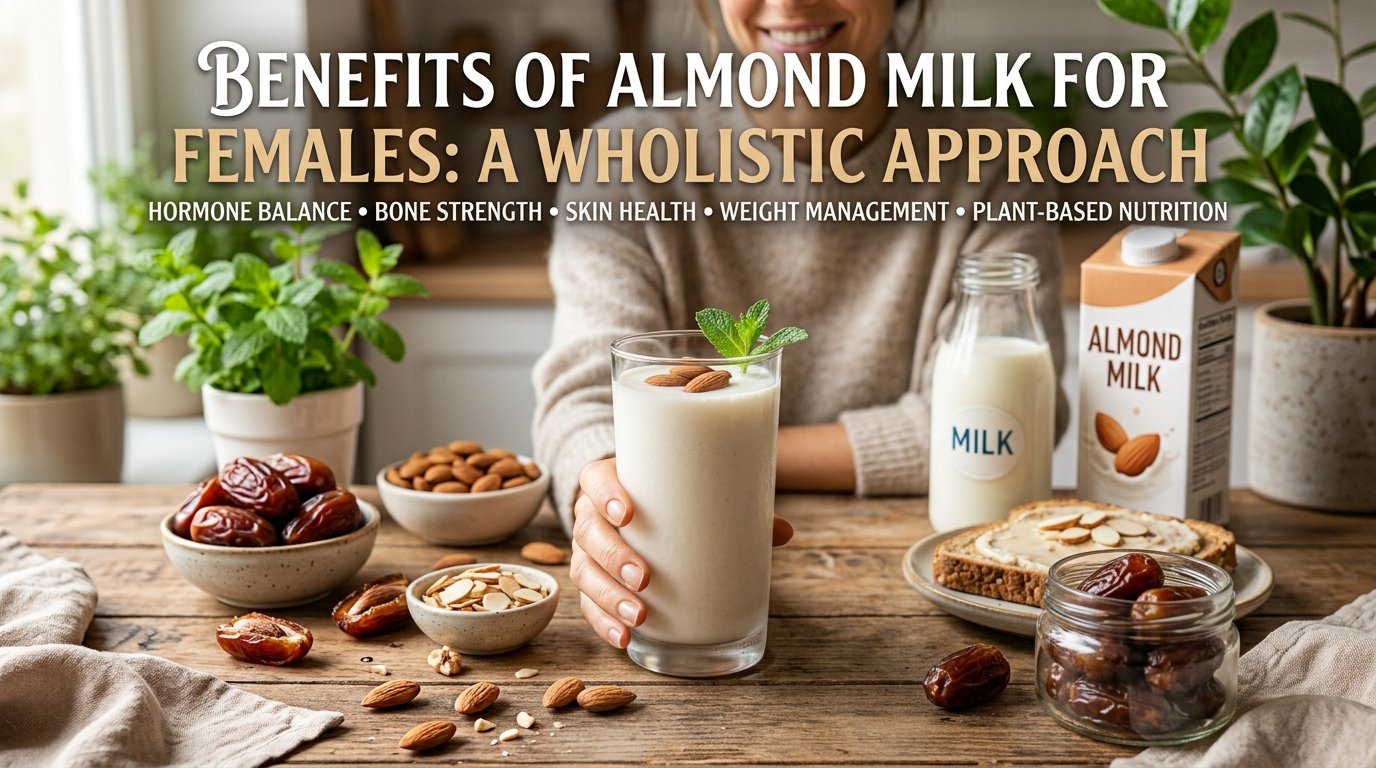
Almond milk can be a useful dairy-free beverage for women, particularly when it is unsweetened and fortified with calcium and vitamin D. However, not every almond milk has the same nutritional profile, so the benefits depend heavily on the product you choose. The FDA recommends checking labels because plant-based beverages can differ substantially in protein, calcium, vitamin D, potassium and other nutrients.
For women, almond milk can be especially useful as part of a diet that provides adequate calcium, vitamin D, protein, iron, folate and other nutrients needed across different life stages.
1. Supports Bone Health
One of the biggest potential benefits of fortified almond milk for women is its calcium content.
Calcium is essential for maintaining strong bones and teeth, while vitamin D helps the body absorb calcium. Women need adequate calcium throughout life, particularly because maintaining bone strength becomes increasingly important with age.
Many commercial almond milks are fortified with calcium, but amounts vary by brand.
Tip: Check the Nutrition Facts label for calcium and vitamin D rather than assuming every almond milk contains the same amount.
2. Provides Vitamin D When Fortified
Some almond milk products are fortified with vitamin D.
Vitamin D helps the body absorb calcium and also supports normal muscle and immune function. NIH notes that fortified almond, soy and oat beverages can provide vitamin D, although the amount varies between products.
This makes fortified almond milk potentially useful as part of a diet designed to provide adequate vitamin D.
3. Naturally Provides Vitamin E
Almonds are naturally rich in vitamin E, an antioxidant nutrient.
Commercial almond milk can retain vitamin E, although the amount varies depending on processing and the product.
Vitamin E helps protect cells from oxidative stress and is an important nutrient for overall health.
4. Can Be a Low-Calorie Milk Alternative
Unsweetened almond milk is generally relatively low in calories.
For example, one cup of unsweetened almond milk may contain around 30–40 calories, although the exact amount varies by brand.
This can make it useful for women who want a creamy beverage without adding many calories.
However, sweetened almond milk can contain considerably more sugar and calories, so always check the label.
5. Contains Little or No Added Sugar When Unsweetened
Unsweetened almond milk can contain very little sugar.
By comparison, sweetened varieties can contain substantially more sugar. One comparison from WebMD lists approximately 0 grams of sugar in a cup of unsweetened almond milk versus around 12 grams in a cup of sweetened almond milk.
For everyday use, unsweetened almond milk is usually the better choice if you’re trying to limit added sugar.
6. Naturally Lactose-Free
Almond milk is made from almonds and water rather than cow’s milk.
Therefore, it naturally contains no lactose.
This can make it an option for women who avoid lactose because of intolerance or who simply prefer dairy-free foods.
7. Suitable for Vegan Diets
Plain almond milk is plant-based and can fit into a vegan diet.
You can use it in:
- Smoothies
- Oatmeal
- Coffee
- Chia pudding
- Cereal
- Pancakes
- Baking recipes
However, nutritional content varies, so women following plant-based diets should make sure they obtain sufficient protein, calcium, vitamin B12, vitamin D, iron and other nutrients from their overall diet.
8. May Help Women Increase Calcium Intake
Women between ages 19 and 50 generally need about 1,000 mg of calcium per day, while women 51–70 need about 1,200 mg. Pregnant and breastfeeding women generally need 1,000 mg, with teens needing more.
Fortified almond milk can contribute significantly toward these requirements.
This is particularly useful for women who don’t consume dairy products.
9. Can Complement a Weight-Management Diet
Unsweetened almond milk can be a relatively low-calorie replacement for higher-calorie beverages.
For example, you can use it in:
Morning smoothie → instead of juice
Coffee → instead of cream
Oatmeal → instead of higher-calorie additions
However, almond milk itself doesn’t cause weight loss.
Your overall calorie intake, diet quality and physical activity are much more important.
10. Provides Some Healthy Unsaturated Fat
Almond milk generally contains a small amount of fat, much of which comes from almonds.
The amount varies substantially because almond milk contains relatively few almonds compared with whole almonds or almond butter.
Therefore, while almond milk can contribute some unsaturated fat, don’t treat it as a major source of healthy fats.
For more healthy fats, include foods such as:
- Whole almonds
- Walnuts
- Chia seeds
- Flaxseed
- Avocado
- Olive oil
11. Can Be a Convenient Breakfast Ingredient
Almond milk makes it easy to build a nutrient-rich breakfast.
Try combining it with:
- Oats
- Chia seeds
- Flaxseed
- Berries
- Banana
- Almond butter
- Walnuts
For example:
Almond Milk Breakfast Smoothie
- 1 cup unsweetened fortified almond milk
- ½ banana
- ½ cup berries
- 1 tablespoon almond butter
- 1 tablespoon chia seeds
This provides a much broader nutritional profile than almond milk alone.
12. May Support Healthy Aging Through Bone Nutrition
Bone health is important throughout a woman’s life.
Women build much of their bone mass during youth and early adulthood, while maintaining adequate calcium and vitamin D remains important later in life. The FDA specifically highlights the importance of calcium and vitamin D for women across different life stages.
A fortified almond milk can therefore be one convenient source of these nutrients.
But it should be part of a broader diet that includes other calcium-rich foods.
13. Can Be Useful for Women Who Avoid Dairy
Women may choose dairy-free diets for many reasons, including lactose intolerance, dietary preferences or vegan eating.
Almond milk can replace dairy milk in many everyday uses.
However, there is an important nutritional difference:
1 cup unsweetened almond milk may provide only around 1 gram of protein, while cow’s milk typically provides around 8 grams.
So women replacing dairy milk should make sure they’re getting adequate protein elsewhere.
14. Can Provide a Convenient Source of Fortified Nutrients
Commercial almond milk can have nutrients added during processing.
Depending on the product, these may include:
- Calcium
- Vitamin D
- Vitamin E
- Vitamin A
- Riboflavin
- Other nutrients
The FDA emphasizes that the nutritional content of plant-based beverages varies, which is why reading the label is important.
15. Easy to Include in Everyday Meals
Perhaps the simplest benefit is convenience.
You can use almond milk in:
Breakfast
Oatmeal, cereal and smoothies.
Snacks
Chia pudding and fruit smoothies.
Drinks
Coffee and homemade shakes.
Cooking
Pancakes, muffins, sauces and other recipes.
This makes it easy to incorporate into a balanced eating pattern.
Almond Milk for Different Stages of a Woman’s Life
Younger Women
Calcium and vitamin D are important for developing and maintaining strong bones.
Women of Reproductive Age
A balanced diet should provide adequate protein, iron, folate, calcium and other nutrients. Almond milk can contribute some nutrients, particularly when fortified, but it shouldn’t be relied upon as a complete nutritional source.
Pregnant Women
Pregnancy increases nutritional needs. Almond milk can be included if desired, but choose a fortified product and make sure your overall diet and prenatal nutrition plan provide sufficient protein, calcium, vitamin D, iron, folate and other essential nutrients.
Breastfeeding Women
Nutrient needs remain important during breastfeeding. Almond milk can be part of the diet, but it should complement rather than replace a varied diet.
Women Over 50
Calcium and vitamin D become especially important for maintaining bone health as women age. Fortified almond milk can be one convenient source of these nutrients.
What Type of Almond Milk Is Best for Women?
For general everyday use, look for:
✓ Unsweetened
✓ Fortified with calcium
✓ Fortified with vitamin D
✓ Reasonable protein content
✓ Low in added sugar
✓ Simple ingredient list
The FDA recommends comparing plant-based beverages by checking their Nutrition Facts labels, particularly for protein, calcium, vitamin D and potassium.
Important: Almond Milk Is Not a Complete Replacement for Dairy Milk
This is an important point for your article.
Almond milk can be nutritious, but it generally contains far less protein than cow’s milk.
Therefore, if a woman replaces dairy milk with almond milk, she should obtain protein from other foods such as:
- Eggs
- Greek yogurt
- Fish
- Chicken
- Beans
- Lentils
- Tofu
- Soy milk
- Nuts and seeds
16. May Help Support Bone Health During Menopause
Bone health becomes particularly important during and after menopause because declining estrogen levels are associated with increased bone loss. NIH notes that women over 50 generally need 1,200 mg of calcium per day.
A calcium- and vitamin-D-fortified almond beverage can contribute to that intake, especially for women who don’t consume dairy.
However, almond milk should be one part of a broader bone-health diet—not the only source of calcium.
17. Can Be a Convenient Calcium Source for Women Who Avoid Dairy
Women who don’t consume dairy may need alternative calcium sources.
Fortified almond beverages are among the plant-based options that can provide calcium.
Other calcium-rich foods include:
- Tofu made with calcium
- Yogurt or dairy products, if tolerated
- Leafy green vegetables
- Sardines with bones
- Calcium-fortified foods
The important thing is to look at the actual calcium amount on the almond milk label.
18. May Fit a Heart-Conscious Diet
Unsweetened almond milk can be useful in a heart-conscious eating pattern because it is generally low in saturated fat.
However, almond milk itself shouldn’t be described as a treatment for heart disease.
For a healthier everyday choice, look for varieties that are:
- Unsweetened
- Lower in saturated fat
- Fortified with calcium
- Fortified with vitamin D
The FDA recommends comparing plant-based beverages based on protein, calcium, vitamin D and potassium while choosing products lower in saturated fat and added sugar.
19. Can Be Useful for Women Managing Calorie Intake
Unsweetened almond milk is often relatively low in calories compared with many other beverages.
This can make it useful in:
- Smoothies
- Coffee
- Oatmeal
- Cereal
- Chia pudding
However, low calorie doesn’t automatically mean healthier.
A very low-calorie almond beverage may also provide very little protein.
So if you’re replacing milk, look at the complete Nutrition Facts label rather than calories alone.
20. May Support a Dairy-Free Lifestyle
Some women avoid dairy because of lactose intolerance, milk allergy, dietary preferences, or vegan eating.
Almond milk provides a convenient plant-based alternative for many everyday uses. The FDA notes that plant-based milk alternatives can be useful for people who avoid dairy, but their nutritional composition varies substantially.
21. Can Be Combined With Protein-Rich Foods
One weakness of many almond milk products is their low protein content compared with cow’s milk.
That’s why a woman using almond milk as a dairy replacement can pair it with protein-rich foods.
For example:
Breakfast
Almond milk + oats + Greek yogurt + berries
Smoothie
Almond milk + almond butter + chia seeds + banana
Snack
Almond milk + whole-grain toast + eggs
This creates a more nutritionally balanced meal.
22. May Help Increase Vitamin D Intake When Fortified
Vitamin D helps the body absorb calcium and plays an important role in bone health.
Some almond milk products are fortified with vitamin D.
Therefore, fortified almond milk can be useful for women who have difficulty obtaining vitamin D from food.
But not all almond milk contains the same amount, so check the label.
23. Can Be Useful for Older Women
For women over 50, maintaining adequate calcium and vitamin D becomes particularly important because bone loss can accelerate around menopause and afterward.
A fortified almond beverage can be one convenient way to add calcium and vitamin D to meals.
Try it with:
- Oatmeal
- Chia pudding
- Smoothies
- Whole-grain cereal
24. Can Support a Nutrient-Dense Breakfast
Almond milk becomes much more nutritious when combined with other whole foods.
Try this breakfast:
- 1 cup fortified unsweetened almond milk
- ½ cup oats
- 1 tablespoon chia seeds
- ½ cup berries
- 1 tablespoon almond butter
- A few walnuts
This provides a combination of:
- Fiber
- Healthy fats
- Protein
- Calcium
- Vitamin E
- Plant compounds
- Other vitamins and minerals
The nutritional quality comes from the whole combination, not almond milk alone.
25. Can Be Used in Smoothies for Women
Almond milk works particularly well as the liquid base of smoothies.
Women’s Healthy Almond Milk Smoothie
- 1 cup unsweetened fortified almond milk
- ½ banana
- ½ cup berries
- 1 tablespoon almond butter
- 1 tablespoon chia seeds
- A small handful of spinach
Blend until smooth.
If you want more protein, add Greek yogurt or another protein-rich ingredient.
26. May Be Helpful for Women Who Are Lactose Intolerant
Because almond milk is plant-based, it doesn’t contain lactose.
This can make it a convenient alternative for women who have difficulty digesting lactose.
However, lactose intolerance and milk allergy are different conditions. Someone with a milk allergy should follow appropriate medical guidance regarding dairy avoidance.
27. Almond Milk Is Not a Treatment for Hormonal Problems
This is an important distinction for your article.
You may see claims online that almond milk can:
- Balance hormones
- Increase estrogen
- Regulate periods
- Cure PCOS
- Increase breast size
- Prevent menopause
- Treat infertility
There isn’t good evidence that ordinary almond milk provides these specific effects.
It’s better to describe almond milk as a nutritious beverage that can contribute certain nutrients, rather than claiming that it directly changes female hormones.
28. What About Almond Milk During Pregnancy?
Almond milk can be included in pregnancy if it fits the individual’s dietary needs.
However, pregnancy increases the importance of getting adequate nutrients such as:
- Protein
- Calcium
- Vitamin D
- Iron
- Folate
- Iodine
- Choline
Because almond milk is often low in protein, it shouldn’t be relied upon as a major protein source.
A fortified product can provide calcium and vitamin D, but always check the label.
For individualized pregnancy nutrition, a healthcare professional or registered dietitian is the appropriate source of advice.
29. What About Almond Milk During Breastfeeding?
Almond milk can also be part of a balanced diet during breastfeeding.
The key is making sure your overall diet provides enough calories, protein, fluids, vitamins and minerals.
If almond milk replaces dairy milk, make sure nutrients such as calcium, vitamin D and protein are obtained adequately from other foods and beverages.
30. Almond Milk vs. Cow’s Milk for Women
There isn’t one universally “best” option.
| Nutrient/Feature | Almond Milk | Cow’s Milk |
|---|---|---|
| Dairy-free | ✓ | ✗ |
| Lactose-free | ✓ | ✗ |
| Plant-based | ✓ | ✗ |
| Protein | Usually low | Usually higher |
| Calcium | Often fortified | Naturally rich |
| Vitamin D | Often fortified | Often fortified |
| Calories | Often lower when unsweetened | Varies |
| Added sugar | Depends on product | Usually none in plain milk |
The FDA emphasizes that almond and other plant-based beverages can differ significantly from dairy milk nutritionally.
31. Almond Milk vs. Soy Milk for Women
If protein is important, fortified soy milk may be a stronger nutritional substitute for dairy milk.
The FDA notes that fortified soy beverages are currently the only plant-based beverages included in the U.S. Dietary Guidelines’ dairy group because their nutrient composition is similar enough to milk.
Almond milk can still be a good choice when you prefer its taste, lower calorie content, or nut-based ingredients.
32. How to Choose the Best Almond Milk for Women
When shopping, don’t choose based only on the words “healthy” or “natural” on the front of the package.
Check the Nutrition Facts label.
Look for:
✓ Unsweetened
✓ Calcium-fortified
✓ Vitamin-D-fortified
✓ Reasonable protein
✓ Low added sugar
✓ Lower saturated fat
The FDA specifically recommends comparing plant-based beverages for protein, calcium, vitamin D and potassium and choosing products lower in saturated fat and added sugar.
33. Is Almond Milk Good for Women’s Skin?
Almonds contain vitamin E, an antioxidant nutrient, and some almond beverages provide vitamin E.
However, drinking almond milk should not be presented as a treatment for acne, wrinkles, pigmentation or other skin conditions.
Healthy skin depends on many factors, including overall nutrition, hydration, sun exposure, genetics and skincare habits.
34. Is Almond Milk Good for Digestion?
Almond milk is naturally lactose-free, which can make it easier for people who have difficulty digesting lactose.
However, commercial almond beverages can contain different additives and ingredients, so digestive tolerance varies.
If a particular product causes bloating or discomfort, check its ingredients or try another variety.
35. Can Women Drink Almond Milk Every Day?
For most women who tolerate almonds, moderate daily consumption can fit into a balanced diet.
The main thing is to avoid treating almond milk as a complete nutritional replacement for milk.
A good everyday choice is generally:
Unsweetened + fortified with calcium and vitamin D + appropriate for your overall protein needs.
Key Takeaway for Women
Almond milk can be a useful addition to a woman’s diet, particularly for women who want a dairy-free, lactose-free or plant-based beverage.
Its biggest nutritional advantages depend on the specific product.
For women, the most relevant considerations are:
- Calcium → bone health
- Vitamin D → calcium absorption and bone health
- Vitamin E → antioxidant nutrient
- Low calories → can fit calorie-conscious diets
- Lactose-free → useful for people avoiding lactose
- Plant-based → suitable for vegan diets
- Fortification → can add important nutrients
But remember: almond milk is generally much lower in protein than dairy milk, so protein should come from other foods when almond milk is used as a replacement.
How Much Almond Milk Should Women Drink Per Day?
There isn’t a universal amount that every woman needs to drink.
A common serving is 1 cup (240 mL).
You can include this serving with:
- Breakfast
- Smoothies
- Oatmeal
- Cereal
- Chia pudding
- Coffee
- Healthy snacks
The appropriate amount depends on your overall diet and nutritional needs.
If you’re using almond milk to replace dairy milk, make sure you’re still getting adequate protein, calcium, vitamin D and other nutrients from your overall diet.
Best Ways for Women to Add Almond Milk to Their Diet
1. Almond Milk Smoothie
Combine:
- 1 cup unsweetened fortified almond milk
- ½ banana
- ½ cup berries
- 1 tablespoon almond butter
- 1 tablespoon chia seeds
Blend until smooth.
For additional protein, add Greek yogurt or another protein-rich ingredient.
2. Almond Milk Overnight Oats
Ingredients
- ½ cup rolled oats
- ½ cup almond milk
- 1 tablespoon chia seeds
- ½ cup berries
- Cinnamon
- 1 tablespoon walnuts
Mix the ingredients and refrigerate overnight.
This makes a fiber-rich breakfast with healthy fats and several micronutrients.
3. Almond Milk Chia Pudding
Ingredients
- 1 cup unsweetened almond milk
- 3 tablespoons chia seeds
- ½ teaspoon cinnamon
- Berries
Mix and refrigerate for several hours.
Chia seeds add fiber and ALA omega-3 fatty acids.
4. Almond Milk With Oatmeal
Instead of cooking oatmeal with water, use fortified unsweetened almond milk.
Top it with:
- Berries
- Banana
- Almond butter
- Walnuts
- Ground flaxseed
This creates a more nutritionally complete breakfast than almond milk alone.
5. Almond Milk Coffee
Unsweetened almond milk can be used in coffee or tea instead of dairy milk or cream.
If you’re trying to reduce added sugar, avoid turning your coffee into a highly sweetened beverage.
6. Almond Milk Protein Smoothie
Because many almond milk products are low in protein, combine them with a protein-rich ingredient.
Recipe
- 1 cup fortified almond milk
- ½ banana
- ½ cup Greek yogurt
- 1 tablespoon almond butter
- Cinnamon
- Ice
Blend until creamy.
Almond Milk for Weight Management
Unsweetened almond milk can be a useful low-calorie beverage for women who are managing their calorie intake.
However, almond milk does not burn fat or directly cause weight loss.
The more important factors are:
- Overall calorie intake
- Protein intake
- Fiber intake
- Food quality
- Physical activity
- Sleep and lifestyle habits
Choosing unsweetened almond milk instead of a sugar-sweetened drink can be one small dietary change that reduces added sugar.
Almond Milk for Weight Gain
Almond milk can also be used in higher-calorie smoothies.
Try combining:
- Whole-food ingredients
- Almond butter
- Banana
- Oats
- Dates
- Walnuts
For example:
1 cup almond milk + 1 banana + 2 dates + 1 tablespoon almond butter + 2 tablespoons oats + walnuts
This produces a substantially more calorie-dense drink than plain almond milk.
Almond Milk During Menopause
Menopause is a particularly important stage for bone health.
Women can focus on obtaining sufficient:
- Calcium
- Vitamin D
- Protein
- Magnesium
- Other nutrients
Fortified almond milk can contribute calcium and vitamin D, but it shouldn’t be considered a treatment for menopause symptoms.
A balanced diet, regular physical activity and appropriate medical care remain important.
Possible Side Effects of Almond Milk
Most people tolerate almond milk well, but some individuals may experience problems.
Possible issues include:
- Bloating
- Gas
- Stomach discomfort
- Reactions to certain ingredients
- Allergic reactions
Commercial almond milk may contain ingredients such as gums, stabilizers or added fibers, which some people may not tolerate well.
If you experience repeated symptoms after drinking a particular product, check its ingredient list and consider discussing the issue with a healthcare professional.
Almond Allergy
Women with an almond or tree-nut allergy should avoid almond milk.
Allergic reactions can include:
- Itching
- Hives
- Swelling
- Vomiting
- Wheezing
- Difficulty breathing
A severe allergic reaction requires urgent medical attention.
Also remember that products manufactured alongside other nuts may have cross-contact warnings.
Is Almond Milk Safe During Pregnancy?
Almond milk can generally be included in a pregnancy diet if it fits the individual’s dietary needs.
However, pregnancy increases the importance of adequate intake of nutrients such as:
- Protein
- Calcium
- Vitamin D
- Iron
- Folate
- Iodine
- Choline
Because almond milk is generally low in protein, women shouldn’t rely on it as their main protein source.
A fortified, unsweetened product can be a useful beverage choice, but individual pregnancy nutrition should be discussed with a qualified healthcare professional.
Is Almond Milk Safe While Breastfeeding?
Almond milk can be part of a balanced diet during breastfeeding.
The important thing is to maintain adequate overall nutrition and hydration.
If you use almond milk instead of dairy milk, obtain sufficient:
- Protein
- Calcium
- Vitamin D
- Calories
- Other essential nutrients
from the rest of your diet.
What About Almond Milk and Hormones?
There are many online claims that almond milk can increase estrogen or “balance female hormones.”
These claims should be treated cautiously.
Almond milk is not an established treatment for hormonal disorders, PCOS, infertility, menstrual irregularities or menopause.
It is better to describe its benefits in terms of its nutritional content rather than claiming that it directly changes hormone levels.
Almond Milk vs. Soy Milk for Women
If protein is a major priority, fortified soy milk may be a better nutritional replacement for dairy milk than almond milk.
Almond milk is often:
- Lower in calories
- Lower in protein
- Mild in flavor
Soy milk is generally:
- Higher in protein
- More nutritionally comparable to dairy milk
- Available in fortified varieties
The best option depends on your dietary preferences and nutritional needs.
Frequently Asked Questions
Is almond milk good for females?
Yes. Unsweetened, fortified almond milk can be part of a healthy diet for women. It can provide nutrients such as calcium, vitamin D and vitamin E depending on the product.
Is almond milk good for women’s bones?
Fortified almond milk can contribute calcium and vitamin D, two nutrients important for bone health.
Can women drink almond milk every day?
Most women who tolerate almonds can include a moderate amount of almond milk daily as part of a balanced diet.
Is almond milk good for weight loss?
Unsweetened almond milk can fit into a calorie-conscious diet because it is usually relatively low in calories. It does not directly cause weight loss.
Is almond milk good during menopause?
It can be useful as a source of calcium and vitamin D when fortified, but it isn’t a treatment for menopause.
Is almond milk good during pregnancy?
It can be included during pregnancy, but women should make sure they get enough protein and other essential nutrients from the rest of their diet.
Is almond milk good for skin?
Almonds contain vitamin E, but drinking almond milk should not be considered a treatment for acne, wrinkles or other skin conditions.
Does almond milk contain estrogen?
Almond milk is not considered a significant dietary source of estrogen. Claims that it directly increases female estrogen levels should not be treated as established health benefits.
Is almond milk better than cow’s milk?
Not necessarily. Almond milk is useful for women who prefer dairy-free or lower-calorie options, while cow’s milk generally provides considerably more protein.
Is almond milk better than soy milk?
Not universally. Soy milk generally provides more protein, while unsweetened almond milk is often lower in calories.
What is the healthiest almond milk for women?
A good everyday choice is generally unsweetened almond milk fortified with calcium and vitamin D, with a nutrition label that fits your individual needs.
How much almond milk should a woman drink?
A typical serving is about 1 cup, but there is no universal daily requirement.
Final Takeaway
The benefits of almond milk for females mainly come from its role as a convenient plant-based beverage.
A good fortified almond milk can provide:
- Calcium
- Vitamin D
- Vitamin E
- A dairy-free alternative
- A lactose-free option
- Relatively few calories when unsweetened
- A convenient ingredient for healthy meals
For women, calcium and vitamin D are particularly relevant because maintaining adequate intake is important for bone health throughout life.
However, almond milk is generally low in protein, so women replacing dairy milk should obtain sufficient protein from other foods.
The best everyday option is usually unsweetened and fortified, while checking the Nutrition Facts label for calcium, vitamin D, protein, calories and added sugar.
Suggested Article’s
- Health Benefits of Almond Milk
- Benefits of Almond Butter
- Almond Benefits
- Benefits of Dates, Milk, Walnut & Almond Smoothie
- Best Nuts for Daily Eating
- Mixed Nuts Benefits
- Walnut Benefits
- Pistachio Benefits
- Cashew Benefits
- Hazelnut Benefits
- Pecan Benefits
- Macadamia Nut Benefits
- Brazil Nut Benefits
- Chia Seed Benefits
- Flaxseed Benefits
- Sesame Seed Benefits
- Best Natural Foods
- Best Healthy Pantry Foods




Leave a Reply