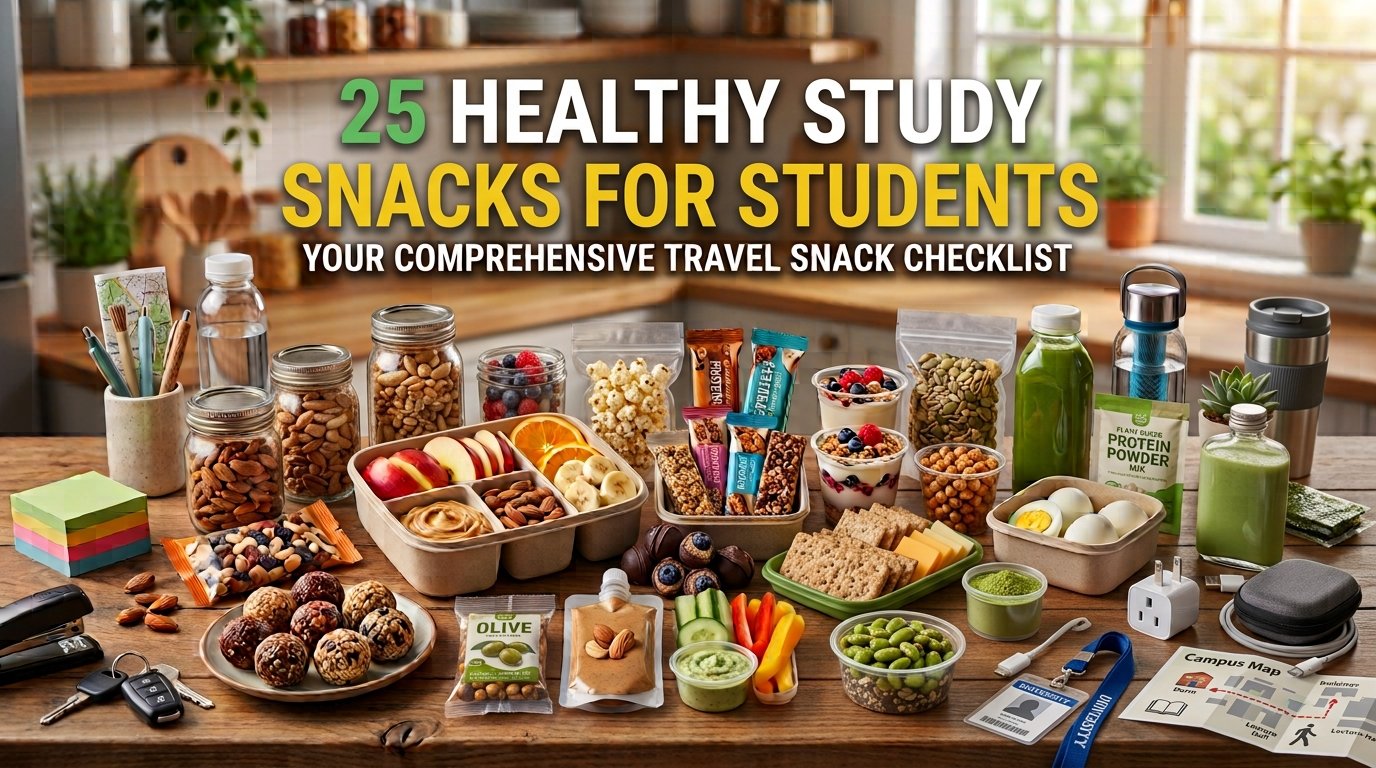
Studying for hours can make you hungry, distracted, and tempted to reach for sugary or highly processed snacks. The right study snacks can make it easier to stay focused while giving you a satisfying break between classes, assignments, and exams.
The best healthy study snacks for students are usually simple, affordable, and easy to keep in a dorm room, backpack, apartment, or study space. Snacks that combine protein, fiber, healthy fats, or whole-food carbohydrates can be especially useful when you want something more satisfying than candy or chips.
Here are 25 healthy study snacks for students that are easy to prepare and practical for busy school days.
1. Apple With Peanut Butter
An apple with peanut butter is a simple combination of fruit, carbohydrates, protein, and healthy fats.
Slice an apple and pair it with 1–2 tablespoons of peanut butter. This makes a convenient snack for studying at home, in a dorm, or at the library.
Easy tip: Choose natural peanut butter with minimal added sugar when possible.
2. Greek Yogurt With Berries
Greek yogurt is a convenient source of protein, while berries add natural sweetness and fiber.
Mix plain or lightly sweetened Greek yogurt with strawberries, blueberries, raspberries, or blackberries.
For extra texture, add a small spoonful of chia seeds or chopped nuts.
3. Almonds and a Banana
When you need a snack that requires almost no preparation, combine a banana with a small handful of almonds.
The banana provides carbohydrates, while almonds add protein, healthy fats, and fiber.
This combination is especially convenient before a long study session.
4. Homemade Trail Mix
Trail mix is one of the easiest snacks for students because you can prepare a large batch once and divide it into small portions.
Try combining:
- Almonds
- Walnuts
- Pumpkin seeds
- Unsweetened dried fruit
- A small amount of dark chocolate
Keep portions moderate because nuts and dried fruit are nutrient-dense and can add calories quickly.
5. Hard-Boiled Eggs and Fruit
Hard-boiled eggs are a practical protein-rich snack.
Pair one or two eggs with an orange, apple, berries, or another piece of fruit for a more balanced snack.
Prepare several eggs ahead of time and keep them refrigerated until you’re ready to eat them.
6. Carrots With Hummus
Crunchy vegetables can make a satisfying study snack without requiring much preparation.
Pair baby carrots or sliced carrots with hummus. You can also use cucumber, bell peppers, celery, or cherry tomatoes.
This is a good option when you want something savory rather than sweet.
7. Air-Popped Popcorn
Popcorn can be a budget-friendly snack for students when prepared with limited added butter, oil, or sugar.
Air-pop popcorn and season it with spices such as paprika, garlic powder, or cinnamon.
For a more filling option, pair it with a small serving of nuts or a protein-rich food.
8. Cottage Cheese With Berries
Cottage cheese provides protein and pairs well with naturally sweet fruit.
Add blueberries, strawberries, peaches, or pineapple for a quick snack.
If you prefer savory flavors, try cottage cheese with cucumber, tomatoes, and black pepper instead.
9. Oatmeal With Banana and Cinnamon
Oatmeal isn’t just a breakfast food. It can also work as a filling study snack.
Prepare a small bowl of oats and add:
- Sliced banana
- Cinnamon
- Chia seeds
- Chopped walnuts
- A small amount of peanut butter
This combination provides carbohydrates along with fiber, protein, and healthy fats.
10. Whole-Grain Crackers With Hummus
Whole-grain crackers and hummus are easy to keep in a student kitchen or pantry.
Choose crackers made with whole grains and pair them with a few tablespoons of hummus.
Add cucumber or bell pepper slices if you want more volume and crunch.
11. Peanut Butter Banana Toast
Spread peanut butter over whole-grain toast and top it with banana slices.
This snack is inexpensive, quick, and easy to customize.
Sprinkle a little cinnamon or chia seed on top for additional flavor.
12. Edamame
Edamame can be an excellent study snack when you want something savory and protein-rich.
Frozen edamame can usually be prepared quickly in a microwave or on the stovetop.
Season it lightly with salt, black pepper, garlic powder, or chili flakes.
13. Greek Yogurt With Chia Seeds
If you’re looking for a simple protein-rich snack, mix chia seeds into Greek yogurt.
You can prepare it in a small container before studying and add berries or sliced fruit.
Chia seeds also provide fiber and healthy fats.
14. Apple and Walnuts
For an extremely simple snack, combine one apple with a small handful of walnuts.
The fruit adds carbohydrates and fiber, while walnuts provide healthy fats.
This combination is particularly convenient when you’re studying away from the kitchen.
15. Roasted Chickpeas
Roasted chickpeas provide a crunchy alternative to chips.
You can make them at home by seasoning cooked chickpeas and roasting them until crisp.
Try flavors such as:
- Paprika
- Garlic
- Black pepper
- Cumin
- Chili powder
Store them in an airtight container for a convenient pantry snack.
16. Dark Chocolate With Almonds
If you have a chocolate craving while studying, a small portion of dark chocolate paired with almonds can be a more balanced option than eating a large amount of candy.
Keep the portion moderate and choose dark chocolate according to your taste and dietary preferences.
17. Fresh Berries With Greek Yogurt
Fresh berries can make a naturally sweet study snack.
Combine strawberries, blueberries, raspberries, or blackberries with Greek yogurt.
For extra crunch, add a tablespoon of chopped almonds or walnuts.
18. Rice Cakes With Nut Butter
Rice cakes are lightweight and easy to store in a dorm or student apartment.
Spread one or two rice cakes with peanut, almond, or another nut butter.
Top with banana slices, apple slices, or cinnamon.
For students with nut allergies, sunflower seed butter can be an alternative if appropriate.
19. Celery With Peanut Butter
Celery and peanut butter is a classic snack that requires very little preparation.
Cut celery into manageable pieces and spread a small amount of peanut butter into the center.
You can also use almond or sunflower seed butter.
20. Homemade Energy Bites
Homemade energy bites can be prepared in advance and kept ready for study sessions.
A simple recipe can include:
- Rolled oats
- Peanut butter
- Chia seeds
- Ground flaxseed
- Unsweetened coconut
- A small amount of honey or dates
Mix the ingredients, form small balls, and refrigerate.
Because recipes vary, keep portions reasonable and adjust ingredients to your dietary needs.
21. Pear With Almonds
A pear and almonds make another simple fruit-and-nut combination.
Pears provide fiber and natural carbohydrates, while almonds contribute protein, healthy fats, and other nutrients.
This is especially useful when you want a snack that doesn’t require cooking.
22. Whole-Grain Toast With Avocado
Avocado toast can work as a substantial snack when you have access to a toaster or kitchen.
Spread mashed avocado over whole-grain toast and add:
- Black pepper
- Tomato
- Chili flakes
- Everything-bagel seasoning
For additional protein, pair it with a hard-boiled egg.
23. Applesauce With Pumpkin Seeds
Unsweetened applesauce is easy to store and doesn’t require preparation.
Pair a small serving with pumpkin seeds for a combination of fruit and healthy fats.
Individual applesauce cups can also be convenient for students who study between classes.
24. Homemade Nut and Seed Mix
Create your own study snack mix using ingredients you already enjoy.
For example, combine:
- Almonds
- Pumpkin seeds
- Walnuts
- Sunflower seeds
- Unsweetened coconut flakes
- A small amount of dried cranberries
Making your own mix can help you control the ingredients and added sugars.
25. Snack Box With Fruit, Nuts, and Protein
When you want one complete study snack, make a small snack box.
Include three or four foods such as:
- Apple or berries
- Almonds or walnuts
- Hard-boiled egg
- Whole-grain crackers
- Hummus
- Cheese cubes
This approach gives you different flavors and textures while combining several types of nutrients.
What Makes a Good Study Snack?
A good study snack doesn’t need to be complicated.
For many students, the most useful snacks combine at least two components, such as protein + carbohydrate, fiber + healthy fat, or fruit + protein.
For example:
Apple + peanut butter
Fruit provides carbohydrates and fiber, while peanut butter adds protein and fat.
Greek yogurt + berries
Yogurt provides protein while berries add carbohydrates and fiber.
Whole-grain crackers + hummus
The crackers provide carbohydrates and the hummus adds protein, fiber, and fat.
The goal isn’t to find one magical food that improves studying. Instead, choose snacks that are satisfying, convenient, and fit your overall eating pattern.
Best Healthy Study Snacks for Late-Night Studying
Students often study late at night, especially during exams.
If you’re hungry after dinner, consider a moderate snack such as:
- Greek yogurt with berries
- Apple with peanut butter
- Cottage cheese with fruit
- Banana with almonds
- Oatmeal with cinnamon
- Carrots with hummus
- A small homemade trail mix
If you’re eating late because you’re genuinely hungry, a balanced snack can be more satisfying than repeatedly grabbing sweets or chips.
It’s also useful to consider whether you’re hungry or simply taking a study break. Both situations are normal, but recognizing the difference can help you choose what you actually need.
Best Study Snacks for the Library
When you’re studying at the library, portable and relatively mess-free snacks are usually the most practical.
Good choices include:
- Almonds
- Walnuts
- Trail mix
- Apples
- Bananas
- Roasted chickpeas
- Protein-rich snack bars
- Whole-grain crackers
- Dried fruit
- Pumpkin seeds
Avoid foods that are extremely messy, strongly scented, or difficult to eat quietly in shared study spaces.
Best Cheap Study Snacks for College Students
Healthy eating doesn’t have to be expensive.
Some budget-friendly options include:
Bananas
Bananas are inexpensive, portable, and require no preparation.
Oatmeal
A container of rolled oats can provide multiple inexpensive servings.
Popcorn
Plain popcorn kernels can be an affordable pantry staple.
Peanut Butter
Peanut butter can be paired with fruit, toast, oatmeal, or rice cakes.
Eggs
Eggs can provide an inexpensive protein-rich option.
Apples
Apples are portable and can stay fresh for a reasonable amount of time when stored appropriately.
Chickpeas
Dried or canned chickpeas can be used to make hummus or roasted chickpeas.
Buying basic ingredients and preparing snacks at home can often be more economical than purchasing individual packaged snacks every day.
How to Prepare Study Snacks for the Week
Students can make healthy snacking easier by preparing a few items once or twice a week.
For example:
Sunday preparation
- Wash fruit
- Portion nuts into containers
- Prepare hard-boiled eggs
- Make homemade trail mix
- Prepare roasted chickpeas
- Make several energy bites
During the week
Grab one or two prepared snacks before heading to class, work, or the library.
Keeping a few shelf-stable options in your backpack or study area can also help when unexpected hunger appears.
How to Build a Balanced Study Snack
A simple formula is:
Choose 1 carbohydrate-rich food + 1 protein or healthy-fat source.
Examples:
- Apple + peanut butter
- Banana + almonds
- Whole-grain crackers + hummus
- Greek yogurt + berries
- Rice cake + nut butter
- Oatmeal + walnuts
- Pear + almonds
You don’t have to follow this formula every time. Sometimes a piece of fruit is exactly what you want. The formula is simply a useful starting point when you want a more satisfying snack.
Study Snacks to Keep in Your Dorm Room
A small student snack collection can make healthy choices easier.
Consider keeping:
Shelf-stable foods
- Almonds
- Walnuts
- Pumpkin seeds
- Oatmeal
- Popcorn
- Whole-grain crackers
- Peanut butter
- Unsweetened applesauce
- Dried fruit
Refrigerated foods
- Greek yogurt
- Eggs
- Hummus
- Cottage cheese
- Fresh berries
- Apples
- Carrots
Always follow food-storage instructions and refrigerate perishable foods promptly.
Common Study Snacking Mistakes
Even nutritious foods can become less helpful when portions are uncontrolled or when snacks replace regular meals.
Eating Directly From the Package
It’s easy to lose track of how much you’re eating while concentrating on an assignment.
Try putting a serving into a bowl or container instead.
Choosing Only Sugary Snacks
Cookies, candy, and sweet drinks can be convenient during stressful study periods, but relying heavily on them may leave you wanting more food soon afterward.
Skipping Meals and Constantly Snacking
Snacks are meant to complement meals, not necessarily replace them every day.
Regular meals containing protein, vegetables or fruit, whole grains, and other nutrient-dense foods can provide a stronger foundation.
Mindless Eating While Studying
Try taking a short break when eating rather than automatically eating while reading or watching a screen.
This can make it easier to notice hunger and fullness cues.
Frequently Asked Questions
What are the best healthy study snacks for students?
Some practical options include Greek yogurt with berries, apples with peanut butter, almonds with bananas, hummus with vegetables, popcorn, trail mix, oatmeal, roasted chickpeas, and whole-grain crackers.
What is a good snack for studying at night?
Greek yogurt with berries, fruit with nuts, oatmeal, cottage cheese with fruit, or a small serving of trail mix can work well when you’re hungry during a late-night study session.
What are cheap healthy snacks for college students?
Oatmeal, bananas, apples, popcorn, peanut butter, eggs, chickpeas, and homemade trail mix can be relatively budget-friendly options.
What snacks can I keep in my dorm room?
Shelf-stable options such as nuts, seeds, popcorn kernels, whole-grain crackers, oatmeal, peanut butter, and unsweetened applesauce are convenient. If you have refrigerator access, Greek yogurt, eggs, hummus, and fresh fruit are additional choices.
Are healthy snacks good for studying?
A snack can help manage hunger during a study session, especially when there is a long gap between meals. However, no individual snack can guarantee better concentration or academic performance. Overall diet, hydration, sleep, and regular meals also matter.
Final Thoughts
The best healthy study snacks for students are the ones that are simple, affordable, satisfying, and easy to fit into a busy school schedule.
Keep a mixture of fresh foods, refrigerated options, and shelf-stable snacks available so you have choices whether you’re studying in a dorm, library, classroom, or at home.
Start with simple combinations such as fruit and nuts, Greek yogurt and berries, hummus and vegetables, or whole-grain toast with peanut butter. Preparing a few snacks ahead of time can also make it easier to avoid relying on vending-machine foods when hunger hits.
Most importantly, think of snacks as part of your overall eating pattern rather than as a special “study food.” Regular meals, adequate hydration, enough sleep, and a varied diet all contribute to supporting your energy and well-being throughout the school day.

Leave a Reply