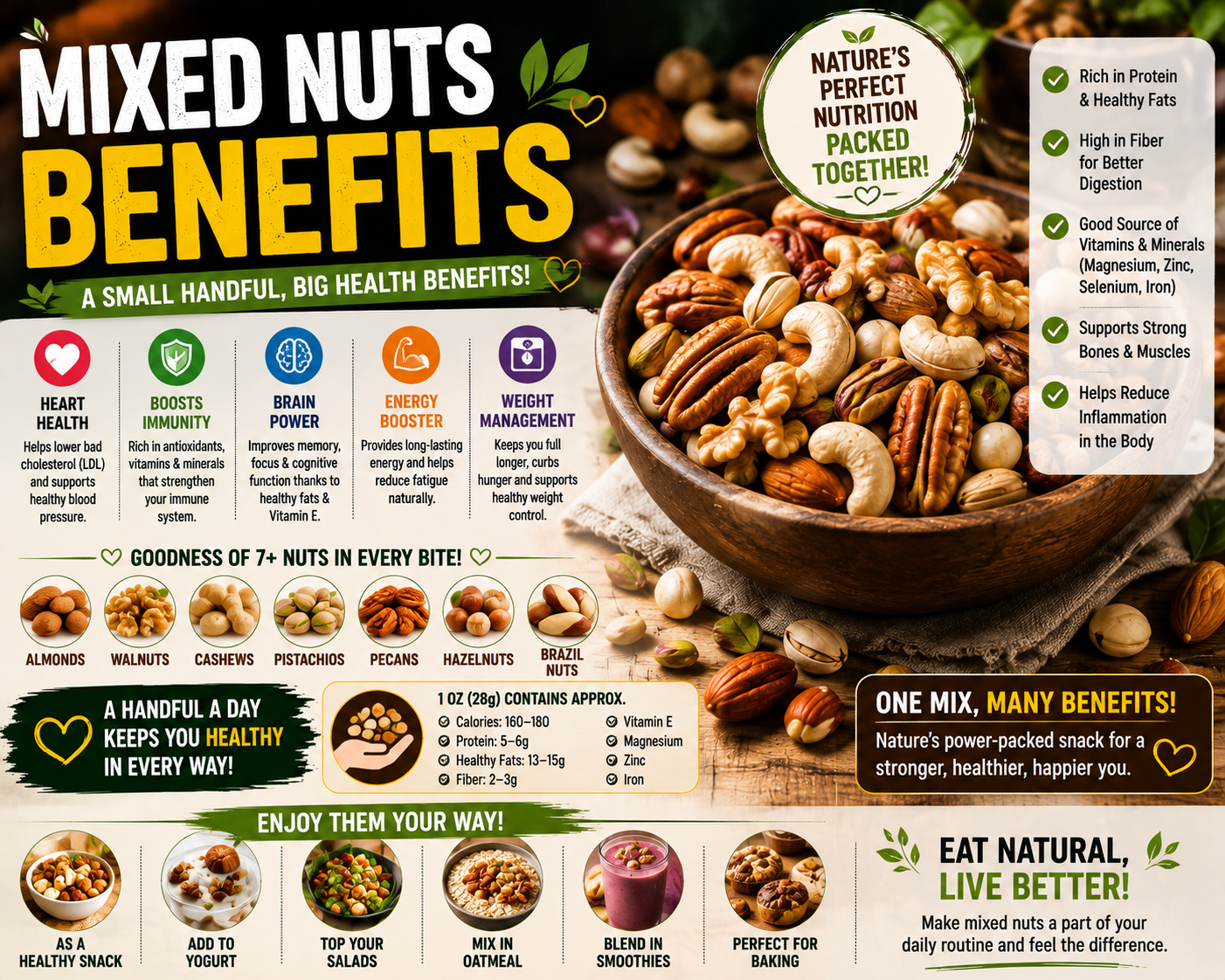
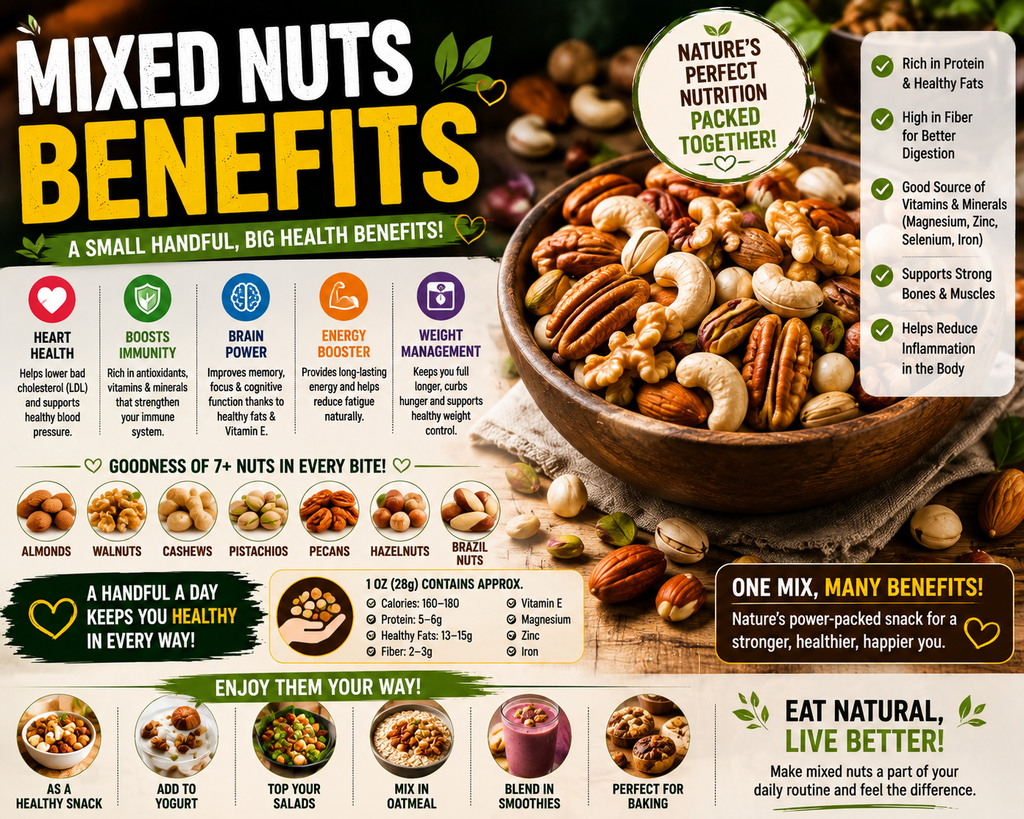
Mixed nuts are a convenient combination of different tree nuts and sometimes peanuts. A typical mix may include almonds, walnuts, cashews, pistachios, pecans, hazelnuts, and Brazil nuts.
Because every type of nut has a slightly different nutritional profile, eating a variety can provide a broader range of:
- Healthy unsaturated fats
- Plant protein
- Dietary fiber
- Vitamin E
- Magnesium
- Copper
- Manganese
- Other vitamins, minerals, and plant compounds
However, not every mixed-nut product is the same. Some contain large amounts of added salt, sugar, oils, or candy-coated ingredients. For everyday eating, a plain, unsalted, or lightly salted mixed-nut blend is generally the simplest choice.
In this first part, we’ll explore mixed-nut nutrition and the first 10 potential mixed nuts benefits.
What Are Mixed Nuts?
Mixed nuts are simply a combination of two or more types of nuts.
A typical mixed-nut blend might include:
Almonds
Known for vitamin E, magnesium, fiber, and protein.
Walnuts
Particularly notable for plant-based ALA omega-3 fatty acids.
Cashews
Provide magnesium, copper, and other minerals.
Pistachios
Provide protein, fiber, vitamin B6, and potassium.
Pecans
Rich in unsaturated fats and several minerals.
Hazelnuts
Known for vitamin E, monounsaturated fats, manganese, and copper.
Brazil Nuts
Exceptionally rich in selenium.
The exact nutritional profile of mixed nuts depends on the types and proportions of nuts in the product.
Mixed Nuts Nutrition Facts
A typical 1-ounce (28-gram) serving of plain mixed nuts provides approximately:
| Nutrient | Approximate Amount |
|---|---|
| Calories | 170–200 |
| Protein | 4–6 g |
| Total Fat | 15–18 g |
| Carbohydrates | 5–8 g |
| Fiber | 2–4 g |
Mixed nuts may also provide useful amounts of:
- Vitamin E
- Magnesium
- Copper
- Manganese
- Phosphorus
- Zinc
- Selenium
The exact amount depends on the mix.
For example, a blend containing Brazil nuts may provide significantly more selenium than a mix without them, while a walnut-heavy mix may provide more ALA omega-3 fats.
1. Mixed Nuts Provide Healthy Unsaturated Fats
One of the biggest mixed nuts benefits is their content of unsaturated fats.
Different nuts provide different types of healthy fats:
- Almonds contain mostly monounsaturated fats.
- Hazelnuts are also rich in monounsaturated fats.
- Pecans provide mostly unsaturated fats.
- Walnuts provide polyunsaturated fats, including ALA omega-3.
- Pistachios and cashews also contribute unsaturated fats.
Replacing some foods high in saturated fat with foods containing unsaturated fats can be part of a heart-conscious eating pattern.
However, mixed nuts are calorie-dense, so moderation remains important.
2. Mixed Nuts Provide Plant-Based Protein
Nuts contain plant protein.
A typical 1-ounce serving of mixed nuts may provide around 4–6 grams of protein, depending on the blend.
Protein contributes to several important functions in the body and is an essential part of a balanced diet.
However, mixed nuts are generally more calorie-dense than many lean protein sources.
For a higher-protein meal, combine them with foods such as:
- Greek yogurt
- Eggs
- Beans
- Lentils
- Chicken
- Fish
- Tofu
For example:
Greek yogurt + berries + a small amount of mixed nuts
can provide a balanced combination of protein, fiber, healthy fats, and carbohydrates.
3. Mixed Nuts Provide Dietary Fiber
Different nuts contribute varying amounts of dietary fiber.
Fiber is important for normal digestive function and can help increase the overall fiber content of meals and snacks.
A mixed-nut snack can be paired with fruit for additional fiber.
Example
Apple + a moderate serving of mixed nuts
Other good sources of fiber include:
- Oats
- Beans
- Lentils
- Whole grains
- Vegetables
- Fruits
- Seeds
A varied diet is the best way to meet your overall fiber needs.
4. Mixed Nuts Provide Vitamin E
Many nut mixes contain almonds and hazelnuts, which are useful sources of vitamin E.
Vitamin E is a fat-soluble vitamin with antioxidant functions.
It helps protect cells from oxidative stress and supports normal immune function.
The vitamin E content of a mixed-nut blend depends heavily on its ingredients.
A mix containing more almonds and hazelnuts may provide more vitamin E than one made primarily from other nuts.
5. Mixed Nuts Can Provide Magnesium
Several popular nuts provide magnesium, including:
- Almonds
- Cashews
- Hazelnuts
- Brazil nuts
Magnesium is involved in many normal processes, including:
- Muscle function
- Nerve function
- Energy metabolism
- Protein synthesis
- Bone health
The magnesium content of your mixed nuts will depend on which nuts are included.
6. Mixed Nuts Provide Important Minerals
Mixed nuts can provide a variety of essential minerals because different nuts have different strengths.
Depending on the blend, you may get:
Copper
Found in cashews, hazelnuts, and other nuts.
Manganese
Found in pecans, hazelnuts, and other nuts.
Phosphorus
Present in several types of nuts.
Zinc
Provided in varying amounts by cashews, almonds, and other nuts.
Selenium
Brazil nuts are particularly rich in selenium.
This nutritional diversity is one of the advantages of eating a variety of nuts.
7. Mixed Nuts Contain Antioxidant Compounds
Nuts naturally contain various plant compounds with antioxidant activity.
Some also provide vitamin E, an antioxidant vitamin.
Different nuts contain different types and amounts of these compounds.
For example:
- Walnuts contain various polyphenols.
- Pecans provide plant compounds with antioxidant properties.
- Almonds and hazelnuts are good sources of vitamin E.
Rather than relying on one “superfood,” aim for variety.
A healthy eating pattern can include:
- Berries
- Fruits
- Vegetables
- Beans
- Whole grains
- Nuts
- Seeds
Mixed nuts can be one part of that pattern.
8. Mixed Nuts Can Fit Into a Heart-Conscious Diet
The combination of unsaturated fats, fiber, plant protein, and micronutrients makes mixed nuts compatible with many heart-conscious dietary patterns.
For example, you could replace a highly processed snack with:
Fresh fruit + a measured serving of mixed nuts
This is generally a more nutrient-dense choice than many heavily processed snack foods.
However, mixed nuts should not be considered a treatment for heart disease or other medical conditions.
The overall quality of your diet matters most.
9. Mixed Nuts Can Be a Convenient and Satisfying Snack
Mixed nuts are easy to carry and require no preparation.
They can be useful for:
- Work
- Travel
- School
- Hiking
- Busy days
The combination of fat, protein, fiber, and crunchy texture can make them satisfying.
Important tip
Don’t eat directly from a large bag.
Measure a portion first, because it can be easy to consume several servings without realizing it.
A small reusable container can make portion control easier.
10. Mixed Nuts Add Nutritional Variety
One of the strongest advantages of mixed nuts is variety.
Instead of relying on one nut, you can benefit from the different nutritional characteristics of several varieties.
For example:
| Nut | Nutritional Strength |
|---|---|
| Almonds | Vitamin E, magnesium, fiber |
| Walnuts | ALA omega-3 fats |
| Cashews | Magnesium and copper |
| Pistachios | Protein, fiber, vitamin B6 |
| Pecans | Unsaturated fats and minerals |
| Hazelnuts | Vitamin E and monounsaturated fats |
| Brazil nuts | Selenium |
A mixed-nut blend can therefore provide a broader nutritional profile than relying exclusively on one type.
Mixed Nuts and Healthy Snacking
Mixed nuts can be a useful alternative to snacks high in refined carbohydrates or added sugar.
For example:
Instead of:
- Candy
- Cookies
- Chips
- Sugary pastries
Try:
- Mixed nuts + apple
- Mixed nuts + berries
- Greek yogurt + mixed nuts
- Oatmeal + fruit + chopped mixed nuts
The goal isn’t to eliminate all treats from your diet.
Instead, it’s about making nutrient-dense foods a regular part of your eating pattern.
Mixed Nuts and Weight Management
Mixed nuts can fit into a weight-management diet, but they aren’t a magic weight-loss food.
Because they are calorie-dense, eating several large handfuls can add hundreds of calories.
The best strategy is usually to use mixed nuts as a replacement for another snack.
Example
Instead of:
Cookies + sweetened coffee
Try:
A measured portion of mixed nuts + fruit + unsweetened coffee or tea
This can improve nutritional quality while helping you manage your overall calorie intake.
Mixed Nuts vs. Eating One Type of Nut
Both approaches can be healthy.
Eating one type
Allows you to focus on the nutrients of that specific nut.
For example:
- Brazil nuts → selenium
- Walnuts → ALA omega-3
- Almonds → vitamin E
Eating mixed nuts
Provides greater variety.
You may receive a combination of:
- Different healthy fats
- Different minerals
- Different vitamins
- Different plant compounds
The best option may simply be the one you enjoy and can include consistently as part of a balanced diet.
11. Mixed Nuts May Support Healthy Cholesterol Levels
Mixed nuts generally contain mostly unsaturated fats.
Replacing some foods high in saturated fat with foods containing unsaturated fats can support a heart-conscious dietary pattern.
For example, instead of regularly eating highly processed snacks, you might choose:
A measured portion of mixed nuts + fresh fruit
Mixed nuts are not a medicine for high cholesterol, and they should not replace medical treatment. Their potential value comes from being part of an overall nutritious eating pattern.
12. Mixed Nuts Can Support a Heart-Healthy Eating Pattern
Mixed nuts can provide a combination of:
- Unsaturated fats
- Dietary fiber
- Plant protein
- Magnesium
- Vitamin E
- Other vitamins and minerals
These nutrients make nuts compatible with many heart-conscious dietary patterns.
A balanced eating pattern may include:
- Fruits
- Vegetables
- Whole grains
- Beans and lentils
- Fish or other protein sources
- Nuts and seeds
- Unsaturated oils
Mixed nuts can be one convenient part of this overall pattern.
13. Mixed Nuts Can Fit Into Blood Sugar-Friendly Meals
Mixed nuts are relatively low in carbohydrates compared with many processed snacks and provide fat, fiber, and protein.
This makes them useful for creating more balanced meals and snacks.
For example:
Greek yogurt + berries + mixed nuts
or:
Oatmeal + fruit + chopped mixed nuts
These combinations provide carbohydrates together with protein, fiber, and fat.
Mixed nuts are not a treatment for diabetes, but they can fit into a balanced eating plan.
14. Mixed Nuts Can Support Digestive Health
The fiber found in nuts contributes to your overall dietary fiber intake.
A mixed-nut snack can become even more fiber-rich when combined with fruit.
Simple example
Apple + mixed nuts
or:
Pear + mixed nuts
For better overall digestive health, include a variety of fiber-rich foods such as:
- Fruits
- Vegetables
- Oats
- Beans
- Lentils
- Whole grains
- Seeds
If your current diet is low in fiber, increase it gradually.
15. Mixed Nuts Provide Nutrients Involved in Energy Metabolism
Mixed nuts provide calories as well as nutrients involved in normal energy metabolism.
Depending on the blend, these may include:
- Magnesium
- Copper
- Manganese
- Phosphorus
- B vitamins
This does not mean mixed nuts create instant energy.
Instead, they provide nutrients and calories that the body uses as part of normal metabolic processes.
For a balanced snack, pair mixed nuts with fruit.
16. Mixed Nuts Can Fit Into an Active Lifestyle
Mixed nuts are portable, require no preparation, and can provide energy along with healthy fats and some protein.
They can be useful for:
- Workouts
- Hiking
- Travel
- Busy workdays
- Outdoor activities
Pre-activity snack
Try:
Banana + a small portion of mixed nuts
Post-activity option
Try:
Greek yogurt + fruit + chopped mixed nuts
Because nuts are relatively high in fat, a very large serving immediately before intense exercise may feel heavy for some people.
17. Mixed Nuts Provide Nutrients Important for Normal Brain and Nervous System Function
Different nuts provide different nutrients relevant to normal body and nervous-system functions.
Depending on the mixture, these can include:
- Vitamin E
- Magnesium
- Copper
- Healthy unsaturated fats
- Other micronutrients
For example, walnuts are notable for their ALA omega-3 fatty acid content, while almonds and hazelnuts provide vitamin E.
However, mixed nuts are not a guaranteed way to improve memory or prevent neurological disease.
Their value comes from contributing nutrients as part of an overall healthy lifestyle.
18. Mixed Nuts Provide Antioxidant Nutrients Relevant to Skin Health
Some nuts, especially almonds and hazelnuts, provide vitamin E.
Mixed nuts may also contain naturally occurring plant compounds with antioxidant activity.
These nutrients can contribute to normal body functions and overall nutritional intake.
However, eating mixed nuts will not automatically:
- Eliminate acne
- Remove wrinkles
- Cure skin conditions
- Reverse aging
Skin health depends on many factors, including nutrition, sleep, sun exposure, genetics, hydration, and skincare.
19. Mixed Nuts Provide Minerals Relevant to Bone Health
Depending on the ingredients, mixed nuts can provide minerals such as:
- Magnesium
- Phosphorus
- Manganese
- Copper
These nutrients are involved in various normal physiological functions.
However, nuts alone cannot provide everything needed for bone health.
A balanced diet should also consider:
- Adequate protein
- Calcium
- Vitamin D
- Other essential nutrients
Regular physical activity, especially weight-bearing exercise, is also important for maintaining healthy bones.
20. Mixed Nuts Can Replace Less Nutritious Snacks
One of the simplest and most practical benefits of mixed nuts is their ability to replace highly processed snack foods.
Instead of:
- Candy
- Cookies
- Chips
- Sugary pastries
Try:
- Mixed nuts + apple
- Mixed nuts + berries
- Greek yogurt + mixed nuts
- Oatmeal + fruit + chopped mixed nuts
This doesn’t mean you have to completely avoid treats.
The goal is simply to make nutrient-dense foods a more regular part of your diet.
Mixed Nuts and Weight Loss
Mixed nuts can fit into a weight-loss diet, but they are not a fat-burning food.
A typical 1-ounce serving may contain around 170–200 calories, depending on the mix.
Because of this, several large handfuls can quickly add a significant number of calories.
A smarter strategy
Use mixed nuts as a replacement rather than simply adding them to your existing diet.
For example:
Cookies → apple + measured mixed nuts
Candy → Greek yogurt + berries + mixed nuts
The overall calorie balance of your diet remains important for weight management.
Mixed Nuts and Heart Health
Mixed nuts can contribute unsaturated fats, fiber, and several important micronutrients.
A heart-conscious meal might include:
Grilled fish or beans + vegetables + whole grains + a small portion of mixed nuts
The important point is the overall dietary pattern.
No single food, including mixed nuts, can guarantee heart health.
Mixed Nuts and Blood Sugar
Because mixed nuts provide fat, fiber, and some protein, they can be combined with carbohydrate-containing foods to create a more balanced snack.
For example:
Banana + mixed nuts
or:
Whole-grain toast + nut butter + fruit
Individual blood-sugar responses vary. People with diabetes or other health conditions should follow personalized guidance from their healthcare professional.
Mixed Nuts vs. Individual Nuts
Both mixed nuts and individual nuts can be nutritious.
Almonds
Known for:
- Vitamin E
- Magnesium
- Fiber
Walnuts
Known for:
- Plant-based ALA omega-3 fats
Cashews
Known for:
- Magnesium
- Copper
Pistachios
Known for:
- Protein
- Fiber
- Vitamin B6
Pecans
Known for:
- Unsaturated fats
- Manganese
Hazelnuts
Known for:
- Vitamin E
- Monounsaturated fats
Brazil Nuts
Known for:
- Selenium
The advantage of mixed nuts
You can combine several nutritional profiles in one snack.
However, if your mix contains Brazil nuts, remember that they can be exceptionally high in selenium, so regularly eating large quantities is not advisable.
Best Ways to Add Mixed Nuts to Your Diet
Breakfast
Add chopped mixed nuts to:
- Oatmeal
- Overnight oats
- Greek yogurt
- Smoothie bowls
Lunch
Use them in:
- Green salads
- Grain bowls
- Roasted vegetable salads
Snacks
Pair a measured serving with:
- Apples
- Pears
- Berries
- Bananas
- Plain yogurt
Dinner
Sprinkle chopped mixed nuts over:
- Roasted vegetables
- Salads
- Rice or grain dishes
- Cooked greens
How Much Mixed Nuts Should You Eat Per Day?
A common serving size for nuts is about 1 ounce (28 grams), which is approximately a small handful.
However, the ideal amount depends on:
- Your calorie needs
- Activity level
- Weight-management goals
- The rest of your diet
- The types of nuts in your mix
Because mixed nuts are calorie-dense, it’s easy to eat several servings without noticing.
Simple portion-control tip
Instead of eating directly from a large bag, measure approximately 28 grams into a small bowl or container.
If you also eat other nuts, nut butter, seeds, avocado, or other calorie-dense foods during the day, you may want to adjust your portion accordingly.
How Many Calories Are in Mixed Nuts?
The exact number depends on the ingredients, but a typical 1-ounce (28-gram) serving of mixed nuts contains approximately:
| Nutrient | Approximate Amount |
|---|---|
| Calories | 170–200 |
| Protein | 4–6 g |
| Fat | 15–18 g |
| Carbohydrates | 5–8 g |
| Fiber | 2–4 g |
A mix containing more pecans, macadamias, or Brazil nuts may have a different calorie and fat profile than one containing more almonds or pistachios.
This is why checking the nutrition label is useful.
Are Mixed Nuts Good for Weight Loss?
Mixed nuts can fit into a weight-loss diet, but they are not a magic fat-burning food.
Their combination of:
- Healthy fats
- Protein
- Fiber
- Crunchy texture
may make them a satisfying snack.
However, because they contain a significant number of calories in a small serving, portion size matters.
Better strategy: Replace, don’t just add
Instead of:
Cookies + sugary drink
Try:
A measured serving of mixed nuts + fresh fruit
Or instead of:
Candy or chips
Try:
Greek yogurt + berries + chopped mixed nuts
The overall calorie balance of your diet remains important for weight management.
Are Mixed Nuts Good for a Low-Carb Diet?
Mixed nuts can fit into many lower-carbohydrate eating patterns because they generally provide more fat and relatively fewer carbohydrates than many grain-based snacks.
However, different nuts have different carbohydrate contents.
A mixed-nut blend containing:
- Almonds
- Walnuts
- Pecans
- Macadamias
may have a different carbohydrate profile from one containing large amounts of cashews or other ingredients.
If you follow a strict low-carb or ketogenic diet, check the nutrition label and calculate your portion based on your personal carbohydrate target.
Raw vs. Roasted Mixed Nuts
Both raw and roasted mixed nuts can be nutritious choices.
The most important factor is often what has been added during processing.
Good everyday options
- Raw mixed nuts
- Dry-roasted mixed nuts
- Unsalted mixed nuts
- Lightly salted mixed nuts
Options to eat less often
- Sugar-coated nuts
- Candy-coated nuts
- Honey-roasted nuts
- Chocolate-heavy mixes
- Mixes with large amounts of added oil
- Trail mixes containing lots of candy
A simple ingredient list is usually a good sign.
Are Salted Mixed Nuts Healthy?
Salted mixed nuts still provide the natural nutrients found in nuts, but they contain more sodium.
If you’re trying to reduce sodium, choose:
Unsalted mixed nuts
You can add flavor at home with:
- Cinnamon
- Paprika
- Black pepper
- Garlic powder
- Rosemary
- Chili powder
This allows you to control the amount of added salt.
Mixed Nuts and Nut Allergies
Mixed nuts can be dangerous for people with nut allergies.
Depending on the product, a mix may contain:
- Almonds
- Walnuts
- Cashews
- Pistachios
- Pecans
- Hazelnuts
- Brazil nuts
- Peanuts
Some people may also react to cross-contact during manufacturing.
Potential allergic symptoms can include:
- Itching
- Hives
- Swelling
- Stomach pain
- Vomiting
- Wheezing
- Difficulty breathing
Severe allergic reactions can be life-threatening. Anyone with a known nut allergy should avoid relevant nuts according to their healthcare professional’s advice.
Brazil Nuts and Selenium: An Important Point
If your mixed nuts contain Brazil nuts, pay attention to the serving size.
Brazil nuts can contain very high amounts of selenium, and the selenium content can vary considerably.
Selenium is an essential nutrient, but consuming excessive amounts regularly can be harmful.
This doesn’t mean you need to avoid Brazil nuts completely. It simply means that eating a very large number every day is unnecessary.
If your mixed-nut blend contains several Brazil nuts, you may want to avoid treating the entire bag as an unlimited snack.
Can You Eat Too Many Mixed Nuts?
Yes.
Even though mixed nuts are nutritious, eating several large handfuls can add a substantial number of calories.
For example, if one serving contains around 180 calories, eating four servings could provide approximately 720 calories.
Large amounts may also cause digestive discomfort for some people.
Possible symptoms include:
- Bloating
- Gas
- Stomach discomfort
Moderation is generally the best approach.
Can Mixed Nuts Cause Digestive Problems?
Most people can tolerate moderate portions without problems.
However, mixed nuts contain fiber and fat, and large amounts may cause digestive discomfort in some individuals.
If your usual diet is low in fiber, increasing your intake gradually may be more comfortable.
Drink enough fluids and get fiber from different foods, including:
- Fruits
- Vegetables
- Oats
- Beans
- Lentils
- Whole grains
- Seeds
How to Store Mixed Nuts
Nuts contain natural oils that can eventually become rancid when exposed to heat, air, and light.
Short-term storage
Keep mixed nuts in:
- An airtight container
- A cool, dry place
- Away from direct sunlight
Longer-term storage
For longer freshness, store them in the:
- Refrigerator
- Freezer
Use a tightly sealed container or freezer-safe bag.
Signs your mixed nuts may have gone bad
Avoid eating them if you notice:
- A rancid or unpleasant smell
- A bitter or unusual taste
- Mold
- Obvious moisture damage
- Unusual discoloration
5 Easy and Healthy Mixed Nut Recipes
1. Mixed Nuts and Fruit Snack
Ingredients
- 1 apple or pear
- A measured serving of mixed nuts
- Cinnamon
Slice the fruit and serve it with your mixed nuts.
This is a simple combination of carbohydrates, fiber, healthy fats, and some protein.
2. Mixed Nut Oatmeal
Ingredients
- Rolled oats
- Milk or unsweetened plant milk
- Banana or berries
- Cinnamon
- Chopped mixed nuts
Cook the oats according to the package instructions.
Top with fruit, cinnamon, and a small amount of chopped mixed nuts.
3. Greek Yogurt Mixed Nut Bowl
Ingredients
- Plain Greek yogurt
- Berries
- Chopped mixed nuts
- Chia seeds
Add everything to a bowl.
For additional sweetness, use fresh fruit rather than large amounts of added sugar.
4. Mixed Nut and Chickpea Salad
Ingredients
- Mixed salad greens
- Cucumber
- Tomatoes
- Cooked chickpeas
- Chopped mixed nuts
- Lemon juice
- A small amount of olive oil
The mixed nuts add crunch, while chickpeas contribute additional plant protein and fiber.
5. Homemade Simple Mixed Nut Snack Mix
Ingredients
Choose a combination such as:
- Almonds
- Walnuts
- Cashews
- Pistachios
- Pecans
- Hazelnuts
Optional additions:
- Pumpkin seeds
- Sunflower seeds
- Unsweetened dried fruit
Mix the ingredients and divide them into small containers for easier portion control.
If you include Brazil nuts, keep their high selenium content in mind and avoid making them the largest component of your daily mix.
Best Time to Eat Mixed Nuts
There is no single “best” time.
You can eat mixed nuts:
- With breakfast
- As a mid-morning snack
- During the afternoon
- With meals
- After exercise as part of a balanced snack
The most important factors are portion size and your overall diet.
For many people, mixed nuts are especially useful when hunger strikes between meals.
Mixed Nuts as Part of a Balanced Diet
Mixed nuts work best as one component of a varied eating pattern.
Try to include:
Protein-rich foods
- Eggs
- Fish
- Chicken
- Beans
- Lentils
- Yogurt
- Tofu
Fruits and vegetables
- Berries
- Apples
- Oranges
- Leafy greens
- Broccoli
- Carrots
Whole-food carbohydrates
- Oats
- Brown rice
- Potatoes
- Whole-grain bread
Healthy fat sources
- Mixed nuts
- Seeds
- Avocado
- Olive oil
No single food can provide every nutrient your body needs.
Variety is important.
Frequently Asked Questions About Mixed Nuts
Are mixed nuts good for you?
Yes. Plain mixed nuts can provide healthy unsaturated fats, protein, fiber, vitamins, minerals, and plant compounds. Their exact nutritional profile depends on the nuts included.
How much mixed nuts should I eat per day?
A common serving size is around 1 ounce or 28 grams, approximately a small handful. Individual needs vary.
Are mixed nuts good for weight loss?
They can fit into a weight-loss diet when eaten in appropriate portions. They don’t directly burn fat, but they can replace less nutritious snacks.
How many calories are in mixed nuts?
A typical 1-ounce serving contains approximately 170–200 calories, depending on the mix.
Are mixed nuts high in protein?
They provide some protein, often around 4–6 grams per ounce, but they’re generally not as protein-dense as foods such as lean meat, fish, Greek yogurt, or legumes.
Are mixed nuts good for your heart?
Their unsaturated fats, fiber, and nutrients make them compatible with a heart-conscious eating pattern.
Can I eat mixed nuts every day?
Many people can include a moderate portion of mixed nuts in a balanced diet, provided they don’t have an allergy and the portion fits their overall calorie needs.
Are raw or roasted mixed nuts better?
Both can be nutritious. Dry-roasted varieties without excessive salt, sugar, or added oils are often good choices.
Are salted mixed nuts healthy?
They still contain beneficial nutrients, but they may contain significant sodium. Unsalted options are useful for people trying to reduce sodium intake.
Can mixed nuts cause allergies?
Yes. Mixed nuts can contain multiple tree nuts and sometimes peanuts. People with relevant allergies should avoid them and carefully check ingredient labels.
Are mixed nuts keto-friendly?
Many mixed nuts can fit into a low-carb eating pattern, but carbohydrate content varies depending on the specific nuts and any added ingredients.
What are the healthiest mixed nuts?
A simple mix containing a variety of nuts such as almonds, walnuts, pistachios, pecans, cashews, and hazelnuts, without excessive added salt, sugar, or oil, can be a nutritious choice.
Final Takeaway
Mixed nuts are a convenient and nutrient-dense snack that can provide a combination of:
- Healthy unsaturated fats
- Plant protein
- Dietary fiber
- Vitamin E
- Magnesium
- Copper
- Manganese
- Other essential nutrients
Their biggest advantage is variety.
A single mixed-nut serving can combine the nutritional strengths of almonds, walnuts, cashews, pistachios, pecans, hazelnuts, and other nuts.
The main thing to remember is portion control.
A small handful may contain around 170–200 calories, so eating directly from a large bag can make it easy to consume more than intended.
For everyday use, choose plain, raw, or dry-roasted mixed nuts with little or no added sugar and moderate sodium.
Mixed nuts aren’t a miracle food, but they can be a delicious and nutritious part of a balanced diet.
Suggested Internal Links
- Pistachio Benefits
- Cashew Benefits
- Pecan Benefits
- Macadamia Nut Benefits
- Brazil Nut Benefits
- Hazelnut Benefits
- Best Natural Foods
- Best Healthy Pantry Foods
- Foods Rich in Magnesium
- Foods Rich in Zinc
- Foods Rich in Iron
- Best Foods for Weight Loss




Leave a Reply