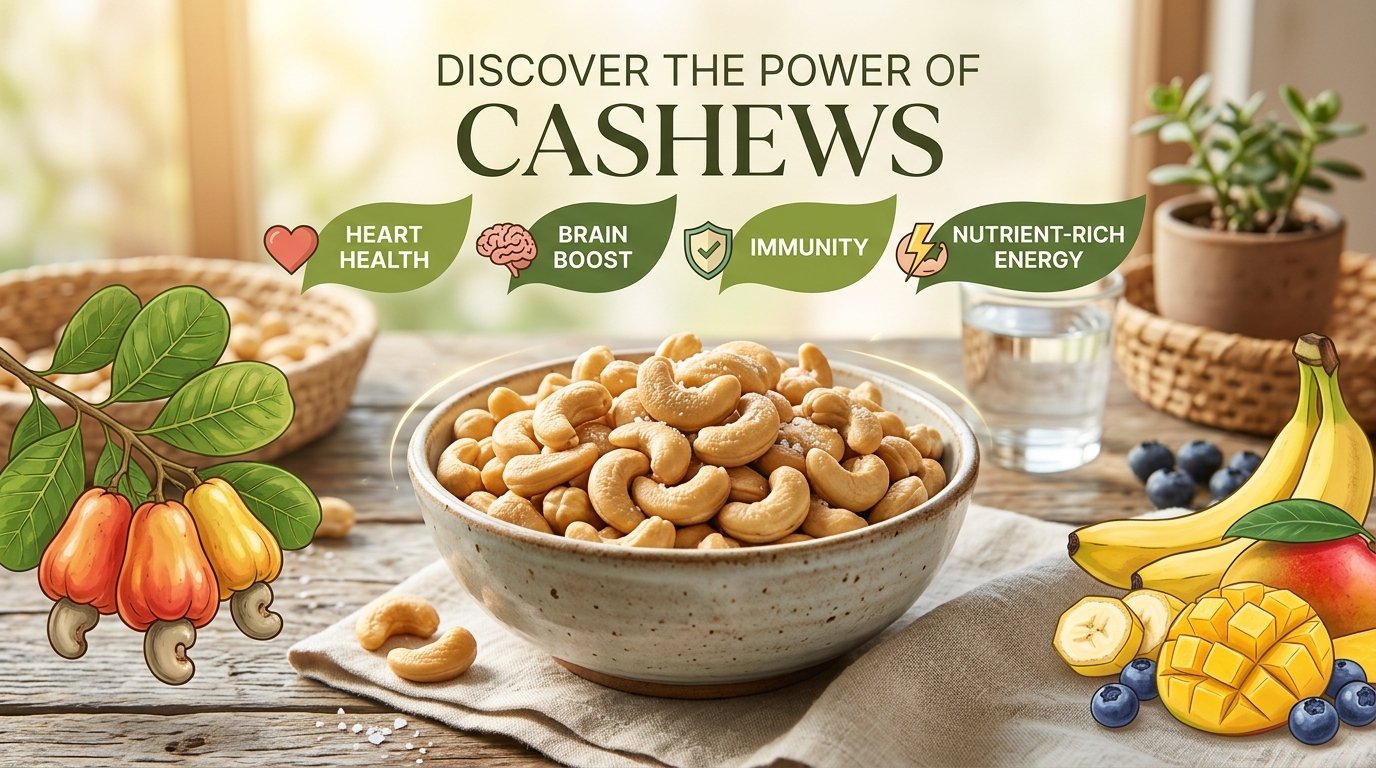
Cashews are creamy, versatile nuts that can be enjoyed as a snack or added to meals, desserts, sauces, and many other recipes. Beyond their taste, cashews provide protein, unsaturated fats, minerals, and other nutrients.
They are also relatively calorie-dense, so the goal is not to eat unlimited amounts. Instead, a moderate portion of cashews can be one nutritious component of an overall balanced diet.
In this guide, we’ll explore the potential cashew benefits, nutrition facts, and practical ways to include cashews in everyday eating.
What Are Cashews?
Cashews are the kidney-shaped seeds of the cashew tree.
They are commonly sold as:
- Raw or heat-treated
- Dry-roasted
- Oil-roasted
- Salted
- Unsalted
- Whole or broken pieces
Cashews have a naturally creamy texture, which makes them useful in both sweet and savory dishes.
You can add them to:
- Oatmeal
- Yogurt
- Salads
- Stir-fries
- Rice dishes
- Smoothies
- Homemade trail mix
- Sauces
For everyday eating, plain, unsalted, or lightly salted cashews are generally practical choices.
Cashew Nutrition Facts
A typical 1-ounce (28-gram) serving of cashews provides approximately:
| Nutrient | Approximate Amount |
|---|---|
| Calories | 157 |
| Protein | 5 g |
| Total fat | 12 g |
| Carbohydrates | 9 g |
| Fiber | 1 g |
| Magnesium | 83 mg |
| Phosphorus | 168 mg |
| Copper | 0.6 mg |
| Zinc | 1.6 mg |
| Iron | 1.9 mg |
The exact nutritional values can vary slightly depending on the product and preparation method.
Cashews provide a combination of protein, fats, carbohydrates, vitamins, and minerals, making them more nutritionally substantial than many refined snack foods.
1. Cashews Provide Mostly Unsaturated Fats
Cashews contain fat, but much of it consists of unsaturated fatty acids.
Unsaturated fats are also found in foods such as:
- Olive oil
- Avocados
- Seeds
- Other nuts
- Fatty fish
Replacing some foods high in saturated fat with foods containing more unsaturated fats can be part of a heart-conscious eating pattern.
However, cashews are still calorie-dense, so portion size matters.
2. Cashews Provide Plant-Based Protein
A 1-ounce serving of cashews provides around 5 grams of protein.
Protein is needed for many functions in the body, including maintaining and repairing tissues.
Cashews can contribute to your total daily protein intake, although they are usually best combined with other protein-rich foods.
For example:
Greek yogurt + fruit + cashews
or:
Oatmeal + milk + cashews
This can create a more balanced meal or snack.
3. Cashews Are Rich in Copper
One of the standout nutrients in cashews is copper.
Copper is an essential mineral involved in functions such as:
- Energy production
- Iron metabolism
- Nervous system function
- Connective tissue formation
Cashews can make a meaningful contribution to your daily copper intake.
Other dietary sources include:
- Seeds
- Legumes
- Shellfish
- Whole grains
- Other nuts
4. Cashews Provide Magnesium
Cashews are a useful source of magnesium.
Magnesium is involved in many normal body processes, including:
- Muscle function
- Nerve function
- Energy metabolism
- Bone health
A varied diet is the best approach for meeting magnesium needs.
Other foods that provide magnesium include:
- Pumpkin seeds
- Almonds
- Spinach
- Beans
- Whole grains
This makes cashews a useful addition to a broader nutrient-rich diet.
5. Cashews Provide Zinc
Cashews also contain zinc.
Zinc is an essential mineral involved in:
- Immune system function
- Normal cell processes
- Wound healing
- DNA and protein production
Cashews are not the only source of zinc, but they can contribute to overall intake.
Other zinc-containing foods include:
- Meat
- Seafood
- Dairy products
- Beans
- Seeds
- Other nuts
6. Cashews Can Support a Heart-Healthy Eating Pattern
Cashews contain unsaturated fats and can fit into a diet that emphasizes:
- Nuts
- Seeds
- Fruits
- Vegetables
- Whole grains
- Legumes
- Healthy oils
The key is to view cashews as part of the overall dietary pattern, not as a treatment for heart disease.
A handful of cashews can be used to replace less nutritious snack foods, rather than simply adding extra calories to an already calorie-heavy diet.
7. Cashews Provide Iron
Cashews contain some iron, which is needed for several important body functions, including the production of hemoglobin.
The iron in cashews is non-heme iron, the form found in plant foods.
Pairing plant-based iron sources with foods containing vitamin C may help support iron absorption.
For example:
Cashews + orange
or:
Cashew and chickpea salad + tomatoes
A varied diet containing legumes, vegetables, grains, nuts, and other nutrient-rich foods can help support overall iron intake.
8. Cashews Can Provide Energy for an Active Lifestyle
Cashews contain:
- Carbohydrates
- Fats
- Protein
This combination makes them a convenient source of energy.
They can work well as part of a snack when you need something portable.
For example:
Banana + a moderate serving of cashews
This combination provides carbohydrates from the banana along with fats and protein from the cashews.
Because cashews contain fat, very large amounts immediately before intense exercise may not feel comfortable for everyone.
9. Cashews Can Help Make Meals More Satisfying
Cashews have a naturally rich, creamy texture and can add crunch to meals.
Their combination of fat and protein may make meals feel more satisfying.
Try adding chopped cashews to:
- Salads
- Oatmeal
- Rice bowls
- Vegetable dishes
- Yogurt
For example:
Brown rice + vegetables + chickpeas + chopped cashews
This simple meal combines carbohydrates, protein, fiber, and healthy fats.
10. Cashews Are Versatile and Convenient
One of the biggest practical cashew benefits is versatility.
Cashews can be eaten directly from the package or used in recipes.
Breakfast
- Oatmeal with cashews and fruit
- Yogurt with cashews and berries
Lunch
- Cashew-topped salad
- Chickpea and cashew grain bowl
Dinner
- Vegetable stir-fry with cashews
- Rice with vegetables and cashews
Snacks
- Cashews + fruit
- Homemade trail mix
Because they require little preparation, cashews can be an easy alternative to some highly processed snack foods.
Cashews vs. Other Nuts
Every nut has a slightly different nutritional profile.
| Nut | Notable Nutritional Features |
|---|---|
| Cashews | Copper, magnesium, zinc |
| Almonds | Vitamin E, magnesium, fiber |
| Pistachios | Vitamin B6, protein, fiber |
| Walnuts | Alpha-linolenic acid (ALA) |
| Brazil nuts | Selenium |
There is no single “best” nut for everyone.
Eating a variety of nuts and seeds can provide a wider range of nutrients.
Cashews and Weight Management
Cashews are sometimes avoided because they contain calories and fat.
However, nutritious foods do not need to be extremely low in calories to fit into a weight-management diet.
Cashews provide:
- Protein
- Unsaturated fats
- Minerals
- A satisfying texture
The important factor is portion awareness.
A common serving is approximately:
1 ounce or 28 grams
Rather than eating continuously from a large container, place a serving in a bowl or small container.
A practical snack could be:
Cashews + an apple
This combines a calorie-dense food with a high-fiber fruit.
Raw vs. Roasted Cashews
Both can fit into a healthy diet.
The most important thing is often what is added during processing.
When buying roasted cashews, check whether they contain:
- Added oil
- Excess salt
- Sugar
- Sweet coatings
- Heavy flavorings
Simple options include:
- Unsalted cashews
- Dry-roasted cashews
- Lightly salted cashews
Choose the version that fits your preferences and overall diet.
Salted Cashews: Are They Healthy?
Salted cashews still contain the nutrients naturally found in cashews.
However, heavily salted varieties can add a significant amount of sodium to your diet.
If you eat cashews frequently, you may prefer:
- Unsalted
- Lightly salted
You can also add flavor at home using:
- Paprika
- Black pepper
- Cinnamon
- Garlic powder
- Other herbs and spices
In Part 1, we covered the nutrition of cashews and the first 10 potential benefits. Now let’s explore the remaining benefits and look at how cashews may fit into a balanced eating pattern.
Cashews are nutritious, but they are not a cure or treatment for disease. Their potential benefits are most meaningful when they are included as part of an overall diet rich in whole and minimally processed foods.
11. Cashews May Fit Into a Weight-Management Diet
Many people avoid nuts when trying to lose weight because they contain fat and calories.
However, cashews can still fit into a weight-management plan.
They provide a combination of:
- Protein
- Fat
- Some fiber
- A satisfying texture
The key is portion size.
A moderate serving can replace less nutritious snacks, while repeatedly eating large amounts directly from a bag can significantly increase calorie intake.
Practical snack idea
A small serving of cashews + an apple or orange
The fruit adds volume and fiber, while cashews add protein and healthy fats.
12. Cashews May Support Healthy Blood Sugar Management
Cashews contain a mixture of fats, protein, and carbohydrates.
When eaten as part of a balanced meal, they may be a better snack choice than many foods high in refined carbohydrates and added sugar.
For example:
Instead of a sugary snack, try:
Plain yogurt + berries + chopped cashews
The overall meal contains protein, fats, fiber, and naturally occurring carbohydrates.
However, cashews are not a treatment for diabetes or high blood sugar. Anyone managing diabetes should follow advice from their healthcare professional.
13. Cashews Provide Nutrients Important for Bone Health
Cashews contain minerals including:
- Magnesium
- Phosphorus
- Copper
These nutrients are involved in normal bone structure and other body functions.
However, bone health depends on many factors, including:
- Adequate calcium
- Vitamin D
- Physical activity
- Overall nutrition
Cashews can contribute to a balanced diet but shouldn’t be viewed as a replacement for other important sources of bone-supporting nutrients.
14. Cashews Can Contribute to Normal Immune Function
Cashews provide zinc and copper, which are essential nutrients involved in normal immune function.
However, eating large quantities of cashews will not “boost” the immune system beyond normal functioning.
A healthy immune system depends on many factors, including:
- Adequate nutrition
- Enough sleep
- Regular physical activity
- Stress management
- Vaccination and appropriate medical care
Cashews can simply contribute nutrients as one part of a healthy lifestyle.
15. Cashews Contain Antioxidant Compounds
Cashews contain naturally occurring plant compounds that can have antioxidant activity.
Antioxidants are found throughout a wide variety of plant foods, including:
- Fruits
- Vegetables
- Nuts
- Seeds
- Beans
- Whole grains
Instead of searching for one “antioxidant superfood,” aim to eat a variety of colorful plant foods.
For example:
Berries + Greek yogurt + cashews
provides a combination of nutrients from several different food groups.
16. Cashews May Support Skin and Tissue Health
Cashews provide nutrients including:
- Copper
- Zinc
- Protein
These nutrients are involved in normal body processes related to tissues and skin.
However, claims that eating cashews can cure acne, remove wrinkles, or dramatically transform your skin are not supported by strong evidence.
For healthy skin, the bigger picture matters:
- A balanced diet
- Adequate sleep
- Hydration
- Sun protection
- Appropriate skincare
Cashews can be one nutritious food within that lifestyle.
17. Cashews Can Be Useful for Plant-Based Eating
Cashews can be particularly useful in plant-based recipes because of their naturally creamy texture.
They can be blended into:
- Sauces
- Soups
- Smoothies
- Plant-based dips
They can also be added to:
- Lentil bowls
- Chickpea salads
- Rice dishes
- Vegetable stir-fries
Cashews aren’t a complete replacement for all other protein sources, but they can contribute useful nutrients to plant-based meals.
18. Cashews Can Replace Less Nutritious Snacks
One practical benefit of cashews is using them as a replacement for snacks high in added sugar or refined ingredients.
For example, instead of regularly choosing:
- Candy
- Sugary pastries
- Some highly refined snack foods
you could occasionally choose:
Cashews + fruit
The goal isn’t to label other foods as “bad.” Instead, it’s about making nutrient-dense foods a regular part of your eating pattern.
19. Cashews Can Add Flavor and Texture Without Complicated Recipes
Healthy meals don’t need to be boring.
Cashews can add:
- Crunch
- Creaminess
- Richness
- Flavor
Try them in:
Breakfast
Oatmeal + banana + chopped cashews
Lunch
Vegetable salad + chickpeas + cashews
Dinner
Brown rice + vegetables + tofu + cashews
Snack
Cashews + fruit
Small additions like these can make healthy meals more enjoyable.
20. Cashews Add Nutritional Variety
Perhaps one of the most important benefits is simply variety.
Cashews offer a nutritional profile different from:
- Almonds
- Walnuts
- Pistachios
- Peanuts
- Seeds
Rotating different nuts and seeds can help diversify your nutrient intake.
For example, you might include:
- Almonds on one day
- Pistachios on another
- Cashews another day
- Walnuts on another day
You don’t have to eat every type every week, but dietary variety is generally a useful goal.
Cashews and Heart Health
Cashews contain mostly unsaturated fats and can be part of a dietary pattern that supports cardiovascular health.
A heart-conscious eating pattern may emphasize:
- Fruits
- Vegetables
- Whole grains
- Beans and lentils
- Nuts and seeds
- Fish
- Unsaturated oils
The most useful approach is to consider what cashews are replacing.
Replacing some highly processed snacks with a moderate portion of cashews may improve the overall nutritional quality of your diet.
Cashews for Weight Loss
Cashews are sometimes considered unsuitable for weight loss because they are calorie-dense.
That isn’t necessarily true.
You can include cashews while trying to lose weight if your overall calorie intake supports your goal.
A practical strategy
Instead of eating from a large container:
- Measure a moderate serving.
- Put it in a small bowl.
- Eat slowly.
- Pair it with fruit or another high-volume food.
For example:
Cashews + apple
or:
Cashews + plain Greek yogurt + berries
This can be more satisfying than a snack based entirely on refined carbohydrates.
Cashews and Exercise
Cashews can be a convenient addition to an active lifestyle.
Before exercise
Try a small portion with a carbohydrate source:
Banana + cashews
After exercise
Combine them with a more substantial protein source:
Greek yogurt + fruit + cashews
or include them in a balanced meal containing protein, carbohydrates, and vegetables.
For intense athletic training, individual nutritional needs may differ.
Cashews vs. Almonds vs. Pistachios
Each nut has its own nutritional strengths.
| Nutrient Focus | Cashews | Almonds | Pistachios |
|---|---|---|---|
| Protein | Good | Good | Good |
| Magnesium | Good | High | Moderate |
| Vitamin E | Moderate | High | Moderate |
| Vitamin B6 | Moderate | Low | High |
| Copper | High | Moderate | Moderate |
| Fiber | Lower | Higher | Moderate |
Rather than searching for one perfect nut, including different nuts over time can provide a wider variety of nutrients.
Are Cashews Good for Men and Women?
Cashews can be part of a balanced diet for adults of any sex.
Their nutrients support general body functions rather than providing benefits exclusively for men or women.
Individual nutritional needs can vary based on:
- Age
- Activity level
- Overall diet
- Health conditions
- Energy needs
The best approach is to consider cashews as one food within a broader eating pattern.
How Many Cashews Should You Eat a Day?
A common serving size for cashews is approximately 1 ounce (28 grams).
Because cashews vary in size, the exact number of nuts in a serving can differ.
Instead of trying to count every cashew, measure a 1-ounce serving once so you can recognize an appropriate portion.
For everyday snacking, a small handful can be a practical amount.
However, the ideal portion depends on your:
- Overall calorie needs
- Activity level
- Dietary pattern
- Weight-management goals
- Other foods you eat
There is no requirement that everyone eat cashews every day.
How Many Calories Are in Cashews?
A 1-ounce (28-gram) serving of cashews contains approximately 157 calories.
They also provide around:
- 5 g protein
- 12 g fat
- 9 g carbohydrates
- 1 g fiber
This explains why cashews can be nutritious while still contributing a significant amount of energy.
Important tip
Don’t judge a food only by its calorie content.
Cashews provide nutrients that many highly processed snack foods may not provide in the same combination.
The key is portion control.
Are Cashews Good for Weight Loss?
Yes, cashews can be included in a weight-loss diet.
But they do not directly burn body fat.
Weight loss depends primarily on maintaining an appropriate energy balance over time.
Cashews may be useful because they provide:
- Protein
- Unsaturated fats
- Some fiber
- A satisfying texture
A smart way to use them
Instead of adding cashews to an already large meal, use them as a replacement for a less nutritious snack.
For example:
Instead of cookies → cashews + apple
or:
Instead of candy → cashews + orange
This approach adds nutritional value without unnecessarily increasing your total food intake.
Best Time to Eat Cashews
There isn’t one scientifically proven “best time” to eat cashews.
You can enjoy them:
In the morning
Add chopped cashews to oatmeal or yogurt.
Between meals
Have a small portion with fruit.
Before exercise
Combine a small portion with a carbohydrate source such as a banana.
After exercise
Include cashews in a meal containing protein and carbohydrates.
In the evening
Use a moderate serving as part of a balanced snack.
What matters more than timing is your overall diet and portion size.
Raw vs. Roasted Cashews
Both raw and roasted cashews can fit into a healthy diet.
However, products can differ significantly depending on how they’re prepared.
When shopping, check the ingredient list.
Simple choices
- Plain cashews
- Dry-roasted cashews
- Unsalted cashews
- Lightly salted cashews
Products to consume more selectively
- Sugar-coated cashews
- Honey-roasted cashews
- Heavily salted cashews
- Cashews covered in sweet or flavored coatings
The issue isn’t that roasted cashews are automatically unhealthy. The added ingredients can change the overall nutritional profile.
Salted vs. Unsalted Cashews
Salted cashews can still contain protein, minerals, and healthy fats.
However, heavily salted products can contribute more sodium.
If you’re trying to reduce sodium intake, choose:
Unsalted or lightly salted cashews.
You can add your own flavors using:
- Black pepper
- Paprika
- Cinnamon
- Garlic powder
- Chili powder
- Dried herbs
This gives you more control over the final amount of salt.
Can Cashews Cause Allergic Reactions?
Yes.
Cashews are tree nuts and can cause allergic reactions in people with a cashew or tree-nut allergy.
Symptoms may include:
- Itching
- Hives
- Swelling
- Vomiting
- Stomach discomfort
- Difficulty breathing
Severe allergic reactions can be life-threatening.
If you already know that you have a nut allergy, follow your healthcare professional’s advice regarding which foods to avoid.
Don’t try to test a suspected severe allergy by eating cashews yourself.
Can Cashews Cause Digestive Problems?
Cashews are tolerated well by many people, but eating a large quantity at once may cause digestive discomfort.
Possible symptoms include:
- Bloating
- Gas
- Abdominal discomfort
If you’re not used to eating nuts or fiber-rich foods, start with a smaller amount.
Eating slowly and maintaining adequate fluid intake may also help.
People with specific digestive conditions should follow individualized dietary advice.
Are Cashews Safe for Everyone?
For most people who aren’t allergic to tree nuts, cashews can be part of a balanced diet.
However, some people may need to pay particular attention to:
- Nut allergies
- Sodium intake
- Calorie intake
- Individual dietary restrictions
People with medical conditions requiring dietary restrictions should ask their healthcare professional whether cashews are appropriate for them.
How to Store Cashews
Cashews contain natural oils, so they can eventually lose freshness if stored improperly.
For short-term storage
Keep them:
- In an airtight container
- In a cool, dry place
- Away from direct sunlight
For longer storage
Refrigeration can help preserve freshness.
You can also freeze cashews for longer-term storage.
Discard cashews if they develop:
- A strong unpleasant smell
- An unusual bitter or rancid flavor
- Visible mold
- Other obvious signs of spoilage
How to Choose Healthy Cashews
When shopping, consider these factors:
1. Check the Ingredient List
Plain cashews may have a very simple ingredient list.
2. Watch Sodium
Choose unsalted or lightly salted varieties if appropriate for your diet.
3. Avoid Excessive Added Sugar
Sweet-coated cashews can contain considerably more added sugar.
4. Check Portion Size
Don’t assume that a large package represents one serving.
5. Look for Freshness
Choose products with intact packaging and good storage conditions.
5 Easy Healthy Cashew Recipes
1. Cashew Yogurt Bowl
Ingredients
- Plain Greek yogurt
- Cashews
- Berries
- Chia seeds
- Cinnamon
Preparation
Add everything to a bowl and mix.
It’s a simple breakfast or snack that combines protein, fruit, seeds, and nuts.
2. Cashew Oatmeal
Ingredients
- Oats
- Milk or plant milk
- Banana
- Chopped cashews
- Cinnamon
Preparation
Cook the oats with your preferred milk.
Top with banana, cinnamon, and cashews.
3. Cashew Chickpea Salad
Ingredients
- Chickpeas
- Cucumber
- Tomatoes
- Leafy greens
- Cashews
Add lemon juice, olive oil, black pepper, and herbs.
Mix and serve.
4. Vegetable Cashew Stir-Fry
Ingredients
- Broccoli
- Carrots
- Bell peppers
- Cashews
- Brown rice
Cook the vegetables until tender and add cashews near the end.
Serve with brown rice.
5. Simple Cashew Snack
For a no-cook option:
A moderate serving of cashews + one piece of fruit
Good combinations include:
- Cashews + apple
- Cashews + banana
- Cashews + orange
- Cashews + pear
It’s quick enough for work, school, or travel.
Cashews in a Balanced Diet
Rather than building your diet around nuts, use cashews as one component of a broader food pattern.
A balanced plate might include:
Protein
- Eggs
- Chicken
- Fish
- Beans
- Lentils
- Greek yogurt
Whole-food carbohydrates
- Oats
- Brown rice
- Quinoa
- Sweet potatoes
Vegetables and fruits
- Broccoli
- Spinach
- Carrots
- Tomatoes
- Berries
- Apples
Healthy fats
- Cashews
- Almonds
- Pistachios
- Seeds
- Avocado
- Olive oil
This approach provides much greater nutritional variety than relying on any individual “superfood.”
Cashew Benefits: The Bottom Line
Cashews are a nutrient-dense food that provides:
- Protein
- Unsaturated fats
- Magnesium
- Copper
- Zinc
- Iron
- Phosphorus
- Other nutrients and plant compounds
They can be useful in a balanced diet and may contribute to an overall eating pattern that supports heart health, adequate nutrition, weight management, and general wellness.
But there is an important distinction:
Cashews are nutritious, but more is not necessarily better.
Because they’re relatively calorie-dense, portion size matters.
A moderate serving combined with fruits, vegetables, whole grains, legumes, or other protein sources can be a practical way to enjoy them.
Frequently Asked Questions About Cashews
Are cashews good for you?
Yes. Cashews provide protein, unsaturated fats, magnesium, copper, zinc, iron, and other nutrients. They can be part of a balanced diet when eaten in appropriate portions.
How many cashews should I eat per day?
A common serving is approximately 1 ounce (28 grams). The ideal amount depends on your overall diet, calorie needs, and health goals.
Are cashews good for weight loss?
Cashews can fit into a weight-loss diet, particularly when they replace less nutritious snacks. However, they are calorie-dense, so portion control is important.
Are cashews high in protein?
Cashews provide about 5 grams of protein per 1-ounce serving. They can contribute to protein intake but aren’t usually considered a primary protein source.
Are cashews high in magnesium?
Yes. Cashews are a useful dietary source of magnesium, with roughly 83 mg per 1-ounce serving.
Are cashews good for your heart?
Cashews contain mostly unsaturated fats and can fit into a heart-healthy dietary pattern. Their benefits should be considered alongside the quality of your overall diet.
Can I eat cashews every day?
For people without a cashew or tree-nut allergy, cashews can be eaten regularly as part of a varied diet. A moderate portion is generally more practical than eating large quantities.
Are roasted cashews healthy?
Roasted cashews can be part of a healthy diet. Check the label for added salt, sugar, and oils, especially if you’re eating them frequently.
Are salted cashews healthy?
They can still provide the nutrients found in cashews, but heavily salted versions contain more sodium. Unsalted or lightly salted options may be preferable for regular consumption.
Are cashews good for digestion?
Cashews provide some dietary fiber and can contribute to a fiber-rich diet. However, eating a large amount at once may cause digestive discomfort in some people.
Are cashews good for skin?
Cashews provide nutrients such as copper, zinc, and protein that are involved in normal body functions. However, claims that cashews directly cure acne or dramatically improve skin aren’t well established.
Are cashews better than almonds?
Neither is universally better. Cashews and almonds have different nutritional profiles, so eating a variety of nuts can be a good approach.
Final Takeaway
Cashews are much more than a crunchy snack.
Their combination of healthy fats, protein, magnesium, copper, zinc, iron, and other nutrients makes them a useful addition to many different meals.
The easiest way to enjoy them is to keep portions moderate and combine them with other nutrient-rich foods.
Try:
Cashews + fruit
Cashews + Greek yogurt
Cashews + oatmeal
or
Cashews + vegetables + whole grains
You don’t need to eat cashews every day or rely on them as a “superfood.” The bigger goal is to build a diet based on variety, balance, appropriate portions, and mostly nutrient-dense foods.
Suggested Articles:
- Pistachio Benefits
- Best Natural Foods
- Best Healthy Pantry Foods
- Healthy Foods List
- Best Superfoods
- Foods Rich in Magnesium
- Foods Rich in Zinc
- Foods Rich in Iron
- Foods High in Antioxidants




Leave a Reply