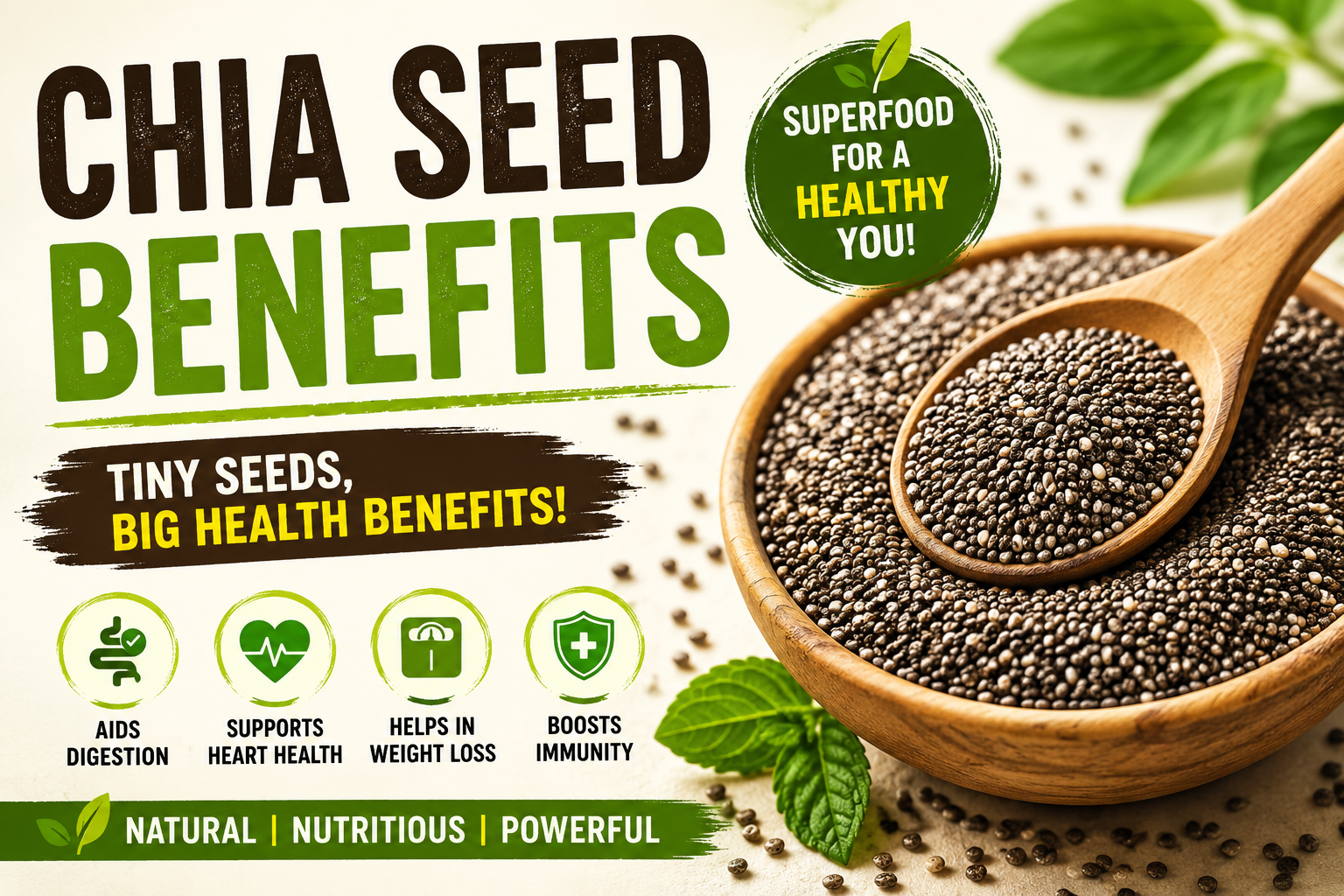
Chia seeds are tiny edible seeds that have become popular because they provide dietary fiber, healthy fats, plant-based omega-3 fatty acids, protein, and several important minerals.
Despite their small size, chia seeds are nutrient-dense. They can easily be added to foods such as oatmeal, yogurt, smoothies, salads, and homemade chia pudding.
But what exactly are the main chia seed benefits?
In this article, we’ll explore the nutrition of chia seeds and the first 10 potential benefits of adding them to a balanced diet.
What Are Chia Seeds?
Chia seeds come from the plant Salvia hispanica.
They are small, oval-shaped seeds that can be black, gray, brown, or white.
One of their most interesting characteristics is their ability to absorb liquid. When mixed with water or another liquid, chia seeds form a gel-like texture.
This makes them useful for:
- Chia pudding
- Smoothies
- Overnight oats
- Yogurt bowls
- Baking
- Homemade drinks
Chia seeds have a relatively mild flavor, so they can easily be combined with many different foods.
Chia Seed Nutrition Facts
A typical serving of chia seeds is around 2 tablespoons (28 grams).
This amount provides approximately:
| Nutrient | Approximate Amount |
|---|---|
| Calories | 130–140 |
| Protein | 4–5 g |
| Total Fat | 8–10 g |
| Carbohydrates | 11–12 g |
| Fiber | Around 10 g |
| Calcium | Useful amount |
| Magnesium | Useful amount |
| Phosphorus | Useful amount |
| Manganese | Useful amount |
Chia seeds also provide alpha-linolenic acid (ALA), a plant-based omega-3 fatty acid.
The exact nutritional values can vary slightly depending on the product.
1. Chia Seeds Are Rich in Dietary Fiber
One of the biggest chia seed benefits is their high fiber content.
A serving of approximately 2 tablespoons can provide around 10 grams of fiber.
Fiber is an important part of a balanced diet and contributes to normal digestive function.
A higher-fiber diet can include foods such as:
- Fruits
- Vegetables
- Beans
- Lentils
- Oats
- Whole grains
- Nuts
- Seeds
Because chia seeds contain a large amount of fiber in a small serving, it is usually best to increase your intake gradually if you aren’t used to eating high-fiber foods.
2. Chia Seeds Provide Plant-Based Omega-3 Fats
Chia seeds are a notable plant source of ALA omega-3 fatty acids.
ALA is an essential fatty acid, meaning it must come from the diet.
Other plant sources of ALA include:
- Walnuts
- Flaxseeds
- Hemp seeds
It’s important to remember that ALA is different from the EPA and DHA omega-3 fats found primarily in fatty fish and certain algae-based products.
Still, chia seeds can be a useful plant-based source of omega-3 fats.
3. Chia Seeds Provide Plant-Based Protein
Chia seeds provide a modest amount of plant protein.
A 2-tablespoon serving generally contains around 4–5 grams of protein.
Protein is involved in many important functions in the body.
However, chia seeds shouldn’t be your only protein source.
For a more protein-rich meal, combine them with:
- Greek yogurt
- Milk or fortified soy milk
- Eggs
- Beans
- Lentils
- Tofu
- Fish
- Chicken
Simple example
Greek yogurt + berries + chia seeds
This combination can provide protein, fiber, and a variety of nutrients.
4. Chia Seeds Provide Important Minerals
Chia seeds contain several essential minerals.
Depending on the serving size, they can contribute:
Calcium
Calcium is important for normal bone and teeth function.
Magnesium
Magnesium contributes to normal muscle and nerve function and energy metabolism.
Phosphorus
Phosphorus is involved in normal bone and energy-related functions.
Manganese
Manganese contributes to several normal metabolic processes.
Chia seeds shouldn’t be considered the only source of these nutrients, but they can contribute to your overall intake.
5. Chia Seeds Can Support Digestive Health
The high fiber content of chia seeds can contribute to overall digestive health.
When chia seeds absorb liquid, they form a gel-like texture.
For some people, combining chia seeds with enough fluids can make them easier to consume.
Easy ways to add chia seeds
Try mixing them into:
- Oatmeal
- Yogurt
- Smoothies
- Overnight oats
- Chia pudding
If your current diet is low in fiber, start with a smaller amount and increase gradually.
6. Chia Seeds Can Help You Build More Filling Meals
Chia seeds contain a combination of:
- Fiber
- Fat
- Protein
Adding them to meals can increase the fiber and nutrient content.
For example:
Basic breakfast bowl
- Greek yogurt
- Berries
- 1 tablespoon chia seeds
- A small amount of chopped nuts
This can be a more substantial option than eating a low-fiber breakfast alone.
However, individual appetite and fullness responses vary.
7. Chia Seeds Can Fit Into a Heart-Conscious Eating Pattern
Chia seeds provide:
- Unsaturated fats
- ALA omega-3 fatty acids
- Fiber
These characteristics make them compatible with many heart-conscious dietary patterns.
For example, you can include chia seeds alongside:
- Fruits
- Vegetables
- Whole grains
- Beans
- Nuts
- Seeds
- Fish
- Other nutrient-dense foods
Chia seeds are not a treatment for heart disease, and no single food can guarantee heart health.
The overall quality of your diet matters most.
8. Chia Seeds Provide Antioxidant Plant Compounds
Like many plant foods, chia seeds contain naturally occurring compounds with antioxidant activity.
They can contribute to the variety of plant foods in your diet.
For overall nutrition, aim to eat a variety of:
- Fruits
- Vegetables
- Legumes
- Whole grains
- Nuts
- Seeds
Rather than relying on one food as a “superfood,” variety is generally a better long-term approach.
9. Chia Seeds Can Support Bone-Related Nutrition
Chia seeds provide minerals including:
- Calcium
- Magnesium
- Phosphorus
- Manganese
These nutrients play different roles in normal body functions, including bone-related processes.
However, bone health depends on many factors, including:
- Adequate protein
- Calcium intake
- Vitamin D
- Physical activity
- Overall nutrition
Chia seeds can contribute to a balanced diet, but they aren’t a complete solution for bone health.
10. Chia Seeds Are Easy to Add to Many Foods
One of the most practical benefits of chia seeds is their versatility.
You can add them to many foods without significantly changing the flavor.
Breakfast
Add chia seeds to:
- Oatmeal
- Overnight oats
- Yogurt
- Smoothies
Snacks
Try:
- Chia pudding
- Yogurt with fruit and chia seeds
- Smoothies
Meals
Sprinkle a small amount over:
- Salads
- Grain bowls
- Soups
Baking
Chia seeds can also be incorporated into:
- Muffins
- Homemade energy bars
- Pancakes
Their mild flavor makes experimentation easy.
Chia Seeds vs. Other Seeds
Chia seeds are nutritious, but they aren’t the only healthy seed.
Different seeds have different nutritional strengths.
| Seed | Notable Nutritional Features |
|---|---|
| Chia seeds | Fiber and ALA omega-3 |
| Flaxseeds | ALA omega-3 and lignans |
| Pumpkin seeds | Magnesium and zinc |
| Sunflower seeds | Vitamin E |
| Sesame seeds | Minerals and healthy fats |
| Hemp seeds | Protein and unsaturated fats |
Including a variety of seeds can provide a broader range of nutrients.
Can You Eat Chia Seeds Every Day?
For many people, chia seeds can be included regularly as part of a balanced diet.
A common serving is around 1–2 tablespoons.
However, because chia seeds are high in fiber, suddenly eating a large amount may cause digestive discomfort for some people.
Starting with a smaller amount and drinking adequate fluids can be a practical approach.
11. Chia Seeds Can Support Weight Management
Chia seeds are often promoted as a weight-loss food because they contain a lot of fiber.
Fiber can contribute to feelings of fullness, which may help some people manage their overall food intake.
However, chia seeds do not directly burn body fat.
A weight-management diet still depends on your overall calorie intake, food choices, physical activity, sleep, and other lifestyle factors.
A simple weight-friendly snack
Try:
Greek yogurt + berries + 1 tablespoon chia seeds
This provides protein, fiber, and other nutrients in one simple snack.
12. Chia Seeds Can Make Breakfast More Satisfying
Adding chia seeds to breakfast is an easy way to increase its fiber content.
For example:
Chia oatmeal
- ½ cup oats
- 1 tablespoon chia seeds
- Milk or unsweetened plant milk
- Berries
- Cinnamon
The oats and chia seeds provide fiber, while milk or yogurt can increase the protein content.
13. Chia Seeds Can Help Create Balanced Snacks
Chia seeds work particularly well when combined with foods from different nutrient groups.
Instead of eating chia seeds alone, combine them with:
- Fruit
- Yogurt
- Oats
- Nuts
- Seeds
- Milk
Example
Apple + Greek yogurt + chia seeds
This combination provides carbohydrates from the fruit together with protein, fiber, and fats.
A balanced snack can be more satisfying than relying on a single ingredient.
14. Chia Seeds Can Absorb Liquid and Form a Gel
One of the most unique characteristics of chia seeds is their ability to absorb liquid.
When soaked, they develop a thick, gel-like coating.
This property makes them especially useful for:
- Chia pudding
- Overnight oats
- Smoothies
- Homemade jams
- Breakfast bowls
Basic chia pudding
Mix:
- 2 tablespoons chia seeds
- ½–¾ cup milk or fortified plant milk
Stir thoroughly and refrigerate for several hours or overnight.
Add berries or other fruit before serving.
15. Chia Seeds Can Contribute to Hydration-Focused Foods
Because chia seeds absorb liquid, they’re sometimes promoted as a hydration food.
However, chia seeds do not replace water.
Your primary source of hydration should still be adequate fluids throughout the day.
Chia seeds can simply be incorporated into foods and drinks that contain liquid.
For example:
Water + chia seeds + lemon
If you prepare a chia drink, allow the seeds to hydrate properly rather than swallowing a large quantity of dry seeds.
16. Chia Seeds Can Provide Nutrients for an Active Lifestyle
Chia seeds provide:
- Carbohydrates
- Healthy fats
- Fiber
- Plant protein
- Minerals
This makes them easy to incorporate into meals around physical activity.
Before exercise
Try a small serving of:
Oatmeal + banana + chia seeds
After exercise
Try:
Greek yogurt + berries + chia seeds
For intense or prolonged exercise, however, your nutritional needs may require more carbohydrates, protein, fluids, and electrolytes than chia seeds alone can provide.
17. Chia Seeds Can Add Texture and Nutrition to Smoothies
Chia seeds can easily be added to smoothies.
Simple smoothie
Blend:
- 1 banana
- ½ cup berries
- 1 cup milk or fortified plant milk
- 1 tablespoon chia seeds
- Plain Greek yogurt
The chia seeds add fiber and ALA omega-3 fats while thickening the smoothie slightly.
If you prefer a smoother texture, you can soak the seeds first.
18. Chia Seeds Can Be Useful in Plant-Based Diets
Chia seeds can be particularly convenient for people who eat mostly plant-based foods.
They provide:
- Plant protein
- ALA omega-3
- Fiber
- Calcium
- Magnesium
- Phosphorus
- Manganese
However, chia seeds alone cannot provide every nutrient needed in a plant-based diet.
A varied diet should include foods such as:
- Beans
- Lentils
- Tofu
- Whole grains
- Nuts
- Seeds
- Fruits
- Vegetables
- Fortified foods
19. Chia Seeds Can Support Overall Nutrient Variety
One of the advantages of chia seeds is that they provide several nutrients in a relatively small serving.
Adding them to your diet can increase your intake of:
- Fiber
- ALA omega-3
- Protein
- Calcium
- Magnesium
- Phosphorus
- Manganese
But nutrition is about the overall diet rather than individual “superfoods.”
You can get many of these nutrients from other foods as well.
The best approach is to eat a variety of nutrient-dense foods throughout the week.
20. Chia Seeds Are Versatile for Healthy Recipes
Chia seeds can be used in both sweet and savory foods.
Breakfast
- Chia pudding
- Oatmeal
- Overnight oats
- Yogurt bowls
Drinks
- Smoothies
- Chia-infused water
Meals
- Salads
- Grain bowls
- Homemade dressings
Baking
- Muffins
- Pancakes
- Homemade energy bars
Their mild flavor means they can be added to many recipes without overpowering the other ingredients.
Chia Seeds for Weight Loss: What You Should Know
You may see claims online that chia seeds “melt belly fat” or dramatically increase metabolism.
These claims are misleading.
Chia seeds can support a healthy weight-management diet, mainly because they’re rich in fiber and can make meals more nutrient-dense.
But successful weight loss generally requires a sustained calorie deficit.
A practical approach is to use chia seeds to improve the nutritional quality of meals rather than treating them as a weight-loss supplement.
Example
Instead of:
Sugary cereal + sweetened drink
Try:
Oatmeal + berries + chia seeds + plain yogurt
This provides more fiber and protein and can be more satisfying.
Chia Seeds and Blood Sugar
Chia seeds are relatively low in digestible carbohydrates and provide considerable fiber.
Adding them to carbohydrate-containing foods can create a more balanced meal.
For example:
Oats + chia seeds + berries + Greek yogurt
is more nutritionally balanced than relying on a sugary breakfast alone.
However, chia seeds aren’t a treatment for diabetes, and people with diabetes should follow their individualized nutrition and medical guidance.
Whole Chia Seeds vs. Ground Chia Seeds
Chia seeds can generally be eaten whole.
Unlike flaxseeds, which are often ground to improve access to their nutrients, chia seeds don’t necessarily need to be ground before eating.
You can use them:
Whole → yogurt, oatmeal, chia pudding
Ground → smoothies, baked goods, sauces
Both forms can be useful depending on the recipe.
Chia Seeds vs. Flaxseeds
Both chia seeds and flaxseeds are excellent plant sources of ALA omega-3 and fiber.
| Feature | Chia Seeds | Flaxseeds |
|---|---|---|
| Fiber | Very high | High |
| ALA omega-3 | High | High |
| Protein | Moderate | Moderate |
| Soaking ability | Excellent | Lower |
| Best known for | Gel-forming texture | Lignans and ALA |
| Need to grind? | Usually no | Often recommended |
Both can be useful additions to a healthy diet.
Rather than choosing only one, you can include both at different times.
Simple Ways to Eat Chia Seeds Every Day
You don’t need complicated recipes.
Morning
Add 1 tablespoon to oatmeal.
Snack
Mix chia seeds into Greek yogurt with berries.
Smoothie
Blend 1 tablespoon into your favorite smoothie.
Lunch
Sprinkle them over a salad.
Evening
Prepare chia pudding for the next morning.
Small, consistent additions can make chia seeds easier to incorporate into your regular diet.
11. Chia Seeds Can Support Weight Management
Chia seeds are often promoted as a weight-loss food because they contain a lot of fiber.
Fiber can contribute to feelings of fullness, which may help some people manage their overall food intake.
However, chia seeds do not directly burn body fat.
A weight-management diet still depends on your overall calorie intake, food choices, physical activity, sleep, and other lifestyle factors.
A simple weight-friendly snack
Try:
Greek yogurt + berries + 1 tablespoon chia seeds
This provides protein, fiber, and other nutrients in one simple snack.
12. Chia Seeds Can Make Breakfast More Satisfying
Adding chia seeds to breakfast is an easy way to increase its fiber content.
For example:
Chia oatmeal
- ½ cup oats
- 1 tablespoon chia seeds
- Milk or unsweetened plant milk
- Berries
- Cinnamon
The oats and chia seeds provide fiber, while milk or yogurt can increase the protein content.
13. Chia Seeds Can Help Create Balanced Snacks
Chia seeds work particularly well when combined with foods from different nutrient groups.
Instead of eating chia seeds alone, combine them with:
- Fruit
- Yogurt
- Oats
- Nuts
- Seeds
- Milk
Example
Apple + Greek yogurt + chia seeds
This combination provides carbohydrates from the fruit together with protein, fiber, and fats.
A balanced snack can be more satisfying than relying on a single ingredient.
14. Chia Seeds Can Absorb Liquid and Form a Gel
One of the most unique characteristics of chia seeds is their ability to absorb liquid.
When soaked, they develop a thick, gel-like coating.
This property makes them especially useful for:
- Chia pudding
- Overnight oats
- Smoothies
- Homemade jams
- Breakfast bowls
Basic chia pudding
Mix:
- 2 tablespoons chia seeds
- ½–¾ cup milk or fortified plant milk
Stir thoroughly and refrigerate for several hours or overnight.
Add berries or other fruit before serving.
15. Chia Seeds Can Contribute to Hydration-Focused Foods
Because chia seeds absorb liquid, they’re sometimes promoted as a hydration food.
However, chia seeds do not replace water.
Your primary source of hydration should still be adequate fluids throughout the day.
Chia seeds can simply be incorporated into foods and drinks that contain liquid.
For example:
Water + chia seeds + lemon
If you prepare a chia drink, allow the seeds to hydrate properly rather than swallowing a large quantity of dry seeds.
16. Chia Seeds Can Provide Nutrients for an Active Lifestyle
Chia seeds provide:
- Carbohydrates
- Healthy fats
- Fiber
- Plant protein
- Minerals
This makes them easy to incorporate into meals around physical activity.
Before exercise
Try a small serving of:
Oatmeal + banana + chia seeds
After exercise
Try:
Greek yogurt + berries + chia seeds
For intense or prolonged exercise, however, your nutritional needs may require more carbohydrates, protein, fluids, and electrolytes than chia seeds alone can provide.
17. Chia Seeds Can Add Texture and Nutrition to Smoothies
Chia seeds can easily be added to smoothies.
Simple smoothie
Blend:
- 1 banana
- ½ cup berries
- 1 cup milk or fortified plant milk
- 1 tablespoon chia seeds
- Plain Greek yogurt
The chia seeds add fiber and ALA omega-3 fats while thickening the smoothie slightly.
If you prefer a smoother texture, you can soak the seeds first.
18. Chia Seeds Can Be Useful in Plant-Based Diets
Chia seeds can be particularly convenient for people who eat mostly plant-based foods.
They provide:
- Plant protein
- ALA omega-3
- Fiber
- Calcium
- Magnesium
- Phosphorus
- Manganese
However, chia seeds alone cannot provide every nutrient needed in a plant-based diet.
A varied diet should include foods such as:
- Beans
- Lentils
- Tofu
- Whole grains
- Nuts
- Seeds
- Fruits
- Vegetables
- Fortified foods
19. Chia Seeds Can Support Overall Nutrient Variety
One of the advantages of chia seeds is that they provide several nutrients in a relatively small serving.
Adding them to your diet can increase your intake of:
- Fiber
- ALA omega-3
- Protein
- Calcium
- Magnesium
- Phosphorus
- Manganese
But nutrition is about the overall diet rather than individual “superfoods.”
You can get many of these nutrients from other foods as well.
The best approach is to eat a variety of nutrient-dense foods throughout the week.
20. Chia Seeds Are Versatile for Healthy Recipes
Chia seeds can be used in both sweet and savory foods.
Breakfast
- Chia pudding
- Oatmeal
- Overnight oats
- Yogurt bowls
Drinks
- Smoothies
- Chia-infused water
Meals
- Salads
- Grain bowls
- Homemade dressings
Baking
- Muffins
- Pancakes
- Homemade energy bars
Their mild flavor means they can be added to many recipes without overpowering the other ingredients.
Chia Seeds for Weight Loss: What You Should Know
You may see claims online that chia seeds “melt belly fat” or dramatically increase metabolism.
These claims are misleading.
Chia seeds can support a healthy weight-management diet, mainly because they’re rich in fiber and can make meals more nutrient-dense.
But successful weight loss generally requires a sustained calorie deficit.
A practical approach is to use chia seeds to improve the nutritional quality of meals rather than treating them as a weight-loss supplement.
Example
Instead of:
Sugary cereal + sweetened drink
Try:
Oatmeal + berries + chia seeds + plain yogurt
This provides more fiber and protein and can be more satisfying.
Chia Seeds and Blood Sugar
Chia seeds are relatively low in digestible carbohydrates and provide considerable fiber.
Adding them to carbohydrate-containing foods can create a more balanced meal.
For example:
Oats + chia seeds + berries + Greek yogurt
is more nutritionally balanced than relying on a sugary breakfast alone.
However, chia seeds aren’t a treatment for diabetes, and people with diabetes should follow their individualized nutrition and medical guidance.
Whole Chia Seeds vs. Ground Chia Seeds
Chia seeds can generally be eaten whole.
Unlike flaxseeds, which are often ground to improve access to their nutrients, chia seeds don’t necessarily need to be ground before eating.
You can use them:
Whole → yogurt, oatmeal, chia pudding
Ground → smoothies, baked goods, sauces
Both forms can be useful depending on the recipe.
Chia Seeds vs. Flaxseeds
Both chia seeds and flaxseeds are excellent plant sources of ALA omega-3 and fiber.
| Feature | Chia Seeds | Flaxseeds |
|---|---|---|
| Fiber | Very high | High |
| ALA omega-3 | High | High |
| Protein | Moderate | Moderate |
| Soaking ability | Excellent | Lower |
| Best known for | Gel-forming texture | Lignans and ALA |
| Need to grind? | Usually no | Often recommended |
Both can be useful additions to a healthy diet.
Rather than choosing only one, you can include both at different times.
Simple Ways to Eat Chia Seeds Every Day
You don’t need complicated recipes.
Morning
Add 1 tablespoon to oatmeal.
Snack
Mix chia seeds into Greek yogurt with berries.
Smoothie
Blend 1 tablespoon into your favorite smoothie.
Lunch
Sprinkle them over a salad.
Evening
Prepare chia pudding for the next morning.
Small, consistent additions can make chia seeds easier to incorporate into your regular diet.
Suggested Article’s:
- Best Natural Foods
- Best Healthy Pantry Foods
- Best Nuts for Daily Eating
- Mixed Nuts Benefits
- Foods Rich in Zinc
- Foods Rich in Iron
- Best Foods for Weight Loss
- Pistachio Benefits
- Walnut Benefits




Leave a Reply