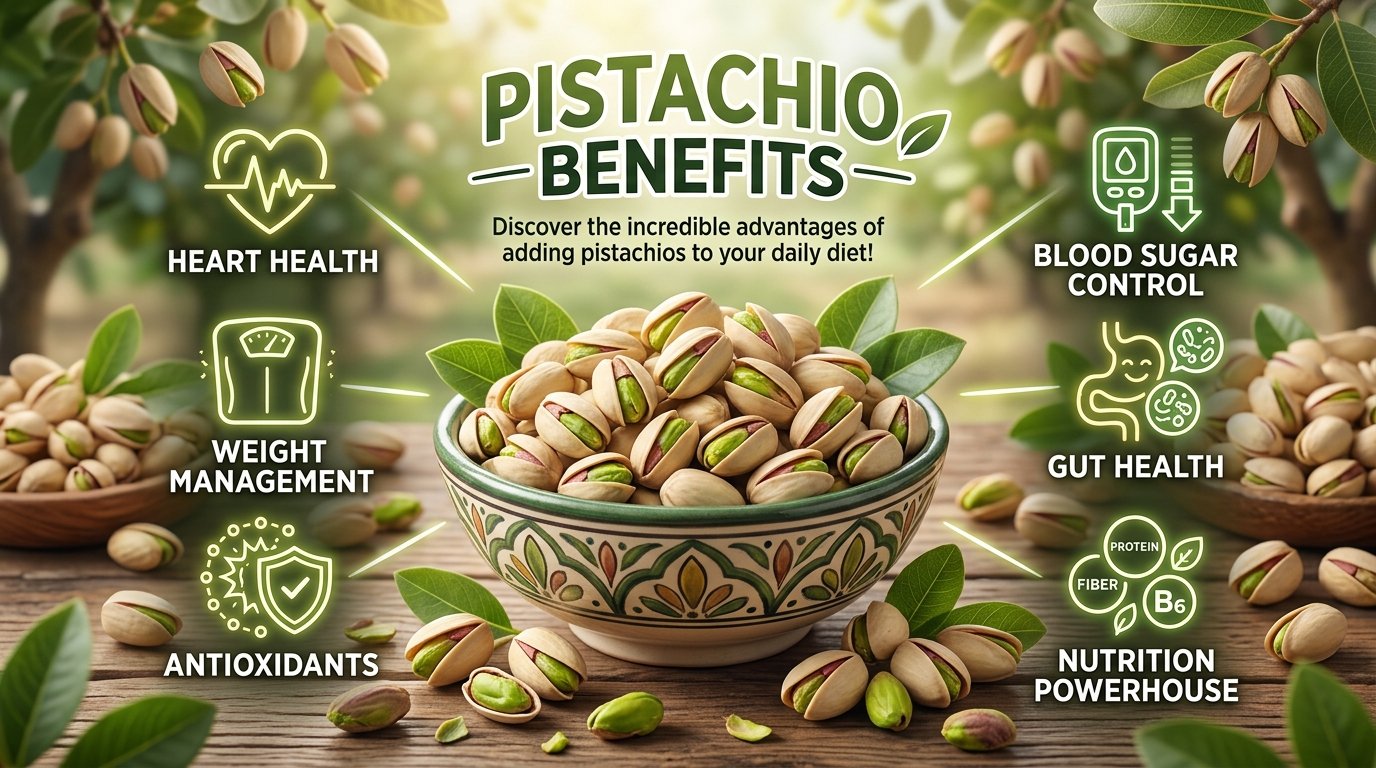
Pistachios are small, flavorful nuts that can do much more than add crunch to a snack or dessert. They provide protein, fiber, unsaturated fats, vitamins, minerals, and other naturally occurring plant compounds, making them a useful addition to a balanced diet.
Whether you eat them as a snack, sprinkle them over yogurt, or add them to salads and oatmeal, pistachios are an easy way to increase the nutritional variety of your meals.
In this guide, we’ll explore the potential pistachio benefits, their nutritional profile, how they may support heart health and weight management, and practical ways to include them in your diet.
What Are Pistachios?
Pistachios are the edible seeds of the pistachio tree, which belongs to the cashew family.
They are usually sold:
- In their shells
- Shelled
- Raw
- Roasted
- Salted
- Unsalted
Pistachios have a naturally mild, slightly sweet flavor and a distinctive green-and-purple appearance.
They can be eaten alone or incorporated into many foods, including:
- Yogurt
- Oatmeal
- Salads
- Rice dishes
- Smoothies
- Homemade trail mix
- Desserts
For everyday nutrition, unsalted or lightly salted pistachios are generally practical choices.
Pistachio Nutrition
Pistachios are relatively energy-dense, but they also provide several nutrients.
A typical 1-ounce (28-gram) serving of shelled pistachios provides roughly:
| Nutrient | Approximate Amount |
|---|---|
| Calories | 159 |
| Protein | 5.7 g |
| Total fat | 12.8 g |
| Carbohydrates | 7.7 g |
| Fiber | 2.9 g |
| Potassium | 290 mg |
| Phosphorus | 139 mg |
| Vitamin B6 | 0.48 mg |
| Copper | 0.37 mg |
Exact amounts can vary depending on the variety and product.
One important point is that pistachios contain a combination of protein, fiber, and fat, which makes them different from many highly refined snack foods.
1. Pistachios Provide Plant Protein
One of the major benefits of pistachios is their protein content.
A 28-gram serving provides approximately 5–6 grams of protein.
Protein is important for:
- Maintaining muscles
- Supporting normal body tissues
- Producing enzymes and hormones
- Helping create satisfying meals
Pistachios aren’t a complete replacement for major protein sources such as eggs, fish, dairy, meat, beans, or lentils, but they can make a useful contribution to your overall protein intake.
Easy idea
Add pistachios to Greek yogurt or oatmeal for a more substantial breakfast or snack.
2. Pistachios Contain Dietary Fiber
Pistachios provide dietary fiber, with roughly 3 grams per ounce.
Fiber is important for digestive health and can contribute to feelings of fullness.
Adding fiber-rich foods to meals may also make it easier to build a balanced diet.
Other good sources of fiber include:
- Lentils
- Beans
- Chickpeas
- Oats
- Fruits
- Vegetables
- Seeds
Instead of depending on a single food for fiber, aim for variety throughout the day.
3. They Provide Mostly Unsaturated Fats
Although pistachios contain a significant amount of fat, much of that fat is unsaturated.
Unsaturated fats are commonly found in foods such as:
- Nuts
- Seeds
- Avocados
- Olive oil
- Fatty fish
Replacing some foods high in saturated fats with foods rich in unsaturated fats can be part of a heart-friendly eating pattern.
This is one reason nuts can fit comfortably into a balanced diet.
4. Pistachios May Support Heart Health
One of the most widely discussed pistachio benefits is their potential role in cardiovascular health.
Pistachios provide:
- Unsaturated fats
- Fiber
- Potassium
- Plant compounds
Research on nuts overall suggests that regular nut consumption can be associated with favorable cardiovascular outcomes.
However, pistachios should be viewed as one part of an overall heart-healthy eating pattern, rather than a treatment for heart disease.
A balanced diet also includes:
- Vegetables
- Fruits
- Whole grains
- Legumes
- Fish
- Healthy oils
5. Pistachios Can Be a Useful Weight-Management Snack
Despite containing a considerable number of calories, pistachios can fit into a weight-management diet.
Why?
They provide a combination of:
- Protein
- Fiber
- Fat
- Texture
These characteristics can make a moderate serving more satisfying than some highly refined snack foods.
However, pistachios are still calorie-dense.
Eating several large handfuls can quickly increase calorie intake.
Practical portion
A common serving is around:
1 ounce (28 grams)
You can portion this into a small container instead of eating directly from a large bag.
6. Pistachios Provide Vitamin B6
Pistachios are particularly notable for their vitamin B6 content.
Vitamin B6 plays several roles in the body, including supporting:
- Normal metabolism
- Nervous system function
- Red blood cell formation
- Immune function
A single serving of pistachios can contribute a meaningful amount of vitamin B6 toward daily needs.
This doesn’t mean pistachios should be used as a supplement, but they can contribute to overall nutrient intake.
7. They Provide Copper
Pistachios also contain copper.
Copper is an essential mineral involved in several biological processes, including:
- Energy production
- Connective tissue formation
- Iron metabolism
- Normal nervous system function
Eating a varied diet is the best way to obtain copper and other essential minerals.
Other foods containing copper include:
- Seeds
- Shellfish
- Legumes
- Whole grains
- Other nuts
Pistachios and Antioxidants
Pistachios contain naturally occurring plant compounds, including carotenoids and polyphenols.
These compounds have antioxidant properties.
Interestingly, the green and purple colors found in pistachios come partly from naturally occurring plant pigments.
Antioxidants are compounds that help protect cells from oxidative damage.
However, it’s important not to interpret this as meaning that eating pistachios can prevent or cure diseases.
A diet containing a variety of colorful fruits, vegetables, nuts, seeds, and whole grains provides a much broader range of plant compounds.
8. Pistachios Add More Variety to a Healthy Diet
One underrated benefit of pistachios is simply their versatility.
You can use them in both sweet and savory foods.
Breakfast
- Oatmeal + pistachios + berries
- Greek yogurt + pistachios + banana
Lunch
- Green salad + pistachios
- Quinoa bowl + vegetables + pistachios
Dinner
- Pistachio-crusted fish
- Rice with vegetables and chopped pistachios
Snacks
- Pistachios + fruit
- Pistachios + plain yogurt
Eating a variety of foods can make a healthy diet easier to maintain.
9. Pistachios Can Make Meals More Satisfying
Texture plays a surprisingly useful role in eating.
Pistachios provide a combination of:
- Crunch
- Fat
- Protein
- Fiber
Adding a small portion to a meal can make a simple dish feel more substantial.
For example, instead of eating plain yogurt, try:
Greek yogurt + berries + pistachios
Or turn a simple salad into:
Leafy greens + chickpeas + tomatoes + pistachios + olive oil
The pistachios add texture without requiring complicated ingredients.
10. Pistachios Are a Convenient Snack
One of the simplest benefits is convenience.
Pistachios require little preparation and can be carried to:
- Work
- School
- Travel
- The gym
- Outdoor activities
For an easy snack, combine a moderate serving of pistachios with:
- An apple
- A banana
- Orange
- Berries
This can be more nutritionally balanced than relying on highly processed snack foods.
Shelled vs. In-Shell Pistachios
Both forms can be nutritious.
However, pistachios in their shells may have one practical advantage: they take longer to eat.
Opening each shell can naturally slow down snacking.
Shelled pistachios are more convenient for:
- Cooking
- Baking
- Oatmeal
- Salads
- Smoothies
If you tend to eat mindlessly from a large bag, buying in-shell pistachios may make portion awareness easier.
Raw vs. Roasted Pistachios
Both raw and roasted pistachios can fit into a healthy diet.
The bigger consideration is often what has been added during processing.
When buying roasted pistachios, check for:
- Added salt
- Added oils
- Sugar
- Flavoring ingredients
For regular snacking, dry-roasted and unsalted or lightly salted pistachios are simple options.
Salted Pistachios: Are They Healthy?
Salted pistachios can still provide the nutrients naturally found in pistachios.
However, eating large amounts of heavily salted nuts can substantially increase sodium intake.
If you’re trying to reduce sodium, choose:
- Unsalted pistachios
- Lightly salted varieties
You can also buy plain pistachios and season them yourself with spices such as:
- Paprika
- Black pepper
- Cinnamon
- Garlic powder
This gives you more control over the flavor.
How Many Pistachios Should You Eat?
A commonly used serving size is approximately 1 ounce (28 grams) of shelled pistachios.
The exact number of individual nuts varies because pistachios differ in size.
Rather than counting every pistachio, measuring a serving once can help you learn what an appropriate portion looks like.
For weight management, avoid assuming that because pistachios are nutritious, unlimited amounts are appropriate.
They are still energy-dense.
Best Ways to Eat Pistachios
Here are some easy ideas:
1. Pistachios With Fruit
Pistachios + apple
2. Pistachio Yogurt Bowl
Greek yogurt + berries + pistachios
3. Pistachio Oatmeal
Oats + banana + cinnamon + pistachios
4. Salad Topping
Add chopped pistachios to:
- Spinach
- Tomatoes
- Cucumber
- Chickpeas
5. Grain Bowl
Combine:
Quinoa + vegetables + chickpeas + pistachios
Part 1 Summary
The first 10 pistachio benefits we’ve covered are:
- Provide plant protein
- Contain dietary fiber
- Provide mostly unsaturated fats
- May support heart health
- Can fit into a weight-management diet
- Provide vitamin B6
- Provide copper
- Contain antioxidant plant compounds
- Add variety and texture to meals
- Make a convenient snack
Pistachios aren’t a miracle food, but their combination of protein, fiber, unsaturated fats, vitamins, minerals, and plant compounds makes them a valuable addition to a varied diet.
11. Pistachios May Help Support Healthy Cholesterol Levels
Pistachios contain mostly unsaturated fats, fiber, and plant compounds.
Research on pistachios and other nuts suggests that incorporating nuts into the diet may have favorable effects on blood lipid profiles, particularly when they replace foods higher in saturated fat.
For example, instead of using highly processed snacks, you could have:
A small serving of pistachios + fresh fruit
The key is replacement, not simply adding large amounts of pistachios on top of an already high-calorie diet.
12. Pistachios May Help With Blood Sugar Management
Pistachios contain relatively little carbohydrate compared with many common snack foods and provide protein, fat, and fiber.
Some research has investigated pistachios as part of meals and their effects on post-meal blood glucose.
One practical strategy is to combine pistachios with carbohydrate-containing foods rather than eating highly refined carbohydrates alone.
For example:
Apple + pistachios
or:
Oatmeal + pistachios + berries
This creates a more balanced snack or meal.
Pistachios are not a treatment for diabetes, however, and people managing blood glucose should follow individualized dietary advice from their healthcare professional.
13. They Can Contribute to a Fiber-Rich Diet
Fiber is important for digestive health and overall diet quality.
Pistachios provide around 3 grams of fiber per ounce.
That may not seem like a huge amount, but small contributions add up when you also eat:
- Beans
- Lentils
- Whole grains
- Vegetables
- Fruits
- Seeds
A high-fiber eating pattern is much more important than relying on pistachios alone.
14. Pistachios May Support Digestive Health
The fiber found in pistachios can contribute to normal digestive function.
Pistachios also contain compounds that have been studied for their potential relationship with the gut microbiome.
The gut microbiome is influenced by the overall diet, particularly the variety of plant foods consumed.
For better digestive health, combine pistachios with other fiber-rich foods such as:
- Oats
- Apples
- Berries
- Lentils
- Chickpeas
- Vegetables
Increasing fiber gradually and drinking enough fluids can also be helpful.
15. Pistachios Provide Potassium
Pistachios contain potassium, an essential mineral involved in:
- Muscle function
- Nerve function
- Fluid balance
- Normal blood pressure regulation
However, pistachios shouldn’t be your only source of potassium.
Other potassium-rich foods include:
- Bananas
- Potatoes
- Beans
- Lentils
- Avocados
- Leafy greens
- Yogurt
A varied diet makes it easier to obtain a broad range of nutrients.
16. Pistachios Contain Nutrients Important for Normal Eye Health
Pistachios contain carotenoids such as lutein and zeaxanthin.
These naturally occurring plant pigments are found in the eye and have been studied for their role in eye health.
Including pistachios alongside other colorful foods can increase dietary variety.
Other sources of carotenoids include:
- Spinach
- Kale
- Corn
- Eggs
- Peppers
- Broccoli
No single food can guarantee protection against eye disease, so think of pistachios as one component of a varied diet.
17. Pistachios Can Be Useful for Active People
People who exercise regularly need adequate energy and nutrients.
Pistachios can be incorporated into snacks before or after physical activity.
For example:
Pre-workout snack
Banana + small serving of pistachios
Post-workout snack
Greek yogurt + berries + pistachios
The ideal snack depends on the intensity and duration of your activity as well as your individual nutritional needs.
Pistachios aren’t a specialized sports supplement, but they can contribute protein, fats, and calories to an overall eating plan.
18. Pistachios Can Help Make a Weight-Loss Diet More Enjoyable
Weight loss doesn’t require eating bland food.
Pistachios can add:
- Crunch
- Flavor
- Texture
- Healthy fats
to otherwise simple meals.
For example:
Vegetable salad + chickpeas + pistachios
can be much more satisfying than plain vegetables alone.
However, pistachios should still be portion-controlled because their calorie density is relatively high.
A useful strategy
Instead of eating pistachios directly from a large package, place a measured serving into a small bowl.
This makes it easier to keep track of how much you’re eating.
19. Pistachios Can Replace Less Nutritious Snacks
One of the most useful ways to benefit from pistachios is to use them as a replacement food.
For example, instead of:
- Candy
- Sugary cookies
- Highly refined snack foods
you could choose:
Pistachios + fruit
This doesn’t mean you can never eat cookies or chocolate.
The bigger goal is to make nutrient-dense foods a regular part of your diet.
20. Pistachios Can Add Nutritional Variety
Perhaps the most practical benefit is simply that pistachios make it easier to diversify your diet.
You can use them in:
Breakfast
- Oatmeal
- Yogurt
- Smoothie bowls
Lunch
- Salads
- Grain bowls
- Wraps
Dinner
- Rice dishes
- Roasted vegetables
- Fish toppings
Snacks
- Fruit and pistachios
- Pistachios with yogurt
- Homemade trail mix
A healthy diet isn’t built around one food. It is built around variety.
Pistachios for Weight Loss: What Does the Evidence Suggest?
Pistachios can be included in a weight-loss diet, but they are not a fat-burning food.
Successful weight management generally depends on the overall balance between energy intake, physical activity, food quality, sleep, and other lifestyle factors.
Pistachios can be useful because they provide:
- Protein
- Fiber
- Unsaturated fats
- A satisfying crunchy texture
But remember:
Healthy does not mean calorie-free.
A large amount of pistachios can provide a substantial number of calories.
Better approach
Measure approximately one serving and combine it with fruit or another nutritious food.
Pistachios and Heart Health
Pistachios can fit well into a heart-conscious eating pattern because they provide predominantly unsaturated fats and several micronutrients.
Instead of focusing on pistachios alone, consider the bigger picture:
Eat more often
- Nuts
- Seeds
- Vegetables
- Fruits
- Whole grains
- Beans
- Fish
Limit excessive intake of
- Highly processed foods
- Foods high in saturated fat
- Excess sodium
- Sugar-sweetened drinks
Dietary patterns matter much more than one individual food.
Pistachios for a High-Protein Diet
Pistachios can contribute protein, but they shouldn’t be considered a primary protein source for everyone.
A serving provides approximately 5–6 grams of protein.
For a higher-protein meal, combine pistachios with another protein source.
Example
Greek yogurt + pistachios + berries
or:
Chicken + vegetables + pistachio topping
or:
Lentils + quinoa + pistachios
These combinations provide considerably more protein than pistachios alone.
Pistachios vs. Other Nuts
Different nuts have different nutritional profiles.
| Nut | Notable Nutrients |
|---|---|
| Pistachios | Protein, fiber, vitamin B6 |
| Almonds | Vitamin E, magnesium |
| Walnuts | Alpha-linolenic acid (ALA) |
| Cashews | Copper, magnesium |
| Peanuts | Protein, niacin |
There isn’t one universally “best” nut.
Eating different types can provide greater nutritional variety.
Are Pistachios Good for Skin?
Pistachios provide nutrients such as vitamin B6, copper, and unsaturated fats.
These nutrients contribute to normal body functions, including processes involved in maintaining tissues.
However, claims that pistachios directly “clear skin,” “remove wrinkles,” or “cure acne” are much stronger than the evidence supports.
For healthy skin, the bigger picture includes:
- Adequate nutrition
- Hydration
- Sun protection
- Sleep
- Appropriate skincare
Pistachios can be part of that overall healthy lifestyle.
Are Pistachios Good for Men and Women?
Pistachios can be included in a healthy diet for adults of any sex.
Their nutrients support general health rather than being exclusive to men or women.
Their protein, fiber, unsaturated fats, minerals, and vitamins can contribute to a balanced eating pattern.
Individual nutritional requirements vary based on age, activity level, health status, and other factors.
How to Add More Pistachios to Your Diet
You don’t need complicated recipes.
Try these simple ideas:
Morning
Add chopped pistachios to oatmeal.
Midday
Sprinkle pistachios over a salad.
Afternoon
Pair a serving with an apple.
Evening
Use crushed pistachios as a topping for fish or roasted vegetables.
Dessert
Add a small amount to plain Greek yogurt with berries.
We’ve covered 20 potential benefits of pistachios. Now let’s focus on how to eat them, how much to eat, calories, possible downsides, storage, recipes, and common questions.
Pistachios can be a nutritious addition to your diet, but like any calorie-dense food, they work best when eaten in appropriate portions.
How Many Pistachios Should You Eat a Day?
A common serving size is approximately 1 ounce (28 grams) of shelled pistachios.
Because pistachios vary in size, the exact number of individual nuts can differ.
Rather than focusing on an exact number, use the serving size on the nutrition label.
For most people, a small handful is a practical starting point.
For weight management
Measure your portion before eating rather than continuously snacking from a large bag.
For a general healthy diet
Pistachios can be included regularly as part of a varied diet containing other nuts, seeds, fruits, vegetables, whole grains, and protein sources.
There is no universal requirement that everyone must eat pistachios every day.
How Many Calories Are in Pistachios?
A 1-ounce (28-gram) serving of shelled pistachios contains approximately 159 calories.
This is important because pistachios are nutritious but energy-dense.
For comparison, eating several large handfuls can quickly turn a small snack into a substantial amount of calories.
If you’re trying to lose weight, you don’t necessarily need to avoid pistachios. Instead:
- Measure portions
- Choose unsalted varieties
- Pair them with fruit
- Use them as a replacement for less nutritious snacks
Pistachios for Weight Loss: How to Eat Them
If you’re trying to lose weight, consider using pistachios strategically.
Option 1
Apple + pistachios
Option 2
Greek yogurt + berries + pistachios
Option 3
Carrots + hummus + pistachios
Option 4
Oatmeal + berries + pistachios
These combinations provide a mixture of nutrients and textures.
The important point is that pistachios should replace some less nutritious foods rather than simply being added on top of your existing calorie intake.
Should You Eat Pistachios With the Shell?
In-shell pistachios can be useful for people who tend to snack quickly.
The process of opening each shell naturally slows eating and may make you more aware of how much you’ve consumed.
Shelled pistachios are more convenient for:
- Cooking
- Baking
- Salads
- Oatmeal
- Yogurt
- Smoothies
Both forms can be part of a healthy diet.
Salted vs. Unsalted Pistachios
If you’re eating pistachios regularly, unsalted or lightly salted varieties are often practical choices.
Heavily salted pistachios can contribute a substantial amount of sodium.
This is particularly relevant if you’re already consuming many packaged foods.
Better everyday options
- Raw unsalted
- Dry-roasted unsalted
- Lightly salted
Occasional options
- Heavily salted
- Honey-roasted
- Sugar-coated
- Flavored varieties with added ingredients
Check the nutrition label because products vary considerably.
Raw vs. Roasted Pistachios
Both raw and roasted pistachios can fit into a nutritious diet.
Roasting can change the flavor and texture without automatically making pistachios unhealthy.
When choosing roasted pistachios, check whether the product contains:
- Added oils
- Extra salt
- Sugar
- Sweet coatings
A simple ingredient list is often easiest for everyday use.
Possible Pistachio Allergy
One of the most important considerations is tree-nut allergy.
Pistachios are tree nuts and can cause allergic reactions in people who are allergic to them.
Symptoms can range from mild to severe and may include:
- Itching
- Hives
- Swelling
- Stomach symptoms
- Breathing difficulties
People with a known tree-nut allergy should follow advice from their healthcare professional and avoid foods that may trigger their allergy.
Severe allergic reactions require urgent medical attention.
Can Pistachios Cause Digestive Problems?
Pistachios contain fiber, which is beneficial for many people.
However, suddenly eating a large amount of high-fiber foods can cause digestive discomfort in some individuals.
Possible symptoms may include:
- Bloating
- Gas
- Abdominal discomfort
If you’re increasing your fiber intake, do it gradually and make sure you’re drinking enough fluids.
People with specific digestive conditions may need individualized dietary advice.
Are Pistachios Safe for Everyone?
For most people without an allergy, pistachios can be part of a balanced diet.
However, people with certain medical conditions or dietary restrictions may need personalized guidance.
For example, some individuals may need to monitor:
- Sodium intake
- Potassium intake
- Calories
- Nut allergies
If you have a medical condition requiring dietary restrictions, ask your healthcare professional whether pistachios fit your eating plan.
Pistachio Storage Tips
Pistachios contain natural oils, so improper storage can eventually affect their flavor and freshness.
For short-term storage
Keep pistachios in:
- An airtight container
- A cool, dry place
- Away from direct sunlight
For longer storage
Refrigeration or freezing can help preserve freshness.
If pistachios develop an unusual smell, bitter taste, or other signs of spoilage, don’t eat them.
How to Choose Good-Quality Pistachios
When shopping, look for:
1. Minimal Added Ingredients
Plain pistachios are simple and versatile.
2. Lower Sodium
Choose unsalted or lightly salted if you want to limit sodium.
3. Fresh Aroma
Fresh pistachios should have a pleasant nutty smell.
4. Proper Packaging
Choose sealed packages without obvious damage.
5. Appropriate Portion Packaging
Single-serving packs can make portion control easier if you tend to overeat nuts.
Easy Healthy Pistachio Recipes
1. Pistachio Yogurt Bowl
Ingredients
- Plain Greek yogurt
- Pistachios
- Berries
- Chia seeds
Method
Add everything to a bowl and mix.
That’s it.
2. Pistachio Oatmeal
Ingredients
- Oats
- Milk or plant milk
- Banana
- Cinnamon
- Chopped pistachios
Method
Cook oats with milk.
Top with banana, cinnamon, and pistachios.
3. Pistachio Salad
Ingredients
- Spinach
- Tomatoes
- Cucumber
- Chickpeas
- Pistachios
Add:
- Olive oil
- Lemon juice
- Black pepper
Toss together and serve.
4. Pistachio-Crusted Salmon
Ingredients
- Salmon
- Crushed pistachios
- Lemon
- Black pepper
- Herbs
Press crushed pistachios onto the salmon and bake until the fish is properly cooked.
Serve with broccoli or another vegetable.
5. Simple Pistachio Snack
For a quick snack:
1 serving pistachios + 1 piece of fruit
Try:
- Apple
- Orange
- Banana
- Pear
This requires almost no preparation.
Pistachios in a Balanced Diet
A useful way to think about pistachios is as a supporting ingredient, not the foundation of your diet.
Your overall diet can include:
Protein
- Eggs
- Fish
- Chicken
- Greek yogurt
- Beans
- Lentils
Whole grains
- Oats
- Brown rice
- Quinoa
- Whole-grain bread
Fruits and vegetables
- Apples
- Berries
- Broccoli
- Leafy greens
- Carrots
Healthy fats
- Pistachios
- Almonds
- Walnuts
- Seeds
- Avocado
- Olive oil
This approach gives you more nutritional variety than relying heavily on any single food.
Pistachio Benefits: The Bottom Line
Pistachios are a nutrient-dense food that can provide:
- Protein
- Fiber
- Unsaturated fats
- Vitamin B6
- Copper
- Potassium
- Plant compounds
- Carotenoids
They may also fit well into eating patterns designed to support heart health, balanced nutrition, weight management, and overall diet quality.
But pistachios aren’t a miracle food.
The biggest benefits come from including them as part of an overall diet rich in fruits, vegetables, whole grains, legumes, fish, and other nutritious foods.
And because pistachios contain a significant amount of calories, portion size matters.
Frequently Asked Questions About Pistachios
Are pistachios good for you?
Yes. Pistachios provide protein, fiber, unsaturated fats, vitamins, minerals, and plant compounds. They can be part of a balanced diet when eaten in appropriate portions.
How many pistachios should I eat per day?
A common serving is approximately 1 ounce (28 grams) of shelled pistachios. Individual needs vary, so the appropriate amount depends on your overall diet and calorie needs.
Are pistachios good for weight loss?
Pistachios can fit into a weight-loss diet because they provide protein, fiber, and fats that can make snacks more satisfying. However, they are calorie-dense, so portion control is important.
Do pistachios have protein?
Yes. One ounce of shelled pistachios provides approximately 5–6 grams of protein.
Are pistachios high in fiber?
Pistachios provide roughly 3 grams of fiber per 1-ounce serving, making them a useful addition to a fiber-rich diet.
Are salted pistachios healthy?
Salted pistachios can still contain the nutrients naturally present in pistachios, but heavily salted varieties may contribute more sodium. Unsalted or lightly salted pistachios are practical choices for regular consumption.
Are pistachios good for your heart?
Pistachios provide unsaturated fats, fiber, potassium, and other nutrients that can fit into a heart-healthy eating pattern. Research on nuts overall supports their inclusion in healthy dietary patterns.
Can I eat pistachios every day?
For most people without a pistachio or tree-nut allergy, pistachios can be eaten regularly as part of a varied diet. A moderate serving is generally more practical than consuming large quantities.
Are pistachios better than almonds?
Neither is universally better.
Pistachios and almonds have different nutritional profiles. Eating a variety of nuts can provide a broader range of nutrients.
Are pistachios good before exercise?
They can be included in a pre-exercise snack, particularly when combined with a carbohydrate source such as fruit. However, because nuts contain fat and fiber, very large amounts immediately before intense exercise may not be comfortable for everyone.
Do pistachios help digestion?
Pistachios provide dietary fiber, which contributes to normal digestive function. They can be part of a high-fiber diet that also includes fruits, vegetables, legumes, and whole grains.
Final Takeaway
If you’re looking for a simple nutrient-dense snack, pistachios are an excellent option.
Their combination of protein, fiber, unsaturated fats, vitamin B6, copper, potassium, and plant compounds makes them more than just a crunchy snack.
The easiest way to include them is to keep portions moderate and pair them with other nutritious foods.
Try:
Pistachios + fruit
Pistachios + Greek yogurt
Pistachios + oatmeal
or
Pistachios + vegetables and whole grains
The goal isn’t to eat more pistachios simply because they’re healthy. It’s to use them as one nutritious component of a varied, balanced, and sustainable diet.
Suggested Internal Links
- Best Natural Foods
- Best Healthy Pantry Foods
- Best Foods for Weight Loss
- Healthy Foods List
- Best Superfoods
- High Protein Snacks
- Foods Rich in Magnesium
- Foods Rich in Zinc
- Foods Rich in Iron
- Foods High in Antioxidants


Leave a Reply