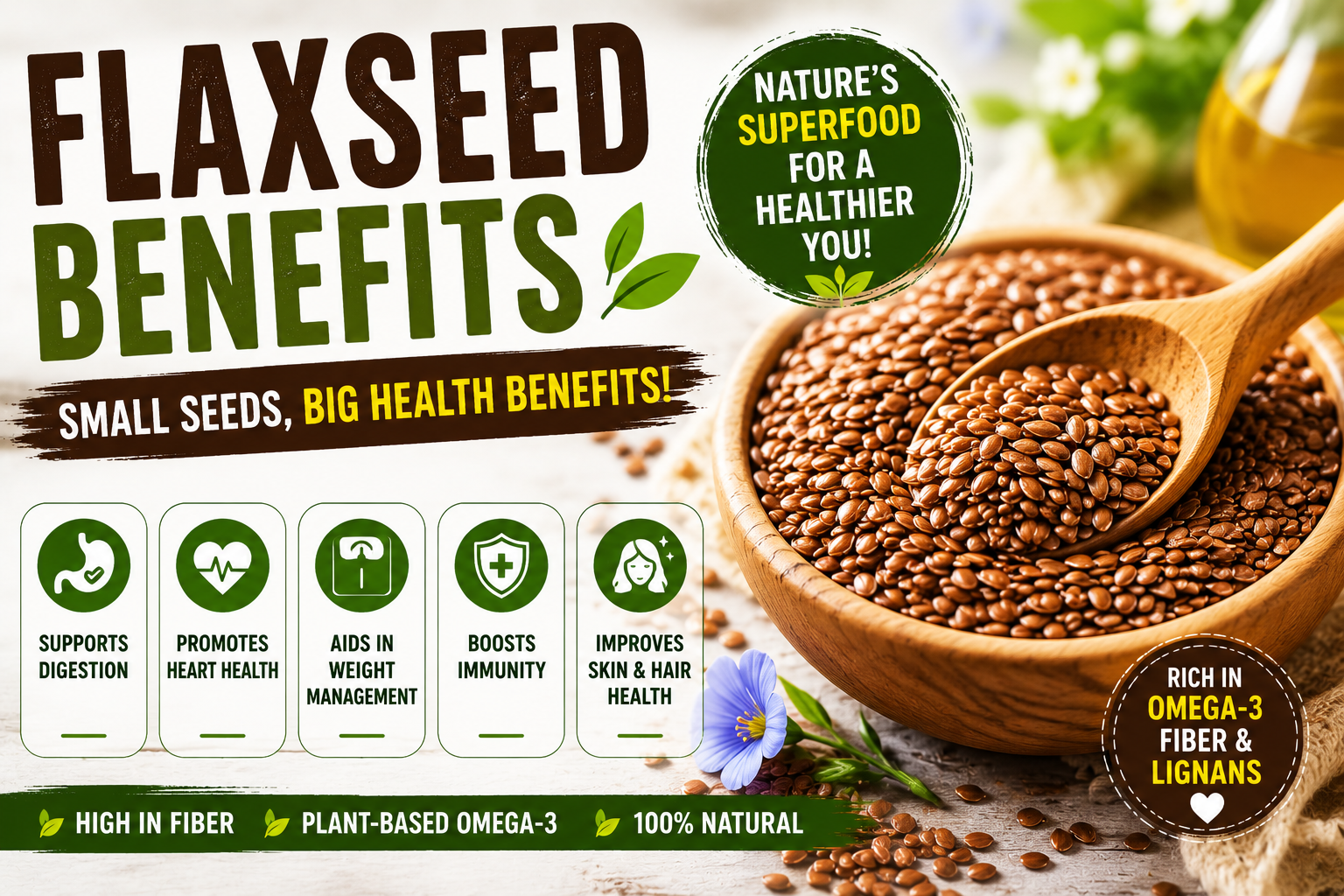
Flaxseeds are tiny seeds with an impressive nutritional profile. They provide dietary fiber, plant-based omega-3 fatty acids, protein, healthy fats, and naturally occurring plant compounds called lignans.
They are also one of the easiest foods to add to everyday meals. Ground flaxseed can be mixed into oatmeal, yogurt, smoothies, baked goods, and many other recipes.
But what are the main flaxseed benefits, and why are these tiny seeds considered a nutritious addition to a balanced diet?
In this article, we’ll look at flaxseed nutrition and the first 10 potential benefits of including flaxseeds in your diet.
What Are Flaxseeds?
Flaxseeds come from the flax plant (Linum usitatissimum).
They are small, flat seeds that are commonly available in:
- Brown varieties
- Golden varieties
- Whole seeds
- Ground flaxseed
- Flaxseed meal
Flaxseeds have a mild, nutty flavor.
One important difference between flaxseeds and chia seeds is that ground flaxseed is generally preferred when you want to maximize access to its nutrients, because whole flaxseeds may pass through the digestive tract without being fully broken down.
Flaxseed can be added to:
- Oatmeal
- Smoothies
- Yogurt
- Cereals
- Salads
- Pancakes
- Muffins
- Homemade energy bars
Flaxseed Nutrition Facts
A typical serving is around 1 tablespoon (7 grams) of ground flaxseed.
It provides approximately:
| Nutrient | Approximate Amount |
|---|---|
| Calories | 35–40 |
| Protein | 1–1.5 g |
| Fat | 3 g |
| Carbohydrates | 2 g |
| Fiber | About 2 g |
| ALA omega-3 | Around 1.5–2 g |
Flaxseeds also contain minerals such as:
- Magnesium
- Phosphorus
- Copper
- Manganese
- Thiamine
Their nutritional composition makes them a useful addition to a varied diet.
1. Flaxseeds Are Rich in Dietary Fiber
One of the most notable flaxseed benefits is their fiber content.
Both whole and ground flaxseeds contain dietary fiber.
Fiber contributes to normal digestive function and can help you build a more fiber-rich diet.
Adding flaxseed to meals is an easy way to increase fiber intake.
Try adding ground flaxseed to:
- Oatmeal
- Yogurt
- Smoothies
- Whole-grain cereal
- Homemade muffins
If your current diet is low in fiber, increase your intake gradually rather than suddenly consuming large amounts.
2. Flaxseeds Provide Plant-Based Omega-3 Fatty Acids
Flaxseeds are one of the richest plant sources of alpha-linolenic acid (ALA).
ALA is an essential omega-3 fatty acid, meaning your body needs to obtain it from food.
Other plant sources of ALA include:
- Chia seeds
- Walnuts
- Hemp seeds
- Certain plant oils
It’s important to distinguish ALA from EPA and DHA, the omega-3 fatty acids found primarily in fatty fish and algae.
Your body can convert some ALA into EPA and DHA, but the conversion is limited.
3. Flaxseeds Contain Lignans
Flaxseeds are particularly notable for their lignan content.
Lignans are naturally occurring plant compounds that have antioxidant properties and are classified as phytoestrogens.
Flaxseed is one of the richest dietary sources of lignans.
This is one reason flaxseeds are nutritionally different from many other seeds.
Eating a variety of plant foods is still the best approach rather than relying on one food for antioxidants or other plant compounds.
4. Flaxseeds Can Support Digestive Health
Flaxseeds contain both soluble and insoluble fiber.
These different types of fiber can contribute to normal digestive function.
Ground flaxseed can be particularly easy to incorporate into meals.
Simple option
Mix:
1 tablespoon ground flaxseed + oatmeal + berries
This adds fiber and healthy fats to breakfast.
However, increasing fiber too quickly can cause gas or bloating, so start with a smaller amount if necessary.
5. Flaxseeds Can Help You Increase Your Fiber Intake
Many people don’t consume enough fiber.
Adding a tablespoon or two of ground flaxseed to meals can help increase your daily intake.
Other excellent sources of fiber include:
- Beans
- Lentils
- Fruits
- Vegetables
- Whole grains
- Nuts
- Chia seeds
- Other seeds
Easy combination
Oatmeal + ground flaxseed + banana + berries
This gives you several different sources of fiber in one meal.
6. Flaxseeds Can Fit Into a Heart-Conscious Diet
Flaxseeds provide:
- ALA omega-3 fatty acids
- Unsaturated fats
- Fiber
- Lignans
These nutrients and plant compounds make flaxseeds a useful addition to many heart-conscious eating patterns.
A balanced dietary pattern should also include:
- Vegetables
- Fruits
- Whole grains
- Beans
- Nuts
- Fish or other appropriate protein sources
Flaxseed isn’t a treatment for heart disease, but it can be part of an overall nutritious diet.
7. Flaxseeds Provide Plant-Based Protein
Flaxseeds contain some protein, although they aren’t considered a particularly high-protein food.
A tablespoon provides approximately 1 gram or slightly more of protein, depending on the product.
They can contribute to your overall protein intake when combined with other foods.
For example:
Greek yogurt + berries + ground flaxseed
or:
Oatmeal + milk + flaxseed + nuts
For higher protein needs, include foods such as:
- Eggs
- Greek yogurt
- Fish
- Chicken
- Beans
- Lentils
- Tofu
- Tempeh
8. Flaxseeds Provide Important Minerals
Flaxseeds contain several minerals that contribute to normal body functions.
These include:
Magnesium
Important for normal muscle and nerve function and energy metabolism.
Phosphorus
Involved in normal bone and energy-related processes.
Copper
Contributes to normal connective tissue, energy metabolism, and iron transport.
Manganese
Supports normal metabolic processes and antioxidant defenses.
Thiamine
Flaxseeds also provide vitamin B1, which contributes to normal energy metabolism and nervous-system function.
9. Flaxseeds Can Help Make Meals More Nutrient-Dense
One of the simplest benefits of flaxseed is how easy it is to add to foods you already eat.
For example, you can turn ordinary oatmeal into a more nutrient-dense meal by adding:
- Ground flaxseed
- Berries
- Banana
- Nuts
- Cinnamon
You don’t need to completely change your diet.
Small additions can improve the overall nutritional profile of meals.
10. Flaxseeds Can Be Useful in Plant-Based Diets
Flaxseeds are particularly convenient for people who eat mostly plant-based foods.
They provide:
- ALA omega-3
- Fiber
- Healthy fats
- Some protein
- Minerals
- Lignans
They can be combined with other plant foods such as:
- Oats
- Beans
- Lentils
- Nuts
- Chia seeds
- Fruits
- Vegetables
- Whole grains
A varied plant-based diet is important because no single seed can provide every nutrient your body needs.
Ground Flaxseed vs. Whole Flaxseed
This is one of the most important things to know about flaxseed.
Whole flaxseeds
Whole seeds provide fiber and other nutrients, but their hard outer coating can make them more difficult to break down during digestion.
Ground flaxseed
Ground flaxseed is generally easier to digest and allows better access to the nutrients inside the seed.
For everyday use, ground flaxseed is often the more practical choice.
You can buy it pre-ground or grind whole flaxseeds at home using a coffee grinder or food processor.
Flaxseed vs. Chia Seeds
Both flaxseeds and chia seeds are nutritious.
| Nutrient/Feature | Flaxseeds | Chia Seeds |
|---|---|---|
| ALA omega-3 | High | High |
| Fiber | High | Very high |
| Protein | Moderate | Moderate |
| Lignans | Particularly rich | Lower |
| Gel formation | Moderate | Very strong |
| Usually ground? | Yes | Not necessary |
Neither is universally better.
You can easily include both in your diet.
Example
Breakfast:
Oatmeal + chia seeds + ground flaxseed + berries
This combines two nutritious seeds with fruit and whole grains.
Can You Eat Flaxseed Every Day?
For most people, moderate amounts of flaxseed can be included regularly as part of a balanced diet.
A practical starting amount is 1 tablespoon of ground flaxseed per day.
If you tolerate it well, you can gradually increase the amount depending on your overall diet.
Because flaxseed contains a lot of fiber, drink enough fluids and increase your intake gradually.
11. Flaxseeds Can Support Weight Management
Flaxseeds can fit into a weight-management diet because they provide fiber, healthy fats, and some protein.
Fiber can contribute to feelings of fullness, which may help some people manage their overall food intake.
However, flaxseed is not a fat-burning food.
Successful weight loss depends primarily on your overall calorie intake, food quality, physical activity, and other lifestyle factors.
Simple option
Try adding 1 tablespoon of ground flaxseed to:
- Plain Greek yogurt
- Berries
- Oatmeal
This can make a snack or breakfast more nutrient-dense.
12. Flaxseeds Can Contribute to a Heart-Healthy Eating Pattern
Flaxseeds contain ALA omega-3, fiber, and unsaturated fats.
These characteristics make them a useful ingredient in dietary patterns focused on cardiovascular health.
Instead of thinking of flaxseed as a treatment, consider it one component of a broader eating pattern that includes:
- Fruits
- Vegetables
- Whole grains
- Beans
- Nuts
- Seeds
- Fish or other lean protein sources
A varied diet provides a much broader range of nutrients and plant compounds.
13. Flaxseeds Can Help Increase Soluble Fiber Intake
Flaxseed contains both soluble and insoluble fiber.
Soluble fiber absorbs water and can contribute to normal digestive function.
Including flaxseed alongside other sources of soluble fiber can help create a fiber-rich diet.
Good complementary foods include:
- Oats
- Apples
- Pears
- Beans
- Lentils
- Barley
Breakfast idea
Oatmeal + ground flaxseed + chopped apple + cinnamon
14. Flaxseeds Can Provide Plant Compounds Called Lignans
Lignans are one of the features that make flaxseeds particularly interesting nutritionally.
These naturally occurring compounds have antioxidant activity and are classified as phytoestrogens.
Flaxseeds contain substantially more lignans than many commonly eaten plant foods.
However, more isn’t necessarily better.
The goal should be a varied diet containing many different plant foods rather than relying heavily on one ingredient.
15. Flaxseeds Can Be Useful for Plant-Based Omega-3 Intake
People who don’t eat fish may look for plant sources of omega-3 fats.
Flaxseed is one of the richest plant sources of ALA.
Other useful plant sources include:
- Chia seeds
- Walnuts
- Hemp seeds
Keep in mind that ALA isn’t the same as EPA and DHA.
If you follow a completely plant-based diet and are concerned about EPA and DHA intake, discuss appropriate algae-based omega-3 options with a healthcare professional.
16. Flaxseeds Can Add Healthy Fats to Meals
Flaxseeds contain a substantial amount of fat, much of which is unsaturated.
Adding a small amount to foods can increase their healthy-fat content.
Try adding ground flaxseed to:
- Smoothies
- Oatmeal
- Yogurt
- Homemade granola
- Whole-grain pancakes
The goal isn’t to consume huge quantities. A modest serving can provide plenty of nutrition.
17. Flaxseeds Can Add Nutritional Value to Smoothies
Flaxseed has a mild nutty flavor, making it easy to blend into smoothies.
Simple flaxseed smoothie
Blend:
- 1 banana
- ½ cup berries
- 1 cup milk or fortified plant milk
- 1 tablespoon ground flaxseed
- Plain Greek yogurt
This combination provides:
- Fiber
- Protein
- ALA omega-3
- Fruit
- Calcium and other nutrients depending on the milk or yogurt used
18. Flaxseeds Can Be Used in Baking
Ground flaxseed can easily be added to homemade baked foods.
Try incorporating it into:
- Muffins
- Pancakes
- Homemade bread
- Oat bars
- Crackers
- Energy bites
Simple pancake addition
Add 1–2 tablespoons of ground flaxseed to your usual pancake mixture.
It can add a mild nutty flavor and increase the fiber content.
19. Flaxseeds Can Make Breakfast More Nutrient-Dense
Breakfast is one of the easiest times to use flaxseed.
For example:
Flaxseed oatmeal
- Rolled oats
- 1 tablespoon ground flaxseed
- Banana
- Berries
- Cinnamon
- Milk or fortified plant milk
This combines whole grains, fruit, fiber, healthy fats, and other nutrients in one meal.
You can also add chopped walnuts or chia seeds for additional variety.
20. Flaxseeds Are Easy to Include in a Variety of Meals
You don’t need a special flaxseed recipe to enjoy the benefits.
Ground flaxseed can be added to:
Breakfast
- Oatmeal
- Cereal
- Yogurt
- Smoothies
Lunch
- Salads
- Grain bowls
- Homemade dressings
Snacks
- Energy bites
- Yogurt with fruit
Dinner
- Soups
- Sauces
- Homemade veggie burgers
Baking
- Muffins
- Pancakes
- Bread
This versatility makes flaxseed a convenient pantry ingredient.
Flaxseed and Cholesterol: What Should You Know?
Flaxseed is often discussed in relation to cholesterol because it contains soluble fiber, ALA, and lignans.
Some research suggests that consuming flaxseed may have modest effects on blood lipid levels, particularly when used regularly as part of an overall healthy dietary pattern.
However, flaxseed should not replace prescribed cholesterol medication.
If you have high cholesterol, follow your healthcare professional’s recommendations.
Flaxseed and Blood Sugar
Flaxseed contains fiber and relatively little digestible carbohydrate per serving.
Adding it to meals may help create a more balanced meal, particularly when combined with protein and other high-fiber foods.
For example:
Oatmeal + flaxseed + berries + Greek yogurt
is a more balanced meal than a breakfast consisting mainly of refined carbohydrates and added sugar.
Flaxseed isn’t a treatment for diabetes, however, and people with diabetes should follow their individualized medical and nutrition advice.
Flaxseed for Women’s Health
Flaxseeds contain lignans, which have weak phytoestrogenic activity.
This has led to considerable interest in flaxseed and women’s health, including menopause-related nutrition.
However, evidence for specific benefits is mixed, and flaxseed should not be promoted as a guaranteed treatment for hot flashes, menopause symptoms, or hormonal conditions.
If you’re experiencing significant symptoms, discuss appropriate treatment options with a healthcare professional.
Does Flaxseed Help Skin and Hair?
You’ll often see flaxseed promoted online for glowing skin and stronger hair.
Flaxseed provides:
- ALA omega-3
- Essential fats
- Protein
- Minerals
- Plant compounds
These nutrients contribute to overall nutrition, which is important for normal skin and hair function.
However, there isn’t strong evidence that simply eating flaxseed will dramatically transform your skin or hair.
A balanced diet, adequate protein, hydration, and overall health matter much more.
Flaxseed vs. Chia Seeds: Which Is Better?
Both are excellent choices.
Choose flaxseed if you want:
- High ALA omega-3
- Lignans
- Fiber
- A nutty flavor
- An ingredient that works well ground
Choose chia seeds if you want:
- Very high fiber
- Strong gel-forming properties
- Easy chia pudding
- A seed that generally doesn’t need grinding
Best option?
You don’t necessarily need to choose.
Try using both.
Oatmeal + chia seeds + ground flaxseed + berries makes an excellent nutrient-rich breakfast.
How Much Flaxseed Should You Add to Food?
A practical starting point is 1 tablespoon of ground flaxseed per day.
If you tolerate it well, you may use more depending on your dietary needs.
Because flaxseed is high in fiber, increasing your intake gradually is generally more comfortable.
Also make sure you consume adequate fluids.
How Much Flaxseed Should You Eat Per Day?
A practical starting amount is around 1 tablespoon (7 grams) of ground flaxseed per day.
Some people may consume 1–2 tablespoons daily as part of a balanced diet.
If you’re not accustomed to eating much fiber, start with a smaller amount and increase gradually.
Eating a large amount suddenly may cause:
- Gas
- Bloating
- Abdominal discomfort
- Changes in bowel movements
Adequate fluid intake is also important when increasing dietary fiber.
How Many Calories Are in Flaxseed?
Approximately 1 tablespoon (7 grams) of ground flaxseed provides around:
- 35–40 calories
- 1–1.5 g protein
- About 3 g fat
- Around 2 g carbohydrate
- Approximately 2 g fiber
- Around 1.5–2 g ALA omega-3
Exact values vary slightly depending on the product.
Because flaxseed contains healthy fats, it still contributes calories, so portion size matters when you’re managing your overall calorie intake.
What Is the Best Time to Eat Flaxseed?
There is no scientifically established “best” time.
You can eat flaxseed:
- At breakfast
- With lunch
- As a snack
- With dinner
- In smoothies
- In yogurt
- In oatmeal
Breakfast
Oatmeal + banana + ground flaxseed + berries
Snack
Greek yogurt + berries + flaxseed
Smoothie
Milk + banana + berries + flaxseed
Choose whichever time fits naturally into your routine.
Ground Flaxseed vs. Whole Flaxseed
For most nutritional purposes, ground flaxseed is the more practical choice.
Whole flaxseed
Whole seeds have a tough outer coating. Some may pass through the digestive tract without being fully broken down.
Ground flaxseed
Grinding breaks the seed into smaller particles, making its nutrients more accessible during digestion.
Best approach
You can:
- Buy pre-ground flaxseed
- Grind whole flaxseed at home
- Add it directly to oatmeal or smoothies
If grinding your own seeds, store the ground product properly because the oils can oxidize over time.
Can You Eat Flaxseed Every Day?
For most people, moderate daily amounts can fit comfortably into a balanced diet.
A common approach is:
Start → 1 tablespoon daily
Then increase gradually if desired and well tolerated.
You don’t need large amounts to benefit from the nutritional properties of flaxseed.
Can Flaxseed Help With Weight Loss?
Flaxseed can be part of a weight-loss diet because it provides fiber and healthy fats.
However, flaxseed itself does not burn belly fat or automatically cause weight loss.
The most useful approach is to use it as part of nutritious meals.
Example
Instead of:
Sugary cereal + sweetened drink
Try:
Oatmeal + berries + ground flaxseed + plain Greek yogurt
The second meal provides more fiber and protein and may be more satisfying.
Your overall calorie intake remains the major factor in weight loss.
Possible Flaxseed Side Effects
Most people tolerate moderate amounts well, but increasing flaxseed too quickly may cause digestive symptoms.
Possible effects include:
Gas
The sudden addition of fiber can increase gas.
Bloating
Large amounts may cause temporary bloating.
Diarrhea
Some people may experience loose stools after consuming a large amount.
Constipation
This can occur if fiber intake increases substantially without enough fluid.
Better approach
Start small, increase gradually, and drink adequate fluids.
Can Flaxseed Cause an Allergy?
Flaxseed allergy is uncommon, but allergic reactions can occur.
Possible symptoms include:
- Itching
- Hives
- Swelling
- Stomach symptoms
- Wheezing
- Difficulty breathing
Anyone experiencing a severe allergic reaction should seek emergency medical attention.
If you’ve previously had food allergies, discuss introducing flaxseed with an appropriate healthcare professional.
Flaxseed and Medications
Flaxseed is a food, not a medication.
However, its high fiber content may affect the absorption or timing of some medications.
If you take prescription medicines regularly, especially medicines where absorption or timing is important, ask your doctor or pharmacist whether you should separate them from flaxseed or other high-fiber foods.
People with certain digestive conditions or swallowing difficulties should also seek individualized advice before consuming large quantities.
Flaxseed During Pregnancy
Flaxseed contains lignans and other biologically active plant compounds, so pregnancy is a situation where individualized dietary advice can be useful.
Rather than consuming large amounts based on internet claims, pregnant or breastfeeding people should discuss regular flaxseed use and appropriate amounts with their healthcare professional.
Normal food portions may be different from concentrated flaxseed supplements or extracts.
How to Store Flaxseed
Whole flaxseeds generally keep longer than ground flaxseed.
Whole flaxseed
Store in:
- An airtight container
- A cool, dry location
- Away from direct sunlight
Ground flaxseed
Because grinding exposes the oils to air, it can spoil more quickly.
For longer freshness, store ground flaxseed in an airtight container in the:
- Refrigerator
- Freezer
Signs of spoilage
Discard flaxseed if it develops:
- A strong rancid smell
- Bitter or unpleasant taste
- Mold
- Moisture contamination
Fresh flaxseed should have a mild, nutty aroma.
5 Healthy Flaxseed Recipes
1. Flaxseed Oatmeal
Ingredients
- ½ cup rolled oats
- 1 tablespoon ground flaxseed
- 1 banana
- ½ cup berries
- Milk or fortified plant milk
- Cinnamon
Instructions
- Cook the oats with milk or water.
- Stir in ground flaxseed.
- Add banana and berries.
- Sprinkle with cinnamon.
- Serve warm.
2. Berry Flaxseed Smoothie
Ingredients
- 1 banana
- ½ cup berries
- 1 cup milk or fortified plant milk
- 1 tablespoon ground flaxseed
- Plain Greek yogurt
Instructions
Blend everything until smooth.
Add more liquid if necessary.
3. Flaxseed Yogurt Bowl
Ingredients
- Plain Greek yogurt
- 1 tablespoon ground flaxseed
- Strawberries
- Blueberries
- Chopped almonds
- Cinnamon
Mix everything together and serve chilled.
4. Flaxseed Overnight Oats
Ingredients
- ½ cup rolled oats
- 1 tablespoon ground flaxseed
- ½ cup milk
- ½ cup yogurt
- Berries
- Cinnamon
Mix the ingredients in a container.
Refrigerate overnight and add fresh fruit before eating.
5. Homemade Flaxseed Energy Bites
Ingredients
- Rolled oats
- Ground flaxseed
- Peanut or almond butter
- Mashed banana
- Cinnamon
Mix the ingredients together and form small balls.
Refrigerate before serving.
Keep portions moderate because nuts, nut butter, and flaxseed are all calorie-dense.
Frequently Asked Questions About Flaxseed
What are the main flaxseed benefits?
Flaxseeds provide dietary fiber, ALA omega-3 fatty acids, lignans, healthy fats, protein, and several minerals.
How much flaxseed should I eat per day?
A practical starting amount is 1 tablespoon of ground flaxseed per day. Some people consume 1–2 tablespoons depending on their diet and tolerance.
Is ground flaxseed better than whole flaxseed?
Ground flaxseed is generally easier to digest and allows better access to nutrients inside the seed.
Can flaxseed help with weight loss?
It can support a nutritious, fiber-rich weight-management diet, but flaxseed does not directly burn fat.
Is flaxseed good for digestion?
Its fiber content can contribute to normal digestive function. Increase your intake gradually and consume adequate fluids.
Is flaxseed high in omega-3?
Yes. Flaxseed is particularly rich in the plant omega-3 fatty acid ALA.
Can I put flaxseed in a smoothie?
Yes. Ground flaxseed blends easily into smoothies.
Should I eat flaxseed in the morning or at night?
Either is fine. There is no established best time. Choose the time that fits your eating routine.
Can I eat flaxseed every day?
Moderate daily amounts can fit into a balanced diet for most people. Start with a small serving if you’re not accustomed to high-fiber foods.
Does flaxseed reduce belly fat?
No food specifically targets belly fat. Overall calorie balance and lifestyle factors determine body-fat loss.
Is flaxseed better than chia seeds?
Neither is universally better. Flaxseed is especially notable for ALA and lignans, while chia seeds are particularly rich in fiber and form a strong gel when soaked.
Can children eat flaxseed?
Flaxseed can be included in age-appropriate diets, but portions and preparation should be appropriate for the child’s age. Ask a pediatrician if you have specific concerns.
Does flaxseed expire?
Yes. Flaxseed can become rancid because it contains natural oils. Ground flaxseed generally requires more careful storage than whole seeds.
Final Takeaway
Flaxseeds are a small but nutrient-dense food that can add significant nutritional value to everyday meals.
They provide:
- Dietary fiber
- Plant-based ALA omega-3
- Healthy unsaturated fats
- Plant protein
- Lignans
- Magnesium
- Phosphorus
- Copper
- Manganese
- Thiamine
For everyday use, ground flaxseed is often the most convenient option.
Starting with around 1 tablespoon per day is a practical approach. If your body tolerates it well, you can adjust the amount according to your overall diet.
The best way to use flaxseed isn’t as a miracle cure or weight-loss supplement. Instead, incorporate it into nutritious foods such as oatmeal, yogurt, smoothies, overnight oats, and homemade baked goods.
A varied diet containing fruits, vegetables, whole grains, legumes, nuts, seeds, and appropriate protein sources remains more important than any single food.
Suggested Article’s:
- Chia Seed Benefits
- Best Natural Foods
- Best Healthy Pantry Foods
- Best Nuts for Daily Eating
- Mixed Nuts Benefits
- Walnut Benefits
- Foods Rich in Zinc
- Foods Rich in Iron
- Best Foods for Weight Loss




Leave a Reply