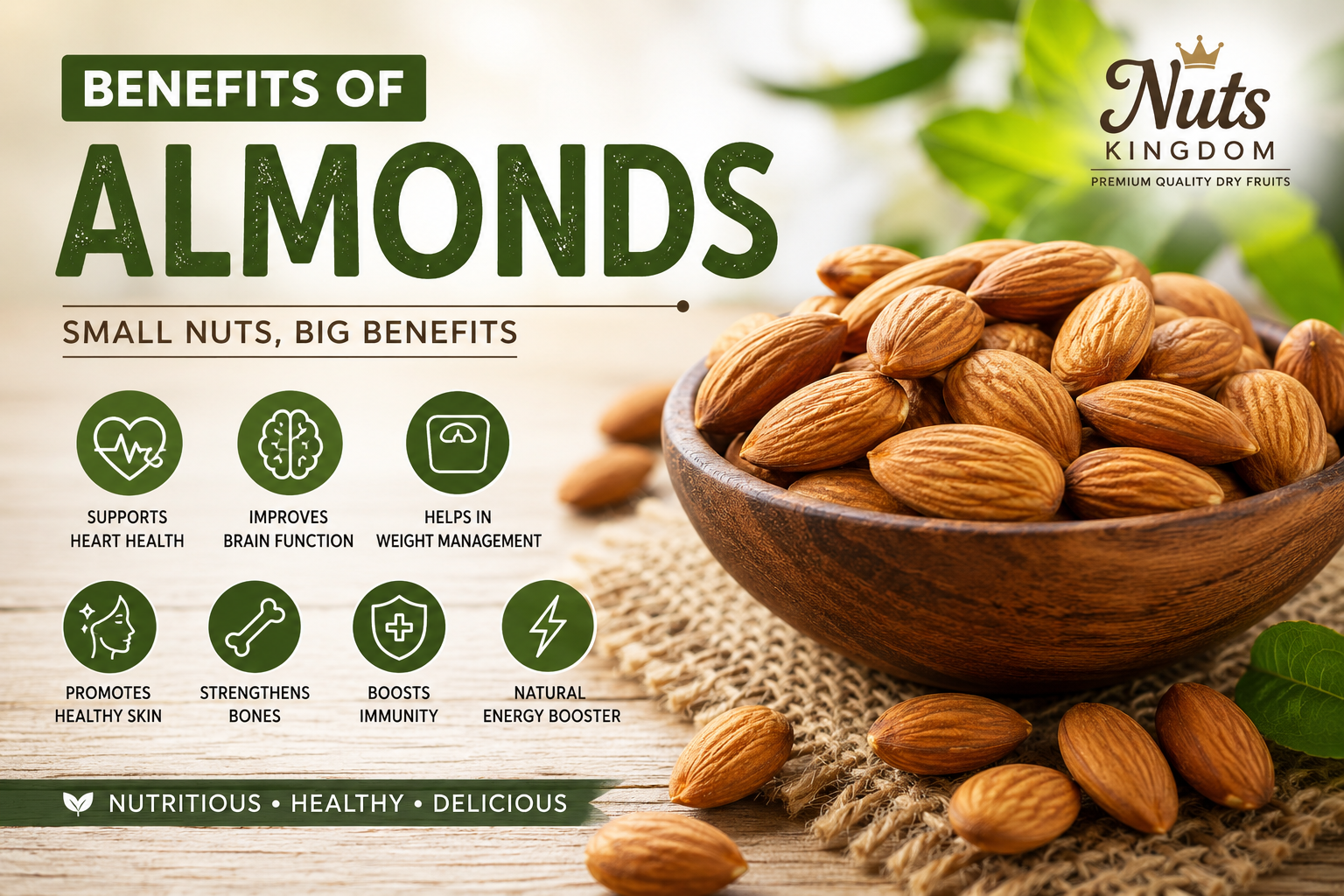
Almonds are among the healthiest and most popular tree nuts in the world. Known for their mild flavor, crunchy texture, and impressive nutritional profile, almonds have been enjoyed for centuries as a wholesome snack and a versatile ingredient in countless recipes.
Whether eaten raw, dry-roasted, soaked overnight, or blended into almond butter or almond milk, almonds provide a wide range of nutrients that support overall health. They are naturally rich in healthy fats, plant-based protein, dietary fiber, vitamin E, magnesium, and powerful antioxidants.
Research suggests that including almonds in a balanced diet may support heart health, weight management, blood sugar control, digestive health, and healthy aging. While no single food can prevent or cure disease, almonds can play an important role in a healthy eating pattern.
In this comprehensive guide, you’ll discover the 20 science-backed benefits of almonds, their nutritional value, recommended serving sizes, and practical ways to include them in your daily routine.
What Are Almonds?
Almonds are the edible seeds of the almond tree (Prunus dulcis), which is native to the Middle East and South Asia but is now cultivated in many regions around the world.
Although commonly referred to as nuts, almonds are technically seeds found inside the fruit of the almond tree. They are widely used in both sweet and savory dishes and are available in several forms, including:
- Raw almonds
- Dry-roasted almonds
- Sliced almonds
- Chopped almonds
- Almond flour
- Almond butter
- Unsweetened almond milk
Their versatility makes almonds one of the easiest healthy foods to include in everyday meals.
Almond Nutrition Facts
A typical serving of almonds is 1 ounce (28 grams), which is about 23 whole almonds.
| Nutrient | Amount (Per 28g) |
|---|---|
| Calories | 164 |
| Protein | 6 g |
| Healthy Fat | 14 g |
| Carbohydrates | 6 g |
| Fiber | 3.5 g |
| Vitamin E | 48% Daily Value |
| Magnesium | 19% Daily Value |
| Calcium | 6% Daily Value |
| Potassium | 4% Daily Value |
| Riboflavin (Vitamin B2) | 23% Daily Value |
Almonds are also naturally cholesterol-free and contain beneficial plant compounds such as flavonoids and polyphenols that contribute to their antioxidant activity.
Why Are Almonds So Healthy?
Almonds are considered a nutrient-dense food because they provide a large amount of nutrition relative to their calorie content.
Some of the reasons almonds are highly regarded include:
- Rich in heart-healthy unsaturated fats
- Excellent source of vitamin E
- High in plant-based protein
- Good source of dietary fiber
- Packed with magnesium and calcium
- Naturally low in sugar
- Free from cholesterol
- Rich in antioxidants
Together, these nutrients support many aspects of health, from heart function to healthy skin and bones.
1. Rich in Essential Nutrients
One of the biggest advantages of almonds is their impressive nutrient profile.
Even a small handful provides important vitamins and minerals that your body needs every day.
These include:
- Vitamin E
- Magnesium
- Calcium
- Potassium
- Riboflavin
- Phosphorus
- Manganese
These nutrients play important roles in:
- Energy production
- Muscle function
- Bone health
- Nervous system function
- Immune support
Adding almonds to your daily diet is a simple way to increase your intake of these essential nutrients.
2. High in Powerful Antioxidants
Almonds are an excellent source of antioxidants, especially in their brown skin.
Antioxidants help protect your body’s cells from oxidative stress caused by free radicals.
Oxidative stress is associated with aging and may contribute to the development of various chronic diseases over time.
The majority of almond antioxidants are concentrated in the skin, so eating whole almonds with the skin on provides the greatest benefit.
3. Supports Heart Health
Heart disease remains one of the leading causes of death worldwide, making heart-healthy food choices more important than ever.
Almonds contain:
- Monounsaturated fats
- Polyunsaturated fats
- Magnesium
- Vitamin E
- Fiber
Together, these nutrients may help:
- Maintain healthy cholesterol levels
- Support normal blood pressure
- Reduce oxidative stress
- Promote healthy blood vessel function
Replacing processed snacks with almonds can be one simple step toward a more heart-friendly diet.
4. Helps with Weight Management
Many people avoid nuts because they are high in calories.
However, studies suggest that almonds can actually support weight management when eaten in appropriate portions.
Their combination of:
- Protein
- Fiber
- Healthy fats
helps increase feelings of fullness and may reduce overall calorie intake throughout the day.
For the best results, enjoy almonds as a snack instead of highly processed foods such as chips, cookies, or candy.
5. May Improve Blood Sugar Control
Almonds have a low carbohydrate content and are naturally rich in healthy fats, protein, and magnesium.
This combination helps slow digestion and may reduce rapid increases in blood sugar after meals.
Magnesium also plays an important role in normal insulin function and glucose metabolism.
For balanced snacks, pair almonds with:
- Greek yogurt
- Fresh fruit
- Whole-grain crackers
- Oatmeal
6. Supports Healthy Digestion
Dietary fiber is essential for a healthy digestive system, and almonds provide a good amount in every serving.
Fiber helps:
- Support regular bowel movements
- Feed beneficial gut bacteria
- Increase fullness after meals
- Promote digestive health
Including fiber-rich foods like almonds alongside fruits, vegetables, and whole grains supports a healthy gut microbiome.
7. Provides Long-Lasting Energy
Unlike sugary snacks that can cause quick energy spikes followed by crashes, almonds provide a more steady source of energy.
Their combination of healthy fats, protein, and fiber helps fuel your body gradually throughout the day.
This makes almonds an excellent choice for:
- Busy mornings
- Midday snacks
- Work breaks
- Road trips
- School lunches
- Hiking and outdoor activities
Pair almonds with a piece of fresh fruit, such as an apple or banana, for an even more balanced snack.
Why Almonds Make an Excellent Daily Snack
Almonds are one of the easiest healthy foods to include in your routine because they are:
- Portable
- Shelf-stable
- Naturally gluten-free
- Suitable for many eating patterns
- Easy to add to meals and snacks
You can enjoy them:
- Raw
- Dry-roasted
- In homemade trail mix
- Sprinkled over salads
- Mixed into oatmeal
- Blended into smoothies
- As almond butter on whole-grain toast
Their versatility makes it easy to enjoy almonds without getting bored.
8. May Support Brain Health
Almonds contain nutrients that play important roles in normal brain function, including vitamin E, healthy fats, riboflavin, and magnesium.
Vitamin E acts as an antioxidant that helps protect cells from oxidative stress, while healthy fats support the structure of brain cells.
Including almonds as part of a balanced diet may help support:
- Memory
- Learning
- Concentration
- Overall cognitive health
Although almonds are nutritious, maintaining brain health also depends on regular exercise, quality sleep, and an overall healthy diet.
9. Promotes Healthy Skin
Healthy skin starts with good nutrition, and almonds are an excellent source of vitamin E, one of the most important nutrients for skin health.
Vitamin E helps protect skin cells from oxidative stress caused by environmental factors such as sunlight and pollution.
Eating almonds regularly may help support:
- Healthy-looking skin
- Skin hydration
- Skin elasticity
- A natural glow
Many skincare products also use almond oil because of its moisturizing properties.
10. Helps Keep Hair Strong
Healthy hair requires a variety of nutrients, including protein, healthy fats, vitamin E, biotin, zinc, and magnesium.
While almonds are not a miracle solution for hair growth, they provide several nutrients that contribute to healthy hair as part of a balanced diet.
Including almonds in your meals may help:
- Support stronger hair
- Reduce breakage
- Nourish hair follicles
- Promote overall hair health
11. Supports Strong Bones
Almonds contain several minerals that are important for maintaining healthy bones.
These include:
- Calcium
- Magnesium
- Phosphorus
- Manganese
These nutrients work together to support bone strength and normal muscle function.
Pair almonds with calcium-rich foods such as yogurt or milk for an even more nutrient-rich snack.
12. Helps with Muscle Recovery
Almonds are a popular snack among athletes and fitness enthusiasts because they provide:
- Plant-based protein
- Healthy fats
- Magnesium
- Potassium
Protein supports muscle maintenance, while magnesium contributes to normal muscle function.
Enjoy almonds after exercise with Greek yogurt, cottage cheese, or a protein smoothie for a balanced recovery snack.
13. Supports the Immune System
A healthy immune system depends on many nutrients working together.
Almonds provide several nutrients that support normal immune function, including:
- Vitamin E
- Zinc
- Copper
- Magnesium
Combined with a balanced diet rich in fruits and vegetables, almonds can be part of a healthy lifestyle that supports your body’s natural defenses.
14. May Help Maintain Healthy Cholesterol Levels
Replacing foods high in saturated fat with foods rich in unsaturated fats, such as almonds, may help support healthy cholesterol levels.
Almonds contain:
- Monounsaturated fats
- Polyunsaturated fats
- Fiber
- Plant sterols
These nutrients contribute to heart health when included as part of a diet low in saturated fat.
For the greatest benefit, replace processed snacks with a handful of almonds rather than adding extra calories to your diet.
15. Supports Eye Health
Almonds contain vitamin E and antioxidant compounds that help protect cells from oxidative damage.
While carrots are often associated with eye health, almonds can also contribute to a balanced diet that supports healthy vision.
For a nutrient-rich meal, pair almonds with colorful fruits and vegetables that provide vitamins A and C.
Best Ways to Eat Almonds
Almonds are incredibly versatile and easy to include in your daily meals.
Breakfast
- Add sliced almonds to oatmeal.
- Sprinkle over Greek yogurt.
- Blend into smoothies.
- Mix into homemade granola.
Healthy Snacks
- A handful of raw almonds
- Apple slices with almond butter
- Mixed nuts and seeds
- Homemade energy bites
Lunch and Dinner
- Sprinkle chopped almonds over salads.
- Add to stir-fries.
- Mix into rice or quinoa dishes.
- Use crushed almonds as a coating for baked chicken or fish.
Healthy Desserts
- Almond butter with banana slices
- Homemade protein balls
- Yogurt parfait with almonds and berries
- Chia pudding topped with chopped almonds
Raw vs. Roasted Almonds
Many people wonder which option is healthier.
Raw Almonds
Benefits
- No added oils
- No added salt
- Natural flavor
- Minimal processing
Dry-Roasted Almonds
Benefits
- Crunchier texture
- Rich flavor
- Retain most nutrients
Which Should You Choose?
Both raw and dry-roasted almonds are healthy choices.
For the best nutritional value, choose:
- Unsalted almonds
- Dry-roasted almonds without added oil
- Plain raw almonds
Avoid:
- Honey-roasted almonds
- Chocolate-coated almonds
- Sugar-coated almonds
- Heavily salted almonds
These varieties often contain added sugar, sodium, or extra calories.
How Many Almonds Should You Eat Per Day?
Moderation is key because almonds are calorie-dense.
For most healthy adults, the ideal serving is:
23 almonds (about 28 grams or 1 ounce) per day.
This serving provides approximately:
| Nutrient | Amount |
|---|---|
| Calories | 164 |
| Protein | 6 g |
| Fiber | 3.5 g |
| Healthy Fat | 14 g |
| Vitamin E | 48% DV |
This amount fits well into most healthy eating plans without contributing excessive calories.
Common Mistakes to Avoid
To get the most health benefits from almonds, avoid these common mistakes:
Eating Large Portions
Although almonds are nutritious, eating several handfuls at once can add more calories than intended.
Choosing Sweetened Varieties
Flavored almonds coated in sugar or chocolate are best enjoyed occasionally rather than every day.
Ignoring Portion Sizes
Pre-portion almonds into small containers instead of eating directly from a large bag.
Replacing Balanced Meals
Almonds are an excellent snack, but they should complement—not replace—meals that include vegetables, fruits, lean protein, and whole grains.
16. A Heart-Healthy Snack
Almonds are naturally rich in monounsaturated fats, fiber, magnesium, and vitamin E. Replacing snacks high in saturated fat with a moderate serving of almonds may support heart health as part of an overall balanced diet.
Pair almonds with fruits, vegetables, whole grains, and legumes to build a heart-friendly eating pattern.
17. Rich in Plant-Based Protein
Protein is essential for building and repairing tissues, supporting muscles, and helping you feel full after meals.
A 28-gram serving of almonds provides about 6 grams of plant-based protein, making them an excellent snack for:
- Vegetarians
- Vegans
- Fitness enthusiasts
- Busy professionals
- Students
For a balanced snack, combine almonds with yogurt, fruit, or whole-grain crackers.
18. Supports Healthy Aging
Almonds contain antioxidants, healthy fats, vitamins, and minerals that help protect cells from oxidative stress.
Including antioxidant-rich foods in your diet may support healthy aging by contributing to overall wellness.
A healthy lifestyle—including regular physical activity, quality sleep, and a varied diet—is equally important.
19. Easy to Include in Any Diet
One of the greatest advantages of almonds is their versatility.
They fit into many eating patterns, including:
- Mediterranean diet
- Vegetarian diet
- Vegan diet
- Low-carb diet
- High-protein diet
- Gluten-free diet
Whether you enjoy them as a snack or use them in cooking, almonds are an easy way to increase the nutritional value of your meals.
20. Delicious and Convenient
Healthy eating becomes easier when nutritious foods are also enjoyable.
Almonds require no preparation, travel well, and can be stored for long periods when kept properly.
They are ideal for:
- Office snacks
- School lunches
- Travel
- Hiking
- Gym bags
- Emergency healthy snacks
Keeping a small container of almonds nearby can help you avoid less nutritious convenience foods.
Frequently Asked Questions (FAQs)
1. Is it healthy to eat almonds every day?
Yes. Most healthy adults can enjoy a daily serving of about 23 almonds (28 grams) as part of a balanced diet.
2. How many almonds should I eat daily?
A serving of 23 whole almonds provides a good balance of protein, fiber, healthy fats, and essential nutrients without excessive calories.
3. Are soaked almonds better than raw almonds?
Soaking almonds changes their texture and may make them easier for some people to chew. However, both soaked and raw almonds are nutritious choices.
Choose the form you enjoy most.
4. Are roasted almonds healthy?
Yes, dry-roasted, unsalted almonds are a healthy option.
Try to avoid varieties with added sugar, excessive salt, or large amounts of oil.
5. Can almonds help with weight loss?
Almonds can support weight management because they provide protein, fiber, and healthy fats that promote fullness. However, they should be eaten in appropriate portions as part of a calorie-controlled diet.
6. Are almonds good for people with diabetes?
Almonds are naturally low in carbohydrates and provide healthy fats and protein. They can fit into many diabetes-friendly eating plans, but people with diabetes should follow advice from their healthcare provider or dietitian.
7. Can children eat almonds?
Yes, provided they are old enough to safely chew them. For younger children, sliced or chopped almonds or almond butter may be safer options to reduce choking risk.
Who Should Limit Almonds?
Although almonds are healthy for most people, some individuals should be cautious.
People with Tree Nut Allergies
Anyone with a tree nut allergy should avoid almonds unless advised otherwise by an allergy specialist.
People Following a Calorie-Controlled Diet
Because almonds are calorie-dense, portion control is important to avoid consuming more calories than intended.
Individuals with Kidney Conditions
Almonds contain potassium and phosphorus. People with certain kidney conditions should ask their healthcare provider whether almonds are appropriate for their dietary needs.
How to Store Almonds
Proper storage helps preserve freshness, flavor, and texture.
Storage Tips
- Store in an airtight container.
- Keep in a cool, dry place.
- Refrigerate for longer freshness.
- Freeze for long-term storage.
- Protect from heat, sunlight, and moisture.
Properly stored almonds can stay fresh for several months.
Final Thoughts
Almonds are one of the most nutritious and versatile foods you can include in your daily diet. They provide an excellent balance of healthy fats, plant-based protein, fiber, vitamins, minerals, and antioxidants that support overall health.
From helping you feel full and supporting heart health to providing vitamin E for healthy skin and nutrients that contribute to strong bones and muscles, almonds offer a wide range of benefits. They are also easy to enjoy in many ways, whether as a snack, a topping for oatmeal and salads, or blended into almond butter and smoothies.
The key is moderation. A serving of about 23 almonds per day can fit well into a balanced eating plan while providing valuable nutrition.
Remember that no single food is a cure-all. The greatest health benefits come from combining almonds with a varied diet rich in fruits, vegetables, whole grains, lean proteins, and regular physical activity.
Key Takeaways
- Almonds are rich in healthy fats, protein, fiber, vitamin E, and magnesium.
- They may support heart health, weight management, digestion, and healthy aging.
- A daily serving of 23 almonds (28 grams) is suitable for most healthy adults.
- Choose raw or dry-roasted, unsalted almonds for the best nutritional value.
- Store almonds in an airtight container away from heat and moisture.
- Enjoy almonds as part of a balanced diet rather than relying on a single food for health benefits.
You May Also Like
Continue exploring healthy foods with these related articles:
🥜 Nuts & Dry Fruits
- Best Dry Fruits for Weight Loss
- 10 Best Dry Fruits for Diabetes
- Best Time to Eat Nuts
- Walnuts vs. Almonds: Which Is Healthier?
- Health Benefits of Pistachios
- Best High-Protein Nuts




Leave a Reply