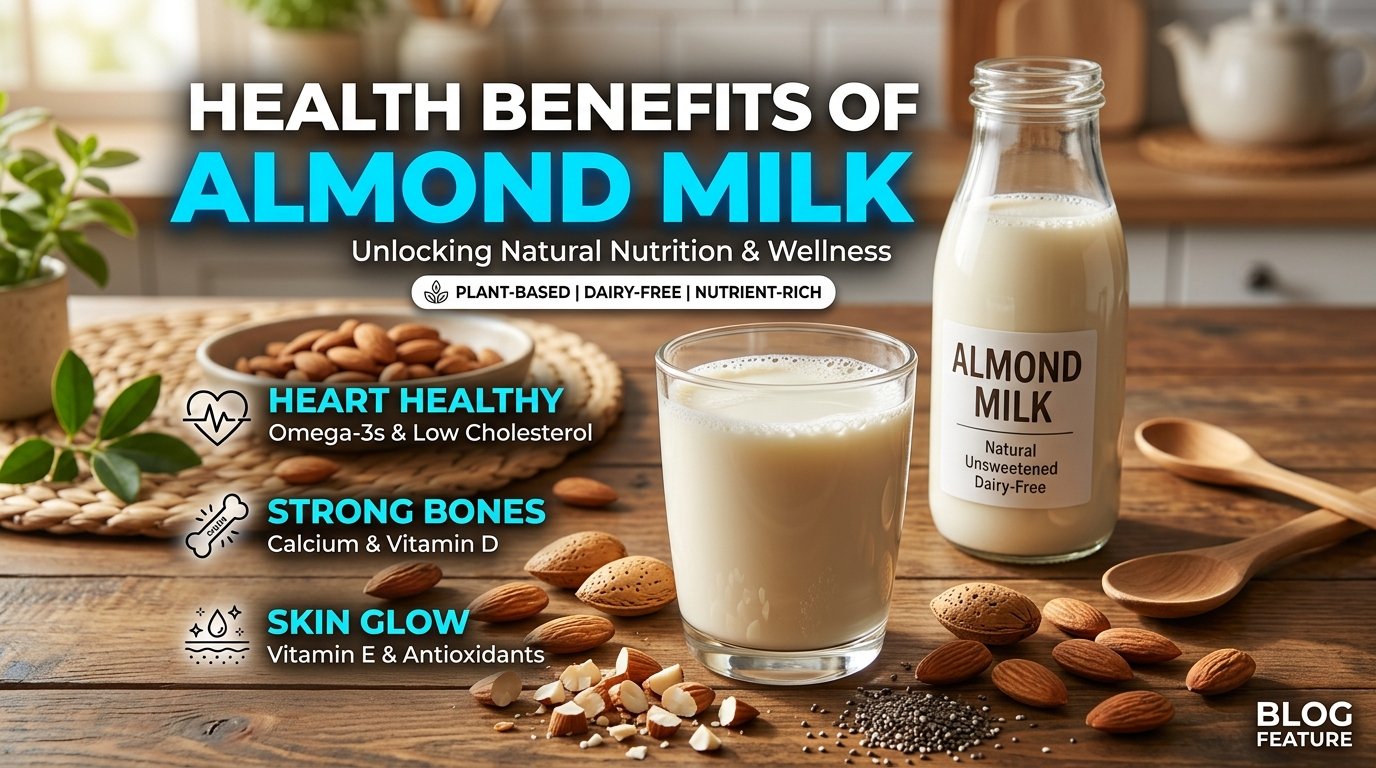
Almond milk is a popular plant-based alternative to dairy milk. It is commonly made from almonds and water, although commercial products may also contain added vitamins, minerals, stabilizers, flavorings, or sweeteners.
One important thing to remember is that almond milk nutrition varies significantly by brand. Unsweetened, sweetened, fortified, and homemade almond milk can have very different amounts of calories, protein, calcium, vitamin D, and added sugar.
What Is Almond Milk?
Almond milk is a plant-based beverage made primarily from almonds and water. Commercial versions may also contain ingredients such as added vitamins and minerals, stabilizers, flavorings, or sweeteners.
It is commonly used as an alternative to dairy milk in:
- Coffee and tea
- Smoothies
- Oatmeal
- Cereal
- Baking
- Soups and sauces
One of the most important things to understand is that not all almond milk is nutritionally the same. The nutrient content can vary depending on the brand, processing method, and whether vitamins and minerals such as calcium and vitamin D have been added.
Almond Milk Nutrition Facts
The nutrition of almond milk depends heavily on whether it is unsweetened, sweetened, or fortified.
For example, some unsweetened commercial almond milks may contain around 30–60 calories per cup, while flavored or sweetened versions can contain considerably more. Many almond milk products also provide only around 1 gram of protein per cup, which is much less than cow’s milk.
Fortified almond milk may provide added nutrients such as:
- Calcium
- Vitamin D
- Vitamin A
- Vitamin B12
Always check the Nutrition Facts label, because nutrient levels can vary substantially between products.
1. Almond Milk Is Naturally Dairy-Free
One of the biggest potential benefits of almond milk is that it does not contain dairy.
This can make it a useful option for people who:
- Avoid dairy for personal reasons
- Follow a vegan or plant-based diet
- Prefer plant-based beverages
- Need an alternative to cow’s milk
However, almond milk is not suitable for people with an almond or tree-nut allergy.
Also, dairy-free does not automatically mean nutritionally identical to dairy milk. Different products can have very different levels of protein, calcium, vitamin D, and other nutrients.
2. Almond Milk Is Naturally Lactose-Free
Because almond milk is not made from dairy, it is naturally lactose-free.
This makes it an option for people who avoid lactose-containing dairy products.
However, lactose-free cow’s milk is also available and may provide a nutritional profile closer to regular dairy milk, including substantially more protein than many almond milk products.
The best choice depends on your dietary needs and preferences.
3. Unsweetened Almond Milk Can Be Relatively Low in Calories
Many varieties of unsweetened almond milk are relatively low in calories compared with many other beverages.
Some commercial unsweetened products contain approximately 30–60 calories per cup, although the exact amount varies by brand.
This can make unsweetened almond milk a useful option for people who are trying to manage their overall calorie intake.
However, always compare the label because:
- Sweetened almond milk can contain more calories.
- Flavored versions may contain added sugar.
- Different brands can have very different nutritional profiles.
4. Almond Milk Can Fit Into a Weight-Management Diet
Unsweetened almond milk can fit into a balanced weight-management diet, particularly when used as an alternative to higher-calorie beverages.
For example, you might use it in:
- Coffee
- Tea
- Smoothies
- Oatmeal
- Cereal
But almond milk does not directly burn fat or cause weight loss.
Successful weight management depends on your overall dietary pattern, calorie intake, physical activity, sleep, and other individual factors.
A useful strategy is generally to choose an unsweetened version with little or no added sugar.
5. Almond Milk Provides Very Little Saturated Fat in Many Products
Many almond milk products are relatively low in saturated fat.
When choosing plant-based beverages, the FDA recommends comparing products and generally choosing options that are lower in saturated fat and added sugars while considering important nutrients such as protein, calcium, vitamin D, and potassium.
The exact fat content varies depending on the product, so checking the label is still important.
6. Fortified Almond Milk Can Provide Calcium
Almonds naturally contain nutrients, but the calcium content of commercial almond milk may come largely from fortification.
Many commercial almond milk products have calcium added to them.
Calcium is important for:
- Building and maintaining bones
- Maintaining teeth
- Normal muscle function
- Other normal body processes
However, calcium levels vary significantly between products.
That’s why it is useful to compare labels and look for a fortified product if calcium is one of the reasons you’re choosing almond milk.
7. Fortified Almond Milk May Provide Vitamin D
Some almond milk products are fortified with vitamin D.
Vitamin D helps the body maintain appropriate calcium and phosphorus levels and plays an important role in bone health.
The FDA allows vitamin D to be added to plant-based beverages intended as milk alternatives, but whether a specific almond milk contains vitamin D depends on the product.
Important tip
Don’t assume every almond milk product contains vitamin D.
Check the Nutrition Facts label before buying.
8. Almond Milk Can Be Useful in Vegan and Plant-Based Diets
Almond milk can be a convenient ingredient for people following vegan or plant-focused eating patterns.
It can replace dairy milk in many recipes, including:
- Smoothies
- Oatmeal
- Pancakes
- Baking
- Creamy soups
- Coffee drinks
However, because many almond milks are relatively low in protein, people following a plant-based diet should also obtain protein from other foods such as:
- Beans
- Lentils
- Tofu
- Tempeh
- Soy foods
- Nuts
- Seeds
The FDA notes that almond and other plant-based beverages can vary widely in nutrient content, so the label should be checked rather than assuming they provide the same nutrients as dairy milk.
9. Almond Milk Is a Versatile Dairy Alternative
One practical benefit of almond milk is its versatility.
You can use it in many everyday foods and drinks.
At breakfast
Try it with:
- Oatmeal
- Cereal
- Smoothies
- Overnight oats
In drinks
Use it in:
- Coffee
- Tea
- Homemade lattes
- Smoothies
In cooking
It can also be used in:
- Pancakes
- Muffins
- Sauces
- Soups
Unsweetened varieties are generally more versatile for savory recipes because they don’t add extra sweetness.
10. Almond Milk Gives You Another Way to Add Variety to Your Diet
Dietary variety can make healthy eating more enjoyable.
Almond milk can be rotated with other options such as:
- Dairy milk
- Soy milk
- Oat milk
- Other appropriate plant-based beverages
Each option has a different nutritional profile.
For example, FDA guidance notes that plant-based milk alternatives vary in protein, calcium, vitamin D, potassium, saturated fat, and added sugar. Fortified soy beverages are the plant-based alternative currently considered nutritionally similar enough to milk to be included in the U.S. Dietary Guidelines’ dairy group; almond milk generally has a different nutrient profile.
Almond Milk vs. Cow’s Milk
Here is a general comparison:
| Feature | Unsweetened Almond Milk | Cow’s Milk |
|---|---|---|
| Dairy-free | Yes | No |
| Lactose-free | Yes | No |
| Protein | Usually low | Higher |
| Calories | Often lower | Varies by fat level |
| Calcium | Depends on fortification | Naturally provides calcium |
| Vitamin D | Depends on fortification | Often fortified |
| Suitable for vegan diets | Yes | No |
The exact values vary by product. One major difference is protein: many almond milks provide much less protein than cow’s milk.
How to Choose a Healthy Almond Milk
When shopping, don’t choose based only on the word “almond.”
Check the Nutrition Facts label.
Consider looking for:
- Unsweetened
- Low or no added sugar
- Calcium fortification
- Vitamin D fortification
- Appropriate protein content for your needs
- Lower saturated fat
The FDA specifically recommends comparing protein, vitamin D, calcium, potassium, saturated fat, and added sugars when choosing milk and plant-based beverages.
11. Almond Milk Can Provide Vitamin E
Almonds are naturally a source of vitamin E, an antioxidant nutrient.
However, the amount of vitamin E in almond milk can vary considerably depending on how the product is made.
Vitamin E contributes to the protection of cells from oxidative stress and supports normal body functions.
If vitamin E is one of your reasons for choosing almond milk, check the nutrition label rather than assuming every product contains a high amount.
Other good dietary sources of vitamin E include:
- Almonds
- Sunflower seeds
- Hazelnuts
- Peanuts
- Avocado
- Vegetable oils
- Spinach
12. Unsweetened Almond Milk Can Be a Lower-Sugar Beverage Choice
One of the most useful differences between almond milk products is the amount of added sugar.
Unsweetened almond milk generally contains little or no added sugar, while sweetened and flavored varieties can contain substantially more.
Choosing unsweetened almond milk can therefore be useful if you’re trying to reduce your intake of added sugars.
Check the label for:
- Total sugars
- Added sugars
- Flavored varieties
- Sweeteners
For everyday use, unsweetened almond milk is usually the more versatile option.
13. Almond Milk Can Be a Good Option for People Avoiding Dairy
Some people choose to avoid dairy because of dietary preferences, lactose intolerance, or other individual reasons.
Almond milk can provide a convenient alternative for:
- Coffee
- Cereal
- Smoothies
- Baking
- Oatmeal
- Cooking
However, people avoiding dairy should make sure they obtain important nutrients such as protein, calcium, vitamin D, and vitamin B12 from other foods or appropriately fortified products.
Simply replacing dairy milk with almond milk does not automatically provide the same nutritional profile.
14. Almond Milk Can Be Used in Many Healthy Recipes
Almond milk is easy to incorporate into everyday meals.
Almond Milk Smoothie
Combine:
- 1 cup unsweetened almond milk
- 1 banana
- ½ cup berries
- 1 tablespoon chia seeds
- A handful of spinach
Blend until smooth.
This provides nutrients from several different foods rather than relying on almond milk alone.
Almond Milk Overnight Oats
Ingredients
- ½ cup rolled oats
- ½–1 cup unsweetened almond milk
- 1 tablespoon chia seeds
- Berries
- Banana
- Cinnamon
Mix the ingredients and refrigerate overnight.
Almond Milk Chia Pudding
Ingredients
- 1 cup unsweetened almond milk
- 3 tablespoons chia seeds
- Berries
- Cinnamon
Mix and refrigerate until the chia seeds absorb the liquid and create a pudding-like consistency.
15. Almond Milk Can Help Add Variety to a Balanced Diet
There isn’t one perfect milk or milk alternative for everyone.
Almond milk can be useful simply because it gives you another option.
You might use:
- Almond milk in smoothies
- Soy milk when you want more protein
- Dairy milk when appropriate
- Other fortified plant-based beverages for variety
The important thing is to consider the nutritional profile of the specific product.
The FDA recommends comparing plant-based beverages based on nutrients such as protein, calcium, vitamin D and potassium, while also considering saturated fat and added sugars.
Unsweetened vs. Sweetened Almond Milk
This is one of the most important comparisons.
| Feature | Unsweetened | Sweetened |
|---|---|---|
| Added sugar | Usually little or none | Usually higher |
| Calories | Often lower | Often higher |
| Flavor | Mild | Sweeter |
| Best for | Everyday use | Occasional preference |
| Smoothies | Excellent | Adds sweetness |
| Savory cooking | Better | Less suitable |
If you’re trying to control added sugar, unsweetened almond milk is generally the better choice.
Fortified vs. Homemade Almond Milk
Another important difference is fortification.
Commercial Fortified Almond Milk
May contain added:
- Calcium
- Vitamin D
- Vitamin A
- Vitamin B12
This can make fortified almond milk more nutritionally useful as a milk alternative.
Homemade Almond Milk
Homemade almond milk can contain very few ingredients:
Almonds + water
But unless you deliberately fortify it, it generally won’t provide the same added calcium and vitamin D found in many commercial products.
Therefore, homemade almond milk shouldn’t automatically be considered nutritionally superior.
Almond Milk vs. Oat Milk
Both are popular plant-based beverages.
Almond milk
Often:
- Lower in calories when unsweetened
- Lower in carbohydrates
- Low in protein
- Available in calcium- and vitamin-D-fortified varieties
Oat milk
Often:
- Higher in carbohydrates
- Creamier
- More calorie-dense than some almond milks
- Available in fortified versions
The best choice depends on your nutritional needs and the specific product.
Almond Milk vs. Soy Milk
This is an especially useful comparison.
Soy milk generally provides more protein than almond milk and can be nutritionally closer to dairy milk in some respects.
Almond milk is often chosen for its:
- Mild flavor
- Lower calorie potential
- Nutty taste
- Dairy-free nature
If protein is a major priority, compare labels carefully because almond milk and soy milk can differ substantially in protein content.
Almond Milk and Blood Sugar
Unsweetened almond milk is generally a low-carbohydrate beverage compared with many sweetened drinks.
That makes it an option for people who want to limit their intake of added sugars and carbohydrates.
However, sweetened almond milk can contain considerably more sugar.
If you’re monitoring blood glucose for a medical reason, check the nutrition label and follow your healthcare professional’s dietary recommendations.
Almond milk should not be considered a treatment for diabetes.
Almond Milk and Digestion
Almond milk doesn’t contain lactose, so it can be useful for people who avoid lactose-containing dairy products.
However, digestive tolerance can vary.
Some commercial almond milks contain ingredients such as:
- Gums
- Stabilizers
- Emulsifiers
- Added fibers
Most people tolerate these ingredients, but some individuals may notice digestive discomfort.
If a particular product causes problems, check its ingredient list and consider trying another variety.
Important: Almond Milk Is Not a High-Protein Milk
This is one of the most important points to include in your article.
Although almond milk comes from almonds, commercial almond milk is usually heavily diluted with water.
As a result, it generally contains much less protein than whole almonds.
It also typically contains much less protein than cow’s milk or soy milk.
Therefore, don’t depend on almond milk as your main protein source.
Instead, combine it with foods such as:
- Greek yogurt
- Eggs
- Tofu
- Beans
- Lentils
- Nuts
- Seeds
- Protein-rich whole foods
Who Should Be Careful With Almond Milk?
Almond milk isn’t appropriate for everyone.
People with almond or tree-nut allergies
Should avoid almond milk unless specifically advised otherwise by a qualified healthcare professional.
Infants
Almond milk should not be used as a replacement for breast milk or infant formula.
People needing more protein
Almond milk may not be the best choice if you’re specifically looking for a high-protein milk alternative.
People watching added sugar
Choose unsweetened varieties and check the nutrition label.
How Much Almond Milk Should You Drink Per Day?
There is no universal recommended daily amount specifically for almond milk.
A typical serving is 1 cup (240 mL).
You can use it in:
- Smoothies
- Coffee
- Cereal
- Oatmeal
- Chia pudding
- Cooking
If you’re using almond milk as a replacement for dairy milk, pay attention to the nutrition label and make sure you’re getting enough protein, calcium, vitamin D, and other nutrients from your overall diet.
Is Almond Milk Good for Weight Loss?
Unsweetened almond milk can fit into a weight-management diet because many varieties are relatively low in calories.
However, almond milk itself does not cause fat loss.
A healthy weight-management approach generally includes:
- Appropriate calorie intake
- Protein-rich foods
- Vegetables and fruits
- Whole grains
- Healthy fats
- Regular physical activity
Choosing unsweetened almond milk instead of a sugar-sweetened beverage can be one small way to reduce added sugar and calories.
Possible Almond Milk Side Effects
Almond milk is tolerated well by many people, but some individuals may experience problems depending on the product or their individual sensitivities.
Possible issues include:
- Digestive discomfort
- Bloating
- Gas
- Reactions to certain additives
- Allergic reactions
Some commercial products contain ingredients such as gums, stabilizers, emulsifiers, or added fibers.
If a particular almond milk causes digestive symptoms, try checking the ingredient list or switching to another product.
Almond Allergy
People with an almond or tree-nut allergy should be cautious with almond milk.
An allergic reaction can cause:
- Itching
- Hives
- Swelling
- Vomiting
- Wheezing
- Difficulty breathing
A severe allergic reaction can be life-threatening.
If you have a known almond allergy, avoid almond milk and follow your healthcare professional’s advice.
Can Babies Drink Almond Milk?
Almond milk should not be used as a substitute for breast milk or infant formula during infancy.
Infants have specific nutritional requirements for growth and development that ordinary plant-based beverages are not designed to meet.
For children, ask a pediatrician or other qualified healthcare professional about appropriate milk or milk alternatives.
Homemade Almond Milk Recipe
You can make almond milk at home with a few simple ingredients.
Ingredients
- 1 cup raw almonds
- 3–4 cups water
- Optional cinnamon or vanilla
Instructions
Step 1: Soak the almonds
Place the almonds in water and soak them for several hours or overnight.
Step 2: Drain and rinse
Drain the soaking water and rinse the almonds.
Step 3: Blend
Add the almonds and fresh water to a blender.
Blend until the mixture becomes creamy.
Step 4: Strain
Pour the mixture through a nut-milk bag or fine strainer.
Step 5: Store
Transfer the almond milk to a clean airtight container and refrigerate.
Homemade almond milk usually has a shorter shelf life than commercially packaged products.
How to Store Almond Milk
Unopened commercial almond milk
Follow the storage instructions on the package.
Some shelf-stable products can be stored at room temperature until opened.
Opened almond milk
Once opened, refrigerate it and follow the manufacturer’s instructions regarding how long it should be consumed.
Homemade almond milk
Homemade almond milk should be refrigerated promptly and generally has a much shorter shelf life.
Discard almond milk if you notice:
- Sour smell
- Unusual texture
- Mold
- Spoilage
- Strange taste
When in doubt, don’t consume it.
5 Healthy Ways to Use Almond Milk
1. Berry Almond Milk Smoothie
Ingredients
- 1 cup unsweetened almond milk
- ½ cup strawberries
- ½ cup blueberries
- 1 banana
- 1 tablespoon chia seeds
Blend everything until smooth.
2. Almond Milk Overnight Oats
Ingredients
- ½ cup rolled oats
- ½ cup unsweetened almond milk
- 1 tablespoon chia seeds
- Berries
- Banana
- Cinnamon
Mix everything together and refrigerate overnight.
3. Almond Milk Chia Pudding
Ingredients
- 1 cup almond milk
- 3 tablespoons chia seeds
- Berries
- Cinnamon
Mix the almond milk and chia seeds.
Refrigerate for several hours until thick.
Add berries before serving.
4. Almond Milk Oatmeal
Cook rolled oats with unsweetened almond milk instead of water.
Top with:
- Banana
- Berries
- Walnuts
- Cinnamon
This creates a more nutrient-dense breakfast by combining several whole foods.
5. Almond Milk Protein Smoothie
Ingredients
- 1 cup unsweetened almond milk
- 1 banana
- ½ cup Greek yogurt
- 1 tablespoon peanut butter
- Cinnamon
Blend until smooth.
Because almond milk is relatively low in protein, adding Greek yogurt or another protein-rich ingredient makes this a more balanced option.
Frequently Asked Questions About Almond Milk
What are the main health benefits of almond milk?
Potential benefits include being dairy-free and lactose-free, providing a relatively low-calorie option when unsweetened, and supplying vitamin E and added nutrients such as calcium and vitamin D when fortified.
Is almond milk healthier than cow’s milk?
Neither is universally healthier. They have different nutritional profiles. Almond milk is often lower in calories and protein, while cow’s milk generally provides substantially more protein and naturally occurring nutrients such as calcium.
Is almond milk good for weight loss?
Unsweetened almond milk can fit into a calorie-conscious diet, but it doesn’t directly cause weight loss.
Is almond milk good for your skin?
Almonds contain vitamin E, and some almond milk products may provide vitamin E. However, almond milk should not be considered a treatment for skin conditions.
Is almond milk high in protein?
Usually not. Many commercial almond milk products contain only around 1 gram of protein per cup, although this varies by product.
Is almond milk high in calcium?
Many commercial almond milks are calcium-fortified, but the amount varies by brand. Check the Nutrition Facts label.
Is almond milk lactose-free?
Yes. Because almond milk is made from almonds rather than dairy, it does not naturally contain lactose.
Is unsweetened almond milk better than sweetened?
If you’re trying to limit added sugar and calories, unsweetened almond milk is generally the better choice.
Can you drink almond milk every day?
For most people who tolerate it and don’t have an almond allergy, almond milk can be included regularly as part of a balanced diet.
Is homemade almond milk healthier?
Not necessarily. Homemade almond milk gives you control over ingredients, but commercial fortified products may provide more calcium and vitamin D.
Can almond milk replace milk in recipes?
Yes. Almond milk works well in many recipes, including smoothies, oatmeal, pancakes, muffins, and some sauces.
Does almond milk contain dairy?
No. Almond milk is a plant-based beverage and contains no dairy unless other ingredients are added.
Final Takeaway
Almond milk can be a convenient plant-based, dairy-free beverage that fits into many different eating patterns.
Potential advantages include:
- Dairy-free
- Lactose-free
- Often relatively low in calories when unsweetened
- Can provide vitamin E
- Many products are fortified with calcium
- Some products provide vitamin D
- Useful in vegan and plant-based diets
- Versatile for cooking and beverages
However, there’s one important point to remember:
Almond milk is not nutritionally identical to dairy milk.
Many almond milk products are relatively low in protein, while their calcium and vitamin D content may depend on fortification.
For everyday use, look for an unsweetened, fortified almond milk that provides useful amounts of calcium and vitamin D while keeping added sugar low.
And always check the Nutrition Facts label rather than assuming every almond milk product has the same nutritional value.
Suggested Article’s:
- Almond Benefits
- Health Benefits of Almonds
- Best Nuts for Daily Eating
- Mixed Nuts Benefits
- Pistachio Benefits
- Cashew Benefits
- Hazelnut Benefits
- Macadamia Nut Benefits
- Pecan Benefits
- Brazil Nut Benefits
- Sunflower Seed Benefits
- Chia Seed Benefits
- Flaxseed Benefits
- Sesame Seed Benefits
- Foods Rich in Calcium
- Foods Rich in Vitamin E
- Best Natural Foods




Leave a Reply