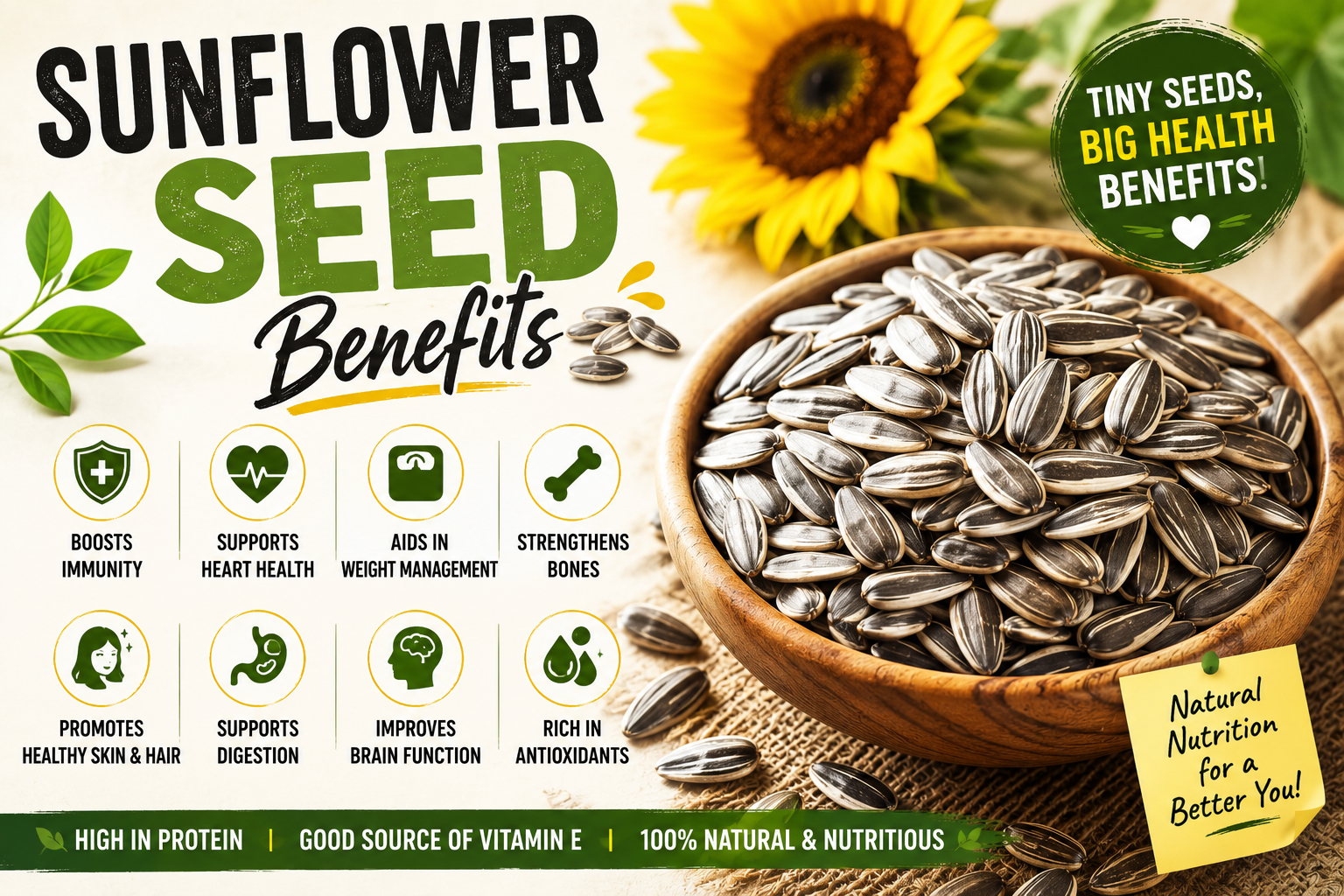
Sunflower seeds are small, crunchy seeds packed with nutrients. They provide vitamin E, healthy unsaturated fats, protein, magnesium, selenium, copper, phosphorus, and other important nutrients.
They can be enjoyed raw or roasted and are easy to add to salads, oatmeal, yogurt, smoothies, homemade granola, and snacks.
But what are the main sunflower seed benefits, and why are these seeds worth including in a balanced diet?
In Part 1, we’ll explore sunflower seed nutrition and the first 10 potential benefits.
What Are Sunflower Seeds?
Sunflower seeds come from the sunflower plant, Helianthus annuus.
They are commonly sold as:
- Whole sunflower seeds
- Shelled sunflower seeds
- Raw sunflower seeds
- Roasted sunflower seeds
- Salted sunflower seeds
- Unsalted sunflower seeds
The edible kernel has a mild, nutty flavor and crunchy texture.
Shelled sunflower seeds are particularly convenient because they can be eaten directly or added to recipes.
Popular ways to eat sunflower seeds
You can sprinkle them over:
- Salads
- Oatmeal
- Yogurt
- Smoothie bowls
- Soups
- Rice dishes
- Roasted vegetables
- Homemade granola
They can also be mixed with other nuts and seeds to make a nutritious trail mix.
Sunflower Seed Nutrition Facts
Sunflower seeds are relatively calorie-dense because they contain a significant amount of fat.
A 1-ounce (28-gram) serving of shelled sunflower seeds provides approximately:
| Nutrient | Approximate Amount |
|---|---|
| Calories | 160–170 |
| Protein | 5–6 g |
| Fat | 14–15 g |
| Carbohydrates | 5–6 g |
| Fiber | 2–3 g |
| Vitamin E | Around 7 mg |
| Magnesium | Around 90 mg |
| Phosphorus | Around 160 mg |
| Selenium | Around 20 mcg |
Exact amounts vary depending on the variety and preparation.
Sunflower seeds are particularly notable for their vitamin E, healthy fats, magnesium, copper, selenium, and protein.
1. Sunflower Seeds Are Rich in Vitamin E
One of the most important sunflower seed benefits is their vitamin E content.
Vitamin E is a fat-soluble antioxidant that helps protect cells from oxidative damage.
It also contributes to:
- Normal immune function
- Protection of cells from oxidative stress
- Maintaining normal body functions
A small serving of sunflower seeds can provide a meaningful amount of vitamin E.
Other foods that provide vitamin E include:
- Almonds
- Hazelnuts
- Peanuts
- Avocados
- Plant oils
- Spinach
Including several vitamin E-rich foods in your diet can help provide nutritional variety.
2. Sunflower Seeds Provide Healthy Unsaturated Fats
Sunflower seeds contain a substantial amount of fat, much of which is unsaturated fat.
Unsaturated fats can be part of a heart-conscious eating pattern, particularly when they replace foods high in saturated fats.
Other sources of unsaturated fats include:
- Almonds
- Walnuts
- Pistachios
- Pumpkin seeds
- Avocados
- Olive oil
Because sunflower seeds are calorie-dense, a moderate serving is usually enough.
3. Sunflower Seeds Provide Plant-Based Protein
A 1-ounce serving of sunflower seeds provides approximately 5–6 grams of protein.
Protein is needed for:
- Maintaining muscle
- Repairing body tissues
- Normal growth and development
- Making enzymes and hormones
- Supporting many normal body functions
Sunflower seeds aren’t a complete protein source on their own, but they can contribute to your overall daily protein intake.
Easy combination
Try:
Greek yogurt + berries + sunflower seeds
or:
Oatmeal + milk + sunflower seeds + banana
Combining different protein-containing foods can help create a more balanced meal.
4. Sunflower Seeds Are a Good Source of Magnesium
Sunflower seeds provide a useful amount of magnesium.
Magnesium contributes to:
- Normal muscle function
- Normal nerve function
- Energy metabolism
- Normal electrolyte balance
- Maintenance of normal bones
Other magnesium-rich foods include:
- Pumpkin seeds
- Almonds
- Cashews
- Beans
- Whole grains
- Leafy green vegetables
Adding different magnesium-rich foods to your diet can help improve nutritional variety.
5. Sunflower Seeds Provide Selenium
Sunflower seeds contain selenium, an essential trace mineral.
Selenium contributes to:
- Normal thyroid function
- Normal immune function
- Protection of cells from oxidative stress
- Normal hair and nail maintenance
The amount of selenium can vary depending on growing conditions and the seeds themselves.
Sunflower seeds can therefore contribute to selenium intake, although they are not as concentrated a source as some other foods.
6. Sunflower Seeds Provide Copper
Copper is another mineral found in sunflower seeds.
Copper contributes to:
- Normal energy metabolism
- Normal iron transport
- Normal connective tissue
- Normal nervous-system function
- Protection of cells from oxidative stress
A varied diet containing nuts, seeds, whole grains, seafood, and legumes can provide copper from multiple sources.
7. Sunflower Seeds Provide Phosphorus
Sunflower seeds contain phosphorus, a mineral involved in several important processes.
Phosphorus contributes to:
- Maintenance of normal bones and teeth
- Normal energy metabolism
- Normal cell function
- Normal acid-base balance
A serving of sunflower seeds can contribute to your daily phosphorus intake.
Other phosphorus-rich foods include:
- Dairy products
- Meat
- Fish
- Beans
- Nuts
- Seeds
8. Sunflower Seeds Contain Dietary Fiber
Sunflower seeds provide dietary fiber, particularly when consumed as part of a varied diet.
Fiber contributes to normal digestive function.
A fiber-rich diet can include:
- Fruits
- Vegetables
- Whole grains
- Beans
- Lentils
- Nuts
- Seeds
Adding sunflower seeds to oatmeal, salads, or yogurt is an easy way to increase the nutritional variety of a meal.
9. Sunflower Seeds Contain Antioxidant Compounds
Sunflower seeds contain vitamin E and other naturally occurring plant compounds with antioxidant properties.
Antioxidants help protect cells from oxidative stress.
However, it’s better to obtain antioxidants from a variety of foods rather than relying on a single ingredient.
Try including:
- Berries
- Citrus fruits
- Tomatoes
- Leafy greens
- Nuts
- Seeds
- Colorful vegetables
Different plant foods provide different combinations of beneficial compounds.
10. Sunflower Seeds Can Fit Into a Heart-Conscious Diet
Sunflower seeds provide a combination of:
- Unsaturated fats
- Fiber
- Magnesium
- Protein
- Vitamin E
- Plant compounds
These characteristics make them a useful addition to many heart-conscious eating patterns.
A balanced eating pattern should also include plenty of:
- Vegetables
- Fruits
- Whole grains
- Beans
- Nuts
- Seeds
- Appropriate protein sources
Sunflower seeds aren’t a treatment for heart disease, but they can be part of an overall nutritious diet.
Sunflower Seeds vs. Pumpkin Seeds
Both are nutritious, but they have different nutritional strengths.
| Nutrient/Feature | Sunflower Seeds | Pumpkin Seeds |
|---|---|---|
| Protein | Moderate | Higher |
| Vitamin E | Particularly notable | Lower |
| Magnesium | Good source | Particularly high |
| Zinc | Moderate | Particularly notable |
| Healthy fats | High | High |
| Selenium | Provides some | Provides some |
Both can have a place in a healthy diet.
You can even combine them in a homemade seed mix.
Raw vs. Roasted Sunflower Seeds
Both raw and roasted sunflower seeds can be nutritious.
Raw sunflower seeds
They have a mild flavor and work well in:
- Smoothies
- Oatmeal
- Yogurt
- Homemade energy bites
Roasted sunflower seeds
Roasting produces a crunchy texture and stronger flavor.
They’re excellent as:
- Snacks
- Salad toppings
- Soup toppings
- Trail mix ingredients
When purchasing roasted seeds, check the label for added sodium and oils.
How to Add Sunflower Seeds to Your Diet
You don’t need complicated recipes.
Breakfast
Add them to oatmeal, cereal, or yogurt.
Lunch
Sprinkle them over salads or grain bowls.
Snack
Pair a small handful with fruit.
Dinner
Use them as a topping for roasted vegetables or soup.
Baking
Add them to homemade bread, muffins, crackers, or granola.
How Many Sunflower Seeds Should You Eat?
A practical serving is approximately 1 ounce (28 grams) of shelled sunflower seeds.
That’s roughly a small handful.
You don’t need to eat this much every day.
Because sunflower seeds are calorie-dense, eating very large portions can add significant calories to your diet.
If you’re new to eating seeds, start with a smaller serving and adjust according to your overall diet and tolerance.
11. Sunflower Seeds Can Support Weight Management
Sunflower seeds can fit into a balanced weight-management diet because they provide protein, fiber, and unsaturated fats.
Protein and fiber can contribute to feelings of fullness, which may help some people manage their overall food intake.
However, sunflower seeds are calorie-dense.
A large handful can contain substantially more calories than expected.
A practical approach
Use a moderate serving with:
- Fresh fruit
- Plain yogurt
- Oatmeal
- A vegetable salad
Sunflower seeds can be nutritious, but they don’t directly burn body fat.
12. Sunflower Seeds Can Support Normal Muscle Function
Sunflower seeds provide magnesium, a mineral that contributes to normal muscle function.
They also provide protein, which is important for maintaining muscle tissue.
For people who exercise regularly, sunflower seeds can be included as part of a broader protein-rich diet.
Simple snack
Banana + Greek yogurt + sunflower seeds
This combination provides carbohydrates, protein, fats, and several minerals.
13. Sunflower Seeds Provide Nutrients Important for Normal Nerve Function
Magnesium and other nutrients found in sunflower seeds contribute to normal nervous-system function.
Magnesium is involved in normal nerve signaling and energy metabolism.
Rather than relying on one food, aim to get nutrients from a variety of foods, including:
- Nuts
- Seeds
- Whole grains
- Beans
- Vegetables
- Fruits
- Dairy or fortified alternatives
A varied diet provides a wider range of essential nutrients.
14. Sunflower Seeds Can Contribute to Normal Immune Function
Sunflower seeds provide nutrients such as vitamin E and selenium, which contribute to normal immune function.
Adequate nutrition is important for maintaining normal immune defenses.
However, eating large amounts of sunflower seeds won’t automatically prevent infections.
Overall immune health is influenced by many factors, including:
- Balanced nutrition
- Adequate sleep
- Physical activity
- General health
- Hygiene
Sunflower seeds are simply one nutritious food that can contribute to the diet.
15. Sunflower Seeds Provide Nutrients Involved in Energy Metabolism
Sunflower seeds contain several nutrients involved in normal energy metabolism, including:
- Magnesium
- Phosphorus
- Copper
- Protein
These nutrients help the body carry out normal metabolic processes.
However, sunflower seeds don’t provide a special energy-boosting effect.
If you’re frequently experiencing unexplained fatigue, it’s better to discuss it with a healthcare professional rather than relying on a particular food.
16. Sunflower Seeds Can Support Plant-Based Eating
Sunflower seeds can be particularly useful in vegetarian and plant-focused diets.
They provide:
- Plant protein
- Healthy fats
- Vitamin E
- Magnesium
- Selenium
- Copper
- Phosphorus
They can be combined with other plant foods to create balanced meals.
Example
Brown rice + chickpeas + vegetables + sunflower seeds
This provides carbohydrates, protein, healthy fats, fiber, and a variety of micronutrients.
17. Sunflower Seeds Can Contribute to Skin Nutrition
Vitamin E is one reason sunflower seeds are often included in discussions about skin health.
Vitamin E acts as an antioxidant and helps protect cells from oxidative stress.
Sunflower seeds also provide healthy fats and other nutrients.
However, eating sunflower seeds alone won’t guarantee clear or younger-looking skin.
Skin health is influenced by:
- Overall diet
- Hydration
- Sun protection
- Sleep
- Genetics
- Hormonal factors
- General health
A varied diet containing fruits, vegetables, nuts, and seeds is a better approach than relying on a single “skin food.”
18. Sunflower Seeds Can Support Bone-Related Nutrition
Sunflower seeds provide several nutrients involved in normal bone health, including:
- Magnesium
- Phosphorus
- Protein
- Copper
These nutrients contribute to normal physiological processes related to bones and connective tissues.
However, healthy bones require more than sunflower seeds.
A bone-supportive diet should also provide adequate:
- Calcium
- Vitamin D
- Protein
- Other essential nutrients
Weight-bearing physical activity is also important for maintaining bone health.
19. Sunflower Seeds Can Make Healthy Meals More Satisfying
Adding sunflower seeds to meals can provide crunch, flavor, protein, fats, and fiber.
This can make otherwise simple meals more enjoyable.
Try adding sunflower seeds to:
- Vegetable salads
- Oatmeal
- Yogurt
- Grain bowls
- Soups
- Roasted vegetables
For example:
Mixed greens + cucumber + tomato + chickpeas + sunflower seeds + olive oil + lemon
creates a simple, nutrient-rich meal.
20. Sunflower Seeds Are an Easy and Versatile Pantry Food
One of the biggest practical advantages of sunflower seeds is their versatility.
They can be used in almost every part of the day.
Breakfast
- Oatmeal
- Yogurt
- Smoothie bowls
- Cereal
Lunch
- Salads
- Grain bowls
- Sandwich toppings
Snacks
- Trail mix
- Fruit and seeds
- Homemade energy bites
Dinner
- Soup toppings
- Roasted vegetables
- Rice dishes
Baking
- Bread
- Crackers
- Muffins
- Granola
This makes sunflower seeds an easy pantry ingredient for people looking to add more nutrient-dense foods to their meals.
Sunflower Seeds and Men’s Health
Sunflower seeds provide nutrients such as selenium, vitamin E, magnesium, and zinc.
These nutrients contribute to normal physiological functions, including reproductive and immune functions.
However, online claims that sunflower seeds dramatically increase testosterone or prevent specific prostate conditions should be treated cautiously.
Sunflower seeds can be part of a nutritious diet, but they shouldn’t replace medical care or prescribed treatment.
Sunflower Seeds and Women’s Health
Sunflower seeds provide several nutrients that are important for overall nutrition.
For example, magnesium contributes to normal muscle and nerve function, while vitamin E provides antioxidant activity.
However, sunflower seeds should not be promoted as a treatment for hormonal conditions, menopause symptoms, infertility, or other medical problems.
For specific health concerns, individualized advice from a qualified healthcare professional is more appropriate.
Sunflower Seeds vs. Pumpkin Seeds
Both are excellent nutrient-dense seeds.
Sunflower seeds are particularly notable for:
- Vitamin E
- Healthy fats
- Selenium
- Copper
Pumpkin seeds are particularly notable for:
- Magnesium
- Zinc
- Protein
- Phosphorus
Rather than choosing only one, you can rotate between both.
Easy seed mix
Sunflower seeds + pumpkin seeds + almonds + walnuts
Use a small portion as a topping for yogurt, oatmeal, or salads.
Sunflower Seeds vs. Chia Seeds
These seeds have different nutritional strengths.
Sunflower seeds
Particularly notable for:
- Vitamin E
- Healthy fats
- Magnesium
- Selenium
- Protein
Chia seeds
Particularly notable for:
- Fiber
- ALA omega-3
- Calcium
- Gel-forming properties
Both can be valuable additions to a balanced diet.
Sunflower Seeds vs. Flaxseeds
Flaxseeds are especially well known for:
- ALA omega-3
- Fiber
- Lignans
Sunflower seeds are particularly notable for:
- Vitamin E
- Selenium
- Healthy fats
- Magnesium
- Protein
You can include both in your diet for greater nutritional variety.
Simple combination
Oatmeal + ground flaxseed + sunflower seeds + berries
How to Choose Healthy Sunflower Seeds
When buying sunflower seeds, look for products with simple ingredients.
Good options
- Unsalted
- Lightly salted
- Dry-roasted
- Raw
- Minimal added ingredients
Check the label
Some flavored sunflower seeds can contain significant amounts of:
- Sodium
- Added sugar
- Added oils
If you’re eating them frequently, plain or lightly salted varieties give you more control over your overall intake.
How Many Sunflower Seeds Should You Eat Per Day?
A practical serving is about 1 ounce (28 grams) of shelled sunflower seeds, roughly equivalent to a small handful.
You don’t necessarily need to eat this amount every day.
Sunflower seeds are nutrient-dense but also relatively high in calories, so portion size matters.
If you’re adding them to your diet for the first time, start with a smaller amount and increase gradually according to your preferences and tolerance.
How Many Calories Are in Sunflower Seeds?
A 1-ounce (28-gram) serving of shelled sunflower seeds typically provides around 160–170 calories.
It also provides approximately:
- 5–6 g protein
- 14–15 g fat
- 5–6 g carbohydrates
- 2–3 g fiber
- A significant amount of vitamin E
- Useful amounts of magnesium, selenium, phosphorus, and copper
Exact nutritional values vary depending on the product and preparation.
Because most of their calories come from fat, sunflower seeds can be very filling but are easy to overeat.
What Is the Best Time to Eat Sunflower Seeds?
There is no scientifically established “best” time.
You can eat sunflower seeds:
- At breakfast
- With lunch
- As an afternoon snack
- With dinner
- Before or after exercise
Breakfast
Add them to oatmeal or yogurt.
Afternoon
Pair a small serving with fruit.
Dinner
Sprinkle them over a salad or roasted vegetables.
The most important factor is how they fit into your overall diet.
Raw vs. Roasted Sunflower Seeds
Both raw and roasted sunflower seeds can be nutritious.
Raw Sunflower Seeds
Raw seeds have a mild flavor and softer texture.
They’re useful in:
- Smoothies
- Oatmeal
- Yogurt
- Homemade energy bites
- Salads
Roasted Sunflower Seeds
Roasting produces a crunchy texture and stronger nutty flavor.
They’re excellent for:
- Snacking
- Salads
- Soups
- Trail mixes
When buying roasted seeds, check the label for added sodium and oils.
Salted vs. Unsalted Sunflower Seeds
If you’re eating sunflower seeds regularly, unsalted or lightly salted varieties can be a better everyday choice.
Some packaged sunflower seeds contain a large amount of sodium.
High sodium intake can be a concern, particularly for people who need to limit sodium.
Better choices
Look for:
- Unsalted
- Lightly salted
- Dry-roasted
- Minimal-ingredient products
You can also roast plain sunflower seeds at home and control the amount of salt.
Shelled vs. Unshelled Sunflower Seeds
Sunflower seeds are available both with and without their shells.
Shelled seeds
These are also called sunflower kernels.
They’re convenient because you can eat them directly and easily add them to recipes.
Unshelled seeds
The shell provides additional fiber, but it isn’t typically eaten in the same way as the kernel.
For everyday cooking, shelled sunflower seeds are usually the easiest option.
Possible Sunflower Seed Side Effects
Sunflower seeds are generally well tolerated when eaten in moderate amounts.
However, eating a large quantity may cause digestive discomfort.
Possible symptoms include:
- Bloating
- Gas
- Stomach discomfort
- Changes in bowel movements
The combination of fat and fiber can be difficult for some people to tolerate in very large portions.
How to avoid discomfort
Start with a small serving and increase gradually.
Also, choose plain seeds if heavily seasoned products cause digestive problems.
Sunflower Seed Allergy
Sunflower seed allergy is uncommon but possible.
Potential allergic reactions can include:
- Itching
- Hives
- Swelling
- Stomach symptoms
- Wheezing
- Difficulty breathing
Anyone experiencing severe difficulty breathing or other signs of a serious allergic reaction should seek emergency medical attention.
If you have a known seed allergy, discuss sunflower seeds with an appropriate healthcare professional before consuming them.
Sunflower Seeds and Medication Considerations
Sunflower seeds are a food rather than a medication.
For most people, moderate amounts can be incorporated into a normal diet.
However, individuals following medically restricted diets or taking medications for specific conditions should follow their healthcare professional’s advice.
If you take prescription medication regularly and are unsure whether a dietary change could affect your treatment, ask your doctor or pharmacist.
Don’t use sunflower seeds as a substitute for prescribed treatment.
How to Store Sunflower Seeds
Sunflower seeds contain natural oils that can eventually become rancid.
Store them in:
- An airtight container
- A cool, dry location
- A place away from direct sunlight
For longer storage, refrigeration or freezing can help preserve freshness.
Signs sunflower seeds have gone bad
Discard them if they develop:
- A rancid smell
- Bitter taste
- Mold
- Unusual moisture
- An unpleasant flavor
Fresh sunflower seeds should have a mild, nutty aroma.
5 Healthy Sunflower Seed Recipes
1. Sunflower Seed Yogurt Bowl
Ingredients
- 1 cup plain Greek yogurt
- 1 tablespoon sunflower seeds
- ½ cup berries
- 1 banana
- Cinnamon
Instructions
- Add yogurt to a bowl.
- Add berries and sliced banana.
- Sprinkle sunflower seeds over the top.
- Add cinnamon.
This makes a simple breakfast or snack with protein, fruit, healthy fats, and minerals.
2. Sunflower Seed Oatmeal
Ingredients
- ½ cup rolled oats
- 1 tablespoon sunflower seeds
- 1 banana
- ½ cup milk
- Berries
- Cinnamon
Instructions
Cook the oats with milk or water.
Top with banana, berries, sunflower seeds, and cinnamon.
3. Crunchy Sunflower Seed Salad
Ingredients
- Mixed leafy greens
- Cucumber
- Tomatoes
- Bell pepper
- Chickpeas
- 1 tablespoon sunflower seeds
- Lemon juice
- Olive oil
Instructions
Combine the ingredients in a bowl and toss well.
The sunflower seeds provide a crunchy texture and additional nutrients.
4. Homemade Sunflower Seed Trail Mix
Ingredients
- Sunflower seeds
- Pumpkin seeds
- Almonds
- Walnuts
- Unsweetened coconut
- Small amount of dried fruit
Mix the ingredients together and store in an airtight container.
Keep portions moderate because nuts, seeds, and dried fruit can be calorie-dense.
5. Homemade Roasted Sunflower Seeds
Ingredients
- Raw sunflower seeds
- 1 teaspoon olive oil
- Paprika
- Garlic powder
- Small amount of salt
Instructions
- Spread the seeds on a baking tray.
- Add a small amount of olive oil.
- Season lightly.
- Roast until lightly browned and crunchy.
- Allow them to cool before eating.
For a lower-sodium option, leave out the salt.
Frequently Asked Questions About Sunflower Seeds
What are the main sunflower seed benefits?
Sunflower seeds provide vitamin E, healthy unsaturated fats, protein, magnesium, selenium, copper, phosphorus, fiber, and other nutrients.
Are sunflower seeds good for weight loss?
They can fit into a weight-management diet because they provide protein, fiber, and healthy fats. However, they are calorie-dense and do not directly burn body fat.
How many sunflower seeds should I eat per day?
Around 1 ounce (28 grams) is a practical serving of shelled sunflower seeds. Individual needs vary.
Are sunflower seeds high in vitamin E?
Yes. Sunflower seeds are particularly notable for their vitamin E content.
Are sunflower seeds high in protein?
They provide a moderate amount of protein, with roughly 5–6 grams per 1-ounce serving.
Are sunflower seeds good for skin?
They provide vitamin E and other nutrients involved in normal cell function. However, no single food guarantees clear or youthful-looking skin.
Are sunflower seeds good for the heart?
Their unsaturated fats and other nutrients can fit into a heart-conscious eating pattern. They aren’t a treatment for heart disease.
Are raw or roasted sunflower seeds better?
Both can be nutritious. Choose according to preference and check roasted products for excessive salt or added oils.
Are unsalted sunflower seeds healthier?
Unsalted or lightly salted varieties can make it easier to control your sodium intake.
Can I eat sunflower seeds every day?
Moderate portions can fit into a balanced diet for most people.
Do sunflower seeds help with sleep?
Sunflower seeds contain magnesium and other nutrients involved in normal physiological functions, but they should not be considered a proven treatment for insomnia.
Are sunflower seeds good for men?
They provide several nutrients important for normal body functions, including selenium, magnesium, and vitamin E. Claims about dramatically increasing testosterone should be treated cautiously.
Can children eat sunflower seeds?
Sunflower seed kernels can be included in age-appropriate diets. For young children, whole seeds may present a choking risk, so preparation should be appropriate for their age.
Do sunflower seeds expire?
Yes. Their natural oils can become rancid over time. Store them properly and check for unusual odors or flavors.
Final Takeaway
Sunflower seeds are a convenient and versatile food that can add several important nutrients to your diet.
They provide:
- Vitamin E
- Protein
- Healthy unsaturated fats
- Magnesium
- Selenium
- Copper
- Phosphorus
- Fiber
You can easily add them to oatmeal, yogurt, salads, smoothies, soups, granola, trail mixes, and homemade snacks.
A small serving of around 1 ounce (28 grams) can provide a substantial amount of nutrition without requiring a large quantity of food.
For everyday eating, choose plain, unsalted or lightly salted sunflower seeds when possible, and keep portions moderate because they’re calorie-dense.
Most importantly, think of sunflower seeds as one useful part of a varied diet rather than a miracle food. Combining them with fruits, vegetables, whole grains, legumes, nuts, and other seeds gives you a much broader range of nutrients.
Suggested Article’s:
- Pumpkin Seed Benefits
- Chia Seed Benefits
- Flaxseed Benefits
- Pistachio Benefits
- Cashew Benefits
- Pecan Benefits
- Macadamia Nut Benefits
- Brazil Nut Benefits
- Hazelnut Benefits
- Mixed Nuts Benefits
- Best Nuts for Daily Eating
- Foods Rich in Zinc
- Foods Rich in Iron
- Best Natural Foods
- Best Healthy Pantry Foods


Leave a Reply