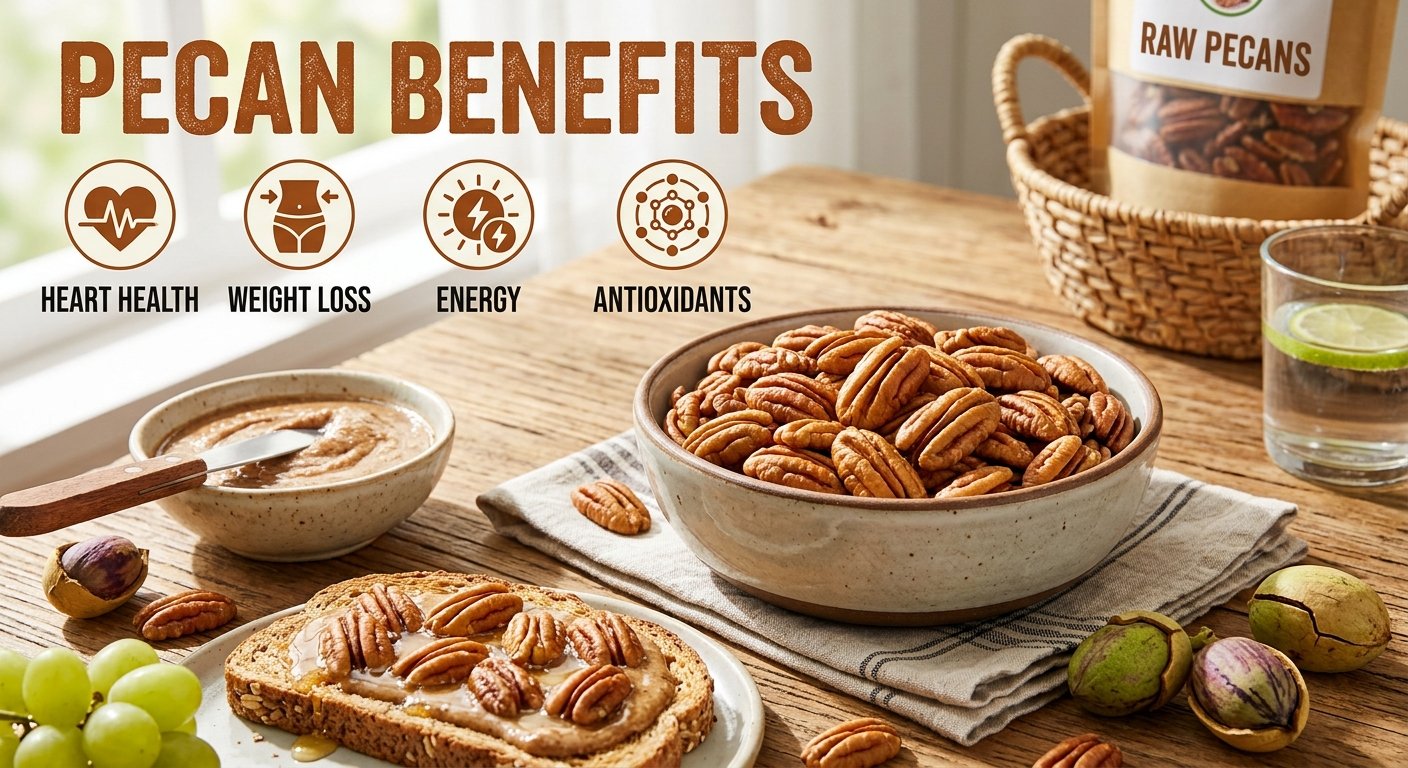
Pecans are more than a popular ingredient in pies and desserts. These buttery, mildly sweet tree nuts provide unsaturated fats, fiber, protein, minerals, and antioxidant compounds, making them a useful addition to a balanced diet.
Although pecans are naturally nutritious, they are also calorie-dense. The goal isn’t to eat large amounts simply because they’re healthy. A moderate portion can provide valuable nutrients while fitting into an overall balanced eating pattern.
In this guide, we’ll explore the most important pecan benefits, their nutrition profile, how they may fit into a healthy lifestyle, and practical ways to enjoy them.
What Are Pecans?
Pecans are edible nuts that grow on pecan trees, which are native to North America.
They are commonly eaten:
- Raw
- Dry-roasted
- Chopped
- Ground
- Added to oatmeal
- Mixed into salads
- Used in baked goods
- Added to yogurt and desserts
Pecans have a naturally rich and buttery flavor, so even a relatively small amount can add plenty of taste and texture to a meal.
For everyday eating, plain or unsalted pecans are generally the simplest option.
Pecan Nutrition Facts
A 1-ounce (28-gram) serving of pecans provides approximately:
| Nutrient | Approximate Amount |
|---|---|
| Calories | 196 |
| Protein | 2.6 g |
| Total fat | 20.4 g |
| Carbohydrates | 3.9 g |
| Fiber | 2.7 g |
| Magnesium | 34 mg |
| Phosphorus | 79 mg |
| Zinc | 1.3 mg |
| Copper | 0.3 mg |
| Manganese | 1.3 mg |
The exact numbers can vary slightly depending on the product and preparation method.
One thing that immediately stands out is the relatively high amount of fat. However, much of the fat in pecans is unsaturated fat, rather than saturated fat.
1. Pecans Are Rich in Unsaturated Fats
One of the defining nutritional features of pecans is their high fat content.
But fat isn’t automatically unhealthy.
Pecans contain predominantly unsaturated fatty acids, including monounsaturated and polyunsaturated fats.
These types of fats can be part of a heart-conscious dietary pattern, particularly when they replace foods higher in saturated fats.
Good sources of unsaturated fats also include:
- Avocados
- Olive oil
- Almonds
- Pistachios
- Seeds
- Fatty fish
Practical idea
Instead of adding a large amount of pecans to an already calorie-heavy meal, use a small amount to replace another less nutritious topping.
2. Pecans Provide Dietary Fiber
A 1-ounce serving of pecans provides roughly 2.7 grams of fiber.
Fiber is important for normal digestive function and can contribute to a more satisfying diet.
Pecans aren’t a substitute for high-fiber foods such as beans, lentils, fruits, vegetables, and whole grains, but they can make a useful contribution.
For a fiber-rich snack, try:
Apple + pecans
or:
Berries + plain yogurt + pecans
3. Pecans Contain Plant-Based Protein
Pecans aren’t as protein-dense as some other nuts, legumes, dairy products, eggs, meat, or fish.
Still, they provide a modest amount of protein.
A 1-ounce serving contains approximately 2.6 grams of protein.
That means pecans can contribute to your overall protein intake, particularly when combined with other foods.
For example:
Greek yogurt + berries + pecans
provides substantially more protein than pecans alone.
4. Pecans Provide Manganese
Pecans are a particularly useful source of manganese, an essential mineral involved in several normal body processes.
Manganese contributes to:
- Normal metabolism
- Bone development
- Antioxidant enzyme function
- Protection of cells from oxidative stress
A varied diet can provide manganese from nuts, whole grains, legumes, vegetables, and other foods.
5. Pecans Provide Copper
Pecans also contain copper.
Copper is involved in several important functions, including:
- Energy production
- Iron metabolism
- Connective tissue formation
- Nervous system function
Pecans aren’t the only dietary source of copper, but they can make a useful contribution to overall intake.
Other sources include:
- Seeds
- Shellfish
- Legumes
- Whole grains
- Other nuts
6. Pecans Contain Antioxidant Compounds
Pecans contain naturally occurring plant compounds, including polyphenols, that have antioxidant activity.
Antioxidants help protect cells from oxidative damage.
However, it’s important not to think of pecans as a cure or treatment for diseases caused by oxidative stress.
A better strategy is to eat a wide variety of plant foods, including:
- Berries
- Vegetables
- Fruits
- Nuts
- Seeds
- Whole grains
- Legumes
Pecans can be one part of that variety.
7. Pecans Can Fit Into a Heart-Healthy Diet
Pecans are naturally rich in unsaturated fats and contain fiber and plant compounds.
These characteristics make them compatible with dietary patterns that emphasize foods such as:
- Nuts
- Seeds
- Vegetables
- Fruits
- Whole grains
- Beans
- Fish
The important point is that the overall dietary pattern matters much more than any individual food.
Using pecans to replace certain highly processed snacks can improve the nutritional quality of a meal or snack.
8. Pecans May Help Support a Balanced Eating Pattern
Pecans can make simple foods more satisfying and interesting.
For example, plain oatmeal can become:
Oatmeal + blueberries + cinnamon + chopped pecans
A simple salad can become:
Greens + cucumber + apple + pecans + chickpeas
This makes it easier to build meals around minimally processed foods rather than relying heavily on packaged snacks.
9. Pecans Can Be a Convenient Snack
Pecans require virtually no preparation.
You can keep a measured serving at:
- Home
- Work
- School
- During travel
A simple snack could be:
Pecans + fresh fruit
The combination gives you the richness of nuts alongside the water, carbohydrates, and fiber found in fruit.
For calorie control, pre-portion the pecans rather than eating directly from a large bag.
10. Pecans Add Flavor and Texture to Healthy Foods
Pecans have a naturally buttery flavor and crunchy texture.
They can transform simple meals without requiring complicated preparation.
Try adding chopped pecans to:
Breakfast
Oatmeal, overnight oats, or yogurt.
Lunch
Green salads or grain bowls.
Dinner
Roasted vegetables or whole-grain dishes.
Snacks
Fruit, yogurt, or homemade trail mix.
Desserts
Use a small amount in homemade recipes instead of relying entirely on highly processed toppings.
Pecans and Weight Management
Pecans can fit into a weight-management diet, but portion size is particularly important.
Why?
Because a 1-ounce serving contains approximately 196 calories.
That means a few large handfuls can add a substantial number of calories.
However, calorie density doesn’t make a food automatically unhealthy.
A better strategy is to use pecans in moderate portions and make them a replacement for less nutritious foods.
Example
Instead of:
Cookies + sugary drink
try:
Pecans + apple + water
This doesn’t mean the second option is magically a weight-loss meal. It simply provides a different nutritional profile.
Pecans vs. Other Nuts
Different nuts have different nutritional strengths.
| Nut | Notable Nutritional Features |
|---|---|
| Pecans | Unsaturated fats, manganese, copper, polyphenols |
| Walnuts | ALA omega-3 fatty acid |
| Almonds | Vitamin E, magnesium |
| Pistachios | Protein, fiber, vitamin B6 |
| Cashews | Copper, magnesium, zinc |
There is no single nut that is best for everyone.
Including different nuts and seeds can provide greater nutritional variety.
How to Add Pecans to Your Diet
You don’t need complicated recipes.
Try these simple combinations:
Breakfast
Oatmeal + banana + pecans
Snack
Apple + pecans
Lunch
Chicken salad + vegetables + pecans
Afternoon
Greek yogurt + berries + pecans
Dinner
Roasted vegetables + quinoa + chopped pecans
These combinations make it easy to include pecans without turning them into the main component of every meal.
A Note About Pecan Products
Not every pecan-based food has the same nutritional profile.
Whole or minimally processed pecans are different from products such as:
- Candied pecans
- Sugar-coated pecans
- Chocolate-covered pecans
- Highly salted pecans
- Pecan desserts
These products may contain substantial amounts of:
- Added sugar
- Sodium
- Butter
- Other added fats
If your goal is to maximize the nutritional benefits of pecans, plain or lightly processed versions are usually easier to incorporate into a healthy diet.
11. Pecans Can Fit Into a Weight-Loss Diet
Pecans are often avoided during weight loss because they contain a relatively high number of calories.
However, calorie-dense does not automatically mean unhealthy.
Pecans provide:
- Unsaturated fats
- Fiber
- A small amount of protein
- A satisfying crunchy texture
These characteristics can make them a useful alternative to some highly refined snacks.
Try this swap
Instead of:
Cookies or candy
Try:
A small serving of pecans + an apple
The goal is not to eat unlimited pecans. It’s to use a controlled portion as part of a balanced eating pattern.
12. Pecans May Support Healthy Cholesterol Levels
Pecans contain predominantly unsaturated fats.
Research on nuts overall suggests that incorporating nuts into a balanced diet may have favorable effects on blood lipid profiles, especially when they replace foods higher in saturated fat.
For example, you might use chopped pecans instead of a highly processed topping on oatmeal or yogurt.
However, pecans aren’t a medication and should not be used to treat high cholesterol.
If your cholesterol is elevated, follow your healthcare professional’s recommendations.
13. Pecans May Help Support a Balanced Blood Sugar Response
Pecans contain relatively little carbohydrate and provide fat and fiber.
Adding nuts to a meal can change the overall nutritional composition of that meal compared with consuming refined carbohydrates alone.
For example:
Oatmeal + berries + pecans
contains more protein, fat, and fiber than a breakfast based primarily on refined carbohydrates.
Research has investigated nuts as part of dietary patterns for people concerned about metabolic health, but pecans should not be considered a treatment for diabetes.
14. Pecans Contribute to Digestive Health
Pecans provide dietary fiber.
Fiber contributes to normal bowel function and is an important part of a healthy digestive system.
However, pecans should be combined with other sources of fiber.
Good choices include:
- Beans
- Lentils
- Chickpeas
- Oats
- Apples
- Berries
- Vegetables
- Whole grains
Increasing fiber gradually can be more comfortable than suddenly consuming large amounts.
15. Pecans Provide Magnesium
Pecans contain magnesium, an essential mineral involved in hundreds of biochemical processes.
Magnesium contributes to:
- Normal muscle function
- Nerve function
- Energy metabolism
- Normal protein synthesis
- Bone health
A serving of pecans won’t provide all your magnesium needs, but it can contribute to your overall intake.
Other good sources include:
- Pumpkin seeds
- Almonds
- Beans
- Whole grains
- Leafy greens
16. Pecans Provide Phosphorus
Pecans also contain phosphorus.
Phosphorus is important for:
- Bones and teeth
- Energy metabolism
- Cell membranes
- Normal cellular processes
Most people can obtain phosphorus from a varied diet that includes nuts, seeds, dairy products, legumes, meat, fish, and whole grains.
Pecans are one small contributor.
17. Pecans Can Support Normal Energy Metabolism
Pecans provide calories from fat along with small amounts of protein and carbohydrate.
Their nutrients, including B vitamins and minerals, contribute to normal metabolic processes.
This doesn’t mean pecans provide a special energy boost like caffeine.
Rather, they provide usable dietary energy that can be part of a normal meal or snack.
For a balanced snack, try:
Pecans + banana
The banana provides carbohydrates while the pecans provide fats and a small amount of protein.
18. Pecans Can Be Useful for Active People
People who exercise need enough energy and nutrients to support their activity.
Pecans can be included in snacks and meals around exercise.
Before exercise
Try a small amount of pecans with fruit.
Banana + pecans
After exercise
Include pecans alongside a more substantial protein and carbohydrate source.
Greek yogurt + berries + pecans
or:
Chicken + brown rice + vegetables + pecans
Because pecans are relatively high in fat, a very large portion immediately before intense exercise may feel uncomfortable for some people.
19. Pecans Can Make Healthy Meals More Enjoyable
Healthy eating becomes easier when food actually tastes good.
Pecans can add:
- Crunch
- Richness
- Mild sweetness
- Nutty flavor
For example, steamed vegetables can become more appealing with:
Broccoli + lemon + chopped pecans
A simple salad can become:
Spinach + apple + chickpeas + pecans
And oatmeal can become:
Oats + berries + cinnamon + pecans
Small additions can make nutritious meals more enjoyable.
20. Pecans Increase Dietary Variety
Different nuts offer different combinations of nutrients.
Pecans provide a nutritional profile that differs from:
- Almonds
- Walnuts
- Pistachios
- Cashews
- Peanuts
You don’t have to choose only one type.
Rotating different nuts and seeds can help add variety to your diet.
For example:
Monday: almonds
Tuesday: pistachios
Wednesday: pecans
Thursday: walnuts
The exact schedule doesn’t matter. Variety is the important idea.
Pecans and Heart Health: Looking at the Bigger Picture
Pecans can fit comfortably into a heart-conscious dietary pattern.
Instead of focusing on one food, build meals around:
More often
- Vegetables
- Fruits
- Whole grains
- Beans
- Lentils
- Nuts
- Seeds
- Fish
Less often
- Highly processed foods
- Foods high in saturated fat
- Excess sodium
- Sugar-sweetened beverages
Pecans are most useful when they contribute to this overall pattern.
Pecans for Blood Sugar: What You Should Know
Pecans are relatively low in carbohydrates compared with many common snack foods.
However, this doesn’t mean that eating large amounts of pecans is necessary or automatically beneficial for blood sugar.
A better approach is to combine foods.
For example:
Plain Greek yogurt + berries + pecans
or:
Oats + cinnamon + berries + pecans
These meals contain a combination of nutrients rather than relying primarily on refined carbohydrates.
People with diabetes should consider their individual meal plan and follow guidance from their healthcare professional.
Pecans and Skin Health
Pecans contain:
- Unsaturated fats
- Copper
- Zinc
- Manganese
- Other plant compounds
These nutrients contribute to normal physiological functions.
However, there is a big difference between saying a food provides nutrients involved in normal skin function and claiming that it will cure acne or reverse aging.
Pecans can be part of a nutrient-rich diet, but healthy skin depends on many factors.
Pecans and Brain Health
Pecans contain unsaturated fats and antioxidant plant compounds that have attracted interest in nutrition research.
A healthy dietary pattern may support overall cardiovascular and metabolic health, which is also relevant to long-term brain health.
However, claims that pecans directly improve memory or prevent dementia go beyond what can be confidently concluded from eating the nuts alone.
A better strategy is to focus on an overall healthy lifestyle that includes:
- Nutritious foods
- Regular physical activity
- Adequate sleep
- Healthy blood pressure
- Social and mental activity
Are Pecans Better Than Walnuts?
Not necessarily.
Walnuts are particularly known for providing alpha-linolenic acid (ALA), a plant-based omega-3 fatty acid.
Pecans are especially notable for their:
- Monounsaturated fats
- Manganese
- Copper
- Polyphenols
Both can fit into a healthy diet.
You don’t need to choose one exclusively.
Are Pecans Better Than Almonds?
Again, there is no universal winner.
Almonds are particularly known for:
- Vitamin E
- Magnesium
- Fiber
Pecans are notable for:
- Unsaturated fats
- Manganese
- Copper
- Polyphenols
Eating different nuts can provide more nutritional variety than relying on one type.
Best Ways to Eat Pecans
Pecans are extremely versatile.
Breakfast
Add them to:
- Oatmeal
- Overnight oats
- Greek yogurt
Lunch
Add chopped pecans to:
- Salads
- Grain bowls
- Chickpea dishes
Dinner
Use them as a topping for:
- Roasted vegetables
- Whole grains
- Fish
Snack
Pair a small serving with:
- Apple
- Pear
- Berries
- Banana
How Many Pecans Should You Eat a Day?
A commonly used serving size for pecans is 1 ounce (28 grams).
Because pecans vary in size, the exact number of individual halves can differ, but this is roughly a small handful.
Your ideal portion can depend on:
- Daily calorie needs
- Activity level
- Overall diet
- Weight-management goals
- Other sources of fat in your meals
You don’t have to eat pecans every day to benefit from their nutrients.
Simple portion-control tip
Instead of eating directly from a large bag, measure a serving and place it in a small bowl.
This makes it easier to enjoy pecans without accidentally eating several servings.
How Many Calories Are in Pecans?
A 1-ounce (28-gram) serving of pecans contains approximately 196 calories.
It also provides around:
- 2.6 g protein
- 20.4 g fat
- 3.9 g carbohydrates
- 2.7 g fiber
Their high calorie content comes largely from their natural fat.
This is one reason portion size is important.
At the same time, those calories come with useful nutrients, unlike many highly processed snack foods that can provide large amounts of calories with relatively little nutritional value.
Can You Eat Pecans While Trying to Lose Weight?
Yes.
Pecans can be included in a calorie-controlled diet.
The key is to use them strategically.
Instead of adding pecans:
Use them to replace another snack or topping.
For example:
Cookies → apple + pecans
Sugary cereal topping → berries + pecans
Highly processed snack → yogurt + pecans
This approach can improve the nutritional quality of your diet without unnecessarily adding large amounts of extra calories.
Remember that pecans themselves don’t burn fat. Weight loss depends on your overall energy intake, food choices, activity, and other lifestyle factors.
Best Time to Eat Pecans
There is no scientifically established “best time” to eat pecans.
They can be enjoyed whenever they fit into your diet.
Morning
Add chopped pecans to oatmeal.
Midday
Pair them with fruit for a snack.
Before exercise
A small portion with a carbohydrate-rich food can work for some people.
After exercise
Combine them with protein and carbohydrates as part of a balanced meal.
Evening
A measured portion can be included in a snack such as yogurt and fruit.
The total amount you eat throughout the day matters more than the exact timing.
Raw vs. Roasted Pecans
Both raw and roasted pecans can be nutritious.
However, roasting and flavoring can change the overall nutritional profile.
When shopping, check the ingredient list.
Simple options
- Raw pecans
- Dry-roasted pecans
- Unsalted pecans
- Lightly salted pecans
Products to consume more selectively
- Candied pecans
- Sugar-coated pecans
- Chocolate-covered pecans
- Heavily salted pecans
- Pecans roasted with substantial added oils
The pecan itself can be nutritious, while the added ingredients may significantly increase sugar, sodium, or calories.
Are Salted Pecans Healthy?
Salted pecans can still provide the nutrients naturally present in pecans.
The main consideration is sodium.
If you already consume a lot of salty foods, choosing unsalted or lightly salted pecans can make it easier to manage your overall sodium intake.
You can add flavor yourself with:
- Cinnamon
- Paprika
- Black pepper
- Garlic powder
- Rosemary
- Chili powder
Can Pecans Cause Allergies?
Yes.
Pecans are tree nuts and can cause allergic reactions.
Possible symptoms include:
- Itching
- Hives
- Swelling
- Stomach pain
- Vomiting
- Difficulty breathing
A severe allergic reaction can be life-threatening.
If you have a known tree-nut allergy, don’t assume pecans are safe. Follow your healthcare professional’s advice about which nuts and products to avoid.
If someone develops difficulty breathing, swelling of the throat, or other signs of a severe allergic reaction after eating pecans, seek emergency medical care immediately.
Can Eating Too Many Pecans Cause Problems?
Yes.
Even nutritious foods can cause problems when eaten in excessive amounts.
Large quantities of pecans may contribute substantial calories and, for some people, digestive discomfort.
Possible issues include:
- Bloating
- Gas
- Stomach discomfort
The easiest solution is usually portion control.
If you are not accustomed to eating nuts regularly, start with a smaller amount and see how your body responds.
Are Candied Pecans Healthy?
Candied pecans are different from plain pecans.
They may contain:
- Added sugar
- Syrups
- Butter
- Additional oils
- Other sweeteners
This doesn’t mean you can never eat them.
It simply means they should be viewed more like a sweet treat rather than the same nutritional choice as plain pecans.
For everyday use, plain or lightly roasted pecans are generally easier to incorporate into a nutrient-focused diet.
How to Store Pecans
Pecans contain a high amount of natural oil, so proper storage helps maintain their quality.
Room temperature
For short-term storage, keep pecans in:
- An airtight container
- A cool location
- A dry environment
- A place away from direct sunlight
Refrigerator
Refrigeration can help extend freshness.
Freezer
For longer storage, pecans can be frozen in a well-sealed container or freezer bag.
Before eating stored pecans, check for:
- Rancid or unpleasant smell
- Bitter flavor
- Mold
- Unusual appearance
If they smell or taste rancid, it’s better to discard them.
5 Easy Ways to Add Pecans to Your Diet
1. Pecan and Apple Snack
Ingredients
- 1 small apple
- A moderate serving of pecans
- Cinnamon
Slice the apple and enjoy it with the pecans.
Simple, portable, and requires no cooking.
2. Pecan Oatmeal
Ingredients
- Rolled oats
- Milk or unsweetened plant milk
- Banana
- Chopped pecans
- Cinnamon
Cook the oats and top them with banana, cinnamon, and pecans.
3. Berry Pecan Yogurt Bowl
Ingredients
- Plain Greek yogurt
- Blueberries or strawberries
- Chopped pecans
- Chia seeds
Combine everything in a bowl.
This gives you protein from the yogurt, fruit, seeds, and healthy fats from the pecans.
4. Pecan Salad
Ingredients
- Spinach or mixed greens
- Apple slices
- Cucumber
- Chickpeas
- Pecans
Add lemon juice and a small amount of olive oil.
The pecans provide crunch and richness without requiring a complicated dressing.
5. Roasted Vegetables With Pecans
Ingredients
- Broccoli
- Carrots
- Bell peppers
- Sweet potato
- Chopped pecans
Roast the vegetables and sprinkle the pecans over them before serving.
For extra flavor, add black pepper, garlic, and herbs.
How Pecans Fit Into a Balanced Plate
Pecans should complement other nutritious foods rather than replace them.
A balanced meal could contain:
Protein
Chicken, fish, eggs, tofu, beans, lentils, or Greek yogurt.
Carbohydrates
Oats, brown rice, quinoa, potatoes, or whole-grain bread.
Vegetables
Broccoli, spinach, carrots, tomatoes, peppers, or leafy greens.
Fruit
Apples, berries, oranges, bananas, or pears.
Healthy fats
Pecans, seeds, avocado, or olive oil.
This approach provides a much broader range of nutrients than relying heavily on one food.
Frequently Asked Questions About Pecan Benefits
Are pecans good for you?
Yes. Pecans provide unsaturated fats, fiber, manganese, copper, magnesium, and antioxidant plant compounds. They can be part of a balanced diet.
How many pecans should I eat a day?
A common serving is approximately 1 ounce (28 grams). Your appropriate amount depends on your overall calorie and nutritional needs.
Are pecans good for weight loss?
Pecans can fit into a weight-loss diet when eaten in moderate portions. They don’t directly burn fat, but they can replace less nutritious snacks.
Are pecans high in calories?
Yes. A 1-ounce serving contains approximately 196 calories, so portion control is important.
Are pecans high in protein?
Pecans contain some protein, around 2.6 grams per 1-ounce serving, but they aren’t among the most protein-dense foods.
Are pecans high in fiber?
Pecans provide around 2.7 grams of fiber per ounce and can contribute to your daily fiber intake.
Are pecans good for your heart?
Pecans contain predominantly unsaturated fats and can fit into a heart-conscious dietary pattern. The overall quality of your diet remains more important than any individual food.
Can I eat pecans every day?
If you don’t have a pecan or tree-nut allergy, moderate amounts can be included regularly as part of a varied diet.
Are raw pecans healthier than roasted pecans?
Both can fit into a healthy diet. Pay attention to added salt, sugar, and oils in flavored or roasted products.
Are salted pecans healthy?
They still provide the nutrients found in pecans, but heavily salted varieties can contain more sodium. Unsalted or lightly salted versions may be preferable if you’re watching sodium intake.
Are pecans good for digestion?
Pecans provide dietary fiber, which contributes to normal digestive function. Eating very large quantities may cause digestive discomfort for some people.
Can pecans help lower cholesterol?
Nuts, including pecans, can be part of dietary patterns associated with healthier blood lipid profiles. However, pecans should not be considered a substitute for medical treatment.
Are pecans good for blood sugar?
Pecans are relatively low in carbohydrates and provide fat and fiber. They can fit into balanced meals, but they aren’t a treatment for diabetes.
Are pecans good for the brain?
Pecans provide unsaturated fats and plant compounds that contribute to a nutrient-rich diet. However, eating pecans alone has not been established as a way to prevent or treat brain diseases.
Are pecans better than walnuts?
Neither is universally better. Walnuts are notable for ALA omega-3 fatty acids, while pecans are particularly rich in unsaturated fats and certain minerals and plant compounds.
Pecan Benefits: Final Takeaway
Pecans are a flavorful and nutrient-dense tree nut that can add healthy fats, fiber, minerals, and antioxidant plant compounds to your diet.
Their biggest nutritional strengths include:
- Unsaturated fats
- Manganese
- Copper
- Fiber
- Plant compounds
- Some protein
- Magnesium and phosphorus
The most practical way to enjoy pecans is to keep portions moderate and use them alongside other whole foods.
Try adding a small serving to oatmeal, yogurt, salads, fruit, roasted vegetables, or whole-grain meals.
And remember: a healthy diet isn’t about finding one perfect food. It’s about consistently eating a variety of nutrient-rich foods in appropriate portions.
Suggested Articles:
- Pistachio Benefits
- Cashew Benefits
- Best Natural Foods
- Best Healthy Pantry Foods
- Healthy Foods List
- Best Superfoods
- Foods Rich in Magnesium
- Foods Rich in Zinc
- Foods Rich in Iron
- Foods High in Antioxidants
- High Protein Snacks
- Best Foods for Weight Loss



Leave a Reply