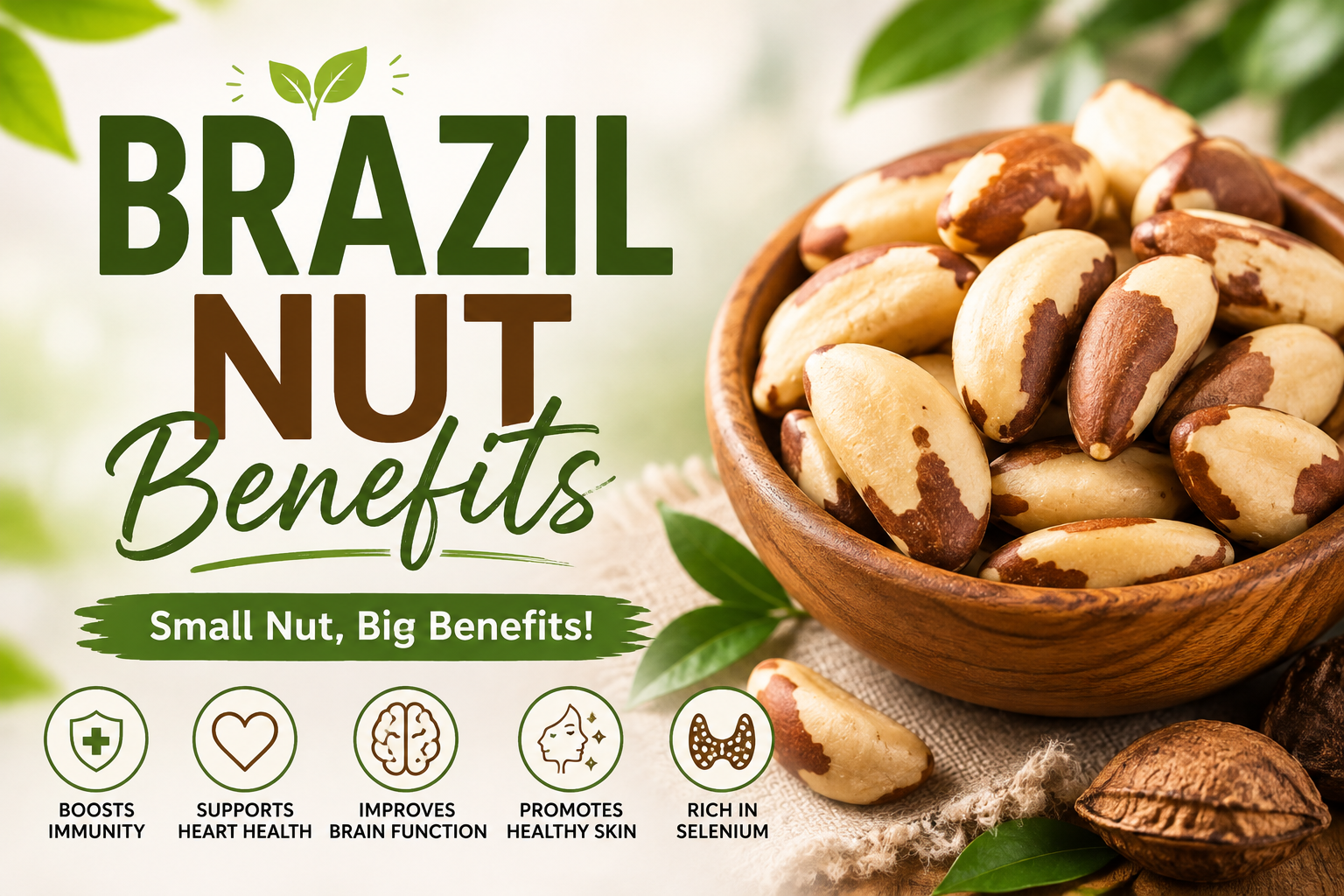
Brazil nuts are large, creamy tree nuts native to the Amazon rainforest. They have a rich, slightly earthy flavor and are especially famous for being one of the richest natural food sources of selenium, an essential mineral that the body needs in small amounts.
Along with selenium, Brazil nuts provide healthy unsaturated fats, protein, fiber, magnesium, copper, phosphorus, and other nutrients.
However, Brazil nuts are different from many other nuts because selenium content can vary substantially between individual nuts. More is not necessarily better, so portion size is particularly important.
In this first part, we’ll explore Brazil nut nutrition and the first 10 potential benefits.
What Are Brazil Nuts?
Brazil nuts are seeds from the Bertholletia excelsa tree, which grows naturally in parts of the Amazon region of South America.
Despite their name, Brazil nuts aren’t exclusively from Brazil. They can also come from other Amazonian countries.
You may find them:
- Raw
- Roasted
- Unsalted
- Salted
- Chopped
- Included in trail mixes
- Added to desserts and baked goods
Their rich, creamy texture makes them easy to use in both sweet and savory foods.
Brazil Nut Nutrition Facts
Brazil nuts are nutrient-dense, meaning they provide a significant amount of nutrients relative to their serving size.
A 1-ounce (28-gram) serving provides approximately:
| Nutrient | Approximate Amount |
|---|---|
| Calories | 187 |
| Protein | 4.1 g |
| Total fat | 19 g |
| Carbohydrates | 3.3 g |
| Fiber | 2.1 g |
| Magnesium | 106 mg |
| Phosphorus | 203 mg |
| Copper | 0.5 mg |
| Selenium | Very high and highly variable |
The exact nutritional composition can vary, particularly the selenium content.
This variability is one of the most important things to understand about Brazil nuts.
1. Brazil Nuts Are Extremely Rich in Selenium
The most famous Brazil nut benefit is their exceptionally high selenium content.
Selenium is an essential trace mineral that the body needs for several important functions.
It contributes to:
- Normal thyroid function
- Protection of cells from oxidative stress
- Normal immune function
- DNA synthesis
- Reproduction
Brazil nuts can provide a substantial amount of selenium from a very small quantity.
However, this is also why you shouldn’t assume that eating a large handful is better.
Brazil nuts are a food where moderation is particularly important.
2. Brazil Nuts Support Normal Thyroid Function
Selenium is important for normal thyroid function.
The thyroid gland uses selenium-dependent enzymes in processes involved in thyroid hormone metabolism.
Because Brazil nuts are exceptionally rich in selenium, they can contribute significantly to dietary selenium intake.
However, eating Brazil nuts should not be considered a treatment for thyroid disease.
If you have a diagnosed thyroid condition or take thyroid medication, your healthcare professional can advise you about your individual nutritional needs.
3. Brazil Nuts Provide Healthy Fats
Brazil nuts contain a substantial amount of fat, much of which is unsaturated.
Unsaturated fats can be part of a heart-conscious eating pattern when they replace foods higher in saturated fats.
Other foods rich in unsaturated fats include:
- Almonds
- Pecans
- Macadamia nuts
- Avocados
- Olive oil
- Seeds
Brazil nuts can therefore be incorporated into a balanced diet as one source of dietary fat.
4. Brazil Nuts Provide Plant-Based Protein
Brazil nuts provide approximately 4 grams of protein per 1-ounce serving.
Protein is needed for:
- Muscle maintenance
- Tissue repair
- Enzyme production
- Hormone production
- Normal immune function
However, Brazil nuts aren’t a complete replacement for protein-rich foods.
You can combine them with:
- Beans
- Lentils
- Eggs
- Greek yogurt
- Fish
- Chicken
- Tofu
For example:
Greek yogurt + berries + chopped Brazil nuts
creates a more protein-rich and nutritionally diverse snack.
5. Brazil Nuts Provide Dietary Fiber
Brazil nuts contain dietary fiber, with roughly 2 grams per ounce.
Fiber contributes to:
- Normal digestive function
- Regular bowel movements
- Overall dietary quality
But Brazil nuts shouldn’t be your primary source of fiber.
A high-fiber diet should also include:
- Fruits
- Vegetables
- Beans
- Lentils
- Whole grains
- Seeds
Because Brazil nuts are so selenium-rich, you should not try to consume large quantities simply to increase your fiber intake.
6. Brazil Nuts Are a Good Source of Magnesium
Brazil nuts contain a substantial amount of magnesium.
Magnesium is an essential mineral involved in hundreds of processes in the body.
It contributes to:
- Normal muscle function
- Normal nerve function
- Energy metabolism
- Protein synthesis
- Maintenance of normal bones
Other magnesium-rich foods include:
- Pumpkin seeds
- Almonds
- Cashews
- Beans
- Whole grains
- Leafy green vegetables
Brazil nuts can contribute to your daily magnesium intake while also providing other nutrients.
7. Brazil Nuts Provide Copper
Brazil nuts also contain copper, an essential trace mineral.
Copper contributes to several normal body functions, including:
- Energy production
- Iron transport
- Connective tissue maintenance
- Nervous system function
- Normal immune function
A varied diet generally provides copper from foods such as nuts, seeds, seafood, beans, and whole grains.
Brazil nuts can be one dietary source.
8. Brazil Nuts Provide Phosphorus
Brazil nuts contain phosphorus, another essential mineral.
Phosphorus contributes to:
- Normal bones and teeth
- Energy metabolism
- Cell membranes
- Normal cellular processes
A balanced diet typically provides phosphorus from a variety of foods, including nuts, seeds, dairy products, meat, fish, legumes, and whole grains.
9. Brazil Nuts Contain Antioxidant Nutrients and Compounds
Brazil nuts contain selenium and other naturally occurring compounds that contribute to the body’s antioxidant defense systems.
Selenium is involved in the activity of certain antioxidant enzymes.
Antioxidants help protect cells from oxidative stress.
However, it’s important not to think of Brazil nuts as a miracle antioxidant food.
A varied diet containing many plant foods is a better approach.
Include foods such as:
- Berries
- Citrus fruits
- Vegetables
- Beans
- Whole grains
- Nuts
- Seeds
Different foods provide different beneficial compounds.
10. Brazil Nuts Can Support a Nutrient-Dense Diet
One of the simplest benefits of Brazil nuts is that they provide several nutrients in a relatively small serving.
A moderate portion can contribute:
- Selenium
- Magnesium
- Copper
- Phosphorus
- Protein
- Fiber
- Unsaturated fats
This makes Brazil nuts a nutrient-dense food.
However, nutrient density doesn’t mean you should eat unlimited amounts.
In the case of Brazil nuts, their exceptionally high and variable selenium content makes moderation especially important.
Brazil Nuts and Selenium: Why Portion Size Matters
This deserves special attention.
Many nuts can be eaten by the handful, but Brazil nuts are somewhat different.
Their selenium content can vary significantly depending on factors such as:
- Soil conditions
- Growing region
- Individual nut
- Agricultural conditions
As a result, one Brazil nut may contain considerably more or less selenium than another.
This means you shouldn’t rely on a fixed number of nuts to guarantee an exact selenium intake.
The key principle
A small amount can provide plenty of selenium.
Consuming very large quantities regularly can lead to excessive selenium intake.
Too much selenium over time can cause a condition known as selenosis.
Possible signs of excessive selenium intake can include:
- Garlic-like breath odor
- Metallic taste
- Hair loss
- Brittle nails
- Nausea
- Diarrhea
- Fatigue
Severe excess can cause more serious problems.
Therefore, Brazil nuts should be treated as a small-portion food, rather than a snack where eating several handfuls is encouraged.
Are Brazil Nuts Good for You?
Yes, Brazil nuts can be an excellent nutrient-dense food when consumed appropriately.
Their major nutritional strengths include:
Selenium + magnesium + copper + phosphorus + unsaturated fats + protein + fiber
But their nutritional advantage also creates an important limitation.
Unlike many foods where eating a larger portion simply provides more nutrients and calories, Brazil nuts can provide very large amounts of selenium from relatively small amounts of food.
That’s why moderation matters.
Brazil Nuts vs. Other Nuts
Brazil nuts have a particularly distinctive nutritional profile.
| Nut | Notable Nutritional Features |
|---|---|
| Brazil nuts | Extremely rich in selenium, magnesium, copper |
| Almonds | Vitamin E, magnesium, fiber |
| Walnuts | ALA omega-3 fatty acids |
| Pistachios | Protein, fiber, vitamin B6 |
| Cashews | Copper, magnesium |
| Pecans | Unsaturated fats, manganese |
| Macadamias | Monounsaturated fats, thiamine |
There isn’t one nut that is best for everyone.
Brazil nuts are particularly interesting because of their selenium content.
Simple Ways to Eat Brazil Nuts
Because of their rich flavor, you don’t need complicated recipes.
Breakfast
Chop a small amount over:
Oatmeal + berries + cinnamon
Yogurt
Add finely chopped Brazil nuts to:
Plain Greek yogurt + strawberries
Salad
Add chopped Brazil nuts to:
Spinach + cucumber + apple + chickpeas
Snack
Combine a small portion with:
Apple or pear
Smoothie
Blend a small amount into:
Banana + berries + unsweetened yogurt
Remember that adding Brazil nuts to foods doesn’t eliminate the need for portion control.
11. Brazil Nuts Support Normal Immune Function
Selenium plays an important role in normal immune-system function.
Brazil nuts can provide a substantial amount of selenium, making them one dietary source of this essential mineral.
A healthy immune system also depends on many other nutrients, including:
- Vitamin C
- Vitamin A
- Vitamin D
- Zinc
- Protein
- Iron
For this reason, Brazil nuts should be viewed as one part of a varied diet, rather than a food that can independently “boost” or cure immune problems.
12. Brazil Nuts Contribute to Heart-Healthy Eating
Brazil nuts contain unsaturated fats, magnesium, fiber, and other nutrients that can fit into a heart-conscious eating pattern.
A heart-friendly diet generally emphasizes:
- Vegetables
- Fruits
- Whole grains
- Beans
- Fish
- Nuts and seeds
- Unsaturated fats
Using a small portion of Brazil nuts instead of highly processed snacks can be a simple way to improve the nutritional quality of your diet.
However, Brazil nuts should not be considered a treatment for heart disease or high cholesterol.
13. Brazil Nuts Provide Nutrients Important for Normal Energy Metabolism
Brazil nuts provide several nutrients involved in normal metabolic processes.
For example, magnesium contributes to normal energy metabolism, while selenium is involved in several enzyme systems.
This doesn’t mean Brazil nuts work like an energy drink or provide an instant energy boost.
Instead, they contribute nutrients and calories that your body uses during normal physiological processes.
For a balanced snack, consider:
Fruit + a small portion of Brazil nuts
14. Brazil Nuts Can Fit Into a Weight-Management Diet
Brazil nuts are relatively high in calories because they contain a significant amount of fat.
A 1-ounce serving provides approximately 187 calories.
That doesn’t make them unsuitable for weight loss.
Instead, portion size becomes important.
A better strategy
Use Brazil nuts as a replacement for a less nutritious snack rather than simply adding them to your existing calorie intake.
For example:
Candy → fruit + a small amount of Brazil nuts
or:
Cookies → plain yogurt + berries + chopped Brazil nuts
Brazil nuts don’t directly burn fat. Weight loss depends on your overall calorie intake, food quality, activity, and other lifestyle factors.
15. Brazil Nuts Provide Nutrients Important for Bone Health
Brazil nuts provide minerals such as:
- Magnesium
- Phosphorus
- Copper
These minerals are involved in normal bone-related functions.
However, healthy bones require more than Brazil nuts.
Important dietary factors include:
- Adequate calcium
- Vitamin D
- Protein
- Magnesium
- Phosphorus
- Vitamin K
Weight-bearing exercise and other lifestyle factors also contribute to maintaining healthy bones.
Brazil nuts can simply be one nutritious component of your diet.
16. Brazil Nuts Support Normal Nervous System Function
Several nutrients found in Brazil nuts are involved in normal nervous-system function.
Magnesium contributes to normal nerve and muscle function, while copper plays important roles in the nervous system.
Selenium also participates in important biological processes throughout the body.
However, claims that Brazil nuts directly improve memory, intelligence, or prevent neurological diseases are much stronger than the available evidence supports.
A better approach is to maintain an overall nutrient-rich lifestyle.
17. Brazil Nuts Can Contribute to Healthy Skin Through Nutrition
Brazil nuts provide selenium, copper, and other nutrients that contribute to normal physiological processes.
These nutrients are involved in functions related to:
- Antioxidant defense
- Connective tissue
- Cell protection
- Normal immune function
However, eating Brazil nuts isn’t a guaranteed way to:
- Remove acne
- Eliminate wrinkles
- Reverse skin aging
- Cure skin conditions
Healthy skin depends on many factors, including genetics, nutrition, hydration, sleep, sun exposure, and skincare.
18. Brazil Nuts Provide Nutrients Relevant to Hair and Nail Health
Selenium and other minerals are important for normal biological processes, including those involved in healthy tissues.
Because Brazil nuts are particularly rich in selenium, they can contribute to dietary selenium intake.
But more selenium doesn’t necessarily mean healthier hair or nails.
In fact, excessive selenium intake can itself cause hair and nail problems.
This is another reason not to consume large quantities of Brazil nuts.
A balanced diet is much more important than relying on one food.
19. Brazil Nuts Can Be a Convenient Nutrient-Dense Snack
Brazil nuts require almost no preparation.
You can keep a small portion available for:
- Work
- Travel
- Hiking
- School
- Home snacks
Pairing them with fruit can create a simple combination of nutrients.
For example:
Apple + small portion of Brazil nuts
or:
Pear + Brazil nuts
The key is to pre-portion them rather than carrying a large bag and eating without tracking the amount.
20. Brazil Nuts Add Variety to Your Nut Intake
Different nuts provide different combinations of nutrients.
For example:
Brazil nuts
Particularly rich in selenium.
Almonds
Known for vitamin E, magnesium, and fiber.
Walnuts
Notable for plant-based ALA omega-3 fatty acids.
Pistachios
Provide protein, fiber, and vitamin B6.
Pecans
Rich in unsaturated fats and several minerals.
Macadamias
Particularly rich in monounsaturated fats.
Including different nuts across your diet can provide nutritional variety.
However, because Brazil nuts are so high in selenium, you don’t necessarily need large quantities of them.
Brazil Nuts and Blood Sugar
Brazil nuts are relatively low in carbohydrates and provide fat, protein, and fiber.
They can therefore fit into balanced meals for people who are paying attention to carbohydrate intake.
For example:
Plain Greek yogurt + berries + a small amount of Brazil nuts
provides a combination of:
- Protein
- Fat
- Fiber
- Carbohydrates
However, Brazil nuts are not a treatment for diabetes.
People with diabetes should follow their individualized dietary and medical guidance.
Brazil Nuts and Thyroid Health
Selenium is essential for normal thyroid function, which is one reason Brazil nuts often receive attention in discussions about thyroid nutrition.
However, this topic needs some caution.
Selenium is important.
But:
More selenium isn’t automatically better.
The amount of selenium in Brazil nuts can vary substantially, and consuming excessive amounts can cause selenium toxicity.
Therefore, people shouldn’t use Brazil nuts as a self-treatment for:
- Hypothyroidism
- Hyperthyroidism
- Hashimoto’s disease
- Other thyroid disorders
If you have a thyroid condition, discuss selenium intake with your healthcare professional.
Brazil Nuts and Antioxidants
Brazil nuts contain selenium, which contributes to the activity of certain antioxidant enzymes.
Antioxidants help protect cells from oxidative stress.
But instead of looking for one “superfood,” it’s better to consume a variety of foods containing different antioxidant compounds.
Good choices include:
- Blueberries
- Strawberries
- Oranges
- Tomatoes
- Spinach
- Broccoli
- Beans
- Nuts
- Seeds
Brazil nuts can be one part of this varied dietary pattern.
Brazil Nuts vs. Almonds
Both are nutritious, but their strengths are different.
Brazil nuts
Particularly notable for:
- Selenium
- Magnesium
- Copper
- Phosphorus
Almonds
Particularly notable for:
- Vitamin E
- Magnesium
- Fiber
- Protein
If you’re looking for a regular snack nut, almonds may be easier to consume in larger portions.
Brazil nuts are better treated as a small-portion nutrient-dense food because of their selenium content.
Brazil Nuts vs. Walnuts
Walnuts are especially known for their ALA omega-3 fatty acids.
Brazil nuts stand out because of their exceptionally high selenium content.
Both can be useful.
A practical approach is:
Walnuts for variety + a small amount of Brazil nuts for selenium
rather than eating large quantities of Brazil nuts every day.
Brazil Nuts vs. Pecans
Pecans are rich in unsaturated fats and contain minerals such as manganese and copper.
Brazil nuts provide much more selenium.
Both are calorie-dense, so portion control matters.
The major distinction is that Brazil nuts require more attention to selenium intake.
Brazil Nuts and an Overall Healthy Diet
Brazil nuts work best when they’re part of a broader nutritious eating pattern.
A balanced diet might include:
Fruits
- Apples
- Berries
- Bananas
- Oranges
Vegetables
- Spinach
- Broccoli
- Carrots
- Tomatoes
Protein
- Eggs
- Fish
- Chicken
- Beans
- Lentils
- Greek yogurt
Whole grains
- Oats
- Brown rice
- Quinoa
- Whole-grain bread
Healthy fats
- Brazil nuts
- Almonds
- Walnuts
- Seeds
- Avocado
- Olive oil
Variety is more important than relying heavily on one particular food.
How Many Brazil Nuts Should You Eat a Day?
This is one of the most important questions about Brazil nuts.
Unlike many other nuts, Brazil nuts can contain very large and highly variable amounts of selenium.
For that reason, there isn’t a reliable rule such as “eat exactly X nuts every day” that guarantees a particular selenium intake.
A practical approach is to eat a small portion rather than a large handful, and avoid regularly consuming large quantities.
The exact selenium content can vary depending on:
- Growing region
- Soil selenium levels
- Individual nut
- Agricultural conditions
So two Brazil nuts can potentially contain very different amounts of selenium.
The key takeaway
You don’t need a large quantity of Brazil nuts to get selenium.
More is not necessarily better.
Why Is Selenium Important?
Selenium is an essential trace mineral.
Your body needs it for several important functions, including:
- Normal thyroid function
- Normal immune function
- DNA synthesis
- Reproduction
- Protection from oxidative stress
Because Brazil nuts are exceptionally rich in selenium, even a small amount can contribute significantly to your daily selenium intake.
Can You Eat Too Many Brazil Nuts?
Yes.
This is one of the biggest differences between Brazil nuts and many other commonly eaten nuts.
Regularly consuming excessive amounts can lead to excessive selenium intake.
Too much selenium over time can cause selenosis.
Possible symptoms include:
- Garlic-like breath
- Metallic taste
- Nausea
- Diarrhea
- Fatigue
- Hair loss
- Brittle nails
- Skin problems
Severe selenium toxicity can cause more serious health problems.
Therefore, don’t treat Brazil nuts like popcorn or another snack that you can eat by the handful throughout the day.
Are Brazil Nuts Good for Weight Loss?
Brazil nuts can fit into a weight-loss diet, but they don’t directly cause fat loss.
A 1-ounce serving contains approximately 187 calories, largely because Brazil nuts are rich in fat.
The best approach is portion control.
Instead of adding Brazil nuts:
Use them to replace a less nutritious snack.
For example:
Cookies → fruit + a small amount of Brazil nuts
or:
Candy → Greek yogurt + berries + chopped Brazil nuts
This can improve the nutritional quality of your snack while helping you manage your overall calorie intake.
Brazil Nut Calories
A 1-ounce (28-gram) serving contains approximately:
- 187 calories
- 4.1 g protein
- 19 g fat
- 3.3 g carbohydrates
- 2.1 g fiber
Because Brazil nuts are calorie-dense, eating several large handfuls can quickly add substantial calories.
A small, measured portion is usually the better choice.
Raw vs. Roasted Brazil Nuts
Both raw and roasted Brazil nuts can be included in a balanced diet.
The main thing to check is what has been added during processing.
Good options
- Raw Brazil nuts
- Dry-roasted Brazil nuts
- Unsalted Brazil nuts
- Lightly salted Brazil nuts
Options to consume less frequently
- Sugar-coated Brazil nuts
- Honey-roasted Brazil nuts
- Chocolate-covered Brazil nuts
- Heavily salted Brazil nuts
- Products containing large amounts of added oils
Plain or lightly processed varieties make it easier to control added sugar, sodium, and calories.
Are Salted Brazil Nuts Healthy?
Salted Brazil nuts still contain their natural nutrients.
However, added salt increases the sodium content.
If you already consume a lot of sodium, unsalted or lightly salted Brazil nuts may be a better everyday choice.
You can add flavor with:
- Cinnamon
- Black pepper
- Paprika
- Garlic powder
- Rosemary
- Chili powder
Can Brazil Nuts Cause Allergies?
Yes.
Brazil nuts are tree nuts and can cause allergic reactions.
Symptoms may include:
- Itching
- Hives
- Swelling
- Stomach pain
- Vomiting
- Wheezing
- Difficulty breathing
A severe allergic reaction can be life-threatening.
People with known tree-nut allergies should follow medical advice regarding Brazil nuts and products that may contain them.
Always check food labels when buying packaged products.
Can Brazil Nuts Cause Digestive Problems?
Some people may experience digestive discomfort after eating large quantities of nuts.
Possible symptoms include:
- Bloating
- Gas
- Stomach discomfort
This can be more likely when someone suddenly increases their intake of high-fat or fiber-containing foods.
A smaller portion may be easier to tolerate.
Can Brazil Nuts Be Bad for Your Thyroid?
Brazil nuts themselves aren’t inherently bad for the thyroid.
The issue is excess selenium.
Selenium is required for normal thyroid function, but extremely high intake can cause problems.
This is why people with thyroid conditions shouldn’t assume that eating large numbers of Brazil nuts will improve their thyroid health.
If you have a thyroid disorder or are taking thyroid medication, discuss your selenium intake with your healthcare professional.
Are Brazil Nuts Good for a Keto Diet?
Brazil nuts are relatively low in carbohydrates and high in fat, so they can fit into many low-carbohydrate eating patterns.
A small portion can provide:
- Healthy fats
- Some protein
- Fiber
- Minerals
However, portion control remains important because they are calorie-dense.
And because of their selenium content, eating very large quantities isn’t advisable even if a diet is low in carbohydrates.
How to Store Brazil Nuts
Brazil nuts contain natural oils that can become rancid if they’re exposed to heat, air, or light for too long.
Short-term storage
Keep them:
- In an airtight container
- In a cool, dry location
- Away from direct sunlight
Longer storage
Refrigeration can help extend freshness.
For extended storage, you can place Brazil nuts in a tightly sealed freezer-safe container or bag.
Check for spoilage
Discard nuts if they have:
- A strong rancid smell
- Bitter or unpleasant taste
- Mold
- An unusual appearance
5 Easy Ways to Eat Brazil Nuts
1. Brazil Nut and Apple Snack
Ingredients
- 1 apple
- A small portion of Brazil nuts
- Cinnamon
Slice the apple and sprinkle with cinnamon.
Enjoy with the nuts.
This is a simple snack requiring no cooking.
2. Brazil Nut Oatmeal
Ingredients
- Rolled oats
- Milk or unsweetened plant milk
- Berries
- Cinnamon
- A small amount of chopped Brazil nuts
Cook the oats and add berries, cinnamon, and chopped nuts.
Because Brazil nuts are so selenium-rich, there’s no need to add a large quantity.
3. Brazil Nut Yogurt Bowl
Ingredients
- Plain Greek yogurt
- Strawberries or blueberries
- Chopped Brazil nuts
- Chia seeds
Mix the ingredients together for a nutritious breakfast or snack.
4. Brazil Nut Salad
Ingredients
- Spinach
- Cucumber
- Apple
- Chickpeas
- A small amount of chopped Brazil nuts
Add lemon juice and a little olive oil.
The nuts provide a creamy crunch that complements the fresh ingredients.
5. Brazil Nut Energy Bites
Ingredients
- Rolled oats
- Dates
- Chia seeds
- A small amount of finely chopped Brazil nuts
- Cinnamon
Blend or mix the ingredients and form small balls.
Because dates are naturally sweet and calorie-dense, keep the portions moderate.
Brazil Nuts as Part of a Balanced Plate
Brazil nuts are best viewed as a small nutritional addition, not the foundation of a meal.
A balanced plate can include:
Protein
Chicken, fish, eggs, beans, lentils, tofu, or Greek yogurt.
Whole-food carbohydrates
Oats, potatoes, brown rice, quinoa, or whole grains.
Vegetables
Spinach, broccoli, carrots, peppers, tomatoes, or other colorful vegetables.
Fruit
Apples, berries, oranges, bananas, or pears.
Healthy fats
A small portion of Brazil nuts, seeds, avocado, or olive oil.
This gives you a wider range of nutrients than relying heavily on Brazil nuts.
Frequently Asked Questions About Brazil Nut Benefits
Are Brazil nuts good for you?
Yes. Brazil nuts provide selenium, magnesium, copper, phosphorus, unsaturated fats, protein, and fiber. They can be part of a balanced diet when consumed in appropriate amounts.
How many Brazil nuts should I eat a day?
Because selenium content varies greatly between individual Brazil nuts, there isn’t a universal number that guarantees a specific selenium intake. A small portion is generally more appropriate than eating a large handful regularly.
Why are Brazil nuts so high in selenium?
Brazil nut trees grow in soils where selenium availability can be relatively high. The amount absorbed by the trees and ultimately found in individual nuts varies considerably by location and growing conditions.
Can Brazil nuts help with thyroid health?
Selenium is important for normal thyroid function, and Brazil nuts are an excellent source of selenium. However, Brazil nuts shouldn’t be used to treat thyroid disease, and excessive selenium can be harmful.
Are Brazil nuts good for weight loss?
They can fit into a weight-loss diet when eaten in small portions. They don’t directly burn fat, and their calorie density makes portion control important.
How many calories are in Brazil nuts?
A 1-ounce (28-gram) serving contains approximately 187 calories.
Are Brazil nuts high in protein?
They provide some protein, approximately 4 grams per ounce, but they aren’t as protein-dense as foods such as eggs, Greek yogurt, fish, chicken, or legumes.
Are Brazil nuts high in magnesium?
Yes. Brazil nuts provide a useful amount of magnesium in a relatively small serving.
Are Brazil nuts good for your heart?
They contain unsaturated fats, fiber, magnesium, and other nutrients that can fit into a heart-conscious eating pattern. However, no single food can guarantee heart health.
Are Brazil nuts good for digestion?
They provide dietary fiber, which contributes to normal digestive function. However, eating too many may cause digestive discomfort.
Are roasted Brazil nuts healthy?
Yes, plain roasted Brazil nuts can fit into a healthy diet. Look for varieties without excessive added salt, sugar, or oils.
Are salted Brazil nuts healthy?
They still contain the nutrients naturally present in Brazil nuts, but heavily salted varieties provide more sodium. Unsalted or lightly salted options are generally easier to incorporate into a lower-sodium diet.
Can Brazil nuts cause selenium toxicity?
Yes. Because Brazil nuts can contain exceptionally high and highly variable levels of selenium, regularly eating large quantities can contribute to excessive selenium intake.
Are Brazil nuts better than almonds?
Not necessarily. Brazil nuts are exceptional for selenium, while almonds are particularly known for vitamin E, magnesium, and fiber. Both can have a place in a varied diet.
Are Brazil nuts better than walnuts?
They have different nutritional strengths. Brazil nuts are exceptionally rich in selenium, while walnuts are particularly notable for their plant-based ALA omega-3 fatty acid content.
Final Takeaway: Brazil Nut Benefits
Brazil nuts are one of the most selenium-rich foods available.
Their nutritional profile includes:
- Selenium
- Magnesium
- Copper
- Phosphorus
- Unsaturated fats
- Protein
- Fiber
They can contribute to a nutrient-rich diet and provide nutrients involved in normal thyroid function, immune function, antioxidant defense, energy metabolism, and other physiological processes.
But Brazil nuts come with an important caveat:
More isn’t better.
Because selenium content varies significantly between individual Brazil nuts, eating large quantities regularly can result in excessive selenium intake.
For most people, the smart approach is to enjoy small portions as part of a varied diet rather than treating Brazil nuts as an unlimited snack.
Pair them with foods such as:
- Fresh fruit
- Greek yogurt
- Oatmeal
- Vegetables
- Whole grains
And choose plain or lightly processed varieties when possible.
Suggested Articles
- Pistachio Benefits
- Cashew Benefits
- Pecan Benefits
- Macadamia Nut Benefits
- Best Natural Foods
- Healthy Foods List
- Best Healthy Pantry Foods
- Foods High in Antioxidants
- Foods Rich in Magnesium
- Foods Rich in Zinc
- Foods Rich in Iron
- Best Foods for Weight Loss




Leave a Reply