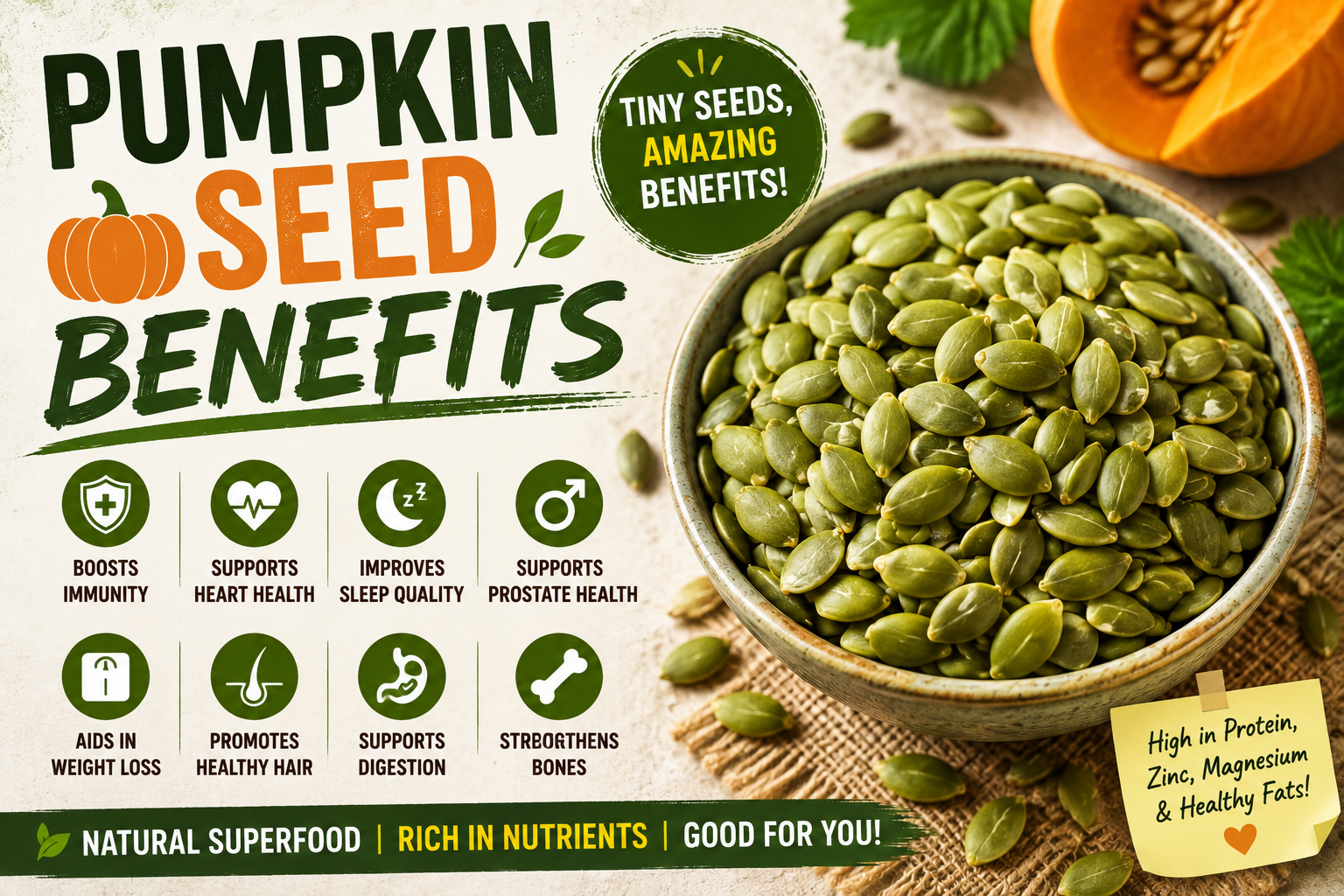
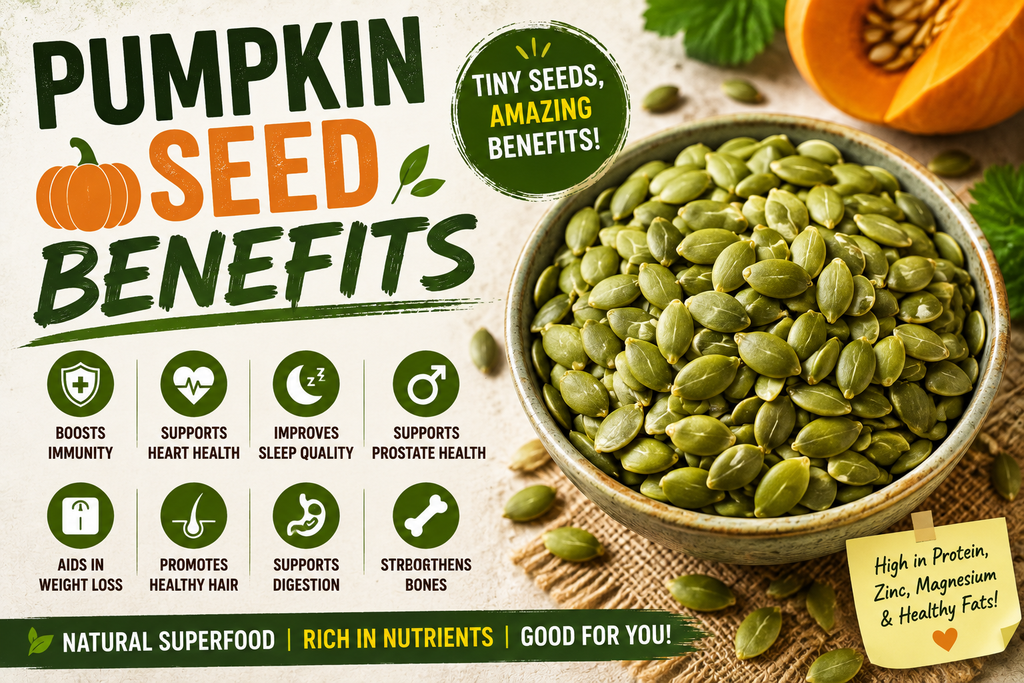
Pumpkin seeds are small, nutrient-dense seeds that can be a simple addition to a healthy diet. They provide protein, unsaturated fats, fiber, magnesium, zinc, phosphorus, iron, and other nutrients.
Also called pepitas when sold without their outer shell, pumpkin seeds can be eaten raw, roasted, added to salads, mixed into oatmeal, or used in homemade snacks.
But what exactly are the main pumpkin seed benefits?
In Part 1, we’ll look at pumpkin seed nutrition and the first 10 potential benefits of adding them to your diet.
What Are Pumpkin Seeds?
Pumpkin seeds are the edible seeds found inside pumpkins and certain other squash varieties.
They can be sold:
- Whole with the shell
- Shelled
- Raw
- Roasted
- Salted
- Unsalted
Shelled pumpkin seeds are commonly called pepitas.
They have a mild, nutty flavor and crunchy texture, making them easy to add to everyday meals.
Popular ways to eat pumpkin seeds
You can add them to:
- Oatmeal
- Yogurt
- Smoothies
- Salads
- Soups
- Grain bowls
- Homemade granola
- Trail mix
- Baked foods
Pumpkin Seed Nutrition Facts
Pumpkin seeds are relatively calorie-dense because they contain a substantial amount of fat.
A typical 1-ounce (28-gram) serving of shelled pumpkin seeds provides approximately:
| Nutrient | Approximate Amount |
|---|---|
| Calories | 150–170 |
| Protein | 8–9 g |
| Fat | 13–15 g |
| Carbohydrates | 4–5 g |
| Fiber | 1–2 g |
| Magnesium | Around 150 mg |
| Phosphorus | Around 330 mg |
| Zinc | Around 2 mg |
| Iron | Around 2–3 mg |
Exact values vary depending on the variety and preparation method.
Pumpkin seeds are particularly notable for their magnesium, phosphorus, zinc, protein, and unsaturated fats.
1. Pumpkin Seeds Are a Good Source of Magnesium
One of the most notable pumpkin seed benefits is their magnesium content.
Magnesium contributes to many normal functions in the body, including:
- Normal muscle function
- Normal nerve function
- Energy metabolism
- Normal electrolyte balance
- Maintenance of normal bones
A small serving of pumpkin seeds can contribute a significant amount of your daily magnesium needs.
Other magnesium-rich foods include:
- Almonds
- Cashews
- Spinach
- Beans
- Whole grains
- Dark chocolate
Adding different magnesium-rich foods to your diet can help provide variety.
2. Pumpkin Seeds Provide Plant-Based Protein
Pumpkin seeds are a convenient source of plant-based protein.
A 1-ounce serving can provide approximately 8–9 grams of protein.
Protein is important for:
- Maintaining muscle
- Building and repairing tissues
- Supporting normal body functions
- Making enzymes and hormones
Pumpkin seeds can be especially useful as part of meals that combine several protein sources.
Example
Greek yogurt + berries + pumpkin seeds
or
Oatmeal + milk + pumpkin seeds + nuts
For higher protein needs, combine pumpkin seeds with foods such as eggs, dairy, beans, lentils, tofu, fish, or lean meats.
3. Pumpkin Seeds Provide Zinc
Pumpkin seeds contain zinc, an essential mineral involved in several normal body functions.
Zinc contributes to:
- Normal immune function
- Normal wound healing
- DNA synthesis
- Protein synthesis
- Normal metabolism
The amount of zinc in pumpkin seeds can vary depending on the variety and processing method.
Other dietary sources of zinc include:
- Meat
- Seafood
- Dairy
- Beans
- Nuts
- Seeds
- Whole grains
Pumpkin seeds can therefore be one useful plant-based source of zinc.
4. Pumpkin Seeds Contain Healthy Unsaturated Fats
Pumpkin seeds contain a substantial amount of fat, much of which is unsaturated.
Unsaturated fats can be part of a heart-conscious eating pattern when they replace substantial amounts of saturated fats.
Other foods rich in unsaturated fats include:
- Almonds
- Walnuts
- Pistachios
- Avocados
- Olive oil
- Seeds
Because pumpkin seeds are calorie-dense, a moderate portion is usually sufficient.
5. Pumpkin Seeds Provide Phosphorus
Pumpkin seeds are particularly rich in phosphorus.
Phosphorus contributes to:
- Normal bone and teeth maintenance
- Normal energy metabolism
- Normal cell function
- Normal acid-base balance
A serving of pumpkin seeds can make a meaningful contribution to your daily phosphorus intake.
However, most people can obtain phosphorus from a wide variety of foods, including dairy products, meat, fish, beans, nuts, and seeds.
6. Pumpkin Seeds Contain Iron
Pumpkin seeds also provide dietary iron.
Iron contributes to:
- Normal oxygen transport
- Normal red blood cell formation
- Energy metabolism
- Normal cognitive function
- Reduction of tiredness and fatigue when adequate iron status is maintained
Plant-based iron is non-heme iron, which is absorbed differently from the heme iron found in animal foods.
Improve iron absorption
Combining plant sources of iron with foods containing vitamin C can help improve absorption.
For example:
Pumpkin seeds + chickpeas + bell peppers
or
Pumpkin seeds + spinach + tomatoes
can create a nutrient-rich meal.
7. Pumpkin Seeds Provide Dietary Fiber
Pumpkin seeds contain fiber, although their fiber content varies depending on whether the outer shell is eaten.
Fiber is important for normal digestive health.
A fiber-rich diet can include:
- Fruits
- Vegetables
- Beans
- Lentils
- Whole grains
- Nuts
- Seeds
Pumpkin seeds can contribute to your overall fiber intake when included as part of a varied diet.
8. Pumpkin Seeds Contain Antioxidant Compounds
Pumpkin seeds contain various naturally occurring plant compounds and antioxidants.
Antioxidants help protect cells from oxidative damage caused by free radicals.
Pumpkin seeds are only one source of antioxidant compounds.
For a diverse diet, include a variety of colorful plant foods such as:
- Berries
- Citrus fruits
- Tomatoes
- Leafy greens
- Peppers
- Nuts
- Seeds
Different plant foods contain different combinations of beneficial compounds.
9. Pumpkin Seeds Can Support Bone-Related Nutrition
Pumpkin seeds contain several nutrients involved in normal bone health, including:
- Magnesium
- Phosphorus
- Zinc
- Protein
Magnesium and phosphorus contribute to normal bone maintenance, while adequate protein is important for maintaining body tissues.
However, healthy bones depend on many factors.
A bone-supportive diet should also provide adequate:
- Calcium
- Vitamin D
- Protein
- Other essential nutrients
Regular physical activity is also important for maintaining bone strength.
10. Pumpkin Seeds Can Fit Into a Heart-Conscious Diet
Pumpkin seeds provide a combination of:
- Unsaturated fats
- Magnesium
- Fiber
- Plant protein
- Antioxidant compounds
This makes them a useful ingredient in many heart-conscious eating patterns.
Instead of focusing on one food, consider building meals around:
- Vegetables
- Fruits
- Whole grains
- Beans
- Nuts
- Seeds
- Fish or other lean protein sources
Pumpkin seeds are not a treatment for heart disease, but they can be part of an overall nutritious diet.
Pumpkin Seeds vs. Other Seeds
Pumpkin seeds have a different nutritional profile from other popular seeds.
| Seed | Notable Nutritional Features |
|---|---|
| Pumpkin seeds | Magnesium, zinc, phosphorus and protein |
| Chia seeds | Fiber and ALA omega-3 |
| Flaxseeds | ALA omega-3 and lignans |
| Sunflower seeds | Vitamin E and healthy fats |
| Hemp seeds | Protein and unsaturated fats |
| Sesame seeds | Minerals and healthy fats |
There is no need to choose only one type.
Eating different seeds can provide a wider variety of nutrients.
Raw vs. Roasted Pumpkin Seeds
Both raw and roasted pumpkin seeds can be nutritious.
Raw pumpkin seeds
These have a softer texture and can be added directly to:
- Smoothies
- Oatmeal
- Yogurt
- Salads
Roasted pumpkin seeds
Roasting produces a crunchy texture and stronger nutty flavor.
They work well as:
- Snacks
- Salad toppings
- Soup toppings
- Trail mix ingredients
If you’re watching your sodium intake, choose unsalted or lightly salted varieties.
How to Add Pumpkin Seeds to Your Diet
You don’t need complicated recipes.
Breakfast
Sprinkle pumpkin seeds over oatmeal or yogurt.
Lunch
Add them to a salad or grain bowl.
Snack
Eat a small handful with fruit.
Dinner
Use roasted pumpkin seeds as a topping for soup or roasted vegetables.
Baking
Add them to homemade bread, muffins, or granola.
How Many Pumpkin Seeds Should You Eat?
A practical serving is around 1 ounce (28 grams), or roughly a small handful of shelled pumpkin seeds.
You don’t necessarily need this much every day.
Because pumpkin seeds are calorie-dense, portion size matters if you’re managing your calorie intake.
Start with a smaller amount and combine them with other nutrient-rich foods.
11. Pumpkin Seeds Can Support Weight Management
Pumpkin seeds can be included in a weight-management diet because they provide protein, fiber, and healthy fats.
Protein and fiber can contribute to feelings of fullness, potentially helping you manage overall food intake.
However, pumpkin seeds are also calorie-dense.
A large serving can add significant calories to your diet.
A practical portion
Try approximately 1 ounce (28 grams) of pumpkin seeds with:
- Fruit
- Plain yogurt
- Oatmeal
- A salad
For weight management, portion size and your overall dietary pattern matter more than any individual food.
12. Pumpkin Seeds Can Support Muscle Nutrition
Pumpkin seeds provide protein and several minerals involved in normal muscle function.
Their magnesium content is particularly noteworthy because magnesium contributes to normal muscle and nerve function.
However, pumpkin seeds shouldn’t be considered a complete muscle-building food on their own.
For people who exercise regularly, combine them with other protein-rich foods such as:
- Greek yogurt
- Eggs
- Milk
- Beans
- Lentils
- Tofu
- Fish
- Chicken
Simple post-workout snack
Greek yogurt + banana + pumpkin seeds
This combination provides protein, carbohydrates, healthy fats, and minerals.
13. Pumpkin Seeds Provide Nutrients Important for Normal Nerve Function
Pumpkin seeds contain magnesium, which plays a role in normal nerve function.
They also provide other nutrients involved in normal energy metabolism.
A balanced diet containing a variety of whole foods is the best way to support overall nervous-system nutrition.
Other magnesium-rich foods include:
- Almonds
- Cashews
- Beans
- Whole grains
- Leafy green vegetables
- Chia seeds
14. Pumpkin Seeds Can Contribute to Normal Immune Function
Zinc is one of the nutrients found in pumpkin seeds that contributes to normal immune function.
Adequate zinc intake is important for maintaining normal immune defenses.
However, eating more pumpkin seeds than necessary won’t automatically “boost” your immune system.
A healthy immune system depends on many factors, including:
- Adequate nutrition
- Sleep
- Physical activity
- Overall health
- Good hygiene
Pumpkin seeds can simply be one source of important nutrients.
15. Pumpkin Seeds Can Be Useful in Plant-Based Diets
Pumpkin seeds are particularly convenient for people who eat vegetarian or mostly plant-based diets.
They provide:
- Plant protein
- Magnesium
- Zinc
- Phosphorus
- Iron
- Unsaturated fats
You can combine pumpkin seeds with:
Beans + whole grains + vegetables + pumpkin seeds
to create a nutrient-rich plant-based meal.
Eating a variety of plant foods is important because different foods provide different nutrients.
16. Pumpkin Seeds Can Add Protein to Breakfast
Breakfast doesn’t have to rely entirely on eggs or dairy for protein.
Pumpkin seeds can be added to several breakfast foods.
Example
Pumpkin seed oatmeal
- Rolled oats
- Milk
- 1 tablespoon pumpkin seeds
- Banana
- Berries
- Cinnamon
For an even higher-protein breakfast, add Greek yogurt or another protein-rich food.
17. Pumpkin Seeds Can Make Salads More Nutritious
A simple salad can become more satisfying when you add seeds.
Try:
- Leafy greens
- Cucumber
- Tomatoes
- Bell peppers
- Chickpeas
- Pumpkin seeds
- Olive oil
- Lemon juice
Pumpkin seeds add crunch, protein, healthy fats, and minerals.
They can also make salads more enjoyable, which may make it easier to eat vegetables regularly.
18. Pumpkin Seeds Can Be a Convenient Snack
Pumpkin seeds are portable and don’t require much preparation.
A small portion can be paired with:
- An apple
- A banana
- Berries
- Plain yogurt
- Other nuts
Simple snack
Apple + small handful of unsalted pumpkin seeds
This combines fruit with protein, fats, and minerals.
Choose unsalted varieties if you are trying to reduce your sodium intake.
19. Pumpkin Seeds May Be Useful for Sleep-Related Nutrition
Pumpkin seeds are sometimes promoted as a natural sleep aid because they contain magnesium and the amino acid tryptophan.
These nutrients are involved in normal physiological processes related to the nervous system.
However, eating pumpkin seeds should not be presented as a guaranteed treatment for insomnia or sleep disorders.
Good sleep habits remain more important:
- Maintain a consistent sleep schedule
- Limit excessive caffeine late in the day
- Reduce bright-screen exposure before bed
- Keep your bedroom comfortable and dark
- Exercise regularly
Pumpkin seeds can simply be part of a nutritious evening snack if you enjoy them.
20. Pumpkin Seeds Can Add Variety to a Healthy Diet
Perhaps one of the simplest pumpkin seed benefits is their versatility.
They can add texture, flavor, protein, and minerals to many foods.
Try them in:
Breakfast
- Oatmeal
- Yogurt
- Smoothie bowls
Lunch
- Salads
- Grain bowls
- Soups
Snacks
- Trail mix
- Fruit and seeds
- Homemade energy bites
Dinner
- Roasted vegetables
- Soups
- Rice bowls
Baking
- Bread
- Muffins
- Homemade granola
Eating a variety of foods is generally more beneficial than relying heavily on any single “superfood.”
Pumpkin Seeds and Men’s Health
Pumpkin seeds are sometimes promoted online specifically for men’s health, particularly because they contain zinc and magnesium.
Zinc contributes to normal reproductive function and several other physiological processes.
However, claims that pumpkin seeds can dramatically increase testosterone or prevent prostate disease should be treated cautiously.
Pumpkin seeds can be part of a nutritious diet, but they shouldn’t replace medical evaluation or treatment for health conditions.
Pumpkin Seeds and Blood Sugar
Pumpkin seeds contain protein, fat, and fiber and are relatively low in digestible carbohydrates.
Adding them to a carbohydrate-containing meal can make the meal more nutritionally balanced.
Example
Instead of eating fruit alone, try:
Apple + pumpkin seeds + plain Greek yogurt
This provides carbohydrates, protein, fat, and fiber.
People with diabetes should still follow their individualized dietary and medical recommendations.
Pumpkin seeds are not a treatment for diabetes.
Pumpkin Seeds vs. Sunflower Seeds
Both seeds are nutritious, but their nutrient profiles differ.
| Feature | Pumpkin Seeds | Sunflower Seeds |
|---|---|---|
| Protein | High | Moderate-high |
| Magnesium | Particularly notable | Good source |
| Zinc | Good source | Lower |
| Vitamin E | Moderate | Particularly rich |
| Healthy fats | High | High |
| Flavor | Nutty | Mild and nutty |
Both can fit into a healthy diet.
You can even combine them in homemade trail mix.
Pumpkin Seeds vs. Chia Seeds
These seeds have different strengths.
Pumpkin seeds
Particularly notable for:
- Protein
- Magnesium
- Zinc
- Phosphorus
- Unsaturated fats
Chia seeds
Particularly notable for:
- Fiber
- ALA omega-3
- Gel-forming ability
There’s no need to choose only one.
Using different seeds throughout the week gives your diet more nutritional variety.
Pumpkin Seeds vs. Flaxseeds
Flaxseeds are especially known for:
- ALA omega-3
- Fiber
- Lignans
Pumpkin seeds are particularly notable for:
- Protein
- Magnesium
- Zinc
- Phosphorus
Both can be useful additions to a healthy diet.
Easy combination
Oatmeal + ground flaxseed + pumpkin seeds + berries
This gives you nutrients from two different types of seeds.
How to Choose Healthy Pumpkin Seeds
When buying pumpkin seeds, consider:
Unsalted
Better if you’re trying to keep sodium intake moderate.
Dry-roasted
A convenient crunchy option without requiring added oil.
Raw
Useful for smoothies, oatmeal, and recipes.
Minimal ingredients
Check the label and avoid products containing excessive:
- Added salt
- Added sugar
- Unnecessary oils
The simpler the ingredient list, the easier it is to control what you’re consuming.
How Many Pumpkin Seeds Should You Eat Per Day?
A practical serving of shelled pumpkin seeds is around 1 ounce (28 grams), which is approximately a small handful.
You don’t necessarily need to eat a full serving every day.
Because pumpkin seeds are relatively high in calories, portion size is important, particularly if you’re trying to manage your weight.
If you’re new to eating seeds, start with a smaller amount and see how your body responds.
How Many Calories Are in Pumpkin Seeds?
A 1-ounce (28-gram) serving of shelled pumpkin seeds generally provides around 150–170 calories.
It also provides approximately:
- 8–9 g protein
- 13–15 g fat
- 4–5 g carbohydrates
- 1–2 g fiber
- Significant amounts of magnesium and phosphorus
- Smaller amounts of zinc and iron
The exact nutritional values depend on the variety and preparation method.
What Is the Best Time to Eat Pumpkin Seeds?
There isn’t a scientifically established best time.
You can enjoy pumpkin seeds:
- At breakfast
- With lunch
- As an afternoon snack
- With dinner
- Before or after exercise
Morning
Add them to oatmeal or yogurt.
Afternoon
Pair a small handful with fruit.
Evening
Add them to a salad or soup.
The most important thing is choosing an amount that fits your overall diet.
Raw vs. Roasted Pumpkin Seeds
Both can be nutritious.
Raw Pumpkin Seeds
Raw seeds have a softer texture and mild flavor.
They’re convenient for:
- Smoothies
- Oatmeal
- Yogurt
- Homemade energy bites
Roasted Pumpkin Seeds
Roasting creates a crunchy texture and stronger nutty flavor.
They’re excellent for:
- Snacking
- Salads
- Soups
- Trail mix
If you’re buying packaged roasted seeds, check the nutrition label for added salt and oil.
Salted vs. Unsalted Pumpkin Seeds
If you regularly eat pumpkin seeds, unsalted or lightly salted varieties can be a good choice.
Heavily salted products can contain substantial amounts of sodium.
Excessive sodium intake can be a concern for people who need to limit sodium as part of their diet.
Better options
Look for:
- Unsalted
- Lightly salted
- Dry-roasted
- Minimal-ingredient products
You can also roast raw pumpkin seeds at home and control how much salt you add.
Shelled vs. Unshelled Pumpkin Seeds
Pumpkin seeds can be sold with or without their outer shell.
Shelled seeds
Also called pepitas, these are easy to eat and commonly used in recipes.
Unshelled seeds
The shell adds additional fiber and makes the seeds crunchier, but it can be harder to chew and digest.
For everyday cooking and snacking, shelled pumpkin seeds are often the most convenient.
Possible Pumpkin Seed Side Effects
Pumpkin seeds are generally well tolerated in moderate portions, but eating large amounts can cause digestive discomfort.
Possible symptoms include:
- Bloating
- Gas
- Stomach discomfort
- Changes in bowel movements
This is partly because seeds contain fiber and a significant amount of fat.
How to reduce digestive discomfort
Start with a smaller portion and increase gradually.
Also, eat a varied diet rather than suddenly adding a large amount of seeds.
Pumpkin Seed Allergy
Pumpkin seed allergy appears to be uncommon, but allergic reactions are possible.
Symptoms can include:
- Itching
- Hives
- Swelling
- Vomiting
- Wheezing
- Difficulty breathing
A severe allergic reaction requires emergency medical attention.
If you have known seed or food allergies, speak with a healthcare professional before adding pumpkin seeds to your diet.
Pumpkin Seeds and Medication Considerations
Pumpkin seeds are a food rather than a medication.
For most people, moderate amounts can be incorporated into a normal diet.
However, people taking medications for specific medical conditions may have individualized dietary requirements.
If you’re following a medically restricted diet or taking prescription medication regularly, ask your doctor or pharmacist whether there are any dietary restrictions relevant to you.
Don’t use pumpkin seeds as a substitute for prescribed treatment.
How to Store Pumpkin Seeds
Proper storage helps maintain freshness.
Whole pumpkin seeds
Store them in:
- An airtight container
- A cool, dry place
- Away from direct sunlight
For longer storage
You can refrigerate or freeze pumpkin seeds.
This is particularly useful for keeping larger quantities fresh.
Signs your pumpkin seeds have gone bad
Discard them if they develop:
- A rancid smell
- Bitter or unusual flavor
- Mold
- Visible moisture
Fresh pumpkin seeds should have a mild, pleasant nutty aroma.
5 Healthy Pumpkin Seed Recipes
1. Pumpkin Seed Yogurt Bowl
Ingredients
- 1 cup plain Greek yogurt
- 1 tablespoon pumpkin seeds
- ½ cup berries
- 1 banana
- Cinnamon
Instructions
- Add yogurt to a bowl.
- Top with berries and banana.
- Sprinkle pumpkin seeds over the top.
- Add cinnamon.
This makes a simple breakfast or snack containing protein, fruit, and healthy fats.
2. Pumpkin Seed Oatmeal
Ingredients
- ½ cup rolled oats
- 1 tablespoon pumpkin seeds
- 1 banana
- ½ cup milk
- Cinnamon
- Berries
Instructions
Cook the oats with milk or water.
Add banana, berries, cinnamon, and pumpkin seeds before serving.
3. Pumpkin Seed Salad
Ingredients
- Mixed leafy greens
- Cucumber
- Tomatoes
- Bell pepper
- Chickpeas
- 1 tablespoon pumpkin seeds
- Lemon juice
- Olive oil
Combine everything in a bowl and serve fresh.
The pumpkin seeds add crunch and additional protein and minerals.
4. Homemade Pumpkin Seed Trail Mix
Ingredients
- Pumpkin seeds
- Almonds
- Walnuts
- Unsweetened coconut
- Raisins or dried cranberries
Mix the ingredients together.
Keep portions moderate because nuts and seeds are calorie-dense.
5. Roasted Pumpkin Seeds
Ingredients
- Raw pumpkin seeds
- 1 teaspoon olive oil
- A small amount of salt
- Paprika
- Garlic powder
Instructions
- Wash and thoroughly dry the seeds.
- Toss with a small amount of olive oil and seasoning.
- Spread them evenly on a baking tray.
- Roast until lightly browned and crunchy.
- Allow them to cool before eating.
For a lower-sodium option, skip the salt or use a very small amount.
Frequently Asked Questions About Pumpkin Seeds
What are the main pumpkin seed benefits?
Pumpkin seeds provide protein, magnesium, zinc, phosphorus, iron, healthy unsaturated fats, fiber, and other nutrients.
How many pumpkin seeds should I eat per day?
A practical serving is around 1 ounce (28 grams) of shelled pumpkin seeds. A smaller portion may be appropriate depending on your overall diet and calorie needs.
Are pumpkin seeds good for weight loss?
They can fit into a weight-management diet because they provide protein, fiber, and healthy fats. However, they are calorie-dense and don’t directly burn fat.
Are pumpkin seeds high in protein?
Yes. A 1-ounce serving of shelled pumpkin seeds provides approximately 8–9 grams of protein.
Are pumpkin seeds high in magnesium?
Yes. Pumpkin seeds are particularly good dietary sources of magnesium.
Are pumpkin seeds a good source of zinc?
Yes. They provide zinc, an essential mineral involved in normal immune function and many other physiological processes.
Are pumpkin seeds good for sleep?
Pumpkin seeds provide magnesium and tryptophan, but there isn’t enough evidence to claim that eating pumpkin seeds is a guaranteed treatment for sleep problems.
Are raw or roasted pumpkin seeds better?
Both can be nutritious. Choose based on taste and preparation. When buying roasted varieties, check for excessive salt or added oils.
Can I eat pumpkin seeds every day?
Moderate portions can fit into a balanced diet for most people. Their calorie density means portion size is worth considering.
Are pumpkin seeds good for men?
Pumpkin seeds provide zinc and magnesium, which are important nutrients for normal body functions. Claims that pumpkin seeds alone dramatically increase testosterone or prevent prostate problems should be treated cautiously.
Are pumpkin seeds good for digestion?
They provide fiber, which contributes to normal digestive health. Eating very large amounts may cause gas or bloating.
Can children eat pumpkin seeds?
Children can eat appropriately prepared pumpkin seeds, but younger children may have a choking risk from whole seeds. Preparation and portion size should be age-appropriate.
Do pumpkin seeds expire?
Yes. Their natural oils can eventually become rancid. Store them in an airtight container and check for unusual smells or flavors.
Final Takeaway
Pumpkin seeds are small but nutrient-dense.
They provide a useful combination of:
- Plant-based protein
- Magnesium
- Zinc
- Phosphorus
- Iron
- Unsaturated fats
- Fiber
- Plant compounds
A moderate serving can easily be incorporated into a healthy eating pattern.
Try adding pumpkin seeds to oatmeal, yogurt, salads, soups, smoothies, homemade granola, or trail mix.
Remember that pumpkin seeds are not a miracle food. Their biggest advantage is that they make it easy to add several useful nutrients to everyday meals.
For most people, a small handful or around 1 ounce (28 grams) is a reasonable serving, but your ideal amount depends on your overall diet, calorie needs, and individual tolerance.
Suggested Article’s:
- Chia Seed Benefits
- Flaxseed Benefits
- Pistachio Benefits
- Cashew Benefits
- Pecan Benefits
- Macadamia Nut Benefits
- Brazil Nut Benefits
- Hazelnut Benefits
- Mixed Nuts Benefits
- Best Nuts for Daily Eating
- Foods Rich in Zinc
- Foods Rich in Iron
- Best Natural Foods
- Best Healthy Pantry Foods


Leave a Reply