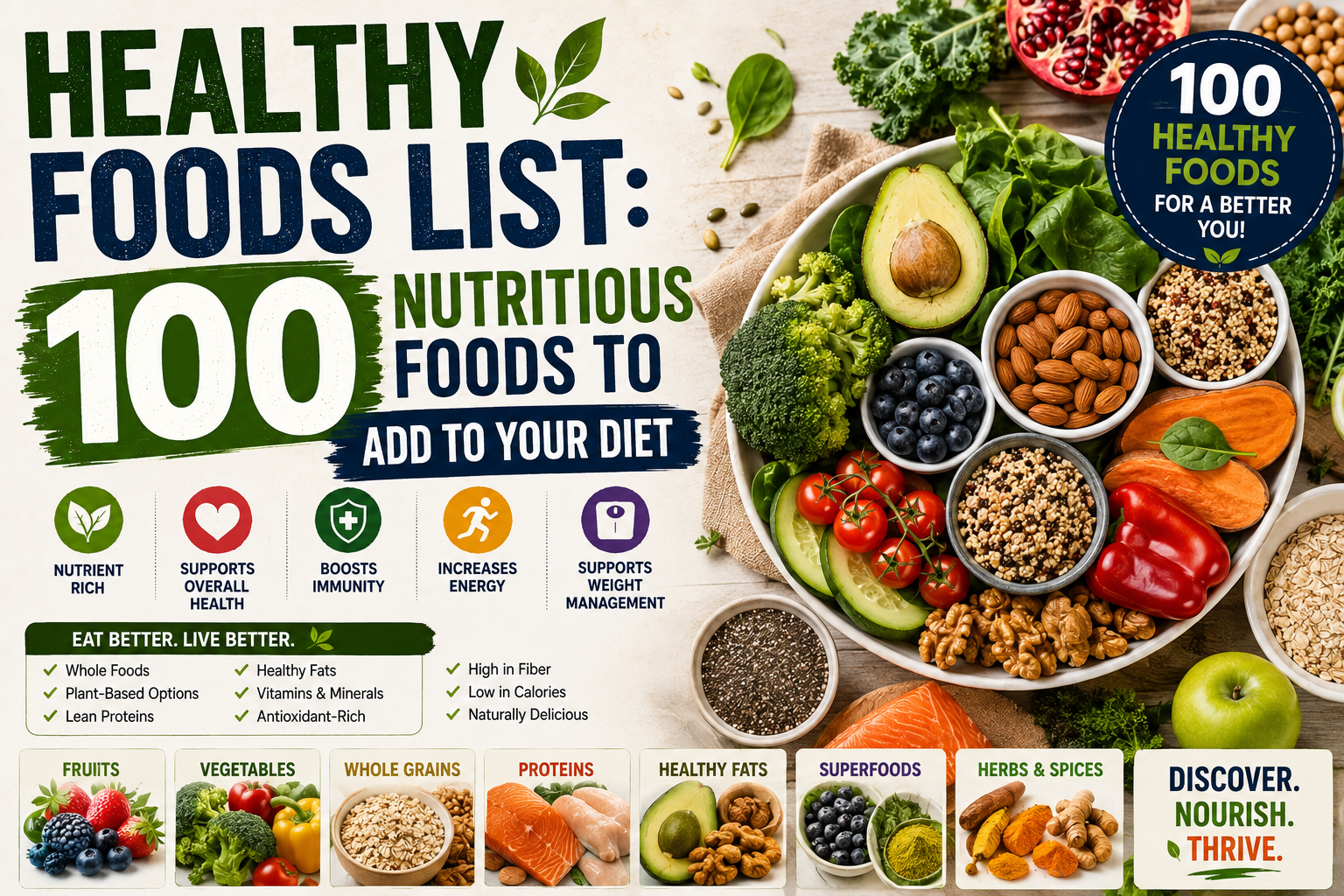
Eating healthy does not have to mean following a complicated diet or buying expensive health products.
A good diet can be built from ordinary foods found in most grocery stores: fresh fruits, vegetables, beans, whole grains, eggs, fish, nuts, seeds, dairy products, and healthy cooking oils.
The challenge is knowing which foods to choose, how to combine them, and how to make healthy eating practical.
This complete healthy foods list includes 100 nutritious foods across different food groups, making it easier to plan breakfasts, lunches, dinners, snacks, and grocery trips.
Whether you’re trying to eat more vegetables, increase protein, add more fiber, choose healthier snacks, or simply improve your everyday diet, this list gives you plenty of options.
Important: There is no single food that provides every nutrient your body needs. A varied diet containing different food groups is generally more useful than focusing on individual “healthy” foods.
What Makes a Food Healthy?
A healthy food doesn’t have to be perfect or contain every possible nutrient.
Foods can be valuable because they provide one or more of the following:
- Protein
- Fiber
- Vitamins
- Minerals
- Healthy fats
- Complex carbohydrates
- Naturally occurring plant compounds
- Essential fatty acids
For example, salmon provides protein and omega-3 fats, while beans provide protein and fiber.
This is why variety matters.
Instead of asking, “What is the healthiest food?” a better question is:
“What combination of foods gives me a balanced diet?”
100 Healthy Foods List
Healthy Fruits
Fruit provides carbohydrates, fiber, vitamins, minerals, and naturally occurring plant compounds.
1. Blueberries
Blueberries are an easy addition to breakfast bowls, smoothies, and snacks.
Try them with:
- Plain yogurt
- Oatmeal
- Chia seeds
- Nuts
2. Apples
Apples are portable and convenient, making them one of the easiest fruits to keep available for snacks.
Pair an apple with peanut butter or a small portion of nuts for a more substantial snack.
3. Oranges
Oranges provide vitamin C and can be eaten without complicated preparation.
Choose the whole fruit rather than relying exclusively on juice when you want the fiber and volume of the fruit itself.
4. Strawberries
Strawberries can add natural sweetness to breakfast and snacks.
Use them in:
- Yogurt bowls
- Oatmeal
- Smoothies
- Fruit salads
5. Bananas
Bananas are convenient and naturally rich in carbohydrates and potassium.
They’re particularly easy to combine with:
- Oats
- Yogurt
- Peanut butter
- Smoothies
6. Avocado
Although often used like a vegetable, avocado is botanically a fruit.
It provides mostly unsaturated fats along with fiber and several vitamins and minerals.
Try it on:
- Whole-grain toast
- Eggs
- Salads
- Grain bowls
7. Kiwi
Kiwi provides vitamin C, fiber, and other nutrients.
Its naturally sweet and slightly tart flavor works well in breakfast bowls and fruit salads.
8. Pears
Pears provide fiber and make a convenient snack.
Try pairing sliced pear with:
- Cheese
- Greek yogurt
- Almonds
- Walnuts
9. Grapes
Grapes are easy to wash and keep ready in the refrigerator.
Frozen grapes can also make a refreshing snack during warmer weather.
10. Pomegranate
Pomegranate seeds add color, texture, and naturally occurring plant compounds to meals.
Sprinkle them over:
- Yogurt
- Salads
- Oatmeal
- Grain bowls
Healthy Vegetables
Vegetables are among the most important foods to include regularly because they provide fiber, vitamins, minerals, and a wide variety of plant compounds.
11. Spinach
Spinach is a versatile leafy green that can be eaten raw or cooked.
Add it to:
- Omelets
- Soups
- Sandwiches
- Smoothies
- Stir-fries
12. Broccoli
Broccoli provides fiber and several vitamins and minerals.
Roasting it with garlic, olive oil, and black pepper can make it much more appealing than plain boiled broccoli.
13. Carrots
Carrots are naturally sweet and provide beta-carotene.
Use them as:
- A snack
- Salad ingredients
- Soup ingredients
- Roasted vegetables
14. Bell Peppers
Bell peppers provide vitamin C and add crunch and color to meals.
Different colors can make salads, wraps, and stir-fries more interesting.
15. Tomatoes
Tomatoes are technically fruits but are commonly used as vegetables.
They can be eaten:
- Fresh
- Roasted
- Cooked into sauces
- Added to salads
- Used in soups
16. Sweet Potatoes
Sweet potatoes provide carbohydrates, fiber, potassium, and beta-carotene.
Bake or roast them and combine with beans, eggs, chicken, or fish.
17. Cauliflower
Cauliflower is extremely versatile.
It can be:
- Roasted
- Steamed
- Added to curries
- Used in soups
- Combined with other vegetables
18. Cabbage
Cabbage is inexpensive, versatile, and stores well.
Use it in:
- Slaws
- Stir-fries
- Soups
- Wraps
- Vegetable dishes
19. Cucumbers
Cucumbers are refreshing and easy to add to meals.
Combine them with:
- Yogurt
- Herbs
- Tomatoes
- Chickpeas
20. Kale
Kale is a dark leafy green that provides fiber and several vitamins and minerals.
If raw kale feels too tough, massage it with dressing or cook it lightly.
Healthy Protein Foods
Protein is important for maintaining and repairing body tissues and can also contribute to meal satisfaction.
21. Eggs
Eggs are versatile and provide high-quality protein along with several vitamins and minerals.
Use them for:
- Breakfast
- Sandwiches
- Salads
- Snack boxes
- Vegetable omelets
22. Salmon
Salmon provides protein and omega-3 fatty acids.
Bake it with lemon and herbs for a simple dinner.
23. Sardines
Sardines are a convenient seafood choice because canned versions can be stored in the pantry.
They provide protein and omega-3 fats.
24. Chicken Breast
Chicken breast is a lean protein source that can be prepared in many ways.
Try it in:
- Salads
- Wraps
- Grain bowls
- Soups
- Stir-fries
25. Turkey
Turkey can be used as a protein source in sandwiches, wraps, salads, and snack plates.
Choose less processed forms when possible.
26. Greek Yogurt
Greek yogurt can provide substantial protein and calcium.
Choose plain varieties if you want greater control over added sugar.
27. Cottage Cheese
Cottage cheese is another convenient protein-rich food.
Combine it with:
- Fruit
- Tomatoes
- Cucumber
- Whole-grain crackers
28. Tofu
Tofu is a versatile plant-based protein.
It can absorb the flavor of marinades and sauces and works well in:
- Stir-fries
- Curries
- Grain bowls
- Soups
29. Tempeh
Tempeh is a fermented soy food that provides plant protein and a firm texture.
It can be:
- Baked
- Pan-seared
- Added to stir-fries
- Used in sandwiches
30. Eggs + Vegetables
This isn’t a separate food, but it’s worth highlighting as a practical combination.
Eggs become a more nutrient-rich meal when paired with vegetables such as:
- Spinach
- Tomatoes
- Mushrooms
- Bell peppers
Healthy eating is often about combinations, not individual ingredients.
Healthy Legumes
Legumes are some of the most useful foods for affordable protein and fiber.
31. Lentils
Lentils are inexpensive, easy to cook, and useful in:
- Soups
- Curries
- Salads
- Grain bowls
32. Chickpeas
Chickpeas can be used in hummus, salads, curries, and roasted snacks.
They’re a convenient source of plant protein and fiber.
33. Black Beans
Black beans work especially well in:
- Tacos
- Burrito bowls
- Salads
- Soups
34. Kidney Beans
Kidney beans can be added to chili, salads, rice dishes, and stews.
35. Pinto Beans
Pinto beans are versatile and can be used in soups, bowls, and Mexican-inspired dishes.
36. Edamame
Edamame is a young soybean and provides plant protein, fiber, and several micronutrients.
Serve it:
- As a snack
- In salads
- In grain bowls
- With stir-fried vegetables
Healthy Whole Grains
Whole grains can provide carbohydrates, fiber, vitamins, and minerals.
37. Oats
Oats are one of the easiest whole grains to add to breakfast.
Combine them with fruit, nuts, seeds, or plain yogurt.
38. Brown Rice
Brown rice retains more of the grain’s original structure than white rice and provides fiber and nutrients.
Use it in:
- Rice bowls
- Stir-fries
- Bean dishes
- Meal prep
39. Quinoa
Quinoa is technically a seed but is commonly prepared like a grain.
It provides protein and fiber and works well in salads and bowls.
40. Barley
Barley provides fiber and has a chewy texture.
Use it in:
- Soups
- Grain bowls
- Salads
- Stews
41. Whole-Grain Bread
Whole-grain bread can be a convenient foundation for nutritious meals.
Top it with:
- Eggs
- Avocado
- Tuna
- Cottage cheese
- Nut butter
Check the ingredient list and Nutrition Facts panel because products vary.
42. Whole-Grain Pasta
Whole-grain pasta can provide more fiber than refined pasta.
Pair it with:
- Tomato sauce
- Vegetables
- Beans
- Chicken
- Seafood
Healthy Nuts and Seeds
Nuts and seeds provide combinations of protein, fiber, minerals, and unsaturated fats.
43. Almonds
Almonds are particularly useful as a portable snack.
Try a small portion with fruit or yogurt.
44. Walnuts
Walnuts provide alpha-linolenic acid, a plant-based omega-3 fatty acid.
Add chopped walnuts to oatmeal, salads, or yogurt.
45. Pistachios
Pistachios provide protein, fiber, and unsaturated fats.
Choosing in-shell pistachios may naturally slow down snacking because you have to shell them.
46. Cashews
Cashews provide unsaturated fats, protein, copper, and magnesium.
They work well in both snacks and savory dishes.
47. Peanuts
Peanuts are technically legumes but are commonly grouped with nuts.
They provide protein, unsaturated fats, and other nutrients.
48. Chia Seeds
Chia seeds are rich in fiber and provide plant-based omega-3 ALA.
Add them to:
- Oats
- Yogurt
- Smoothies
- Chia pudding
49. Flaxseeds
Ground flaxseed is an easy addition to smoothies, oatmeal, and yogurt.
It provides fiber and plant-based omega-3 ALA.
50. Pumpkin Seeds
Pumpkin seeds provide magnesium, zinc, protein, and unsaturated fats.
Use them as a topping for:
- Salads
- Soups
- Yogurt
- Oatmeal
Part 1: Quick Healthy Foods Checklist
Fruits
- Blueberries
- Apples
- Oranges
- Strawberries
- Bananas
- Avocado
- Kiwi
- Pears
- Grapes
- Pomegranate
Vegetables
- Spinach
- Broccoli
- Carrots
- Bell peppers
- Tomatoes
- Sweet potatoes
- Cauliflower
- Cabbage
- Cucumbers
- Kale
Protein
- Eggs
- Salmon
- Sardines
- Chicken breast
- Turkey
- Greek yogurt
- Cottage cheese
- Tofu
- Tempeh
- Eggs with vegetables
Legumes
- Lentils
- Chickpeas
- Black beans
- Kidney beans
- Pinto beans
- Edamame
Whole Grains
- Oats
- Brown rice
- Quinoa
- Barley
- Whole-grain bread
- Whole-grain pasta
Nuts & Seeds
- Almonds
- Walnuts
- Pistachios
- Cashews
- Peanuts
- Chia seeds
- Flaxseeds
- Pumpkin seeds
How to Use This Healthy Foods List
You don’t need to buy all 50 foods in one shopping trip.
Instead, choose a few foods from each major category.
Simple Grocery Formula
2–3 fruits
3–5 vegetables
2–3 protein sources
1–2 legumes
1–2 whole grains
1–2 nuts or seeds
This creates a much more balanced grocery basket than filling your cart with foods from only one category.
A Simple Healthy Meal Formula
When you’re unsure what to eat, use this basic structure:
Protein
Eggs, fish, chicken, tofu, beans, lentils, or yogurt
Vegetables or Fruit
Choose one or more colorful options.
Whole-Grain or High-Fiber Carbohydrate
Oats, brown rice, quinoa, barley, or whole-grain bread
Healthy Fat
Avocado, nuts, seeds, or olive oil
You don’t need every component in every snack, but this formula can make main meals easier to balance.
A healthy grocery list becomes much easier when you stop thinking about individual “perfect” foods and start building a variety of food groups.
The remaining foods below add more choices for seafood, dairy, vegetables, fruits, whole grains, healthy fats, and convenient everyday ingredients.
51. Tuna
Canned or pouch-packed tuna is a convenient protein source that requires little preparation.
Use it in:
- Sandwiches
- Salads
- Whole-grain wraps
- Snack plates
When buying canned tuna, compare sodium levels and consider the type of tuna and serving size.
52. Trout
Trout is another fish that provides protein and omega-3 fats.
Bake or grill it with lemon, herbs, and vegetables for a simple meal.
53. Shrimp
Shrimp provides protein and is quick to prepare.
Try it with:
- Brown rice
- Vegetables
- Whole-grain pasta
- Salads
54. Plain Milk
Milk provides protein, calcium, vitamin B12, and other nutrients.
It can be used in:
- Oatmeal
- Smoothies
- Coffee
- Breakfast meals
Choose the type that fits your dietary needs.
55. Kefir
Kefir is a fermented milk drink that can provide protein and calcium.
Look for plain varieties if you want to limit added sugar.
56. Plain Yogurt
Plain yogurt can be used in both sweet and savory meals.
Combine it with:
- Berries
- Nuts
- Seeds
- Cucumber
- Herbs
57. Mozzarella
Mozzarella provides protein and calcium.
Fresh mozzarella can be combined with:
- Tomatoes
- Basil
- Olive oil
for a simple salad.
58. Feta Cheese
Feta can add strong flavor to a meal, meaning you may only need a small amount.
Try it with:
- Tomatoes
- Cucumbers
- Beans
- Whole grains
Because cheese can contain substantial sodium and saturated fat, portion size matters.
59. Chia Pudding
Chia pudding is a practical way to turn chia seeds into a make-ahead breakfast or snack.
Mix chia seeds with milk or a suitable alternative and refrigerate until thickened.
Top with fruit and nuts.
60. Hummus
Hummus is traditionally made from chickpeas, tahini, olive oil, lemon, and seasonings.
Use it as a dip for:
- Carrots
- Cucumbers
- Bell peppers
- Whole-grain crackers
It can also be spread inside wraps and sandwiches.
More Healthy Fruits
61. Raspberries
Raspberries are a useful source of fiber and can add natural sweetness to meals.
Try them with plain yogurt or oatmeal.
62. Blackberries
Blackberries provide fiber, vitamin C, and other plant compounds.
Fresh or frozen berries can both be convenient.
63. Cherries
Cherries are naturally sweet and can be eaten fresh or frozen.
Add them to yogurt, oatmeal, or smoothies.
64. Papaya
Papaya provides vitamin C and other nutrients.
Eat it on its own or add it to fruit salads.
65. Mango
Mango provides vitamin C and other nutrients while adding natural sweetness.
Use it in:
- Smoothies
- Fruit salads
- Salsas
- Yogurt bowls
66. Pineapple
Pineapple can be a refreshing fruit option.
Combine it with plain yogurt or cottage cheese for a more filling snack.
67. Guava
Guava is particularly notable for its vitamin C content and can be eaten whole when prepared appropriately.
68. Peaches
Peaches provide fiber and vitamins and can be enjoyed fresh or added to yogurt and oatmeal.
69. Plums
Plums are portable and can make an easy snack.
Keep the whole fruit available instead of relying on sweetened fruit products.
70. Dates
Dates are naturally sweet and provide carbohydrates and fiber.
They can be paired with nuts or nut butter to make a more substantial snack.
Because dates are concentrated in natural sugars and calories, portion size is still worth considering.
More Healthy Vegetables
71. Brussels Sprouts
Brussels sprouts are cruciferous vegetables that provide fiber and several vitamins.
Roasting them with olive oil, garlic, and black pepper can improve their flavor and texture.
72. Green Beans
Green beans provide fiber and several vitamins and minerals.
Steam, roast, or sauté them with garlic.
73. Zucchini
Zucchini is versatile and can be:
- Grilled
- Roasted
- Stir-fried
- Added to soups
74. Eggplant
Eggplant can absorb flavors from herbs, spices, and sauces.
Roast it with tomatoes and garlic or use it in vegetable-based dishes.
75. Beets
Beets provide folate, potassium, fiber, and naturally occurring plant compounds.
Try them:
- Roasted
- In salads
- Blended into dips
76. Asparagus
Asparagus provides fiber, folate, and other nutrients.
Roast it with lemon and black pepper as an easy side dish.
77. Peas
Green peas provide carbohydrates, fiber, and plant protein.
Frozen peas are especially convenient because they can be added directly to many cooked meals.
78. Onions
Onions add flavor to food while providing fiber and various plant compounds.
Use them in:
- Soups
- Stir-fries
- Bean dishes
- Omelets
- Salads
79. Mushrooms
Mushrooms provide B vitamins, selenium, potassium, and other compounds.
Sauté them with garlic or add them to soups and omelets.
80. Garlic
Garlic is useful for making healthy meals more flavorful without needing large amounts of salt or heavy sauces.
Use it with vegetables, beans, fish, chicken, and whole grains.
Healthy Whole-Grain and High-Fiber Foods
81. Farro
Farro is an ancient wheat grain with a chewy texture.
Use it in:
- Grain bowls
- Salads
- Soups
82. Bulgur
Bulgur cooks relatively quickly and works well in salads and grain bowls.
83. Rye Bread
Whole-grain rye bread can be a flavorful alternative to standard bread.
Pair it with eggs, fish, avocado, or cottage cheese.
84. Corn
Corn provides carbohydrates, fiber, and several micronutrients.
Fresh, frozen, or canned corn can be used in:
- Salads
- Soups
- Grain bowls
- Salsas
85. Air-Popped Popcorn
Plain or lightly seasoned popcorn can be a whole-grain snack.
Keep additions such as butter, caramel, and large amounts of salt moderate.
Healthy Fats
86. Extra-Virgin Olive Oil
Olive oil provides mostly monounsaturated fat and can be used for cooking, roasting, and dressings.
87. Tahini
Tahini is made from ground sesame seeds.
It provides unsaturated fats and minerals and can be used in:
- Hummus
- Salad dressings
- Sauces
- Toast toppings
88. Natural Peanut Butter
Peanut butter provides protein and unsaturated fats.
Look for products with a relatively simple ingredient list if you want to avoid unnecessary added ingredients.
89. Sesame Seeds
Sesame seeds can add texture and flavor to:
- Stir-fries
- Salads
- Grain bowls
- Homemade dressings
90. Olives
Olives provide unsaturated fats and can add strong flavor to salads and Mediterranean-style meals.
Because they can be high in sodium, portions are worth considering.
Convenient Healthy Foods
91. Frozen Berries
Frozen berries are convenient for smoothies, oatmeal, and yogurt.
They can reduce food waste because you can use only the amount you need.
92. Frozen Vegetables
Frozen broccoli, spinach, peas, mixed vegetables, and other options can make healthy meals faster.
They’re especially useful when fresh vegetables aren’t available or convenient.
93. Canned Beans
Canned beans can save significant preparation time.
Rinse and drain them before adding them to meals.
94. Canned Tomatoes
Canned tomatoes are useful for:
- Soups
- Sauces
- Bean dishes
- Curries
Choose products according to your sodium needs.
95. Unsweetened Applesauce
Unsweetened applesauce can be used as a snack or added to oatmeal and baking recipes.
Check the label to distinguish it from varieties with added sugar.
More Nutrient-Dense Everyday Foods
96. Edamame
Edamame provides plant protein and fiber and can be eaten as a snack or added to meals.
97. Seaweed
Seaweed provides iodine and other minerals, although nutrient levels can vary substantially between products.
Packaged seaweed snacks may also contain significant sodium.
98. Green Tea
Green tea contains naturally occurring polyphenols and can be consumed without added sugar.
99. Unsweetened Cocoa Powder
Unsweetened cocoa can add chocolate flavor to:
- Oatmeal
- Smoothies
- Yogurt
- Chia pudding
Choose unsweetened cocoa rather than products dominated by added sugar.
100. Water
Water isn’t technically a food, but it belongs on every healthy lifestyle grocery checklist.
Adequate hydration supports normal body functions, and water is generally a better everyday beverage choice than sugar-sweetened drinks.
Complete Healthy Foods List: 100 Foods
| Category | Foods |
|---|---|
| Fruits | Blueberries, apples, oranges, strawberries, bananas, avocado, kiwi, pears, grapes, pomegranate |
| Vegetables | Spinach, broccoli, carrots, bell peppers, tomatoes, sweet potatoes, cauliflower, cabbage, cucumbers, kale |
| Protein | Eggs, salmon, sardines, chicken, turkey, Greek yogurt, cottage cheese, tofu, tempeh, tuna |
| Legumes | Lentils, chickpeas, black beans, kidney beans, pinto beans, edamame |
| Whole Grains | Oats, brown rice, quinoa, barley, whole-grain bread, whole-grain pasta, farro, bulgur, rye bread, corn |
| Nuts & Seeds | Almonds, walnuts, pistachios, cashews, peanuts, chia seeds, flaxseeds, pumpkin seeds, sesame seeds |
| Dairy & Fermented | Milk, kefir, plain yogurt, mozzarella, feta |
| More Fruits | Raspberries, blackberries, cherries, papaya, mango, pineapple, guava, peaches, plums, dates |
| More Vegetables | Brussels sprouts, green beans, zucchini, eggplant, beets, asparagus, peas, onions, mushrooms, garlic |
| Healthy Fats & Extras | Olive oil, tahini, peanut butter, olives, hummus, seaweed, green tea, cocoa, frozen berries, frozen vegetables |
Best Healthy Foods for Different Goals
The word “healthy” can mean different things depending on what you’re trying to accomplish.
For More Protein
Consider:
- Eggs
- Salmon
- Tuna
- Chicken
- Greek yogurt
- Cottage cheese
- Lentils
- Beans
- Tofu
- Tempeh
For More Fiber
Choose:
- Lentils
- Beans
- Oats
- Chia seeds
- Flaxseeds
- Berries
- Apples
- Vegetables
- Whole grains
- Popcorn
For Healthy Fats
Try:
- Walnuts
- Almonds
- Avocado
- Olive oil
- Chia seeds
- Flaxseeds
- Salmon
- Tahini
- Peanuts
For Budget-Friendly Shopping
Some practical choices include:
- Oats
- Eggs
- Lentils
- Beans
- Brown rice
- Potatoes and sweet potatoes
- Frozen vegetables
- Bananas
- Apples
- Canned tomatoes
You don’t need premium “health food” products to eat well.
Healthy Foods for Breakfast
A balanced breakfast can combine several food groups.
Option 1
Oatmeal + blueberries + chia seeds + walnuts
Option 2
Eggs + spinach + whole-grain toast + avocado
Option 3
Greek yogurt + strawberries + pumpkin seeds
Option 4
Whole-grain toast + peanut butter + banana
Option 5
Vegetable omelet + fruit
The goal is not to find one perfect breakfast. It’s to create a meal that provides nutrients and fits your routine.
Healthy Foods for Snacks
For snacks, choose combinations that are easy to portion.
Fruit + Protein
Apple + Greek yogurt
Fruit + Healthy Fat
Banana + peanut butter
Vegetables + Dip
Carrots + hummus
Dairy + Fruit
Cottage cheese + berries
Nuts + Fruit
Almonds + orange
Whole Grain + Protein
Whole-grain crackers + tuna
Healthy Foods for Weight Management
No individual food automatically causes weight loss.
However, foods rich in protein, fiber, and water can be useful when building satisfying meals.
Good choices include:
- Vegetables
- Berries
- Apples
- Beans
- Lentils
- Oats
- Greek yogurt
- Eggs
- Fish
- Lean poultry
- Whole grains
Portion sizes and total calorie intake still matter.
How to Build a Healthy Grocery List
Instead of randomly buying “healthy” products, divide your shopping cart into categories.
Produce
Choose several different colors.
Protein
Pick fish, eggs, poultry, beans, lentils, tofu, or yogurt.
Whole Grains
Choose oats, brown rice, quinoa, barley, or whole-grain bread.
Healthy Fats
Add nuts, seeds, avocado, or olive oil.
Convenient Options
Keep frozen vegetables, frozen fruit, and canned beans available for busy days.
This makes healthy meals much easier to assemble.
Part 2 Takeaway
A healthy diet doesn’t require a complicated shopping list.
The 100 healthy foods above give you enough variety to build breakfasts, lunches, dinners, snacks, and meal-prep recipes around foods from different categories.
The most useful approach is to rotate foods rather than eating the same ingredients every day.
Choose different fruits and vegetables, alternate protein sources, include whole grains and legumes, and use nuts, seeds, avocado, and healthy oils in sensible portions.
A long healthy foods list is useful, but knowing how to use those foods in real life is what makes the information practical.
You don’t need to eat all 100 foods every week. Instead, build a rotation that includes different fruits, vegetables, protein sources, whole grains, legumes, nuts, and seeds.
The goal is not a perfect diet. The goal is a sustainable eating pattern that you can maintain.
A Simple 7-Day Healthy Meal Plan
This sample plan uses foods from the list and keeps preparation relatively straightforward.
Day 1
Breakfast: Oatmeal with blueberries, chia seeds, and walnuts
Lunch: Chicken and avocado whole-grain wrap with spinach
Snack: Apple with a small portion of almonds
Dinner: Baked salmon with broccoli and sweet potato
Day 2
Breakfast: Eggs with spinach and whole-grain toast
Lunch: Lentil and tomato soup with a side salad
Snack: Plain Greek yogurt with strawberries
Dinner: Brown rice bowl with black beans, peppers, corn, and avocado
Day 3
Breakfast: Greek yogurt with banana, flaxseed, and pumpkin seeds
Lunch: Tuna and cucumber whole-grain sandwich
Snack: Carrots with hummus
Dinner: Chicken with quinoa and roasted vegetables
Day 4
Breakfast: Overnight oats with apple, cinnamon, and chia seeds
Lunch: Chickpea salad with tomatoes, cucumber, spinach, and olive oil
Snack: Pear with walnuts
Dinner: Shrimp stir-fry with brown rice and mixed vegetables
Day 5
Breakfast: Vegetable omelet with avocado and whole-grain toast
Lunch: Turkey and vegetable wrap
Snack: Cottage cheese with berries
Dinner: Lentil curry with brown rice and roasted cauliflower
Day 6
Breakfast: Whole-grain toast with peanut butter and banana
Lunch: Salmon salad with leafy greens and vegetables
Snack: Air-popped popcorn and fruit
Dinner: Tofu stir-fry with quinoa and vegetables
Day 7
Breakfast: Oatmeal with strawberries, walnuts, and flaxseed
Lunch: Black bean and sweet potato bowl
Snack: Greek yogurt with fruit
Dinner: Baked trout with roasted vegetables and barley
This is a general example, not a personalized diet plan. Portions should be adjusted according to individual energy needs, preferences, and dietary requirements.
Healthy Foods for Busy Workdays
A common reason people choose less nutritious food is convenience.
The solution isn’t necessarily more willpower.
It’s better preparation.
Keep a few foods ready before the week gets busy.
Refrigerator
- Hard-boiled eggs
- Greek yogurt
- Cottage cheese
- Washed fruit
- Cut vegetables
- Cooked chicken
Freezer
- Frozen berries
- Frozen broccoli
- Frozen spinach
- Frozen mixed vegetables
- Edamame
Pantry
- Oats
- Canned beans
- Canned tuna
- Canned tomatoes
- Nuts
- Seeds
- Whole-grain crackers
With these ingredients available, you can put together a meal quickly instead of ordering takeout every time you’re busy.
Healthy Foods for Office Snacks
Keep snacks simple and portioned.
Easy Options
Apple + peanut butter
Greek yogurt + berries
Almonds + orange
Carrots + hummus
Cottage cheese + fruit
Whole-grain crackers + tuna
Pumpkin seeds + fruit
A good office snack doesn’t have to come from a package labeled “healthy.”
Healthy Foods for Families
When feeding a family, variety and convenience matter.
Instead of preparing completely separate meals for everyone, build meals where people can choose different components.
For example:
Build-Your-Own Bowl
Put these on the table:
- Brown rice
- Beans
- Chicken
- Corn
- Tomatoes
- Cucumber
- Avocado
- Yogurt-based sauce
Family members can build their own combinations.
This can make healthy meals more flexible and reduce arguments about food.
Foods to Eat More Often
There isn’t a universal number of servings that everyone should eat, but many healthy eating patterns emphasize foods such as:
Fruits and Vegetables
Try to include a variety of colors.
Legumes
Beans, lentils, chickpeas, and peas are useful sources of fiber and plant protein.
Whole Grains
Oats, brown rice, barley, quinoa, and whole-grain bread can replace some refined grains.
Protein-Rich Foods
Rotate fish, eggs, poultry, dairy, legumes, and plant proteins.
Nuts and Seeds
Use moderate portions as snacks or meal toppings.
The key is variety rather than perfection.
Foods to Limit
Healthy eating isn’t only about adding foods.
It’s also useful to avoid making highly processed foods the foundation of your diet.
Consider limiting foods and drinks that are consistently high in:
- Added sugars
- Sodium
- Saturated fat
- Refined carbohydrates
- Excess calories
Examples can include:
- Sugary drinks
- Candy
- Highly processed desserts
- Many fast-food meals
- Processed meats
- Heavily salted snack foods
This doesn’t mean you can never eat these foods.
An occasional treat can fit into an overall healthy eating pattern.
How to Read a Nutrition Facts Label
Food packaging can make healthy shopping confusing.
Instead of focusing only on front-of-package claims such as “natural,” “multigrain,” or “high protein,” check the Nutrition Facts label.
1. Serving Size
First determine how much the nutrition information actually represents.
A package may contain multiple servings.
2. Calories
Consider calories in the context of the serving size and your overall diet.
3. Protein
Compare protein amounts when choosing between similar products.
4. Fiber
Higher-fiber options can be useful when building a balanced diet.
5. Added Sugars
Look for the amount of added sugar rather than assuming a product is healthy because it contains fruit.
6. Sodium
Compare sodium between similar packaged foods, especially if you are trying to reduce sodium intake.
7. Ingredients
The ingredient list can help you understand what a product is actually made from.
A short ingredient list isn’t automatically healthier, and a long list isn’t automatically unhealthy. Context matters.
Fresh, Frozen, or Canned: Which Is Healthier?
There isn’t always one winner.
Fresh
Great when:
- Produce is in season
- You can eat it before it spoils
- It’s affordable
Frozen
Useful when:
- You want long storage
- Fresh produce is expensive
- You want quick meal preparation
Canned
Useful for:
- Beans
- Tomatoes
- Tuna
- Sardines
- Other shelf-stable foods
For canned products, compare sodium and added sugar where relevant.
The healthiest option is often the one that allows you to consistently eat nutritious food without wasting it.
Healthy Food Swaps
Small substitutions can improve your diet without making meals completely different.
Instead of Sugary Cereal
Try oats with fruit and nuts.
Instead of Chips
Try air-popped popcorn or roasted chickpeas.
Instead of Sugary Yogurt
Try plain Greek yogurt with berries.
Instead of Refined Bread
Try whole-grain bread.
Instead of Sugary Drinks
Try water, sparkling water, or unsweetened tea.
Instead of Heavy Cream-Based Sauces
Try yogurt-based or tomato-based sauces.
Instead of Processed Snack Foods
Try fruit, nuts, seeds, yogurt, or vegetables with hummus.
You don’t have to make every swap at once.
Healthy Eating on a Budget
Eating healthy doesn’t have to be expensive.
Buy Seasonal Produce
Prices can be lower when fruits and vegetables are in season.
Use Frozen Produce
Frozen vegetables and berries can reduce waste.
Buy Dry Beans and Lentils
They’re often economical compared with many packaged protein products.
Choose Oats
Oats are inexpensive and can be used for breakfast and snacks.
Buy Eggs
Eggs are versatile and can be used in many meals.
Use Canned Fish
Tuna and sardines can provide convenient protein without requiring fresh seafood every day.
Plan Before Shopping
A short meal plan can prevent unnecessary purchases and reduce food waste.
Healthy Foods for Weight Management
If your goal is managing body weight, don’t focus only on foods marketed as “diet foods.”
Instead, build meals around foods that provide useful nutrients and fit your overall energy needs.
Good options include:
- Vegetables
- Fruit
- Beans
- Lentils
- Oats
- Eggs
- Fish
- Lean poultry
- Greek yogurt
- Whole grains
- Nuts in moderate portions
Protein and fiber can be particularly useful components of satisfying meals.
However, no individual food causes fat loss.
Healthy Foods for High-Protein Eating
If you want to increase protein intake, consider rotating:
Animal-Based
- Eggs
- Chicken
- Turkey
- Salmon
- Tuna
- Greek yogurt
- Cottage cheese
Plant-Based
- Lentils
- Chickpeas
- Black beans
- Tofu
- Tempeh
- Edamame
- Quinoa
- Pumpkin seeds
Combining different sources can make your meals more interesting.
Healthy Foods for High-Fiber Eating
If you want to increase fiber, focus on a variety of:
- Beans
- Lentils
- Chickpeas
- Oats
- Whole grains
- Berries
- Apples
- Chia seeds
- Flaxseeds
- Vegetables
- Nuts
Increase fiber gradually and drink enough fluids.
Common Healthy Food Mistakes
Even when people are trying to eat better, several common mistakes can get in the way.
Mistake 1: Eating the Same “Healthy” Foods Every Day
Variety helps provide a wider range of nutrients.
Mistake 2: Ignoring Portions
Foods such as nuts, seeds, avocado, cheese, and oils can be nutritious but calorie-dense.
Mistake 3: Trusting Marketing Claims
Words such as “natural,” “fit,” “light,” or “multigrain” don’t automatically make a product healthy.
Check the nutrition label.
Mistake 4: Eliminating Entire Food Groups Without a Reason
Removing foods unnecessarily can make it harder to maintain a balanced diet.
Mistake 5: Trying to Change Everything Overnight
Extreme changes are often difficult to maintain.
Small improvements can be more realistic.
Frequently Asked Questions
What are the healthiest foods to eat every day?
There isn’t one universal list for everyone. A balanced diet can regularly include vegetables, fruits, whole grains, legumes, protein-rich foods, nuts, seeds, and other minimally processed foods.
What are the top 10 healthy foods?
Some excellent choices include:
- Leafy greens
- Berries
- Eggs
- Salmon
- Beans
- Lentils
- Oats
- Nuts
- Avocado
- Broccoli
But there is no official scientific ranking of the “top 10 healthiest foods.”
What is the healthiest food in the world?
There is no scientifically established single healthiest food.
Different foods provide different nutrients, so a varied diet is more useful than trying to identify one winner.
What foods should I eat every day?
Many people can benefit from regularly including fruits, vegetables, whole grains, legumes, protein-rich foods, and healthy fats.
Your exact dietary needs depend on factors such as age, activity level, preferences, and health requirements.
What are healthy foods for weight loss?
Vegetables, fruits, beans, lentils, whole grains, fish, lean proteins, and other minimally processed foods can fit into a weight-management diet.
Weight loss depends on overall energy balance rather than a specific food.
What are the best healthy foods for breakfast?
Oats, eggs, Greek yogurt, berries, whole-grain bread, fruit, nuts, and seeds are versatile breakfast choices.
What are healthy foods for snacks?
Good choices include:
- Fruit
- Greek yogurt
- Cottage cheese
- Nuts
- Seeds
- Hummus and vegetables
- Popcorn
- Whole-grain crackers with protein-rich toppings
Are nuts healthy?
Yes, nuts can be part of a healthy diet because they provide unsaturated fats, protein, fiber, vitamins, and minerals.
They are energy-dense, however, so reasonable portions are useful.
Are frozen vegetables healthy?
Yes. Frozen vegetables can be a convenient and nutritious option, particularly when fresh vegetables aren’t practical.
Check packaged products for added sauces, sodium, or other ingredients.
Are canned foods healthy?
Many canned foods can fit into a healthy diet.
Beans, tomatoes, fish, and vegetables can be useful pantry staples.
Compare labels and choose lower-sodium or no-added-sugar options when appropriate.
What are the healthiest foods on a budget?
Some affordable choices include:
- Oats
- Eggs
- Beans
- Lentils
- Brown rice
- Potatoes
- Bananas
- Apples
- Frozen vegetables
- Canned tomatoes
How can I start eating healthier?
Start with small changes.
Add a fruit to breakfast, include a vegetable with lunch or dinner, replace some refined grains with whole grains, and keep simple healthy snacks available.
Consistency matters more than perfection.
Final Thoughts
A healthy foods list should make healthy eating easier—not make it feel complicated.
The 100 foods in this guide give you a wide range of choices across fruits, vegetables, protein foods, legumes, whole grains, nuts, seeds, dairy, and healthy fats.
You don’t need to eat all 100 foods.
Instead, create your own regular rotation.
Choose several colorful vegetables and fruits, alternate protein sources, include high-fiber foods, use whole grains, and add nuts or seeds in sensible portions.
When shopping, don’t let health claims on packaging make the decision for you. Look at the ingredients, serving size, protein, fiber, added sugar, sodium, and overall nutritional profile.
Most importantly, remember that healthy eating is a pattern, not a single meal.
A balanced diet built from mostly nutritious foods can still include foods you simply enjoy.
The best healthy diet is one that is nutritious, practical, affordable, enjoyable, and sustainable.
Quick Reference: 100 Healthy Foods
Fruits
- Blueberries
- Apples
- Oranges
- Strawberries
- Bananas
- Avocado
- Kiwi
- Pears
- Grapes
- Pomegranate
- Raspberries
- Blackberries
- Cherries
- Papaya
- Mango
- Pineapple
- Guava
- Peaches
- Plums
- Dates
Vegetables
- Spinach
- Broccoli
- Carrots
- Bell peppers
- Tomatoes
- Sweet potatoes
- Cauliflower
- Cabbage
- Cucumbers
- Kale
- Brussels sprouts
- Green beans
- Zucchini
- Eggplant
- Beets
- Asparagus
- Peas
- Onions
- Mushrooms
- Garlic
Protein & Dairy
- Eggs
- Salmon
- Sardines
- Chicken breast
- Turkey
- Greek yogurt
- Cottage cheese
- Tofu
- Tempeh
- Tuna
- Trout
- Shrimp
- Milk
- Kefir
- Plain yogurt
- Mozzarella
- Feta
- Hummus
Legumes & Plant Proteins
- Lentils
- Chickpeas
- Black beans
- Kidney beans
- Pinto beans
- Edamame
Whole Grains
- Oats
- Brown rice
- Quinoa
- Barley
- Whole-grain bread
- Whole-grain pasta
- Farro
- Bulgur
- Rye bread
- Corn
- Popcorn
Nuts & Seeds
- Almonds
- Walnuts
- Pistachios
- Cashews
- Peanuts
- Chia seeds
- Flaxseeds
- Pumpkin seeds
- Sesame seeds
- Tahini
Healthy Fats & Other Foods
- Extra-virgin olive oil
- Olives
- Natural peanut butter
- Seaweed
- Green tea
- Unsweetened cocoa powder
- Frozen berries
- Frozen vegetables
- Canned beans
- Canned tomatoes
- Unsweetened applesauce
- Chia pudding
- Dates with nuts
- Vegetable-and-hummus snack
- Water
Recommended Article
Healthy Snacks for Adults in the USA
High-Protein Snacks in the USA
Leave a Reply