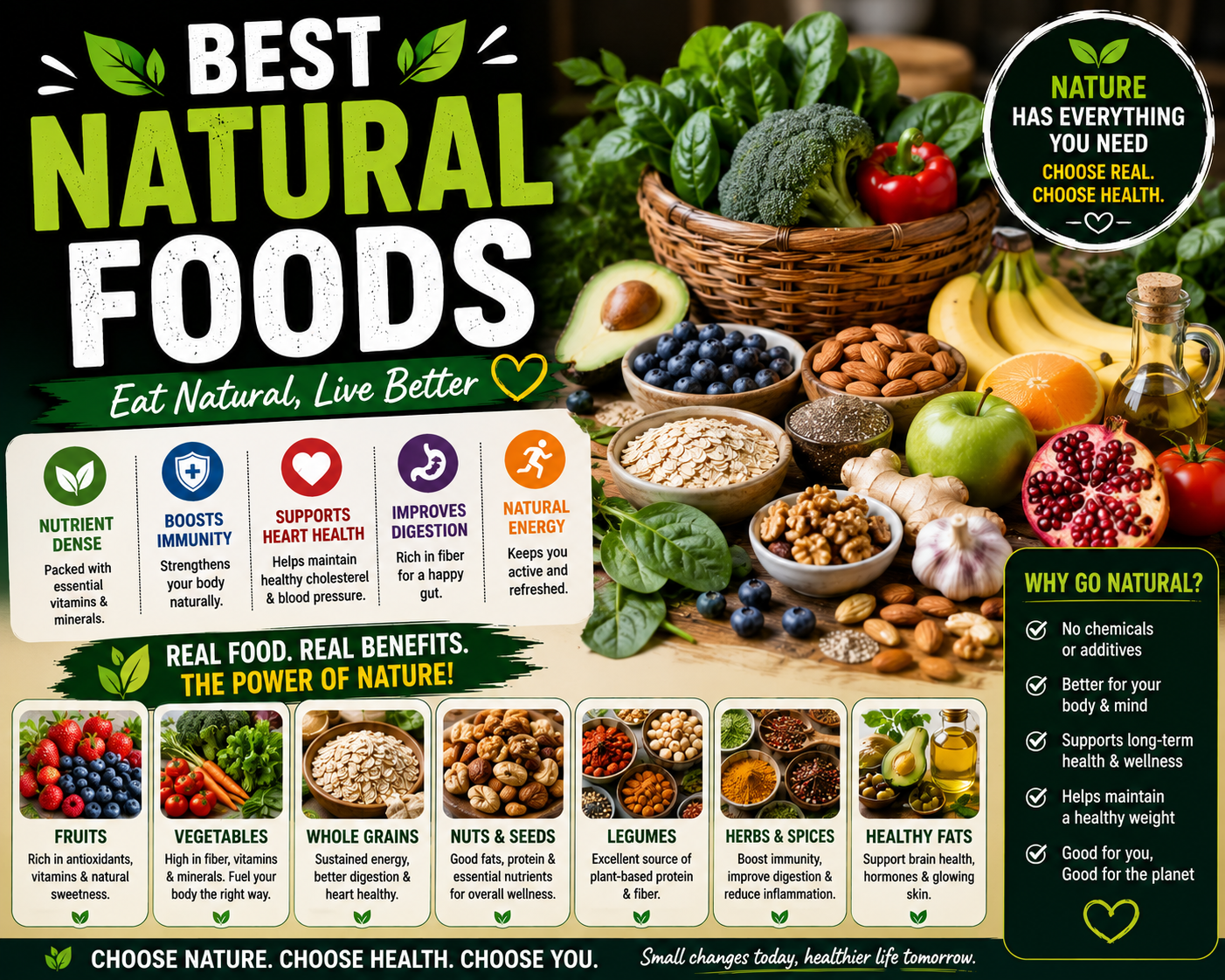
Eating more natural foods can be a simple way to improve the overall quality of your diet. Natural foods generally include foods that are close to their original form or have undergone minimal processing, such as fruits, vegetables, nuts, seeds, beans, eggs, and whole grains.
You don’t need to follow a perfect diet or completely eliminate packaged foods. A more practical goal is to make whole and minimally processed foods the foundation of most meals.
In this guide, we’ll explore 30 nutritious natural foods and practical ways to include them in everyday eating.
What Are Natural Foods?
The term “natural food” doesn’t have one universal definition. In everyday nutrition, it usually refers to foods that are:
- Whole or close to their original form
- Minimally processed
- Naturally rich in nutrients
- Free from excessive added ingredients
Examples include:
- Fruits
- Vegetables
- Nuts
- Seeds
- Beans
- Lentils
- Whole grains
- Eggs
- Fish
- Plain dairy products
For example, an apple is a whole food, while applesauce with added sugar is more processed.
However, processed does not automatically mean unhealthy.
Foods such as canned beans, frozen vegetables, plain yogurt, and whole-grain bread may be processed to some degree but can still fit into a nutritious diet.
The goal is not to fear all processing. Instead, focus on eating a variety of nutrient-dense foods.
Natural Foods vs. Highly Processed Foods
Natural or minimally processed foods often retain more of their original structure and nutritional qualities.
Examples include:
Natural or minimally processed foods
- Apples
- Oats
- Almonds
- Lentils
- Eggs
- Brown rice
- Plain yogurt
- Frozen vegetables
- Canned beans
More highly processed foods
- Sugary breakfast cereals
- Candy
- Sugar-sweetened drinks
- Packaged pastries
- Some heavily processed snack foods
Again, this doesn’t mean every processed food must be avoided.
A healthy diet is based on your overall eating pattern, not whether every single food is completely unprocessed.
Are All Natural Foods Healthy?
Not necessarily.
A food can be natural and still be high in calories, sugar, or saturated fat.
For example:
- Honey is natural but contains a lot of sugar.
- Coconut oil is natural but high in saturated fat.
- Dried fruit is nutritious but concentrated in calories and natural sugars.
- Nuts are highly nutritious but calorie-dense.
This is why portion size and overall diet quality still matter.
The best approach is to eat a variety of foods rather than relying heavily on one “superfood.”
Benefits of Eating More Natural Foods
Whole and minimally processed foods can contribute important nutrients, including:
- Fiber
- Protein
- Healthy fats
- Vitamins
- Minerals
- Naturally occurring plant compounds
Building meals around these foods may also make it easier to consume a more balanced diet.
For example:
Oats + fruit + nuts can provide carbohydrates, fiber, healthy fats, and other nutrients.
Or:
Lentils + brown rice + vegetables can create a filling plant-based meal.
The key is variety.
1. Almonds
Almonds are one of the easiest natural foods to keep at home.
They provide:
- Protein
- Fiber
- Unsaturated fats
- Vitamin E
- Magnesium
Almonds can be eaten as a snack or added to:
- Oatmeal
- Yogurt
- Salads
- Homemade trail mix
Because they are calorie-dense, a moderate portion is usually enough.
Choose unsalted or lightly salted almonds if you’re trying to reduce sodium intake.
Simple idea
Add chopped almonds and fruit to a bowl of oatmeal for extra crunch and nutrition.
2. Walnuts
Walnuts are another nutritious whole food rich in unsaturated fats.
They can be used in:
- Oatmeal
- Salads
- Yogurt
- Homemade granola
- Baking
Walnuts also work well as a simple snack.
Because nuts contain natural oils, store large quantities in an airtight container in a cool place. Refrigeration or freezing can help maintain freshness for longer.
3. Dates
Dates are naturally sweet and can be a useful alternative when you want sweetness without relying entirely on refined sugar.
They can provide:
- Carbohydrates
- Fiber
- Potassium
- Other micronutrients
Try dates:
- As a snack
- Chopped into oatmeal
- Blended into smoothies
- Combined with nuts
- Used in homemade energy bites
Dates are calorie-dense, so portion size still matters.
A simple snack is:
Dates + almonds or walnuts
This combination provides natural carbohydrates along with fats and some protein.
4. Apples
Apples are one of the most convenient whole fruits.
They contain fiber and can be eaten without preparation beyond washing.
Try apples with:
- Peanut butter
- Almond butter
- A handful of nuts
- Plain yogurt
Keeping fruit visible and easy to access can make it more convenient to choose as a snack.
5. Bananas
Bananas are affordable, portable, and versatile.
They can be used in:
- Smoothies
- Oatmeal
- Yogurt bowls
- Homemade pancakes
- Snacks
Bananas provide carbohydrates and potassium.
For a more filling snack, pair a banana with peanut butter or a small handful of nuts.
6. Berries
Berries include:
- Strawberries
- Blueberries
- Raspberries
- Blackberries
They provide fiber and a variety of naturally occurring plant compounds.
Fresh berries can be expensive in some locations, but frozen berries can be a practical alternative.
Use them in:
- Oatmeal
- Smoothies
- Yogurt
- Homemade desserts
You don’t need exotic or expensive berries. Choose what is affordable and available.
7. Avocados
Avocados provide mostly unsaturated fats along with fiber and other nutrients.
They can be used in:
- Toast
- Salads
- Sandwiches
- Grain bowls
- Dips
Avocados are calorie-dense, but they can still be part of a balanced diet.
Simple meal idea
Whole-grain toast + mashed avocado + egg
Add tomatoes or other vegetables for extra flavor and variety.
8. Leafy Green Vegetables
Leafy greens include:
- Spinach
- Kale
- Collard greens
- Swiss chard
These vegetables can provide several vitamins and minerals.
Add them to:
- Soups
- Smoothies
- Omelets
- Salads
- Lentil dishes
Frozen spinach can also be a convenient option when fresh greens aren’t available.
9. Broccoli
Broccoli is a versatile vegetable that can be eaten:
- Steamed
- Roasted
- Stir-fried
- Added to soups
- Mixed into grain bowls
It provides fiber and several important nutrients.
A simple meal combination is:
Brown rice + chickpeas + broccoli + olive oil + spices
10. Sweet Potatoes
Sweet potatoes are a nutritious carbohydrate source that can be used in many meals.
They can be:
- Baked
- Roasted
- Mashed
- Added to soups
- Used in grain bowls
Try combining sweet potatoes with:
- Beans
- Chickpeas
- Eggs
- Chicken
- Yogurt
Their natural sweetness can also make healthy meals more enjoyable without adding extra sugar.
11. Oats
Oats are one of the most practical natural foods for everyday eating.
They provide carbohydrates and fiber and can be used for:
- Oatmeal
- Overnight oats
- Smoothies
- Homemade granola
- Baking
Easy breakfast
Combine:
- Oats
- Milk or plant milk
- Chia seeds
- Fruit
- Almonds or walnuts
This gives you a more balanced meal than plain oats alone.
12. Brown Rice
Brown rice is a whole-grain option that works well as the base of many meals.
Try it with:
- Lentils
- Beans
- Vegetables
- Chicken
- Fish
Easy natural-food meal
Brown rice + black beans + tomatoes + vegetables + spices
Make a larger batch and use it for multiple meals during the week.
13. Lentils
Lentils are one of the best affordable natural plant foods.
They provide:
- Plant protein
- Fiber
- Iron
- Folate
- Other nutrients
Different types include:
- Red lentils
- Brown lentils
- Green lentils
- Black lentils
Use them in:
- Soups
- Curries
- Stews
- Salads
Easy meal
Red lentils + tomatoes + garlic + cumin + turmeric
Serve with brown rice or whole-grain bread.
14. Chickpeas
Chickpeas are versatile and easy to include in many meals.
You can use them for:
- Hummus
- Salads
- Curries
- Soups
- Grain bowls
- Roasted snacks
They provide plant protein and fiber.
Canned chickpeas are convenient, while dried chickpeas can be a budget-friendly option.
15. Eggs
Eggs are a nutrient-rich food and a convenient source of protein.
They can be prepared in many ways:
- Boiled
- Scrambled
- Poached
- Added to omelets
- Combined with vegetables
Simple breakfast idea
Eggs + spinach + tomatoes + whole-grain toast
This meal combines protein, vegetables, and whole grains.
Eggs can fit into a balanced diet, but individual dietary needs may vary.
Part 1 Takeaway
The first 15 foods on our best natural foods list are:
- Almonds
- Walnuts
- Dates
- Apples
- Bananas
- Berries
- Avocados
- Leafy greens
- Broccoli
- Sweet potatoes
- Oats
- Brown rice
- Lentils
- Chickpeas
- Eggs
These foods are versatile, widely available, and easy to use in everyday meals.
The biggest advantage isn’t that any single food is “perfect.” It’s that combining different fruits, vegetables, whole grains, legumes, nuts, and protein sources creates a more varied and balanced eating pattern.
16. Greek Yogurt
Greek yogurt is a convenient food that can provide:
- Protein
- Calcium
- Other important nutrients
Plain Greek yogurt is generally a better everyday choice than heavily sweetened varieties because you can control what you add.
Try combining it with:
- Berries
- Bananas
- Dates
- Almonds
- Walnuts
- Chia seeds
Simple breakfast idea
Greek yogurt + berries + walnuts + chia seeds
This combination provides protein, fiber, and healthy fats.
If you prefer a plant-based diet, choose an unsweetened yogurt alternative and compare the nutrition label, as protein content can vary.
17. Salmon
Salmon is a nutritious fish and a useful source of:
- Protein
- Unsaturated fats
- Omega-3 fatty acids
You can prepare salmon:
- Baked
- Grilled
- Pan-cooked
- Added to salads
- Served with grains and vegetables
Easy meal idea
Salmon + brown rice + broccoli
This simple combination includes protein, carbohydrates, and vegetables.
Canned salmon can also be a practical shelf-stable option.
18. Sardines
Sardines are another nutrient-dense seafood option.
They provide protein and beneficial fats. Sardines with edible bones can also contribute calcium.
Try sardines:
- On whole-grain toast
- With crackers
- In salads
- Mixed into pasta
Canned sardines are convenient because they have a long shelf life.
If you’re new to sardines, try them with lemon, herbs, tomatoes, or whole-grain crackers.
19. Chicken
Chicken is a widely available source of protein.
Different cuts have different amounts of fat, and preparation methods also matter.
Simple preparation methods include:
- Baking
- Grilling
- Roasting
- Stir-frying
Balanced meal idea
Chicken + sweet potato + vegetables
Chicken can also be added to soups, salads, wraps, and grain bowls.
The healthiest choice isn’t always about one specific food—it also depends on the overall meal and how it is prepared.
20. Beans
Beans are among the most useful and affordable natural plant foods.
Popular varieties include:
- Black beans
- Kidney beans
- White beans
- Pinto beans
- Navy beans
They provide:
- Plant protein
- Fiber
- Iron
- Other minerals
Beans can be used in:
- Soups
- Chili
- Salads
- Rice bowls
- Stews
Simple meal
Beans + brown rice + tomatoes + vegetables
This is an affordable and filling combination.
21. Pumpkin Seeds
Pumpkin seeds are small but nutrient-dense.
They can provide:
- Protein
- Healthy fats
- Magnesium
- Zinc
- Iron
Add them to:
- Oatmeal
- Yogurt
- Salads
- Soups
- Grain bowls
They also make a convenient snack.
Because seeds are calorie-dense, a small serving is usually enough.
22. Chia Seeds
Chia seeds are an easy addition to many meals.
They contain fiber and unsaturated fats and can absorb liquid to create a thicker texture.
Try them in:
- Overnight oats
- Smoothies
- Yogurt
- Oatmeal
- Chia pudding
Simple chia pudding
Combine chia seeds with milk or an unsweetened plant-based milk and refrigerate until thickened.
Add fruit, cinnamon, or nuts before eating.
23. Flaxseeds
Flaxseeds are another useful whole food to keep in your kitchen.
They can provide:
- Fiber
- Unsaturated fats
- Plant compounds
Ground flaxseed is often easier to use because it can be mixed directly into food.
Add it to:
- Oatmeal
- Smoothies
- Yogurt
- Pancake batter
- Homemade baked foods
Store ground flaxseed in an airtight container in a cool place to help maintain freshness.
24. Quinoa
Quinoa is technically a seed but is commonly prepared like a grain.
It provides:
- Carbohydrates
- Protein
- Fiber
- Minerals
Quinoa works well in:
- Grain bowls
- Salads
- Soups
- Side dishes
Simple natural-food bowl
Quinoa + chickpeas + tomatoes + vegetables + pumpkin seeds
Add olive oil, lemon, and herbs for flavor.
25. Tomatoes
Tomatoes are an easy food to include in everyday meals.
They can be eaten:
- Fresh
- Roasted
- Added to salads
- Used in sauces
- Included in soups and stews
Tomatoes contain several nutrients and naturally occurring plant compounds.
Easy idea
Add chopped tomatoes to:
- Eggs
- Lentil dishes
- Sandwiches
- Salads
- Grain bowls
Canned tomatoes can also be a practical minimally processed option.
26. Carrots
Carrots are affordable, versatile, and easy to store.
You can eat them:
- Raw
- Roasted
- Steamed
- Added to soups
- Added to curries
Try raw carrots with hummus for a simple snack.
Their natural sweetness can also make vegetables more enjoyable for people who don’t usually eat many vegetables.
27. Oranges
Oranges are a convenient source of several nutrients, including vitamin C.
They can be eaten as:
- A snack
- Part of breakfast
- Added to salads
- Blended into smoothies
Whole oranges generally provide more fiber than orange juice.
A simple strategy is to keep whole fruit available for snacks.
28. Garlic
Garlic is a natural ingredient that can add significant flavor to meals.
Use it in:
- Soups
- Lentil dishes
- Beans
- Vegetable meals
- Pasta sauces
- Chicken and fish recipes
Fresh garlic is a whole food, while garlic powder is more processed but can still be a useful ingredient.
Adding herbs and spices can make simple natural foods taste better without depending heavily on sugary sauces.
29. Extra Virgin Olive Oil
Extra virgin olive oil is a minimally processed cooking oil rich primarily in unsaturated fats.
Use it for:
- Salad dressings
- Roasted vegetables
- Grain bowls
- Pasta dishes
- Light cooking
Simple dressing
Mix:
- Extra virgin olive oil
- Lemon juice
- Black pepper
- Garlic
- Dried herbs
Because olive oil is calorie-dense, a small amount can go a long way.
30. Dark Chocolate
Dark chocolate is less processed than many heavily sweetened candy products, although it is still a treat and can contain added sugar.
Choose products with a higher cocoa content if you enjoy the taste, and check the ingredients.
Dark chocolate can be enjoyed with:
- Almonds
- Walnuts
- Fruit
- Yogurt
You don’t need to completely eliminate enjoyable foods to follow a nutritious diet.
A balanced approach is usually easier to maintain than an extremely restrictive one.
Natural Foods for Weight Management
If you’re trying to manage your weight, natural foods can be useful because many contain:
- Fiber
- Protein
- Water
- Important nutrients
Some practical options include:
- Oats
- Apples
- Berries
- Vegetables
- Lentils
- Beans
- Chickpeas
- Eggs
- Greek yogurt
- Chicken
- Fish
However, natural doesn’t automatically mean low in calories.
Foods such as:
- Nuts
- Seeds
- Dates
- Avocados
- Olive oil
- Dark chocolate
can all be nutritious but are relatively calorie-dense.
The goal is to focus on balanced portions and satisfying meals, rather than simply eating unlimited amounts of foods labeled “natural.”
High-Protein Natural Foods
If you want to increase protein intake, consider including a variety of foods.
Animal-Based Options
- Eggs
- Greek yogurt
- Salmon
- Sardines
- Chicken
Plant-Based Options
- Lentils
- Chickpeas
- Beans
- Pumpkin seeds
- Chia seeds
- Almonds
Protein needs vary from person to person depending on factors such as body size, age, activity level, and health.
A varied diet is generally more useful than relying entirely on one food or supplement.
Best Natural Foods for Healthy Snacks
Healthy snacks don’t need complicated recipes.
Here are some simple combinations:
Apple + Peanut Butter
A combination of fruit with protein and fats.
Dates + Almonds
Naturally sweet and convenient.
Greek Yogurt + Berries
A protein-rich option with fruit.
Carrots + Hummus
Crunchy, flavorful, and easy to prepare.
Banana + Peanut Butter
A simple snack before or after activity.
Walnuts + Dark Chocolate
A small portion can make an enjoyable snack.
Popcorn + Pumpkin Seeds
A whole-grain snack combined with seeds.
Budget-Friendly Natural Foods
Natural foods don’t have to be expensive.
Some affordable options include:
1. Oats
Useful for breakfast and baking.
2. Lentils
Inexpensive, filling, and versatile.
3. Beans
Dried beans can be especially economical.
4. Chickpeas
Useful for curries, salads, soups, and snacks.
5. Bananas
Often one of the more affordable fresh fruits.
6. Carrots
Easy to store and use in many meals.
7. Brown Rice
A useful whole-grain base.
8. Eggs
A convenient protein source for many households.
9. Canned Fish
Canned tuna or sardines can provide convenient protein and have a longer shelf life.
10. Frozen Vegetables
Frozen vegetables can be a practical option when fresh produce is expensive or difficult to use before it spoils.
A Simple Natural Foods Meal Formula
You don’t need complicated recipes to eat more whole foods.
Try building meals using this formula:
1. Choose a protein
Examples:
- Eggs
- Lentils
- Beans
- Chicken
- Fish
- Greek yogurt
2. Add a carbohydrate
Examples:
- Oats
- Brown rice
- Quinoa
- Sweet potato
3. Add vegetables or fruit
Examples:
- Broccoli
- Carrots
- Leafy greens
- Tomatoes
- Apples
- Berries
4. Add healthy fats
Examples:
- Almonds
- Walnuts
- Avocado
- Pumpkin seeds
- Olive oil
For example:
Brown rice + lentils + broccoli + olive oil
Or:
Greek yogurt + berries + walnuts + chia seeds
These simple combinations make it easier to build balanced meals without relying on complicated diet rules.
Now that we’ve covered all 30 foods, the next step is learning how to include more natural and minimally processed foods in everyday meals.
You don’t need to completely change your diet overnight. Small changes—such as eating fruit instead of a sugary snack, adding vegetables to lunch, or replacing a highly processed meal with beans and whole grains—can make a difference over time.
The goal is not perfection. A healthy eating pattern should also be practical, affordable, and enjoyable.
How to Eat More Natural Foods Every Day
A simple way to improve your diet is to make whole and minimally processed foods the starting point for most meals.
Start With One Simple Change
Instead of changing everything at once, try one or two changes:
- Add fruit to breakfast.
- Eat a handful of nuts instead of some packaged snacks.
- Add vegetables to lunch or dinner.
- Choose oats instead of a highly sugary cereal.
- Add beans or lentils to meals.
- Keep healthy foods visible and easy to access.
Small habits are often easier to maintain than extremely restrictive diets.
Natural Food Breakfast Ideas
1. Oatmeal With Fruit and Nuts
Combine:
- Oats
- Milk or plant milk
- Banana or berries
- Almonds or walnuts
- Chia or flaxseed
This creates a filling breakfast with carbohydrates, fiber, fats, and some protein.
2. Greek Yogurt Bowl
Combine:
- Plain Greek yogurt
- Berries
- Chia seeds
- Walnuts
- A small amount of chopped dates
This is a quick breakfast that requires very little preparation.
3. Eggs and Vegetables
Prepare:
- Eggs
- Spinach
- Tomatoes
- Other vegetables
Serve with whole-grain toast or a small portion of brown rice.
4. Overnight Oats
Add to a container:
- Oats
- Milk or plant milk
- Chia seeds
- Cinnamon
Refrigerate overnight and add fruit or nuts before eating.
Natural Food Lunch Ideas
1. Chickpea and Brown Rice Bowl
Combine:
- Brown rice
- Chickpeas
- Tomatoes
- Leafy greens
- Olive oil
- Lemon and herbs
This is an easy plant-based meal.
2. Lentil and Vegetable Bowl
Use:
- Cooked lentils
- Carrots
- Leafy greens
- Tomatoes
- Olive oil
- Spices
Add brown rice or quinoa if desired.
3. Salmon and Vegetable Bowl
Combine:
- Salmon
- Brown rice or quinoa
- Broccoli
- Carrots
- Olive oil
This provides protein, vegetables, carbohydrates, and healthy fats.
4. Chicken and Sweet Potato Meal
Try:
Chicken + roasted sweet potato + broccoli or other vegetables
Simple meals don’t need complicated ingredients.
Natural Food Dinner Ideas
1. Lentil Curry
Combine:
- Lentils
- Tomatoes
- Garlic
- Turmeric
- Cumin
- Other spices
Serve with brown rice.
2. Bean and Vegetable Stew
Use:
- Beans
- Tomatoes
- Carrots
- Leafy greens
- Garlic
- Herbs
This can be an affordable and filling meal.
3. Baked Salmon With Vegetables
Serve salmon with:
- Broccoli
- Carrots
- Sweet potatoes
Add a small amount of olive oil and herbs for flavor.
4. Chickpea and Quinoa Bowl
Combine:
- Quinoa
- Chickpeas
- Tomatoes
- Leafy greens
- Pumpkin seeds
- Olive oil
This is an easy plant-based option.
Best Natural Food Snack Ideas
Natural snacks don’t need to be complicated.
Apple + Peanut Butter
A convenient combination of fruit and healthy fats.
Banana + Almonds
Portable and easy to prepare.
Dates + Walnuts
Naturally sweet with a satisfying texture.
Greek Yogurt + Berries
A simple protein-rich snack.
Carrots + Hummus
An easy vegetable-based snack.
Dark Chocolate + Almonds
A small portion can satisfy a chocolate craving while still including nutrient-dense foods.
7-Day Natural Foods Meal Plan
This is a general example and can be adjusted based on your preferences, budget, dietary requirements, and calorie needs.
| Day | Breakfast | Lunch | Dinner |
|---|---|---|---|
| Monday | Oatmeal with berries and walnuts | Chickpea rice bowl | Lentil curry with vegetables |
| Tuesday | Greek yogurt with fruit and chia | Chicken and vegetable bowl | Salmon with sweet potato |
| Wednesday | Eggs with spinach and tomatoes | Lentil and brown rice bowl | Bean and vegetable stew |
| Thursday | Overnight oats | Chickpea quinoa bowl | Chicken with vegetables |
| Friday | Oatmeal with banana and almonds | Tuna or salmon salad | Lentil soup with brown rice |
| Saturday | Greek yogurt with berries | Bean and vegetable bowl | Baked salmon with broccoli |
| Sunday | Eggs with whole-grain toast | Chickpea and tomato salad | Quinoa with vegetables and beans |
You can repeat meals and use leftovers. A healthy diet does not require cooking a completely different recipe every day.
How to Shop for Natural Foods on a Budget
One common misconception is that natural foods are always expensive.
Many affordable foods are minimally processed and nutritious.
Buy Basic Staples
Focus on foods such as:
- Oats
- Lentils
- Beans
- Chickpeas
- Brown rice
- Eggs
- Bananas
- Carrots
- Seasonal vegetables
These foods are often more affordable than trendy “superfood” products.
Choose Seasonal Produce
Seasonal fruits and vegetables may be more affordable and fresher.
You don’t need to buy exotic fruits or expensive imported foods to eat well.
An apple, banana, carrot, or locally available vegetable can be just as useful in a balanced diet.
Use Frozen and Canned Foods
Frozen vegetables can be convenient and reduce food waste.
Canned foods such as:
- Beans
- Chickpeas
- Tomatoes
- Fish
can also be practical.
Compare labels and choose options with less added sugar or sodium when possible.
Buy in Bulk When It Makes Sense
Foods such as:
- Oats
- Rice
- Lentils
- Beans
- Nuts
- Seeds
may be more economical when purchased in larger quantities.
However, only buy large amounts of foods that you will actually use before their quality declines.
Common Mistakes When Trying to Eat More Natural Foods
1. Trying to Be Perfect
You don’t need to remove every processed food from your life.
A diet based mostly on nutritious foods can still include occasional treats and convenience foods.
2. Assuming “Natural” Means Unlimited
Foods such as nuts, seeds, dates, avocado, olive oil, and dark chocolate can be nutritious but calorie-dense.
Portion size still matters.
3. Buying Foods You Don’t Actually Like
Don’t buy quinoa, chia seeds, or other foods simply because they are popular.
The best healthy foods are the ones you enjoy and can consistently include in your meals.
4. Ignoring Protein
Fruit and vegetables are important, but meals may be more satisfying when they also include a protein source.
Examples include:
- Eggs
- Greek yogurt
- Lentils
- Beans
- Chicken
- Fish
5. Making Healthy Eating Too Complicated
You don’t need expensive powders, supplements, or complicated recipes.
A meal such as:
Brown rice + lentils + vegetables + olive oil
can be simple, affordable, and nutritious.
How to Build a Balanced Natural Food Meal
A useful formula is:
½ of your meal: Vegetables and/or fruit
Examples:
- Broccoli
- Carrots
- Leafy greens
- Tomatoes
- Berries
Add a protein source
Examples:
- Lentils
- Beans
- Eggs
- Chicken
- Fish
- Greek yogurt
Add a carbohydrate source
Examples:
- Brown rice
- Oats
- Quinoa
- Sweet potatoes
Add healthy fats
Examples:
- Almonds
- Walnuts
- Avocado
- Seeds
- Olive oil
You don’t have to measure every meal perfectly. This is simply a practical framework.
Frequently Asked Questions
What are the best natural foods to eat every day?
There is no single list that works for everyone, but a varied diet can include:
- Fruits
- Vegetables
- Nuts
- Seeds
- Beans
- Lentils
- Whole grains
- Eggs
- Fish
- Plain dairy or suitable alternatives
Variety is generally more useful than eating one food repeatedly.
Are natural foods better than processed foods?
Not always.
Some processed foods can still be nutritious. Examples include:
- Frozen vegetables
- Canned beans
- Plain yogurt
- Whole-grain bread
- Canned fish
The degree of processing and the overall nutritional profile are often more important than simply labeling a food “processed.”
What are good natural foods for weight management?
Useful options include:
- Apples
- Berries
- Vegetables
- Oats
- Lentils
- Beans
- Chickpeas
- Eggs
- Greek yogurt
- Fish
Foods containing protein and fiber may help create more satisfying meals, but total eating patterns and portion sizes also matter.
What are the best natural foods for protein?
Natural protein-rich foods include:
Animal-based
- Eggs
- Greek yogurt
- Chicken
- Salmon
- Sardines
Plant-based
- Lentils
- Beans
- Chickpeas
- Pumpkin seeds
- Nuts
Can I eat natural foods if I have a busy lifestyle?
Yes.
Keep convenient options available, such as:
- Fruit
- Nuts
- Greek yogurt
- Boiled eggs
- Canned beans
- Canned fish
- Frozen vegetables
Meal preparation can also make healthy eating easier during busy days.
Are canned and frozen foods considered natural?
They may be processed, but many can still be nutritious.
For example, plain frozen vegetables, canned beans, and canned tomatoes can be practical choices.
Check the ingredients and nutrition label, particularly for added sugar and sodium.
Do I need to buy organic natural foods?
No. Organic foods are not required for a healthy diet.
For many people, eating a variety of fruits, vegetables, legumes, whole grains, and other nutritious foods is more important than whether every item is organic.
Choose options that fit your budget and availability.
Final Takeaway
The best natural foods are not limited to expensive superfoods or special diet products.
A healthy eating pattern can be built around ordinary foods such as:
- Apples
- Bananas
- Berries
- Leafy greens
- Broccoli
- Carrots
- Sweet potatoes
- Oats
- Brown rice
- Lentils
- Chickpeas
- Beans
- Eggs
- Greek yogurt
- Salmon
- Chicken
- Almonds
- Walnuts
- Pumpkin seeds
- Olive oil
The most important goal is to eat a variety of whole and minimally processed foods that fit your lifestyle and budget.
You don’t need to eat perfectly. Start by making small changes, such as adding one more serving of fruit or vegetables to your day, cooking with lentils or beans more often, or keeping nuts and fruit available for quick snacks.
Over time, these simple habits can help you build a more nutritious and sustainable eating pattern.
Internal Linking Opportunities
- Best Healthy Pantry Foods
- Healthy Foods List
- Best Superfoods
- Best Foods for Weight Loss
- Foods Rich in Magnesium
- Foods Rich in Zinc
- Foods Rich in Iron
- Foods High in Antioxidants
- High Protein Snacks

Leave a Reply