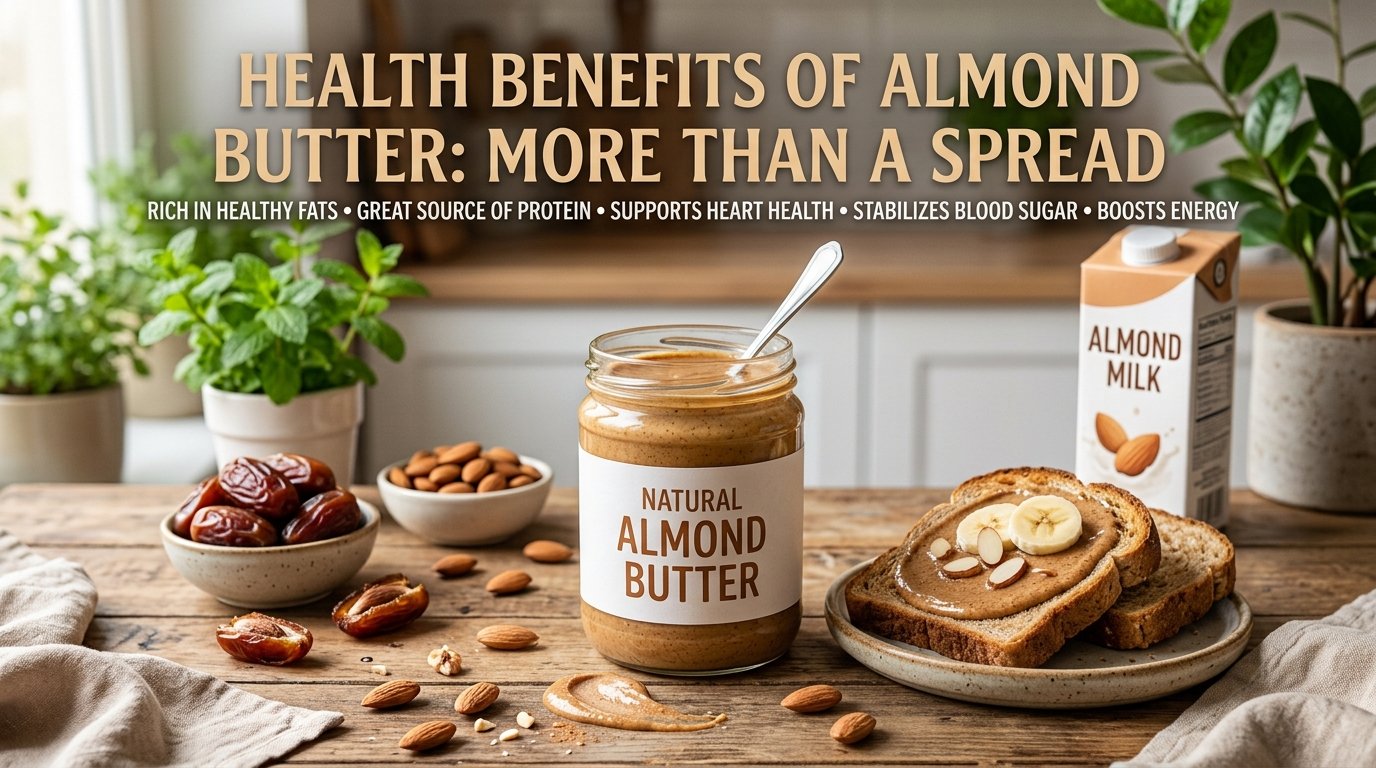
Benefits of almond butter include its combination of healthy fats, protein, fiber, vitamins, and minerals. Almond butter is a nutritious spread that can be enjoyed with toast, fruit, oatmeal, smoothies, or other foods. Adding almond butter to a balanced diet may help provide lasting energy and important nutrients.
Almond butter is made by grinding almonds into a smooth or crunchy spread. Because it is made from almonds, it provides many of the same nutrients found in whole almonds, including unsaturated fats, protein, fiber, vitamin E, magnesium, calcium, and potassium.
It is also a versatile food that can be added to toast, oatmeal, smoothies, fruit, yogurt, and many recipes.
Important: Almond butter is nutrient-dense but also calorie-dense, so portion size matters. Product nutrition can also vary depending on whether sugar, salt, or added oils are included.
1. Rich in Healthy Unsaturated Fats
Almond butter contains predominantly unsaturated fats, especially monounsaturated fat. A 1-tablespoon serving of plain almond butter contains about 9 grams of total fat, with much of it coming from monounsaturated fat.
Replacing foods higher in saturated fat with foods containing unsaturated fats can be part of a heart-conscious eating pattern.
2. Provides Plant-Based Protein
benefits of almond butter provides protein along with healthy fats and fiber.
One tablespoon contains roughly 3–4 grams of protein, depending on the product.
You can increase the protein content of a snack by combining almond butter with:
- Greek yogurt
- Milk
- Oatmeal
- Whole-grain toast
- Chia seeds
- Flaxseed
3. Excellent Source of Vitamin E
One of almond butter’s standout nutrients is vitamin E, an antioxidant nutrient that helps protect cells from oxidative stress.
Almond butter is particularly notable among nut butters for its vitamin E content.
Other vitamin-E-rich foods include:
- Almonds
- Sunflower seeds
- Hazelnuts
- Peanuts
- Avocado
4. Contains Dietary Fiber
Almond butter provides dietary fiber, which contributes to normal digestive health.
A tablespoon provides roughly 1.5–2 grams of fiber, depending on the product.
For even more fiber, combine almond butter with:
- Apples
- Pears
- Berries
- Oatmeal
- Chia seeds
- Whole-grain bread
5. Provides Magnesium
Almond butter contains magnesium, an essential mineral involved in normal muscle and nerve function and energy metabolism.
Two tablespoons can provide a meaningful amount of magnesium.
6. Contains Calcium
Almond butter also provides calcium.
The exact amount varies by product, but almond butter can contribute to overall calcium intake when included as part of a varied diet.
Calcium is important for maintaining normal bones and teeth as well as normal muscle function.
7. Provides Potassium
Almond butter contains potassium, a mineral involved in normal muscle and nerve function.
One tablespoon provides around 120 mg of potassium in some nutrition databases.
8. Can Be a Filling Snack
The combination of fat, protein and fiber makes almond butter more substantial than many low-nutrient spreads.
Try:
Apple slices + almond butter
or
Whole-grain toast + almond butter + banana
These combinations can make a satisfying snack.
9. Can Fit Into a Heart-Healthy Eating Pattern
Almond butter’s unsaturated fat profile makes it a useful addition to a balanced eating pattern.
Research on almonds—not necessarily every commercial almond-butter product—has associated almond consumption with favorable changes in some cardiovascular risk factors.
The overall diet still matters much more than one food.
10. May Help Improve the Nutritional Quality of Meals
Adding a small amount of almond butter to foods such as oatmeal, fruit or whole-grain toast can increase the meal’s content of:
- Protein
- Unsaturated fats
- Fiber
- Vitamin E
- Magnesium
- Calcium
- Potassium
USDA-supported research has found that almond consumers generally had higher intakes of several nutrients and better overall diet-quality measures, although this type of observational research does not prove that almonds themselves caused those differences.
11. Convenient Source of Energy
Almond butter is energy-dense.
One tablespoon contains around 98 calories, while two tablespoons provide roughly 190–200 calories depending on the product.
This can be useful when you need a compact source of energy, but it also means portions should be considered if you’re managing your calorie intake.
12. Can Be Useful for Plant-Based Diets
Almond butter is naturally plant-based and can be incorporated into vegetarian and vegan meals.
Use it in:
- Smoothies
- Oatmeal
- Energy bites
- Toast
- Fruit bowls
- Sauces
It can also contribute protein, healthy fats and minerals to plant-based meals.
13. May Be a Good Alternative to Peanut Butter
If you enjoy nut butters but want something different, almond butter is a convenient alternative to peanut butter.
The two have different nutritional profiles, but almond butter provides notable amounts of vitamin E, magnesium, calcium and monounsaturated fats.
Important: People with peanut allergies should not assume almond butter is automatically safe; cross-contact can occur depending on manufacturing.
14. Easy to Add to Smoothies
Almond butter can make smoothies creamier while adding protein, fat and calories.
Simple Almond Butter Smoothie
- 1 banana
- 1 cup milk or unsweetened almond milk
- 1 tablespoon almond butter
- 1 tablespoon chia seeds
- Cinnamon
- Ice
Blend until smooth.
This can also connect naturally with your dates, milk, walnut and almond smoothie article.
15. Works in Both Sweet and Savory Recipes
Almond butter isn’t limited to toast.
You can use it in:
- Smoothies
- Oatmeal
- Salad dressings
- Stir-fry sauces
- Energy balls
- Baked goods
- Fruit dips
- Sandwiches
The versatility makes it easy to incorporate into different meals.
Almond Butter Nutrition
A typical 1-tablespoon (16 g) serving of plain almond butter provides approximately:
| Nutrient | Amount |
|---|---|
| Calories | 98 |
| Protein | 3.4 g |
| Fat | 9 g |
| Carbohydrates | 3 g |
| Fiber | 1.6 g |
| Sugar | 0.7 g |
Values can vary between brands and recipes.
How to Choose Healthy Almond Butter
When shopping, look at the ingredient list and Nutrition Facts label.
A simple almond butter may contain:
Almonds
or:
Almonds + a small amount of salt
Some products contain:
- Added sugar
- Added oils
- Extra salt
If you’re looking for the simplest option, choose a product with minimal added ingredients.
How Much Almond Butter Should You Eat?
A practical serving is often around 1–2 tablespoons.
Because almond butter is calorie-dense, eating large amounts can quickly increase your calorie intake.
You don’t need a large quantity to enjoy its nutritional benefits.
Possible Side Effects and Precautions
Although almond butter can be nutritious, it isn’t appropriate for everyone.
Almond allergy
People with an almond or tree-nut allergy should avoid almond butter and follow their healthcare professional’s advice. Tree-nut allergies can cause serious reactions.
High calorie content
Large portions can add substantial calories.
Added sugar
Some flavored almond butters contain added sugar.
Added oils
Some products contain additional oils to improve texture.
Kidney stones
Almonds contain oxalates. People with a history of certain kidney stones may need individualized dietary advice from a healthcare professional.
5 Easy Ways to Eat Almond Butter
1. Almond Butter Toast
Spread 1 tablespoon over whole-grain toast and top with banana slices.
2. Apple and Almond Butter
Slice an apple and serve it with almond butter as a simple snack.
3. Almond Butter Oatmeal
Stir a tablespoon into cooked oatmeal and add berries.
4. Almond Butter Smoothie
Blend almond butter with banana, milk and cinnamon.
5. Almond Butter Chia Pudding
Combine almond milk, chia seeds and almond butter, then refrigerate until thick.
Almond Butter vs. Whole Almonds
Both can be nutritious, but there is an important difference.
Whole almonds require chewing and have a different physical structure.
Almond butter is already ground, making it easy to eat quickly and incorporate into recipes.
USDA-supported research has found that the amount of metabolizable energy from almonds can vary depending on their physical form, with almond butter showing greater measured energy availability than whole almonds in one controlled study.
So almond butter shouldn’t automatically be considered a lower-calorie version of whole almonds.
Frequently Asked Questions
Is almond butter healthy?
Yes, almond butter can be part of a healthy diet. It provides unsaturated fats, protein, fiber, vitamin E and minerals such as magnesium and calcium.
Is almond butter good for weight loss?
It can fit into a weight-management diet, but it is calorie-dense. Portion control is important.
Is almond butter good for your heart?
Its predominantly unsaturated-fat profile can fit into a heart-conscious diet. However, almond butter isn’t a treatment for heart disease.
Is almond butter high in protein?
It provides protein, but it isn’t as protein-dense as many dedicated protein foods. One tablespoon contains roughly 3–4 grams.
Is almond butter better than peanut butter?
Neither is universally better. Both can be nutritious. Compare their ingredient lists and nutrition labels based on your individual needs.
Can you eat almond butter every day?
For most people who tolerate almonds, a moderate serving can fit into a balanced diet.
Does almond butter contain sugar?
Plain almond butter naturally contains a small amount of sugar. Some commercial varieties also have added sugar, so check the label.
Is almond butter dairy-free?
Plain almond butter made only from almonds is naturally dairy-free.
Is almond butter vegan?
Plain almond butter is generally vegan, provided no animal-derived ingredients have been added.
Final Takeaway
Almond butter is a nutrient-dense, versatile spread that can add healthy unsaturated fats, protein, fiber, vitamin E, magnesium, calcium and potassium to your diet.
The best choice is usually a product with simple ingredients and little or no added sugar, while keeping portions reasonable because almond butter is calorie-dense.
Use it with nutrient-rich foods such as fruit, oatmeal, whole grains, yogurt or smoothies rather than treating it as a standalone health cure.
Suggested Article’s:
- Health Benefits of Almond Milk
- Benefits of Dates, Milk, Walnut & Almond Smoothie
- Best Nuts for Daily Eating
- Mixed Nuts Benefits
- Pistachio Benefits
- Cashew Benefits
- Walnut Benefits
- Pecan Benefits
- Hazelnut Benefits
- Macadamia Nut Benefits
- Brazil Nut Benefits
- Chia Seed Benefits
- Flaxseed Benefits
- Best Natural Foods
- Best Healthy Pantry Foods




Leave a Reply