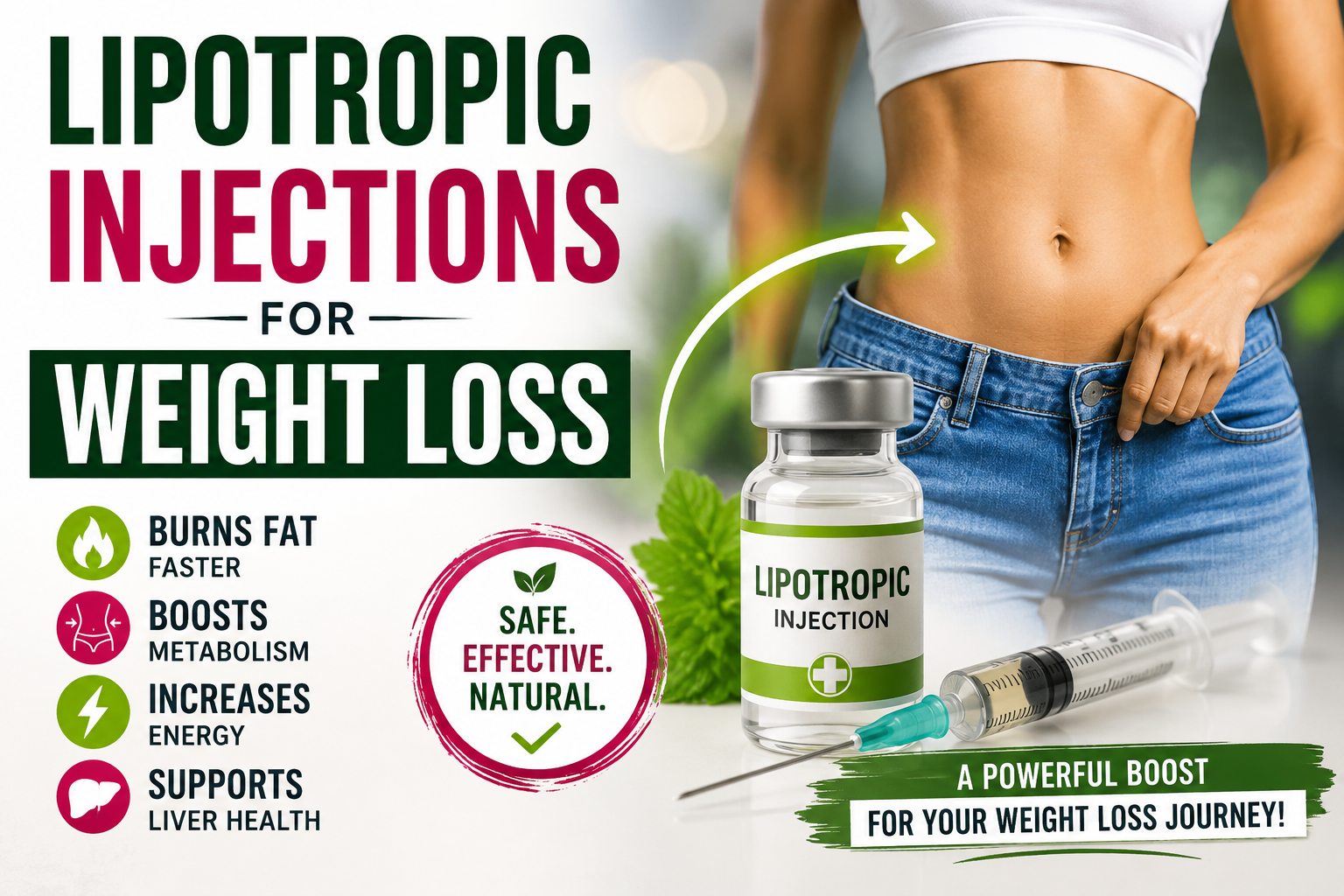
Lipotropic Injections for Weight Loss are becoming a popular option for people looking for additional support during their weight loss journey. These injections contain lipotropic compounds that may support fat metabolism and overall weight management when combined with a healthy diet and regular physical activity.
Lipotropic injections are widely promoted as fat-burning shots that may help with weight loss, increase energy, and support metabolism. Weight-loss clinics, wellness centers, and online advertisements often describe these injections as a quick way to help the body burn fat.
But an important question remains:
Do lipotropic injections actually work for weight loss?
The answer is more complicated than many advertisements suggest. Lipotropic injections are not one standardized treatment. Different providers may use different combinations of ingredients, doses, and injection schedules. Some ingredients commonly included in these injections have important roles in normal metabolism, but that does not necessarily mean that injecting extra amounts will cause significant fat loss.
Before considering any injectable weight-loss product, it is important to understand what it contains, what evidence exists for the specific treatment, and what potential risks may be involved.
What Are Lipotropic Injections?
The term lipotropic injection usually refers to an injectable mixture containing one or more nutrients or compounds that are promoted as supporting fat metabolism. There is no single universal formula.
Depending on the provider, a lipotropic injection may contain ingredients such as:
- Vitamin B12
- Methionine
- Choline
- Inositol
- Vitamin B6
- L-carnitine or other ingredients
Because formulas vary, it is important not to assume that every “lipotropic shot” contains the same ingredients or has the same effects.
A clinic may market an injection as a skinny shot, fat-burning injection, MIC injection, or metabolism booster. The name alone does not tell you whether that specific product has been tested for weight loss.
How Are Lipotropic Injections Supposed to Work?
The marketing behind lipotropic injections is usually based on the idea that certain nutrients participate in normal metabolic processes involving fats and energy.
For example, nutrients such as choline and vitamin B12 have established biological functions. However, there is an important difference between:
A nutrient being necessary for normal metabolism
and
Injecting extra amounts of that nutrient causing significant weight loss.
The first statement may be true, while the second requires specific clinical evidence.
This is where many advertisements can become misleading. The fact that an ingredient is involved in metabolism does not automatically prove that extra injections will make the body burn more fat.
Do Lipotropic Injections Actually Work for Weight Loss?
The evidence supporting standard lipotropic injections as a direct, reliable weight-loss treatment is limited.
There is also another challenge: because lipotropic injections are not one standardized product, it is difficult to make a single scientific conclusion about every formula sold under that name.
A person may receive a combination of vitamin B12, methionine, inositol, and choline from one provider, while another clinic may use an entirely different mixture.
In addition, many people receiving these injections are also participating in a weight-loss program that includes:
- Eating fewer calories
- Changing food choices
- Exercising more
- Tracking body weight
- Receiving coaching
- Reducing sugary drinks
- Improving sleep habits
If that person loses weight, it can be difficult to determine how much of the result—if any—came from the injection itself.
The National Institute of Diabetes and Digestive and Kidney Diseases explains that weight management generally relies on sustainable lifestyle changes, and, when appropriate, evidence-based medicines or surgery may also be considered.
Common Ingredients in Lipotropic Injections
Vitamin B12
Vitamin B12 is an essential nutrient involved in several important functions in the body.
A person with a true vitamin B12 deficiency may benefit from appropriate medical treatment. Correcting a deficiency can improve problems related to that deficiency.
However, that is different from saying that vitamin B12 injections automatically cause weight loss in someone who already has adequate B12 levels.
If a clinic claims that every person will lose weight simply by receiving B12 injections, that claim should be viewed cautiously.
Methionine
Methionine is an amino acid that plays multiple roles in the body.
It is sometimes included in lipotropic formulations because of its involvement in normal metabolic processes.
However, its inclusion in a weight-loss injection does not by itself prove that the injection produces clinically meaningful fat loss.
Choline
Choline is an essential nutrient involved in several processes, including normal liver function and lipid metabolism.
Choline’s biological importance is one reason it is frequently included in lipotropic products.
But again, having a role in fat metabolism does not automatically mean that more choline will produce more weight loss.
Inositol
Inositol is another compound sometimes included in lipotropic formulations.
Different forms of inositol have been studied in specific health contexts. However, evidence for a particular ingredient in one situation should not automatically be applied to every lipotropic injection formula.
The exact formulation and reason for use matter.
Why Do Some People Report Weight Loss After Lipotropic Injections?
There are several possible explanations.
1. They Changed Their Diet
Many weight-loss clinics recommend a reduced-calorie diet along with injections.
Reducing calorie intake may be a major contributor to weight loss.
2. They Started Exercising
Beginning regular physical activity can increase energy expenditure and provide important health benefits.
NIDDK recommends regular physical activity as part of healthy weight management and notes that sustainable eating and activity habits are central to losing or maintaining weight.
3. They Became More Consistent
Paying for a weight-loss program may encourage some people to become more consistent with:
- Meal planning
- Exercise
- Weigh-ins
- Portion awareness
This behavioral change can contribute to results.
4. They Corrected a Nutrient Deficiency
If someone has a diagnosed deficiency and receives appropriate treatment, they may feel better or have more energy.
That does not necessarily mean the injection itself is directly melting body fat.
Can Lipotropic Injections Burn Belly Fat?
No injection should be described as a proven way to selectively melt fat from one specific area of the body unless that particular treatment has been properly evaluated and approved for that specific use.
The body does not generally allow people to choose exactly where they will lose fat through ordinary dieting or exercise.
Be cautious with advertisements claiming that a lipotropic shot can specifically eliminate:
- Belly fat
- Love handles
- Arm fat
- Thigh fat
The FDA has separately warned about unapproved fat-dissolving injections, reporting serious adverse reactions associated with some products. These products are not necessarily the same as standard vitamin-based lipotropic injections, so they should not be treated as identical—but consumers should understand the difference and avoid assuming that every injectable product marketed for fat reduction is proven safe or effective.
Lipotropic Injections vs. FDA-Approved Weight-Loss Medications
This distinction is extremely important.
Lipotropic injections and prescription weight-management medications are not automatically the same thing.
Prescription medicines used to treat overweight and obesity have specific active ingredients, dosing requirements, indications, warnings, and clinical evidence.
NIDDK notes that prescription weight-management medications may be considered for certain adults, such as people with a BMI of 30 or higher, or a BMI of 27 or higher with weight-related health problems, depending on individual circumstances. These medications are intended to be used alongside lifestyle changes rather than as replacements for healthy eating and physical activity.
A lipotropic injection sold by a wellness clinic should not be presented as equivalent to an FDA-approved anti-obesity medication simply because both are injections.
Potential Benefits of Lipotropic Injections
Potential benefits depend on the exact ingredients and the individual’s nutritional status.
Possible Support for Nutrient Deficiencies
If an injection contains a nutrient that a person is genuinely deficient in, appropriate medical treatment may be beneficial.
However, a healthcare professional should determine whether a deficiency exists and whether an injection is appropriate.
Convenience
Some people prefer injections over remembering to take supplements.
Convenience, however, is not evidence that a treatment causes weight loss.
Possible Improvement in Energy for People With a Deficiency
A person with a nutrient deficiency may experience symptoms that improve when the deficiency is appropriately treated.
This should not be generalized into a claim that lipotropic injections universally increase energy or metabolism in everyone.
Possible Side Effects of Lipotropic Injections
Because there is no universal formula, side effects can vary depending on:
- The ingredients
- The dose
- The injection technique
- The quality of the product
- Individual allergies or sensitivities
- Other medications or supplements being used
Possible issues may include:
- Pain at the injection site
- Redness or swelling
- Bruising
- Nausea
- Digestive symptoms
- Allergic reactions
- Reactions to specific ingredients
The FDA has discussed adverse-event reports involving multi-ingredient “weight loss injections,” including gastrointestinal symptoms and injection-site problems, while noting that determining the exact cause can be difficult when multiple substances are involved.
Injection Risks
Any injection also introduces risks associated with:
- Improper technique
- Contamination
- Nonsterile equipment
- Poor-quality products
For this reason, people should not purchase injectable products from questionable websites and attempt to inject themselves.
The FDA specifically warns against self-injecting unapproved fat-dissolving products purchased online because serious complications, including infections and permanent scarring, have been reported.
Who Should Be Especially Careful?
A person should discuss lipotropic injections with a qualified healthcare professional before use, especially if they:
- Are pregnant
- Are breastfeeding
- Have liver or kidney disease
- Have a known allergy to an ingredient
- Take prescription medications
- Have an ongoing medical condition
- Have a history of serious allergic reactions
The exact product matters. A provider should be able to tell you exactly what is being injected and at what dose.
Questions to Ask Before Getting a Lipotropic Injection
Before paying for a treatment, ask:
1. What are the exact ingredients?
Do not accept only a vague answer such as “vitamins and fat burners.”
Ask for the complete ingredient list.
2. What is the dose of each ingredient?
The amount matters, not just the ingredient name.
3. What evidence supports this exact formula?
Evidence for one ingredient does not automatically prove that the entire combination works.
4. What are the possible side effects?
Ask about both common and serious risks.
5. Who prepared the product?
Know whether the product comes from an appropriately regulated source.
6. Who will administer the injection?
An appropriately qualified healthcare professional should administer injectable treatments when indicated.
7. What happens if I experience a reaction?
A legitimate provider should have a clear process for managing adverse reactions.
How Often Are Lipotropic Injections Given?
There is no universal schedule because formulas and provider practices vary.
Some clinics advertise weekly or more frequent injections.
However, more frequent injections do not automatically mean better or faster weight loss.
The correct schedule, if an injection is medically appropriate at all, depends on the specific ingredients, dose, and reason for treatment.
How Much Weight Can You Lose With Lipotropic Injections?
There is no reliable number that applies to everyone.
Be skeptical of advertisements promising:
- 10 pounds in one week
- Guaranteed fat loss
- Permanent weight loss without lifestyle changes
- Targeted belly-fat melting
- Results with no diet or activity changes
A safe weight-management plan should focus on realistic and sustainable goals.
NIDDK describes an initial goal of losing about 5% to 10% of starting body weight over six months as a realistic target used in successful weight-management programs.
Lipotropic Injections and Exercise
Even if someone chooses to receive lipotropic injections under medical supervision, exercise remains valuable.
Physical activity can support:
- Weight management
- Cardiovascular health
- Muscle strength
- Physical function
- Long-term weight maintenance
For healthy adults, NIDDK highlights at least 150 minutes per week of moderate-intensity aerobic activity and muscle-strengthening activities on two or more days per week as general recommendations. Individual needs may differ depending on health status.
Lipotropic Injections and Diet
An injection cannot compensate for an overall dietary pattern that consistently provides more energy than your body needs.
A sustainable eating plan may include:
- Vegetables
- Fruits
- Whole grains
- Protein-rich foods
- Beans and lentils
- Nuts and seeds
- Healthy fats
The best plan is generally one that meets nutritional needs and is realistic enough to maintain over time.
Are Lipotropic Injections a Scam?
Not every provider offering lipotropic injections is necessarily committing fraud, and the ingredients themselves may have legitimate medical or nutritional roles.
However, marketing can become misleading when a clinic:
- Guarantees dramatic weight loss
- Claims the injection “melts fat” without strong evidence
- Refuses to disclose ingredients
- Does not discuss risks
- Encourages self-injection
- Claims that the shots can replace healthy eating or medical treatment
The safest approach is to evaluate the specific product and the evidence supporting that exact formulation.
Lipotropic Injections vs. B12 Shots
Vitamin B12 injections are sometimes included in lipotropic formulas, but they are not the same thing.
A B12 injection may be medically appropriate for someone with a confirmed deficiency or another clinical reason for injectable B12.
A lipotropic injection may contain B12 plus several other ingredients.
Neither category should automatically be described as a proven fat-burning treatment.
Lipotropic Injections vs. “Fat-Dissolving” Injections
These terms are sometimes confused.
Lipotropic injections
Usually marketed as nutrient or metabolic-support injections.
Fat-dissolving injections
Injected into specific body areas with the goal of destroying or reducing fat cells.
They are different categories, and their ingredients, intended uses, and risks can differ substantially.
The FDA has issued warnings about certain unapproved fat-dissolving injections and reports of serious complications.
A Better Evidence-Based Weight-Loss Strategy
For people trying to lose weight, the foundation should be a plan that can realistically be maintained.
1. Create a Sustainable Calorie Deficit
Weight loss generally requires reducing overall calorie intake relative to energy use over time.
Extremely restrictive diets may be difficult to maintain.
2. Prioritize Protein and Fiber
Including adequate protein and fiber-rich foods may help with meal satisfaction and overall diet quality.
Good options include:
- Eggs
- Fish
- Poultry
- Beans
- Lentils
- Greek yogurt
- Tofu
- Fruits
- Vegetables
- Whole grains
3. Stay Physically Active
Walking, cycling, swimming, resistance training, and other forms of activity can contribute to health and weight management.
4. Focus on Sleep and Long-Term Habits
Weight management is influenced by more than food alone. Sleep, stress, medications, medical conditions, and lifestyle habits can also matter.
5. Discuss Evidence-Based Medical Treatment When Appropriate
For some people, lifestyle changes alone may not be sufficient.
NIDDK notes that healthcare professionals may consider prescription weight-management medications or bariatric surgery in appropriate circumstances, alongside lifestyle treatment.
Frequently Asked Questions
Do lipotropic injections really burn fat?
There is limited evidence that standard lipotropic injections directly cause meaningful fat loss. The ingredients may have roles in normal metabolism, but that does not prove that injecting them produces significant weight loss.
How quickly do lipotropic injections work?
There is no scientifically reliable timeline that applies to every lipotropic injection formula. Be cautious about guaranteed rapid-weight-loss claims.
Can lipotropic injections reduce belly fat?
They should not be described as a proven treatment for selectively reducing belly fat.
Are lipotropic injections FDA-approved for weight loss?
Lipotropic injections are not one standardized FDA-approved weight-loss treatment. The regulatory status depends on the exact product and its intended use. A wellness-clinic “lipotropic shot” should not automatically be assumed to have the same evidence or approval status as prescription weight-management medication.
Are lipotropic injections safe?
Safety depends on the specific ingredients, doses, product quality, and how the injection is administered. Potential risks include injection-site reactions, allergic reactions, and other adverse effects. Discuss the exact product with a qualified healthcare professional.
Do lipotropic injections give you energy?
If a person has a nutrient deficiency that is appropriately treated, correcting that deficiency may improve related symptoms. That does not mean lipotropic injections universally increase energy in everyone.
Can you combine lipotropic injections with a diet?
A balanced eating plan remains important. Injections should not be viewed as a replacement for healthy eating.
Are lipotropic injections better than weight-loss medications?
They are not directly comparable. Prescription weight-management medications have specific indications and clinical evidence. The evidence for a particular lipotropic injection depends on its exact formulation.
Can I inject lipotropic shots myself?
Do not self-inject products purchased from questionable or unverified sources. Improper injections and unapproved injectable products can lead to serious complications.
Final Verdict: Are Lipotropic Injections Worth It for Weight Loss?
Lipotropic injections should not be viewed as a proven shortcut for fat loss.
Some of their ingredients have legitimate roles in nutrition and metabolism, and treating a genuine nutrient deficiency may be medically useful. But that does not establish that a combination of nutrients injected into a person with adequate levels will produce significant or lasting weight loss.
If you are considering lipotropic injections, the most important steps are to:
- Find out the exact ingredients and doses.
- Ask what evidence supports that specific formulation.
- Discuss possible side effects and interactions.
- Use a qualified healthcare professional.
- Avoid self-injecting products purchased from unverified sources.
- Do not treat the injection as a replacement for a sustainable weight-management plan.
For long-term results, evidence-based weight management continues to focus on sustainable nutrition, physical activity, behavioral support, and—when medically appropriate—prescription treatments or other supervised interventions.
Read More:
Is Beef Jerky Good for Weight Loss?
Benefits of Almond Milk for Females
Benefits of Dates, Milk, Walnut & Almond Smoothie
Health Benefits of Almond Milk




Leave a Reply