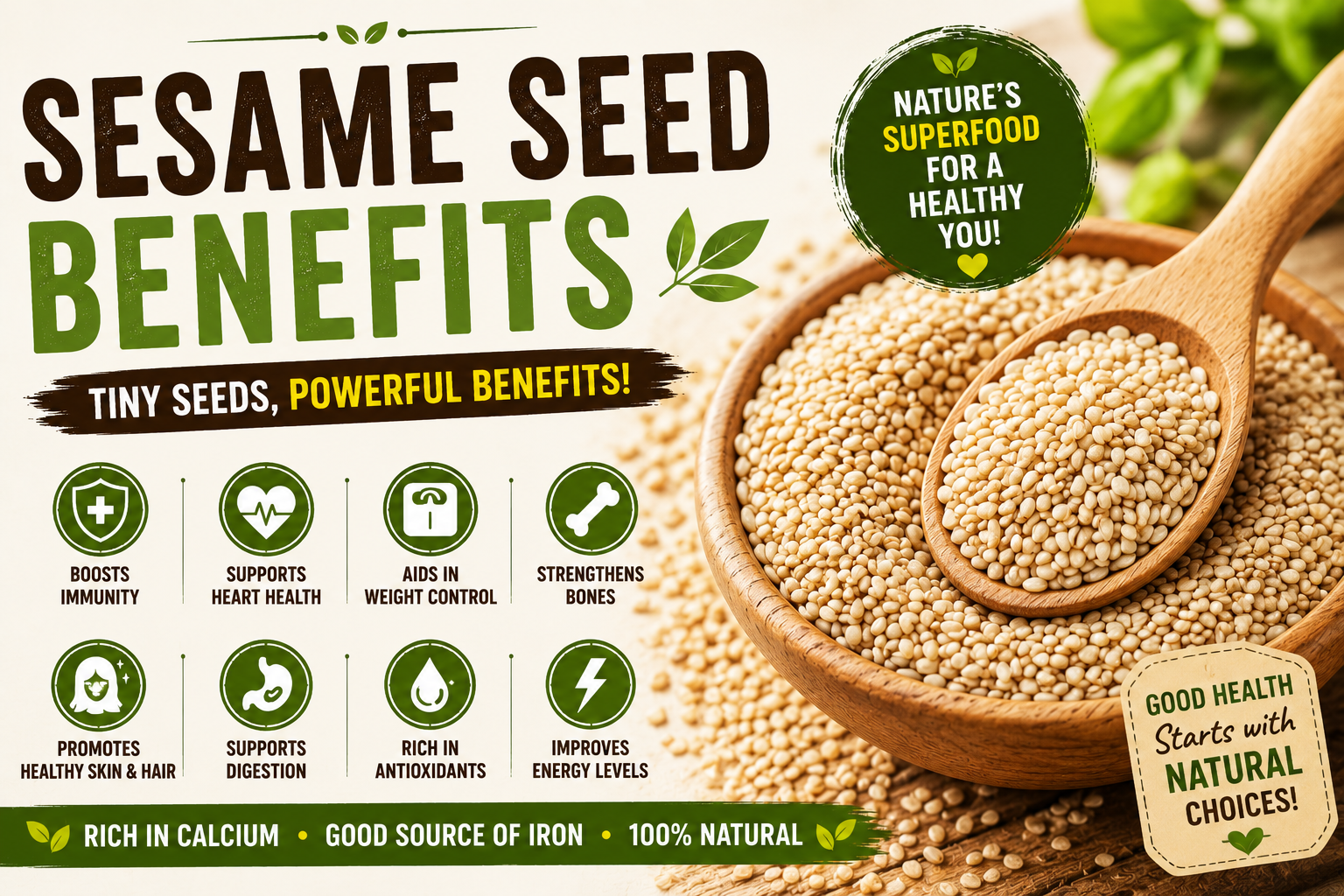
Sesame seeds are tiny seeds with a distinctive nutty flavor and an impressive nutritional profile. They are commonly used in cuisines around the world and can be found in foods such as tahini, hummus, breads, salads, sauces, and sesame snacks.
These tiny seeds provide several important nutrients, including healthy unsaturated fats, protein, fiber, calcium, magnesium, iron, zinc, copper, and phosphorus.
But what are the main sesame seed benefits, and how can these seeds fit into a healthy diet?
In Part 1, we’ll look at sesame seed nutrition and the first 10 potential benefits.
What Are Sesame Seeds?
Sesame seeds come from the sesame plant, Sesamum indicum.
They are available in several varieties, including:
- White sesame seeds
- Brown sesame seeds
- Black sesame seeds
- Hulled sesame seeds
- Unhulled sesame seeds
Sesame seeds can be eaten whole or processed into sesame paste, commonly known as tahini.
They are frequently used in:
- Bread
- Crackers
- Salads
- Stir-fries
- Sauces
- Hummus
- Energy bites
- Granola
- Desserts
Their small size makes them easy to sprinkle over almost any meal.
Sesame Seed Nutrition Facts
Sesame seeds are relatively calorie-dense because they contain a substantial amount of fat.
A 1-ounce (28-gram) serving of whole sesame seeds provides approximately:
| Nutrient | Approximate Amount |
|---|---|
| Calories | 160–170 |
| Protein | 5 g |
| Fat | 14–15 g |
| Carbohydrates | 7 g |
| Fiber | 3–4 g |
| Calcium | Around 275 mg |
| Magnesium | Around 100 mg |
| Phosphorus | Around 180 mg |
| Iron | Around 4 mg |
| Zinc | Around 2 mg |
| Copper | Around 1.1 mg |
Exact amounts can vary depending on whether the seeds are hulled, unhulled, raw, or roasted.
Sesame seeds are particularly notable for calcium, copper, magnesium, iron, healthy fats, and fiber.
1. Sesame Seeds Are a Good Source of Calcium
One of the most notable sesame seed benefits is their calcium content, particularly in whole or unhulled sesame seeds.
Calcium contributes to:
- Maintenance of normal bones and teeth
- Normal muscle function
- Normal nerve transmission
- Normal blood clotting
- Normal energy metabolism
Including calcium-rich foods in your diet is important throughout life.
Other dietary sources of calcium include:
- Dairy products
- Fortified plant milks
- Tofu made with calcium
- Leafy green vegetables
- Some fish
- Nuts and seeds
Sesame seeds can be one convenient plant-based source.
2. Sesame Seeds Provide Healthy Unsaturated Fats
Sesame seeds contain a significant amount of fat, much of which is unsaturated fat.
Unsaturated fats can be part of a heart-conscious eating pattern, especially when they replace substantial amounts of saturated fat.
Other foods rich in unsaturated fats include:
- Almonds
- Walnuts
- Pistachios
- Sunflower seeds
- Pumpkin seeds
- Avocados
- Olive oil
Because sesame seeds are calorie-dense, a moderate serving is generally sufficient.
3. Sesame Seeds Provide Plant-Based Protein
Sesame seeds provide approximately 5 grams of protein per 1-ounce serving.
Protein is essential for:
- Maintaining muscle
- Building and repairing tissues
- Normal growth
- Making enzymes and hormones
- Supporting normal body functions
Sesame seeds can contribute to your overall protein intake, especially when combined with other protein-rich plant foods.
Simple combination
Try:
Oatmeal + sesame seeds + Greek yogurt + berries
or:
Chickpeas + tahini + vegetables + whole-grain bread
These combinations provide protein from several different foods.
4. Sesame Seeds Provide Dietary Fiber
Whole sesame seeds contain dietary fiber.
Fiber contributes to normal digestive function and can be an important part of a balanced diet.
Fiber-rich foods include:
- Fruits
- Vegetables
- Beans
- Lentils
- Whole grains
- Nuts
- Seeds
Adding sesame seeds to salads, oatmeal, grain bowls, or homemade bread is an easy way to increase the variety of fiber-containing foods in your diet.
5. Sesame Seeds Are Rich in Magnesium
Sesame seeds provide a useful amount of magnesium.
Magnesium contributes to:
- Normal muscle function
- Normal nerve function
- Normal energy metabolism
- Normal electrolyte balance
- Maintenance of normal bones
Other magnesium-rich foods include:
- Pumpkin seeds
- Almonds
- Cashews
- Chia seeds
- Beans
- Whole grains
- Leafy greens
Eating a variety of these foods can help you obtain magnesium from different dietary sources.
6. Sesame Seeds Provide Iron
Sesame seeds contain dietary iron.
Iron contributes to:
- Normal oxygen transport
- Normal red blood cell formation
- Normal energy metabolism
- Normal cognitive function
- Reduction of tiredness and fatigue when adequate iron status is maintained
The iron in sesame seeds is non-heme iron, the form found in plant foods.
Improve absorption
Plant-based iron can be better absorbed when eaten alongside foods containing vitamin C.
For example:
Sesame seeds + chickpeas + tomatoes + bell peppers
can make a nutritious combination.
Other plant-based sources of iron include:
- Lentils
- Beans
- Tofu
- Pumpkin seeds
- Spinach
- Fortified grains
7. Sesame Seeds Provide Zinc
Sesame seeds contain zinc, an essential mineral involved in many normal body functions.
Zinc contributes to:
- Normal immune function
- Normal wound healing
- DNA synthesis
- Protein synthesis
- Normal metabolism
Other dietary sources of zinc include:
- Meat
- Seafood
- Dairy
- Beans
- Nuts
- Seeds
- Whole grains
Sesame seeds can therefore contribute to daily zinc intake as part of a varied diet.
8. Sesame Seeds Are an Excellent Source of Copper
Sesame seeds are particularly notable for their copper content.
Copper contributes to:
- Normal energy metabolism
- Normal iron transport
- Normal connective tissue
- Normal nervous-system function
- Protection of cells from oxidative stress
Other sources of copper include:
- Nuts
- Seeds
- Whole grains
- Shellfish
- Cocoa
- Legumes
A balanced diet generally provides copper from multiple foods.
9. Sesame Seeds Provide Phosphorus
Sesame seeds contain phosphorus, another mineral involved in several important physiological processes.
Phosphorus contributes to:
- Maintenance of normal bones and teeth
- Normal energy metabolism
- Normal cell function
- Normal acid-base balance
A serving of sesame seeds can make a useful contribution to daily phosphorus intake.
Other phosphorus-rich foods include:
- Dairy products
- Fish
- Meat
- Beans
- Nuts
- Seeds
10. Sesame Seeds Contain Antioxidant Compounds
Sesame seeds contain naturally occurring plant compounds, including sesamin and sesamolin, as well as vitamin E compounds.
These compounds have antioxidant properties.
Antioxidants help protect cells from oxidative stress.
However, it’s better to obtain antioxidant compounds from a wide variety of foods rather than relying on one ingredient.
Try including:
- Berries
- Citrus fruits
- Tomatoes
- Leafy green vegetables
- Nuts
- Seeds
- Colorful vegetables
Different foods contain different combinations of plant compounds.
White Sesame Seeds vs. Black Sesame Seeds
Both white and black sesame seeds can be nutritious.
White sesame seeds
Commonly used in:
- Bread
- Tahini
- Hummus
- Salads
- Sauces
Black sesame seeds
Often used in:
- Asian desserts
- Smoothies
- Rice dishes
- Garnishes
- Sesame pastes
Their nutritional composition can differ depending on variety and whether the seeds are hulled.
The best choice is often the variety you enjoy and can incorporate regularly into a balanced diet.
Sesame Seeds vs. Chia Seeds
Both are nutritious seeds, but their nutritional strengths differ.
Sesame seeds
Particularly notable for:
- Calcium
- Copper
- Magnesium
- Iron
- Healthy fats
Chia seeds
Particularly notable for:
- Fiber
- ALA omega-3
- Calcium
- Gel-forming properties
You don’t have to choose only one.
Using different seeds throughout the week can provide greater nutritional variety.
Sesame Seeds vs. Sunflower Seeds
| Feature | Sesame Seeds | Sunflower Seeds |
|---|---|---|
| Calcium | Particularly notable | Lower |
| Vitamin E | Moderate | Particularly notable |
| Copper | Particularly notable | Good source |
| Magnesium | Good source | Good source |
| Healthy fats | High | High |
| Protein | Moderate | Moderate |
Both can be useful additions to a healthy diet.
Try combining them in homemade seed mixes, salads, or granola.
How to Add Sesame Seeds to Your Diet
Sesame seeds are extremely versatile.
Breakfast
Sprinkle them over:
- Oatmeal
- Yogurt
- Avocado toast
- Smoothie bowls
Lunch
Add them to:
- Salads
- Hummus
- Grain bowls
- Sandwiches
Dinner
Use them as a topping for:
- Stir-fried vegetables
- Rice
- Noodles
- Fish
- Chicken
Snacks
Combine them with:
- Nuts
- Seeds
- Dried fruit
Baking
Add sesame seeds to:
- Homemade bread
- Crackers
- Granola
- Energy bars
11. Sesame Seeds Can Fit Into a Heart-Conscious Diet
Sesame seeds provide a combination of unsaturated fats, fiber, minerals, and plant compounds.
Unsaturated fats can be part of a heart-conscious eating pattern, particularly when they replace foods high in saturated fat.
A balanced diet for cardiovascular health can also include:
- Vegetables
- Fruits
- Whole grains
- Beans
- Nuts
- Seeds
- Fish or other appropriate protein sources
Sesame seeds aren’t a treatment for heart disease, but they can be a nutritious addition to an overall healthy eating pattern.
12. Sesame Seeds Provide Nutrients Important for Bone Health
Sesame seeds contain several nutrients involved in maintaining normal bones, including:
- Calcium
- Magnesium
- Phosphorus
- Protein
- Copper
Calcium and phosphorus are important components of bones and teeth, while magnesium contributes to normal bone maintenance.
However, bone health depends on more than one food.
A balanced diet should also provide adequate:
- Vitamin D
- Protein
- Calcium
- Other essential nutrients
Regular weight-bearing physical activity is also important for maintaining healthy bones.
13. Sesame Seeds Can Support Normal Digestive Function
Whole sesame seeds contain dietary fiber.
Fiber contributes to normal digestive function and can help increase the overall fiber content of your diet.
Try adding sesame seeds to other fiber-rich foods such as:
- Vegetables
- Fruits
- Beans
- Lentils
- Whole grains
Easy combination
Chickpea salad + vegetables + tahini dressing + sesame seeds
This provides fiber from several different ingredients.
If you’re not used to eating much fiber, increase your intake gradually and drink enough fluids.
14. Sesame Seeds Can Help Make Meals More Satisfying
Sesame seeds contain a combination of fat, protein, and fiber, which can make meals more substantial.
Adding a small amount to a meal can also provide extra texture and flavor.
For example:
Vegetable salad + chickpeas + sesame seeds + tahini dressing
can be more satisfying than eating vegetables alone.
However, sesame seeds are calorie-dense, so adding very large amounts can significantly increase the calories in a meal.
15. Sesame Seeds Can Fit Into a Weight-Management Diet
Sesame seeds can be included in a healthy weight-management eating pattern.
Their protein, fat, and fiber content can contribute to meal satisfaction.
But they should not be considered a weight-loss food that directly burns body fat.
Better approach
Use a moderate serving alongside:
- Vegetables
- Fruits
- Whole grains
- Lean proteins
- Beans
- Other nutrient-dense foods
Portion size matters because sesame seeds contain approximately 160–170 calories per ounce.
16. Sesame Seeds Can Support Plant-Based Eating
Sesame seeds are useful for vegetarian and plant-focused diets.
They provide:
- Plant protein
- Healthy fats
- Calcium
- Iron
- Magnesium
- Zinc
- Copper
- Phosphorus
One particularly useful sesame product is tahini, which is made by grinding sesame seeds into a smooth paste.
Tahini can be used in:
- Hummus
- Salad dressings
- Sauces
- Sandwich spreads
- Dips
17. Sesame Seeds Provide Nutrients Important for Normal Energy Metabolism
Sesame seeds provide minerals such as:
- Magnesium
- Copper
- Phosphorus
- Iron
These nutrients participate in normal energy metabolism and other physiological processes.
However, sesame seeds shouldn’t be described as a special energy booster.
If you’re experiencing persistent or unexplained fatigue, it’s better to investigate the underlying cause with a healthcare professional rather than relying on a particular food.
18. Sesame Seeds Provide Nutrients Important for Normal Immune Function
Sesame seeds contain nutrients such as zinc, iron, copper, and selenium, which are involved in normal physiological and immune functions.
Zinc, for example, contributes to normal immune function.
However, eating sesame seeds alone doesn’t guarantee protection against infections.
A healthy immune system depends on many factors, including:
- Adequate nutrition
- Sleep
- Physical activity
- General health
- Good hygiene
Sesame seeds can simply be one component of a nutritious diet.
19. Sesame Seeds Provide Nutrients Relevant to Skin Nutrition
Sesame seeds contain several nutrients and plant compounds that contribute to overall nutrition, including zinc, copper, vitamin E compounds, and healthy fats.
Zinc and copper are involved in normal physiological processes related to skin and connective tissue.
However, sesame seeds aren’t a cure for acne, wrinkles, eczema, or other skin conditions.
For healthy skin, focus on an overall balanced diet along with:
- Adequate hydration
- Sun protection
- Sufficient sleep
- A suitable skincare routine
20. Sesame Seeds Are an Easy Way to Increase Nutritional Variety
One of the biggest advantages of sesame seeds is their versatility.
A small amount can add:
- Nutty flavor
- Crunch
- Healthy fats
- Protein
- Minerals
- Fiber
They work with both sweet and savory meals.
Try them with:
Breakfast
- Oatmeal
- Yogurt
- Smoothies
Lunch
- Salads
- Hummus
- Sandwiches
Dinner
- Rice
- Stir-fried vegetables
- Noodles
- Fish or chicken
Snacks
- Homemade energy bites
- Granola
- Seed mixes
Sesame Seeds vs. Pumpkin Seeds
Both are nutrient-dense seeds, but their nutritional profiles differ.
Sesame seeds are particularly notable for:
- Calcium
- Copper
- Iron
- Magnesium
- Healthy fats
Pumpkin seeds are particularly notable for:
- Magnesium
- Zinc
- Protein
- Phosphorus
Both can be included in a balanced diet.
Sesame Seeds vs. Flaxseeds
Flaxseeds are particularly well known for:
- ALA omega-3
- Fiber
- Lignans
Sesame seeds are particularly notable for:
- Calcium
- Copper
- Iron
- Magnesium
- Healthy fats
A combination can provide greater nutritional variety.
Simple idea
Add ground flaxseed + sesame seeds + oats + berries to a breakfast bowl.
Sesame Seeds vs. Chia Seeds
Chia seeds are particularly notable for:
- Fiber
- ALA omega-3
- Calcium
- Their ability to absorb liquid and form a gel
Sesame seeds are particularly notable for:
- Calcium
- Copper
- Healthy fats
- Magnesium
- Iron
Both can be useful additions to a varied diet.
Sesame Seeds vs. Sunflower Seeds
Sunflower seeds are particularly known for their vitamin E content.
Sesame seeds are particularly notable for:
- Calcium
- Copper
- Iron
- Magnesium
You can rotate between different seeds rather than relying on just one.
How to Choose Sesame Seeds
When buying sesame seeds, you may see:
- Raw sesame seeds
- Roasted sesame seeds
- Hulled sesame seeds
- Unhulled sesame seeds
- White sesame seeds
- Black sesame seeds
For everyday use, choose products with simple ingredients.
Check the label for:
- Added salt
- Added sugar
- Added oils
- Flavoring ingredients
If you’re eating them regularly, plain or lightly processed seeds can make it easier to control what you’re consuming.
How to Use Tahini
Tahini is a paste made primarily from ground sesame seeds.
It can be used as:
Salad dressing
Mix:
Tahini + lemon juice + water + garlic
Hummus
Combine tahini with:
Chickpeas + lemon juice + garlic
Sandwich spread
Use a thin layer of tahini instead of a heavily processed sauce.
Breakfast
Drizzle a small amount over oatmeal, fruit, or toast.
Tahini is nutritious but also calorie-dense, so portion size still matters.
How Many Sesame Seeds Should You Eat Per Day?
There is no universal daily requirement specifically for sesame seeds.
A practical serving is around 1 ounce (28 grams), which is roughly 2 tablespoons depending on the product and how it is measured.
Because sesame seeds are calorie-dense, you don’t need a large amount to add nutritional value to a meal.
For everyday use, you can simply sprinkle 1–2 tablespoons over meals such as salads, oatmeal, vegetables, or yogurt.
Your ideal amount depends on your overall diet and calorie needs.
How Many Calories Are in Sesame Seeds?
A 1-ounce (28-gram) serving of whole sesame seeds generally contains around 160–170 calories.
It also provides approximately:
- 5 g protein
- 14–15 g fat
- 7 g carbohydrates
- 3–4 g fiber
- Calcium
- Magnesium
- Iron
- Zinc
- Copper
- Phosphorus
Exact nutritional values can vary depending on the variety and whether the seeds are hulled or unhulled.
Because of their calorie density, large portions can add significant calories to your diet.
Raw vs. Roasted Sesame Seeds
Both raw and roasted sesame seeds can be nutritious.
Raw Sesame Seeds
Raw sesame seeds have a mild flavor and can be used in:
- Smoothies
- Salads
- Oatmeal
- Homemade energy bites
- Tahini
Roasted Sesame Seeds
Roasting gives sesame seeds a stronger nutty flavor and crunchy texture.
They’re excellent as toppings for:
- Rice
- Noodles
- Vegetables
- Salads
- Soups
- Homemade bread
When buying roasted sesame seeds, check the nutrition label for added salt or oils.
White vs. Black Sesame Seeds
Both varieties can be nutritious.
White Sesame Seeds
White sesame seeds are commonly used in:
- Tahini
- Hummus
- Bread
- Cookies
- Salad toppings
- Sauces
They generally have a mild, nutty flavor.
Black Sesame Seeds
Black sesame seeds have a stronger, slightly more earthy flavor.
They’re popular in:
- Asian desserts
- Smoothies
- Rice dishes
- Noodles
- Garnishes
- Black sesame paste
The nutritional composition can vary between varieties and preparation methods, so neither should automatically be considered universally “better.”
Hulled vs. Unhulled Sesame Seeds
The hull is the outer layer surrounding the sesame seed.
Hulled sesame seeds
The outer coating has been removed.
They tend to have:
- A softer texture
- Milder flavor
- Easier use in cooking
Unhulled sesame seeds
The outer layer remains.
They generally contain more fiber and can provide higher amounts of some minerals.
However, they can have a slightly stronger and more bitter flavor.
Both types can be included in a balanced diet.
Sesame Seeds vs. Tahini
Tahini is essentially a paste made by grinding sesame seeds.
Whole sesame seeds
Useful as:
- Toppings
- Baking ingredients
- Salad additions
- Crunchy snacks
Tahini
Useful for:
- Hummus
- Salad dressings
- Sauces
- Dips
- Sandwich spreads
Tahini is still calorie-dense because it is made primarily from sesame seeds.
A small serving can add plenty of flavor without requiring a large amount.
Possible Sesame Seed Side Effects
Sesame seeds are generally well tolerated by many people when eaten in moderate amounts.
However, some people may experience digestive discomfort after eating large amounts.
Possible symptoms can include:
- Bloating
- Gas
- Stomach discomfort
- Changes in bowel movements
Increasing fiber intake suddenly can also cause temporary digestive symptoms.
If you don’t regularly eat seeds, start with a smaller amount and increase gradually.
Sesame Seed Allergy
Sesame is a recognized food allergen, and sesame allergy can cause serious reactions in some people.
Possible symptoms may include:
- Hives
- Itching
- Swelling
- Vomiting
- Stomach pain
- Wheezing
- Difficulty breathing
People with a known sesame allergy should avoid sesame-containing foods according to their healthcare professional’s advice.
If someone develops severe symptoms such as difficulty breathing or swelling of the throat after consuming sesame, emergency medical attention is required.
Can You Eat Sesame Seeds Every Day?
For most people without an allergy or dietary restriction, moderate amounts of sesame seeds can fit into an everyday balanced diet.
You can rotate them with other nuts and seeds such as:
- Almonds
- Walnuts
- Pumpkin seeds
- Sunflower seeds
- Chia seeds
- Flaxseeds
Eating a variety of foods is generally more beneficial than relying heavily on one ingredient.
How to Store Sesame Seeds
Sesame seeds contain natural oils, so they can eventually become rancid.
For best quality, store them in an airtight container away from heat, moisture, and direct sunlight.
For longer storage, you can keep them refrigerated or frozen.
Signs sesame seeds may have spoiled
Don’t use them if they develop:
- A rancid smell
- Bitter or unpleasant taste
- Mold
- Unusual moisture
- Significant changes in appearance
Fresh sesame seeds should have a mild, nutty aroma.
5 Healthy Ways to Eat Sesame Seeds
1. Sesame Seed Yogurt Bowl
Ingredients
- 1 cup plain Greek yogurt
- 1 tablespoon sesame seeds
- ½ cup berries
- 1 banana
- Cinnamon
Instructions
Add the yogurt to a bowl and top with berries, banana, sesame seeds, and cinnamon.
This provides protein, fruit, healthy fats, and several minerals.
2. Sesame Seed Salad
Ingredients
- Mixed leafy greens
- Cucumber
- Tomato
- Carrot
- Chickpeas
- 1 tablespoon sesame seeds
- Lemon juice
- Olive oil
Instructions
Combine all ingredients and toss well.
Sprinkle sesame seeds over the top just before serving.
3. Tahini Lemon Dressing
Ingredients
- 1 tablespoon tahini
- 1 tablespoon lemon juice
- 1–2 tablespoons water
- Small amount of garlic
- Optional herbs
Instructions
Mix everything until smooth.
Add more water if you want a thinner dressing.
Use it over:
- Salads
- Roasted vegetables
- Grain bowls
- Chickpeas
4. Sesame Seed Oatmeal
Ingredients
- ½ cup rolled oats
- 1 tablespoon sesame seeds
- 1 banana
- Milk or water
- Berries
- Cinnamon
Instructions
Cook the oats with milk or water.
Add banana, berries, sesame seeds, and cinnamon.
5. Sesame Seed Energy Bites
Ingredients
- 1 cup rolled oats
- 2 tablespoons tahini
- 1 tablespoon sesame seeds
- 2 tablespoons peanut or almond butter
- Small amount of honey
- Cinnamon
Instructions
Mix the ingredients together.
Form small balls and refrigerate until firm.
Keep portions moderate because the ingredients are calorie-dense.
Frequently Asked Questions About Sesame Seeds
What are the main sesame seed benefits?
Sesame seeds provide healthy fats, protein, fiber, calcium, magnesium, iron, zinc, copper, phosphorus, and various plant compounds.
Are sesame seeds good for bones?
They provide calcium, magnesium, phosphorus, and other nutrients involved in normal bone maintenance. However, overall bone health depends on the complete diet and lifestyle.
Are sesame seeds good for weight loss?
They can fit into a weight-management diet because they provide protein, fat, and fiber. However, they are calorie-dense and don’t directly burn body fat.
How many sesame seeds should I eat per day?
A small serving such as 1–2 tablespoons can easily be incorporated into meals. A typical 1-ounce serving is also reasonable for many people, depending on their overall diet.
Are black sesame seeds healthier than white sesame seeds?
Both can be nutritious. Their nutritional composition varies by variety and preparation, so neither should automatically be considered healthier in every situation.
Are sesame seeds high in calcium?
Yes, particularly whole or unhulled sesame seeds can provide a significant amount of calcium.
Are sesame seeds high in iron?
Sesame seeds provide plant-based, non-heme iron and can contribute to overall dietary iron intake.
Can I eat sesame seeds every day?
Yes, moderate amounts can fit into a balanced diet for people who tolerate them and don’t have a sesame allergy.
Is tahini healthy?
Tahini can be a nutritious food because it is made from sesame seeds and provides healthy fats, protein, and minerals. It is also calorie-dense, so portion size matters.
Are roasted sesame seeds healthy?
Roasted sesame seeds can still provide many nutrients. Check the label for excessive sodium, added oils, or other ingredients.
Can children eat sesame seeds?
Sesame can be included in age-appropriate diets, but whole seeds may pose a choking risk for very young children. Preparation should be appropriate for the child’s age.
Do sesame seeds have side effects?
Some people may experience digestive discomfort after consuming large amounts. The most important concern is sesame allergy, which can be serious.
Final Takeaway
Sesame seeds may be tiny, but they can make a meaningful nutritional contribution to your diet.
They provide:
- Calcium
- Magnesium
- Iron
- Zinc
- Copper
- Phosphorus
- Protein
- Fiber
- Healthy unsaturated fats
- Plant compounds
They’re also incredibly versatile. You can sprinkle them over salads, vegetables, rice, noodles, oatmeal, and yogurt or use them to make tahini and hummus.
For everyday eating, choose a moderate portion and consider plain or lightly salted varieties to keep control over sodium and added ingredients.
Most importantly, sesame seeds should be viewed as one nutritious component of a varied diet—not as a miracle food or treatment for a specific medical condition.
Suggested Article’s:
- Sunflower Seed Benefits
- Pumpkin Seed Benefits
- Chia Seed Benefits
- Flaxseed Benefits
- Pistachio Benefits
- Cashew Benefits
- Pecan Benefits
- Macadamia Nut Benefits
- Brazil Nut Benefits
- Hazelnut Benefits
- Mixed Nuts Benefits
- Best Nuts for Daily Eating
- Foods Rich in Zinc
- Foods Rich in Iron
- Best Natural Foods
- Best Healthy Pantry Foods




Leave a Reply