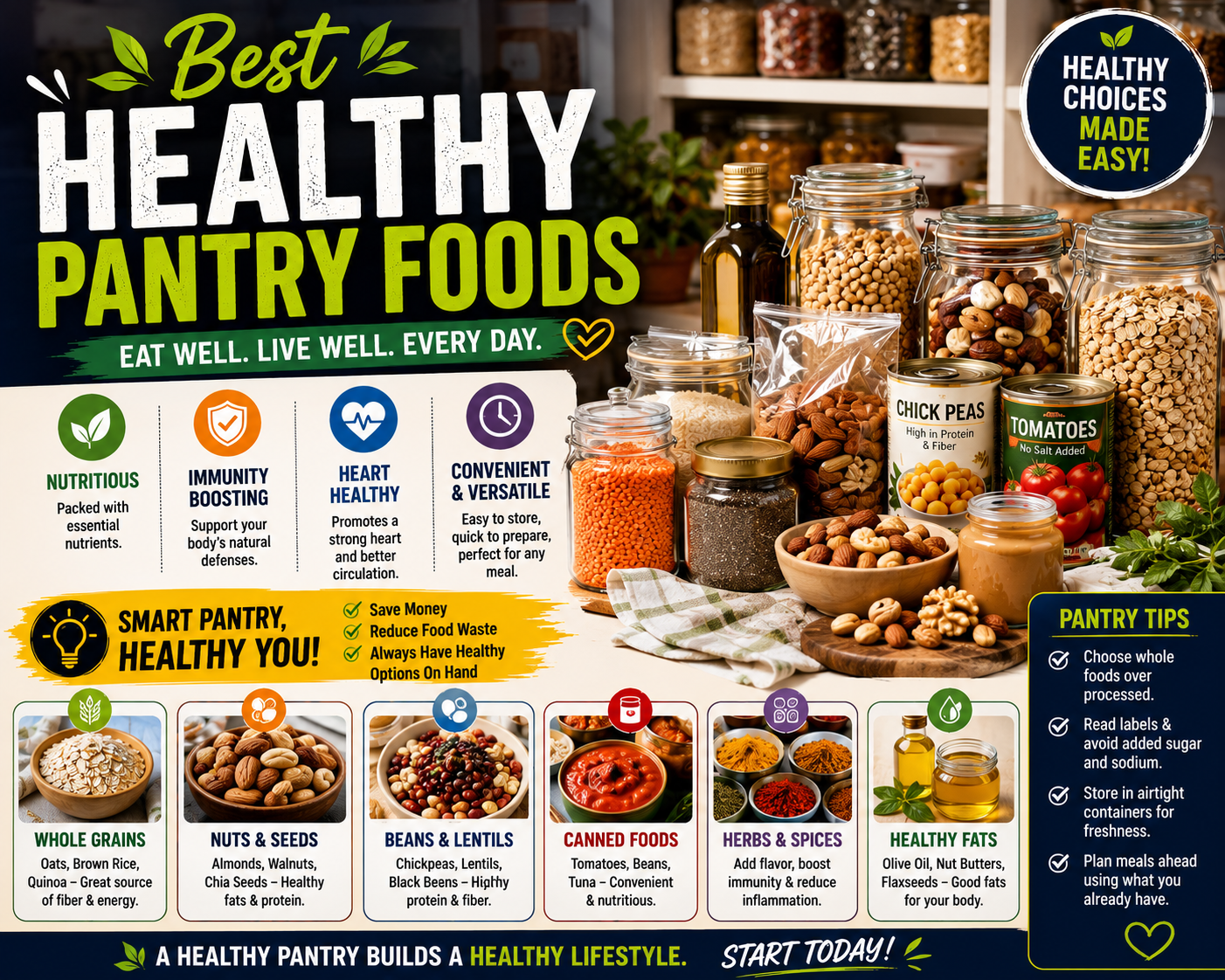
A healthy diet becomes much easier when you have nutritious foods available at home. When your pantry is filled with practical staples, you can prepare a quick breakfast, lunch, dinner, or snack without relying on takeout or highly processed convenience foods.
The best healthy pantry foods are usually shelf-stable, versatile, affordable, and nutrient-dense. They can include whole grains, beans, lentils, nuts, seeds, canned fish, nut butters, and other foods that can be used in multiple meals.
A healthy pantry doesn’t have to be expensive or perfectly organized. The goal is simple:
Keep enough nutritious ingredients at home to make balanced meals easier.
This guide covers 30 healthy pantry staples, practical ways to use them, and ideas for building a pantry that fits your budget and lifestyle.
Note: “Healthy” doesn’t mean that every food has to be low-calorie or fat-free. Foods such as nuts, seeds, olive oil, and peanut butter are calorie-dense but can still be part of a nutritious eating pattern.
What Are Healthy Pantry Foods?
Healthy pantry foods are foods with a relatively long shelf life that can contribute useful nutrients to your regular diet.
Examples include:
- Whole grains
- Beans and lentils
- Nuts and seeds
- Canned vegetables
- Canned fish
- Nut butters
- Herbs and spices
- Healthy cooking oils
- Lower-sugar shelf-stable foods
Many of these foods can be stored for weeks or months when kept properly.
The best choices depend on your dietary preferences, budget, cooking habits, and nutritional needs.
For example, someone following a vegetarian diet may keep more lentils, beans, tofu products, and nuts, while someone who eats seafood might include canned salmon, sardines, or tuna.
Why Should You Keep a Healthy Pantry?
A well-stocked pantry can make healthy eating more convenient.
Instead of wondering what to cook every day, you already have basic ingredients ready.
A healthy pantry can help you:
- Prepare meals more quickly
- Reduce dependence on takeout
- Make better use of your grocery budget
- Create balanced meals with simple ingredients
- Keep emergency meal options available
- Reduce food waste when foods are stored properly
You don’t need to buy everything at once.
Building a healthy pantry gradually is often easier and more affordable.
For example, add:
- One type of bean
- One whole grain
- One nut or seed
- One canned protein
- One healthy cooking oil
during each grocery trip.
Over time, you’ll develop a useful collection of staples.
How to Build a Healthy Pantry
Before filling your kitchen with random “healthy” products, think about what you actually eat.
A useful pantry usually contains foods from several categories.
1. Whole Grains and Carbohydrates
Examples:
- Oats
- Brown rice
- Quinoa
- Whole-grain pasta
- Whole-grain crackers
These foods can provide carbohydrates, fiber, and other nutrients.
2. Protein Sources
Examples:
- Lentils
- Beans
- Chickpeas
- Canned tuna
- Sardines
- Peanut butter
These can help make meals more filling and nutritionally balanced.
3. Nuts and Seeds
Examples:
- Almonds
- Walnuts
- Pumpkin seeds
- Chia seeds
- Flaxseeds
These provide healthy fats and can also contribute protein, fiber, and minerals.
4. Canned and Jarred Foods
Examples:
- Canned beans
- Canned tomatoes
- Canned vegetables
- Canned fish
Look for options with lower sodium and minimal unnecessary ingredients when possible.
5. Flavor Builders
Examples:
- Olive oil
- Garlic powder
- Black pepper
- Cinnamon
- Turmeric
- Cumin
- Paprika
- Dried herbs
Healthy food doesn’t have to be bland.
1. Oats
Oats are one of the most versatile healthy pantry staples.
They can be used for:
- Oatmeal
- Overnight oats
- Smoothies
- Homemade granola
- Baking
- Energy bites
Oats provide carbohydrates and fiber and can be combined with protein-rich foods such as yogurt, milk, nut butter, or seeds.
Easy idea:
Oats + peanut butter + chia seeds + fruit
This creates a more filling breakfast than plain oatmeal alone.
2. Brown Rice
Brown rice is a useful whole-grain pantry staple.
It works well with:
- Beans
- Lentils
- Chicken
- Fish
- Vegetables
- Curries
A simple pantry-based meal could be:
Brown rice + black beans + canned tomatoes + spices
Add fresh or frozen vegetables when available.
Because brown rice generally takes longer to cook than some other grains, you can prepare a larger batch and use it in multiple meals.
3. Quinoa
Quinoa is technically a seed, but it is commonly used like a grain.
It can provide:
- Protein
- Fiber
- Iron
- Magnesium
- Other nutrients
Quinoa can be used in:
- Grain bowls
- Salads
- Soups
- Side dishes
Easy pantry bowl:
Quinoa + chickpeas + canned tomatoes + pumpkin seeds + spices
4. Whole-Grain Pasta
Pasta can absolutely have a place in a healthy pantry.
Whole-grain pasta generally provides more fiber than refined pasta.
Pair it with:
- Tomato sauce
- Beans
- Lentils
- Canned tuna
- Vegetables
- Olive oil and herbs
Quick meal:
Whole-grain pasta + canned tomatoes + white beans + garlic + herbs
This can become a simple, balanced meal using mostly pantry ingredients.
5. Lentils
Lentils are one of the best budget-friendly healthy foods to keep at home.
They provide:
- Plant protein
- Fiber
- Iron
- Folate
- Other nutrients
Different varieties include:
- Brown lentils
- Green lentils
- Red lentils
- Black lentils
Red lentils are especially convenient because they cook relatively quickly.
Use lentils in:
- Soups
- Curries
- Stews
- Salads
- Grain bowls
Easy meal:
Red lentils + canned tomatoes + turmeric + cumin + brown rice
6. Chickpeas
Chickpeas are extremely versatile.
You can use them to make:
- Hummus
- Curries
- Salads
- Soups
- Grain bowls
- Roasted snacks
Canned chickpeas are convenient, while dried chickpeas can be a more economical option.
When using canned products, draining and rinsing them may help reduce some of the sodium.
7. Black Beans
Black beans are a useful pantry source of plant protein and fiber.
Try adding them to:
- Tacos
- Burrito bowls
- Soups
- Chili
- Rice dishes
- Salads
Simple pantry meal:
Brown rice + black beans + canned tomatoes + corn + spices
This is affordable, filling, and easy to customize.
8. Canned Beans
Keeping a few varieties of canned beans can make meal preparation much faster.
Consider:
- Kidney beans
- White beans
- Black beans
- Pinto beans
- Chickpeas
When shopping, look at the Nutrition Facts label and compare sodium levels.
No-salt-added or lower-sodium options can be useful, but you can still use regular canned beans as part of a balanced diet.
9. Canned Tomatoes
Canned tomatoes are one of the most useful ingredients in a healthy pantry.
They can form the base of:
- Pasta sauce
- Lentil soup
- Chili
- Curry
- Bean stew
- Vegetable soup
Look for products without excessive added sugar or sodium when possible.
Keeping canned tomatoes on hand makes it easier to turn basic pantry foods into a proper meal.
10. Canned Tuna
Canned tuna is convenient, shelf-stable, and provides protein.
You can use it in:
- Sandwiches
- Wraps
- Pasta
- Salads
- Rice bowls
Try combining tuna with whole grains, beans, or vegetables rather than relying only on mayonnaise-based preparations.
Easy idea:
Whole-grain crackers + tuna + tomatoes
11. Canned Salmon
Canned salmon is another convenient seafood option.
It provides protein and can also contribute omega-3 fats, depending on the type.
Use canned salmon for:
- Salmon patties
- Salads
- Sandwiches
- Grain bowls
- Pasta dishes
If the canned salmon includes soft edible bones, those can also contribute calcium.
12. Peanut Butter
Peanut butter is a practical pantry staple that can provide:
- Protein
- Unsaturated fats
- Some fiber
- Several vitamins and minerals
Choose a product with a simple ingredient list when possible.
A peanut butter that separates naturally isn’t necessarily a problem—just stir it before using.
Try it with:
- Oats
- Whole-grain toast
- Apples
- Bananas
- Smoothies
Because peanut butter is calorie-dense, a moderate serving is usually enough.
13. Almonds
Almonds are an easy shelf-stable snack.
They provide:
- Healthy fats
- Protein
- Fiber
- Vitamin E
- Magnesium
You can eat them as a snack or add them to:
- Oatmeal
- Yogurt
- Salads
- Homemade trail mix
Buying unsalted or lightly salted varieties may be useful if you’re watching sodium intake.
14. Walnuts
Walnuts provide unsaturated fats and other nutrients.
They’re particularly easy to use in:
- Oatmeal
- Salads
- Baking
- Homemade granola
- Trail mix
Because nuts contain a significant amount of fat, they can become rancid over long storage periods.
Keep them in an airtight container and consider refrigeration or freezing if you buy large quantities.
15. Pumpkin Seeds
Pumpkin seeds, also called pepitas, are a nutrient-dense pantry food.
They provide:
- Protein
- Healthy fats
- Magnesium
- Zinc
- Iron
You can add them to:
- Oatmeal
- Salads
- Soups
- Yogurt
- Grain bowls
They also make a convenient snack.
Because they are calorie-dense, you don’t need a huge portion to benefit from their nutrients.
16. Chia Seeds
Chia seeds are small, but they can be a useful addition to a healthy pantry.
They provide fiber and unsaturated fats and can absorb liquid to form a gel-like texture.
Use them in:
- Overnight oats
- Chia pudding
- Smoothies
- Oatmeal
Simple chia pudding:
Mix chia seeds with milk or an unsweetened plant-based alternative, then refrigerate until thickened.
Add fruit, nuts, or cinnamon for flavor.
17. Ground Flaxseed
Ground flaxseed is another easy pantry addition.
It can provide fiber and unsaturated fats.
Ground flaxseed is generally easier to digest than whole flaxseed.
Add it to:
- Oatmeal
- Smoothies
- Yogurt
- Pancake batter
- Homemade baked goods
Store it properly in an airtight container, preferably in a cool place.
18. Whole-Grain Crackers
Whole-grain crackers can be useful for quick snacks and simple meals.
Pair them with:
- Peanut butter
- Canned tuna
- Hummus
- Nut butter
- Canned salmon
Check labels because some crackers can be high in sodium or contain little whole grain.
The word “multigrain” doesn’t automatically mean a product is made primarily from whole grains.
19. Popcorn Kernels
Plain popcorn can be an affordable whole-grain snack.
Air-popped or lightly prepared popcorn can be a practical alternative to heavily buttered or sugar-coated snacks.
Flavor it with:
- Cinnamon
- Paprika
- Garlic powder
- Herbs
- A moderate amount of salt
Avoid assuming that all packaged microwave popcorn has the same nutritional profile. Check the label because ingredients and sodium levels vary.
20. Canned Vegetables
Canned vegetables can be useful when fresh produce isn’t available.
Examples include:
- Green beans
- Corn
- Peas
- Carrots
- Mixed vegetables
Look for options with lower sodium when possible.
Frozen vegetables are also worth keeping on hand because they are convenient and can be stored for long periods.
A Simple Healthy Pantry Formula
You can create countless meals by choosing:
1. A whole grain
Oats, brown rice, quinoa, or whole-grain pasta.
2. A protein source
Lentils, beans, chickpeas, tuna, salmon, or peanut butter.
3. A healthy fat
Nuts, seeds, or olive oil.
4. A flavor base
Canned tomatoes, herbs, spices, garlic, or seasonings.
Then add fresh, frozen, or canned vegetables whenever available.
For example:
Brown rice + chickpeas + canned tomatoes + olive oil + cumin + vegetables
You don’t need an expensive “superfood” pantry to eat well.
A few affordable staples can be combined in dozens of ways.
Part 1 Takeaway
The first 20 healthy pantry foods to consider include:
- Oats
- Brown rice
- Quinoa
- Whole-grain pasta
- Lentils
- Chickpeas
- Black beans
- Canned beans
- Canned tomatoes
- Canned tuna
- Canned salmon
- Peanut butter
- Almonds
- Walnuts
- Pumpkin seeds
- Chia seeds
- Ground flaxseed
- Whole-grain crackers
- Popcorn kernels
- Canned vegetables
The best pantry isn’t the one with the most products. It’s the one filled with foods you actually enjoy and know how to use.
21. Olive Oil
Olive oil is one of the most useful pantry staples for everyday cooking.
You can use it for:
- Salad dressings
- Roasted vegetables
- Pasta
- Bean dishes
- Light sautéing
It provides mostly unsaturated fat, but it is still calorie-dense. A healthy pantry doesn’t mean using unlimited amounts of every nutritious food.
A small amount can add flavor and help make simple meals more enjoyable.
Easy pantry dressing
Mix:
- Olive oil
- Lemon juice or vinegar
- Black pepper
- Garlic powder
- Dried herbs
Use it on salads, beans, or grain bowls.
22. Low-Sodium Soups
Canned or shelf-stable soups can be useful for busy days.
Look for options that contain:
- Vegetables
- Beans or lentils
- A reasonable amount of sodium
- Minimal added sugar
Soup can become a more complete meal when you add other pantry ingredients.
For example:
Vegetable soup + white beans + whole-grain crackers
or:
Lentil soup + brown rice + pumpkin seeds
This is a simple way to make a basic canned soup more filling.
23. Dried Fruit
Dried fruit can be a convenient pantry snack.
Examples include:
- Raisins
- Dried apricots
- Prunes
- Dates
- Dried figs
Dried fruit contains less water than fresh fruit, so it is more concentrated in calories and natural sugars.
For that reason, portion size matters.
A practical snack could be:
A small handful of dried fruit + a small serving of nuts
This combination provides carbohydrates, fats, and some protein.
When possible, choose dried fruit without unnecessary added sugar.
24. Unsweetened Applesauce
Unsweetened applesauce can be a convenient shelf-stable fruit option.
You can use it:
- As a snack
- With oatmeal
- In baking
- As a topping for whole-grain pancakes
Check the label because some products contain significant amounts of added sugar.
The best option is generally one with apples or other simple ingredients and little or no added sugar.
25. Herbs and Spices
A healthy pantry should not only contain nutritious ingredients—it should also contain ingredients that make food taste good.
Useful options include:
- Cinnamon
- Turmeric
- Cumin
- Paprika
- Black pepper
- Garlic powder
- Ginger
- Chili powder
- Oregano
- Basil
- Thyme
Spices can transform simple pantry foods.
For example:
Mexican-style bean bowl
Black beans + tomatoes + cumin + chili powder
Simple lentil curry
Red lentils + tomatoes + turmeric + cumin + garlic
Savory popcorn
Popcorn + paprika + garlic powder
Keeping different spices on hand can make inexpensive foods much more enjoyable.
26. Dark Chocolate
Dark chocolate can have a place in a healthy pantry.
Chocolate with a higher cocoa content may provide certain minerals and plant compounds, but it is still calorie-dense and can contain added sugar.
Think of dark chocolate as an enjoyable food rather than a food you need to eat for health.
A small portion can be paired with:
- Almonds
- Walnuts
- Fruit
- Peanut butter
You don’t need to eliminate every treat from your pantry to eat a balanced diet.
27. Shelf-Stable Milk or Plant Milk
Shelf-stable milk can be convenient when fresh milk isn’t available.
Depending on the product, options may include:
- Cow’s milk
- Soy milk
- Oat milk
- Almond milk
- Other plant-based alternatives
The nutritional profile can vary significantly.
When choosing plant milk, compare:
- Protein
- Added sugar
- Calcium
- Vitamin D
- Overall ingredients
Unsweetened varieties can be useful if you want to limit added sugar.
Soy milk often provides more protein than many other plant-based alternatives, although the best choice depends on your dietary preferences.
28. Canned Pumpkin
Plain canned pumpkin is different from pumpkin pie filling.
It can be used in:
- Oatmeal
- Smoothies
- Soups
- Pancakes
- Baking
Plain pumpkin provides nutrients and can add a creamy texture to recipes.
Always check the label so you know whether you’re buying 100% pumpkin or a sweetened pie filling.
29. Tomato Paste
Tomato paste is a small but extremely useful pantry ingredient.
A little can add rich flavor to:
- Soups
- Stews
- Chili
- Pasta sauce
- Lentil dishes
- Bean recipes
It also lasts longer than many fresh ingredients when stored properly.
For convenience, consider freezing leftover tomato paste in small portions rather than throwing it away.
30. Natural Nut or Seed Butter
Besides peanut butter, other options can include:
- Almond butter
- Cashew butter
- Sunflower seed butter
- Tahini
These foods can provide unsaturated fats and, depending on the product, protein and other nutrients.
Use them in:
- Oatmeal
- Smoothies
- Toast
- Sauces
- Dressings
Tahini, for example, can be mixed with lemon juice, garlic, and water to create a simple dressing or sauce.
Because nut and seed butters are calorie-dense, moderate portions are generally enough.
Complete Healthy Pantry Foods List
Here are all 30 healthy pantry staples from this guide:
Whole Grains and Carbohydrates
- Oats
- Brown rice
- Quinoa
- Whole-grain pasta
- Whole-grain crackers
- Popcorn kernels
Beans, Lentils and Plant Proteins
- Lentils
- Chickpeas
- Black beans
- Canned beans
Canned and Shelf-Stable Proteins
- Canned tuna
- Canned salmon
Nuts, Seeds and Nut Butters
- Peanut butter
- Almonds
- Walnuts
- Pumpkin seeds
- Chia seeds
- Ground flaxseed
- Natural nut or seed butter
Vegetables and Cooking Staples
- Canned tomatoes
- Canned vegetables
- Canned pumpkin
- Tomato paste
- Olive oil
Other Useful Pantry Foods
- Low-sodium soups
- Dried fruit
- Unsweetened applesauce
- Herbs and spices
- Dark chocolate
- Shelf-stable milk or plant milk
Healthy Pantry Foods for Weight Loss
If your goal is weight loss, you don’t need a completely different pantry.
The most useful strategy is to keep foods that can help you build filling, balanced meals.
Consider stocking:
- Oats
- Lentils
- Beans
- Chickpeas
- Tuna
- Salmon
- Brown rice
- Quinoa
- Popcorn kernels
- Whole-grain crackers
- Nuts
- Seeds
- Low-sodium soups
- Canned vegetables
Foods rich in protein and fiber can help make meals more satisfying.
However, healthy foods can still be high in calories.
For example:
- Nuts
- Seeds
- Peanut butter
- Olive oil
- Dark chocolate
- Dried fruit
can all fit into a weight-loss diet, but portion size matters.
A simple weight-loss-friendly pantry meal
Lentils + canned tomatoes + vegetables + spices
Add a moderate serving of brown rice or quinoa.
This provides a combination of protein, fiber, and carbohydrates without requiring expensive ingredients.
High-Protein Pantry Foods
If you want more protein in your meals, keep several options available.
Animal-based options
- Canned tuna
- Canned salmon
- Shelf-stable milk
Plant-based options
- Lentils
- Beans
- Chickpeas
- Peanut butter
- Soy-based shelf-stable products, where available
- Pumpkin seeds
- Other nuts and seeds
Protein requirements vary depending on factors such as body size, age, activity level, and overall health.
Instead of focusing only on protein powders or expensive supplements, ordinary pantry foods can contribute significantly to your daily protein intake.
Budget-Friendly Healthy Pantry Foods
Eating healthy doesn’t require buying every trendy product.
Some of the most affordable staples include:
1. Lentils
Cheap, versatile, and easy to store.
2. Dried Beans
Buying dried beans can often be economical when you have time to prepare them.
3. Oats
A practical breakfast that can be used in many recipes.
4. Brown Rice
A useful base for multiple meals.
5. Canned Tomatoes
Affordable and useful for soups, pasta, curries, and stews.
6. Popcorn Kernels
An inexpensive whole-grain snack.
7. Peanut Butter
Provides protein and fats and can be used in many meals.
8. Canned Tuna
A convenient protein source when purchased according to your budget.
9. Frozen or Canned Vegetables
Often practical alternatives when fresh produce is expensive or unavailable.
How to Read Pantry Food Labels
Packaging can sometimes make a food appear healthier than it actually is.
When shopping, check the Nutrition Facts label and ingredient list.
Pay attention to:
Serving Size
A package may contain more than one serving.
Added Sugar
Compare products and look for options with less unnecessary added sugar.
Sodium
Canned soups, sauces, and packaged foods can contain significant amounts of sodium.
Lower-sodium options can be useful, especially if you regularly eat packaged foods.
Fiber
Whole grains, beans, lentils, nuts, seeds, and some cereals can provide fiber.
Protein
Compare protein amounts between similar products.
Ingredient List
A shorter ingredient list isn’t automatically healthier, but it can help you understand what you’re buying.
Be cautious of marketing terms such as:
- Natural
- Multigrain
- Light
- Made with whole grains
- Low fat
These phrases don’t automatically tell you the overall nutritional quality of a product.
Pantry Foods to Limit
You don’t have to ban foods from your kitchen.
However, some items may be best kept as occasional foods rather than everyday staples.
Examples can include:
- Highly sugary cereals
- Candy
- Sugary drinks
- Large quantities of cookies
- Highly salted snack foods
- Instant meals high in sodium
- Sweetened dried fruit with lots of added sugar
A useful approach is not to think in terms of “good foods” and “bad foods.”
Instead, focus on what you eat most often.
If most of your pantry contains nutritious staples, there is still room for foods you enjoy.
A Simple Healthy Pantry Shopping Formula
Instead of buying random products, use this formula.
Choose 2–3 grains
For example:
- Oats
- Brown rice
- Whole-grain pasta
Choose 3–4 protein foods
For example:
- Lentils
- Chickpeas
- Black beans
- Tuna
Choose 2–3 nuts and seeds
For example:
- Almonds
- Walnuts
- Pumpkin seeds
Choose 3–4 canned or shelf-stable vegetables
For example:
- Tomatoes
- Corn
- Green beans
- Peas
Choose healthy fats
For example:
- Olive oil
- Peanut butter
- Seeds
Choose flavor ingredients
For example:
- Garlic powder
- Cumin
- Turmeric
- Black pepper
- Paprika
This gives you enough variety to create many meals without overcrowding your pantry.
10 Quick Meals You Can Make From Healthy Pantry Foods
1. Lentil Soup
Lentils + canned tomatoes + spices + water or broth.
2. Bean and Rice Bowl
Brown rice + black beans + canned corn + tomatoes + spices.
3. Chickpea Curry
Chickpeas + canned tomatoes + turmeric + cumin.
4. Tuna Pasta
Whole-grain pasta + tuna + tomato sauce + herbs.
5. Oatmeal Bowl
Oats + peanut butter + chia seeds + fruit.
6. Quinoa and Chickpea Bowl
Quinoa + chickpeas + canned vegetables + olive oil + spices.
7. Tomato and White Bean Pasta
Whole-grain pasta + white beans + canned tomatoes + garlic.
8. Popcorn and Nut Snack
Air-popped popcorn + a small serving of almonds or walnuts.
9. Hummus-Style Chickpea Bowl
Chickpeas + tahini + lemon + spices.
10. Salmon and Rice Bowl
Brown rice + canned salmon + canned vegetables + herbs.
Part 2 Takeaway
A healthy pantry doesn’t need to be expensive, complicated, or filled with trendy “superfoods.”
The most useful foods are often simple staples such as:
- Lentils
- Beans
- Oats
- Brown rice
- Canned fish
- Nuts
- Seeds
- Canned vegetables
- Tomatoes
- Olive oil
- Herbs and spices
The goal is to create a pantry that helps you make quick, affordable, and nutritious meals when you’re busy.
A healthy pantry is only useful if you know how to turn those ingredients into actual meals.
The good news is that you don’t need complicated recipes. With a few basics such as oats, beans, lentils, whole grains, canned fish, nuts, seeds, tomatoes, and spices, you can create a wide variety of breakfasts, lunches, dinners, and snacks.
This final section focuses on practical healthy pantry meal ideas, emergency meals, storage tips, a one-week meal plan, and frequently asked questions.
Healthy Pantry Breakfast Ideas
1. Peanut Butter Oatmeal
Combine:
- Oats
- Peanut butter
- Chia seeds
- Cinnamon
Add fresh, frozen, or dried fruit if available.
This breakfast combines carbohydrates, fiber, fats, and some protein.
2. Overnight Oats
Add to a container:
- Oats
- Milk or unsweetened plant milk
- Chia seeds
- Cinnamon
Refrigerate overnight.
In the morning, add:
- Almonds
- Walnuts
- Peanut butter
- Fruit
3. Pumpkin Oatmeal
Mix cooked oats with:
- Plain canned pumpkin
- Cinnamon
- Peanut butter or chopped nuts
This creates a simple and filling breakfast using mostly shelf-stable ingredients.
4. Whole-Grain Crackers With Nut Butter
For a quick breakfast or snack:
Whole-grain crackers + peanut butter or almond butter
Add fruit when available.
5. High-Protein Oat Bowl
Combine:
- Oats
- Peanut butter
- Pumpkin seeds
- Chia seeds
- Milk or soy milk
This can provide more protein than plain oatmeal.
Healthy Pantry Lunch Ideas
1. Chickpea and Rice Bowl
Combine:
- Brown rice
- Chickpeas
- Canned tomatoes
- Canned vegetables
- Olive oil
- Cumin and paprika
This is a simple meal that can be customized based on what you have.
2. Tuna and White Bean Salad
Combine:
- Canned tuna
- White beans
- Olive oil
- Black pepper
- Herbs
Serve with whole-grain crackers.
If fresh vegetables are available, add tomatoes, cucumber, or bell peppers.
3. Lentil Soup
Cook lentils with:
- Canned tomatoes
- Garlic
- Cumin
- Turmeric
- Black pepper
Serve with whole-grain bread or crackers.
4. Black Bean Bowl
Combine:
- Black beans
- Brown rice
- Corn
- Canned tomatoes
- Chili powder
- Cumin
Add fresh or frozen vegetables when available.
5. Salmon and Quinoa Bowl
Combine:
- Quinoa
- Canned salmon
- Canned vegetables
- Olive oil
- Herbs
This makes a convenient pantry-based lunch.
Healthy Pantry Dinner Ideas
1. Lentil Curry
Use:
- Red lentils
- Canned tomatoes
- Garlic
- Turmeric
- Cumin
- Other spices
Serve with brown rice.
2. Whole-Grain Pasta With Beans
Combine:
- Whole-grain pasta
- White beans or chickpeas
- Canned tomatoes
- Tomato paste
- Garlic
- Herbs
This is an easy plant-based dinner.
3. Chickpea Tomato Stew
Cook together:
- Chickpeas
- Canned tomatoes
- Tomato paste
- Olive oil
- Paprika
- Cumin
Serve with rice or whole-grain bread.
4. Tuna Pasta
Combine:
- Whole-grain pasta
- Canned tuna
- Tomato sauce
- Garlic
- Herbs
Add canned or frozen vegetables for extra variety.
5. Bean and Vegetable Soup
Use:
- Canned beans
- Canned tomatoes
- Canned vegetables
- Herbs and spices
This is an excellent option when fresh groceries are running low.
Healthy Pantry Snack Ideas
A healthy pantry should also make snacks easy.
Nuts and Seeds
Try a moderate portion of:
- Almonds
- Walnuts
- Pumpkin seeds
Popcorn
Air-popped popcorn can be flavored with:
- Cinnamon
- Paprika
- Garlic powder
- Dried herbs
Peanut Butter and Crackers
Use:
- Whole-grain crackers
- Peanut butter
Simple and convenient.
Dried Fruit and Nuts
Combine:
- Raisins
- Dried apricots
- Dates
- Almonds
- Walnuts
Remember that dried fruit and nuts are calorie-dense, so a small portion can be enough.
Dark Chocolate and Almonds
A small portion of dark chocolate with a few almonds can be an enjoyable snack.
Healthy eating doesn’t require removing every food you enjoy.
Emergency Healthy Pantry Meals
Sometimes you don’t have fresh groceries, time to cook, or energy to prepare a complicated meal.
Keeping a few emergency staples can help.
Emergency Meal 1: Beans and Rice
Use:
- Brown rice
- Canned beans
- Canned tomatoes
- Spices
Emergency Meal 2: Tuna Crackers
Use:
- Canned tuna
- Whole-grain crackers
- Black pepper
- Olive oil
Add vegetables if available.
Emergency Meal 3: Quick Lentil Soup
Use:
- Red lentils
- Canned tomatoes
- Water or broth
- Spices
Red lentils cook relatively quickly.
Emergency Meal 4: Chickpea Bowl
Use:
- Chickpeas
- Quinoa or brown rice
- Canned vegetables
- Olive oil
- Spices
Emergency Meal 5: Pantry Pasta
Use:
- Whole-grain pasta
- Tomato paste
- Canned tomatoes
- White beans
- Garlic powder
- Herbs
One-Week Healthy Pantry Meal Plan
This is an example plan, not a strict diet.
You can adjust portions and ingredients according to your preferences and energy needs.
| Day | Breakfast | Lunch | Dinner |
|---|---|---|---|
| Monday | Oatmeal with peanut butter and chia | Chickpea rice bowl | Lentil curry with brown rice |
| Tuesday | Overnight oats with walnuts | Tuna and white bean bowl | Whole-grain pasta with beans |
| Wednesday | Pumpkin oatmeal | Black bean bowl | Chickpea tomato stew |
| Thursday | Oats with seeds and fruit | Lentil soup | Salmon and quinoa bowl |
| Friday | Crackers with nut butter | Chickpea salad bowl | Tuna pasta |
| Saturday | Oatmeal with almonds | Bean and rice bowl | Lentil vegetable soup |
| Sunday | Chia oatmeal | Salmon crackers | Whole-grain pasta with chickpeas |
Fresh, frozen, or canned vegetables can be added to meals whenever available.
How to Store Healthy Pantry Foods
Buying healthy food is only useful if it stays fresh.
Here are some practical storage tips.
Keep Foods in Airtight Containers
Airtight containers can help protect foods such as:
- Oats
- Rice
- Lentils
- Beans
- Nuts
- Seeds
They may also make your pantry easier to organize.
Store Nuts and Seeds Properly
Nuts and seeds contain natural oils that can eventually become rancid.
If you buy large quantities, consider storing them in:
- The refrigerator
- The freezer
- Airtight containers
This can help extend freshness.
Use the “First In, First Out” Method
When buying new food:
- Move older items toward the front.
- Place newer items behind them.
- Use older foods first.
This simple system can help reduce food waste.
Check Expiration and Best-Before Dates
Regularly check:
- Canned foods
- Packaged grains
- Nuts
- Seeds
- Nut butters
- Shelf-stable milk
A “best before” date is not always the same as a food-safety expiration date, but damaged, leaking, swollen, or badly rusted cans should not be used.
How to Organize a Healthy Pantry
Organize foods by category.
Shelf 1: Grains
- Oats
- Brown rice
- Quinoa
- Pasta
Shelf 2: Beans and Lentils
- Lentils
- Chickpeas
- Black beans
- White beans
Shelf 3: Canned Foods
- Tomatoes
- Tuna
- Salmon
- Vegetables
Shelf 4: Nuts and Seeds
- Almonds
- Walnuts
- Pumpkin seeds
- Chia seeds
Shelf 5: Flavor Ingredients
- Olive oil
- Herbs
- Spices
- Tomato paste
This makes meal planning easier because you can quickly see what ingredients you have.
How to Build a Healthy Pantry on a Budget
You don’t need to purchase all 30 foods at once.
Start with a basic foundation.
Week 1
Buy:
- Oats
- Lentils
- Brown rice
- Peanut butter
Week 2
Add:
- Chickpeas
- Canned tomatoes
- Black beans
- Spices
Week 3
Add:
- Canned tuna or salmon
- Almonds
- Pumpkin seeds
- Olive oil
Over time, your pantry becomes more useful without requiring a large grocery bill in one week.
What Healthy Pantry Foods Last the Longest?
Many pantry staples can last a long time when stored correctly.
Examples include:
- Dried beans
- Lentils
- Rice
- Oats
- Canned foods
- Pasta
- Herbs and spices
However, quality and freshness can gradually change over time.
Always follow the storage instructions on the package and inspect foods before eating.
Frequently Asked Questions
What should I always keep in a healthy pantry?
A strong basic list includes:
- Oats
- Rice
- Lentils
- Beans
- Chickpeas
- Canned tomatoes
- Canned vegetables
- Canned fish
- Nuts
- Seeds
- Peanut butter
- Olive oil
- Herbs and spices
These foods can be combined into many different meals.
What are the healthiest pantry staples?
There isn’t one perfect list for everyone.
However, some highly versatile choices include:
- Oats
- Lentils
- Beans
- Chickpeas
- Brown rice
- Quinoa
- Nuts
- Seeds
- Canned fish
- Canned vegetables
- Olive oil
A healthy pantry should reflect your dietary preferences and budget.
What are good pantry foods for weight loss?
Useful options include:
- Oats
- Lentils
- Beans
- Chickpeas
- Popcorn
- Tuna
- Salmon
- Canned vegetables
- Brown rice
- Whole grains
Protein and fiber can help make meals more satisfying, while portion sizes still matter.
What pantry foods are high in protein?
Good options include:
- Lentils
- Beans
- Chickpeas
- Canned tuna
- Canned salmon
- Peanut butter
- Pumpkin seeds
- Soy-based foods
The exact protein content varies by product and serving size.
Are canned foods healthy?
Some canned foods can be nutritious and convenient.
Examples include:
- Beans
- Tomatoes
- Vegetables
- Tuna
- Salmon
Compare labels and choose options with lower sodium or no added sugar when practical.
Are frozen foods better than canned foods?
Neither is automatically better.
Frozen vegetables can be convenient and nutritious, while canned vegetables can have a longer shelf life and may be more affordable.
The best choice depends on your budget, storage space, and preferences.
What should I avoid buying for a healthy pantry?
You don’t need to completely ban specific foods.
However, it can be helpful not to make your pantry primarily dependent on:
- Sugary cereals
- Candy
- Sugar-sweetened drinks
- Highly salted snacks
- Instant meals high in sodium
Focus on what you eat most often rather than trying to make every food “perfect.”
How can I eat healthy when I have no fresh food?
Combine shelf-stable ingredients.
For example:
Lentils + canned tomatoes + spices
or:
Rice + beans + canned vegetables
or:
Whole-grain pasta + tuna + tomato sauce
A pantry can provide many balanced meal options even when fresh groceries aren’t available.
How often should I restock my pantry?
That depends on how often you cook and how many people live in your household.
A simple approach is to keep a running shopping list.
Replace foods when you’re running low instead of waiting until everything is gone.
Final Takeaway
The best healthy pantry foods are not necessarily expensive, trendy, or complicated.
A practical pantry can be built around simple foods such as:
Whole Grains
- Oats
- Brown rice
- Quinoa
- Whole-grain pasta
Beans and Protein Foods
- Lentils
- Chickpeas
- Black beans
- White beans
- Canned tuna
- Canned salmon
Nuts and Seeds
- Almonds
- Walnuts
- Pumpkin seeds
- Chia seeds
- Flaxseed
Other Essentials
- Canned tomatoes
- Canned vegetables
- Peanut butter
- Olive oil
- Popcorn
- Herbs and spices
- Dried fruit
The most important thing is to build a pantry around foods you enjoy, can afford, and will actually use.
With a few nutritious staples on hand, preparing a quick meal becomes much easier—and you’re less likely to depend entirely on takeout or heavily processed convenience foods.
Read More:
- Healthy Foods List
- Best Superfoods
- Best Foods for Weight Loss
- High Protein Snacks
- Foods Rich in Magnesium
- Foods Rich in Zinc
- Foods Rich in Iron
- Foods High in Antioxidants
- Best Smoothie Recipe for Weight Loss
Leave a Reply