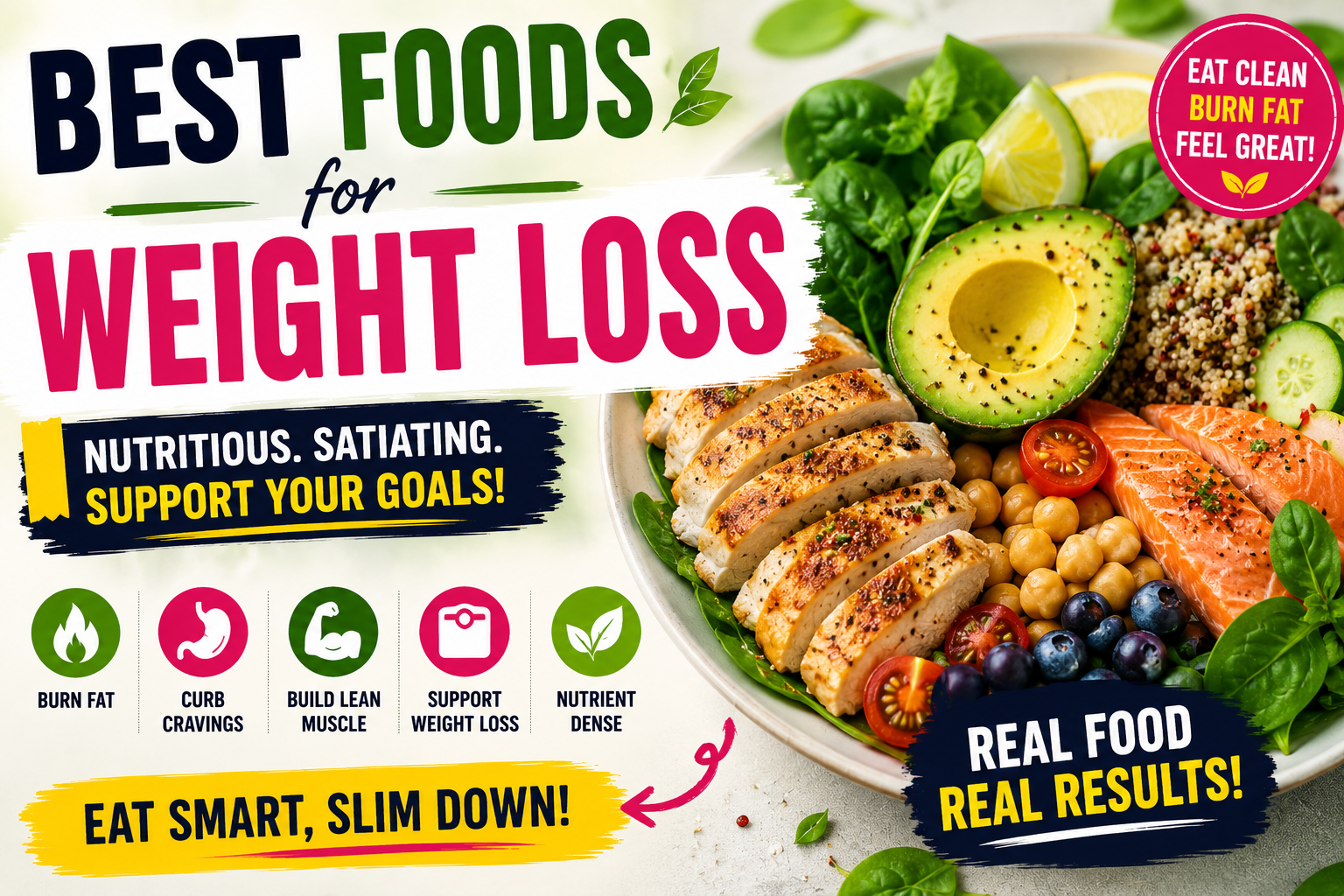
Losing weight doesn’t mean you have to live on salads, skip meals, or completely eliminate your favorite foods. A more sustainable approach is to build your diet around foods that provide plenty of nutrients while helping you feel satisfied.
The best foods for weight loss tend to have one or more useful qualities: they provide protein, fiber, water, or a combination of these nutrients while delivering relatively few calories for the amount of food you can eat.
Foods such as eggs, Greek yogurt, oats, berries, vegetables, beans, lentils, potatoes, fish, chicken, nuts, seeds, and avocado can all fit into a healthy weight-loss diet.
However, no single food burns body fat by itself. Successful weight loss generally comes from maintaining a consistent calorie deficit while eating a nutritious diet that you can follow over time.
In this guide, you’ll discover 30 healthy foods for weight loss, how to use them in meals, which foods are particularly filling, and practical ways to build a weight-loss-friendly eating routine.
What Makes a Food Good for Weight Loss?
Before looking at individual foods, it’s important to understand what makes certain foods particularly useful when you’re trying to lose weight.
1. Protein
Protein can help you feel satisfied and is important for maintaining muscle while losing weight.
Good sources include:
- Eggs
- Chicken
- Fish
- Greek yogurt
- Cottage cheese
- Beans
- Lentils
- Tofu
2. Fiber
Fiber adds bulk to meals and can help support feelings of fullness.
High-fiber foods include:
- Vegetables
- Fruits
- Beans
- Lentils
- Oats
- Whole grains
- Chia seeds
3. High Water Content
Foods containing lots of water can provide substantial volume without a large number of calories.
Examples include:
- Cucumbers
- Tomatoes
- Watermelon
- Strawberries
- Lettuce
- Zucchini
- Oranges
4. Nutrient Density
A weight-loss diet shouldn’t simply contain as few calories as possible. Your body still needs protein, vitamins, minerals, healthy fats, and other nutrients.
That’s why whole and minimally processed foods are useful foundations for a healthy diet.
30 Best Foods for Weight Loss
1. Eggs
Eggs are one of the easiest protein-rich foods to include in a weight-loss diet.
A typical egg provides high-quality protein along with several vitamins and minerals.
Eggs can also be extremely versatile.
Try them as:
- Boiled eggs
- Scrambled eggs with vegetables
- Omelets
- Egg and avocado toast
- Vegetable frittatas
Weight-loss tip
Instead of serving eggs with large amounts of processed meat and refined bread, combine them with vegetables and whole-grain toast for a more balanced meal.
2. Greek Yogurt
Plain Greek yogurt is rich in protein and can make a satisfying breakfast or snack.
Choose plain varieties when possible and add your own flavor with:
- Berries
- Banana
- Chia seeds
- Cinnamon
- Nuts
Greek yogurt can also replace higher-calorie sauces or sour cream in some recipes.
Easy snack
Greek yogurt + strawberries + chia seeds
This combination provides protein, fiber, and plenty of flavor without relying heavily on added sugar.
3. Oatmeal
Oatmeal is a classic breakfast food for a reason.
Oats provide carbohydrates, fiber, and a type of soluble fiber called beta-glucan.
A plain bowl of oats can become more filling when combined with protein and healthy fats.
Try:
Oats + Greek yogurt + berries + chia seeds
or
Oats + banana + peanut butter
Avoid turning oatmeal into a dessert by adding large amounts of sugar, syrup, or chocolate toppings.
4. Potatoes
Potatoes are sometimes unfairly labeled as unhealthy because they are carbohydrate-rich.
In reality, plain potatoes can fit into a weight-loss diet.
They provide:
- Carbohydrates
- Potassium
- Vitamin C
- Fiber, especially when eaten with the skin
The preparation method matters.
A baked or boiled potato is very different from a large serving of deep-fried fries.
Weight-loss idea
Top a baked potato with Greek yogurt, beans, vegetables, and herbs.
5. Salmon
Salmon provides high-quality protein and omega-3 fatty acids.
Protein can help make meals more satisfying, while salmon’s rich flavor makes it easier to create enjoyable meals without relying on highly processed sauces.
Serve salmon with:
- Roasted vegetables
- Brown rice
- Quinoa
- Salad
- Steamed greens
Because salmon is relatively calorie-dense compared with very lean proteins, portion size still matters.
6. Chicken Breast
Skinless chicken breast is a popular weight-loss food because it provides plenty of protein for relatively few calories.
You can prepare it in many ways:
- Grilled
- Baked
- Roasted
- Air-fried
- Added to salads
- Added to wraps
Use herbs, garlic, lemon, paprika, black pepper, and other seasonings to add flavor without relying on heavy sauces.
7. Beans
Beans are one of the most useful foods for a healthy weight-loss diet because they combine protein and fiber.
Popular options include:
- Black beans
- Kidney beans
- Pinto beans
- Navy beans
- Cannellini beans
Use beans in:
- Soups
- Chili
- Salads
- Burrito bowls
- Rice dishes
They are also inexpensive compared with many animal protein sources.
8. Lentils
Lentils are another excellent combination of plant protein and fiber.
They can make a meal more substantial without requiring large amounts of meat.
Try lentils in:
- Lentil soup
- Lentil curry
- Lentil salad
- Vegetable stew
- Grain bowls
For a simple meal, combine lentils with spinach, tomatoes, brown rice, and herbs.
9. Chickpeas
Chickpeas are rich in fiber and provide plant-based protein.
They are extremely versatile.
Use them to make:
- Hummus
- Chickpea salad
- Roasted chickpeas
- Curries
- Grain bowls
- Soups
Roasted chickpeas can also replace some highly processed crunchy snacks.
10. Leafy Green Vegetables
Leafy greens are among the easiest foods to increase when trying to create lower-calorie, high-volume meals.
Examples include:
- Spinach
- Kale
- Romaine lettuce
- Swiss chard
- Collard greens
They provide vitamins, minerals, fiber, and plenty of volume.
Add them to omelets, sandwiches, soups, salads, or smoothies.
11. Broccoli
Broccoli is a nutrient-dense vegetable containing fiber, vitamin C, vitamin K, and other beneficial plant compounds.
It can make meals larger and more satisfying without contributing a large number of calories.
Try roasted broccoli with:
- Chicken
- Salmon
- Tofu
- Brown rice
- Potatoes
12. Cauliflower
Cauliflower is another versatile vegetable that works well in weight-loss meals.
It can be:
- Roasted
- Steamed
- Mashed
- Added to curries
- Used in vegetable soups
- Chopped into rice-like pieces
Its mild flavor makes it easy to combine with other ingredients.
13. Cucumbers
Cucumbers contain a high percentage of water, making them a refreshing low-calorie food.
Use them in:
- Salads
- Sandwiches
- Wraps
- Yogurt-based dips
- Snack plates
Pair cucumber with hummus or Greek yogurt for a more satisfying snack.
14. Tomatoes
Tomatoes provide water, fiber, vitamin C, potassium, and various plant compounds.
They can add flavor and volume to meals without requiring heavy sauces.
Use them in:
- Salads
- Omelets
- Sandwiches
- Soups
- Salsas
- Grain bowls
15. Berries
Berries can be a great choice when you want something naturally sweet.
Examples include:
- Strawberries
- Blueberries
- Raspberries
- Blackberries
They provide fiber, vitamins, and plant compounds.
Add berries to Greek yogurt or oatmeal instead of using large amounts of sugar or syrup.
16. Apples
Apples are convenient, portable, and provide fiber and water.
The skin contains additional fiber and plant compounds, so eating the whole fruit can be beneficial when appropriate.
For a more satisfying snack, combine an apple with:
- Peanut butter
- Almonds
- Greek yogurt
17. Oranges
Whole oranges provide water, fiber, vitamin C, and natural sweetness.
Whole fruit is generally more filling than fruit juice because the intact fruit contains fiber and requires chewing.
Keep oranges available when you want a sweet snack.
18. Watermelon
Watermelon contains a large amount of water, making it a refreshing option when you’re craving something sweet.
It can be particularly enjoyable during hot weather.
Remember that low-calorie foods can still contribute calories if consumed in very large quantities, so overall portions still matter.
19. Avocado
Avocado is different from most fruits because it is relatively high in healthy fats.
It also provides:
- Fiber
- Potassium
- Folate
- Unsaturated fats
Although avocado is nutritious, it is calorie-dense.
A moderate serving can add flavor and satisfaction without turning a meal into a high-calorie dish.
Try avocado with eggs, whole-grain toast, beans, or salads.
20. Cottage Cheese
Cottage cheese is a protein-rich food that can work well as breakfast or a snack.
Choose a variety that fits your nutritional preferences.
You can make it sweet by adding:
- Berries
- Cinnamon
- Apple
- Chia seeds
Or make it savory with:
- Tomatoes
- Cucumber
- Black pepper
- Herbs
21. Tofu
Tofu is a versatile plant-based protein.
It can be:
- Baked
- Grilled
- Stir-fried
- Added to soups
- Crumbled into vegetable dishes
Combine tofu with plenty of vegetables and a moderate serving of brown rice or quinoa.
22. Edamame
Edamame is a convenient source of plant protein and fiber.
Frozen edamame can be quickly heated and used in:
- Salads
- Stir-fries
- Rice bowls
- Soups
- Snack plates
It is particularly useful for people looking for plant-based snack options.
23. Quinoa
Quinoa provides protein, fiber, and several minerals.
It can be used instead of refined grains in many meals.
Try:
Quinoa + chickpeas + spinach + tomatoes + cucumber + lemon
This creates a filling, vegetable-rich meal.
24. Brown Rice
Brown rice provides carbohydrates and fiber and can be part of a balanced weight-loss diet.
The key isn’t eliminating carbohydrates.
Instead, control the portion and combine the rice with:
- Lean protein
- Vegetables
- Beans
- Healthy fats
A balanced bowl might contain chicken, brown rice, broccoli, and avocado.
25. Chia Seeds
Chia seeds are rich in fiber and contain plant-based omega-3 fats.
They can absorb liquid and become gel-like, making them useful in:
- Chia pudding
- Overnight oats
- Smoothies
- Yogurt bowls
Because seeds are calorie-dense, a small serving is generally sufficient.
26. Almonds
Almonds provide protein, fiber, healthy fats, vitamin E, and magnesium.
They can be a convenient alternative to highly processed snacks.
However, nuts are energy-dense, so portion control matters.
A small handful is usually more appropriate than eating directly from a large bag.
27. Pumpkin Seeds
Pumpkin seeds provide protein, healthy fats, fiber, magnesium, zinc, and other nutrients.
Sprinkle them over:
- Salads
- Oatmeal
- Yogurt
- Soups
- Grain bowls
They are nutritious but calorie-dense, so keep portions moderate.
28. Popcorn
Plain air-popped popcorn can be a useful high-volume snack.
The problem is usually not popcorn itself but the large amounts of:
- Butter
- Oil
- Sugar
- Salt
- Cheese flavoring
For a lighter snack, season air-popped popcorn with spices, herbs, paprika, or nutritional yeast.
29. Green Peas
Green peas provide fiber, plant protein, vitamins, and minerals.
They are an easy addition to meals because frozen peas require little preparation.
Add them to:
- Rice
- Pasta
- Soups
- Stir-fries
- Egg dishes
30. High-Fiber Whole Grains
Whole grains can provide fiber and help create more satisfying meals.
Good options include:
- Oats
- Barley
- Brown rice
- Quinoa
- Whole-wheat bread
- Whole-wheat pasta
Rather than avoiding grains completely, choose minimally processed options and keep portions appropriate for your overall calorie needs.
The Best Weight-Loss Foods by Category
Sometimes it’s easier to choose foods when they’re grouped by their main nutritional benefit.
Best High-Protein Foods
- Eggs
- Chicken breast
- Salmon
- Greek yogurt
- Cottage cheese
- Tofu
- Edamame
- Lentils
- Beans
Best High-Fiber Foods
- Lentils
- Beans
- Chickpeas
- Oats
- Chia seeds
- Berries
- Apples
- Broccoli
- Whole grains
Best Low-Calorie, High-Volume Foods
- Cucumbers
- Lettuce
- Spinach
- Tomatoes
- Broccoli
- Cauliflower
- Zucchini
- Watermelon
- Strawberries
Best Healthy-Fat Foods
- Avocado
- Almonds
- Walnuts
- Chia seeds
- Pumpkin seeds
- Salmon
- Natural peanut butter
Remember that healthy fats are still calorie-dense, so portion size matters.
10 Best Foods for a Weight-Loss Breakfast
A filling breakfast can be built around protein and fiber.
Try these combinations:
- Eggs + spinach + whole-grain toast
- Greek yogurt + berries + chia seeds
- Oatmeal + banana + peanut butter
- Cottage cheese + berries + walnuts
- Avocado toast + eggs
- Overnight oats + Greek yogurt
- Vegetable omelet + fruit
- Chia pudding + berries
- Oatmeal + pumpkin seeds + almonds
- Whole-grain toast + peanut butter + banana
You don’t need to eat breakfast if you aren’t hungry. The important factor is the overall quality and amount of food you consume throughout the day.
Best Foods for Weight-Loss Snacks
A good snack can help bridge the gap between meals without becoming a large extra meal.
Consider:
- Apple + peanut butter
- Greek yogurt + berries
- Carrots + hummus
- Cucumber + cottage cheese
- Boiled eggs
- Small handful of almonds
- Pumpkin seeds
- Edamame
- Air-popped popcorn
- Banana + Greek yogurt
The best snack depends on your hunger, activity level, and total calorie needs.
Best Foods for Dinner When Losing Weight
Dinner doesn’t need to be extremely restrictive.
Use a simple structure:
Protein + vegetables + controlled portion of carbohydrates + optional healthy fat
For example:
Meal 1
Grilled chicken + broccoli + roasted potato
Meal 2
Salmon + spinach + brown rice
Meal 3
Lentils + vegetables + quinoa
Meal 4
Tofu + mixed vegetables + brown rice
Meal 5
Black beans + avocado + salad + whole-grain tortilla
This approach is generally easier to maintain than trying to survive on tiny portions.
Foods to Limit When Trying to Lose Weight
You don’t necessarily have to completely eliminate any food.
However, some foods are very easy to overeat because they provide a lot of calories without making you feel equally full.
These include:
- Sugary drinks
- Large portions of fast food
- Deep-fried foods
- Candy
- Cookies
- Pastries
- Highly processed snack foods
- Large portions of creamy sauces
- Sugar-heavy desserts
- Alcoholic drinks
You can still enjoy favorite foods occasionally. The goal is to make nutritious foods the foundation of your diet.
What About “Fat-Burning” Foods?
You may see claims that certain foods “burn belly fat” or dramatically increase metabolism.
Be careful with these claims.
No ordinary food can selectively melt fat from your stomach.
Foods such as chili peppers, green tea, coffee, or certain spices may have interesting effects on metabolism or appetite, but these effects are generally much smaller than the impact of your overall calorie intake, physical activity, sleep, and eating habits.
Instead of searching for one magical fat-burning food, build meals around protein, fiber, vegetables, fruits, whole grains, and appropriate portions of healthy fats.
How to Build a Weight-Loss Plate
A simple plate method can make healthy eating easier.
Aim for:
About Half the Plate
Non-starchy vegetables such as:
- Broccoli
- Spinach
- Cucumbers
- Tomatoes
- Cauliflower
- Peppers
About One Quarter
Protein such as:
- Chicken
- Fish
- Eggs
- Tofu
- Beans
- Lentils
About One Quarter
A carbohydrate source such as:
- Potatoes
- Brown rice
- Quinoa
- Whole-grain pasta
- Whole-grain bread
Then add a moderate amount of healthy fat if desired.
This isn’t a strict formula. Your ideal portions depend on your individual energy needs.
A Simple 7-Day Weight-Loss Food Plan
Day 1
Breakfast: Greek yogurt, berries, chia seeds
Lunch: Grilled chicken salad with avocado
Snack: Apple and almonds
Dinner: Salmon, broccoli, and roasted potatoes
Day 2
Breakfast: Oatmeal with banana and peanut butter
Lunch: Lentil soup with whole-grain toast
Snack: Cottage cheese and berries
Dinner: Chicken, brown rice, and mixed vegetables
Day 3
Breakfast: Eggs, spinach, and whole-grain toast
Lunch: Black bean quinoa bowl
Snack: Greek yogurt
Dinner: Baked salmon with vegetables
Day 4
Breakfast: Chia pudding with berries
Lunch: Chickpea and avocado salad
Snack: Apple with peanut butter
Dinner: Tofu vegetable stir-fry with brown rice
Day 5
Breakfast: Oatmeal with almonds, berries, and cinnamon
Lunch: Chicken and vegetable whole-grain wrap
Snack: Edamame
Dinner: Lentil curry with vegetables and quinoa
Day 6
Breakfast: Cottage cheese with berries and walnuts
Lunch: Tuna and vegetable salad
Snack: Air-popped popcorn
Dinner: Grilled chicken with roasted vegetables and potatoes
Day 7
Breakfast: Vegetable omelet with whole-grain toast
Lunch: Black bean and avocado bowl
Snack: Greek yogurt with chia seeds
Dinner: Salmon, brown rice, and spinach
This is an example rather than a personalized diet plan. Portion sizes should be adjusted according to individual calorie and nutritional needs.
How to Make Weight Loss Easier
Choosing healthy foods is only part of the process.
A few habits can make the entire approach easier.
Eat More Protein
Include a protein source in most meals.
Increase Fiber Gradually
Add beans, lentils, vegetables, fruits, oats, and whole grains.
Drink Mostly Calorie-Free Beverages
Water, sparkling water, and unsweetened tea can reduce calories from beverages.
Eat Slowly
Giving yourself time to eat can make it easier to notice when you’re satisfied.
Plan Snacks
Keeping healthy snacks available can reduce the temptation to rely on highly processed foods when hunger hits.
Watch Portions of Calorie-Dense Foods
Healthy foods can still contribute substantial calories when portions are very large.
This is especially important with:
- Nuts
- Seeds
- Nut butter
- Avocado
- Oils
- Cheese
Frequently Asked Questions
What are the best foods to eat for weight loss?
Some of the most useful choices include vegetables, fruits, beans, lentils, eggs, lean poultry, fish, Greek yogurt, oats, whole grains, and other minimally processed foods.
The best choices are foods you enjoy and can consistently include within your overall calorie needs.
What food burns the most belly fat?
No individual food selectively burns belly fat. Losing abdominal fat generally requires overall body-fat reduction through a sustained calorie deficit.
Are potatoes good for weight loss?
Yes. Plain boiled or baked potatoes can fit into a weight-loss diet. The preparation method and portion size matter.
Are eggs good for losing weight?
Eggs can be useful because they provide high-quality protein and are versatile. Pairing them with vegetables and whole grains can create a balanced meal.
Can I eat rice while losing weight?
Yes. Rice does not automatically cause weight gain. Portion size and the overall calorie content of your diet matter more than eliminating one carbohydrate.
Are nuts good for weight loss?
Nuts provide protein, fiber, and healthy fats, but they are calorie-dense. Moderate portions are important.
What are the best fruits for weight loss?
Berries, apples, oranges, watermelon, and other whole fruits can fit into a weight-loss diet. Rather than focusing on one “best” fruit, aim for variety.
Is avocado good for weight loss?
Avocado provides fiber and healthy unsaturated fats, but it is calorie-dense. Moderate portions can fit well into a balanced diet.
What should I eat at night if I’m hungry?
Depending on your needs, options such as Greek yogurt, cottage cheese, fruit, a boiled egg, or a small portion of nuts can be more filling than highly processed snacks.
Do I need to stop eating carbohydrates to lose weight?
No. Carbohydrates can be part of a healthy weight-loss diet. Choose high-fiber sources such as oats, potatoes, beans, fruit, quinoa, brown rice, and whole grains.
Final Takeaway
The best foods for weight loss aren’t necessarily exotic or expensive.
Many of the most useful choices are ordinary foods you can find in almost any grocery store:
Eggs, Greek yogurt, oats, potatoes, chicken, salmon, beans, lentils, chickpeas, vegetables, berries, apples, avocado, tofu, quinoa, brown rice, nuts, and seeds.
The key is how you build your overall diet.
Choose foods that provide protein and fiber, eat plenty of vegetables and whole fruits, control portions of calorie-dense foods, and limit foods and drinks that provide large amounts of calories without much nutritional value.
Most importantly, don’t look for a diet that produces the fastest result for a few weeks. Look for an eating pattern that you can realistically continue for months and years.
Weight loss is not about finding one magical food.
It’s about creating a sustainable combination of nutritious foods, appropriate portions, regular physical activity, adequate sleep, and consistent habits.
Suggested Internal Links
- Healthy Foods List
- Best Superfoods
- High Protein Snacks in the USA
- Healthy Snacks for Adults in the USA
- Low-Calorie Healthy Snacks
- High Protein Snacks for Weight Loss
- Healthy Snack Ideas
- Foods High in Antioxidants
- Foods Rich in Magnesium
- Best Foods to Reduce Belly Fat
Leave a Reply