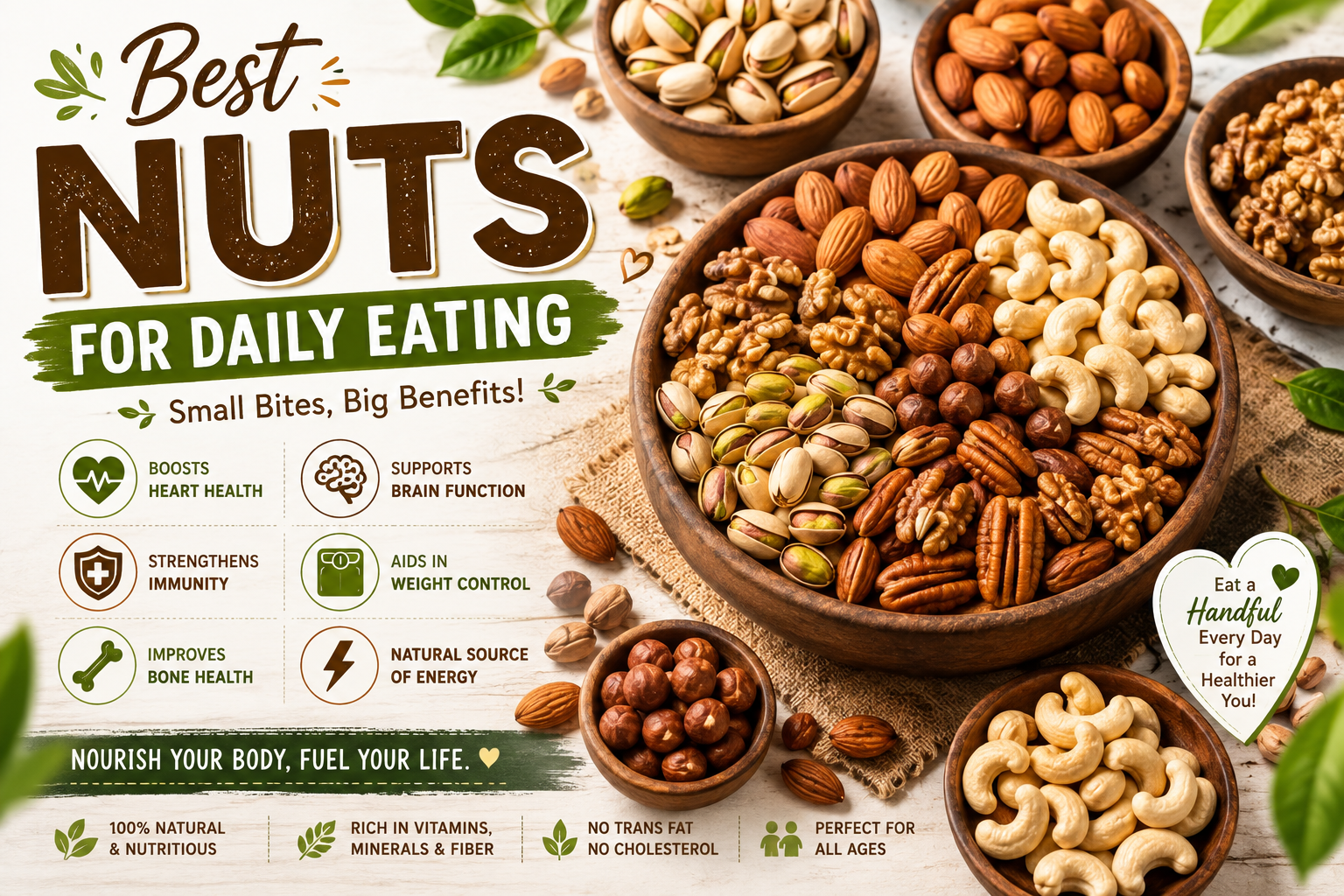
Nuts are among the easiest foods to include in a healthy daily diet. They are naturally rich in unsaturated fats, plant protein, fiber, vitamins, minerals, and beneficial plant compounds. Different nuts also have different nutritional strengths, so eating a variety can help you get a broader range of nutrients.
But with so many choices available, you may wonder: What are the best nuts for daily eating?
There isn’t one nut that is best for everyone. Almonds, walnuts, pistachios, cashews, pecans, hazelnuts, macadamia nuts, Brazil nuts, peanuts, and other varieties can all have a place in a balanced diet.
The best choice depends on your nutritional needs, preferences, calorie requirements, and whether you have any food allergies.
In this article, we’ll look at some of the healthiest nuts to consider for regular eating and what makes each one unique.
What Makes a Nut Healthy?
Before choosing the best nuts for daily eating, it helps to understand what you’re looking for.
A nutritious nut generally provides a combination of:
- Unsaturated fats
- Plant protein
- Dietary fiber
- Vitamins
- Minerals
- Antioxidant compounds
Nuts are also naturally filling and convenient. You don’t need to cook them, and they can easily be added to breakfast, salads, yogurt, oatmeal, or snacks.
However, nuts are calorie-dense, meaning even a relatively small serving can contain a substantial number of calories.
That’s why portion size matters.
How Many Nuts Should You Eat Every Day?
A common serving of nuts is approximately 1 ounce (28 grams).
Depending on the nut and its size, this may be roughly:
- 18–24 almonds
- 14–18 walnut halves
- 30–35 pistachios
- 16–18 cashews
- Around 15–20 hazelnuts
These are only approximate because nut sizes vary.
You don’t necessarily need to eat a full serving of nuts every day. Your ideal amount depends on your total diet and calorie requirements.
A simple strategy is to measure a portion rather than eating directly from a large bag.
1. Almonds


Almonds are one of the most popular choices when it comes to the best nuts for daily eating.
They’re particularly well known for providing:
- Vitamin E
- Magnesium
- Fiber
- Protein
- Unsaturated fats
A 1-ounce serving of almonds provides roughly 160–170 calories and about 6 grams of protein, although exact values vary.
Why eat almonds regularly?
Their combination of fiber, protein, and healthy fats makes almonds a convenient snack.
You can enjoy them:
- With fruit
- In oatmeal
- With Greek yogurt
- In salads
- As almond butter
- Chopped over cereal
Best choice
Plain, raw, or dry-roasted almonds without excessive added salt or sugar are simple everyday options.
2. Walnuts


Walnuts stand out because they provide alpha-linolenic acid (ALA), a plant-based omega-3 fatty acid.
They also provide:
- Protein
- Fiber
- Magnesium
- Copper
- Manganese
- Polyunsaturated fats
Walnuts have a distinctive rich flavor and work particularly well in breakfast foods and salads.
Easy ways to eat walnuts
Add chopped walnuts to:
- Oatmeal
- Greek yogurt
- Smoothies
- Salads
- Whole-grain cereal
You can also combine walnuts with fresh fruit for a simple snack.
Why walnuts are a great daily option
Their unique fatty-acid profile makes them a useful addition to a varied diet.
3. Pistachios


Pistachios are another excellent option for regular eating.
They provide:
- Protein
- Fiber
- Vitamin B6
- Potassium
- Copper
- Unsaturated fats
One interesting advantage of pistachios is that they’re often eaten in their shells.
For unshelled pistachios, the process of opening the shells can naturally slow down eating.
Pistachios as a snack
Try:
Pistachios + apple
or:
Pistachios + plain Greek yogurt
You can also sprinkle chopped pistachios over salads, oatmeal, or roasted vegetables.
Choose carefully
Salted pistachios can contain a significant amount of sodium, so unsalted or lightly salted varieties are better choices if you’re watching your sodium intake.
4. Cashews


Cashews have a creamy texture and mild flavor that makes them particularly versatile.
They provide:
- Magnesium
- Copper
- Manganese
- Phosphorus
- Zinc
- Unsaturated fats
- Plant protein
Cashews can be eaten as a snack or incorporated into meals.
Ways to use cashews
Try adding them to:
- Stir-fries
- Salads
- Oatmeal
- Rice dishes
- Homemade trail mixes
- Yogurt bowls
Cashews can also be blended into sauces and dairy-free recipes.
A note about portions
Cashews are relatively calorie-dense, so a small serving is generally enough for a snack.
5. Pecans


Pecans are particularly rich in unsaturated fats and provide several important minerals.
They contain:
- Manganese
- Copper
- Zinc
- Magnesium
- Fiber
- Unsaturated fats
Pecans have a naturally rich, buttery flavor, making them useful in both sweet and savory dishes.
Healthy ways to eat pecans
Add chopped pecans to:
- Oatmeal
- Greek yogurt
- Salads
- Roasted vegetables
- Whole-grain dishes
Instead of using heavily sugar-coated pecans, choose plain or dry-roasted varieties.
6. Hazelnuts


6
Hazelnuts are particularly notable for their vitamin E and monounsaturated fat content.
They also provide:
- Fiber
- Magnesium
- Copper
- Manganese
- Plant protein
Their naturally rich flavor makes them especially popular in desserts, but plain hazelnuts can also be an excellent snack.
Try hazelnuts with:
- Apples
- Pears
- Berries
- Greek yogurt
- Oatmeal
Chopped hazelnuts can also add crunch to salads and roasted vegetables.
7. Macadamia Nuts


Macadamia nuts are known for their creamy texture and high proportion of monounsaturated fat.
They also provide:
- Manganese
- Thiamine
- Copper
- Magnesium
- Fiber
Macadamias are particularly calorie-dense, so portion control is important.
How to enjoy macadamias
A small serving works well with:
- Fresh fruit
- Yogurt
- Oatmeal
- Salads
Choose plain or dry-roasted macadamias rather than varieties heavily coated with sugar or salt.
Almonds vs. Walnuts vs. Pistachios
If you’re trying to decide which nuts to eat regularly, each has a slightly different nutritional profile.
| Nut | Particularly Notable For |
|---|---|
| Almonds | Vitamin E, magnesium, fiber |
| Walnuts | ALA omega-3 fats |
| Pistachios | Protein, fiber, vitamin B6 |
| Cashews | Copper, magnesium |
| Pecans | Unsaturated fats, manganese |
| Hazelnuts | Vitamin E, monounsaturated fats |
| Macadamias | Monounsaturated fats |
This doesn’t mean one nut is universally healthier than the others.
Variety is often the better approach.
Should You Eat the Same Nuts Every Day?
You can, but you don’t have to.
For example, you could have:
Monday: Almonds
Tuesday: Walnuts
Wednesday: Pistachios
Thursday: Cashews
Friday: Hazelnuts
Saturday: Pecans
Sunday: Mixed nuts
Or simply use a variety of nuts throughout the week.
This can make your diet more interesting while exposing you to different nutritional profiles.
What About Mixed Nuts?
Mixed nuts can be one of the easiest ways to consume several nut varieties.
A good everyday mix might contain:
- Almonds
- Walnuts
- Pistachios
- Cashews
- Pecans
- Hazelnuts
A plain or lightly salted mix is generally preferable to one containing large amounts of:
- Added sugar
- Candy
- Chocolate
- Excessive salt
- Added oils
8. Brazil Nuts


Brazil nuts are especially famous for their selenium content.
Selenium is an essential mineral involved in normal thyroid function, antioxidant defenses, and immune function.
Brazil nuts also provide:
- Healthy fats
- Protein
- Fiber
- Magnesium
- Copper
- Phosphorus
How many Brazil nuts should you eat?
This is where Brazil nuts differ from most other nuts.
Their selenium content can be extremely high and can vary considerably from nut to nut. Therefore, you generally don’t need a large handful.
A small amount can provide plenty of selenium.
For everyday mixed-nut eating, avoid making Brazil nuts the largest component of your mix.
9. Peanuts


Technically, peanuts are legumes rather than tree nuts, but nutritionally they’re often discussed alongside nuts.
Peanuts provide:
- Protein
- Unsaturated fats
- Fiber
- Magnesium
- Niacin
- Vitamin E
They are also relatively affordable compared with many tree nuts, making them an accessible option for regular eating.
Healthy ways to eat peanuts
Choose:
- Dry-roasted peanuts
- Unsalted peanuts
- Plain peanuts
- Natural peanut butter without excessive added sugar
Peanuts can be added to:
- Oatmeal
- Smoothies
- Fruit
- Whole-grain toast
- Stir-fries
If you have a peanut allergy, however, you should avoid them.
10. Pine Nuts


Pine nuts are smaller than many other nuts but contain a variety of nutrients.
They provide:
- Unsaturated fats
- Magnesium
- Manganese
- Copper
- Vitamin E
- Plant protein
Pine nuts are particularly popular in Mediterranean-style dishes.
How to use pine nuts
Try adding them to:
- Salads
- Pasta
- Pesto
- Roasted vegetables
- Grain bowls
Because they’re relatively expensive, they don’t have to be an everyday nut. They can simply be used occasionally for variety.
11. Chestnuts


Chestnuts are nutritionally different from many other nuts.
Compared with almonds, walnuts, and pecans, chestnuts contain more carbohydrates and much less fat.
They can provide:
- Carbohydrates
- Fiber
- Vitamin C
- Copper
- Manganese
- Potassium
Roasted chestnuts can be enjoyed as a seasonal snack or added to savory dishes.
Because their nutritional profile is different, chestnuts can add variety to a diet rather than simply duplicating the nutrients found in high-fat nuts.
12. Mixed Nuts


If you can’t decide which nut to eat, a mixed-nut blend can be an excellent option.
A nutritious mix might contain:
- Almonds
- Walnuts
- Pistachios
- Cashews
- Pecans
- Hazelnuts
This gives you a broader combination of nutrients.
For example:
Almonds → vitamin E
Walnuts → ALA omega-3
Pistachios → protein and fiber
Cashews → copper and magnesium
Hazelnuts → vitamin E and monounsaturated fats
Pecans → unsaturated fats and minerals
Look for mixes without excessive added salt, sugar, chocolate, or candy.
Related article: Mixed Nuts Benefits: 20 Reasons to Add Mixed Nuts to Your Diet
Best Nuts for Heart Health
If your goal is to choose nuts that fit into a heart-conscious eating pattern, several options are worth considering.
Good choices include:
Walnuts
Provide ALA omega-3 fatty acids and unsaturated fats.
Almonds
Provide unsaturated fats, fiber, vitamin E, and magnesium.
Pistachios
Provide unsaturated fats, fiber, and several micronutrients.
Hazelnuts
Rich in monounsaturated fats and vitamin E.
Pecans
Provide predominantly unsaturated fats.
The bigger picture matters more than choosing one particular nut.
A heart-conscious diet can include nuts alongside:
- Vegetables
- Fruits
- Whole grains
- Beans
- Fish
- Lean proteins
- Olive oil
Best Nuts for Weight Management
Nuts can be included in a weight-management diet, but portion size matters.
Nuts are calorie-dense, so eating unlimited amounts isn’t recommended if you’re trying to reduce calorie intake.
Particularly useful options include:
- Almonds
- Pistachios
- Walnuts
- Hazelnuts
Their combination of fat, fiber, protein, and crunchy texture can make them satisfying.
Best strategy
Use nuts instead of less nutritious snacks.
For example:
Chips → pistachios + fruit
Cookies → almonds + apple
Candy → walnuts + berries
This is more useful than simply adding nuts on top of your normal calorie intake.
Best Nuts for Protein
If you’re looking for nuts that provide relatively more protein, good choices include:
Peanuts
Approximately 7 grams of protein per 1-ounce serving.
Almonds
Approximately 6 grams per ounce.
Pistachios
Approximately 6 grams per ounce.
Cashews
Approximately 5 grams per ounce.
Walnuts
Approximately 4 grams per ounce.
Nuts can contribute to your daily protein intake, but they shouldn’t necessarily replace high-protein foods such as:
- Eggs
- Fish
- Chicken
- Greek yogurt
- Beans
- Lentils
- Tofu
Best Nuts for Fiber
Fiber content varies between nuts.
Some useful choices include:
- Almonds
- Pistachios
- Hazelnuts
- Pecans
- Peanuts
Eating nuts alongside fruits, vegetables, beans, and whole grains can help create a fiber-rich diet.
Easy combination
Almonds + apple
or
Pistachios + berries
Best Nuts for Vitamin E
If vitamin E is your priority, almonds and hazelnuts are particularly useful choices.
Vitamin E acts as an antioxidant and contributes to normal immune function and other physiological processes.
Other foods containing vitamin E include:
- Sunflower seeds
- Avocado
- Vegetable oils
- Spinach
- Other nuts and seeds
So you don’t need to rely exclusively on nuts.
Best Nuts for Magnesium
Several nuts provide magnesium.
Good choices include:
- Almonds
- Cashews
- Peanuts
- Brazil nuts
- Hazelnuts
Magnesium contributes to:
- Normal muscle function
- Normal nerve function
- Energy metabolism
- Normal bone function
A varied diet is the best way to obtain enough magnesium.
Best Nuts for Omega-3 Fats
When it comes to plant-based omega-3 fats, walnuts stand out.
They provide alpha-linolenic acid (ALA).
ALA is an essential fatty acid, meaning your body cannot produce enough of it on its own.
Other plant sources of ALA include:
- Chia seeds
- Flaxseeds
- Hemp seeds
- Certain vegetable oils
Walnuts therefore make a particularly useful addition to a varied diet.
Best Nuts for Everyday Snacking
For a simple everyday snack, some of the easiest choices are:
Almonds
Easy to carry and widely available.
Pistachios
Crunchy and flavorful.
Walnuts
Excellent with fruit and yogurt.
Peanuts
Affordable and protein-rich.
Mixed nuts
Provide variety in one serving.
The healthiest choice isn’t necessarily the most expensive nut.
A simple, affordable nut eaten consistently can be more useful than buying an expensive variety occasionally.
What Is the Healthiest Nut Overall?
There isn’t one universally healthiest nut.
Instead, different nuts have different nutritional strengths.
| Nut | Best Known For |
|---|---|
| Almonds | Vitamin E, magnesium, fiber |
| Walnuts | ALA omega-3 fats |
| Pistachios | Protein, fiber, vitamin B6 |
| Cashews | Copper, magnesium |
| Pecans | Unsaturated fats |
| Hazelnuts | Vitamin E, monounsaturated fats |
| Macadamias | Monounsaturated fats |
| Brazil nuts | Selenium |
| Peanuts | Protein and affordability |
| Pine nuts | Minerals and unsaturated fats |
| Chestnuts | Lower-fat, carbohydrate-rich nut |
| Mixed nuts | Nutritional variety |
So instead of asking “Which nut is the healthiest?”, a better question is:
“Which nuts best fit my nutritional needs and eating habits?”
How to Choose Nuts for Daily Eating
When shopping for nuts, look at the ingredient list.
Best everyday choices
Choose products that are:
- Plain
- Raw
- Dry-roasted
- Unsalted or lightly salted
- Free from excessive added sugar
Limit products containing:
- Candy
- Chocolate
- Caramel
- Large amounts of added sugar
- Excessive salt
- Heavy coatings
- Large amounts of added oil
A simple ingredient list is often the easiest choice.
How Many Nuts Should You Eat Every Day?
A common serving size for nuts is around 1 ounce (28 grams).
That’s approximately a small handful, although the actual number varies considerably by nut size.
For example, 1 ounce may contain roughly:
- Almonds: 20–24
- Pistachios: 30–35 kernels
- Cashews: 16–18
- Hazelnuts: 18–21
- Walnut halves: 14–18
- Pecans: around 15–20
These numbers are approximate.
You don’t necessarily need a full ounce every day. Your appropriate portion depends on your calorie needs and the rest of your diet.
Best tip for portion control
Measure your serving before eating rather than repeatedly reaching into a large bag.
How Many Calories Are in Nuts?
Most nuts provide approximately 160–200 calories per 1-ounce serving.
Examples include:
| Nut | Approx. Calories per 1 oz |
|---|---|
| Almonds | 165 |
| Walnuts | 185 |
| Pistachios | 160 |
| Cashews | 155–165 |
| Pecans | 195–200 |
| Hazelnuts | 175–180 |
| Macadamias | 200–205 |
| Peanuts | 165–170 |
Exact values vary by variety and preparation.
This is why nuts are nutrient-dense but also calorie-dense.
What Is the Best Time to Eat Nuts?
There is no scientifically established “perfect” time to eat nuts.
You can enjoy them:
- At breakfast
- As a morning snack
- In the afternoon
- With lunch
- With dinner
- After exercise as part of a balanced snack
The most important factors are portion size and your overall dietary pattern.
Morning idea
Oatmeal + berries + almonds
Afternoon idea
Apple + pistachios
Evening idea
Greek yogurt + walnuts
Are Nuts Good for Weight Loss?
Nuts can be included in a weight-loss diet, but they don’t directly burn body fat.
They contain fat, protein, and fiber and can be satisfying, but they’re also calorie-dense.
The key is substitution.
Instead of adding a large serving of nuts to your existing diet, replace a less nutritious snack with them.
For example:
Chips → pistachios + fruit
Cookies → almonds + apple
Candy → walnuts + berries
This approach can improve the nutritional quality of your diet without unnecessarily increasing your calorie intake.
Raw vs. Roasted Nuts
Both raw and roasted nuts can be healthy.
The main difference is often the preparation method and added ingredients.
Raw nuts
Advantages:
- No added oil
- No added salt unless specifically treated
- Simple ingredient profile
Dry-roasted nuts
Also a good option.
Dry roasting doesn’t require adding oil, although roasting can slightly alter some nutrients and plant compounds.
Best everyday choices
- Raw
- Dry-roasted
- Unsalted
- Lightly salted
Are Salted Nuts Healthy?
Salted nuts still contain their natural nutrients, but they can contribute significant sodium depending on the product.
If you’re trying to reduce sodium intake, choose:
Unsalted or lightly salted nuts.
You can add your own flavors using:
- Cinnamon
- Paprika
- Black pepper
- Garlic powder
- Rosemary
- Chili powder
Nuts and Heart Health
Nuts can fit well into a heart-conscious eating pattern because many varieties provide predominantly unsaturated fats.
Particularly useful choices include:
- Walnuts
- Almonds
- Pistachios
- Pecans
- Hazelnuts
However, nuts aren’t a treatment for heart disease.
For overall heart health, also focus on:
- Vegetables
- Fruits
- Whole grains
- Beans
- Fish
- Regular physical activity
- Limiting tobacco exposure
- Maintaining a healthy overall diet
Nuts and Protein
If you’re looking for a convenient plant-based source of protein, nuts can contribute to your daily intake.
Among common options:
Peanuts → relatively high in protein
Almonds → good protein contribution
Pistachios → good protein contribution
Cashews → moderate protein
However, nuts shouldn’t be your only protein source.
Combine them with foods such as:
- Eggs
- Greek yogurt
- Beans
- Lentils
- Fish
- Chicken
- Tofu
Nuts and Fiber
Many nuts contain dietary fiber.
Including nuts alongside other high-fiber foods can help you build a fiber-rich diet.
Try:
Almonds + apple
Pistachios + berries
Walnuts + oatmeal
Other important fiber sources include:
- Beans
- Lentils
- Vegetables
- Fruits
- Whole grains
- Seeds
Are Brazil Nuts Safe to Eat Every Day?
Brazil nuts deserve special attention because their selenium content can be exceptionally high and varies considerably.
Selenium is essential, but excessive intake over time can cause toxicity.
You don’t need a large handful of Brazil nuts to get selenium.
If you’re eating a mixed-nut blend containing Brazil nuts, check how many are included rather than consuming unlimited amounts.
People taking selenium supplements should be particularly careful about combining them with large amounts of Brazil nuts.
Can Nuts Cause Allergies?
Yes.
Tree nuts and peanuts are among the foods that can cause serious allergic reactions.
Common symptoms may include:
- Hives
- Itching
- Swelling
- Stomach pain
- Vomiting
- Wheezing
- Difficulty breathing
Severe reactions can be life-threatening.
If you have a known nut allergy, avoid the relevant nuts and carefully check food labels for ingredients and possible cross-contact.
Can You Eat Too Many Nuts?
Yes.
Nuts are healthy, but more isn’t necessarily better.
Because they contain a lot of calories in a small volume, eating several handfuls can significantly increase your calorie intake.
For example:
1 serving ≈ 180 calories
3 servings ≈ 540 calories
The exact amount depends on the nuts.
Large amounts may also cause digestive discomfort in some people because of their fat and fiber content.
How to Store Nuts Properly
Nuts contain natural oils that can become rancid when exposed to heat, air, and light.
For short-term storage
Keep them:
- In an airtight container
- In a cool, dry location
- Away from direct sunlight
For longer storage
Consider keeping them in the:
- Refrigerator
- Freezer
A tightly sealed container or freezer bag helps maintain freshness.
Throw them away if they smell or taste rancid.
A bitter, stale, or unpleasant odor can indicate that the oils have deteriorated.
5 Healthy Ways to Eat Nuts Every Day
1. Nut and Fruit Snack
Combine:
- Apple
- A small serving of almonds or pistachios
Simple, portable, and requires no preparation.
2. Nutty Oatmeal
Add:
- Rolled oats
- Berries
- Banana
- Chopped walnuts
- Cinnamon
This makes an easy breakfast with fiber, carbohydrates, healthy fats, and plant-based protein.
3. Greek Yogurt Nut Bowl
Combine:
- Plain Greek yogurt
- Blueberries
- Strawberries
- Chopped almonds
- Chia seeds
This provides protein, fiber, healthy fats, and micronutrients.
4. Crunchy Nut Salad
Add chopped:
- Almonds
- Walnuts
- Pistachios
to:
- Leafy greens
- Cucumber
- Tomato
- Chickpeas
Finish with lemon juice and a small amount of olive oil.
5. Homemade Mixed-Nut Snack
Combine:
- Almonds
- Walnuts
- Pistachios
- Cashews
- Pecans
- Hazelnuts
Divide the mixture into small containers.
This makes portion control easier and gives you nutritional variety throughout the week.
Best Nuts for Different Goals
| Goal | Good Choices |
|---|---|
| Vitamin E | Almonds, hazelnuts |
| Plant omega-3 | Walnuts |
| Protein | Peanuts, almonds, pistachios |
| Magnesium | Almonds, cashews, peanuts |
| Selenium | Brazil nuts |
| Fiber | Almonds, pistachios, hazelnuts |
| Monounsaturated fats | Hazelnuts, macadamias |
| Variety | Mixed nuts |
| Everyday snacking | Almonds, pistachios, walnuts |
Remember that these are nutritional strengths, not rankings of which nut is universally healthiest.
Frequently Asked Questions
What are the best nuts to eat every day?
Almonds, walnuts, pistachios, cashews, pecans, hazelnuts, and peanuts can all fit into a healthy diet. A varied selection provides different nutrients.
What is the healthiest nut?
There isn’t one universally healthiest nut. Walnuts are notable for ALA omega-3 fats, almonds for vitamin E, pistachios for protein and fiber, and Brazil nuts for selenium.
How many nuts should I eat per day?
A common serving is around 1 ounce (28 grams). Your ideal portion depends on your calorie needs and overall diet.
Are nuts good for weight loss?
They can be included in a weight-loss diet when portions are controlled. They are calorie-dense, so replacing less nutritious snacks with a measured portion is generally more useful than simply adding them.
Are almonds good for daily eating?
Yes. Almonds provide vitamin E, magnesium, fiber, protein, and unsaturated fats and are an easy everyday snack.
Are walnuts good to eat every day?
Walnuts can be included regularly in moderate portions. They are particularly notable for their plant-based ALA omega-3 fatty acids.
Are pistachios healthy?
Yes. Pistachios provide protein, fiber, vitamin B6, potassium, and unsaturated fats.
Are cashews healthy?
Yes. Cashews provide unsaturated fats, copper, magnesium, and other nutrients.
Are salted nuts healthy?
They can still be nutritious, but their sodium content may be high. Unsalted or lightly salted nuts are generally better choices when limiting sodium.
Are roasted nuts healthy?
Plain dry-roasted nuts can be a nutritious choice. Look for products without excessive added salt, sugar, or oil.
Are nuts good for your heart?
Nuts can be part of a heart-conscious dietary pattern because they provide unsaturated fats, fiber, and other nutrients.
Can I eat mixed nuts every day?
Yes, a moderate serving of a simple mixed-nut blend can fit into a balanced diet for people without relevant allergies. Watch the portion size and the amount of added salt or sugar.
Can I eat Brazil nuts every day?
Brazil nuts are exceptionally high in selenium, and the amount varies. Because excessive selenium can be harmful, avoid consuming large quantities regularly.
Final Takeaway
The best nuts for daily eating aren’t necessarily the most expensive or exotic varieties.
Some of the best options include:
- Almonds for vitamin E and magnesium
- Walnuts for plant-based ALA omega-3
- Pistachios for protein and fiber
- Cashews for copper and magnesium
- Pecans for unsaturated fats
- Hazelnuts for vitamin E and monounsaturated fats
- Macadamias for monounsaturated fats
- Peanuts for protein and affordability
- Brazil nuts for selenium, in small amounts
- Mixed nuts for nutritional variety
A practical daily portion is around 1 ounce (28 grams), although your needs may differ.
For the healthiest everyday option, choose plain, raw, or dry-roasted nuts and avoid varieties heavily coated with sugar, chocolate, or excessive salt.
Most importantly, don’t focus on one “super nut.” Eating a variety of nuts as part of a balanced diet is a simple way to increase your intake of healthy fats, fiber, protein, vitamins, minerals, and other beneficial plant compounds.
Suggested Article’s
- Mixed Nuts Benefits
- Pistachio Benefits
- Cashew Benefits
- Pecan Benefits
- Macadamia Nut Benefits
- Brazil Nut Benefits
- Hazelnut Benefits
- Best Natural Foods
- Best Healthy Pantry Foods
- Foods Rich in Zinc
- Foods Rich in Iron
- Best Foods for Weight Loss




Leave a Reply