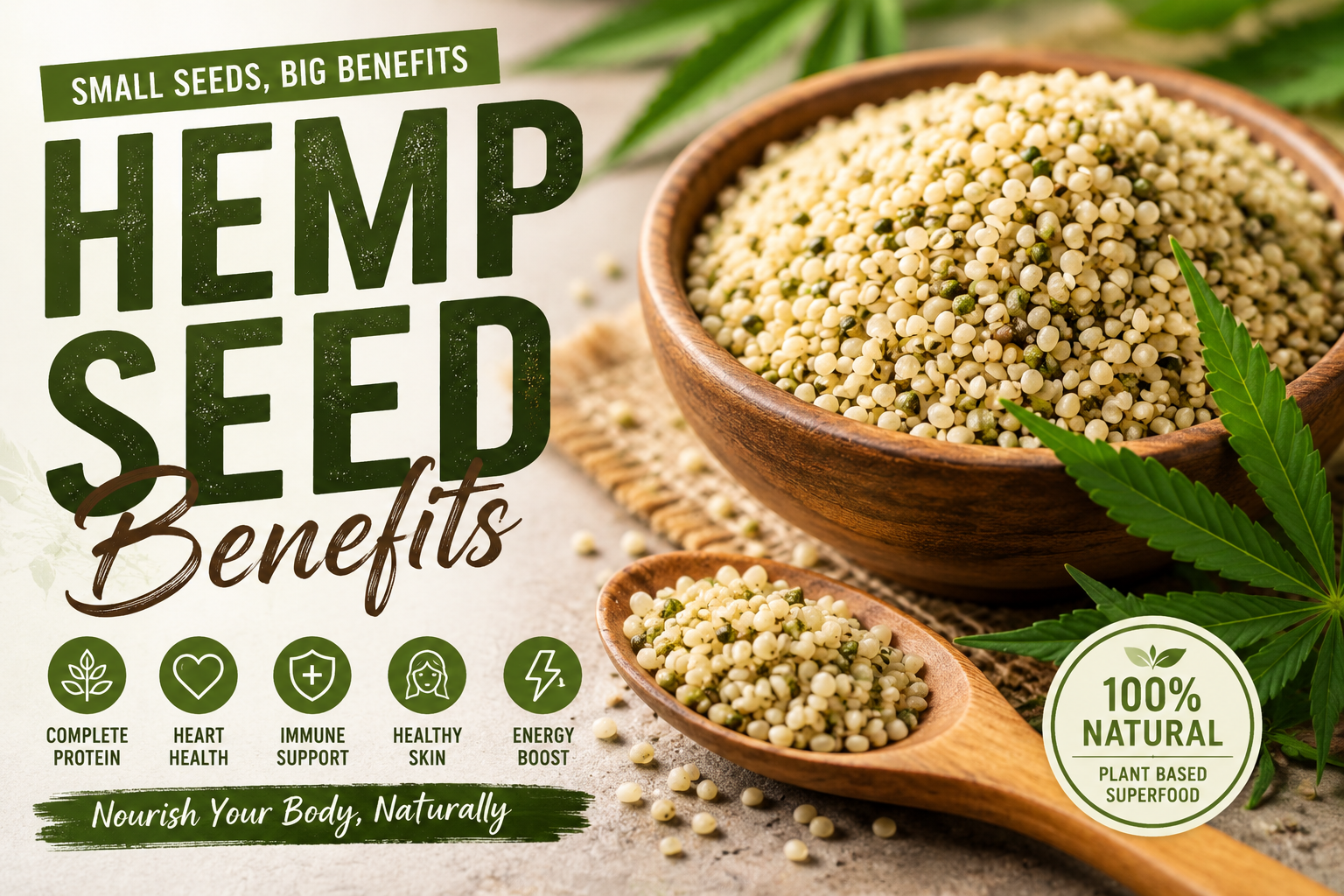
Hemp seeds have become increasingly popular among people looking for nutritious plant-based foods that can easily be added to everyday meals. These small, soft seeds come from the hemp plant and contain a combination of protein, healthy fats, minerals, and other nutrients.
Despite their association with the hemp plant, hemp seeds do not produce the intoxicating effects associated with marijuana. Hemp seeds contain only trace amounts of naturally occurring THC when properly processed, and they are primarily valued as a nutrient-dense food.
From supporting a balanced diet to providing plant-based protein and essential fatty acids, hemp seeds can be a versatile addition to smoothies, oatmeal, salads, yogurt, soups, and homemade energy bites.
This guide explores the potential hemp seed benefits, nutritional value, ways to eat them, possible side effects, and practical tips for adding them to your diet.
What Are Hemp Seeds?
Hemp seeds are the edible seeds of the hemp plant, scientifically known as Cannabis sativa. They have a mild, nutty flavor and a soft texture.
You may find hemp seeds sold as:
- Whole hemp seeds
- Shelled hemp seeds
- Hemp hearts
- Hemp seed powder
- Hemp seed oil
Hemp hearts are simply hemp seeds with most of their outer shell removed. They are particularly popular because they have a soft texture and can be eaten without much preparation.
Hemp seeds are often considered a nutrient-dense food because they provide protein, unsaturated fats, minerals, and other nutrients in a relatively small serving.
Hemp Seed Nutrition
One of the biggest reasons hemp seeds have attracted attention is their nutritional profile.
Hemp seeds provide several important nutrients, including:
- Plant-based protein
- Unsaturated fats
- Omega-3 fatty acid ALA
- Omega-6 fatty acid LA
- Magnesium
- Phosphorus
- Iron
- Zinc
- Manganese
- Copper
The exact nutrition varies depending on the product and serving size.
A typical serving of shelled hemp seeds can provide a substantial amount of plant protein and healthy fats, making them especially useful for people who want to increase the nutrient density of meals.
Protein
Hemp seeds are an excellent plant-based source of protein.
Protein is important for:
- Maintaining muscles
- Supporting normal growth and repair
- Helping you feel satisfied after meals
- Producing enzymes and hormones
- Supporting many normal body functions
Hemp seed protein contains all nine essential amino acids, although the amount of each amino acid varies.
This makes hemp seeds a useful option for people following vegetarian or plant-forward diets.
1. Hemp Seeds May Support a Healthy Diet
One of the simplest hemp seed benefits is that they can make meals more nutrient-dense.
Instead of eating hemp seeds by themselves, you can sprinkle them over foods you already enjoy.
For example:
- Add hemp hearts to oatmeal.
- Sprinkle them over a salad.
- Mix them into yogurt.
- Blend them into smoothies.
- Add them to homemade energy bites.
- Stir them into soups after cooking.
This makes hemp seeds a convenient way to add protein, fats, and minerals to everyday meals.
2. Hemp Seeds Are a Good Source of Plant Protein
For people who don’t eat much meat, hemp seeds can be a convenient source of plant protein.
Protein contributes to the maintenance of muscle mass and helps support normal body functions.
A tablespoon or two of hemp hearts can be added to meals without dramatically changing the flavor.
Easy Protein Combination
Try combining:
Greek yogurt + berries + hemp hearts + chia seeds
This creates a nutrient-rich snack containing protein, fiber, healthy fats, and other nutrients.
3. Hemp Seeds Provide Healthy Unsaturated Fats
Hemp seeds are rich in unsaturated fats.
They contain both omega-3 and omega-6 fatty acids, including:
- Alpha-linolenic acid (ALA)
- Linoleic acid (LA)
These are essential fatty acids, meaning the body needs them from food.
Replacing some foods high in saturated fat with foods containing unsaturated fats can be part of a heart-healthy dietary pattern.
However, hemp seeds are still calorie-dense, so portion size matters.
4. Hemp Seeds Contain Omega-3 Fatty Acids
Hemp seeds provide plant-based omega-3 fatty acid ALA.
ALA is an essential fatty acid that the body cannot make in sufficient amounts and therefore needs to obtain through food.
Other plant sources of ALA include:
- Flaxseeds
- Chia seeds
- Walnuts
The body can convert ALA into EPA and DHA, but the conversion is limited. Therefore, hemp seeds should not automatically be considered nutritionally equivalent to fatty fish as a source of EPA and DHA.
Still, including several plant sources of ALA can contribute to a varied diet.
5. Hemp Seeds May Support Heart Health
Hemp seeds can contribute to a heart-healthy dietary pattern because they provide unsaturated fats and minerals.
A diet emphasizing foods such as:
- Nuts
- Seeds
- Vegetables
- Fruits
- Whole grains
- Legumes
can provide a wide range of nutrients.
However, hemp seeds should not be described as a treatment for heart disease.
Their potential benefit comes primarily from their nutritional composition and how they fit into the overall diet.
6. Hemp Seeds Are Rich in Magnesium
Magnesium is an important mineral involved in numerous processes in the body.
It contributes to:
- Normal muscle function
- Normal nerve function
- Energy metabolism
- Bone health
- Normal blood glucose regulation
Hemp seeds can help contribute to daily magnesium intake.
Other magnesium-rich foods include:
- Almonds
- Pumpkin seeds
- Cashews
- Beans
- Whole grains
- Dark leafy greens
Eating a variety of these foods is a practical way to improve overall nutrient intake.
7. Hemp Seeds Provide Phosphorus
Phosphorus is another mineral found in hemp seeds.
It plays an important role in:
- Bone and teeth health
- Energy metabolism
- Cell function
Hemp seeds can therefore contribute to the mineral content of your diet.
People with certain kidney conditions may need individualized advice regarding phosphorus intake, so more is not always better for everyone.
8. Hemp Seeds Contain Iron
Iron is essential for the production of hemoglobin, a protein involved in transporting oxygen throughout the body.
Plant foods such as hemp seeds can contribute dietary iron.
However, plant-based iron is non-heme iron, which is absorbed differently from the heme iron found in animal foods.
Pairing plant sources of iron with foods containing vitamin C can help improve absorption.
For example:
Hemp seeds + spinach + bell peppers
can be a nutrient-rich combination.
9. Hemp Seeds Provide Zinc
Zinc is another mineral found in hemp seeds.
It supports many normal functions, including:
- Immune function
- Wound healing
- Protein synthesis
- DNA synthesis
Adding hemp seeds to an already varied diet can help contribute to overall zinc intake.
10. Hemp Seeds May Support Digestive Health
Whole hemp seeds contain fiber, while shelled hemp hearts contain less fiber because much of the outer shell has been removed.
Dietary fiber is important for:
- Regular bowel movements
- Digestive health
- Supporting beneficial gut bacteria
- Increasing meal satiety
If your goal is specifically to increase fiber, whole hemp seeds may provide more than hemp hearts.
Other excellent fiber sources include:
- Chia seeds
- Flaxseeds
- Beans
- Lentils
- Vegetables
- Fruits
- Whole grains
When increasing fiber, do so gradually and drink adequate fluids.
11. Hemp Seeds May Help You Feel Full
Hemp seeds contain both protein and fat.
Both nutrients can contribute to satiety, or the feeling of fullness after eating.
Adding a small amount of hemp hearts to breakfast may make the meal more satisfying.
For example:
Filling Breakfast
- Oatmeal
- Hemp hearts
- Berries
- Cinnamon
- Plain Greek yogurt
This provides a combination of carbohydrates, protein, fats, and other nutrients.
Feeling satisfied can be useful when trying to avoid constantly snacking between meals.
12. Hemp Seeds Can Be Useful for Plant-Based Diets
People following vegetarian or vegan diets often look for convenient sources of protein and essential nutrients.
Hemp seeds can be useful because they provide:
- Plant protein
- Essential fatty acids
- Magnesium
- Iron
- Zinc
- Phosphorus
They can be combined with other plant foods to create balanced meals.
For example:
Quinoa + chickpeas + vegetables + hemp hearts
provides multiple sources of protein, carbohydrates, fiber, and micronutrients.
13. Hemp Seeds May Support Bone Health
Hemp seeds contain minerals such as magnesium and phosphorus that are involved in normal bone function.
Bone health depends on many nutrients and lifestyle factors, including:
- Calcium
- Vitamin D
- Protein
- Magnesium
- Phosphorus
- Physical activity
Therefore, hemp seeds can contribute to a healthy diet, but they should not be considered a standalone treatment for weak bones or osteoporosis.
14. Hemp Seeds Can Support Normal Energy Metabolism
Hemp seeds contain protein, fats, and several minerals involved in normal energy metabolism.
They can therefore be a nutrient-rich addition to meals and snacks.
For example, adding hemp hearts to a smoothie can increase its protein and fat content.
Simple Smoothie
Blend:
- Unsweetened milk or plant milk
- Berries
- Spinach
- Hemp hearts
- Plain Greek yogurt
This can make a more substantial smoothie than a fruit-only drink.
15. Hemp Seeds May Support Healthy Skin
Hemp seeds contain essential fatty acids and other nutrients that contribute to overall nutritional health.
Healthy skin depends on many factors, including:
- Adequate protein
- Essential fatty acids
- Vitamins and minerals
- Hydration
- Sun protection
- Overall lifestyle
Eating hemp seeds as part of a balanced diet may contribute to adequate nutrient intake.
However, claims that hemp seeds alone can eliminate wrinkles, acne, or other skin conditions are not supported by strong evidence.
16. Hemp Seeds May Support Hair Health
Hair is made primarily of a protein called keratin, so adequate protein and overall nutrition are important for maintaining normal hair structure.
Hemp seeds provide:
- Protein
- Essential fatty acids
- Zinc
- Iron
- Magnesium
These nutrients contribute to a healthy diet.
However, hair loss can have many causes. Eating hemp seeds should not be considered a guaranteed treatment for hair loss or other hair disorders.
17. Hemp Seeds Can Be Added to Weight-Loss Meals
Hemp seeds are sometimes promoted as a weight-loss food.
The reality is more nuanced.
Hemp seeds are nutrient-dense, but they are also relatively high in calories because they contain significant amounts of fat.
They may help create satisfying meals because they contain protein and fat, but eating unlimited amounts can increase calorie intake.
Better Approach
Use a measured portion of hemp hearts as a topping rather than eating large handfuls throughout the day.
For example:
Salad + chicken + vegetables + 1 tablespoon hemp hearts
can be a balanced meal.
18. Hemp Seeds May Help Increase the Nutrient Density of Breakfast
Breakfast can be an easy place to use hemp seeds.
Try adding them to:
- Oatmeal
- Overnight oats
- Yogurt
- Smoothies
- Chia pudding
- Whole-grain cereal
Example
Overnight oats:
- Rolled oats
- Unsweetened milk
- Chia seeds
- Hemp hearts
- Blueberries
- Cinnamon
Prepare the mixture the night before and refrigerate.
19. Hemp Seeds Are Easy to Add to Salads
Hemp hearts have a mild nutty flavor that works well with salads.
Try:
- Mixed greens
- Cucumber
- Tomatoes
- Carrots
- Chickpeas
- Hemp hearts
- Olive oil
- Lemon juice
This combination provides vegetables, plant protein, healthy fats, and fiber.
20. Hemp Seeds Can Be Added to Smoothies
Hemp hearts blend easily into smoothies.
A simple combination is:
- Frozen berries
- Spinach
- Plain yogurt
- Unsweetened milk
- Hemp hearts
Avoid relying heavily on fruit juice, syrups, or added sugar if you are trying to keep the smoothie lower in added sugars.
How Many Hemp Seeds Should You Eat Per Day?
There is no universally required daily amount.
A common serving is around 1–3 tablespoons of hemp hearts, depending on the product and individual dietary needs.
Start with a small amount if you are not accustomed to eating seeds.
Because hemp seeds contain calories and fat, eating larger amounts is not necessarily better.
If you are tracking calories, carbohydrates, protein, or fat, include the hemp seeds in your daily totals.
Hemp Seeds vs. Chia Seeds
Both hemp and chia seeds are nutritious, but their nutritional profiles are different.
Hemp Seeds
Known for:
- Protein
- Unsaturated fats
- Magnesium
- Phosphorus
- Zinc
Chia Seeds
Known for:
- Fiber
- ALA omega-3
- Calcium
- Magnesium
A diet does not need to choose only one.
You can use both.
For example:
Oatmeal + hemp hearts + chia seeds + berries
provides a variety of nutrients and textures.
Hemp Seeds vs. Flaxseeds
Flaxseeds are especially well known for their ALA omega-3 content and fiber, while hemp seeds are notable for their protein and healthy fat content.
Both can be useful additions to a balanced diet.
Ground flaxseed is generally preferred over whole flaxseed when the goal is to improve digestion and nutrient availability because whole seeds may pass through the digestive tract less fully digested.
Hemp hearts, on the other hand, are already soft and easy to consume.
Who Should Be Careful With Hemp Seeds?
Hemp seeds are generally well tolerated as a food, but some people may need to use caution.
Allergies
Although uncommon, food allergies are possible.
Stop eating hemp seeds and seek appropriate medical attention if you experience symptoms of a serious allergic reaction.
Digestive Sensitivity
Increasing seeds suddenly may cause digestive discomfort in some people, especially if large quantities are eaten.
Start with a small serving.
Medication Considerations
If you take prescription medications and regularly consume large amounts of hemp products, discuss this with your healthcare professional, particularly if you have concerns about possible interactions.
Food products made from hemp are different from concentrated cannabis products.
Final Thoughts on Hemp Seed Benefits
Hemp seeds are small but nutritionally valuable foods that can be incorporated into many different meals.
Their main nutritional advantages include:
- Plant-based protein
- Unsaturated fats
- ALA omega-3 fatty acids
- Magnesium
- Phosphorus
- Iron
- Zinc
They can be particularly useful for people looking for convenient plant-based nutrition.
The easiest way to enjoy them is to use a moderate portion as an addition to foods you already eat.
Try sprinkling hemp hearts over oatmeal, yogurt, salads, soups, or smoothies.
However, hemp seeds are not a miracle food. They should be viewed as one nutritious component of an overall balanced diet, rather than as a cure for a disease or a substitute for medical treatment.
21. Hemp Seeds May Support Cardiovascular Health
Hemp seeds can be a useful addition to a heart-conscious eating pattern because they contain predominantly unsaturated fats, including polyunsaturated fatty acids.
Replacing some foods high in saturated fat with foods containing unsaturated fats can support a healthier overall dietary pattern.
Hemp seeds also provide magnesium and other nutrients that contribute to normal body functions.
However, hemp seeds should not be considered a treatment for high cholesterol, high blood pressure, or heart disease. Their potential value comes from how they fit into the overall diet.
A heart-conscious meal could include:
- Mixed vegetables
- Whole grains
- Beans or lentils
- Fish or another protein
- A small serving of hemp hearts
22. Hemp Seeds Provide Essential Fatty Acids
Hemp seeds contain two important polyunsaturated fatty acids:
- Alpha-linolenic acid (ALA), an omega-3 fatty acid
- Linoleic acid (LA), an omega-6 fatty acid
Both are considered essential because the body cannot produce them in sufficient amounts.
ALA is found in many plant foods, including:
- Hemp seeds
- Chia seeds
- Flaxseeds
- Walnuts
Getting essential fatty acids from a variety of whole foods can contribute to a balanced diet.
23. Hemp Seeds May Support Normal Brain Function
Hemp seeds provide healthy fats, protein, magnesium, iron, zinc, and other nutrients involved in normal body functions.
The brain requires a steady supply of nutrients and energy, and a balanced dietary pattern supports overall health.
However, it would be misleading to claim that hemp seeds alone dramatically improve memory or prevent neurological diseases.
A better approach is to include hemp seeds as one component of a varied diet containing:
- Vegetables
- Fruits
- Whole grains
- Nuts
- Seeds
- Legumes
- Adequate protein
24. Hemp Seeds Can Support a Nutrient-Dense Diet During Busy Days
One practical benefit of hemp hearts is convenience.
You don’t need to cook them before eating.
You can keep them available and add them to meals in seconds.
For example:
Quick lunch:
Whole-grain wrap + chicken + vegetables + avocado + hemp hearts.
Quick breakfast:
Greek yogurt + berries + hemp hearts + chia seeds.
Quick snack:
Apple + natural peanut butter + a small sprinkle of hemp hearts.
Convenient foods can make it easier to maintain a balanced diet when you have a busy schedule.
Hemp Seeds and Weight Loss
Can Hemp Seeds Help With Weight Loss?
Hemp seeds may support a weight-conscious diet, but they do not directly burn body fat.
Their protein and fat content can make meals more satisfying, potentially helping some people manage hunger.
However, hemp seeds are calorie-dense.
This means eating large amounts can actually make it harder to maintain a calorie deficit.
The Best Strategy
Instead of eating hemp seeds by the handful, measure a serving.
For example:
1 tablespoon hemp hearts + oatmeal + berries
can add protein and healthy fats without turning a moderate meal into a very high-calorie one.
Hemp Seeds for Appetite Control
Protein is associated with greater satiety than many carbohydrate-rich foods.
Hemp seeds provide plant protein and can therefore be useful in meals designed to be filling.
For example, compare:
Less Filling Snack
Sugary cereal with sweetened milk.
More Balanced Snack
Plain Greek yogurt + berries + hemp hearts.
The second option provides protein, healthy fats, and other nutrients.
Hemp Seeds and Belly Fat
There is no strong evidence that hemp seeds specifically target belly fat.
You cannot choose where your body loses fat.
Reducing excess body fat generally requires an overall approach involving:
- Appropriate calorie intake
- Regular physical activity
- Adequate protein
- High-quality foods
- Sufficient sleep
- Consistency
Hemp seeds can be part of this approach, but they are not a fat-burning supplement.
Hemp Seeds and Blood Sugar
Are Hemp Seeds Good for Diabetes?
Hemp seeds can fit into a diabetes-friendly diet because hemp hearts are relatively low in carbohydrates and provide protein and fat.
However, the overall meal still matters.
For example:
Plain Greek yogurt + hemp hearts + berries
is different from:
Sweetened yogurt + hemp hearts + honey + granola.
The second meal may contain considerably more carbohydrate and added sugar.
People with diabetes should consider their total carbohydrate intake and individual blood glucose response.
Hemp Seeds and Blood Sugar Spikes
Because hemp hearts contain relatively little carbohydrate compared with many grains and sweetened foods, they can be useful as a topping for meals.
For example, adding hemp hearts to:
- Oatmeal
- Unsweetened yogurt
- Salad
- Smoothies
can increase protein and fat without adding a large amount of carbohydrate.
Hemp seeds should not, however, be marketed as a treatment or cure for diabetes.
Hemp Seeds for Skin Health
Can Hemp Seeds Improve Skin?
Hemp seeds provide nutrients involved in overall nutritional health, including essential fatty acids, zinc, and protein.
Adequate nutrition is important for maintaining normal skin.
A balanced diet that includes:
- Seeds
- Nuts
- Vegetables
- Fruits
- Whole grains
- Protein
can support overall health.
But eating hemp seeds does not guarantee clearer skin, fewer wrinkles, or treatment of acne.
Skin conditions can have many causes and may require professional evaluation.
Hemp Seeds and Dry Skin
Essential fatty acids are important components of healthy nutrition.
Including sources of unsaturated fats in your diet may contribute to overall skin health.
Hemp seeds can be one option alongside:
- Walnuts
- Flaxseeds
- Chia seeds
- Avocado
- Olive oil
- Fatty fish
Hemp Seeds for Hair Health
Hemp seeds contain protein and several minerals involved in normal nutrition.
Protein is especially important because hair is largely made of keratin, a structural protein.
A diet that does not provide enough protein, iron, zinc, or other nutrients can contribute to poor nutritional status and may affect hair health.
However, hemp seeds are not a proven cure for:
- Hair loss
- Male-pattern baldness
- Female-pattern hair loss
- Alopecia
If significant or unexplained hair loss occurs, the underlying cause should be investigated.
Hemp Seeds and Muscle Health
Hemp seeds can be useful for people who want more plant-based protein in their diet.
Protein contributes to maintaining and repairing muscle tissue.
Adding hemp hearts to meals can increase protein intake without requiring meat.
For example:
Post-workout meal:
- Oatmeal
- Hemp hearts
- Greek yogurt
- Berries
- Cinnamon
or:
Lunch:
- Quinoa
- Chickpeas
- Vegetables
- Hemp hearts
- Olive oil and lemon
For people doing strength training, hemp seeds can be one protein source among many.
Hemp Seeds for Vegetarians and Vegans
Hemp seeds can be especially convenient for vegetarian and vegan diets.
They can be added to meals without cooking.
Good combinations include:
Vegan Breakfast
Oats + soy milk + hemp hearts + berries + chia seeds.
Vegan Lunch
Quinoa + chickpeas + spinach + hemp hearts.
Vegan Snack
Smoothie + hemp hearts + unsweetened plant milk + berries.
Vegan Dinner
Lentil bowl + roasted vegetables + hemp hearts.
A varied plant-based diet can provide adequate protein when a variety of foods are consumed.
Hemp Seeds for Older Adults
Older adults may benefit from paying particular attention to protein and nutrient intake.
Hemp seeds can add:
- Plant protein
- Healthy fats
- Magnesium
- Phosphorus
- Iron
- Zinc
to meals.
They are also soft and easy to mix into foods.
For example, hemp hearts can be added to:
- Yogurt
- Oatmeal
- Mashed vegetables
- Smoothies
However, individual dietary needs vary considerably with age and health conditions.
Hemp Seeds and Bone Health
Hemp seeds contain magnesium and phosphorus, minerals involved in normal bone structure and metabolism.
But healthy bones require more than these nutrients.
Important factors include:
- Adequate calcium
- Vitamin D
- Protein
- Physical activity
- Overall nutritional adequacy
A practical bone-supportive diet could include:
- Dairy or fortified alternatives
- Leafy greens
- Beans
- Nuts and seeds
- Fish
- Whole grains
Hemp seeds can contribute to this overall pattern.
Hemp Seed Oil Benefits
Hemp seed oil is produced by pressing hemp seeds.
It differs from CBD oil and cannabis extracts.
Hemp seed oil contains fatty acids, particularly polyunsaturated fats, but it does not provide the same nutritional profile as whole hemp seeds.
For example, whole hemp seeds contain:
- Protein
- Minerals
- Some fiber
while hemp seed oil is primarily a source of fat.
How to Use Hemp Seed Oil
Hemp seed oil can be used in:
- Salad dressings
- Dips
- Cold sauces
- Smoothies
It generally isn’t the best choice for high-heat cooking because of its fatty-acid composition.
Hemp Seed Oil vs. CBD Oil
These products should not be confused.
Hemp seed oil comes from hemp seeds and is primarily a culinary oil.
CBD oil contains cannabidiol and is a different type of product.
The nutritional benefits of hemp seeds should not be used to make claims about CBD products.
Hemp Hearts vs. Whole Hemp Seeds
Hemp Hearts
Hemp hearts are shelled hemp seeds.
They have:
- Soft texture
- Mild nutty flavor
- High protein content
- Healthy fats
- Less fiber than whole seeds
They are excellent for:
- Smoothies
- Yogurt
- Oatmeal
- Salads
Whole Hemp Seeds
Whole seeds retain their outer shell and generally provide more fiber.
They may have a slightly crunchier texture.
The best option depends on what you want nutritionally and how you prefer to eat them.
How to Eat Hemp Seeds
One of the biggest advantages of hemp hearts is versatility.
You can add them to almost any meal.
1. Add Hemp Seeds to Oatmeal
Top oatmeal with:
- Hemp hearts
- Blueberries
- Cinnamon
- Chia seeds
2. Add Hemp Seeds to Yogurt
Combine:
- Plain Greek yogurt
- Strawberries
- Hemp hearts
- Walnuts
3. Add Hemp Seeds to Smoothies
Try:
- Spinach
- Frozen berries
- Unsweetened milk
- Hemp hearts
- Plain yogurt
Blend until smooth.
4. Add Hemp Seeds to Salads
Sprinkle hemp hearts over:
- Lettuce
- Cucumber
- Tomato
- Carrot
- Chickpeas
Add lemon juice and olive oil.
5. Add Hemp Seeds to Soups
A small amount can be sprinkled over soup immediately before serving.
6. Add Hemp Seeds to Homemade Energy Bites
Combine:
- Oats
- Hemp hearts
- Natural nut butter
- Chia seeds
- Unsweetened coconut
Form into small balls and refrigerate.
Remember that these ingredients can be calorie-dense, so portion control remains important.
Easy Hemp Seed Recipes
Hemp Seed Smoothie
Ingredients
- 1 cup unsweetened milk
- ½ cup berries
- 1 tablespoon hemp hearts
- Handful of spinach
- Plain Greek yogurt
Instructions
Add everything to a blender and blend until smooth.
Avoid adding unnecessary sugar if the fruit already provides enough sweetness.
Hemp Seed Oatmeal
Ingredients
- Rolled oats
- Unsweetened milk
- Hemp hearts
- Blueberries
- Cinnamon
Instructions
Cook the oats, then add hemp hearts and toppings before serving.
Hemp Seed Salad
Ingredients
- Mixed greens
- Cucumber
- Tomatoes
- Chickpeas
- Hemp hearts
- Olive oil
- Lemon juice
Combine all ingredients and serve fresh.
Potential Hemp Seed Side Effects
Hemp seeds are generally well tolerated when eaten as food, but some people may experience problems.
1. Digestive Discomfort
Eating a large amount of seeds suddenly may cause:
- Bloating
- Gas
- Loose stools
- Abdominal discomfort
Start with a small amount and increase gradually.
2. Allergic Reaction
Food allergies are possible, although hemp seed allergy appears to be uncommon.
Possible allergy symptoms can include:
- Itching
- Hives
- Swelling
- Vomiting
- Difficulty breathing
Difficulty breathing or swelling of the throat requires urgent medical attention.
3. Calorie Intake
Hemp seeds are nutrient-dense but also calorie-dense.
Large portions can increase total calorie intake.
If weight management is your goal, measure servings rather than eating them freely from the package.
Can You Eat Hemp Seeds Every Day?
For most people, a moderate amount of hemp seeds can be included in a healthy diet every day.
There is no special requirement to eat them daily, however.
You can rotate hemp seeds with other nutritious foods such as:
- Chia seeds
- Flaxseeds
- Walnuts
- Almonds
- Pumpkin seeds
- Sunflower seeds
Variety is generally more useful than relying heavily on one food.
Best Time to Eat Hemp Seeds
There is no scientifically established “best” time of day to eat hemp seeds.
You can consume them:
- At breakfast
- As a snack
- At lunch
- At dinner
The best time is simply when they fit naturally into your eating pattern.
For example, adding hemp hearts to breakfast oatmeal may be an easy routine.
How to Store Hemp Seeds
Because hemp seeds contain a substantial amount of fat, proper storage is important.
For longer freshness:
- Keep them in an airtight container.
- Store them away from heat and direct sunlight.
- Follow the package storage instructions.
- Refrigerate after opening if recommended by the manufacturer.
If the seeds develop an unpleasant rancid smell or taste, discard them.
How to Choose Quality Hemp Seeds
When buying hemp seeds, look for:
- A reputable manufacturer
- Clear ingredient information
- Appropriate packaging
- A reasonable expiration or best-before date
- Minimal unnecessary ingredients
For everyday use, plain hemp hearts are often the most versatile option.
Avoid products with large amounts of added:
- Sugar
- Salt
- Artificial flavoring
if your goal is simply to obtain the nutritional benefits of hemp seeds.
Hemp Seeds and Cholesterol
Hemp seeds contain unsaturated fats, and replacing some saturated fats with unsaturated fats is generally considered part of a heart-healthy dietary pattern.
However, hemp seeds should not be presented as a cholesterol-lowering medication.
If you have high cholesterol, continue following the treatment and dietary recommendations provided by your healthcare professional.
Hemp Seeds and Blood Pressure
Hemp seeds contain nutrients such as magnesium and potassium that contribute to normal physiological functions.
However, eating hemp seeds alone is not a proven treatment for hypertension.
A blood-pressure-conscious diet generally emphasizes:
- Vegetables
- Fruits
- Whole grains
- Legumes
- Nuts and seeds
- Appropriate protein sources
and limits excessive sodium and highly processed foods.
Are Hemp Seeds Safe During Pregnancy?
Pregnancy nutrition is individualized.
Hemp seeds used as a normal food ingredient may be different from concentrated hemp-derived products or supplements.
Because products can vary considerably, pregnant or breastfeeding individuals should discuss hemp-containing foods or supplements with their healthcare professional, particularly when consuming concentrated products.
Do not assume that every hemp-derived product has the same safety profile.
Frequently Asked Questions About Hemp Seeds
Are hemp seeds healthy?
Yes. Hemp seeds are nutrient-dense foods that provide plant protein, unsaturated fats, essential fatty acids, and several minerals.
Do hemp seeds contain THC?
Hemp seeds themselves do not contain intoxicating amounts of THC. Trace contamination can occur depending on harvesting and processing, but properly processed food hemp products are not intended to produce a “high.”
Do hemp seeds get you high?
No. Hemp seeds are a food and do not produce the intoxicating effects associated with marijuana.
Are hemp seeds good for weight loss?
They can be included in a weight-loss diet because they provide protein and healthy fats, but they are calorie-dense. Portion control is important.
Are hemp seeds good for diabetes?
Hemp hearts are relatively low in carbohydrates and can be incorporated into many diabetes-friendly meals. However, they are not a treatment or cure for diabetes.
Are hemp seeds high in protein?
Yes. Shelled hemp seeds provide a substantial amount of plant-based protein relative to their serving size.
Are hemp seeds better than chia seeds?
Neither is universally better. Hemp seeds are particularly notable for protein and healthy fats, while chia seeds are especially rich in fiber and ALA omega-3.
Are hemp seeds better than flaxseeds?
They offer different nutritional advantages. Hemp seeds provide more protein, while flaxseeds are particularly rich in fiber and ALA. Both can be useful.
Can I put hemp seeds in a smoothie?
Yes. Hemp hearts blend easily into smoothies and can increase the protein and fat content.
Can hemp seeds be eaten raw?
Hemp hearts are commonly eaten without cooking. Follow the package instructions for the particular product.
How much hemp seed should I eat daily?
A moderate serving, such as 1–3 tablespoons, is commonly used, but individual needs vary. Because hemp seeds are calorie-dense, larger portions are not necessarily better.
Can hemp seeds improve hair growth?
Hemp seeds provide protein and several nutrients important to normal nutrition, but there is not enough evidence to say that eating hemp seeds directly causes hair growth.
Can hemp seeds improve skin?
They provide essential fatty acids and other nutrients that contribute to a healthy diet, but they should not be considered a cure for acne, eczema, wrinkles, or other skin conditions.
Bottom Line: Hemp Seed Benefits
Hemp seeds are a versatile, nutrient-dense food that can make a useful addition to many diets.
Their strongest nutritional features include:
- Plant-based protein
- Unsaturated fats
- ALA omega-3 fatty acid
- Linoleic acid
- Magnesium
- Phosphorus
- Iron
- Zinc
They can be especially convenient for people following vegetarian or plant-forward diets because they can be added to meals without extensive preparation.
Try adding a moderate amount of hemp hearts to oatmeal, yogurt, salads, smoothies, soups, or homemade snacks.
At the same time, it is important to keep expectations realistic. Hemp seeds are not a miracle food and should not be used as a replacement for medical treatment. Their benefits come from the nutrients they provide and from how they fit into an overall balanced eating pattern.
For the best results, combine hemp seeds with plenty of vegetables, fruits, whole grains, legumes, quality protein sources, and other nuts and seeds.
A diverse diet is generally more valuable than relying on any single “superfood.”
Hemp Seeds for a Healthy Breakfast
Breakfast is one of the easiest times to include hemp seeds in your diet. Their mild, nutty flavor works well with both sweet and savory foods.
Instead of eating hemp seeds alone, use them as a nutrient-rich topping.
Hemp Seed Breakfast Bowl
Try combining:
- Plain Greek yogurt
- Blueberries
- Hemp hearts
- Chia seeds
- Walnuts
- Cinnamon
This combination provides protein, healthy fats, fiber, and a variety of vitamins and minerals.
Hemp Seed Oatmeal
Prepare oatmeal with unsweetened milk or water and add:
- 1–2 tablespoons hemp hearts
- Berries
- Cinnamon
- Chopped walnuts
For people trying to reduce added sugar, use fruit and spices for flavor instead of large amounts of sugar or syrup.
Hemp Seeds for a Healthy Lunch
Hemp seeds can make a simple lunch more satisfying.
Hemp Seed Salad
Combine:
- Mixed greens
- Cucumber
- Tomato
- Carrots
- Chickpeas
- Hemp hearts
- Olive oil
- Lemon juice
This provides a combination of vegetables, plant protein, healthy fats, and fiber.
Hemp Seed Grain Bowl
Another option is:
- Quinoa or brown rice
- Roasted vegetables
- Chickpeas
- Avocado
- Hemp hearts
- Lemon dressing
This can be prepared ahead of time and stored for an easy lunch.
Hemp Seeds for Dinner
Hemp seeds are not limited to breakfast and snacks.
You can sprinkle them over:
- Roasted vegetables
- Grain bowls
- Soups
- Pasta
- Salads
- Stir-fries
Add them after cooking when possible if you want to preserve their delicate flavor.
Hemp Seed Pesto
You can also use hemp hearts as an alternative ingredient in pesto.
Blend:
- Fresh basil
- Hemp hearts
- Garlic
- Olive oil
- Lemon juice
- Parmesan, nutritional yeast, or another suitable ingredient
Use a small amount over vegetables, whole-grain pasta, or grilled chicken.
Hemp Seeds as a Snack
Hemp hearts can be incorporated into snacks, but remember that they are calorie-dense.
Apple and Nut Butter Snack
Try:
- Apple slices
- Natural peanut or almond butter
- Small sprinkle of hemp hearts
Yogurt Snack
Combine:
- Plain yogurt
- Berries
- Hemp hearts
- Cinnamon
This is an easy option when you want a protein-containing snack.
Hemp Seeds and a High-Protein Diet
Hemp seeds can contribute to daily protein intake, particularly when combined with other protein-rich foods.
However, relying on hemp seeds alone for protein would not provide the variety available from other foods.
Combine them with:
- Beans
- Lentils
- Soy foods
- Eggs
- Dairy
- Fish
- Poultry
- Nuts
- Other seeds
depending on your dietary preferences.
For someone following a plant-based diet, variety is especially important.
Hemp Seeds and Muscle Building
People who exercise regularly often pay attention to protein intake.
Hemp seeds can contribute protein to meals, but they should be viewed as one protein source rather than a complete muscle-building solution.
Muscle development depends on:
- Resistance training
- Adequate total protein
- Sufficient calories
- Recovery
- Sleep
- Consistency
A smoothie containing hemp hearts, yogurt or soy milk, berries, and oats can be a convenient post-workout meal or snack.
Hemp Seeds and Healthy Aging
As people age, maintaining muscle mass, bone health, and overall nutritional quality becomes increasingly important.
Hemp seeds can contribute:
- Protein
- Healthy fats
- Magnesium
- Phosphorus
- Zinc
- Iron
Adding a small amount to meals can increase their nutrient density.
However, healthy aging requires a much broader lifestyle approach that includes physical activity, adequate sleep, social connection, medical care, and a balanced diet.
Hemp Seeds and Vegetarian Nutrition
Vegetarians can use hemp seeds in many different meals.
For example:
Vegetarian Breakfast
Eggs + whole-grain toast + vegetables + hemp hearts.
Vegetarian Lunch
Lentil salad + vegetables + hemp hearts.
Vegetarian Dinner
Bean and vegetable bowl + quinoa + avocado + hemp hearts.
This allows hemp seeds to complement other protein sources rather than replacing them.
Hemp Seeds and Vegan Nutrition
Hemp seeds are also useful in vegan meals.
Some easy combinations include:
- Tofu + vegetables + hemp hearts
- Lentils + quinoa + hemp hearts
- Soy yogurt + berries + hemp hearts
- Oatmeal + soy milk + hemp hearts
- Chickpea salad + hemp hearts
For a vegan diet, hemp seeds can provide useful protein and minerals, but they should be combined with a wide range of plant foods.
Can Hemp Seeds Help With Constipation?
Fiber plays an important role in bowel regularity.
Whole hemp seeds contain more fiber than shelled hemp hearts, so they may contribute more to daily fiber intake.
However, hemp seeds should not be viewed as a guaranteed treatment for constipation.
Other helpful sources of dietary fiber include:
- Beans
- Lentils
- Oats
- Whole grains
- Fruits
- Vegetables
- Chia seeds
- Flaxseeds
When increasing fiber, increase fluids as well and make changes gradually.
Hemp Seeds and Gut Health
Dietary fiber can interact with the microorganisms living in the digestive tract.
Whole hemp seeds provide more fiber than hemp hearts, although their overall contribution depends on the serving size and the rest of the diet.
A diverse diet containing many plant foods can provide different types of fiber and other compounds that support a healthy dietary pattern.
Rather than relying on one seed, rotate:
- Hemp seeds
- Chia seeds
- Flaxseeds
- Nuts
- Beans
- Whole grains
- Fruits
- Vegetables
Hemp Seeds and Inflammation
Hemp seeds contain polyunsaturated fatty acids, including ALA.
These fats are important components of a healthy diet.
However, claims that eating hemp seeds directly “cures inflammation” or treats inflammatory diseases are too strong.
Inflammation is a complex biological process, and individual medical conditions require appropriate professional care.
A diet rich in minimally processed plant foods can be part of an overall healthy lifestyle.
Hemp Seeds and Immune Health
Hemp seeds provide minerals such as zinc and iron that are involved in normal immune function.
Adequate nutrition is important for maintaining normal immune function.
But hemp seeds are not an immune-boosting cure or a substitute for medical treatment.
For overall nutritional support, focus on a diverse diet containing:
- Vegetables
- Fruits
- Whole grains
- Legumes
- Nuts
- Seeds
- Protein-rich foods
Hemp Seeds for Men
Hemp seeds provide nutrients that are useful for everyone, regardless of sex.
Their protein, healthy fats, zinc, magnesium, and other nutrients contribute to general nutritional adequacy.
There is currently no reason to consider hemp seeds a special food exclusively for men.
A balanced diet is more important than a single food for supporting overall health.
Hemp Seeds for Women
Hemp seeds can similarly be included in a nutritious diet for women.
Their protein, healthy fats, iron, magnesium, zinc, and other nutrients can contribute to overall dietary quality.
Women with higher nutritional needs—such as during pregnancy or breastfeeding—should discuss individualized dietary requirements with their healthcare professional.
Hemp seeds should not be used as a replacement for prescribed prenatal supplements or other recommended nutrients.
Hemp Seeds for Children
Hemp seeds can be incorporated into age-appropriate meals for children, but serving sizes should be appropriate for the child’s age and nutritional needs.
Possible uses include:
- Smoothies
- Oatmeal
- Yogurt
- Homemade snacks
Parents should introduce new foods appropriately and consider allergies and individual dietary needs.
Young children should also be supervised while eating seeds and other foods that could pose a choking concern depending on preparation and age.
Hemp Seeds and Gluten-Free Diets
Pure hemp seeds are naturally gluten-free.
This makes them potentially useful for people following gluten-free diets.
However, cross-contact can occur during processing.
If you have celiac disease or need to avoid gluten strictly, look for products that are appropriately labeled and processed according to your dietary requirements.
Hemp Seeds vs. Hemp Protein Powder
Hemp protein powder is made by processing hemp seeds to concentrate their protein.
Compared with whole hemp hearts, hemp protein powder may provide:
- More concentrated protein
- Less fat
- Different amounts of fiber depending on processing
Whole hemp hearts provide a broader nutritional profile, including healthy fats.
Protein powder can be convenient when trying to increase protein intake.
Neither is automatically better for everyone.
Hemp Seeds vs. Hemp Oil
These products are nutritionally different.
Whole Hemp Seeds
Provide:
- Protein
- Fat
- Minerals
- Some fiber
Hemp Seed Oil
Provides primarily:
- Fat
- Essential fatty acids
The oil does not contain the same protein, mineral, and fiber profile as the whole seed.
Hemp Seeds vs. Other Nuts and Seeds
There is no single best seed.
Hemp Seeds
Especially useful for:
- Plant protein
- Healthy fats
- Magnesium
- Phosphorus
Chia Seeds
Especially useful for:
- Fiber
- ALA omega-3
- Calcium
Flaxseeds
Especially useful for:
- Fiber
- ALA omega-3
- Lignans
Pumpkin Seeds
Especially useful for:
- Magnesium
- Zinc
- Protein
Sunflower Seeds
Useful for:
- Vitamin E
- Healthy fats
- Magnesium
Including several types can provide a wider range of nutrients.
How to Buy Hemp Seeds
When shopping for hemp seeds, check the nutrition label and ingredient list.
Look for:
- Plain hemp hearts
- Minimal added ingredients
- Appropriate serving size
- Fresh packaging
- A reasonable best-before date
If you want to limit sodium or added sugar, choose an unflavored product.
How to Store Hemp Seeds
Hemp seeds contain a significant amount of unsaturated fat, so protecting them from heat, light, and air can help maintain quality.
After opening:
- Seal the package tightly.
- Keep it in a cool, dry place if directed by the manufacturer.
- Refrigerate if recommended on the package.
- Use them within the recommended period.
If they smell strongly rancid or taste unpleasant, do not eat them.
How Much Hemp Seed Is Too Much?
There is no universal maximum amount for healthy adults.
However, more is not necessarily better.
Large amounts can:
- Increase calorie intake
- Add substantial fat to the diet
- Cause digestive discomfort in some people
For everyday use, a moderate serving such as 1–3 tablespoons of hemp hearts is commonly practical.
Your appropriate amount may differ depending on your calorie and nutritional needs.
Hemp Seeds and Calories
One important point that is sometimes overlooked is that hemp seeds are calorie-dense.
Their healthy fats contribute significantly to their calorie content.
This is not a reason to avoid them.
Instead, use measured portions.
For example, adding one tablespoon to oatmeal is very different from eating several large handfuls throughout the day.
Are Hemp Seeds a Superfood?
“Superfood” is a marketing term rather than a scientific category.
Hemp seeds are certainly nutrient-dense and can be a healthy addition to many diets.
But no single food provides everything your body needs.
The most useful approach is to combine hemp seeds with a wide variety of nutritious foods.
Potential Risks and Side Effects
Although hemp seeds are generally considered a nutritious food, there are a few considerations.
Digestive Symptoms
Eating a large serving suddenly may cause:
- Gas
- Bloating
- Loose stools
- Stomach discomfort
Start with a smaller amount if your diet is low in seeds or fiber.
Allergy
Allergic reactions are possible with any food.
If you develop symptoms such as facial swelling, difficulty breathing, or severe hives after eating hemp seeds, seek urgent medical care.
Calories
Because hemp seeds contain a substantial amount of fat, excessive portions can increase calorie intake.
This is particularly important if you’re trying to lose weight.
Product Differences
Hemp food products vary.
Some may contain:
- Added sugar
- Salt
- Flavorings
- Other ingredients
Always read the label.
Hemp Seeds and Medications
Hemp seeds used as food are different from concentrated cannabis or CBD products.
If you take prescription medication and are concerned about possible interactions with hemp-derived products, speak with your doctor or pharmacist.
This is especially important if you are considering concentrated extracts, oils, or supplements rather than ordinary hemp seeds used as food.
Frequently Asked Questions About Hemp Seed Benefits
1. What are the main benefits of hemp seeds?
Hemp seeds provide plant protein, unsaturated fats, ALA omega-3 fatty acids, magnesium, phosphorus, iron, zinc, and other nutrients.
2. Do hemp seeds contain protein?
Yes. Hemp seeds are a useful plant-based protein source and contain all nine essential amino acids.
3. Are hemp seeds good for weight loss?
They can be part of a weight-loss diet because protein and fat can contribute to fullness. However, hemp seeds are calorie-dense, so portion control is important.
4. Are hemp seeds good for diabetes?
Hemp hearts are relatively low in carbohydrates and can be incorporated into balanced meals. However, they should not be considered a treatment for diabetes.
5. Can hemp seeds lower blood sugar?
Hemp seeds provide protein and fat and contain relatively little carbohydrate, but they should not be promoted as a medication or proven treatment for lowering blood sugar.
6. Are hemp seeds good for your heart?
Their unsaturated fats can fit into a heart-healthy dietary pattern, especially when replacing foods higher in saturated fat.
7. Are hemp seeds good for skin?
They provide essential fatty acids and several nutrients involved in normal nutrition. However, they are not a guaranteed treatment for acne, dryness, or other skin conditions.
8. Are hemp seeds good for hair?
Hemp seeds provide protein, iron, zinc, and other nutrients that contribute to a healthy diet. They cannot guarantee faster hair growth or cure hair loss.
9. Can hemp seeds help with constipation?
Whole hemp seeds contain fiber, which contributes to digestive health. However, they are only one possible source of dietary fiber.
10. Can I eat hemp seeds every day?
Most people can include a moderate serving of hemp seeds as part of a varied diet. There is no requirement to eat them every day.
11. How many hemp seeds should I eat per day?
A practical serving is often around 1–3 tablespoons of hemp hearts, depending on your individual dietary needs and the product.
12. Do hemp seeds make you high?
No. Hemp seeds used as food do not produce the intoxicating effects associated with marijuana.
13. Are hemp hearts and hemp seeds the same?
Hemp hearts are shelled hemp seeds. They have a softer texture and generally contain less fiber than whole hemp seeds.
14. Can I put hemp seeds in oatmeal?
Yes. Hemp hearts have a mild nutty flavor and work particularly well in oatmeal.
15. Can hemp seeds be added to smoothies?
Yes. They blend easily into smoothies and can increase protein and healthy fat content.
16. Are hemp seeds better than chia seeds?
Neither is universally better. Hemp seeds are particularly useful for protein and healthy fats, while chia seeds are especially rich in fiber.
17. Are hemp seeds better than flaxseeds?
They have different nutritional strengths. Hemp seeds provide more protein, while flaxseeds are particularly rich in fiber and ALA omega-3.
18. Can hemp seeds be cooked?
Hemp seeds can be incorporated into cooked recipes, although hemp hearts are often sprinkled onto finished foods such as oatmeal, salads, and soups.
19. Do hemp seeds expire?
Yes. Because they contain a significant amount of unsaturated fat, they can eventually become rancid. Check the package date and storage instructions.
20. Can hemp seeds be part of a vegan diet?
Yes. Hemp seeds are plant-based and can be a useful source of protein and healthy fats in vegan meals.
Final Takeaway
Hemp seeds are small but nutrient-dense seeds that can be an easy addition to a healthy eating pattern.
Their most notable nutritional qualities include:
- Plant-based protein
- Unsaturated fats
- ALA omega-3 fatty acids
- Magnesium
- Phosphorus
- Iron
- Zinc
- Other important nutrients
They can be added to oatmeal, yogurt, salads, smoothies, soups, grain bowls, and homemade snacks.
Hemp seeds may be particularly useful for people who want convenient plant-based protein and healthy fats. They can also help make simple meals more nutrient-dense.
However, hemp seeds are not a miracle food. They do not independently cure diabetes, burn belly fat, eliminate wrinkles, or treat hair loss. Their value comes from the nutrients they provide as part of a balanced dietary pattern.
For most people, the best approach is simple: use a moderate portion, choose minimally processed products, store them properly, and combine them with a wide variety of nutritious foods.
If you are managing a medical condition, taking medication, pregnant or breastfeeding, or considering concentrated hemp-derived products rather than ordinary hemp seeds, discuss your specific situation with a qualified healthcare professional.
Suggested Article’s:
- Chia Seed Benefits
- Flaxseed Benefits
- Pumpkin Seed Benefits
- Sunflower Seed Benefits
- Sesame Seed Benefits
- Best Nuts for Daily Eating
- Benefits of Almonds
- Mixed Nuts Benefits

Leave a Reply