Losing weight does not mean you have to live on salads, smoothies, or tiny meals. One of the most useful strategies for sustainable weight management is choosing foods that provide plenty of nutrition while helping you feel satisfied.
Seeds can be a helpful addition to a weight-loss diet because many varieties contain a combination of fiber, plant-based protein, healthy fats, vitamins, and minerals. These nutrients can make meals more satisfying and may help reduce unnecessary snacking between meals.
However, there is an important distinction to understand: seeds do not magically burn body fat. They can support weight management when they replace less nutritious foods or help you build more filling meals. Since seeds are also calorie-dense, eating very large portions can work against your weight-loss goals.
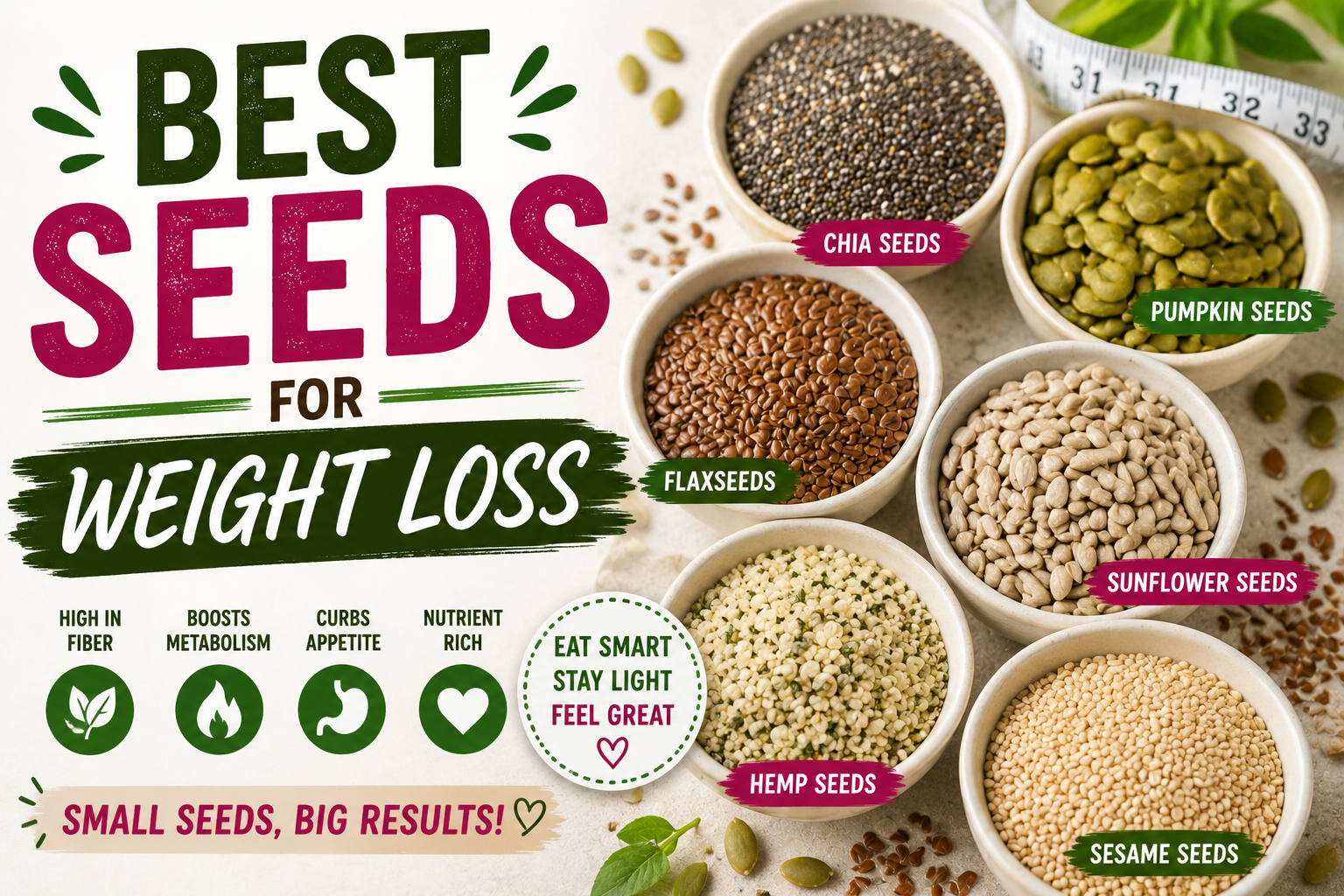
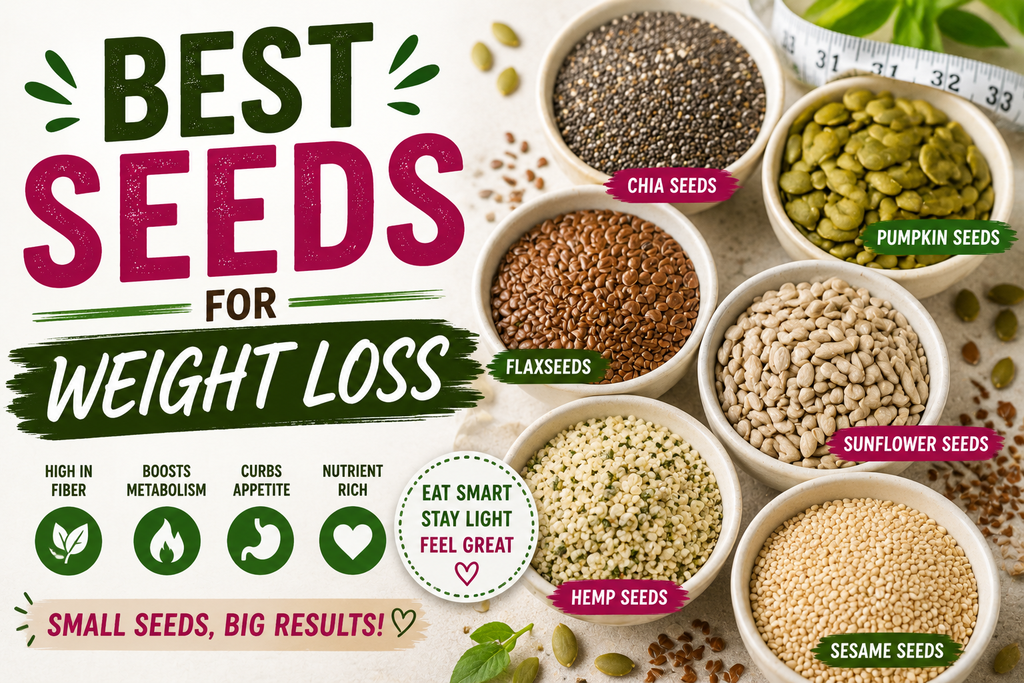
Some of the best seeds to consider include chia seeds, flaxseeds, pumpkin seeds, hemp seeds, sunflower seeds, sesame seeds, and several other varieties.
In this guide, we will explain the best seeds for weight loss, how they may help with fullness, how much to eat, how to add them to meals, and which seeds are highest in fiber or protein.
What Makes Seeds Good for Weight Loss?
Seeds can support a weight-loss eating pattern for several reasons.
1. They Provide Fiber
Fiber can help you feel full for longer and is an important part of a healthy diet.
Chia and flaxseeds are particularly useful sources of fiber. Harvard Health notes that a tablespoon of chia seeds provides about 4 grams of fiber, while a tablespoon of flaxseed provides about 3 grams.
Fiber can slow digestion and add bulk to meals.
Instead of eating a snack that disappears quickly, adding a fiber-rich seed to yogurt, oatmeal, or a smoothie can make the meal more substantial.
2. They Provide Protein
Protein is another nutrient that can help make meals satisfying.
Seeds vary considerably in protein content.
Pumpkin seeds and hemp seeds are particularly useful options for people looking to increase plant-based protein intake. Recent nutrition reporting notes that pumpkin seeds provide more than 8 grams of protein per ounce.
3. They Contain Healthy Fats
Seeds contain mostly unsaturated fats.
Healthy fats are important because they contribute to a balanced diet and can make meals more satisfying.
However, fat contains more calories per gram than protein or carbohydrates, so portion size matters.
4. They Add Nutrients Without Complicated Preparation
Most seeds require very little preparation.
You can sprinkle them over:
- Oatmeal
- Yogurt
- Salads
- Smoothies
- Soups
- Vegetables
- Whole-grain bowls
This makes them particularly convenient for busy people.
1. Chia Seeds
Why Chia Seeds Are One of the Best Seeds for Weight Loss
Chia seeds are one of the most popular seeds associated with weight management.
Their biggest nutritional advantage is their high fiber content.
They also provide:
- Plant-based protein
- ALA omega-3 fatty acids
- Minerals
- Antioxidants
When chia seeds come into contact with liquid, they absorb water and develop a gel-like consistency.
This makes them useful in foods such as:
- Chia pudding
- Overnight oats
- Yogurt
- Smoothies
Harvard Health lists chia as an especially good source of plant-based omega-3 and fiber.
How to Eat Chia Seeds for Weight Loss
Try adding:
1 tablespoon chia seeds + plain Greek yogurt + berries
or:
1 tablespoon chia seeds + oatmeal + cinnamon + blueberries
If you are not accustomed to eating much fiber, start with a smaller amount and increase gradually while maintaining adequate fluid intake.
Best Time to Eat Chia Seeds
There is no scientifically proven “magic” time.
Breakfast is simply a convenient option.
2. Flaxseeds
Flaxseeds are another excellent choice for people trying to improve the nutritional quality of their diet.
They provide:
- Fiber
- Plant-based protein
- ALA omega-3 fatty acids
- Lignans
- Unsaturated fats
The American Heart Association notes that flaxseeds provide fiber, plant protein, omega-3 fats, and other nutrients.
Ground Flaxseed vs. Whole Flaxseed
Ground flaxseed is often easier to incorporate into meals and allows you to access more of the seed’s nutrients than whole seeds that may pass through the digestive system relatively intact.
You can add ground flaxseed to:
- Oatmeal
- Smoothies
- Yogurt
- Whole-grain cereal
- Homemade energy bites
- Muffins
Simple Weight-Loss Combination
Greek yogurt + ground flaxseed + raspberries
This provides protein and fiber in a simple snack.
3. Pumpkin Seeds
Pumpkin seeds, also called pepitas when shelled, are particularly useful when protein is a priority.
They provide:
- Protein
- Healthy fats
- Magnesium
- Zinc
- Phosphorus
- Other minerals
Pumpkin seeds can be especially useful for people following vegetarian or plant-forward diets.
Are Pumpkin Seeds Good for Weight Loss?
They can be.
Their protein and fat content can make them satisfying, but they are also calorie-dense.
Therefore, don’t assume that eating unlimited pumpkin seeds will accelerate weight loss.
A measured serving is a much better approach.
Best Ways to Eat Pumpkin Seeds
Try them:
- On salads
- Over oatmeal
- In homemade trail mix
- With fruit
- On roasted vegetables
- In yogurt
Choose unsalted or lightly salted versions when possible.
4. Hemp Seeds
Hemp seeds are another excellent option, particularly for people who want more plant-based protein.
They provide:
- Protein
- Unsaturated fats
- ALA omega-3 fatty acids
- Magnesium
- Phosphorus
- Iron
- Zinc
Hemp seeds are softer than many other seeds and have a mild nutty flavor.
They can be added directly to food without complicated preparation.
Hemp Seeds for Weight Loss
Hemp seeds can help make meals more nutrient-dense and satisfying.
For example:
Oatmeal + hemp hearts + blueberries
or:
Greek yogurt + hemp hearts + strawberries
However, hemp seeds are not a fat-burning supplement.
Use them as a nutritious ingredient rather than consuming large quantities.
5. Sunflower Seeds
Sunflower seeds are a convenient snack and a good source of vitamin E, healthy fats, and several minerals.
They can be eaten:
- As a snack
- In salads
- In homemade trail mix
- On oatmeal
- In grain bowls
Are Sunflower Seeds Good for Weight Loss?
They can fit into a weight-loss diet when portions are controlled.
Recent nutrition coverage comparing pumpkin and sunflower seeds highlights that both can provide protein, fiber, and healthy fats, but both are also energy-dense.
Important Tip
Avoid heavily salted sunflower seeds if you’re trying to keep sodium intake lower.
Also be careful with flavored varieties because some may contain added oils, sugar, or other ingredients.
6. Sesame Seeds
Sesame seeds are another nutritious choice.
They provide:
- Healthy fats
- Protein
- Fiber
- Calcium
- Magnesium
- Iron
- Plant compounds such as lignans
You can sprinkle sesame seeds over:
- Stir-fried vegetables
- Salads
- Rice bowls
- Fish
- Chicken
- Whole-grain dishes
Sesame Seeds and Weight Management
Sesame seeds are not specifically proven to cause weight loss.
Their usefulness comes from helping you build nutrient-dense meals.
For example:
Vegetable stir-fry + tofu + brown rice + sesame seeds
can be a much more balanced meal than a highly processed snack.
7. Hemp Hearts
Hemp hearts are the shelled form of hemp seeds.
They have a soft texture and mild flavor, making them particularly easy to use.
They can be mixed into:
- Yogurt
- Oatmeal
- Smoothies
- Salads
- Soups
Hemp hearts are particularly notable for protein and healthy fats.
If your primary weight-loss goal is to increase protein intake, hemp hearts may be useful.
8. Pumpkin Seed Kernels
Pumpkin seed kernels are simply shelled pumpkin seeds.
They are especially convenient because you don’t need to remove the shell.
Use a small serving as:
- A snack
- Salad topping
- Oatmeal topping
- Soup garnish
Because pumpkin seeds are calorie-dense, measuring your portion can help prevent accidental overeating.
9. Sesame Seed Butter
Tahini is a paste made primarily from ground sesame seeds.
It can be a nutritious ingredient, but it is calorie-dense.
Instead of using large quantities, try a small amount in:
- Hummus
- Salad dressing
- Vegetable dips
- Whole-grain wraps
For weight loss, the goal is not necessarily to avoid calorie-dense foods completely. The goal is to use reasonable portions.
10. Sunflower Seed Butter
Sunflower seed butter can be an alternative to peanut or tree-nut butter.
Try it with:
- Apple slices
- Banana
- Whole-grain toast
- Oatmeal
Check the nutrition label for added sugar and oils.
Chia Seeds vs. Flaxseeds for Weight Loss
Both are excellent choices, but they have different strengths.
| Feature | Chia Seeds | Flaxseeds |
|---|---|---|
| Fiber | Very high | High |
| ALA omega-3 | High | High |
| Protein | Moderate | Moderate |
| Best form | Whole or soaked | Ground often preferred |
| Texture | Gel-like when soaked | Nutty |
| Best use | Pudding, yogurt, oats | Oats, smoothies, baking |
Chia and flax are both strong choices if fiber is your main priority.
Hemp Seeds vs. Chia Seeds
If you are choosing between hemp and chia, consider your main goal.
Choose Chia If:
You want more:
- Fiber
- ALA omega-3
- Gel-forming texture
Choose Hemp If:
You want more:
- Protein
- Healthy fats
- Minerals
You don’t have to choose only one.
Using small amounts of both can add nutritional variety.
Pumpkin Seeds vs. Sunflower Seeds
Both can fit into a weight-loss diet.
Pumpkin seeds are particularly useful for protein and minerals such as magnesium and zinc.
Sunflower seeds provide vitamin E and other nutrients.
A recent comparison found that pumpkin seeds offered slightly more protein per ounce, while sunflower seeds provided slightly more fiber.
The better choice ultimately depends on your overall diet and preferences.
What Is the Best Seed for Weight Loss?
There is no single seed that has been scientifically established as the universal “best” seed for weight loss.
If we compare their main nutritional strengths:
Best for Fiber
Chia seeds
Best for Ground Fiber + Omega-3
Flaxseeds
Best for Plant Protein
Hemp seeds and pumpkin seeds
Best for Vitamin E
Sunflower seeds
Best for Versatility in Savory Foods
Sesame seeds
Instead of searching for one magical seed, rotating several types may provide more nutritional variety.
Best Seed Mix for Weight Loss
You can create a simple seed mix using:
- Chia seeds
- Ground flaxseed
- Pumpkin seeds
- Hemp hearts
- Sunflower seeds
However, mixing five calorie-dense seeds together does not automatically make the mixture better for weight loss.
The important factor is the total amount you eat.
For example, instead of adding several large spoonfuls to every meal, use a small measured portion.
How Many Seeds Should You Eat for Weight Loss?
There is no single serving that works for everyone.
A practical starting point is approximately 1–2 tablespoons of seeds per meal or snack, depending on your overall calorie needs and what else you’re eating.
For some people, a smaller amount is appropriate.
Remember:
More seeds ≠ more weight loss.
Seeds contain healthy fats, but those fats still provide calories.
If you add several tablespoons of seeds to your normal diet without reducing anything else, you may increase total calorie intake.
Best Time to Eat Seeds for Weight Loss
There is no scientifically proven time when seeds burn more fat.
You can eat them:
- At breakfast
- Before lunch
- With lunch
- As an afternoon snack
- With dinner
The best time is the one that helps you create a sustainable eating routine.
Morning
Chia or flax can be added to oatmeal or yogurt.
Afternoon
Pumpkin seeds or sunflower seeds can replace chips or candy.
Evening
Greek yogurt with chia seeds can be a satisfying alternative to cookies or ice cream.
Best Breakfast With Seeds for Weight Loss
Try this simple breakfast:
Berry Chia Yogurt Bowl
Ingredients:
- Plain Greek yogurt
- 1 tablespoon chia seeds
- Blueberries
- Strawberries
- Cinnamon
Mix everything together.
This provides protein from yogurt and fiber from fruit and chia.
Best Smoothie With Seeds for Weight Loss
Try:
- Unsweetened milk
- Frozen berries
- Spinach
- Plain Greek yogurt
- 1 tablespoon ground flaxseed
Blend until smooth.
Avoid adding large amounts of honey, syrup, or fruit juice if you’re trying to keep calories under control.
Best Oatmeal With Seeds
Prepare plain oatmeal and add:
- 1 tablespoon chia seeds
- 1 tablespoon ground flaxseed
- Blueberries
- Cinnamon
For additional protein, add Greek yogurt on the side or mix it in after the oatmeal cools slightly.
Best Salad With Seeds
Create a large vegetable salad using:
- Mixed greens
- Cucumber
- Tomatoes
- Bell peppers
- Carrots
- Chickpeas
- Pumpkin seeds
Use lemon juice and a moderate amount of olive oil as dressing.
This can provide fiber, protein, healthy fats, and plenty of vegetables.
Seeds as a Replacement for Unhealthy Snacks
One of the smartest ways to use seeds for weight loss is to replace less nutritious snacks rather than simply adding seeds to your existing diet.
For example:
Instead of:
Potato chips
Try:
A measured serving of pumpkin seeds.
Instead of:
Candy
Try:
Greek yogurt with chia seeds and berries.
Instead of:
Cookies
Try:
Apple slices with a small amount of sunflower seed butter.
Instead of:
Sugary cereal
Try:
Oatmeal with ground flaxseed and berries.
The replacement strategy is important because simply adding calorie-dense seeds to your existing diet may not help you lose weight.
Are Seeds Good for Belly Fat?
Seeds cannot specifically target belly fat.
There is no food that selectively causes your body to burn fat from one particular area.
Reducing abdominal fat generally requires reducing overall excess body fat through a sustainable combination of:
- Appropriate calorie intake
- Nutritious foods
- Physical activity
- Adequate protein
- Sleep
- Long-term consistency
Seeds can be one component of that approach.
Do Seeds Burn Fat?
No seed should be described as a guaranteed fat burner.
Chia, flax, pumpkin, hemp, sunflower, and sesame seeds can provide nutrients that support a healthy eating pattern, but they do not directly melt body fat.
This distinction is important because many weight-loss products use exaggerated claims.
A better way to think about seeds is:
Seeds can help you build filling, nutrient-dense meals.
They are not a magic weight-loss supplement.
Common Mistakes When Eating Seeds for Weight Loss
Mistake 1: Eating Too Many
Seeds are small, so it is easy to underestimate their calories.
Measure your serving.
Mistake 2: Choosing Sugary Seed Products
Granola and trail mixes containing seeds can sometimes contain significant added sugar.
Read the label.
Mistake 3: Buying Heavily Salted Seeds
Salted seeds can add a lot of sodium.
Choose unsalted or lightly salted varieties when possible.
Mistake 4: Adding Seeds Without Removing Anything
If you add several hundred calories of seeds to your usual diet, you may not lose weight.
Use them to replace less nutritious foods or make existing meals more satisfying.
Mistake 5: Expecting Fast Results
Seeds are foods, not weight-loss drugs.
Sustainable weight loss usually requires consistent changes over time.
Are Roasted Seeds Good for Weight Loss?
Roasted seeds can fit into a healthy diet.
The main issue is how they are prepared.
Choose varieties that are:
- Dry roasted
- Lightly salted
- Unsweetened
- Free from excessive added oils
Some flavored seed products can contain significantly more calories, sodium, or sugar.
Are Soaked Seeds Better for Weight Loss?
Soaking does not magically increase the fat-burning properties of seeds.
However, soaking chia seeds changes their texture and makes them easier to incorporate into foods such as puddings and overnight oats.
Flaxseeds are often consumed ground.
Pumpkin, sunflower, and hemp seeds generally do not require soaking for ordinary culinary use.
Best Seeds for Weight Loss and Constipation
If constipation is also a concern, fiber-rich seeds may be useful.
Chia and flax are particularly notable for fiber.
But increase fiber gradually and drink enough fluids.
A diet that suddenly jumps from very little fiber to very high fiber can cause:
- Gas
- Bloating
- Abdominal discomfort
Best Seeds for a High-Protein Weight-Loss Diet
If protein is your priority, consider:
- Hemp seeds
- Pumpkin seeds
- Sunflower seeds
- Flaxseeds
- Chia seeds
Hemp and pumpkin seeds are especially useful options for plant-based protein.
However, seeds should complement other protein foods such as:
- Greek yogurt
- Eggs
- Fish
- Chicken
- Beans
- Lentils
- Tofu
- Cottage cheese
7-Day Seed-Based Snack Plan for Weight Loss
Day 1
Snack: Greek yogurt + chia seeds + blueberries
Day 2
Snack: Apple + small serving of almonds
Day 3
Snack: Pumpkin seeds + orange
Day 4
Snack: Cottage cheese + strawberries + ground flaxseed
Day 5
Snack: Carrots + hummus + sesame seeds
Day 6
Snack: Edamame + pumpkin seeds
Day 7
Snack: Plain yogurt + hemp hearts + raspberries
The goal is variety rather than eating the same seed every day.
Grocery Shopping List for Weight Loss Seeds
When shopping in U.S. grocery stores, look for:
Seeds
- Chia seeds
- Ground flaxseed
- Pumpkin seeds
- Hemp hearts
- Sunflower seeds
- Sesame seeds
Pair Them With
- Plain Greek yogurt
- Berries
- Apples
- Oranges
- Oatmeal
- Vegetables
- Hummus
- Cottage cheese
- Whole-grain crackers
Look for products with minimal added sugar and reasonable sodium.
How to Store Seeds
Seeds contain unsaturated fats and can eventually become rancid.
For best quality:
- Keep packages tightly sealed.
- Store them away from heat and sunlight.
- Follow package instructions.
- Refrigerate or freeze seeds when recommended, especially ground flaxseed.
- Check for changes in smell or taste.
Ground flaxseed generally has a shorter shelf life than whole flaxseed because more of the seed’s interior is exposed to oxygen.
Who Should Be Careful With Seeds?
Most people can enjoy seeds as ordinary foods, but individual circumstances vary.
People with:
- Seed allergies
- Certain digestive conditions
- Difficulty swallowing
- Specific medical conditions
- Medication-related dietary restrictions
may need individualized advice.
If you have a medical condition or take medications and want to make major dietary changes, speak with a qualified healthcare professional.
Frequently Asked Questions
What are the best seeds for weight loss?
Chia, flax, pumpkin, hemp, sunflower, and sesame seeds can all fit into a weight-loss diet. Chia and flax are especially useful for fiber, while hemp and pumpkin seeds are useful sources of plant protein.
Which seed burns the most belly fat?
None. Seeds do not selectively burn belly fat. They can support an overall calorie-controlled diet but cannot target a specific body area.
Can I eat seeds every day?
Yes, many people can include moderate portions of seeds every day as part of a balanced diet.
How many tablespoons of seeds should I eat for weight loss?
A practical starting point is around 1–2 tablespoons at a time, depending on the type of seed and your overall calorie needs.
Which is better for weight loss, chia or flax?
Both are excellent. Chia is particularly rich in fiber, while flax provides fiber, ALA omega-3 fats, and lignans.
Are pumpkin seeds good for losing weight?
Yes, they can fit into a weight-loss diet because they provide protein and healthy fats. However, their calorie density makes portion control important.
Are hemp seeds good for weight loss?
Hemp seeds can add protein and healthy fats to meals and may make them more satisfying. They should still be consumed in moderate portions.
Can I eat sunflower seeds while losing weight?
Yes. Choose unsalted or lightly salted varieties and measure your portion because sunflower seeds are calorie-dense.
Should I eat seeds at night?
You can. There is no special rule requiring seeds to be eaten in the morning. A small portion of chia or flax in yogurt can be a reasonable evening snack.
Do seeds reduce hunger?
Fiber and protein can contribute to fullness, so seeds may help some people manage hunger when incorporated into balanced meals. However, individual responses vary.
Can seeds replace meals?
Seeds should generally be viewed as an ingredient or snack rather than a complete meal. Combine them with protein, vegetables, fruits, or whole grains for a more balanced meal.
Final Thoughts: Best Seeds for Weight Loss
The best seeds for weight loss are not necessarily the ones with the most dramatic marketing claims.
Instead, look for seeds that provide useful amounts of fiber, protein, healthy fats, and micronutrients and that you can realistically include in your normal diet.
The strongest options include:
- Chia seeds for fiber and ALA omega-3
- Flaxseeds for fiber, ALA omega-3, and lignans
- Pumpkin seeds for plant protein and minerals
- Hemp seeds for plant protein and healthy fats
- Sunflower seeds for vitamin E and healthy fats
- Sesame seeds for healthy fats and minerals
Harvard Health and other nutrition resources emphasize that seeds are nutrient-dense but also relatively calorie-dense, making portion control an important part of using them for weight management.
The most effective strategy is to use seeds as replacements for less nutritious snacks or as measured additions to filling meals, rather than simply adding unlimited amounts to your diet.
For example, replace chips with pumpkin seeds, add chia to Greek yogurt, mix ground flax into oatmeal, or sprinkle hemp hearts over a salad.
And remember: no single seed causes weight loss by itself. Sustainable weight management comes from your overall eating pattern, activity level, sleep, and long-term consistency.
Suggested Article’s:
- Chia Seed Benefits
- Flaxseed Benefits
- Pumpkin Seed Benefits
- Sunflower Seed Benefits
- Sesame Seed Benefits
- Hemp Seed Benefits
- Best Nuts for Daily Eating
- Mixed Nuts Benefits
- Healthy Snacks for Weight Loss in the USA

Leave a Reply