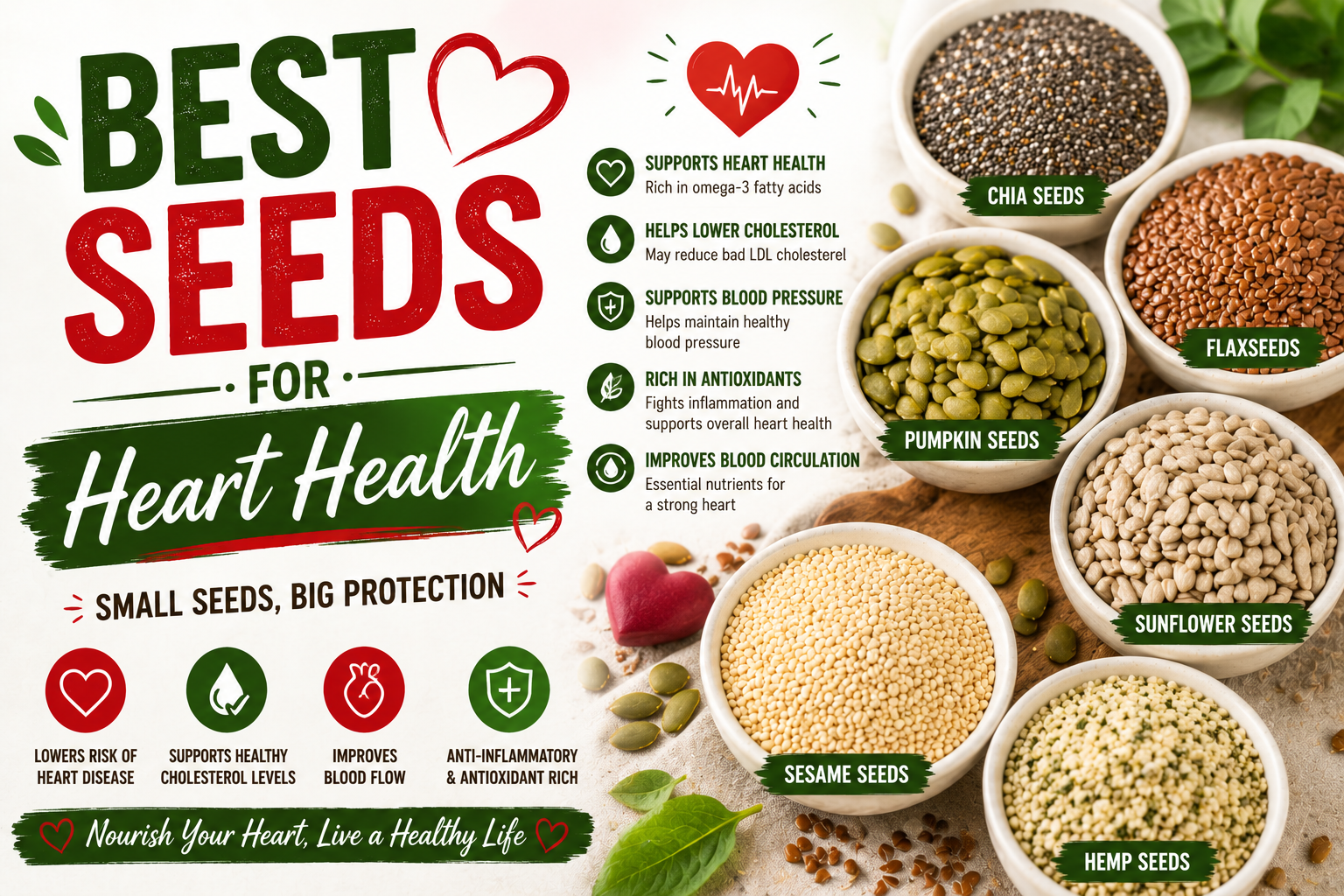
Your heart works continuously to keep blood circulating throughout your body, which makes taking care of cardiovascular health an important part of a healthy lifestyle. Along with regular physical activity, adequate sleep, stress management, and not smoking, your everyday food choices can play an important role in supporting heart health.
Seeds are small foods, but many varieties contain an impressive combination of fiber, unsaturated fats, plant-based protein, minerals, and other beneficial plant compounds. Adding different seeds to a balanced eating pattern can be an easy way to increase the nutritional quality of meals.
Some of the best seeds for heart health include flaxseeds, chia seeds, pumpkin seeds, sunflower seeds, hemp seeds, sesame seeds, and several other varieties. Flax and chia are particularly interesting because they provide alpha-linolenic acid (ALA), a plant-based omega-3 fatty acid. Other seeds provide nutrients such as magnesium, fiber, protein, and unsaturated fats.
However, it is important to understand that no individual food can guarantee protection from heart disease. Seeds work best as part of an overall heart-healthy dietary pattern.
In this article, we’ll look at the best seeds for heart health, their nutritional benefits, how to eat them, how much to use, and simple ways to add them to your daily meals.
What Makes Seeds Good for Heart Health?
Different seeds contain different nutrients, but several characteristics make them useful additions to a heart-conscious diet.
1. Seeds Provide Unsaturated Fats
Many seeds contain predominantly unsaturated fats.
Replacing some foods high in saturated fat with foods containing unsaturated fats can be part of a heart-healthy dietary pattern.
This is one reason seeds can be useful alternatives to highly processed snack foods.
For example, instead of reaching for a pastry or fried snack, you could use a small portion of pumpkin seeds, sunflower seeds, or walnuts alongside fruit.
2. Seeds Can Provide Dietary Fiber
Fiber is another important nutritional feature of several seeds.
Chia and flaxseeds are particularly rich in fiber.
Fiber can contribute to digestive health and may also support healthy cholesterol levels as part of an overall healthy eating pattern.
The American Heart Association recommends getting dietary fiber from foods such as fruits, vegetables, whole grains, legumes, nuts, and seeds.
3. Seeds Provide Plant-Based Protein
Seeds can contribute protein to your diet.
Protein is important for maintaining muscles and supporting many normal functions in the body.
Some seeds, particularly pumpkin and hemp seeds, can make useful contributions to daily protein intake.
They can be combined with other plant proteins such as:
- Beans
- Lentils
- Chickpeas
- Tofu
- Edamame
to create balanced meals.
4. Seeds Contain Important Minerals
Different seeds provide different micronutrients.
Depending on the variety, seeds can contribute:
- Magnesium
- Zinc
- Calcium
- Iron
- Phosphorus
- Copper
- Selenium
Magnesium, for example, is involved in many processes throughout the body, including normal muscle and nerve function.
5. Seeds Contain Plant Compounds
Some seeds contain naturally occurring plant compounds such as lignans and other antioxidants.
Flaxseeds and sesame seeds are particularly notable for their lignan content.
These compounds are one reason researchers continue to study seeds as part of healthy dietary patterns.
1. Flaxseeds
One of the Best Seeds for Heart Health
Flaxseeds are often considered one of the most interesting seeds for cardiovascular nutrition.
They contain:
- ALA omega-3 fatty acids
- Dietary fiber
- Plant protein
- Lignans
- Magnesium
- Other nutrients
The American Heart Association notes that flaxseed provides fiber, plant protein, omega-3 fats, and other nutrients.
Why Flaxseeds Are Interesting
ALA is an essential omega-3 fatty acid that must come from the diet because the body cannot produce it on its own.
The body can convert ALA into the longer-chain omega-3 fatty acids EPA and DHA, although the conversion is limited.
This means flaxseed can be useful as one plant-based source of omega-3 fat, but it does not provide EPA and DHA in the same way fatty fish does.
Ground Flaxseed vs. Whole Flaxseed
Ground flaxseed is generally easier to incorporate into foods.
Whole flaxseeds have a tough outer layer, and grinding them makes their nutrients more accessible during digestion.
Try adding ground flaxseed to:
- Oatmeal
- Greek yogurt
- Smoothies
- Whole-grain cereal
- Homemade muffins
- Overnight oats
Simple Heart-Healthy Combination
Oatmeal + ground flaxseed + blueberries + cinnamon
This combination provides fiber from oats and flaxseed along with fruit and other nutrients.
2. Chia Seeds
Chia seeds are another excellent option for a heart-conscious eating pattern.
They provide:
- Fiber
- ALA omega-3 fatty acids
- Protein
- Calcium
- Magnesium
- Other minerals
Chia seeds are particularly rich in dietary fiber.
When exposed to liquid, chia seeds absorb water and form a gel-like texture.
This makes them useful for:
- Chia pudding
- Overnight oats
- Smoothies
- Yogurt
- Homemade breakfast bowls
Chia Seeds and Cholesterol
Because chia seeds provide substantial fiber and unsaturated fats, they can fit into an eating pattern designed to support healthy cholesterol levels.
However, chia seeds should not be viewed as a cholesterol-lowering treatment.
Your overall diet matters much more than one ingredient.
Easy Chia Breakfast
Mix:
- Plain Greek yogurt
- 1 tablespoon chia seeds
- Blueberries
- Strawberries
- Cinnamon
This creates a nutrient-dense breakfast or snack.
3. Pumpkin Seeds
Pumpkin seeds are a flavorful source of plant-based protein, unsaturated fats, magnesium, zinc, and other nutrients.
They can be particularly useful for people who prefer savory snacks.
Try adding pumpkin seeds to:
- Salads
- Oatmeal
- Soups
- Grain bowls
- Roasted vegetables
- Homemade trail mix
Are Pumpkin Seeds Good for the Heart?
Pumpkin seeds can fit well into a heart-healthy eating pattern.
Their unsaturated fats and mineral content make them nutritionally valuable.
However, pumpkin seeds are energy-dense, so eating large quantities can add significant calories.
A small, measured serving is usually a more practical approach.
Choose Unsalted When Possible
Many packaged pumpkin seeds contain added sodium.
If you’re trying to reduce sodium intake, choose:
Unsalted or lightly salted pumpkin seeds.
This is particularly useful because excess sodium intake can contribute to higher blood pressure in salt-sensitive individuals.
4. Sunflower Seeds
Sunflower seeds are another nutrient-dense option.
They contain:
- Unsaturated fats
- Vitamin E
- Protein
- Fiber
- Magnesium
- Selenium
- Other nutrients
Vitamin E acts as an antioxidant in the body.
Sunflower seeds can be eaten as a snack or added to meals.
Try Them On:
- Salads
- Oatmeal
- Yogurt
- Whole-grain bowls
- Vegetables
Heart-Healthy Tip
Choose plain, unsalted, or lightly salted sunflower seeds.
Flavored varieties can contain additional sodium, oils, or other ingredients.
5. Hemp Seeds
Hemp seeds have become increasingly popular because of their protein content and mild nutty flavor.
They provide:
- Plant-based protein
- Unsaturated fats
- ALA omega-3 fatty acids
- Magnesium
- Phosphorus
- Iron
- Zinc
Hemp hearts are the shelled version and have a soft texture.
You can easily sprinkle them over:
- Oatmeal
- Yogurt
- Salads
- Smoothies
- Soups
Hemp Seeds for Heart Health
Hemp seeds can contribute healthy unsaturated fats and plant protein to your diet.
They are especially useful for people following vegetarian or plant-forward diets.
Again, they should be considered one component of a healthy diet rather than a treatment for cardiovascular disease.
6. Sesame Seeds
Sesame seeds are widely used in cuisines around the world.
They contain:
- Unsaturated fats
- Protein
- Fiber
- Calcium
- Magnesium
- Iron
- Plant compounds including lignans
You can use sesame seeds in both savory and sweet dishes.
Easy Ways to Eat Sesame Seeds
Sprinkle them over:
- Stir-fried vegetables
- Brown rice
- Fish
- Chicken
- Tofu
- Salads
- Whole-grain bowls
Sesame seeds can also be ground into tahini.
7. Pumpkin Seed Butter
Pumpkin seed butter is another way to incorporate pumpkin seeds into your diet.
It can be used similarly to nut butter.
Try it with:
- Apples
- Pears
- Whole-grain toast
- Oatmeal
- Smoothies
However, check the ingredient list.
Ideally, choose products with simple ingredients and limited added sugar and sodium.
Because seed butter is calorie-dense, portion size still matters.
8. Tahini
Tahini is a creamy paste made from ground sesame seeds.
It provides:
- Unsaturated fats
- Protein
- Minerals
- Sesame lignans
Tahini is commonly used in hummus and salad dressings.
Heart-Friendly Tahini Dressing
Combine:
- Tahini
- Lemon juice
- Water
- Garlic
- Black pepper
Use a moderate amount over a large vegetable salad.
This can be a flavorful alternative to heavy creamy dressings.
9. Poppy Seeds
Poppy seeds are small but can contribute minerals and healthy fats to the diet.
They can be sprinkled over:
- Whole-grain bread
- Salads
- Yogurt
- Oatmeal
- Homemade baked goods
Because they are normally eaten in small quantities, they should be considered more of a nutritional addition than a major source of heart-health nutrients.
10. Quinoa Seeds
Quinoa is technically a seed rather than a traditional grain.
It provides:
- Plant protein
- Fiber
- Magnesium
- Iron
- Other nutrients
Quinoa can be used as a base for a heart-conscious meal.
Try combining cooked quinoa with:
- Black beans
- Spinach
- Tomatoes
- Avocado
- Pumpkin seeds
This creates a filling plant-forward bowl.
Flaxseed vs. Chia Seeds for Heart Health
Both flax and chia are excellent choices.
| Nutrient/Feature | Flaxseed | Chia Seeds |
|---|---|---|
| ALA omega-3 | High | High |
| Fiber | High | Very high |
| Protein | Moderate | Moderate |
| Lignans | Particularly notable | Lower |
| Best form | Ground | Whole/soaked |
| Easy uses | Oatmeal, smoothies | Yogurt, pudding, oats |
There is no requirement to choose only one.
Using both can add nutritional variety.
Best Seeds for Cholesterol
If you’re specifically interested in seeds as part of a diet designed to support healthy cholesterol levels, consider:
1. Flaxseeds
Their combination of fiber, ALA, and plant compounds makes them particularly interesting.
2. Chia Seeds
Their high fiber content makes them another useful option.
3. Sesame Seeds
They provide unsaturated fats, fiber, and lignans.
4. Pumpkin Seeds
They provide unsaturated fats, protein, and minerals.
5. Sunflower Seeds
They provide unsaturated fats, vitamin E, and other nutrients.
But remember that your overall dietary pattern matters more than one seed.
Best Seeds for Blood Pressure
Seeds can be part of a healthy dietary pattern designed to support normal blood pressure.
Some seeds provide minerals such as magnesium and potassium, depending on the variety.
However, one of the most important considerations when choosing packaged seeds is sodium.
A large amount of salted seeds can contribute substantial sodium to your diet.
Better Choices
Choose:
- Unsalted pumpkin seeds
- Unsalted sunflower seeds
- Plain chia seeds
- Plain flaxseed
- Plain hemp hearts
- Unsalted sesame seeds
Best Seeds for a Heart-Healthy Breakfast
Breakfast is one of the easiest meals for adding seeds.
Option 1: Flax Oatmeal
Combine:
- Oatmeal
- Ground flaxseed
- Blueberries
- Cinnamon
- Plain Greek yogurt
Option 2: Chia Yogurt Bowl
Combine:
- Plain Greek yogurt
- Chia seeds
- Strawberries
- Blueberries
- A small amount of chopped nuts
Option 3: Hemp Smoothie
Blend:
- Unsweetened milk
- Berries
- Spinach
- Plain yogurt
- Hemp hearts
These combinations provide different nutrients while keeping preparation simple.
Best Seeds to Add to Salads
Seeds can turn an ordinary salad into a more satisfying meal.
Try:
Mixed greens + cucumber + tomatoes + chickpeas + pumpkin seeds
or:
Spinach + strawberries + sunflower seeds + grilled chicken
or:
Kale + quinoa + hemp hearts + vegetables
Instead of a heavy creamy dressing, consider a simple olive-oil-and-lemon dressing.
Best Seeds for a Heart-Healthy Snack
A snack can be as simple as:
Option 1
Apple + small serving of pumpkin seeds
Option 2
Greek yogurt + chia seeds + berries
Option 3
Pear + sunflower seed butter
Option 4
Carrots + hummus + sesame seeds
Option 5
Whole-grain crackers + hummus + pumpkin seeds
The goal is to combine seeds with other nutrient-dense foods rather than relying on seeds alone.
How Much Seeds Should You Eat?
There is no universal amount that everyone should consume.
A practical portion for many people is around 1–2 tablespoons for smaller seeds or a small handful for larger seeds, depending on the type and your overall calorie needs.
Remember that seeds are nutrient-dense but also relatively high in calories.
Eating large amounts because a food is “healthy” can still make it harder to manage calorie intake.
A useful strategy is to measure your portion rather than eating directly from a large package.
Can You Eat Seeds Every Day?
For most people, seeds can be included regularly as part of a varied diet.
You don’t need to eat every type of seed every day.
Instead, rotate them.
For example:
Monday: Chia
Tuesday: Flax
Wednesday: Pumpkin
Thursday: Hemp
Friday: Sunflower
Saturday: Sesame
Sunday: Chia + flax
This approach provides variety.
Best Way to Eat Flaxseed for Heart Health
If you use flaxseed, ground flaxseed is generally easier to incorporate into meals.
Try adding one tablespoon to:
- Oatmeal
- Smoothies
- Yogurt
- Whole-grain cereal
- Homemade energy bites
Store ground flaxseed according to package instructions and consider refrigeration if recommended.
Best Way to Eat Chia Seeds
Chia can be eaten whole, but many people prefer soaking it.
Simple Chia Pudding
Mix:
- Chia seeds
- Unsweetened milk
- Cinnamon
- Berries
Refrigerate until thick.
This makes an easy breakfast or snack.
If you’re increasing your fiber intake significantly, do so gradually and drink enough fluids.
Are Roasted Seeds Healthy for the Heart?
Roasted seeds can absolutely fit into a healthy diet.
The issue is often what is added during processing.
Look for:
- Dry-roasted options
- Unsalted varieties
- Lightly salted varieties
- Minimal added oils
- No added sugar
Avoid assuming that every flavored seed product is equally healthy.
Always check the nutrition label.
Are Salted Seeds Good for Heart Health?
Seeds themselves may be nutritious, but heavily salted versions can contain a lot of sodium.
For people trying to manage sodium intake, unsalted or lightly salted seeds are usually the better choice.
You can add flavor yourself with:
- Lemon
- Black pepper
- Garlic powder
- Paprika
- Chili powder
- Herbs
This gives you more control over the final dish.
Seeds vs. Nuts for Heart Health
Both nuts and seeds can fit into a heart-healthy diet.
Seeds
Excellent options include:
- Chia
- Flax
- Pumpkin
- Hemp
- Sunflower
- Sesame
Nuts
Useful options include:
- Almonds
- Walnuts
- Pistachios
- Pecans
- Peanuts
Instead of choosing only one category, you can include both.
For example:
Greek yogurt + berries + chia seeds + chopped walnuts
provides variety from both seeds and nuts.
Heart-Healthy Seed Mix
You can create your own seed mix using:
- Chia seeds
- Ground flaxseed
- Pumpkin seeds
- Hemp hearts
- Sunflower seeds
However, portion control remains important.
A seed mix can become very calorie-dense if you eat several large handfuls throughout the day.
Use a measured amount as a topping or snack.
7-Day Heart-Healthy Seed Meal Plan
Day 1
Breakfast: Oatmeal + ground flaxseed + blueberries
Snack: Apple + pumpkin seeds
Day 2
Breakfast: Greek yogurt + chia + strawberries
Snack: Carrots + hummus + sesame seeds
Day 3
Breakfast: Berry smoothie + hemp hearts
Snack: Orange + sunflower seeds
Day 4
Breakfast: Overnight oats + chia + raspberries
Snack: Pear + small amount of seed butter
Day 5
Breakfast: Whole-grain toast + avocado + sesame seeds
Snack: Greek yogurt + ground flaxseed
Day 6
Breakfast: Quinoa breakfast bowl + berries + chia
Snack: Small serving of pumpkin seeds
Day 7
Breakfast: Oatmeal + flaxseed + banana
Snack: Hummus + vegetables + sesame seeds
This type of meal plan emphasizes variety rather than depending on one “superfood.”
Common Mistakes When Eating Seeds for Heart Health
Mistake 1: Eating Too Much
Seeds are nutritious but calorie-dense.
Large portions can add many calories.
Mistake 2: Choosing Heavily Salted Seeds
Excess sodium can be an issue for people trying to manage blood pressure.
Choose unsalted versions when appropriate.
Mistake 3: Buying Sugary Seed Mixes
Some trail mixes contain:
- Added sugar
- Chocolate
- Candy
- Sweetened dried fruit
These can turn a healthy-looking snack into a high-calorie product.
Mistake 4: Treating Seeds as Medicine
Seeds can support a healthy dietary pattern, but they should not replace prescribed medications or medical treatment.
Mistake 5: Focusing on One Food
Heart health depends on your overall lifestyle.
Eating chia seeds every day does not compensate for an otherwise poor diet.
Heart-Healthy Foods to Eat With Seeds
Seeds work particularly well with other nutrient-dense foods.
Consider combining them with:
Fruits
- Berries
- Apples
- Oranges
- Pears
- Bananas
Vegetables
- Spinach
- Broccoli
- Carrots
- Tomatoes
- Bell peppers
Whole Grains
- Oats
- Brown rice
- Barley
- Quinoa
- Whole-grain bread
Protein Foods
- Beans
- Lentils
- Fish
- Chicken
- Tofu
- Greek yogurt
Healthy Fats
- Avocado
- Olive oil
- Nuts
This broader dietary pattern is more important than any individual seed.
Can Seeds Lower Cholesterol?
Some seeds, particularly flaxseed, have been studied for their potential effects on cholesterol levels.
Their fiber and unsaturated fat content may make them useful components of a heart-conscious diet.
However, results can vary depending on the type of seed, amount consumed, and the person’s overall diet.
If you have high cholesterol, do not stop prescribed medication because you have started eating seeds.
Instead, discuss dietary changes with your healthcare professional.
Can Seeds Help With Blood Pressure?
Seeds can be part of a dietary pattern that supports healthy blood pressure.
Their nutrients may contribute to overall nutritional quality.
However, seeds alone are not a treatment for hypertension.
If you have high blood pressure, pay attention to your total dietary sodium, physical activity, weight management if appropriate, alcohol intake, sleep, and prescribed treatment.
Are Seeds Good for Heart Health and Weight Management?
Many people want to support both heart health and healthy weight.
Seeds can fit into both goals.
Their fiber, protein, and healthy fats can make meals satisfying.
But because seeds are calorie-dense, portion control remains important.
A useful approach is:
Use seeds as a topping, ingredient, or measured snack—not as an unlimited food.
Frequently Asked Questions
What are the best seeds for heart health?
Flaxseeds, chia seeds, pumpkin seeds, sunflower seeds, hemp seeds, and sesame seeds are among the most useful options to include in a heart-healthy eating pattern.
Which seed is best for cholesterol?
Flaxseed is particularly well studied because it provides fiber, ALA omega-3 fatty acids, and lignans. However, no single seed should be considered a cholesterol treatment.
Are chia seeds good for your heart?
Chia seeds provide fiber, ALA omega-3 fats, protein, and minerals, making them a nutritious addition to a balanced diet.
Are flaxseeds better than chia seeds?
Neither is universally better. Flaxseed is particularly notable for ALA, fiber, and lignans, while chia provides substantial fiber and ALA.
Are pumpkin seeds heart healthy?
Pumpkin seeds can fit into a heart-healthy diet because they provide unsaturated fats, protein, magnesium, and other nutrients. Choose unsalted varieties when possible.
Are sunflower seeds good for your heart?
Sunflower seeds provide unsaturated fats, vitamin E, protein, and minerals. Choose unsalted or lightly salted varieties if you are monitoring sodium.
Can I eat seeds every day?
For most people, moderate portions of seeds can be included regularly as part of a varied, balanced diet.
How much seeds should I eat daily?
There is no single requirement for everyone. A moderate portion, such as 1–2 tablespoons depending on the seed, can be a practical starting point.
Are salted seeds bad for the heart?
The seeds themselves can be nutritious, but heavily salted varieties may contain substantial sodium. If you’re limiting sodium, choose unsalted or lightly salted versions.
Do seeds unclog arteries?
No. Seeds should not be described as foods that “unclog” arteries. They can contribute to a heart-healthy diet, but they do not physically remove arterial plaque.
Do seeds lower blood pressure?
Seeds can be part of an overall healthy dietary pattern, but they should not be considered a standalone treatment for high blood pressure.
Final Thoughts
Adding seeds to your diet can be a simple way to increase your intake of fiber, plant-based protein, unsaturated fats, minerals, and other beneficial nutrients.
Among the best options are:
- Flaxseeds — especially notable for ALA omega-3, fiber, and lignans
- Chia seeds — excellent source of fiber and ALA
- Pumpkin seeds — useful source of protein, magnesium, and unsaturated fats
- Sunflower seeds — provide vitamin E and unsaturated fats
- Hemp seeds — provide plant protein and unsaturated fats
- Sesame seeds — provide healthy fats, minerals, and lignans
- Poppy seeds — useful in small culinary amounts
- Quinoa — a nutritious seed that can replace refined grains in meals
The most important point is that heart health is about the whole dietary pattern, not one superfood.
A diet rich in vegetables, fruits, whole grains, legumes, fish or other healthy protein sources, nuts, seeds, and unsaturated fats is generally a much stronger strategy than relying on a single ingredient.
For everyday use, try sprinkling ground flaxseed into oatmeal, adding chia seeds to yogurt, topping salads with pumpkin seeds, using hemp hearts in smoothies, or adding sesame seeds to vegetables.
And remember: seeds are nutritious, but they are also energy-dense. Moderate portions can help you enjoy their nutritional benefits without unnecessarily increasing your overall calorie intake.
If you have high cholesterol, high blood pressure, cardiovascular disease, diabetes, or take medications that affect your diet, discuss significant dietary changes with your healthcare professional.
Suggested Article’s:
- Chia Seed Benefits
- Flaxseed Benefits
- Pumpkin Seed Benefits
- Sunflower Seed Benefits
- Sesame Seed Benefits
- Hemp Seed Benefits
- Best Seeds for Weight Loss
- Mixed Nuts Benefits
- Best Nuts for Daily Eating



Leave a Reply