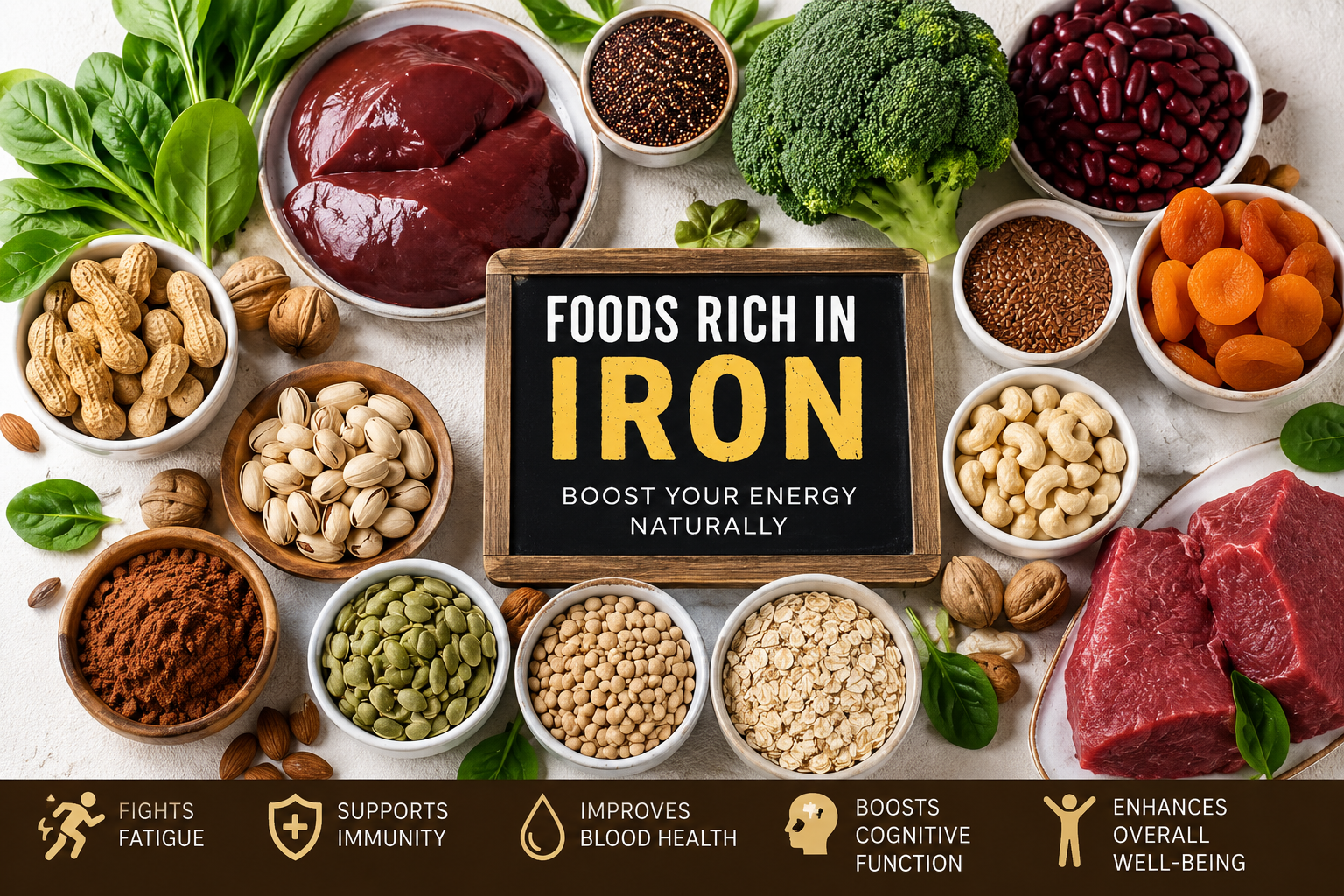
Iron is an essential mineral that your body needs to stay healthy. It is best known for its role in making hemoglobin, a protein in red blood cells that carries oxygen from your lungs to tissues throughout your body. Iron is also involved in energy metabolism, normal cellular function, and other important biological processes.
Because your body cannot make iron on its own, you need to obtain it from food. Fortunately, there are plenty of options, including seafood, meat, poultry, beans, lentils, nuts, seeds, vegetables, whole grains, and fortified foods.
In this guide, we’ll explore the best foods rich in iron, explain the difference between heme and non-heme iron, and show you practical ways to include more iron-containing foods in your everyday meals.
Important: This article provides general nutrition information and isn’t intended to diagnose or treat iron deficiency or anemia. If you suspect you have low iron, speak with a qualified healthcare professional before taking an iron supplement.
What Is Iron?
Iron is a mineral that plays several important roles in the body.
One of its most important functions is helping your body produce hemoglobin, which allows red blood cells to transport oxygen.
Iron is also involved in:
- Oxygen transport
- Normal energy metabolism
- Cellular function
- Growth and development
- Production of certain hormones and proteins
When your body doesn’t get enough iron over time, iron stores can become depleted. Severe or prolonged deficiency can eventually lead to iron-deficiency anemia.
How Much Iron Do You Need Every Day?
Iron requirements vary considerably depending on age, sex, and life stage.
According to the National Institutes of Health, recommended amounts for adults include:
- Adult men ages 19–50: 8 mg per day
- Adult women ages 19–50: 18 mg per day
- Adults 51 and older: 8 mg per day
- Pregnancy: 27 mg per day
- Breastfeeding: 9–10 mg per day, depending on age
Women of reproductive age generally have higher requirements because of menstrual blood loss.
These numbers are dietary recommendations, not targets that everyone needs to calculate meal by meal.
Heme vs. Non-Heme Iron: What’s the Difference?
Iron in food comes in two primary forms.
Heme Iron
Heme iron is found mainly in animal foods.
Examples include:
- Beef
- Liver
- Oysters
- Sardines
- Other seafood
- Poultry
The body generally absorbs heme iron more efficiently than non-heme iron.
Non-Heme Iron
Non-heme iron is found primarily in plant foods and fortified foods.
Examples include:
- Lentils
- Beans
- Chickpeas
- Spinach
- Pumpkin seeds
- Sesame seeds
- Nuts
- Whole grains
- Fortified cereals
Vegetarian and vegan diets can provide iron, but because plant-based iron is less readily absorbed, food choices and meal combinations can be especially important.
30 Best Foods Rich in Iron
Let’s look at some of the most useful iron-containing foods you can add to your diet.
1. Oysters


Oysters are one of the most nutrient-dense seafood choices and provide iron along with protein, zinc, vitamin B12, and other nutrients.
They contain heme iron, which is generally more readily absorbed than the non-heme iron found in plant foods.
Oysters can be served:
- Grilled
- Baked
- Steamed
- Added to seafood dishes
If you don’t regularly eat shellfish, you can obtain iron from many other foods on this list.
2. Beef Liver


Organ meats such as beef liver can be exceptionally rich in nutrients, including iron and vitamin B12.
Because liver is so nutrient-dense, it doesn’t need to be eaten in large portions.
However, liver is also very high in vitamin A, so eating very large amounts regularly isn’t advisable, particularly during pregnancy.
For most people, if liver is included in the diet, moderation is sensible.
3. Beef


Beef is a well-known source of heme iron.
It also provides:
- Protein
- Zinc
- Vitamin B12
- Selenium
- Other nutrients
Lean cuts can be a practical choice if you want the nutritional benefits of beef while keeping saturated fat intake in check.
Try pairing lean beef with vegetables and a whole grain for a balanced meal.
4. Lamb
Lamb provides heme iron along with high-quality protein and several other nutrients.
It can be used in:
- Grilled dishes
- Curries
- Stews
- Kebabs
- Grain bowls
Choosing leaner cuts and reasonable portions can help keep the meal balanced.
5. Chicken


Chicken provides iron along with protein and other nutrients.
Although it generally contains less iron than some red meats or organ meats, chicken can still contribute to your overall daily intake.
Dark meat tends to contain more iron than chicken breast.
Try combining chicken with foods containing vitamin C, such as bell peppers, tomatoes, or broccoli.
6. Turkey
Turkey is another poultry option that contributes iron and protein.
It works well in:
- Sandwiches
- Salads
- Grain bowls
- Soups
- Roasted meals
For an iron-conscious meal, combine turkey with vegetables and a whole-grain side.
7. Sardines


Sardines provide iron along with protein and other nutrients.
They’re also a source of omega-3 fatty acids and vitamin B12.
You can add sardines to:
- Whole-grain toast
- Salads
- Pasta
- Rice dishes
- Mediterranean-style meals
Canned sardines can be particularly convenient.
8. Tuna
Tuna contains iron and provides a convenient source of protein.
You can use tuna in:
- Salads
- Whole-grain sandwiches
- Wraps
- Grain bowls
- Pasta dishes
When eating tuna regularly, variety is useful because different fish species have different nutritional profiles and mercury levels.
9. Eggs


Eggs provide some iron along with protein, vitamin B12, choline, and other nutrients.
They aren’t the richest source of iron on this list, but they’re easy to incorporate into everyday meals.
Try:
Eggs + whole-grain toast + tomatoes + spinach
This creates a more nutrient-dense breakfast than relying on eggs alone.
10. Lentils


Lentils are one of the most useful plant-based sources of iron.
They also provide:
- Plant protein
- Fiber
- Folate
- Magnesium
- Potassium
Lentils can be used in:
- Dal
- Soups
- Curries
- Salads
- Grain bowls
For better absorption of their non-heme iron, pair lentils with vitamin-C-rich foods.
11. Chickpeas
Chickpeas are another versatile source of plant-based iron.
You can enjoy them as:
- Hummus
- Roasted chickpeas
- Curries
- Salads
- Soups
- Grain bowls
Try combining chickpeas with tomatoes, bell peppers, or lemon to add vitamin C to the meal.
12. Soybeans
Soybeans contain iron as well as plant protein.
They’re particularly useful for vegetarian and vegan diets.
You can eat soybeans as:
- Edamame
- Cooked soybeans
- Tofu
- Tempeh
- Soy-based foods
Soy foods can contribute both protein and iron to a plant-based eating pattern.
13. Tofu


Tofu is a convenient plant-based protein that can contribute iron.
It’s particularly useful because it can take on the flavor of almost any dish.
Try tofu in:
- Stir-fries
- Curries
- Soups
- Salads
- Grain bowls
For an iron-rich meal, combine tofu with broccoli, bell peppers, or tomatoes.
14. Spinach


Spinach contains non-heme iron and can contribute to overall iron intake.
It also provides:
- Folate
- Vitamin K
- Vitamin A
- Fiber
- Other plant compounds
One important point is that spinach also contains compounds that can reduce mineral absorption, so don’t rely on spinach as your only iron source.
Instead, include it as part of a varied diet.
15. Pumpkin Seeds


Pumpkin seeds are a convenient plant-based source of iron.
They can be sprinkled over:
- Oatmeal
- Yogurt
- Salads
- Soups
- Smoothie bowls
They’re also a source of magnesium, zinc, protein, and healthy fats.
Because they’re calorie-dense, a moderate serving is usually sufficient.
16. Sesame Seeds
Sesame seeds contain non-heme iron and can be incorporated into meals without much effort.
You can add them to:
- Stir-fries
- Salads
- Rice dishes
- Homemade breads
- Vegetable dishes
Tahini, made from sesame seeds, is another convenient way to incorporate sesame into your diet.
17. Cashews
Cashews provide iron along with copper, magnesium, healthy fats, and some protein.
A small serving can make an easy snack.
You can also add cashews to:
- Stir-fries
- Oatmeal
- Salads
- Trail mix
- Homemade energy bites
As with other nuts, portion size matters because they’re energy-dense.
18. Almonds
Almonds contain iron as well as magnesium, vitamin E, protein, fiber, and healthy fats.
They’re not among the highest-iron foods, but they can make a useful contribution when eaten regularly.
Try adding almonds to:
- Oatmeal
- Yogurt
- Salads
- Smoothies
- Homemade trail mix
19. Quinoa


Quinoa is a whole grain-like seed that provides iron and plant protein.
It’s an easy substitute for rice or other grains.
Try making a bowl with:
Quinoa + chickpeas + spinach + tomatoes + pumpkin seeds
This combination brings together several plant-based sources of iron.
20. Oats
Oats provide non-heme iron along with fiber and other nutrients.
A simple breakfast can combine:
Oatmeal + pumpkin seeds + strawberries + peanut butter
The fruit adds vitamin C, while the seeds and oats contribute iron.
21. Fortified Breakfast Cereals
Some breakfast cereals have iron added during manufacturing.
Fortified cereals can provide a substantial amount of iron, depending on the product.
Always check the Nutrition Facts label because iron levels vary widely.
Also consider:
- Added sugar
- Fiber
- Protein
- Serving size
- Overall ingredients
A cereal with added iron isn’t automatically a healthy choice if it’s also extremely high in added sugar.
22. White Beans
White beans provide non-heme iron along with protein and fiber.
They can be used in:
- Soups
- Salads
- Stews
- Bean bowls
- Mediterranean dishes
Pairing them with tomatoes or other vitamin-C-rich foods can help your body absorb plant-based iron more efficiently.
23. Kidney Beans
Kidney beans contain iron and can be used in a wide range of meals.
Popular options include:
- Bean chili
- Rice and beans
- Curries
- Salads
- Soups
Always prepare dried kidney beans properly because raw or undercooked kidney beans can contain naturally occurring toxins.
24. Black Beans
Black beans provide iron, plant protein, fiber, and other minerals.
Try them in:
- Burrito bowls
- Tacos
- Salads
- Soups
- Chili
- Rice dishes
For a balanced plant-based meal, combine black beans with whole grains and vegetables.
25. Dried Apricots
Dried fruits such as apricots can contribute iron, although they are less concentrated sources than many meats, seafood, seeds, and legumes.
Because dried fruit contains less water than fresh fruit, it’s also more calorie-dense and contains concentrated natural sugars.
A small portion can work well as a snack or oatmeal topping.
26. Raisins
Raisins contain some iron and can be incorporated into meals or snacks.
Try adding them to:
- Oatmeal
- Trail mix
- Whole-grain cereal
- Salads
- Rice dishes
Again, portion size matters because dried fruit is concentrated.
27. Dark Chocolate
Dark chocolate containing a high percentage of cocoa can provide some iron along with other minerals.
However, chocolate is still an energy-dense food and may contain significant amounts of added sugar.
Think of it as an occasional food that can contribute nutrients—not as a primary strategy for meeting iron requirements.
28. Whole-Grain Bread
Whole-grain bread can contribute iron, particularly when the product is fortified.
Check the Nutrition Facts label to see how much iron a serving provides.
Pair whole-grain bread with foods such as:
- Eggs
- Hummus
- Peanut butter
- Lean meat
- Vegetables
29. Green Peas
Green peas provide some iron along with fiber, plant protein, vitamin C, and other nutrients.
They can be added to:
- Rice
- Pasta
- Soups
- Curries
- Salads
- Grain bowls
Their combination of nutrients makes them a useful part of an overall healthy eating pattern.
30. Broccoli
Broccoli isn’t one of the richest foods in iron, but it deserves a place on this list because it provides some iron and vitamin C.
That combination makes it especially useful alongside plant-based iron sources.
Try:
Lentils + broccoli
or
Tofu + broccoli + bell peppers
The vitamin C in vegetables can help improve absorption of non-heme iron from plant foods.
The Best Way to Think About Iron-Rich Foods
Rather than asking:
“What single food has the most iron?”
it’s often more useful to ask:
“How can I build meals that provide iron and help my body absorb it?”
For example:
Lentils + tomatoes
Plant-based iron + vitamin C
Tofu + bell peppers
Plant-based iron + vitamin C
Beef + broccoli
Heme iron + vitamin C-rich vegetable
Chickpeas + lemon
Plant-based iron + vitamin C
This approach makes your overall diet more useful than simply chasing a single “superfood.”
Quick Iron-Rich Foods List
| Food | Main Iron Type | Easy Meal Idea |
|---|---|---|
| Oysters | Heme | Seafood dinner |
| Beef liver | Heme | Small serving with vegetables |
| Beef | Heme | Steak or grain bowl |
| Lamb | Heme | Curry or grilled meal |
| Chicken | Heme | Chicken bowl |
| Turkey | Heme | Sandwich or salad |
| Sardines | Heme | Toast or salad |
| Tuna | Heme | Sandwich or bowl |
| Eggs | Mixed | Breakfast |
| Lentils | Non-heme | Dal or soup |
| Chickpeas | Non-heme | Hummus |
| Soybeans | Non-heme | Edamame/tofu |
| Tofu | Non-heme | Stir-fry |
| Spinach | Non-heme | Salad or cooked greens |
| Pumpkin seeds | Non-heme | Oatmeal topping |
| Sesame seeds | Non-heme | Tahini |
| Cashews | Non-heme | Snack |
| Almonds | Non-heme | Yogurt topping |
| Quinoa | Non-heme | Grain bowl |
| Oats | Non-heme | Breakfast |
| White beans | Non-heme | Soup |
| Kidney beans | Non-heme | Chili |
| Black beans | Non-heme | Rice bowl |
| Dried apricots | Non-heme | Snack |
| Raisins | Non-heme | Oatmeal |
| Fortified cereal | Added iron | Breakfast |
| Broccoli | Non-heme | Vegetable side |
Part 1 Takeaway
The best foods rich in iron include both animal and plant sources.
Heme iron sources:
- Oysters
- Beef liver
- Beef
- Lamb
- Chicken
- Turkey
- Sardines
- Tuna
Plant-based sources:
- Lentils
- Chickpeas
- Beans
- Tofu
- Soybeans
- Spinach
- Pumpkin seeds
- Sesame seeds
- Cashews
- Almonds
- Quinoa
- Oats
Fortified foods:
- Breakfast cereals
- Fortified breads and grains
Adult men generally need 8 mg of iron per day, while women ages 19–50 generally need 18 mg per day. Pregnancy increases the recommended intake to 27 mg per day.
Knowing which foods contain iron is only half the story. Your body doesn’t absorb all dietary iron equally. The type of iron you eat, the foods you consume alongside it, and even the timing of tea or coffee can affect how much iron your body absorbs.
This is especially important for people who get most of their iron from plant foods.
Heme vs. Non-Heme Iron: Why Absorption Matters
There are two major forms of dietary iron.
Heme iron
Found primarily in:
- Beef
- Lamb
- Liver
- Oysters
- Sardines
- Chicken
- Turkey
- Other seafood and animal foods
Heme iron is generally absorbed more efficiently.
Non-heme iron
Found primarily in:
- Lentils
- Beans
- Chickpeas
- Tofu
- Spinach
- Pumpkin seeds
- Sesame seeds
- Nuts
- Whole grains
- Fortified foods
Non-heme iron is affected more strongly by other components of the meal.
This doesn’t mean plant-based iron is ineffective. It simply means meal composition becomes more important.
How to Increase Iron Absorption
One of the simplest strategies is to combine plant-based iron sources with foods rich in vitamin C.
Vitamin C can improve the absorption of non-heme iron.
Good vitamin-C-rich foods include:
- Bell peppers
- Oranges
- Kiwi
- Strawberries
- Guava
- Tomatoes
- Broccoli
- Cabbage
- Brussels sprouts
- Citrus fruits
1. Lentils + Tomatoes
This is an easy combination for everyday meals.
Try:
Lentil curry + tomatoes + lemon
The lentils provide non-heme iron, while vitamin-C-containing ingredients can help improve absorption.
2. Chickpeas + Lemon
Hummus is a convenient example.
Try:
Chickpea hummus + lemon juice + bell peppers
The chickpeas provide iron, while the lemon and vegetables provide vitamin C.
3. Beans + Bell Peppers
Make a colorful bean bowl with:
- Black beans
- Red bell peppers
- Corn
- Tomatoes
- Brown rice
- Fresh lime
This gives you a combination of plant-based iron, protein, fiber, and vitamin C.
4. Tofu + Broccoli
Tofu can provide non-heme iron, while broccoli contributes vitamin C.
A simple stir-fry can include:
- Tofu
- Broccoli
- Red bell pepper
- Mushrooms
- Brown rice
This is an easy plant-based dinner.
5. Spinach + Bell Peppers
Instead of eating spinach alone, combine it with vitamin-C-rich vegetables.
For example:
Spinach salad + bell peppers + tomatoes + lemon dressing
This is a better approach than relying exclusively on spinach for iron.
6. Pumpkin Seeds + Strawberries
For breakfast or a snack:
Greek yogurt + pumpkin seeds + strawberries
The pumpkin seeds contribute iron, while strawberries provide vitamin C.
7. Oatmeal + Berries
Oats provide non-heme iron.
Add:
- Strawberries
- Raspberries
- Kiwi
- Orange slices
This creates a breakfast containing both iron and vitamin C.
8. Beef + Broccoli
Animal foods provide heme iron, which is already relatively well absorbed.
Adding vegetables still creates a nutritionally balanced meal.
Try:
Lean beef + broccoli + bell peppers + brown rice
Can Tea and Coffee Reduce Iron Absorption?
Yes. Tea and coffee contain compounds called polyphenols that can interfere with the absorption of non-heme iron when consumed with meals.
This is particularly relevant for people who rely heavily on plant-based iron.
If you’re trying to maximize iron absorption, consider drinking tea or coffee between meals rather than alongside an iron-rich meal.
You don’t necessarily need to eliminate tea or coffee.
Timing can be a simpler strategy.
What About Calcium?
Calcium can interfere with iron absorption under some circumstances, particularly when consumed at the same time as an iron-rich meal or supplement.
This doesn’t mean you should avoid calcium-containing foods.
Calcium is an essential nutrient too.
Instead, if you’re specifically trying to maximize iron absorption, you can avoid taking an iron supplement together with a calcium supplement unless your healthcare professional tells you otherwise.
For normal diets, the overall effect of calcium on iron status is generally less straightforward than simply saying “never eat calcium with iron.”
What Are Phytates?
Phytates, or phytic acid, occur naturally in many plant foods.
They’re found in foods such as:
- Beans
- Lentils
- Nuts
- Seeds
- Whole grains
Phytates can reduce absorption of minerals including iron and zinc.
However, this doesn’t mean phytate-containing foods are unhealthy.
Beans, nuts, seeds, and whole grains are also valuable sources of:
- Fiber
- Protein
- Magnesium
- Healthy fats
- Plant compounds
The goal isn’t to eliminate them.
Instead, food preparation can help.
Soaking Foods to Improve Mineral Availability
Soaking legumes and some grains can reduce phytate levels.
For example, dried beans are commonly soaked before cooking.
Soaking can also help shorten cooking time and improve the texture of legumes.
Sprouting
Sprouting can change the nutritional composition of certain grains, legumes, and seeds.
It can reduce phytate content and may improve the availability of some minerals.
Sprouted foods can therefore be another option for people relying heavily on plant-based foods.
Fermentation
Fermentation is another traditional food-preparation method that can influence phytate levels.
Examples include:
- Tempeh
- Sourdough bread
- Fermented grain products
The effect varies depending on the food and fermentation process.
Cooking Legumes Properly
Cooking doesn’t mean you’re “destroying” all the iron.
Proper cooking makes legumes easier to digest and safe to eat.
Examples include:
- Lentils
- Chickpeas
- Kidney beans
- Black beans
- White beans
- Soybeans
Dried beans should be prepared according to food-safety recommendations.
Iron-Rich Foods for Vegetarians
Vegetarians can obtain iron from a wide range of foods.
Focus on:
Legumes
- Lentils
- Chickpeas
- Black beans
- Kidney beans
- White beans
- Soybeans
Seeds
- Pumpkin seeds
- Sesame seeds
- Hemp seeds
Nuts
- Cashews
- Almonds
- Peanuts
Grains
- Oats
- Quinoa
- Whole-grain bread
- Fortified cereals
Vegetables
- Spinach
- Broccoli
- Green peas
Eggs and dairy
These can contribute to an overall balanced diet, although dairy foods aren’t particularly concentrated sources of iron.
Iron-Rich Foods for Vegans
A vegan diet can provide iron without meat, poultry, seafood, eggs, or dairy.
Useful choices include:
- Lentils
- Chickpeas
- Beans
- Tofu
- Tempeh
- Soybeans
- Pumpkin seeds
- Sesame seeds
- Hemp seeds
- Cashews
- Quinoa
- Oats
- Fortified cereals
A simple rule is:
Plant-based iron source + vitamin-C-rich food
For example:
Lentils + tomatoes
or
Tofu + broccoli
or
Chickpeas + lemon
Best Iron-Rich Breakfast Ideas
Breakfast doesn’t have to be complicated.
Option 1: Iron-Rich Oatmeal
- Oats
- Pumpkin seeds
- Strawberries
- Chopped cashews
Option 2: Eggs and Spinach
- Eggs
- Spinach
- Tomatoes
- Whole-grain toast
Option 3: Fortified Cereal
- Iron-fortified cereal
- Milk or fortified plant milk
- Strawberries
- Kiwi
Check the nutrition label because iron content varies significantly between cereals.
Best Iron-Rich Lunch Ideas
Lentil Bowl
Combine:
- Lentils
- Quinoa
- Tomatoes
- Bell peppers
- Spinach
- Lemon dressing
This meal contains several sources of non-heme iron plus vitamin C.
Beef Grain Bowl
Use:
- Lean beef
- Brown rice
- Broccoli
- Bell peppers
- Tomatoes
This combines heme iron with vegetables and whole grains.
Chickpea Salad
Try:
- Chickpeas
- Spinach
- Tomatoes
- Red peppers
- Cucumber
- Lemon juice
It’s simple, filling, and plant-based.
Best Iron-Rich Dinner Ideas
1. Beef and Bean Chili
Combine:
- Lean beef
- Black beans
- Tomatoes
- Bell peppers
- Onions
Serve with brown rice or a whole grain.
2. Lentil Curry
Use:
- Lentils
- Tomatoes
- Spinach
- Bell peppers
- Spices
Serve with brown rice or whole-grain flatbread.
3. Tofu Stir-Fry
Combine:
- Tofu
- Broccoli
- Red peppers
- Green peas
- Sesame seeds
Serve over brown rice.
4. Seafood Dinner
Try:
- Sardines or another seafood
- Roasted vegetables
- Quinoa
- Lemon
This provides a combination of protein and important micronutrients.
Iron-Rich Snacks
You don’t need to get all your iron at breakfast, lunch, and dinner.
Consider:
Pumpkin Seeds
A small serving makes an easy snack.
Hummus + Bell Peppers
Chickpeas provide iron while bell peppers provide vitamin C.
Trail Mix
Combine:
- Cashews
- Pumpkin seeds
- Almonds
- Raisins
Keep portions moderate because nuts and seeds are calorie-dense.
Fortified Cereal
A small serving of a lower-sugar fortified cereal can work as a convenient snack.
Iron-Rich Foods for Women
Women of reproductive age have higher iron requirements than adult men because of menstrual blood loss.
Useful foods include:
- Lean beef
- Oysters
- Sardines
- Chicken
- Lentils
- Beans
- Chickpeas
- Tofu
- Pumpkin seeds
- Fortified cereals
- Spinach
- Quinoa
Women who experience unusually heavy menstrual bleeding may have a higher risk of iron deficiency and should discuss symptoms with a healthcare professional.
Iron-Rich Foods During Pregnancy
Pregnancy increases iron requirements substantially.
The recommended dietary allowance for pregnant adults is 27 mg per day.
Food sources include:
- Lean beef
- Poultry
- Seafood
- Lentils
- Beans
- Tofu
- Spinach
- Pumpkin seeds
- Fortified cereals
Pregnancy is not the right time to self-prescribe high-dose supplements.
If you’re pregnant, follow your healthcare provider’s recommendations regarding prenatal vitamins and iron supplementation.
Can Iron Help With Tiredness?
Iron is involved in oxygen transport, so inadequate iron can contribute to fatigue when deficiency becomes significant.
However, tiredness doesn’t automatically mean you have an iron deficiency.
Fatigue can have many causes, including:
- Poor sleep
- Stress
- Inadequate calorie intake
- Other nutritional deficiencies
- Thyroid problems
- Infections
- Other medical conditions
If unexplained fatigue continues, it’s better to investigate the cause rather than simply taking an iron supplement.
Should You Eat More Iron If You Feel Weak?
Not necessarily.
Feeling weak or tired isn’t enough to determine whether you need more iron.
Taking unnecessary iron supplements can be harmful because the body has limited ways to eliminate excess iron.
If you suspect iron deficiency, speak with a healthcare professional. They may recommend appropriate testing based on your symptoms and medical history.
Iron and Vitamin C: The Simple Meal Formula
If you’re primarily getting iron from plants, remember this simple formula:
Iron-rich plant food + vitamin-C-rich food = a smart combination
Examples:
| Iron Source | Add |
|---|---|
| Lentils | Tomatoes |
| Chickpeas | Lemon |
| Tofu | Bell peppers |
| Beans | Broccoli |
| Spinach | Strawberries |
| Pumpkin seeds | Kiwi |
| Oats | Berries |
| Quinoa | Tomatoes |
You don’t have to follow this formula perfectly at every meal.
It’s simply a useful strategy for improving the nutritional quality of a plant-based diet.
Foods and Drinks to Separate From Iron-Rich Meals
If maximizing iron absorption is important to you, consider paying attention to the timing of:
Tea
Black and green tea contain compounds that can reduce non-heme iron absorption.
Coffee
Coffee can also interfere with non-heme iron absorption when consumed with meals.
Calcium Supplements
If you’re taking an iron supplement, ask your healthcare professional or pharmacist about appropriate timing with calcium supplements.
Large Amounts of Dairy
Dairy foods are nutritious, but if you’re specifically trying to maximize absorption from an iron-focused meal, it may be useful not to make the meal heavily dependent on calcium-containing foods.
A Practical Example
Imagine you’re eating:
Lentil curry + spinach + whole-grain bread + black tea
This meal contains iron, but the tea can reduce absorption of non-heme iron.
A small change could be:
Lentil curry + tomatoes + bell peppers + whole-grain bread
and have your tea later between meals.
You haven’t dramatically changed the meal.
You’ve simply made the iron-containing meal more absorption-friendly.
Part 2 Takeaway
Getting enough iron isn’t just about eating foods with iron.
It’s also about understanding how your body absorbs that iron.
Remember these principles:
1. Heme iron is generally better absorbed.
Found mainly in meat, seafood, and poultry.
2. Plant foods provide non-heme iron.
Beans, lentils, tofu, seeds, nuts, whole grains, and vegetables can all contribute.
3. Vitamin C can improve non-heme iron absorption.
Pair plant-based iron foods with peppers, tomatoes, citrus, berries, broccoli, or other vitamin-C-rich foods.
4. Tea and coffee can reduce non-heme iron absorption when consumed with meals.
Consider drinking them between meals if you’re trying to maximize iron absorption.
5. Don’t eliminate healthy plant foods because they contain phytates.
Soaking, sprouting, fermentation, and proper cooking can alter phytate levels.
6. Don’t automatically take an iron supplement.
Iron deficiency should be evaluated rather than assumed.
Getting enough iron from food is an important part of a balanced diet, but some people have a higher risk of iron deficiency than others. Understanding the signs, risk factors, and safe intake levels can help you make better nutrition decisions.
Iron deficiency doesn’t always begin with obvious symptoms. In some cases, iron stores can become low before anemia develops. If you have persistent symptoms or believe you may be deficient, it’s better to speak with a healthcare professional than to self-treat with high-dose iron supplements.
What Is Iron Deficiency?
Iron deficiency occurs when your body’s iron stores aren’t sufficient for its needs.
If the deficiency becomes significant enough, it can lead to iron-deficiency anemia, a condition in which the body doesn’t have enough healthy red blood cells to transport oxygen effectively.
Iron deficiency can develop for several reasons, including:
- Not consuming enough iron
- Increased iron requirements
- Blood loss
- Problems absorbing nutrients
- Certain gastrointestinal conditions
The cause matters because simply eating more iron may not solve the underlying problem.
Common Signs of Iron Deficiency
Symptoms can vary depending on how severe the deficiency is.
Possible signs include:
- Fatigue
- Weakness
- Headaches
- Dizziness
- Pale skin
- Shortness of breath
- Rapid heartbeat
- Difficulty concentrating
- Feeling unusually cold
- Reduced exercise tolerance
Some people with iron deficiency may have few noticeable symptoms initially.
These symptoms aren’t specific to iron deficiency, however. Similar symptoms can occur with many other conditions.
Unusual Symptoms of Iron Deficiency
Some people with significant iron deficiency develop less obvious symptoms.
One example is pica, a condition involving cravings for substances that aren’t normally considered food, such as ice, clay, or dirt.
Another possible symptom is restless legs.
These symptoms can have other causes, so they shouldn’t be used to diagnose iron deficiency on their own.
If you experience unusual cravings or persistent symptoms, discuss them with a healthcare professional.
Who Is Most at Risk of Iron Deficiency?
Certain groups require particular attention to iron intake.
Women Who Menstruate
Menstrual blood loss increases iron requirements.
This is one reason women ages 19–50 generally have a recommended intake of 18 mg per day, compared with 8 mg for adult men.
Women with particularly heavy menstrual bleeding may have an increased risk of iron deficiency.
Pregnant Women
Iron requirements increase substantially during pregnancy.
The recommended dietary allowance rises to 27 mg per day during pregnancy.
Pregnancy increases the body’s need for iron because blood volume expands and the developing baby also requires iron.
Pregnant women should follow their healthcare provider’s recommendations regarding prenatal vitamins and iron supplements.
Infants and Children
Iron is especially important during periods of rapid growth.
Infants, toddlers, and children have changing nutritional requirements as they develop.
Parents should discuss appropriate sources of iron with a pediatrician or qualified healthcare professional, particularly when children have restricted diets.
Vegetarians and Vegans
People who don’t consume meat or seafood can still obtain enough iron from food.
However, most plant-based iron is non-heme iron, which is less readily absorbed than heme iron.
Useful sources include:
- Lentils
- Beans
- Chickpeas
- Tofu
- Tempeh
- Pumpkin seeds
- Sesame seeds
- Cashews
- Quinoa
- Oats
- Fortified cereals
Combining these foods with vitamin-C-rich ingredients can help improve non-heme iron absorption.
Frequent Blood Donors
Regular blood donation can increase iron loss.
People who donate blood frequently may need to pay particular attention to their iron status.
If you’re a frequent donor and experience fatigue or other symptoms, ask your healthcare provider whether iron testing is appropriate.
People With Gastrointestinal Conditions
Certain gastrointestinal disorders can interfere with nutrient absorption or cause blood loss.
Examples can include conditions affecting the small intestine or digestive tract.
If you have a digestive condition and are concerned about iron, your healthcare professional can help determine whether you need testing or dietary adjustments.
Iron Deficiency vs. Anemia
These terms are related but aren’t identical.
Iron deficiency
Means your body doesn’t have enough iron stores.
Iron-deficiency anemia
Occurs when iron deficiency becomes severe enough to reduce the body’s ability to produce adequate hemoglobin and healthy red blood cells.
You can therefore have low iron stores before developing full iron-deficiency anemia.
Can You Treat Iron Deficiency With Food?
Food is an important source of iron and can help prevent inadequate intake.
However, established iron-deficiency anemia may require more than dietary changes.
Depending on the cause and severity, a healthcare professional may recommend:
- Dietary changes
- Iron supplements
- Treatment for blood loss
- Treatment for an underlying medical condition
Don’t assume that eating more spinach or taking an over-the-counter supplement is enough.
Should You Take an Iron Supplement?
Not everyone needs an iron supplement.
Supplements can be useful when a healthcare professional determines that dietary intake isn’t enough or when iron deficiency has been diagnosed.
However, taking iron unnecessarily can cause side effects and, in excessive amounts, can be harmful.
Possible side effects include:
- Constipation
- Nausea
- Abdominal discomfort
- Vomiting
- Diarrhea
- Dark-colored stools
If you’re considering an iron supplement, discuss the appropriate form and dose with a healthcare professional.
How Much Iron Is Too Much?
The upper intake level for adults is 45 mg of iron per day from all sources, according to the National Institutes of Health.
This number is an upper limit—not a recommended target.
You should not try to consume 45 mg of iron every day simply because it’s below the upper limit.
The recommended intake for most adult men is 8 mg per day, while women ages 19–50 generally need 18 mg per day.
The difference between the recommended amount and the upper limit demonstrates why more isn’t necessarily better.
Can Too Much Iron Be Harmful?
Yes.
Excessive iron intake, particularly from supplements, can cause gastrointestinal problems and potentially more serious complications.
High iron intake can be especially dangerous for children if they accidentally consume large amounts of iron-containing supplements.
Keep iron supplements safely away from children.
Can You Get Too Much Iron From Food?
For most healthy people eating a varied diet, obtaining excessive amounts of iron from ordinary foods is less likely than from high-dose supplements.
However, people with certain inherited conditions can accumulate excessive iron in the body.
One example is hereditary hemochromatosis, a genetic condition that can cause excessive iron absorption.
People with this condition may need specific dietary and medical guidance.
Iron-Rich Meal Plan for One Day
Here’s a practical example of how to spread iron-containing foods throughout your day.
Breakfast: Iron-Rich Oatmeal
Ingredients:
- 1 serving of oats
- Pumpkin seeds
- Strawberries
- Chopped cashews
- Optional fortified plant milk
Why it works
Oats, seeds, and nuts provide non-heme iron, while strawberries provide vitamin C.
Morning Snack
Hummus + Bell Peppers
Try:
- Hummus
- Sliced red and yellow bell peppers
The chickpeas in hummus provide plant-based iron, while bell peppers provide vitamin C.
Lunch: Lentil & Quinoa Bowl
Build a bowl with:
- Cooked lentils
- Quinoa
- Spinach
- Tomatoes
- Bell peppers
- Lemon dressing
This meal combines several plant-based iron sources with vitamin-C-rich ingredients.
Afternoon Snack
Pumpkin Seeds + Fruit
A small serving of pumpkin seeds with an orange, kiwi, or strawberries makes a simple snack.
Because seeds are calorie-dense, a moderate serving is enough.
Dinner: Beef & Bean Bowl
Use:
- Lean beef
- Black beans
- Brown rice
- Broccoli
- Tomatoes
- Bell peppers
This combines heme and non-heme iron sources in one meal.
Vegetarian One-Day Iron Meal Plan
If you don’t eat meat, you can use this alternative.
Breakfast
Oatmeal + pumpkin seeds + strawberries
Snack
Cashews + orange
Lunch
Lentil curry + brown rice + tomatoes + broccoli
Snack
Hummus + bell peppers
Dinner
Tofu + black beans + quinoa + mixed vegetables
This pattern provides multiple opportunities to consume iron throughout the day.
Vegan One-Day Iron Meal Plan
Breakfast
Fortified oatmeal + pumpkin seeds + kiwi
Lunch
Chickpea and quinoa bowl + tomatoes + bell peppers
Snack
Cashews + strawberries
Dinner
Tofu and black-bean stir-fry + broccoli + brown rice
This approach emphasizes variety rather than relying on one particular “superfood.”
Iron-Rich Foods for Weight Loss
If you’re trying to lose weight, you don’t need to avoid iron-rich foods.
Instead, choose nutrient-dense options and pay attention to portions.
Good choices include:
- Lentils
- Beans
- Chickpeas
- Lean beef
- Chicken
- Seafood
- Tofu
- Spinach
- Broccoli
- Pumpkin seeds
For calorie control, combine iron-rich foods with:
- Vegetables
- Lean proteins
- Whole grains
- High-fiber foods
Nuts and seeds are nutritious but calorie-dense, so moderate portions are helpful.
Iron-Rich Foods for Breakfast
Some easy choices include:
Oatmeal + Pumpkin Seeds
Add berries or kiwi for vitamin C.
Fortified Cereal + Fruit
Choose a cereal with a meaningful amount of iron and relatively little added sugar.
Eggs + Spinach + Tomatoes
A simple savory breakfast.
Whole-Grain Toast + Hummus
Add bell peppers or tomatoes on the side.
Iron-Rich Foods for Lunch
Lentil Salad
Lentils + spinach + tomatoes + bell peppers + lemon
Beef Bowl
Lean beef + quinoa + broccoli + tomatoes
Chickpea Wrap
Whole-grain wrap + hummus + spinach + bell peppers
Tofu Bowl
Tofu + brown rice + broccoli + sesame seeds
Iron-Rich Foods for Dinner
Seafood + Vegetables
Sardines or another seafood option with vegetables and whole grains.
Beef + Beans
Lean beef combined with black beans, tomatoes, and peppers.
Lentil Curry
Lentils cooked with tomatoes and vegetables.
Tofu Stir-Fry
Tofu, broccoli, peppers, peas, and sesame seeds served with brown rice.
How to Build an Iron-Rich Plate
You don’t need to calculate every milligram of iron in your meals.
Use this simple plate method:
¼ plate: Iron-containing protein
Examples:
- Beef
- Seafood
- Chicken
- Lentils
- Beans
- Tofu
¼ plate: Whole grain or starch
Examples:
- Quinoa
- Brown rice
- Oats
- Whole-grain bread
½ plate: Vegetables
Especially consider vitamin-C-rich choices such as:
- Bell peppers
- Broccoli
- Tomatoes
- Cabbage
This creates a balanced meal while naturally incorporating iron.
Frequently Asked Questions About Foods Rich in Iron
What food is highest in iron?
Oysters and certain organ meats are among the richest natural sources of iron. Other excellent sources include beef, seafood, poultry, legumes, seeds, and fortified foods.
The actual amount varies according to the food, preparation method, and serving size.
What are the best foods high in iron?
Some of the most useful options include:
- Oysters
- Beef liver
- Beef
- Sardines
- Lamb
- Lentils
- Chickpeas
- Beans
- Tofu
- Pumpkin seeds
- Fortified cereals
A varied diet is more useful than relying on one food.
Which fruits are high in iron?
Fruit generally isn’t among the richest sources of iron.
Some dried fruits, such as raisins and dried apricots, contain iron, but their amounts are relatively modest compared with meat, seafood, legumes, seeds, and fortified foods.
Fruit can still be valuable because many fruits provide vitamin C, which can help improve absorption of non-heme iron.
Are bananas high in iron?
Bananas contain some iron but aren’t considered a particularly rich source.
If your goal is specifically to increase iron intake, focus more on foods such as legumes, seeds, meat, seafood, and fortified foods.
Is spinach a good source of iron?
Spinach contains iron, but the iron is non-heme and its absorption is affected by compounds naturally present in spinach.
It can still be part of a healthy iron-conscious diet.
Try combining spinach with tomatoes, peppers, citrus, or another vitamin-C-rich food.
Are eggs high in iron?
Eggs contain iron but aren’t among the highest-iron foods.
They can still contribute to your overall intake when combined with other iron-containing foods.
Are nuts high in iron?
Some nuts, particularly cashews, contain useful amounts of iron.
However, nuts aren’t as concentrated in iron as foods such as oysters, liver, or some legumes and seeds.
Are pumpkin seeds high in iron?
Yes. Pumpkin seeds are one of the more useful plant-based options for increasing dietary iron.
Add them to oatmeal, yogurt, salads, soups, or grain bowls.
Can vegetarians get enough iron?
Yes.
Vegetarians can obtain iron from:
- Lentils
- Beans
- Chickpeas
- Tofu
- Soybeans
- Pumpkin seeds
- Sesame seeds
- Nuts
- Quinoa
- Oats
- Fortified foods
Combining these foods with vitamin-C-rich ingredients can improve absorption of non-heme iron.
Can vegans get enough iron?
Yes.
A well-planned vegan diet can provide iron through legumes, soy foods, seeds, nuts, whole grains, vegetables, and fortified foods.
Because plant-based iron is non-heme iron, meal combinations and overall dietary variety are particularly important.
Does vitamin C help iron absorption?
Yes.
Vitamin C can improve absorption of non-heme iron from plant foods.
Good combinations include:
- Lentils + tomatoes
- Chickpeas + lemon
- Tofu + bell peppers
- Beans + broccoli
- Oats + strawberries
Does coffee reduce iron absorption?
Coffee contains compounds that can reduce absorption of non-heme iron when consumed with an iron-containing meal.
If you’re concerned about iron absorption, consider drinking coffee between meals rather than directly alongside an iron-rich meal.
Does tea reduce iron absorption?
Yes. Tea contains polyphenols that can interfere with non-heme iron absorption.
People who are particularly concerned about iron status may benefit from drinking tea between meals instead of with meals.
Is iron good for energy?
Iron is essential for oxygen transport and normal cellular energy processes.
When someone has iron deficiency, correcting the deficiency may improve symptoms such as fatigue.
But iron isn’t a general-purpose energy supplement, and taking extra iron when you aren’t deficient isn’t a reliable way to increase energy.
Can iron help with anemia?
Iron can help iron-deficiency anemia, but not all anemia is caused by iron deficiency.
Some forms of anemia have completely different causes.
Therefore, don’t assume that anemia automatically means you need an iron supplement.
A healthcare professional can determine the cause.
How can I increase iron naturally?
Include a variety of iron-containing foods such as:
- Lentils
- Beans
- Chickpeas
- Beef
- Seafood
- Poultry
- Tofu
- Pumpkin seeds
- Nuts
- Fortified cereals
For plant-based sources, pair them with vitamin-C-rich foods.
Final Takeaway: The Best Foods Rich in Iron
Iron is an essential mineral needed for oxygen transport and several other important functions.
The best approach isn’t simply to search for one extremely high-iron food. Instead, build a varied diet containing multiple sources of iron.
Best animal sources
- Oysters
- Beef liver
- Beef
- Lamb
- Sardines
- Tuna
- Chicken
- Turkey
Best plant sources
- Lentils
- Chickpeas
- Black beans
- Kidney beans
- White beans
- Tofu
- Soybeans
- Pumpkin seeds
- Sesame seeds
- Cashews
- Quinoa
- Oats
- Spinach
Fortified sources
- Iron-fortified breakfast cereals
- Fortified breads
- Fortified grain products
If you primarily eat plant-based foods, remember the simple strategy:
Iron-rich plant food + vitamin-C-rich food.
Also consider keeping tea and coffee away from iron-focused meals if you’re trying to maximize non-heme iron absorption.
Finally, don’t automatically start taking iron supplements because you feel tired. Iron deficiency should be evaluated properly, and excessive iron can be harmful.
Read More
- Foods Rich in Zinc
- Foods Rich in Magnesium
- Foods High in Antioxidants
- Best Superfoods
- Healthy Foods List
- High Protein Snacks
- Best Foods for Weight Loss
Leave a Reply