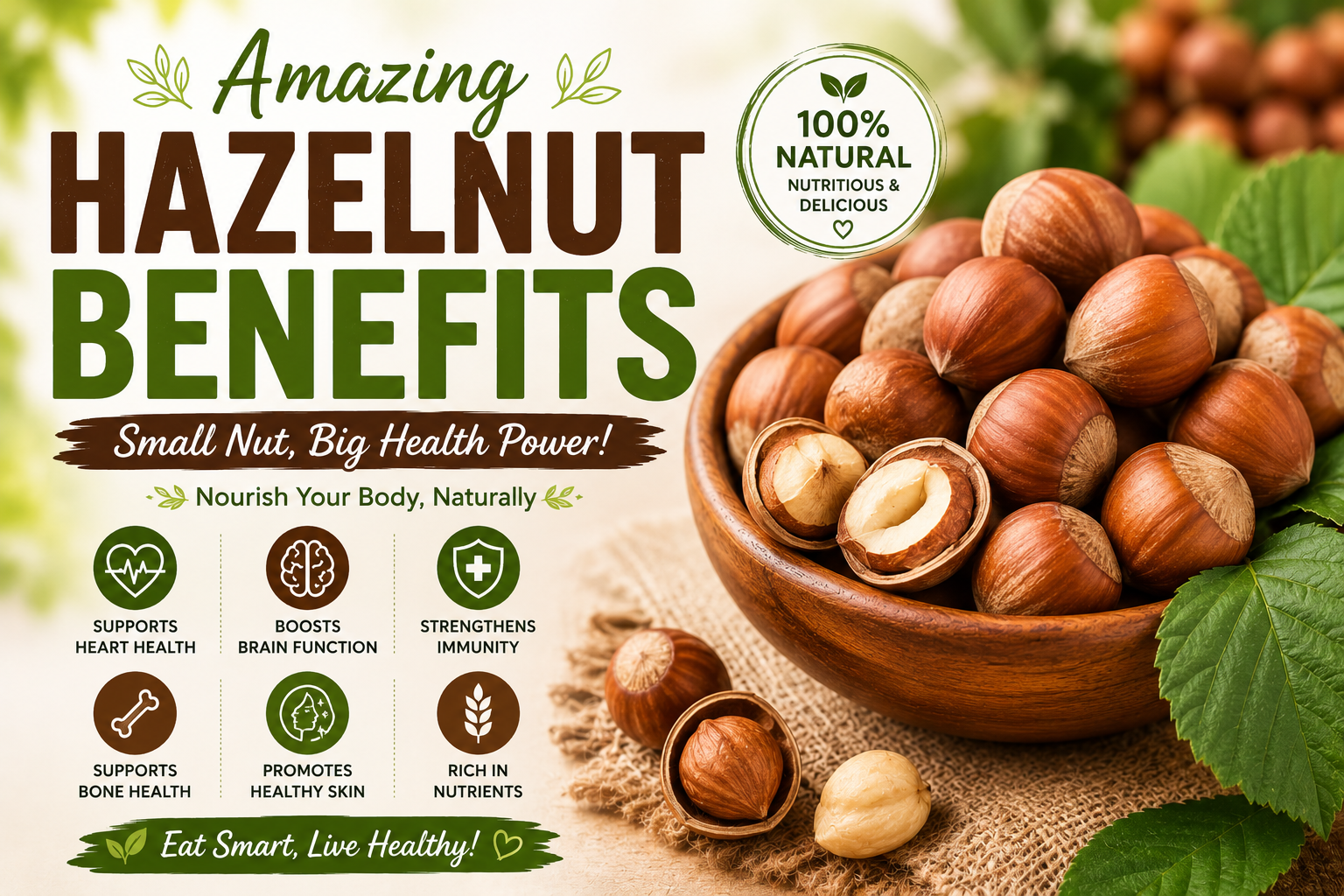
Hazelnuts are small, round tree nuts with a naturally sweet, buttery flavor and satisfying crunch. They are especially popular in desserts, chocolate spreads, and baked goods, but plain hazelnuts can also be a nutritious addition to a balanced diet.
They provide healthy unsaturated fats, dietary fiber, vitamin E, magnesium, copper, manganese, and other nutrients. Like other nuts, hazelnuts are relatively calorie-dense, so portion size is important.
In this first part, we’ll look at hazelnut nutrition and the first 10 potential hazelnut benefits.
What Are Hazelnuts?
Hazelnuts are the edible seeds of hazel trees. They are sometimes called filberts and are widely used around the world.
They can be eaten:
- Raw
- Dry roasted
- Chopped
- Ground into flour
- Made into nut butter
- Added to oatmeal
- Mixed into salads
- Used in baked goods
Hazelnuts are also commonly paired with chocolate because their naturally creamy flavor complements cocoa.
For everyday eating, plain or lightly roasted hazelnuts are generally the simplest choices.
Hazelnut Nutrition Facts
A 1-ounce (28-gram) serving of raw hazelnuts provides approximately:
| Nutrient | Approximate Amount |
|---|---|
| Calories | 178 |
| Protein | 4.2 g |
| Total fat | 17.2 g |
| Carbohydrates | 4.7 g |
| Fiber | 2.8 g |
| Magnesium | 46 mg |
| Phosphorus | 82 mg |
| Copper | 0.5 mg |
| Manganese | 1.7 mg |
| Vitamin E | 4.3 mg |
Exact values can vary depending on the variety and whether the nuts are raw, roasted, salted, or otherwise processed.
One of the standout nutrients in hazelnuts is vitamin E, an antioxidant vitamin that helps protect cells from oxidative damage.
1. Hazelnuts Are Rich in Healthy Unsaturated Fats
One of the major hazelnut benefits is their high concentration of unsaturated fats.
Hazelnuts contain mostly monounsaturated fat, similar to foods such as:
- Avocados
- Olive oil
- Almonds
- Macadamia nuts
- Pecans
Replacing some foods high in saturated fat with foods containing unsaturated fats can be part of a heart-conscious dietary pattern.
However, hazelnuts are still calorie-dense, so eating a moderate portion is important.
2. Hazelnuts Are a Good Source of Vitamin E
Hazelnuts are particularly notable for their vitamin E content.
Vitamin E is a fat-soluble vitamin with antioxidant functions. It helps protect cells from oxidative stress and supports normal immune function.
A 1-ounce serving of hazelnuts provides a meaningful amount of vitamin E.
Other foods that provide vitamin E include:
- Almonds
- Sunflower seeds
- Peanuts
- Avocado
- Spinach
Adding different vitamin-E-rich foods to your diet can help increase dietary variety.
3. Hazelnuts Provide Dietary Fiber
Hazelnuts provide approximately 2.8 grams of fiber per ounce.
Dietary fiber contributes to normal digestive function and can be an important component of a healthy eating pattern.
Fiber-rich foods include:
- Fruits
- Vegetables
- Beans
- Lentils
- Whole grains
- Seeds
- Nuts
Hazelnuts can contribute to your overall fiber intake, although they shouldn’t be your only source.
4. Hazelnuts Provide Magnesium
Hazelnuts contain magnesium, an essential mineral involved in numerous processes in the body.
Magnesium contributes to:
- Normal muscle function
- Normal nerve function
- Energy metabolism
- Protein synthesis
- Maintenance of normal bones
Other foods containing magnesium include:
- Pumpkin seeds
- Almonds
- Cashews
- Beans
- Whole grains
- Leafy green vegetables
Including a variety of these foods is a practical way to support adequate magnesium intake.
5. Hazelnuts Are a Good Source of Copper
Hazelnuts provide copper, a trace mineral that the body needs in relatively small amounts.
Copper contributes to several normal functions, including:
- Energy production
- Iron metabolism
- Connective tissue maintenance
- Nervous system function
- Normal immune function
Other sources include shellfish, seeds, legumes, whole grains, and other nuts.
6. Hazelnuts Provide Manganese
Hazelnuts are particularly rich in manganese.
Manganese is an essential trace mineral involved in:
- Normal energy metabolism
- Bone formation
- Protection of cells from oxidative stress
- Normal connective tissue formation
- Enzyme activity
A varied diet can provide manganese from nuts, seeds, whole grains, legumes, and other plant foods.
7. Hazelnuts Contain Antioxidant Compounds
Hazelnuts contain vitamin E and naturally occurring plant compounds that contribute to antioxidant activity.
Antioxidants help protect cells from oxidative stress.
However, it’s important not to think of hazelnuts as a miracle antioxidant food.
A wide variety of plant foods can provide different beneficial compounds.
Try including:
- Berries
- Citrus fruits
- Tomatoes
- Leafy greens
- Beans
- Whole grains
- Nuts
- Seeds
Hazelnuts can be one part of this overall pattern.
8. Hazelnuts Can Fit Into a Heart-Healthy Diet
Hazelnuts contain mostly unsaturated fats along with fiber and several micronutrients.
These characteristics make them compatible with dietary patterns that emphasize heart-conscious foods.
For example, you could replace a highly processed snack with:
A moderate serving of hazelnuts + fresh fruit
rather than adding the nuts on top of an already calorie-dense diet.
Hazelnuts aren’t a treatment for heart disease, but they can contribute to an overall nutritious eating pattern.
9. Hazelnuts Can Be a Satisfying Snack
The combination of fat, fiber, protein, and crunchy texture can make hazelnuts a convenient snack.
Instead of eating directly from a large package, measure a portion into a bowl.
Simple combinations
Hazelnuts + apple
Hazelnuts + pear
Hazelnuts + berries
Hazelnuts + plain Greek yogurt
These combinations add variety and can make a snack more nutritionally balanced.
10. Hazelnuts Can Add Nutritional Variety to Your Diet
Different nuts have different nutritional profiles.
For example:
Hazelnuts
Notable for vitamin E, monounsaturated fats, manganese, and copper.
Almonds
Known for vitamin E, magnesium, protein, and fiber.
Walnuts
Particularly notable for plant-based ALA omega-3 fatty acids.
Brazil nuts
Exceptionally rich in selenium.
Macadamia nuts
Particularly rich in monounsaturated fats.
Pecans
Provide unsaturated fats and several minerals.
There’s no requirement to choose just one type.
Rotating different nuts and seeds can make your diet more varied and enjoyable.
Hazelnuts and Healthy Fats
Hazelnuts are especially rich in monounsaturated fats.
These fats are also found in:
- Olive oil
- Avocado
- Almonds
- Pistachios
- Pecans
- Macadamia nuts
The overall quality of your diet matters more than any individual food.
A useful strategy is to use foods such as nuts and seeds in place of snacks dominated by refined carbohydrates, added sugars, or less favorable fats.
Hazelnuts and Vitamin E
Vitamin E is one of the nutrients that makes hazelnuts particularly interesting.
It acts as an antioxidant and helps protect cells from oxidative damage.
Vitamin E is fat-soluble, which means dietary fat helps with its absorption.
Hazelnuts naturally combine vitamin E with healthy fats, making them a useful food source of this nutrient.
However, eating excessive amounts isn’t necessary.
A moderate serving is enough to contribute to your overall vitamin E intake.
Hazelnuts and Digestive Health
The fiber in hazelnuts contributes to normal digestive function.
For a higher-fiber snack, you could combine hazelnuts with fruit.
For example:
Apple + hazelnuts
provides fiber from both foods.
A balanced diet should also include other sources of fiber, such as:
- Oats
- Beans
- Lentils
- Vegetables
- Fruits
- Whole grains
- Chia seeds
If your usual diet is low in fiber, increase fiber gradually and drink enough fluids.
Hazelnuts and Weight Management
Hazelnuts can be included in a weight-management diet, but portion control is important.
A 1-ounce serving provides approximately 178 calories.
This means a few large handfuls can add substantial calories.
The better strategy is to replace a less nutritious snack rather than simply adding hazelnuts to your existing diet.
Example
Instead of:
Cookies + sugary drink
try:
Hazelnuts + apple + water
The goal isn’t to make hazelnuts a weight-loss food. Instead, they’re a nutrient-dense food that can fit within appropriate calorie intake.
Simple Ways to Add Hazelnuts to Your Diet
Breakfast
Add chopped hazelnuts to:
- Oatmeal
- Overnight oats
- Greek yogurt
- Smoothie bowls
Lunch
Try them in:
- Green salads
- Grain bowls
- Roasted vegetable salads
Snacks
Combine a small serving with:
- Apple
- Pear
- Berries
- Plain yogurt
Dinner
Sprinkle chopped hazelnuts over:
- Roasted vegetables
- Whole grains
- Salads
- Cooked greens
Are Hazelnuts Good for You?
Yes. Hazelnuts can be a nutritious addition to a balanced diet.
Their main nutritional strengths include:
- Unsaturated fats
- Vitamin E
- Fiber
- Magnesium
- Copper
- Manganese
- Plant compounds with antioxidant activity
But like other nuts, they’re calorie-dense.
The best approach is to enjoy them in moderate portions and combine them with a variety of fruits, vegetables, whole grains, legumes, and protein-rich foods.
11. Hazelnuts May Support Healthy Cholesterol Levels
Hazelnuts contain predominantly unsaturated fats, particularly monounsaturated fats.
Replacing some foods high in saturated fat with foods rich in unsaturated fats can support a heart-conscious dietary pattern.
For example, instead of regularly choosing a highly processed snack, you could choose:
A moderate portion of hazelnuts + fresh fruit
The benefit comes from the overall dietary replacement, rather than hazelnuts acting as a medicine.
If you have high cholesterol, continue following the dietary and medical recommendations provided by your healthcare professional.
12. Hazelnuts Can Support a Heart-Healthy Eating Pattern
Several characteristics make hazelnuts compatible with heart-conscious eating:
- Unsaturated fats
- Dietary fiber
- Vitamin E
- Magnesium
- Plant compounds
A nutritious heart-focused diet can include:
- Fruits
- Vegetables
- Whole grains
- Beans and lentils
- Fish
- Nuts and seeds
- Unsaturated oils
Hazelnuts can easily fit into this pattern.
However, they shouldn’t be considered a treatment or cure for cardiovascular disease.
13. Hazelnuts Can Fit Into Blood Sugar-Friendly Meals
Hazelnuts contain relatively little carbohydrate compared with many grain-based snacks.
They also provide fat, fiber, and protein.
Adding a small amount of nuts to a balanced meal can create a more varied nutrient combination.
For example:
Plain Greek yogurt + berries + chopped hazelnuts
or:
Oatmeal + cinnamon + berries + hazelnuts
These combinations provide carbohydrates along with protein, fiber, and fat.
Hazelnuts aren’t a treatment for diabetes, but they can be part of a balanced eating pattern.
14. Hazelnuts May Support Digestive Health
Hazelnuts provide dietary fiber, which contributes to normal digestive function.
Regularly eating a variety of fiber-rich foods can help you meet your dietary fiber needs.
Good choices include:
- Fruits
- Vegetables
- Beans
- Lentils
- Oats
- Whole grains
- Seeds
- Nuts
For an easy high-fiber combination, try:
Apple + hazelnuts
The apple contributes additional fiber while the hazelnuts provide healthy fats and minerals.
15. Hazelnuts Provide Nutrients Involved in Energy Metabolism
Hazelnuts provide several nutrients involved in normal metabolic processes.
For example, magnesium contributes to normal energy metabolism, while copper and manganese participate in various enzyme functions.
This doesn’t mean hazelnuts provide an instant energy boost.
Instead, they provide dietary calories and nutrients that your body uses as part of normal metabolism.
For a balanced snack, combine them with a carbohydrate-rich food such as fruit.
16. Hazelnuts Can Be Useful for Active Lifestyles
People who exercise need enough calories and nutrients to support their activity.
Hazelnuts can be included in meals and snacks around workouts.
Before exercise
Try a small serving with fruit:
Banana + hazelnuts
After exercise
Combine hazelnuts with protein and carbohydrates:
Greek yogurt + berries + chopped hazelnuts
or:
Oatmeal + banana + hazelnuts + Greek yogurt
Because hazelnuts contain a lot of fat, very large portions immediately before intense exercise may feel heavy for some people.
17. Hazelnuts Provide Nutrients That Support Normal Brain Function
Hazelnuts provide nutrients such as:
- Vitamin E
- Magnesium
- Copper
- Healthy unsaturated fats
These nutrients contribute to normal physiological processes, including nervous-system function.
However, it’s important not to overstate the evidence.
Eating hazelnuts doesn’t guarantee:
- Better memory
- Higher intelligence
- Protection from dementia
- Prevention of neurological disease
Instead, hazelnuts can be one component of an overall nutritious dietary pattern.
18. Hazelnuts Provide Nutrients Relevant to Skin Health
Hazelnuts are particularly known for their vitamin E content.
Vitamin E has antioxidant functions and helps protect cells from oxidative stress.
Hazelnuts also provide healthy fats and several minerals.
However, eating hazelnuts isn’t a guaranteed treatment for:
- Acne
- Wrinkles
- Dry skin
- Skin aging
Healthy skin depends on many factors, including:
- Overall nutrition
- Sun exposure
- Sleep
- Hydration
- Genetics
- Skincare
- General health
A nutrient-rich diet can support normal body functions, but no single food can transform your skin overnight.
19. Hazelnuts Provide Nutrients Important for Normal Bone Function
Hazelnuts provide minerals such as:
- Magnesium
- Manganese
- Copper
- Phosphorus
These nutrients contribute to normal physiological functions associated with bones and connective tissues.
However, maintaining strong bones requires more than nuts.
A balanced diet should also provide:
- Calcium
- Vitamin D
- Protein
- Vitamin K
- Magnesium
- Phosphorus
Regular physical activity, especially weight-bearing exercise, is also important for bone health.
20. Hazelnuts Can Replace Less Nutritious Snack Foods
One practical way to use hazelnuts is as a replacement for highly processed snacks.
For example:
Instead of:
- Candy
- Cookies
- Sugary pastries
- Highly processed snack foods
Try:
A measured portion of hazelnuts + fresh fruit
This doesn’t mean you can never eat desserts or other treats.
The goal is simply to make nutrient-dense foods a regular part of your diet.
Hazelnuts and Weight Loss
Hazelnuts can be included in a weight-loss diet, but they aren’t a fat-burning food.
A 1-ounce serving contains approximately 178 calories.
Therefore, eating several handfuls can quickly increase your calorie intake.
Better strategy
Use hazelnuts as a replacement.
Cookies → hazelnuts + apple
Candy → hazelnuts + berries
Sugary snack → Greek yogurt + hazelnuts
This approach can make it easier to control total calorie intake while improving nutritional quality.
Hazelnuts and Heart Health
Hazelnuts contain mostly unsaturated fats and provide fiber, vitamin E, magnesium, and other nutrients.
A heart-conscious meal could look like:
Grilled fish + vegetables + whole grains + a small amount of chopped hazelnuts
The goal is to build an overall healthy dietary pattern rather than relying on one food.
Hazelnuts and Blood Sugar
Hazelnuts are relatively low in carbohydrates and provide fat, fiber, and some protein.
This makes them a useful ingredient in balanced meals.
For example:
Oats + berries + Greek yogurt + hazelnuts
is nutritionally different from eating a sugary pastry alone.
However, individual blood-glucose responses vary, and people with diabetes should follow their personalized medical and nutrition guidance.
Hazelnuts vs. Almonds
Both are highly nutritious nuts.
Hazelnuts
Particularly notable for:
- Vitamin E
- Monounsaturated fats
- Manganese
- Copper
Almonds
Particularly notable for:
- Vitamin E
- Magnesium
- Fiber
- Protein
Neither nut is universally “better.”
You can easily include both in a varied diet.
Hazelnuts vs. Walnuts
Walnuts are particularly notable for their ALA omega-3 fatty acids.
Hazelnuts are particularly notable for:
- Monounsaturated fats
- Vitamin E
- Manganese
- Copper
Both can be useful.
A varied diet can include walnuts on some days and hazelnuts on others.
Hazelnuts vs. Pecans
Hazelnuts and pecans are both rich in unsaturated fats.
Hazelnuts are especially notable for vitamin E and manganese.
Pecans provide:
- Unsaturated fats
- Manganese
- Copper
- Other plant compounds
Both are calorie-dense, so moderate portions are appropriate.
Hazelnuts vs. Macadamia Nuts
Both have a rich, creamy texture and are high in monounsaturated fats.
Hazelnuts
Notable for:
- Vitamin E
- Manganese
- Copper
- Fiber
Macadamia nuts
Notable for:
- Very high monounsaturated fat content
- Thiamine
- Manganese
Both can fit into a balanced diet.
Best Ways to Add Hazelnuts to Your Diet
Breakfast
Add chopped hazelnuts to:
- Oatmeal
- Greek yogurt
- Overnight oats
- Smoothie bowls
Lunch
Use them in:
- Green salads
- Grain bowls
- Roasted vegetable salads
Snack
Combine a moderate portion with:
- Apples
- Pears
- Berries
- Yogurt
Dinner
Sprinkle chopped hazelnuts over:
- Roasted vegetables
- Whole grains
- Salads
- Cooked greens
How Many Hazelnuts Should You Eat a Day?
A common serving size for nuts is about 1 ounce (28 grams).
For hazelnuts, that works out to roughly 18–21 whole nuts, depending on their size.
However, you don’t necessarily need to eat a full serving every day.
Your ideal amount depends on:
- Your overall calorie needs
- Activity level
- Weight-management goals
- The rest of your diet
- Other nuts and seeds you consume
Because hazelnuts are calorie-dense, measuring a portion can help prevent accidentally eating several servings.
Simple tip
Instead of eating directly from a large bag, put your desired portion into a small bowl.
How Many Calories Are in Hazelnuts?
A 1-ounce (28-gram) serving of hazelnuts contains approximately 178 calories.
It provides roughly:
- 4.2 grams protein
- 17.2 grams fat
- 4.7 grams carbohydrates
- 2.8 grams fiber
Most of the fat is unsaturated.
This combination makes hazelnuts nutrient-dense, but also means that portion size matters if you’re trying to control your calorie intake.
Are Hazelnuts Good for Weight Loss?
Yes, hazelnuts can fit into a weight-loss diet.
However, they do not directly burn body fat.
Their combination of fat, fiber, protein, and texture can make them a satisfying addition to meals and snacks.
The important factor is total calorie intake.
A smart approach
Instead of adding hazelnuts to an already high-calorie snack, use them as a replacement.
Instead of cookies:
Apple + measured serving of hazelnuts
Instead of candy:
Greek yogurt + berries + chopped hazelnuts
Instead of a sugary snack:
Pear + hazelnuts
This allows you to enjoy their nutrients without unnecessarily increasing your total calorie intake.
Are Hazelnuts Good for a Low-Carb or Keto Diet?
Hazelnuts contain relatively few carbohydrates compared with many grain-based snacks.
They also provide:
- Fat
- Fiber
- Some protein
- Magnesium
- Vitamin E
- Manganese
For this reason, they can fit into many low-carbohydrate eating patterns.
However, they’re still calorie-dense.
If you’re following a specific therapeutic or medically prescribed diet, follow the recommendations provided by your healthcare professional.
Raw vs. Roasted Hazelnuts
Both raw and roasted hazelnuts can be nutritious.
The main thing to watch is what is added during processing.
Good everyday choices
- Raw hazelnuts
- Dry-roasted hazelnuts
- Unsalted hazelnuts
- Lightly salted hazelnuts
Options to limit
- Sugar-coated hazelnuts
- Chocolate-covered hazelnuts
- Honey-roasted hazelnuts
- Heavily salted hazelnuts
- Products containing large amounts of added oil
Always check the ingredient list when purchasing flavored or packaged varieties.
Are Salted Hazelnuts Healthy?
Salted hazelnuts can still provide the nutrients naturally found in hazelnuts.
However, added salt increases their sodium content.
If you’re trying to reduce sodium intake, choose:
Unsalted or lightly salted hazelnuts.
You can add flavor to plain hazelnuts with:
- Cinnamon
- Paprika
- Black pepper
- Garlic powder
- Rosemary
- Chili powder
Can Hazelnuts Cause Allergies?
Yes.
Hazelnuts are tree nuts and can cause allergic reactions in susceptible people.
Symptoms can include:
- Itching
- Hives
- Swelling
- Stomach pain
- Vomiting
- Wheezing
- Difficulty breathing
Severe allergic reactions can be life-threatening.
If you have a known tree-nut allergy, avoid hazelnuts according to your healthcare professional’s advice and carefully check food labels.
Hazelnuts can also be present in products such as:
- Chocolate
- Nut spreads
- Desserts
- Cookies
- Cakes
- Ice cream
- Granola
Can You Eat Too Many Hazelnuts?
Yes.
Even nutritious foods can become excessive when consumed in very large amounts.
Eating several handfuls of hazelnuts can add a substantial number of calories.
Some people may also experience digestive discomfort from consuming large amounts.
Possible symptoms include:
- Bloating
- Gas
- Stomach discomfort
A moderate serving is generally more practical.
Can Hazelnuts Cause Digestive Problems?
Hazelnuts contain dietary fiber and fat.
For most people, moderate amounts are well tolerated.
However, eating a large quantity at once may cause digestive discomfort, particularly if your usual diet is low in fiber.
If you’re increasing your intake, start with a smaller portion and gradually increase your overall dietary fiber from different foods.
How to Store Hazelnuts
Hazelnuts contain natural oils that can become rancid if exposed to heat, air, or light for extended periods.
For short-term storage
Keep them in:
- An airtight container
- A cool location
- A dry environment
- Away from direct sunlight
For longer storage
Refrigeration can help preserve freshness.
You can also freeze hazelnuts in a tightly sealed freezer-safe container or bag.
Signs that hazelnuts may have gone bad
Don’t eat them if you notice:
- A rancid smell
- Bitter or unpleasant taste
- Mold
- Unusual discoloration
- Other obvious signs of spoilage
5 Easy and Healthy Hazelnut Recipes
1. Apple and Hazelnut Snack
Ingredients
- 1 apple
- A moderate serving of hazelnuts
- Cinnamon
Slice the apple and sprinkle with cinnamon.
Serve with the hazelnuts.
This makes a quick snack without cooking.
2. Hazelnut Oatmeal
Ingredients
- Rolled oats
- Milk or unsweetened plant milk
- Banana
- Cinnamon
- Chopped hazelnuts
- Berries
Cook the oats and top with banana, berries, cinnamon, and chopped hazelnuts.
3. Hazelnut Yogurt Bowl
Ingredients
- Plain Greek yogurt
- Blueberries
- Strawberries
- Chopped hazelnuts
- Chia seeds
Combine everything in a bowl.
The yogurt provides protein, fruit provides carbohydrates and fiber, while hazelnuts and chia seeds add healthy fats.
4. Crunchy Hazelnut Salad
Ingredients
- Mixed greens
- Cucumber
- Apple
- Chickpeas
- Chopped hazelnuts
Add a simple dressing made from lemon juice and a small amount of olive oil.
The hazelnuts provide a satisfying crunch.
5. Roasted Vegetable and Hazelnut Bowl
Ingredients
- Broccoli
- Carrots
- Bell peppers
- Sweet potato
- Chopped hazelnuts
Roast the vegetables and add chopped hazelnuts before serving.
Season with:
- Black pepper
- Garlic
- Rosemary
- Paprika
Hazelnuts as Part of a Balanced Diet
Hazelnuts are most useful when they’re combined with a wide variety of nutritious foods.
A balanced diet can include:
Protein
- Eggs
- Fish
- Chicken
- Beans
- Lentils
- Tofu
- Greek yogurt
Whole-food carbohydrates
- Oats
- Brown rice
- Quinoa
- Potatoes
- Whole-grain bread
Fruits and vegetables
- Berries
- Apples
- Oranges
- Spinach
- Broccoli
- Carrots
Healthy fats
- Hazelnuts
- Almonds
- Walnuts
- Seeds
- Avocado
- Olive oil
The goal isn’t to find one “perfect” food.
It’s to build a nutritious overall eating pattern.
Frequently Asked Questions About Hazelnut Benefits
Are hazelnuts good for you?
Yes. Hazelnuts provide predominantly unsaturated fats, vitamin E, fiber, magnesium, copper, manganese, and other nutrients. They can be part of a balanced diet.
How many hazelnuts should I eat a day?
A common serving is around 1 ounce (28 grams), or roughly 18–21 whole hazelnuts depending on their size. Individual needs vary.
Are hazelnuts good for weight loss?
They can fit into a weight-loss diet when eaten in moderate portions. They don’t directly burn fat, but they can replace less nutritious snacks.
How many calories are in hazelnuts?
A 1-ounce (28-gram) serving contains approximately 178 calories.
Are hazelnuts high in protein?
They provide some protein, around 4.2 grams per ounce, but they’re not considered a particularly high-protein food.
Are hazelnuts high in vitamin E?
Yes. Hazelnuts are a useful dietary source of vitamin E.
Are hazelnuts good for your heart?
Their high content of unsaturated fats, along with fiber and other nutrients, makes them compatible with a heart-conscious eating pattern.
Are hazelnuts good for digestion?
They provide dietary fiber, which contributes to normal digestive function. Eating excessive amounts may cause digestive discomfort for some people.
Can you eat hazelnuts every day?
For people without a hazelnut allergy, moderate portions can be included in a varied diet. Your overall diet and calorie needs determine the appropriate amount.
Are roasted hazelnuts healthy?
Plain roasted hazelnuts can be a nutritious option. Look for varieties without excessive added salt, sugar, or oils.
Are hazelnuts keto-friendly?
Their relatively low carbohydrate content and high fat content make them compatible with many low-carbohydrate diets.
Can hazelnuts cause allergies?
Yes. Hazelnuts are tree nuts and can cause potentially serious allergic reactions in susceptible individuals.
Are hazelnuts better than almonds?
Neither is universally better. Hazelnuts are particularly notable for vitamin E, manganese, copper, and monounsaturated fats, while almonds are particularly rich in vitamin E, magnesium, fiber, and protein.
Are hazelnuts better than walnuts?
They have different nutritional strengths. Hazelnuts are particularly rich in vitamin E and monounsaturated fats, while walnuts are especially notable for ALA omega-3 fatty acids.
Final Takeaway
Hazelnuts are a nutritious tree nut that can add healthy unsaturated fats, fiber, vitamin E, magnesium, copper, and manganese to your diet.
The potential benefits of including hazelnuts in a balanced eating pattern include supporting overall nutrient intake, digestive health, heart-conscious eating, and healthy energy metabolism.
They’re also incredibly versatile.
You can add them to:
- Oatmeal
- Yogurt
- Salads
- Fruit
- Roasted vegetables
- Whole grains
The main thing to remember is portion size.
A 1-ounce serving contains approximately 178 calories, so a moderate portion is generally more practical than eating several handfuls.
Choose plain, raw, or dry-roasted varieties when possible, and be especially careful if you have a tree-nut allergy.
Ultimately, hazelnuts aren’t a miracle food. Their greatest value comes from being one nutritious component of a varied, balanced diet.
Suggested Article’s:
- Brazil Nut Benefits
- Macadamia Nut Benefits
- Pecan Benefits
- Cashew Benefits
- Pistachio Benefits
- Best Natural Foods
- Best Healthy Pantry Foods
- Foods High in Antioxidants
- Foods Rich in Magnesium
- Foods Rich in Zinc
- Foods Rich in Iron
- Best Foods for Weight Loss



Leave a Reply