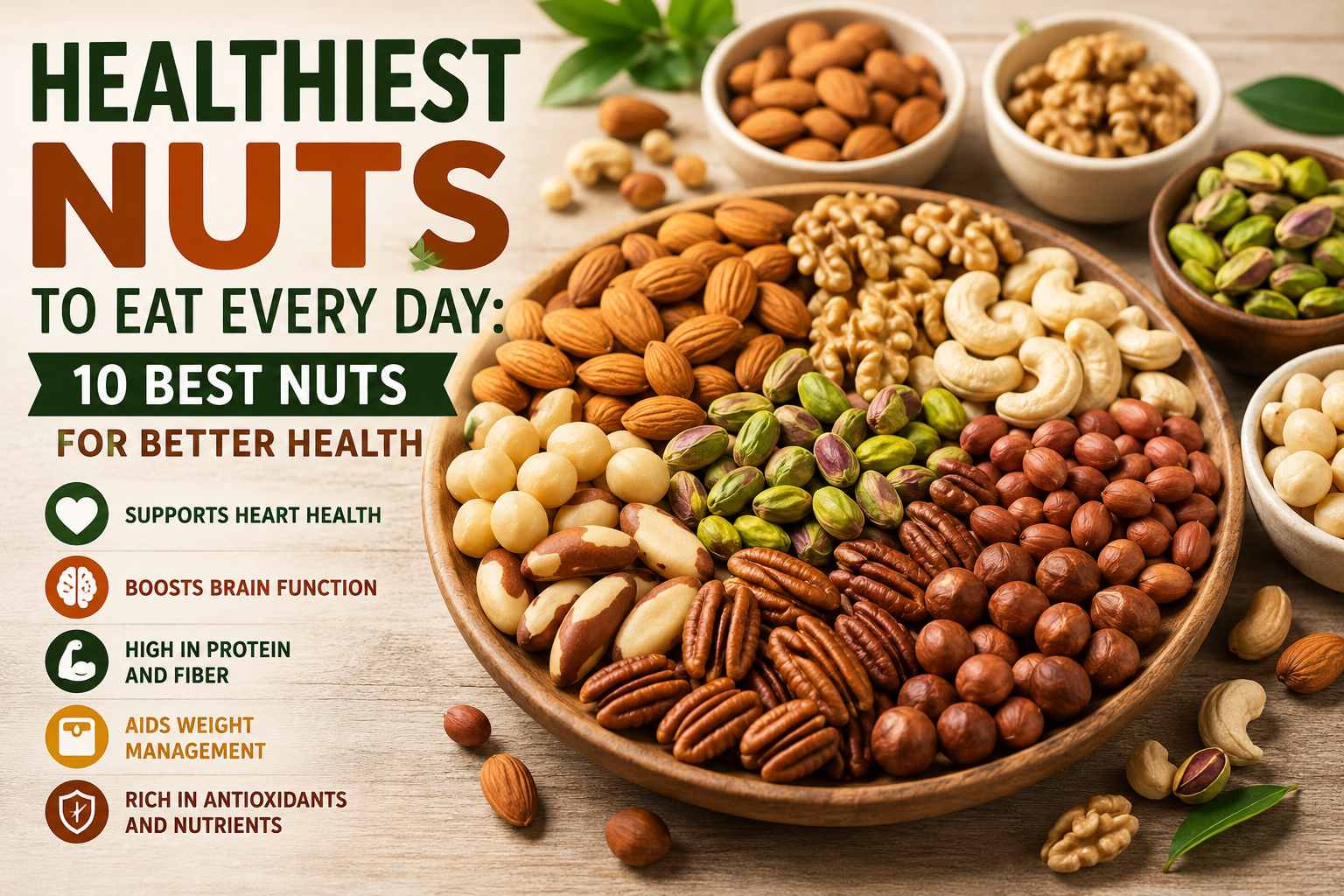
Nuts are among the most nutrient-dense foods you can add to your daily diet. They are packed with healthy fats, protein, fiber, vitamins, minerals, and powerful antioxidants that support your heart, brain, immune system, and overall well-being. Whether you’re trying to lose weight, improve heart health, or simply eat healthier, including a handful of nuts every day can make a significant difference.
But not all nuts offer the same nutritional benefits. Some are richer in omega-3 fatty acids, while others provide more protein, magnesium, or antioxidants. Understanding the strengths of each type can help you choose the best nuts for your health goals.
In this guide, you’ll discover the 10 healthiest nuts to eat every day, their nutritional benefits, recommended serving sizes, and practical ways to include them in your daily routine.
Why Are Nuts So Healthy?
Nuts are considered one of nature’s healthiest snacks because they contain an impressive combination of nutrients in a small serving.
A typical handful (about 1 ounce or 28 grams) provides:
- Healthy unsaturated fats
- Plant-based protein
- Dietary fiber
- Vitamin E
- Magnesium
- Potassium
- Calcium
- Zinc
- Selenium (especially Brazil nuts)
- Powerful antioxidants
Unlike many processed snacks, nuts help keep you full for longer, stabilize blood sugar levels, and provide sustained energy throughout the day.
Research has shown that people who regularly eat nuts often have a lower risk of heart disease, type 2 diabetes, and certain chronic health conditions.
Health Benefits of Eating Nuts Every Day
Adding nuts to your daily diet offers numerous science-backed benefits.
1. Supports Heart Health
Most nuts are rich in monounsaturated and polyunsaturated fats that help lower LDL (“bad”) cholesterol while maintaining HDL (“good”) cholesterol.
Healthy fats also reduce inflammation, one of the major contributors to cardiovascular disease.
2. Helps with Weight Management
Although nuts are calorie-dense, studies consistently show they do not necessarily cause weight gain when eaten in moderation.
Their combination of protein, healthy fats, and fiber keeps you satisfied, reducing overall calorie intake throughout the day.
3. Improves Brain Function
Several nuts contain nutrients linked to better brain health.
These include:
- Vitamin E
- Omega-3 fatty acids
- Magnesium
- Polyphenols
These nutrients may help protect brain cells from oxidative stress and support memory and cognitive performance.
4. Better Blood Sugar Control
Nuts have a low glycemic index, meaning they don’t cause large spikes in blood sugar.
People with diabetes or prediabetes often benefit from including nuts as part of balanced meals.
5. Rich in Antioxidants
Antioxidants help protect the body’s cells from free radical damage.
Walnuts, pecans, and almonds are particularly rich in antioxidants that support healthy aging.
6. Good for Gut Health
Fiber found in nuts feeds beneficial gut bacteria.
A healthy gut microbiome contributes to:
- Better digestion
- Stronger immunity
- Reduced inflammation
- Improved nutrient absorption
How Many Nuts Should You Eat Per Day?
For most healthy adults, experts recommend eating approximately:
1 ounce (28 grams) or a small handful of unsalted mixed nuts daily.
This equals approximately:
| Nut | Daily Serving |
|---|---|
| Almonds | 23 almonds |
| Walnuts | 14 halves |
| Cashews | 18 nuts |
| Pistachios | 49 kernels |
| Pecans | 19 halves |
| Brazil Nuts | 1–2 nuts |
| Hazelnuts | 20 nuts |
Avoid eating very large amounts because nuts are naturally high in calories.
1. Almonds – The Best All-Round Nut
Almonds are among the world’s most popular healthy nuts—and for good reason.
They provide an excellent balance of protein, healthy fats, vitamin E, magnesium, and fiber.
Nutrition (Per 28g)
- Calories: 164
- Protein: 6g
- Fiber: 3.5g
- Healthy Fat: 14g
- Vitamin E: 48% DV
- Magnesium: 19% DV
Health Benefits
Almonds may help:
- Lower LDL cholesterol
- Improve heart health
- Support healthy skin
- Strengthen bones
- Improve blood sugar control
- Increase fullness after meals
Vitamin E also protects cells from oxidative stress, making almonds one of the best foods for healthy aging.
Best Ways to Eat Almonds
- Eat raw
- Dry roasted
- Add to oatmeal
- Blend into smoothies
- Sprinkle over salads
- Make homemade almond butter
2. Walnuts – Best for Brain Health
Walnuts stand out because they contain high amounts of plant-based omega-3 fatty acids (ALA).
This makes them one of the healthiest nuts for both the brain and heart.
Nutrition (Per 28g)
- Calories: 185
- Protein: 4g
- Fiber: 2g
- Healthy Fat: 18g
- Omega-3 (ALA): 2.5g
Health Benefits
Walnuts may help:
- Improve memory
- Support cognitive function
- Reduce inflammation
- Lower cholesterol
- Improve blood vessel health
- Protect against heart disease
Their unique antioxidant profile makes walnuts one of the highest antioxidant nuts available.
Best Ways to Eat Walnuts
- Mix with yogurt
- Add to salads
- Bake into healthy muffins
- Top oatmeal
- Blend into pesto
- Eat as a snack
3. Pistachios – Best for Weight Loss
Pistachios are one of the lowest-calorie nuts while still providing plenty of protein and fiber.
Because shelling pistachios takes time, people naturally eat them more slowly, which may help prevent overeating.
Nutrition (Per 28g)
- Calories: 159
- Protein: 6g
- Fiber: 3g
- Potassium: High
- Vitamin B6: Excellent source
Health Benefits
Pistachios may:
- Support healthy weight loss
- Improve cholesterol levels
- Promote eye health with lutein and zeaxanthin
- Help stabilize blood sugar
- Improve gut bacteria
Their vibrant green color comes from natural plant compounds that also offer antioxidant protection.
4. Cashews – Best for Energy and Bone Health
Cashews have a naturally creamy texture and a slightly sweet flavor, making them one of the most popular nuts worldwide. Besides tasting great, they’re packed with minerals that support strong bones, healthy muscles, and energy production.
Nutrition (Per 28g)
- Calories: 157
- Protein: 5g
- Fiber: 1g
- Healthy Fat: 12g
- Magnesium: 20% DV
- Copper: 67% DV
- Zinc: 15% DV
Health Benefits
Cashews may help:
- Support healthy bones and joints
- Improve muscle function
- Boost energy production
- Strengthen the immune system
- Promote healthy skin and hair
- Support red blood cell formation
Copper, one of the standout nutrients in cashews, plays an important role in collagen production, which supports healthy skin and connective tissues.
Best Ways to Eat Cashews
- Raw or dry roasted
- In stir-fries
- Homemade cashew butter
- Cashew milk
- Mixed with dried fruits
- Added to curries
5. Brazil Nuts – Best Source of Selenium
Brazil nuts are unique because they’re the richest natural source of selenium, a mineral essential for thyroid function and immune health.
Unlike other nuts, you only need one or two Brazil nuts per day to meet your daily selenium requirement.
Nutrition (Per 28g)
- Calories: 187
- Protein: 4g
- Fiber: 2g
- Healthy Fat: 19g
- Selenium: Over 700% DV
Health Benefits
Brazil nuts may help:
- Support thyroid health
- Boost immunity
- Protect cells from oxidative damage
- Improve male fertility
- Promote healthy hair and nails
- Reduce inflammation
Important Tip
Because Brazil nuts contain very high amounts of selenium, avoid eating large quantities daily. Consuming too much selenium over time may lead to unwanted side effects.
Best Ways to Eat Brazil Nuts
- Eat 1–2 whole nuts daily
- Chop into oatmeal
- Add to homemade trail mix
- Blend into smoothies
6. Pecans – Rich in Antioxidants
Pecans have one of the highest antioxidant levels among all nuts. They are rich in healthy fats and plant compounds that help protect cells from oxidative stress.
Nutrition (Per 28g)
- Calories: 196
- Protein: 3g
- Fiber: 3g
- Healthy Fat: 20g
Health Benefits
Pecans may help:
- Lower LDL cholesterol
- Improve heart health
- Reduce inflammation
- Protect brain cells
- Support healthy aging
The antioxidants in pecans may help reduce the damage caused by free radicals, which is linked to many chronic diseases.
Best Ways to Eat Pecans
- Sprinkle over salads
- Add to yogurt
- Bake into healthy granola
- Mix with oatmeal
- Enjoy as a snack
7. Hazelnuts – Excellent for Heart Health
Hazelnuts are loaded with vitamin E, healthy fats, and antioxidants. They have a rich, buttery flavor and are commonly used in desserts, but they’re just as nutritious when eaten on their own.
Nutrition (Per 28g)
- Calories: 178
- Protein: 4g
- Fiber: 3g
- Healthy Fat: 17g
- Vitamin E: High
Health Benefits
Hazelnuts may help:
- Improve heart health
- Reduce inflammation
- Support healthy skin
- Lower cholesterol
- Protect cells from oxidative stress
Their high vitamin E content also contributes to healthier skin by protecting it from environmental damage.
Best Ways to Eat Hazelnuts
- Raw
- Roasted
- Mixed into cereal
- Homemade nut butter
- Added to baked goods
8. Macadamia Nuts – Rich in Healthy Fats
Macadamia nuts contain one of the highest amounts of heart-friendly monounsaturated fats among all nuts. Their smooth, buttery texture makes them a favorite snack.
Nutrition (Per 28g)
- Calories: 204
- Protein: 2g
- Fiber: 2g
- Healthy Fat: 21g
Health Benefits
Macadamia nuts may:
- Improve cholesterol levels
- Support heart health
- Reduce inflammation
- Help maintain healthy blood vessels
- Provide long-lasting energy
Although they’re higher in calories than most nuts, moderate portions fit well into a balanced diet.
Best Ways to Eat Macadamia Nuts
- Eat raw
- Add to salads
- Mix into homemade granola
- Use in baking
- Blend into nut butter
9. Pine Nuts – Small but Nutrient-Dense
Pine nuts are actually seeds from pine trees, but they’re commonly grouped with tree nuts because of their similar nutritional value.
Nutrition (Per 28g)
- Calories: 191
- Protein: 4g
- Healthy Fat: 19g
- Magnesium: Good source
- Iron: Good source
Health Benefits
Pine nuts may help:
- Increase energy levels
- Support heart health
- Improve eye health
- Promote healthy skin
- Aid weight management by increasing satiety
Pine nuts also contain pinolenic acid, a fatty acid that may help reduce appetite by influencing hunger hormones.
Best Ways to Eat Pine Nuts
- Homemade pesto
- Salads
- Pasta dishes
- Rice bowls
- Soups
10. Peanuts – Affordable and Protein-Rich
Although peanuts are technically legumes rather than true nuts, nutritionally they offer many of the same health benefits.
They’re one of the most affordable sources of plant protein available.
Nutrition (Per 28g)
- Calories: 161
- Protein: 7g
- Fiber: 2g
- Healthy Fat: 14g
Health Benefits
Peanuts may help:
- Build and maintain muscle
- Improve heart health
- Support healthy weight management
- Reduce hunger between meals
- Provide lasting energy
Peanuts also contain resveratrol, an antioxidant that has been studied for its potential heart-protective effects.
Best Ways to Eat Peanuts
- Dry roasted (unsalted)
- Homemade peanut butter
- Mixed into trail mix
- Added to salads
- Stir-fried dishes
Nutritional Comparison of Popular Nuts
| Nut | Protein | Fiber | Best For |
|---|---|---|---|
| Almonds | 6g | 3.5g | Overall health |
| Walnuts | 4g | 2g | Brain health |
| Pistachios | 6g | 3g | Weight loss |
| Cashews | 5g | 1g | Energy |
| Brazil Nuts | 4g | 2g | Thyroid health |
| Pecans | 3g | 3g | Antioxidants |
| Hazelnuts | 4g | 3g | Heart health |
| Macadamia | 2g | 2g | Healthy fats |
| Pine Nuts | 4g | 1g | Energy |
| Peanuts | 7g | 2g | Protein |
Which Nut Is Best for Your Health Goal?
Best for Heart Health
- Walnuts
- Almonds
- Hazelnuts
- Macadamia nuts
Best for Weight Loss
- Pistachios
- Almonds
- Peanuts
Best for Brain Health
- Walnuts
- Pecans
Best for Diabetes
- Almonds
- Pistachios
- Walnuts
Best for Skin
- Almonds
- Hazelnuts
- Brazil nuts
Best for Muscle Building
- Peanuts
- Almonds
- Pistachios
- Cashews
Are Raw or Roasted Nuts Healthier?
Both raw and roasted nuts can be part of a healthy diet, but there are a few differences to consider.
Raw Nuts
Raw nuts are minimally processed and retain their natural nutrient profile. They contain healthy fats, protein, fiber, vitamins, and minerals without added ingredients.
Pros:
- No added oils
- No added sodium
- Natural flavor
- Rich in antioxidants
Dry-Roasted Nuts
Dry-roasted nuts are roasted without oil. They maintain most of their nutritional value while offering a crunchier texture.
Pros:
- Great taste
- Convenient snack
- Retain most nutrients
Oil-Roasted Nuts
Oil-roasted nuts may contain added fats and calories, depending on the type of oil used.
Which Is Better?
For the healthiest choice, choose:
- ✅ Raw nuts
- ✅ Dry-roasted nuts
- ✅ Unsalted varieties
Limit heavily salted, sugar-coated, honey-roasted, or chocolate-covered nuts if you’re aiming for the greatest health benefits.
What Is the Best Time to Eat Nuts?
There isn’t one perfect time to eat nuts, but certain times may provide specific benefits.
Morning
Eating nuts at breakfast provides lasting energy and helps you stay full longer.
Great additions include:
- Oatmeal
- Greek yogurt
- Smoothies
- Whole-grain cereal
As a Midday Snack
A handful of nuts can curb hunger between meals and help reduce cravings for processed snacks.
Before a Workout
Nuts provide healthy fats and a small amount of protein for sustained energy. Pair them with a banana or apple for a balanced pre-workout snack.
After a Workout
Combine nuts with a protein source such as yogurt, milk, or a protein smoothie to support muscle recovery.
Before Bed
A small serving of almonds or walnuts may be a satisfying evening snack without causing major blood sugar spikes.
Common Mistakes to Avoid When Eating Nuts
Even healthy foods can become less beneficial when consumed incorrectly.
1. Eating Too Many
Nuts are nutrient-dense but also calorie-dense. Large portions can contribute to excess calorie intake.
Stick to about one handful (28 grams) per day unless advised otherwise by a healthcare professional.
2. Choosing Salted Nuts
High sodium intake may increase blood pressure in some people.
Whenever possible, choose unsalted or lightly salted options.
3. Eating Sugary Nuts
Honey-roasted or candy-coated nuts often contain significant amounts of added sugar.
These are best enjoyed occasionally rather than every day.
4. Ignoring Portion Sizes
Eating directly from a large container can make it easy to consume several servings without realizing it.
Consider pre-portioning nuts into small containers or snack bags.
5. Relying on Only One Type of Nut
Each nut offers a unique nutritional profile.
Rotating between different varieties provides a broader range of vitamins, minerals, healthy fats, and antioxidants.
Who Should Be Careful with Nuts?
While nuts are healthy for most people, some individuals should take extra precautions.
People with Nut Allergies
Tree nut and peanut allergies can cause severe allergic reactions. If you have a known allergy, avoid the specific nuts and follow your healthcare provider’s advice.
People with Kidney Disease
Some nuts are high in potassium and phosphorus. Individuals with chronic kidney disease may need personalized dietary guidance.
Those Watching Calorie Intake
Because nuts are calorie-dense, measuring portions can help support weight-management goals.
Brazil Nut Consumption
Brazil nuts are exceptionally high in selenium. Eating one or two per day is generally sufficient for most adults. Consistently eating large amounts may lead to excessive selenium intake.
How to Store Nuts Properly
Healthy fats in nuts can become rancid if stored incorrectly.
To keep them fresh:
- Store in an airtight container.
- Keep them in a cool, dry place.
- Refrigerate for longer freshness.
- Freeze for long-term storage (up to a year for many varieties).
- Keep away from direct sunlight and moisture.
Proper storage helps preserve flavor, texture, and nutritional quality.
Frequently Asked Questions (FAQs)
What are the healthiest nuts to eat every day?
Almonds, walnuts, pistachios, Brazil nuts, hazelnuts, pecans, and cashews are among the healthiest choices because they provide healthy fats, protein, fiber, vitamins, and minerals.
Which nuts are best for heart health?
Walnuts, almonds, hazelnuts, and macadamia nuts are excellent choices due to their heart-friendly unsaturated fats and antioxidant content.
Which nuts are best for weight loss?
Pistachios, almonds, and peanuts can support weight management by promoting fullness through their protein and fiber content.
Can eating nuts every day lower cholesterol?
Regularly eating nuts as part of a balanced diet may help reduce LDL (“bad”) cholesterol and support healthy cholesterol levels.
Are roasted nuts unhealthy?
Not necessarily. Dry-roasted, unsalted nuts are a nutritious option. Try to avoid nuts that are heavily salted or coated with sugar.
Which nuts have the most protein?
Peanuts, almonds, and pistachios are among the highest-protein options, making them great choices for active individuals and those following plant-based diets.
Are nuts good for people with diabetes?
Yes. Most nuts have a low glycemic impact and may help improve blood sugar management when included in a balanced diet.
How many nuts should I eat every day?
A serving of about 1 ounce (28 grams)—roughly a small handful—is generally recommended for most healthy adults.
Final Thoughts
Adding a variety of nuts to your daily diet is one of the simplest ways to improve your overall nutrition. Almonds, walnuts, pistachios, cashews, Brazil nuts, pecans, hazelnuts, macadamia nuts, pine nuts, and even peanuts each offer unique health benefits.
Whether your goal is to support heart health, improve brain function, manage your weight, build muscle, or simply enjoy a nutritious snack, nuts can be an excellent addition to a balanced eating pattern.
For the greatest benefit, choose raw or dry-roasted, unsalted nuts, keep portions moderate, and enjoy a mix of different varieties throughout the week. Combined with regular physical activity and a diet rich in fruits, vegetables, whole grains, and lean proteins, eating nuts every day can contribute to long-term health and wellness.
Key Takeaways
- Nuts are rich in healthy fats, protein, fiber, vitamins, and minerals.
- A daily serving of about 28 grams (1 ounce) is ideal for most adults.
- Almonds are an excellent all-around choice.
- Walnuts are especially beneficial for brain and heart health.
- Pistachios are a smart option for weight management.
- Brazil nuts are the best natural source of selenium but should be eaten in moderation.
- Choosing a variety of nuts helps maximize nutritional benefits.
- Raw or dry-roasted, unsalted nuts are the healthiest options.
- Proper storage keeps nuts fresh and preserves their nutritional quality.





Leave a Reply