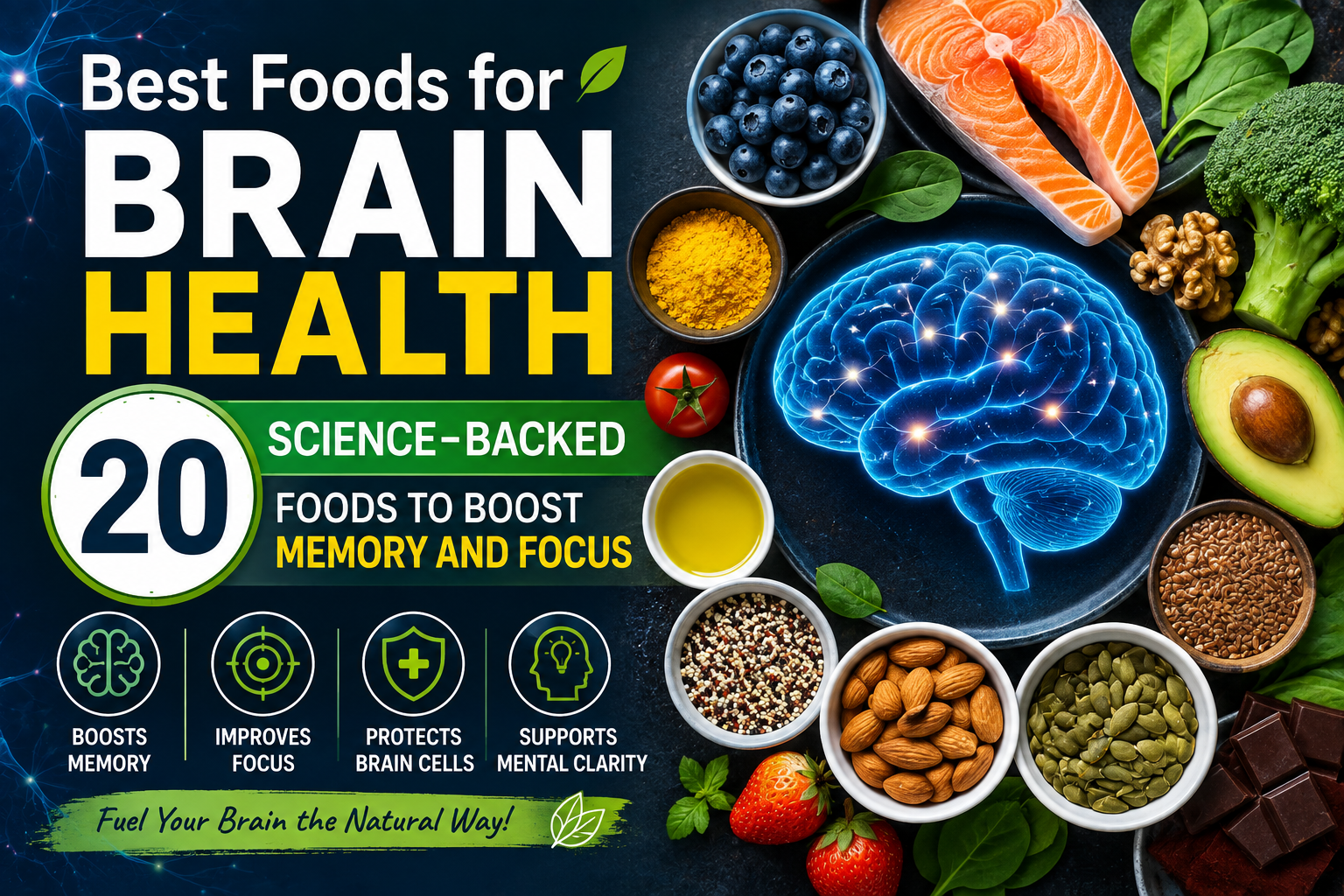
Your brain is one of the hardest-working organs in your body. It controls your thoughts, memory, emotions, movement, learning, and decision-making every single day. Just like your heart and muscles, your brain needs the right nutrients to function at its best.
Although no single food can magically improve intelligence or prevent every brain-related condition, research shows that a balanced diet rich in nutrient-dense foods can support cognitive function, memory, focus, and long-term brain health.
Many of the best brain foods are packed with omega-3 fatty acids, antioxidants, vitamins, minerals, and healthy fats that help nourish brain cells and protect them from oxidative stress.
In this comprehensive guide, you’ll discover 20 science-backed foods for brain health, their nutritional benefits, and practical ways to include them in your daily diet.
Why Brain Health Matters
Your brain performs billions of tasks every day, including:
- Processing information
- Storing memories
- Regulating emotions
- Controlling movement
- Supporting concentration
- Managing communication between body systems
Maintaining brain health throughout life may help support:
- Memory
- Learning ability
- Mental clarity
- Focus
- Healthy aging
- Overall well-being
Brain health depends on many lifestyle factors, including a balanced diet, regular exercise, quality sleep, stress management, and social engagement.
Key Nutrients That Support Brain Health
Certain nutrients play important roles in maintaining normal brain function.
Omega-3 Fatty Acids
These healthy fats are important components of brain cell membranes and contribute to normal brain function.
Good sources include:
- Fatty fish
- Walnuts
- Chia seeds
- Flaxseeds
Antioxidants
Antioxidants help protect cells from oxidative stress caused by free radicals.
Foods rich in antioxidants include:
- Blueberries
- Dark chocolate
- Leafy greens
- Colorful fruits and vegetables
Vitamin E
Vitamin E helps protect cells from oxidative damage.
Sources include:
- Almonds
- Sunflower seeds
- Hazelnuts
B Vitamins
B vitamins contribute to normal nervous system function and energy metabolism.
Sources include:
- Eggs
- Whole grains
- Leafy greens
- Dairy products
Magnesium
Magnesium supports normal nerve and muscle function.
Sources include:
- Pumpkin seeds
- Almonds
- Spinach
- Cashews
1. Fatty Fish
Fatty fish are among the best foods for brain health because they provide omega-3 fatty acids EPA and DHA, which are important structural components of the brain.
Examples include:
- Salmon
- Sardines
- Mackerel
- Trout
- Herring
Benefits
Including fatty fish in your diet may help:
- Support normal brain function
- Maintain healthy nerve cells
- Contribute to cognitive health
- Provide high-quality protein
Aim to include fatty fish in your weekly meal plan if it fits your dietary preferences.
2. Walnuts
Walnuts are often called one of the best nuts for brain health because they are rich in alpha-linolenic acid (ALA), a plant-based omega-3 fatty acid.
They also provide:
- Polyphenols
- Copper
- Manganese
- Vitamin B6
- Antioxidants
Why Walnuts Are Good for Your Brain
Walnuts may:
- Support normal brain function
- Provide healthy fats
- Help protect cells from oxidative stress
- Fit well into a Mediterranean-style eating pattern
Easy Ways to Eat Walnuts
- Sprinkle over oatmeal
- Add to yogurt
- Mix into salads
- Enjoy as a snack
- Blend into smoothies
3. Blueberries
Blueberries are one of the richest fruit sources of antioxidants, particularly anthocyanins, which give them their deep blue color.
Benefits
Blueberries may:
- Help protect cells from oxidative stress
- Support healthy aging
- Provide vitamin C
- Add natural sweetness to meals
Healthy Serving Ideas
- Smoothies
- Oatmeal
- Yogurt
- Fruit salads
- Whole-grain cereal
4. Eggs
Eggs provide several nutrients that support normal brain function.
These include:
- Choline
- Vitamin B12
- Vitamin B6
- Folate
- Protein
Choline is particularly important because it is used by the body to produce acetylcholine, a neurotransmitter involved in memory and muscle function.
Healthy Ways to Enjoy Eggs
- Boiled
- Scrambled
- Omelets with vegetables
- Poached
- Whole-grain sandwiches
5. Leafy Green Vegetables
Leafy greens are among the most nutrient-dense foods you can eat.
Examples include:
- Spinach
- Kale
- Swiss chard
- Collard greens
- Romaine lettuce
These vegetables provide:
- Vitamin K
- Folate
- Lutein
- Fiber
- Magnesium
Benefits
Eating leafy greens regularly supports overall nutrition and contributes to healthy brain function as part of a balanced diet.
6. Pumpkin Seeds
Pumpkin seeds are small but packed with nutrients.
They provide:
- Magnesium
- Zinc
- Iron
- Copper
- Healthy fats
- Plant-based protein
Brain Health Benefits
These nutrients contribute to:
- Normal nervous system function
- Energy metabolism
- Overall brain health
Easy Ways to Eat Pumpkin Seeds
- Sprinkle over salads
- Mix into oatmeal
- Add to yogurt
- Blend into smoothies
- Homemade trail mix
7. Dark Chocolate
Good-quality dark chocolate (with a high cocoa content) contains beneficial compounds, including:
- Flavonoids
- Iron
- Magnesium
- Antioxidants
Potential Benefits
Dark chocolate may:
- Help protect cells from oxidative stress
- Support healthy blood flow
- Provide magnesium
- Offer a satisfying treat in moderation
Choose dark chocolate with 70% cocoa or higher and enjoy moderate portions because it still contains calories and added sugar.
Simple Brain-Healthy Breakfast Ideas
Start your day with foods that nourish your brain:
- Oatmeal topped with walnuts and blueberries
- Greek yogurt with pumpkin seeds
- Whole-grain toast with scrambled eggs
- Smoothie with spinach, berries, and flaxseeds
- Overnight oats with almonds and chia seeds
These meals combine healthy fats, fiber, protein, and antioxidants to support overall nutrition.
8. Broccoli
Broccoli is one of the most nutrient-dense vegetables you can include in your diet. It is rich in vitamin K, vitamin C, folate, fiber, and antioxidants, all of which contribute to overall health.
Brain Health Benefits
Broccoli may help:
- Support normal brain function
- Protect cells from oxidative stress
- Provide nutrients important for healthy aging
- Contribute to a balanced, brain-friendly diet
Easy Ways to Eat Broccoli
- Steamed as a side dish
- Added to stir-fries
- Mixed into soups
- Roasted with olive oil
- Tossed into salads
9. Turmeric
Turmeric is a bright yellow spice commonly used in curries and traditional cooking. Its active compound, curcumin, has been widely studied for its antioxidant and anti-inflammatory properties.
Why Turmeric Is Good for Brain Health
Curcumin may help:
- Protect brain cells from oxidative stress
- Support overall brain function
- Promote healthy aging
Since curcumin is not easily absorbed by the body, consuming turmeric with black pepper and a healthy fat such as olive oil may improve absorption.
How to Add Turmeric to Your Diet
- Golden milk
- Soups
- Rice dishes
- Smoothies
- Roasted vegetables
10. Avocados
Avocados are an excellent source of heart-healthy monounsaturated fats, fiber, potassium, and several vitamins.
Because heart health and brain health are closely connected, foods that support healthy blood circulation can also support normal brain function.
Nutritional Benefits
Avocados provide:
- Healthy fats
- Folate
- Potassium
- Vitamin E
- Vitamin K
Healthy Serving Ideas
- Whole-grain toast with avocado
- Salads
- Smoothies
- Sandwiches
- Homemade guacamole
11. Almonds
Almonds are among the healthiest nuts and are packed with nutrients that support overall wellness.
They contain:
- Vitamin E
- Healthy fats
- Protein
- Fiber
- Magnesium
Why Almonds Support Brain Health
Vitamin E acts as an antioxidant that helps protect cells from oxidative damage.
Eating a handful of almonds as part of a balanced diet may contribute to long-term brain health.
Healthy Ways to Eat Almonds
- As a snack
- Mixed with walnuts
- Added to oatmeal
- Sprinkled over yogurt
- Homemade trail mix
12. Green Tea
Green tea contains natural compounds that may support alertness and cognitive performance.
It provides:
- Catechins
- L-theanine
- Caffeine (in smaller amounts than coffee)
Potential Benefits
Green tea may:
- Support concentration
- Promote mental alertness
- Provide antioxidants
- Offer a calming effect due to L-theanine
Enjoy green tea without excessive added sugar for the greatest health benefits.
13. Oranges
Oranges are one of the richest dietary sources of vitamin C, an antioxidant that helps protect cells from oxidative stress.
Brain Health Benefits
Vitamin C contributes to:
- Normal nervous system function
- Healthy immune function
- Protection against oxidative damage
Easy Ways to Enjoy Oranges
- Fresh slices
- Fruit salads
- Smoothies
- Fresh juice (in moderation)
Whole oranges are generally preferred over juice because they provide more fiber.
14. Yogurt
Plain yogurt is rich in:
- Protein
- Calcium
- Vitamin B12
- Probiotics
Emerging research suggests that gut health and brain health are closely connected through the gut-brain axis.
Including probiotic-rich foods like yogurt may support a healthy digestive system, which is an important part of overall wellness.
Healthy Serving Ideas
- Yogurt with berries
- Yogurt with walnuts
- Yogurt parfaits
- Smoothie bowls
Choose plain, unsweetened yogurt whenever possible.
15. Extra Virgin Olive Oil
Extra virgin olive oil is a key component of the Mediterranean diet, one of the most widely studied eating patterns for overall health.
It contains:
- Monounsaturated fats
- Polyphenols
- Vitamin E
Benefits
Olive oil may help:
- Support heart health
- Protect cells from oxidative stress
- Contribute to overall brain health
Use extra virgin olive oil in:
- Salad dressings
- Roasted vegetables
- Whole-grain dishes
- Homemade dips
Best Eating Habits for Brain Health
In addition to eating brain-friendly foods, healthy eating habits are equally important.
Eat a Variety of Whole Foods
Aim to include:
- Fruits
- Vegetables
- Whole grains
- Nuts
- Seeds
- Beans
- Lean proteins
- Healthy fats
Stay Hydrated
Even mild dehydration can affect concentration and mental performance.
Drink water consistently throughout the day.
Include Healthy Fats
Healthy fats from:
- Walnuts
- Fatty fish
- Olive oil
- Avocados
- Seeds
help support normal brain function.
Don’t Skip Breakfast
A balanced breakfast provides energy after an overnight fast and can help support focus during the morning.
Limit Highly Processed Foods
Choose whole foods more often than:
- Sugary drinks
- Candy
- Packaged snacks
- Fast food
- Highly processed desserts
Foods to Limit for Better Brain Health
While no food needs to be completely avoided, limiting the following may support overall health:
- Sugar-sweetened beverages
- Highly processed snacks
- Foods high in trans fats
- Excessive alcohol
- Deep-fried foods
- Processed meats
- Refined carbohydrates
Replacing these with nutrient-rich whole foods can improve the quality of your diet.
Daily Nutrition Tips for a Healthy Brain
Simple habits can make a big difference over time:
- Eat colorful fruits and vegetables every day.
- Include nuts such as walnuts and almonds.
- Choose whole grains instead of refined grains.
- Eat fatty fish regularly if you consume seafood.
- Drink enough water.
- Limit added sugar.
- Include probiotic foods like yogurt.
- Cook more meals at home using fresh ingredients.
16. Chia Seeds
Chia seeds are tiny nutritional powerhouses packed with plant-based omega-3 fatty acids (ALA), fiber, protein, magnesium, and antioxidants. These nutrients support overall brain and body health.
Brain Health Benefits
Chia seeds may help:
- Support normal brain function
- Provide healthy fats
- Promote steady energy
- Help you feel full for longer
Easy Ways to Eat Chia Seeds
- Add to overnight oats
- Blend into smoothies
- Mix with yogurt
- Make chia pudding
- Sprinkle over salads
17. Tomatoes
Tomatoes are rich in lycopene, a powerful antioxidant that helps protect the body’s cells from oxidative stress.
They also provide:
- Vitamin C
- Potassium
- Folate
Enjoy tomatoes fresh in salads, cooked in soups, or added to sauces for a nutritious meal.
18. Beets
Beets are naturally rich in dietary nitrates, which the body converts into nitric oxide. Nitric oxide helps support healthy blood flow, an important factor in overall cardiovascular and brain health.
Healthy Ways to Eat Beets
- Roasted
- Steamed
- Added to salads
- Blended into smoothies
- Homemade beet soup
19. Lentils
Lentils are an affordable and nutrient-dense source of:
- Plant-based protein
- Iron
- Folate
- Fiber
- Magnesium
Iron and folate contribute to normal cognitive function and energy metabolism, while fiber supports gut health, which is closely linked to overall well-being.
Add Lentils To
- Soups
- Salads
- Rice bowls
- Curries
- Stews
20. Mixed Nuts
Instead of relying on a single nut, eating a variety provides a wider range of nutrients.
A healthy mix may include:
- Walnuts
- Almonds
- Pistachios
- Cashews
- Hazelnuts
- Pecans
Together, these nuts supply healthy fats, protein, fiber, vitamin E, magnesium, and antioxidants that support overall nutrition and brain health.
Lifestyle Tips for Better Brain Health
Nutrition is only one part of maintaining a healthy brain. Daily habits also play an important role.
Get Enough Sleep
Adults generally need 7–9 hours of quality sleep each night. Sleep supports memory, learning, concentration, and overall cognitive performance.
Exercise Regularly
Aim for at least 150 minutes of moderate physical activity each week. Regular exercise supports healthy blood flow to the brain and overall wellness.
Stay Mentally Active
Keep your brain engaged by:
- Reading books
- Learning new skills
- Solving puzzles
- Playing strategy games
- Practicing a new language
- Engaging in creative hobbies
Manage Stress
Long-term stress can affect concentration and mental well-being.
Helpful stress-management strategies include:
- Meditation
- Deep breathing
- Walking outdoors
- Yoga
- Spending time with family and friends
Stay Socially Connected
Maintaining strong social relationships can support emotional well-being and cognitive health.
Frequently Asked Questions (FAQs)
1. Which food is best for brain health?
There isn’t a single “best” food. A balanced diet that includes fatty fish, walnuts, berries, leafy greens, eggs, whole grains, and healthy fats provides a wide range of nutrients that support brain health.
2. Which nut is best for the brain?
Walnuts are often highlighted because they are rich in plant-based omega-3 fatty acids (ALA). Almonds, pistachios, and other nuts also contribute valuable nutrients.
3. What should I eat for better memory?
Foods that support overall brain health include:
- Fatty fish
- Walnuts
- Blueberries
- Eggs
- Leafy greens
- Pumpkin seeds
- Yogurt
- Olive oil
4. Is coffee good for the brain?
Moderate coffee consumption may help improve alertness and concentration for many adults because it contains caffeine. However, excessive caffeine intake may not be suitable for everyone.
5. What foods should I avoid?
Limit foods high in:
- Added sugar
- Trans fats
- Excess sodium
- Highly processed ingredients
A diet based on whole foods is generally recommended.
6. How much water should I drink?
Hydration needs vary by age, activity level, and climate. Drinking enough water throughout the day helps support overall health, including normal brain function.
7. Can food prevent memory loss?
No single food can prevent memory loss or brain-related diseases. A healthy diet is one of several lifestyle factors that may help support long-term brain health.
8. How often should I eat brain-healthy foods?
Aim to include a variety of brain-friendly foods every day as part of a balanced eating pattern.
Final Thoughts
Your brain depends on proper nutrition every day. While no single food can dramatically improve memory or intelligence on its own, regularly eating nutrient-rich whole foods can help support normal brain function, focus, and healthy aging.
A balanced diet that includes fatty fish, walnuts, berries, leafy green vegetables, eggs, yogurt, olive oil, seeds, legumes, and colorful fruits provides many of the nutrients your brain needs.
Combine healthy eating with regular exercise, quality sleep, hydration, stress management, and lifelong learning to give your brain the best support possible.
Small, consistent lifestyle changes often have a greater long-term impact than dramatic short-term diets.
Key Takeaways
- Eat a variety of nutrient-rich whole foods every day.
- Include omega-3-rich foods such as fatty fish and walnuts.
- Choose colorful fruits and vegetables for antioxidants.
- Eat nuts, seeds, legumes, and whole grains regularly.
- Stay hydrated and limit highly processed foods.
- Exercise regularly and get enough sleep.
- Keep your mind active through reading, learning, and social interaction.
You May Also Like
Continue building a healthy lifestyle with these related articles:
🥜 Nuts & Dry Fruits
- Healthiest Nuts to Eat Every Day
- Walnut Benefits
- Benefits of Almonds
- Best Nuts for Weight Loss
- Best Dry Fruits for Weight Loss
- Best Time to Eat Nuts
- 10 Best Dry Fruits for Diabetes (Science-Backed & Blood Sugar Friendly)
- Medjool Dates Benefits



Leave a Reply