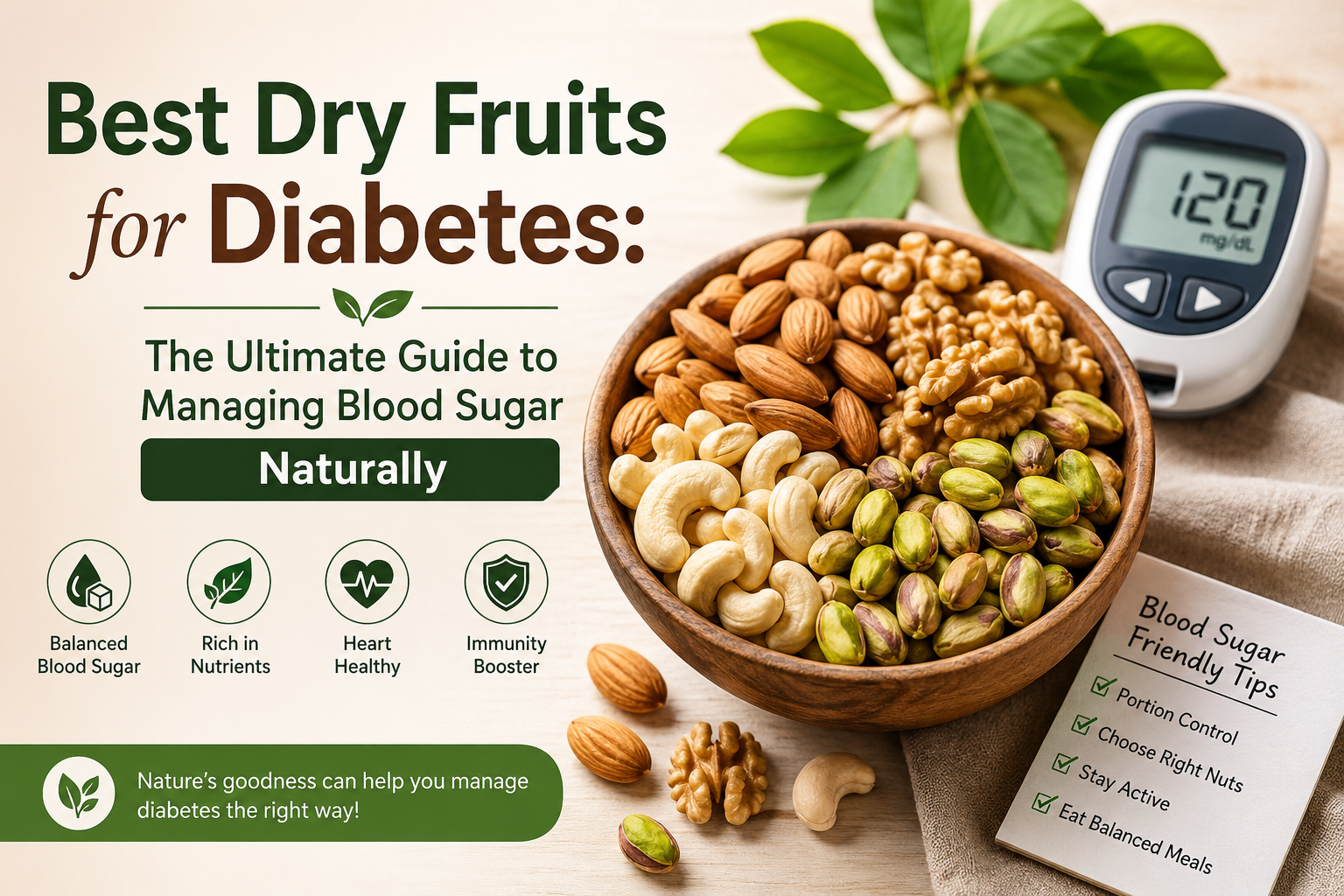
Managing diabetes doesn’t mean giving up every delicious snack. In fact, choosing nutrient-dense foods can help support stable blood sugar levels and overall health. Dry fruits, particularly nuts and seeds, are packed with healthy fats, plant-based protein, fiber, vitamins, minerals, and antioxidants that can be part of a diabetes-friendly eating plan.
However, not all dry fruits affect blood sugar in the same way. Some are naturally low in carbohydrates and have a minimal impact on blood glucose, while others contain higher amounts of natural sugars and should be eaten in smaller portions.
This guide explores the 10 best dry fruits for diabetes, explains why they are beneficial, and provides practical tips on portion sizes and smart ways to include them in your diet.
Important: This article is for educational purposes only and should not replace medical advice. If you have diabetes or another medical condition, consult your healthcare provider or a registered dietitian before making significant dietary changes.
Can People with Diabetes Eat Dry Fruits?
Yes. Most people with diabetes can enjoy many dry fruits as part of a balanced diet. The key is choosing varieties that are high in fiber, healthy fats, and protein, while paying attention to portion sizes.
Nuts such as almonds, walnuts, and pistachios generally have a lower effect on blood sugar because they contain relatively few digestible carbohydrates. Some dried fruits, such as dates and raisins, contain more natural sugar, so they should be eaten in moderation and preferably paired with protein or healthy fats.
When selecting dry fruits, choose:
- Plain, unsalted nuts
- Dry-roasted or raw varieties
- Products without added sugar
- Unsweetened dried fruits
Avoid products coated with sugar, chocolate, or syrup.
Why Some Dry Fruits Are Better for Blood Sugar
Several characteristics make certain dry fruits more suitable for people managing diabetes.
1. High in Fiber
Fiber slows the digestion and absorption of carbohydrates, helping reduce rapid increases in blood sugar after meals.
Foods rich in fiber may also:
- Increase fullness
- Support digestive health
- Help with weight management
- Promote a healthy gut microbiome
2. Rich in Healthy Fats
Healthy monounsaturated and polyunsaturated fats found in nuts can help slow digestion and make meals more satisfying.
These fats also support heart health, which is especially important because people with diabetes have a higher risk of cardiovascular disease.
3. Good Source of Plant-Based Protein
Protein helps balance meals and can improve satiety without causing significant increases in blood sugar.
Combining protein-rich nuts with carbohydrate-containing foods may help create a more balanced snack.
4. Packed with Vitamins and Minerals
Many diabetes-friendly dry fruits provide nutrients such as:
- Magnesium
- Vitamin E
- Potassium
- Zinc
- Copper
- Selenium
These nutrients support overall health and contribute to normal body functions.
How to Choose the Best Dry Fruits for Diabetes
When shopping, keep these tips in mind:
✔ Choose raw or dry-roasted nuts.
✔ Look for products with no added sugar.
✔ Avoid honey-roasted or candy-coated nuts.
✔ Check the nutrition label for sodium and added sugars.
✔ Measure portions instead of eating directly from the package.
Recommended Serving Sizes
Because dry fruits are nutrient-dense and calorie-rich, moderation is important.
| Dry Fruit | Recommended Serving |
|---|---|
| Almonds | 23 nuts |
| Walnuts | 14 halves |
| Pistachios | 49 kernels |
| Pecans | 19 halves |
| Brazil Nuts | 1–2 nuts |
Pairing these servings with fresh vegetables, yogurt, or other balanced foods can make for a satisfying snack.
1. Almonds – The Best Overall Dry Fruit for Diabetes
Almonds are one of the most researched nuts for metabolic health. They are naturally low in carbohydrates and rich in healthy fats, protein, fiber, magnesium, and vitamin E.
Nutrition (Per 28g)
- Calories: 164
- Protein: 6 g
- Fiber: 3.5 g
- Healthy Fat: 14 g
- Magnesium: High
Why Almonds Are Diabetes-Friendly
Almonds may:
- Help promote fullness
- Slow digestion when eaten with meals
- Support healthy blood sugar management as part of a balanced diet
- Provide magnesium, which contributes to normal glucose metabolism
- Support heart health
Best Ways to Eat Almonds
- Raw
- Dry roasted
- Added to oatmeal
- Mixed into plain Greek yogurt
- Sprinkled over salads
2. Walnuts – Rich in Omega-3 Healthy Fats
Walnuts are an excellent source of plant-based omega-3 fatty acids (ALA), along with antioxidants and fiber.
Nutrition (Per 28g)
- Calories: 185
- Protein: 4 g
- Fiber: 2 g
- Healthy Fat: 18 g
Benefits for People with Diabetes
Walnuts may:
- Promote satiety
- Support heart health
- Provide healthy fats that fit into diabetes-friendly eating patterns
- Add texture and nutrition to meals
Best Ways to Eat Walnuts
- Oatmeal
- Salads
- Smoothies
- Yogurt
- Homemade trail mix
3. Pistachios – High in Protein and Fiber
Pistachios provide a satisfying combination of protein, fiber, and healthy fats.
Eating them in their shells may naturally slow down snacking, which can help with portion control.
Nutrition (Per 28g)
- Calories: 159
- Protein: 6 g
- Fiber: 3 g
- Healthy Fat: 13 g
Diabetes-Friendly Benefits
Pistachios may:
- Help you feel full longer
- Support balanced eating habits
- Provide antioxidants
- Offer important vitamins and minerals
Choose unsalted pistachios whenever possible.
4. Brazil Nuts – Small but Nutrient-Dense
Brazil nuts are especially rich in selenium, a mineral that supports thyroid function and immune health.
Nutrition (Per 2 Nuts)
- Calories: ~66
- Protein: 2 g
- Healthy Fat: 7 g
- Selenium: Very high
Benefits
Brazil nuts may:
- Support normal thyroid function
- Provide healthy fats
- Promote fullness
Because they contain large amounts of selenium, 1–2 Brazil nuts per day are generally sufficient.
5. Pecans – Rich in Heart-Healthy Fats
Pecans are naturally low in carbohydrates and rich in monounsaturated fats and antioxidants.
Nutrition (Per 28g)
- Calories: 196
- Protein: 3 g
- Fiber: 3 g
- Healthy Fat: 20 g
Why Pecans Are a Good Choice
Pecans may:
- Help satisfy hunger
- Support heart health
- Provide antioxidants
- Fit well into lower-carbohydrate eating patterns
Enjoy pecans in moderation because they are calorie-dense.
6. Hazelnuts – Rich in Healthy Fats and Vitamin E
Hazelnuts are packed with monounsaturated fats, vitamin E, magnesium, and antioxidants. Their combination of healthy fats and fiber makes them a satisfying snack for people managing diabetes.
Nutrition (Per 28g)
- Calories: 178
- Protein: 4 g
- Fiber: 3 g
- Healthy Fat: 17 g
- Vitamin E: High
Diabetes-Friendly Benefits
Hazelnuts may:
- Help promote fullness
- Support heart health
- Provide antioxidant protection
- Add healthy fats to your diet
Best Ways to Eat Hazelnuts
- Raw
- Dry roasted
- Mixed into plain yogurt
- Added to salads
- Homemade trail mix
7. Cashews – Enjoy in Moderation
Cashews contain healthy fats, protein, and important minerals such as magnesium, zinc, and copper. They have slightly more carbohydrates than some other nuts, but they can still fit into a diabetes-friendly eating plan when portion sizes are controlled.
Nutrition (Per 28g)
- Calories: 157
- Protein: 5 g
- Fiber: 1 g
- Healthy Fat: 12 g
Benefits
Cashews may:
- Provide lasting energy
- Support bone and muscle health
- Contribute to balanced meals when paired with vegetables or protein-rich foods
Choose plain, unsalted cashews rather than flavored or sweetened varieties.
8. Pumpkin Seeds – A Nutrient-Packed Choice
Although technically seeds rather than nuts, pumpkin seeds are often included with dry fruits because of their nutritional value.
They are rich in protein, magnesium, iron, zinc, and healthy fats.
Nutrition (Per 28g)
- Calories: 160
- Protein: 8 g
- Fiber: 2 g
- Healthy Fat: 13 g
Benefits for Diabetes
Pumpkin seeds may:
- Help increase fullness
- Support heart health
- Provide magnesium, which contributes to normal muscle and nerve function
- Add plant-based protein to snacks and meals
Best Ways to Eat Pumpkin Seeds
- Sprinkle over salads
- Mix into oatmeal
- Blend into smoothies
- Add to homemade trail mix
9. Chia Seeds – High in Fiber
Chia seeds are another nutrient-rich seed that can support a balanced eating plan.
They absorb water and form a gel-like texture, which can make meals more filling.
Nutrition (Per 28g)
- Calories: 138
- Protein: 5 g
- Fiber: 10 g
- Healthy Fat: 9 g
Benefits
Chia seeds may:
- Increase feelings of fullness
- Support digestive health
- Provide plant-based omega-3 fatty acids
- Help create balanced meals when combined with yogurt or oats
Best Ways to Eat Chia Seeds
- Chia pudding
- Smoothies
- Yogurt
- Oatmeal
- Homemade energy bites
10. Flaxseeds – Rich in Omega-3 and Fiber
Flaxseeds are packed with fiber, healthy fats, and plant compounds called lignans.
Ground flaxseeds are easier to digest than whole flaxseeds.
Nutrition (Per 28g)
- Calories: 150
- Protein: 5 g
- Fiber: 8 g
- Healthy Fat: 12 g
Benefits
Flaxseeds may:
- Support digestive health
- Promote fullness
- Provide omega-3 fatty acids
- Complement a heart-healthy diet
Best Ways to Eat Flaxseeds
- Ground into smoothies
- Mixed with yogurt
- Stirred into oatmeal
- Added to baking recipes
Best Time to Eat Dry Fruits for Diabetes
The timing of snacks can help you stay satisfied throughout the day.
Morning
Add nuts or seeds to breakfast for protein, fiber, and healthy fats.
Good options include:
- Greek yogurt with almonds
- Oatmeal with walnuts
- Chia pudding
- Whole-grain toast with almond butter
Mid-Morning or Afternoon Snack
A measured serving of nuts can help reduce hunger before your next meal.
Before Exercise
If you exercise, pair a small serving of nuts with a piece of fruit if recommended by your healthcare provider or dietitian.
After Exercise
Combine nuts or seeds with a protein source, such as plain yogurt or cottage cheese, to create a balanced recovery snack.
Portion Sizes Matter
Even healthy foods can contribute excess calories if eaten in large amounts.
General serving sizes include:
| Dry Fruit | Recommended Serving |
|---|---|
| Almonds | 23 nuts |
| Walnuts | 14 halves |
| Pistachios | 49 kernels |
| Cashews | 18 nuts |
| Hazelnuts | 20 nuts |
| Pumpkin Seeds | 2 tablespoons |
| Chia Seeds | 1–2 tablespoons |
| Flaxseeds | 1 tablespoon (ground) |
| Brazil Nuts | 1–2 nuts |
Measuring servings can help you enjoy these foods while supporting your overall nutrition goals.
Dry Fruits to Limit or Eat Occasionally
Some dried fruits are naturally higher in sugar and carbohydrates. They don’t necessarily need to be avoided, but portion control is important.
Examples include:
- Dates
- Raisins
- Dried mango
- Dried pineapple
- Sweetened dried cranberries
Choose unsweetened versions whenever available, and consider pairing them with nuts or plain yogurt to create a more balanced snack.
Common Mistakes to Avoid
Eating Large Portions
Nuts and seeds are nutritious but calorie-dense. Eating directly from a large bag can make portion control difficult.
Choosing Sugar-Coated Products
Avoid:
- Honey-roasted nuts
- Chocolate-covered nuts
- Sugar-coated seeds
- Candied mixed nuts
These products often contain added sugars that are not ideal for blood sugar management.
Ignoring Nutrition Labels
Always check ingredient lists for:
- Added sugar
- Syrups
- Excess sodium
- Hydrogenated oils
Choose products with simple ingredient lists whenever possible.
Relying Only on Dry Fruits
Dry fruits should complement a balanced diet that also includes:
- Non-starchy vegetables
- Whole grains (as appropriate for your eating plan)
- Lean proteins
- Healthy fats
- Fruits in suitable portions
A varied diet provides a wider range of nutrients than relying on one food group alone.
Frequently Asked Questions (FAQs)
1. Which dry fruit is best for diabetes?
Almonds are often considered one of the best dry fruits for people with diabetes because they are rich in protein, fiber, healthy fats, and magnesium while being relatively low in digestible carbohydrates. Walnuts, pistachios, hazelnuts, and pumpkin seeds are also excellent choices.
2. Can people with diabetes eat dry fruits every day?
Yes. Most people with diabetes can include a moderate serving of diabetes-friendly dry fruits in their daily meal plan. Portion control and overall carbohydrate intake are important.
3. Are dates safe for people with diabetes?
Dates contain natural sugars and carbohydrates, so they should be eaten in moderation. Small portions may fit into some meal plans, especially when paired with protein or healthy fats, but it’s best to discuss portion sizes with your healthcare provider or dietitian.
4. Are raisins good for diabetes?
Raisins can be enjoyed occasionally in small portions because they contain concentrated natural sugars. Pairing raisins with nuts or plain yogurt may help create a more balanced snack.
5. Can nuts lower blood sugar?
Nuts are not a treatment for diabetes and do not directly lower blood sugar. However, because they contain healthy fats, protein, and fiber, they can be part of a balanced eating pattern that supports healthy blood sugar management.
6. Which nuts should people with diabetes avoid?
Most plain nuts can fit into a diabetes-friendly diet. It’s best to limit:
- Honey-roasted nuts
- Sugar-coated nuts
- Chocolate-covered nuts
- Heavily salted varieties
These products often contain added sugars, sodium, or extra calories.
7. Are pumpkin seeds good for diabetes?
Yes. Pumpkin seeds provide protein, healthy fats, magnesium, and fiber, making them a nutritious addition to a balanced diet.
8. How many nuts should a person with diabetes eat daily?
For most adults, a serving of about 28 grams (1 ounce) per day is appropriate. Examples include:
- 23 almonds
- 14 walnut halves
- 49 pistachios
- 20 hazelnuts
Individual needs may vary depending on your meal plan and health goals.
Tips for Managing Blood Sugar with Dry Fruits
Including dry fruits in your diet is only one part of good diabetes management. These practical tips can help you make the most of them.
Choose Plain, Unsalted Varieties
Select raw or dry-roasted nuts without added sugar, honey, or excessive salt.
Measure Your Portions
Use a measuring cup or kitchen scale rather than eating directly from the package.
Pair with Protein
Balanced snacks may include:
- Almonds with plain Greek yogurt
- Walnuts with cottage cheese
- Pistachios with sliced cucumber
- Pumpkin seeds sprinkled on a salad
Read Nutrition Labels
Look for products that contain:
- No added sugar
- No syrups
- Minimal sodium
- Simple ingredient lists
Stay Physically Active
Healthy eating works best alongside regular physical activity, such as walking, cycling, swimming, or strength training, according to your healthcare provider’s recommendations.
Foods That Pair Well with Diabetes-Friendly Dry Fruits
Combining dry fruits with other nutrient-rich foods creates balanced meals and snacks.
Healthy Breakfast
- Oatmeal with chopped walnuts
- Greek yogurt with almonds
- Chia pudding with berries
- Whole-grain toast with almond butter
Healthy Snacks
- Almonds with apple slices
- Pistachios with cucumber
- Pumpkin seeds mixed into plain yogurt
- Walnuts with carrots
Salads
Add nuts and seeds to salads for extra texture and nutrition.
Examples include:
- Walnuts with spinach
- Almonds with mixed greens
- Pumpkin seeds with kale
- Pecans with arugula
Who Should Be Careful?
Although these foods are healthy, some individuals should take extra care.
People with Nut Allergies
Anyone with a tree nut allergy should avoid the nuts that trigger their allergy and seek medical advice.
People with Kidney Disease
Some nuts contain significant amounts of potassium or phosphorus. People with certain kidney conditions should follow advice from their healthcare provider.
People Trying to Lose Weight
Dry fruits are calorie-dense. Portion control is important to support weight management.
How to Store Dry Fruits
To keep nuts and seeds fresh:
- Store them in airtight containers.
- Keep them in a cool, dry place.
- Refrigerate or freeze for longer storage.
- Protect them from moisture, heat, and direct sunlight.
Proper storage helps preserve flavor, texture, and nutritional quality.
Final Thoughts
Dry fruits can be a nutritious addition to a diabetes-friendly eating plan when chosen carefully and eaten in moderation. Nuts and seeds such as almonds, walnuts, pistachios, hazelnuts, pumpkin seeds, chia seeds, and flaxseeds provide healthy fats, protein, fiber, and essential nutrients that support overall health.
At the same time, remember that diabetes management involves more than one food. A balanced eating pattern, regular physical activity, appropriate medication (if prescribed), and routine blood sugar monitoring all play important roles.
If you’re unsure which foods are best for your personal needs, consult your healthcare provider or a registered dietitian for individualized advice.
Key Takeaways
- Plain nuts and seeds can be part of a diabetes-friendly diet.
- Almonds, walnuts, pistachios, hazelnuts, and pumpkin seeds are among the best choices.
- Choose raw or dry-roasted varieties without added sugar.
- Measure portion sizes to manage calories and carbohydrates.
- Pair dry fruits with protein-rich foods for balanced snacks.
- Limit sweetened dried fruits and sugar-coated nuts.
- Combine healthy eating with regular exercise and medical guidance for the best results.
You May Also Like
Continue learning about healthy eating with these related articles:
🥜 Nuts & Dry Fruits
- Best Dry Fruits for Weight Loss
- Benefits of Almonds
- 10 Best Dry Fruits for Diabetes
- Best Dry Fruits for Weight Loss
- Walnuts vs. Almonds: Which Is Healthier?
- Top High-Protein Nuts




Leave a Reply