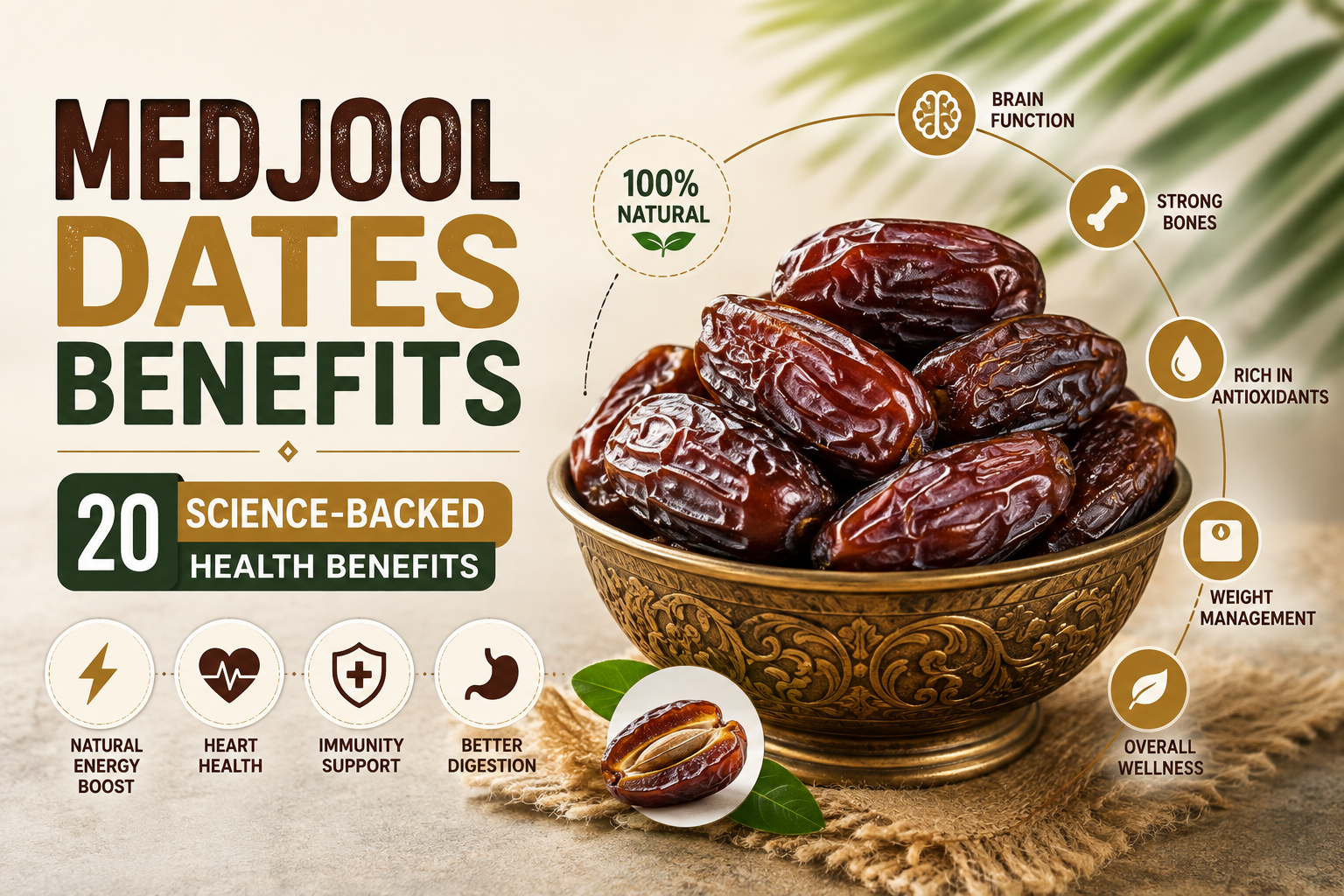
Medjool dates are often called the “King of Dates” because of their large size, soft texture, rich caramel-like flavor, and impressive nutritional value. Originally cultivated in Morocco, these premium dates are now grown in several regions around the world, including the Middle East and the United States.
Besides their naturally sweet taste, Medjool dates are packed with dietary fiber, antioxidants, vitamins, and essential minerals that support overall health. They are a popular natural snack for athletes, fitness enthusiasts, and anyone looking for a healthier alternative to refined sugar.
Although Medjool dates contain natural sugars, they also provide fiber and important nutrients, making them a nutritious choice when enjoyed in moderation as part of a balanced diet.
In this comprehensive guide, you’ll discover 20 science-backed benefits of Medjool dates, their nutrition facts, the best ways to eat them, recommended serving sizes, and answers to frequently asked questions.
What Are Medjool Dates?
Medjool dates are the fruit of the date palm tree (Phoenix dactylifera). They are one of the largest and most popular varieties of dates available.
Compared with many other date varieties, Medjool dates are:
- Larger in size
- Softer and juicier
- Naturally sweet with a caramel-like flavor
- Rich in fiber and minerals
- Easy to enjoy as a snack or ingredient
Because of their natural sweetness, Medjool dates are commonly used as a healthier alternative to refined sugar in smoothies, desserts, and energy bars.
Medjool Dates Nutrition Facts
A typical serving of 2 Medjool dates (about 48 grams) provides approximately:
| Nutrient | Amount |
|---|---|
| Calories | 133 |
| Carbohydrates | 36 g |
| Natural Sugars | 32 g |
| Fiber | 3.2 g |
| Protein | 1 g |
| Fat | 0 g |
| Potassium | 334 mg |
| Magnesium | 13 mg |
| Copper | Good source |
| Vitamin B6 | Moderate |
Medjool dates also contain:
- Calcium
- Iron
- Phosphorus
- Manganese
- Antioxidants
- Polyphenols
Their combination of natural sugars and fiber provides quick energy while slowing digestion compared with foods containing refined sugar alone.
Why Are Medjool Dates So Healthy?
Medjool dates are considered nutrient-dense because they offer much more than natural sweetness.
They provide:
- Dietary fiber
- Natural carbohydrates
- Antioxidants
- Potassium
- Magnesium
- Copper
- Vitamin B6
- Plant compounds called polyphenols
These nutrients contribute to overall health and can be part of a balanced eating pattern.
1. Rich in Dietary Fiber
One of the biggest nutritional advantages of Medjool dates is their fiber content.
Fiber plays an important role in:
- Supporting digestive health
- Promoting regular bowel movements
- Increasing feelings of fullness
- Supporting a healthy gut microbiome
Including fiber-rich foods like Medjool dates in your diet can help you meet your daily fiber needs.
2. Excellent Source of Antioxidants
Medjool dates contain several beneficial antioxidants, including:
- Flavonoids
- Carotenoids
- Phenolic acids
Antioxidants help protect the body’s cells from oxidative stress caused by free radicals.
A diet rich in antioxidant-containing foods supports overall health and healthy aging.
3. Supports Healthy Digestion
The combination of fiber and natural plant compounds makes Medjool dates a digestive-friendly food.
Regular fiber intake may help:
- Promote bowel regularity
- Support beneficial gut bacteria
- Improve digestive comfort
- Contribute to overall gut health
For the greatest digestive benefits, eat Medjool dates alongside other fiber-rich foods such as vegetables, fruits, legumes, and whole grains.
4. Provides Natural Energy
Because Medjool dates contain natural carbohydrates, they provide a quick source of energy.
Many athletes and active individuals enjoy them:
- Before workouts
- During endurance exercise
- As a post-workout snack paired with protein
Unlike candy or sugary drinks, Medjool dates also provide fiber, vitamins, and minerals.
5. Supports Heart Health
Heart health depends on many lifestyle factors, including a balanced diet.
Medjool dates provide nutrients that support cardiovascular health, including:
- Potassium
- Fiber
- Antioxidants
Replacing highly processed sugary snacks with whole foods like Medjool dates may improve overall diet quality.
6. Rich in Potassium
Potassium is an essential mineral that supports:
- Normal muscle function
- Healthy nerve function
- Fluid balance
- Normal blood pressure regulation
Medjool dates are a convenient source of potassium, making them a nutritious addition to a balanced diet.
People with kidney disease or other medical conditions affecting potassium intake should consult their healthcare provider before increasing potassium-rich foods.
7. May Support Bone Health
Healthy bones require several vitamins and minerals working together.
Medjool dates contain:
- Magnesium
- Phosphorus
- Copper
- Manganese
These nutrients contribute to maintaining normal bone health when consumed as part of a varied diet.
Pair Medjool dates with calcium-rich foods such as yogurt or milk for a nutrient-rich snack.
Best Ways to Eat Medjool Dates
Medjool dates are delicious and incredibly versatile.
Breakfast
- Chop into oatmeal
- Add to overnight oats
- Blend into smoothies
- Mix into yogurt
- Sprinkle over breakfast bowls
Healthy Snacks
- Stuff with almond butter or peanut butter
- Pair with walnuts
- Enjoy with cheese
- Eat with mixed nuts
Desserts
- Blend into energy balls
- Add to homemade granola bars
- Use in baking recipes
- Blend into natural date paste as a refined sugar alternative
How Many Medjool Dates Should You Eat?
Because Medjool dates are naturally high in carbohydrates and sugars, moderation is important.
For most healthy adults:
- 2–3 Medjool dates per day fit well into a balanced diet.
If you’re physically active, your energy needs may be higher. If you have diabetes or another medical condition, discuss appropriate portion sizes with your healthcare provider or a registered dietitian.
8. Supports Brain Health
Your brain needs a steady supply of nutrients to function properly. Medjool dates provide natural carbohydrates for energy along with antioxidants, potassium, and vitamin B6, which contribute to normal nervous system function.
Including antioxidant-rich foods as part of a balanced diet may help protect cells from oxidative stress, an important factor in maintaining overall brain health.
Key Nutrients for Brain Health
- Vitamin B6
- Potassium
- Natural carbohydrates
- Polyphenols
- Flavonoids
For the best results, combine Medjool dates with other brain-friendly foods such as walnuts, almonds, berries, and leafy green vegetables.
9. May Support a Healthy Pregnancy
Medjool dates are a nutritious food that provides fiber, potassium, magnesium, and natural energy. These nutrients can be beneficial during pregnancy when included as part of a balanced diet.
Some research has explored date consumption in late pregnancy, but more evidence is needed before making broad recommendations. Pregnant women should always follow the advice of their healthcare provider.
Nutritional Benefits During Pregnancy
- Natural source of energy
- Fiber for digestive health
- Potassium for normal muscle function
- Magnesium for overall wellness
10. May Support Healthy Blood Sugar Management (When Eaten in Moderation)
Although Medjool dates contain natural sugars, they also contain dietary fiber, which slows digestion compared with foods containing only refined sugar.
For people with diabetes or prediabetes, portion size is especially important.
Tips for Enjoying Medjool Dates
- Eat 1–2 dates at a time rather than large portions.
- Pair dates with protein or healthy fats, such as almonds, walnuts, or plain Greek yogurt.
- Include them within your overall carbohydrate intake for the day.
- Monitor blood sugar as advised by your healthcare provider.
Dates should not be considered a treatment for diabetes, but they can fit into some meal plans when eaten thoughtfully.
11. Supports Exercise Recovery
Medjool dates are a popular snack among athletes because they provide quickly available carbohydrates that help replenish energy after physical activity.
Pairing dates with a protein source creates a more balanced recovery snack.
Great Post-Workout Combinations
- Medjool dates with almonds
- Dates and walnuts
- Greek yogurt with chopped dates
- Cottage cheese with dates
- Peanut butter stuffed dates
12. Promotes Healthy Skin
Healthy skin depends on a combination of good nutrition, hydration, sleep, and sun protection.
Medjool dates provide:
- Antioxidants
- Copper
- Vitamin B6
- Natural plant compounds
These nutrients contribute to maintaining healthy skin and protecting cells from oxidative stress.
13. Supports the Immune System
A healthy immune system relies on a variety of vitamins, minerals, and antioxidants.
Medjool dates contribute nutrients such as:
- Copper
- Potassium
- Magnesium
- Polyphenols
Combined with fruits, vegetables, whole grains, lean protein, and healthy fats, dates can be part of an overall healthy eating pattern.
14. Helps Reduce Oxidative Stress
Oxidative stress occurs when free radicals outnumber the body’s antioxidant defenses.
Medjool dates contain several antioxidant compounds, including:
- Phenolic acids
- Flavonoids
- Carotenoids
Eating a diet rich in colorful fruits, vegetables, nuts, seeds, and whole grains helps support the body’s natural defense systems.
15. A Convenient and Healthy Natural Snack
One of the biggest advantages of Medjool dates is convenience.
They require:
- No preparation
- No refrigeration (for short-term storage)
- No added sugar
Their naturally sweet taste makes them an excellent alternative to many processed snacks.
Healthy Snack Ideas
- Dates stuffed with almond butter
- Dates with walnuts
- Dates and cheese
- Dates with mixed nuts
- Dates sliced into oatmeal
Medjool Dates vs. Regular Dates
Many people wonder whether Medjool dates are healthier than other varieties.
| Feature | Medjool Dates | Regular Dates (e.g., Deglet Noor) |
|---|---|---|
| Size | Larger | Smaller |
| Texture | Soft and chewy | Firmer |
| Flavor | Rich, caramel-like | Mildly sweet |
| Moisture | Higher | Lower |
| Calories | Slightly higher per date | Slightly lower per date |
| Best Uses | Snacks, desserts, smoothies | Baking, cooking, snacks |
Both varieties are nutritious. The best choice depends on your taste preferences and intended use.
Best Time to Eat Medjool Dates
There is no single “perfect” time, but these are popular options:
Morning
Enjoy chopped dates in oatmeal or yogurt for natural energy.
Before Exercise
Eat 1–2 Medjool dates about 30–60 minutes before a workout for a quick source of carbohydrates.
After Exercise
Pair dates with protein-rich foods to support recovery.
As an Afternoon Snack
Stuff dates with nuts or nut butter for a balanced, satisfying snack.
Recommended Daily Serving
Because Medjool dates are naturally high in carbohydrates and sugars, moderation is key.
For Most Healthy Adults
- 2–3 Medjool dates per day
For Active Individuals
Energy needs may be higher, so slightly larger portions may fit within their diet.
For People with Diabetes
Work with your healthcare provider or registered dietitian to determine the portion size that best fits your meal plan.
Common Mistakes to Avoid
Eating Too Many Dates
Even nutritious foods can contribute excess calories and sugar if portions are too large.
Replacing Whole Fruits
Dates are nutritious, but they should complement—not replace—a variety of fresh fruits.
Buying Sugar-Coated Dates
Choose plain Medjool dates without:
- Added sugar
- Chocolate coatings
- Sweet syrups
Ignoring Portion Sizes
Instead of eating directly from the package, portion out your serving to help avoid overeating.
16. May Support Healthy Weight Management
Although Medjool dates are naturally sweet and contain more calories than many fresh fruits, they also provide dietary fiber that helps increase feelings of fullness. When eaten in moderation as part of a balanced diet, they can satisfy sweet cravings and reduce the temptation to choose highly processed desserts.
Weight Management Tips
- Stick to 2–3 Medjool dates per day for most healthy adults.
- Pair dates with nuts such as almonds or walnuts for a balanced snack.
- Use chopped dates instead of refined sugar in homemade recipes.
- Pay attention to your total daily calorie intake.
17. A Natural Alternative to Refined Sugar
One of the biggest advantages of Medjool dates is their natural sweetness. Many people use them to sweeten recipes without relying on refined white sugar.
You can blend Medjool dates into a smooth paste and use it in:
- Smoothies
- Oatmeal
- Homemade granola
- Energy balls
- Muffins
- Cookies
- Healthy desserts
While dates still contain natural sugars, they also provide fiber, vitamins, and minerals that refined sugar lacks.
18. Supports a Healthy Lifestyle
No single food can guarantee good health, but nutrient-dense foods like Medjool dates can contribute to a balanced eating pattern.
Combined with vegetables, fruits, whole grains, lean proteins, legumes, nuts, and seeds, Medjool dates can be part of an overall healthy lifestyle that supports long-term wellness.
19. Easy to Carry and Travel-Friendly
Medjool dates require little preparation and are easy to pack for busy days.
They make an excellent snack for:
- Office work
- School
- Hiking
- Traveling
- Gym bags
- Road trips
Unlike many processed snacks, Medjool dates are made by nature and don’t require artificial flavors or preservatives.
20. Delicious and Versatile
One of the reasons Medjool dates are loved worldwide is their versatility. They can be enjoyed in both sweet and savory dishes.
Creative Ways to Enjoy Medjool Dates
- Stuffed with almond butter
- Stuffed with peanut butter
- Filled with walnuts
- Chopped into oatmeal
- Mixed into yogurt
- Added to salads
- Blended into smoothies
- Mixed into homemade trail mix
- Used in baking
- Served on cheese boards
Their rich caramel-like flavor makes them a naturally satisfying ingredient in many recipes.
Frequently Asked Questions (FAQs)
1. Are Medjool dates healthy?
Yes. Medjool dates are rich in fiber, antioxidants, potassium, magnesium, copper, and natural carbohydrates, making them a nutritious addition to a balanced diet.
2. How many Medjool dates should I eat per day?
For most healthy adults, 2–3 Medjool dates per day fit well into a balanced eating plan. Individual needs may vary depending on activity level and health conditions.
3. Are Medjool dates good for weight loss?
Medjool dates can fit into a weight-loss plan when eaten in moderation. Their fiber content may help increase fullness, but portion control is important because they are calorie-dense.
4. Can people with diabetes eat Medjool dates?
Some people with diabetes may be able to include small portions of Medjool dates in their meal plan. Because dates contain natural sugars, portion size and overall carbohydrate intake matter. Consult your healthcare provider or registered dietitian for personalized advice.
5. What is the best time to eat Medjool dates?
Popular times include:
- At breakfast
- Before exercise
- After exercise with protein
- As a healthy afternoon snack
The best time depends on your lifestyle and nutrition goals.
6. Are Medjool dates better than regular dates?
Medjool dates are generally larger, softer, and sweeter than many other varieties. Both Medjool and other dates can be nutritious choices.
7. Should I refrigerate Medjool dates?
Yes. Refrigeration helps extend freshness, especially if you buy dates in large quantities or plan to store them for several weeks.
8. Can Medjool dates replace sugar?
Yes. Blended Medjool dates or date paste can replace refined sugar in many recipes while also adding fiber and minerals.
Who Should Limit Medjool Dates?
Although Medjool dates are healthy for many people, some individuals should be mindful of portion sizes.
People with Diabetes
Dates contain natural sugars and carbohydrates, so portion control is important.
People Following a Calorie-Controlled Diet
Because dates are calorie-dense, eating large portions may increase total calorie intake.
Individuals with Certain Medical Conditions
People with kidney disease or other health conditions that require dietary restrictions should follow the guidance of their healthcare provider.
How to Store Medjool Dates
Proper storage helps preserve freshness and flavor.
Storage Tips
- Keep dates in an airtight container.
- Refrigerate for longer shelf life.
- Freeze for long-term storage.
- Store away from moisture and direct sunlight.
- Check regularly for changes in smell or texture.
Properly stored Medjool dates can stay fresh for several months in the refrigerator and even longer in the freezer.
Final Thoughts
Medjool dates are more than just a naturally sweet treat—they are a nutrient-rich whole food that provides fiber, antioxidants, vitamins, and essential minerals. Their soft texture, caramel-like flavor, and versatility make them an excellent addition to many healthy eating patterns.
Whether you enjoy them as a quick snack, a natural sweetener, or part of a balanced breakfast, Medjool dates can help you increase your intake of nutrient-dense foods. The key is moderation, especially if you are monitoring your calorie or carbohydrate intake.
When combined with regular exercise, quality sleep, hydration, and a varied diet rich in fruits, vegetables, whole grains, lean proteins, nuts, and seeds, Medjool dates can be part of a healthy lifestyle.
Key Takeaways
- Medjool dates are rich in fiber, antioxidants, potassium, and natural energy.
- They can be a healthier alternative to refined sugar in many recipes.
- Most healthy adults can enjoy 2–3 Medjool dates per day.
- Pair dates with nuts or yogurt for a more balanced snack.
- Store dates in an airtight container and refrigerate for longer freshness.
- Enjoy them in moderation as part of a balanced diet.
You May Also Like
Continue exploring healthy foods with these related articles:
🥜 Nuts & Dry Fruits
- Healthiest Nuts to Eat Every Day
- Benefits of Almonds
- Walnut Benefits
- Best Time to Eat Nuts
- Best Nuts for Weight Loss
- Best Dry Fruits for Weight Loss
- 10 Best Dry Fruits for Diabetes (Science-Backed & Blood Sugar Friendly)



Leave a Reply