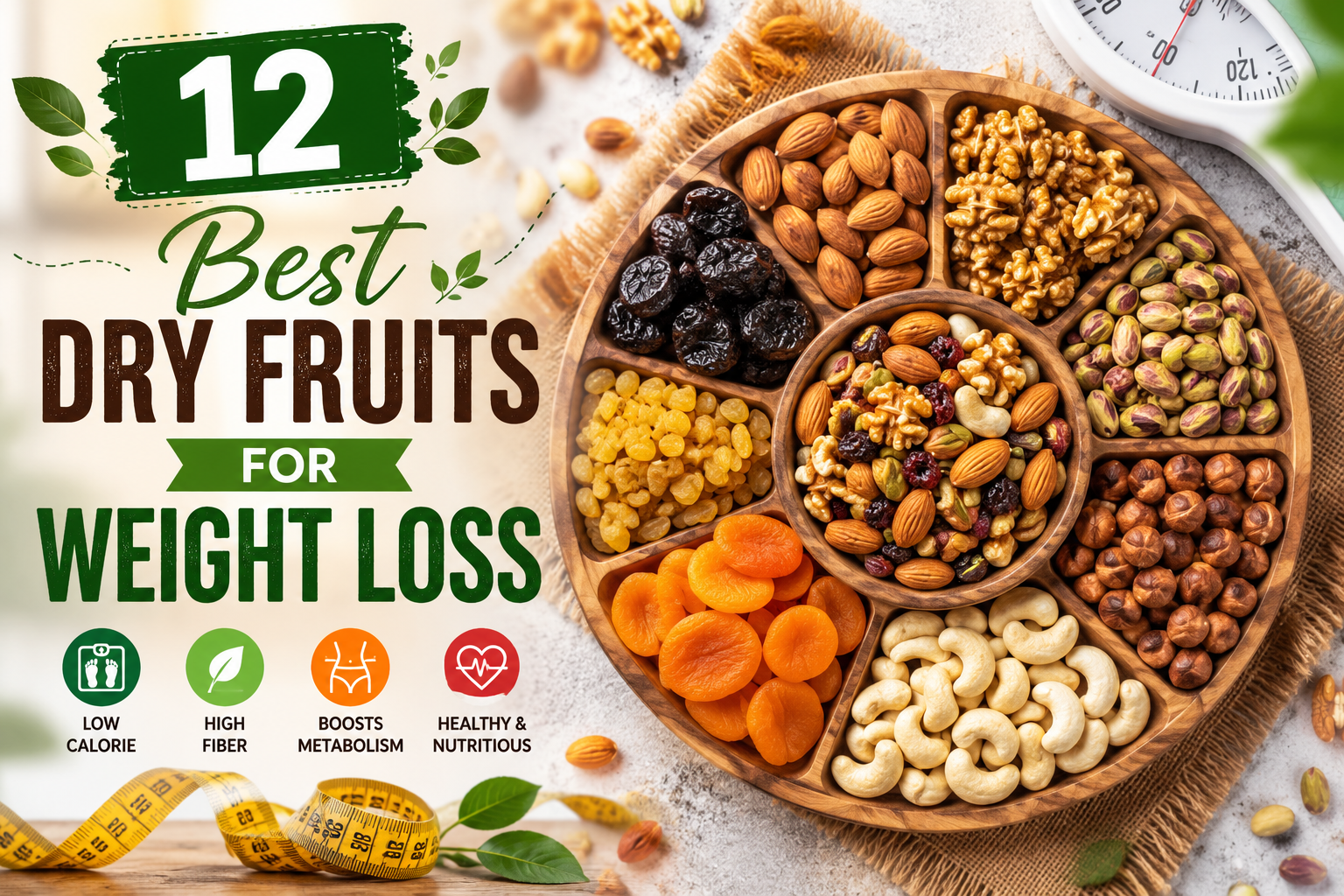
When trying to lose weight, many people assume they must avoid all high-calorie foods. However, that’s not always true. The key to successful weight loss is choosing nutrient-dense foods that keep you full, reduce cravings, and provide long-lasting energy. Dry fruits are an excellent example.
Packed with fiber, healthy fats, plant-based protein, vitamins, minerals, and antioxidants, many dry fruits can support a healthy weight-loss journey when eaten in the right portions. They are convenient, naturally sweet, and make a satisfying alternative to processed snacks like chips, cookies, and candy.
Whether your goal is to reduce body fat, improve your overall diet, or find healthier snack options, adding the right dry fruits to your daily routine can help you stay on track.
In this comprehensive guide, you’ll discover the 12 best dry fruits for weight loss, their nutritional benefits, recommended serving sizes, and practical tips to enjoy them as part of a balanced diet.
Are Dry Fruits Good for Weight Loss?
Yes, dry fruits can be good for weight loss when consumed in moderation.
Although many dry fruits are calorie-dense, they also provide nutrients that help control appetite and support overall health. Their combination of protein, fiber, and healthy fats helps you stay satisfied for longer, making it easier to avoid overeating.
Some dried fruits, such as raisins, prunes, figs, and apricots, also provide dietary fiber that supports digestion and promotes fullness.
The key is portion control. Eating a small serving each day can fit well into a calorie-conscious eating plan.
Why Dry Fruits Help with Weight Management
Dry fruits support weight management in several ways.
1. High in Fiber
Fiber slows digestion, helping you feel full for longer after eating.
A high-fiber diet may help:
- Reduce hunger
- Improve digestion
- Support gut health
- Maintain steady energy levels
- Reduce unnecessary snacking
2. Rich in Healthy Fats
Nuts such as almonds, walnuts, and pistachios contain heart-friendly monounsaturated and polyunsaturated fats.
These healthy fats promote satiety, making it easier to control calorie intake throughout the day.
3. Good Source of Plant Protein
Protein plays an important role in weight management by helping preserve lean muscle while reducing hunger.
Many nuts provide between 4–7 grams of protein per serving.
4. Naturally Sweet Alternative
Dried fruits like dates, raisins, and apricots satisfy sweet cravings naturally, making them a healthier alternative to sugary desserts when eaten in moderation.
5. Nutrient-Dense Snack
Dry fruits provide many essential nutrients, including:
- Vitamin E
- Magnesium
- Potassium
- Calcium
- Iron
- Zinc
- Copper
- Antioxidants
This makes them a much healthier choice than many ultra-processed snack foods.
Nutritional Benefits of Dry Fruits
Adding a variety of dry fruits to your diet can provide several health benefits beyond weight management.
These include:
- Better heart health
- Improved digestion
- Stronger bones
- Healthier skin
- Increased energy
- Better brain function
- Support for healthy cholesterol levels
Each type of dry fruit offers a unique combination of nutrients, so eating a variety can help you meet your nutritional needs.
How Much Dry Fruit Should You Eat Per Day?
Portion size is one of the most important factors when eating dry fruits for weight loss.
General serving recommendations include:
| Dry Fruit | Recommended Daily Serving |
|---|---|
| Almonds | 23 nuts |
| Walnuts | 14 halves |
| Pistachios | 49 kernels |
| Cashews | 18 nuts |
| Raisins | 2 tablespoons |
| Dates | 2–3 medium dates |
| Dried Figs | 2–3 figs |
| Dried Apricots | 4–5 pieces |
| Prunes | 3–5 prunes |
These amounts provide valuable nutrients without adding excessive calories to your daily intake.
1. Almonds – The Best Dry Fruit for Weight Loss
Almonds consistently rank among the healthiest foods for weight management.
They contain an excellent balance of protein, fiber, healthy fats, and vitamin E, making them one of the most filling snacks available.
Nutrition (Per 28g)
- Calories: 164
- Protein: 6 g
- Fiber: 3.5 g
- Healthy Fat: 14 g
- Vitamin E: High
Weight Loss Benefits
Almonds may help:
- Reduce hunger
- Keep you full between meals
- Support muscle maintenance
- Help manage blood sugar levels
- Reduce unhealthy snacking
Because almonds require more chewing than many processed snacks, they may also encourage slower, more mindful eating.
Best Ways to Eat Almonds
- Raw
- Dry roasted (unsalted)
- Added to oatmeal
- Mixed into Greek yogurt
- Blended into smoothies
- Homemade trail mix
2. Walnuts – Best for Healthy Fats
Walnuts are rich in plant-based omega-3 fatty acids (ALA), making them one of the healthiest nuts for both weight management and overall wellness.
Nutrition (Per 28g)
- Calories: 185
- Protein: 4 g
- Fiber: 2 g
- Healthy Fat: 18 g
Weight Loss Benefits
Walnuts may:
- Help control appetite
- Increase feelings of fullness
- Support heart health
- Reduce inflammation
- Provide long-lasting energy
Despite being slightly higher in calories, walnuts fit well into a balanced weight-loss diet when eaten in recommended portions.
Best Ways to Eat Walnuts
- Oatmeal
- Salads
- Yogurt
- Smoothies
- Homemade granola
3. Pistachios – The Best Low-Calorie Nut
Pistachios are among the lowest-calorie nuts and provide an excellent combination of protein and fiber.
Eating pistachios in their shells may also help slow down snacking, making portion control easier.
Nutrition (Per 28g)
- Calories: 159
- Protein: 6 g
- Fiber: 3 g
- Healthy Fat: 13 g
Weight Loss Benefits
Pistachios may:
- Promote fullness
- Reduce overall calorie intake
- Support digestion
- Help maintain healthy blood sugar levels
- Provide antioxidants that support overall health
Best Ways to Eat Pistachios
- Unsalted snack
- Salad topping
- Mixed into yogurt
- Homemade trail mix
- Healthy lunchbox snack
4. Dates – A Naturally Sweet Energy Boost
Dates are naturally sweet and rich in fiber, making them a satisfying choice when you’re craving something sweet.
Although dates contain more natural sugar than most nuts, they can still fit into a healthy eating plan when enjoyed in moderation.
Nutrition (Per 2 Medium Dates)
- Calories: ~130
- Fiber: 3 g
- Potassium: High
- Magnesium: Moderate
Weight Loss Benefits
Dates may:
- Help satisfy sweet cravings
- Provide quick energy before workouts
- Support digestive health
- Reduce the desire for processed desserts
Pair dates with a few almonds or walnuts to create a balanced snack with protein, healthy fats, and fiber.
5. Raisins – A Fiber-Rich Snack
Raisins are dried grapes packed with natural sweetness, antioxidants, and dietary fiber.
When eaten in moderate portions, they can be a healthier alternative to candy or sugary snacks.
Nutrition (Per 2 Tablespoons)
- Calories: ~85
- Fiber: 1–2 g
- Iron: Small amount
- Potassium: Good source
Weight Loss Benefits
Raisins may:
- Help satisfy sugar cravings naturally
- Provide quick energy for active lifestyles
- Support healthy digestion
- Pair well with protein-rich foods like nuts or yogurt
For better appetite control, combine raisins with almonds or pistachios instead of eating large portions on their own.
6. Cashews – A Healthy Snack in Moderation
Cashews are creamy, delicious, and packed with essential minerals. While they contain slightly more carbohydrates than some other nuts, they can still be part of a healthy weight-loss diet when eaten in the right portions.
Nutrition (Per 28g)
- Calories: 157
- Protein: 5 g
- Fiber: 1 g
- Healthy Fat: 12 g
- Magnesium: High
- Copper: High
Weight Loss Benefits
Cashews may:
- Help control hunger
- Support muscle recovery
- Provide steady energy
- Promote healthy bones
- Supply important minerals for metabolism
Best Ways to Eat Cashews
- Raw or dry roasted
- Added to stir-fries
- Mixed into homemade trail mix
- Blended into smoothies
- Chopped over salads
7. Dried Figs – High in Fiber
Dried figs are naturally sweet and one of the richest dried fruits in dietary fiber. They are a satisfying option for people looking to reduce cravings while improving digestion.
Nutrition (Per 2–3 Figs)
- Calories: ~100
- Fiber: 4–5 g
- Calcium: Good source
- Potassium: Good source
Weight Loss Benefits
Dried figs may:
- Increase fullness
- Improve digestive health
- Reduce cravings for sweets
- Support healthy bowel movements
Best Ways to Eat Dried Figs
- With Greek yogurt
- Chopped into oatmeal
- Added to homemade granola
- As a healthy afternoon snack
8. Dried Apricots – Low in Calories and Rich in Nutrients
Dried apricots are naturally sweet, low in fat, and packed with vitamins and minerals. They are an excellent choice for people looking for a nutritious snack with fewer calories.
Nutrition (Per 5 Pieces)
- Calories: ~85
- Fiber: 2–3 g
- Vitamin A: High
- Potassium: Good source
Weight Loss Benefits
Dried apricots may:
- Help control appetite
- Support eye health
- Improve digestion
- Provide steady energy
Best Ways to Eat Dried Apricots
- Mixed with almonds
- Added to cereal
- Chopped into salads
- Homemade energy bites
9. Prunes – Great for Digestion
Prunes (dried plums) are widely known for supporting digestive health. Their fiber and naturally occurring sorbitol make them a popular choice for maintaining regular bowel movements.
Nutrition (Per 5 Prunes)
- Calories: ~100
- Fiber: 3 g
- Potassium: High
- Vitamin K: Good source
Weight Loss Benefits
Prunes may:
- Improve digestion
- Help reduce hunger
- Support gut health
- Naturally satisfy sweet cravings
Best Ways to Eat Prunes
- Morning snack
- With oatmeal
- Mixed into yogurt
- Healthy trail mix
10. Brazil Nuts – Small but Powerful
Brazil nuts are best known for their exceptionally high selenium content, a mineral that supports thyroid function and immune health.
Nutrition (Per 2 Nuts)
- Calories: ~66
- Protein: 2 g
- Healthy Fat: 7 g
- Selenium: Very high
Weight Loss Benefits
Brazil nuts may:
- Support thyroid health
- Help maintain normal metabolism
- Promote fullness due to healthy fats
Tip: Because Brazil nuts are extremely rich in selenium, eating 1–2 nuts per day is usually enough.
11. Pecans – Rich in Healthy Fats
Pecans are packed with heart-healthy monounsaturated fats and antioxidants. Their rich flavor makes them a satisfying snack in small portions.
Nutrition (Per 28g)
- Calories: 196
- Protein: 3 g
- Fiber: 3 g
- Healthy Fat: 20 g
Weight Loss Benefits
Pecans may:
- Help reduce cravings
- Support heart health
- Keep you feeling satisfied
- Provide long-lasting energy
Best Ways to Eat Pecans
- Salad topping
- Oatmeal
- Homemade granola
- Mixed nuts
12. Hazelnuts – Nutrient-Dense and Filling
Hazelnuts are rich in healthy fats, vitamin E, and antioxidants. They can be a nutritious snack that helps keep hunger under control.
Nutrition (Per 28g)
- Calories: 178
- Protein: 4 g
- Fiber: 3 g
- Healthy Fat: 17 g
Weight Loss Benefits
Hazelnuts may:
- Promote satiety
- Support healthy cholesterol levels
- Provide antioxidant protection
- Add variety to your diet
Best Ways to Eat Hazelnuts
- Raw
- Dry roasted
- Added to yogurt
- Homemade trail mix
Best Time to Eat Dry Fruits for Weight Loss
The timing of your snacks can help you manage hunger throughout the day.
Morning
Adding dry fruits to breakfast provides lasting energy and helps keep you full.
Try them with:
- Oatmeal
- Greek yogurt
- Smoothies
- Whole-grain cereal
Mid-Morning Snack
A handful of mixed nuts or a small serving of dried fruits can prevent hunger before lunch.
Before Exercise
Dates, raisins, or dried apricots provide natural carbohydrates for quick energy before a workout.
After Exercise
Pair nuts with a protein source such as Greek yogurt or milk to support recovery.
Evening Snack
A small serving of almonds or walnuts can be a healthier alternative to chips or sweets.
Raw vs. Roasted Dry Fruits
Choosing the right form of dry fruits can make a difference.
Raw Dry Fruits
Pros
- No added oils
- No added salt
- Natural flavor
- Minimal processing
Dry-Roasted Dry Fruits
Pros
- Crunchier texture
- Great taste
- Retain most nutrients
Avoid
Try to limit:
- Honey-roasted nuts
- Sugar-coated nuts
- Chocolate-covered nuts
- Heavily salted varieties
These products often contain added sugar, sodium, or unhealthy fats that can increase calorie intake.
Common Mistakes to Avoid
Eating Too Much
Dry fruits are healthy but calorie-dense. Stick to recommended serving sizes.
Choosing Flavored Varieties
Many packaged dry fruits contain added sugar, salt, or oils. Choose plain, unsalted options whenever possible.
Replacing Balanced Meals
Dry fruits are best used as snacks or meal additions—not as a substitute for balanced meals that include vegetables, lean protein, and whole grains.
Ignoring Portion Sizes
Measure your servings instead of eating directly from a large bag to avoid accidental overeating.
Eating Only One Type
Different dry fruits provide different nutrients. Rotating your choices helps you enjoy a wider range of health benefits.
Frequently Asked Questions (FAQs)
1. Which dry fruit is best for weight loss?
Almonds are often considered one of the best dry fruits for weight loss because they are rich in protein, fiber, and healthy fats that help keep you full. Pistachios, walnuts, dried figs, and prunes are also excellent choices.
2. Can I eat dry fruits every day?
Yes. Most healthy adults can enjoy a moderate serving of dry fruits every day as part of a balanced diet. Portion control is important because dry fruits are calorie-dense.
3. How many dry fruits should I eat daily for weight loss?
A small handful (about 28–30 grams) of nuts or a moderate serving of dried fruits, such as 2–3 dates or 4–5 dried apricots, is generally suitable for most people.
4. Which dry fruits are lowest in calories?
Some of the lower-calorie options include:
- Pistachios
- Almonds
- Dried apricots
- Raisins (in small portions)
- Prunes
Even lower-calorie options should still be eaten in moderation.
5. Are dates good for weight loss?
Yes. Dates can fit into a weight-loss diet when eaten in moderation. They are naturally sweet and high in fiber, which can help satisfy cravings for sugary snacks.
6. Can dry fruits replace unhealthy snacks?
Absolutely. Replacing chips, cookies, candy, and sugary desserts with plain dry fruits can improve the nutritional quality of your diet and help control hunger.
7. Should I eat raw or roasted nuts?
Raw or dry-roasted, unsalted nuts are generally the healthiest choices. Avoid nuts coated with sugar, chocolate, or excessive salt.
8. Can I eat dry fruits at night?
Yes. A small serving of almonds or walnuts can be a satisfying evening snack. However, keep portions moderate to avoid consuming excess calories before bed.
Weight-Loss Tips Using Dry Fruits
To get the most benefit from dry fruits while managing your weight, follow these practical tips:
Measure Your Portions
Instead of eating directly from the package, portion your daily serving into a small bowl or container.
Pair with Protein
Combine dried fruits with protein-rich foods such as:
- Greek yogurt
- Cottage cheese
- Unsweetened peanut butter
- Mixed nuts
This combination helps keep you fuller for longer.
Choose Unsalted Nuts
Plain, unsalted nuts contain less sodium and no unnecessary flavorings, making them a healthier choice.
Stay Hydrated
Fiber works best when you drink enough water. Staying hydrated also supports digestion and overall health.
Be Physically Active
No single food can cause weight loss on its own. Combine healthy eating with regular exercise, strength training, or daily walking for the best results.
Foods That Pair Well with Dry Fruits
Combining dry fruits with other nutrient-rich foods creates balanced snacks and meals.
Healthy Breakfast Ideas
- Oatmeal with almonds and raisins
- Greek yogurt with walnuts and dried figs
- Whole-grain toast with almond butter
- Smoothie topped with chopped pistachios
Healthy Snack Ideas
- Apple slices with almonds
- Dates stuffed with peanut butter
- Mixed nuts and dried apricots
- Cottage cheese with raisins
Salads
Add chopped nuts and dried fruits to salads for extra texture and nutrition.
Great combinations include:
- Walnuts with spinach
- Pecans with mixed greens
- Dried cranberries with lettuce
- Pistachios with quinoa salad
Who Should Be Careful with Dry Fruits?
Although dry fruits are healthy, some people should consume them with extra care.
People with Nut Allergies
Tree nuts and peanuts can trigger serious allergic reactions. If you have a known allergy, avoid the specific nuts and seek medical advice.
People with Diabetes
Many dried fruits contain concentrated natural sugars. Portion control and medical guidance are important for blood sugar management.
People Following a Low-Calorie Diet
Dry fruits are nutrient-dense but calorie-rich. Measuring portions helps prevent excess calorie intake.
How to Store Dry Fruits Properly
Proper storage helps preserve freshness and nutritional quality.
Follow these tips:
- Store in airtight containers.
- Keep in a cool, dry place.
- Refrigerate for longer freshness.
- Freeze for long-term storage.
- Protect from direct sunlight and moisture.
Properly stored dry fruits stay fresh longer and maintain their flavor and texture.
Final Thoughts
Dry fruits can be an excellent addition to a healthy weight-loss plan when eaten in moderation. Their combination of protein, fiber, healthy fats, vitamins, and minerals makes them far more satisfying than many processed snacks.
Almonds, pistachios, walnuts, dried figs, prunes, dates, and dried apricots each offer unique nutritional benefits. By choosing plain, minimally processed varieties and controlling portion sizes, you can enjoy their health benefits while supporting your weight-management goals.
Remember that successful weight loss is about long-term habits rather than quick fixes. Combine nutritious foods like dry fruits with regular exercise, adequate sleep, stress management, and a balanced diet for the best results.
Key Takeaways
- Dry fruits can support weight loss when eaten in moderate portions.
- Almonds, pistachios, and walnuts are among the best choices.
- Dried figs, prunes, and apricots provide fiber that supports digestion and fullness.
- Portion control is essential because dry fruits are calorie-dense.
- Choose raw or dry-roasted, unsalted nuts whenever possible.
- Pair dry fruits with protein-rich foods for more satisfying snacks.
- Store dry fruits properly to maintain freshness and nutritional quality.
You May Also Like
Continue your healthy eating journey with these helpful guides:
🥜 Nuts & Dry Fruits
Explore more expert articles about nutritious nuts and dry fruits:
- Best Dry Fruits for Weight Loss
- Benefits of Almonds
- 10 Best Dry Fruits for Diabetes
- Top High-Protein Nuts
- Health Benefits of Pistachios
- Best Dry Fruits for Diabetics


Leave a Reply