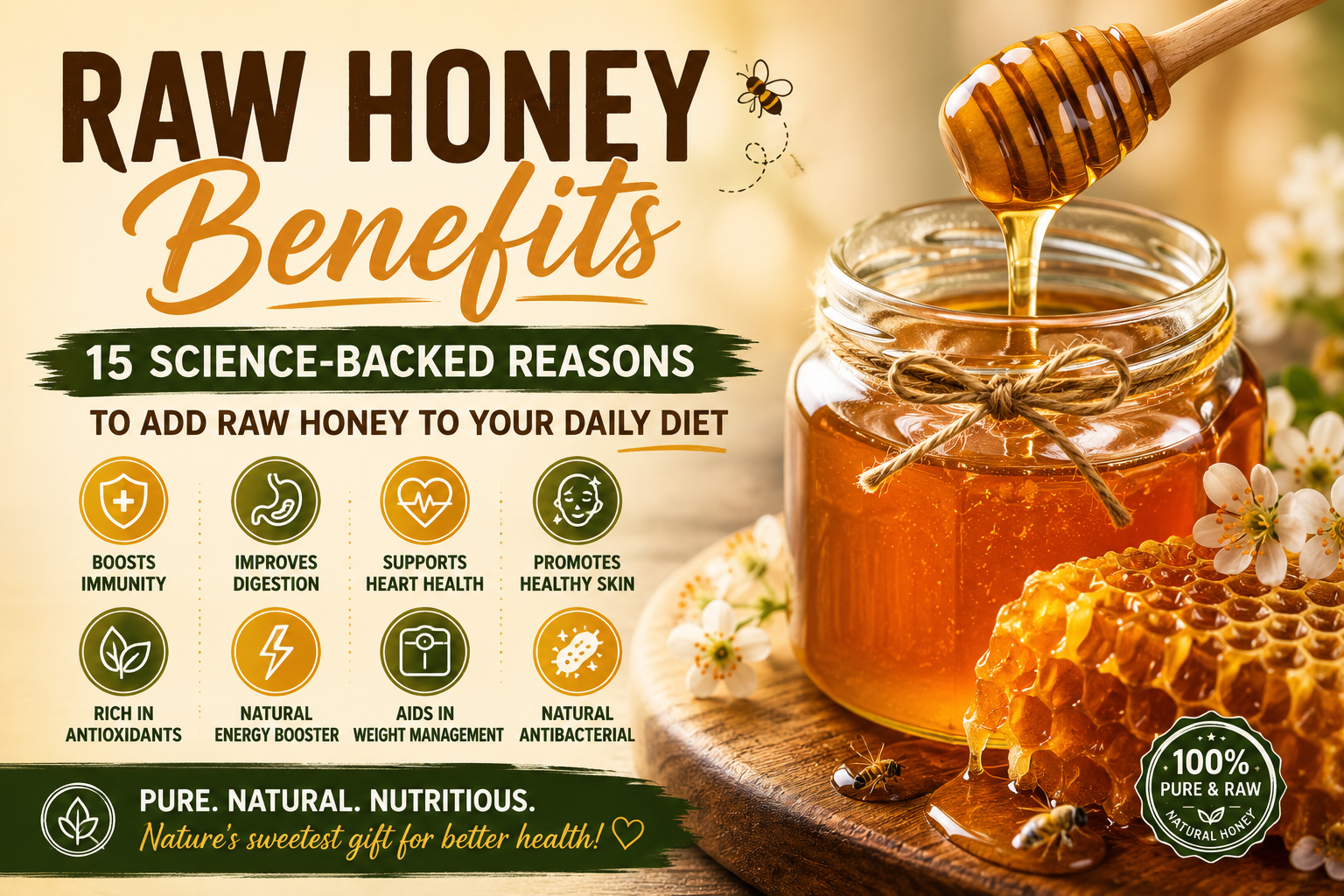
Raw Honey Benefits
Raw honey has been valued for thousands of years as both a natural sweetener and a traditional wellness food. Unlike processed honey, raw honey is minimally filtered and not heated to high temperatures, helping preserve naturally occurring enzymes, antioxidants, vitamins, minerals, pollen, and beneficial plant compounds.
Today, many people use raw honey as a healthier alternative to refined sugar. Research suggests it may support immune health, provide antioxidants, soothe sore throats, and contribute to overall wellness when consumed as part of a balanced diet.
In this guide, you’ll learn about the science-backed benefits of raw honey, its nutritional value, the best ways to enjoy it, and important precautions to keep in mind.
What Is Raw Honey?
Raw honey is honey that comes directly from the beehive and undergoes minimal processing. It is typically strained to remove large particles such as beeswax while retaining many naturally occurring nutrients.
Unlike heavily processed honey, raw honey is generally not pasteurized or exposed to high heat, which helps preserve its natural characteristics.
Raw honey may contain:
- Natural enzymes
- Antioxidants
- Bee pollen (in small amounts)
- Amino acids
- Organic acids
- Trace vitamins and minerals
- Natural sugars such as fructose and glucose
Its color and flavor vary depending on the flowers visited by bees. Some varieties are light and mild, while others are darker with a richer taste.
Raw Honey Nutrition Facts
The nutritional profile of raw honey can vary depending on its floral source, but a typical 1 tablespoon (about 21 grams) contains approximately:
| Nutrient | Amount |
|---|---|
| Calories | 64 |
| Carbohydrates | 17 g |
| Natural Sugars | 17 g |
| Protein | 0 g |
| Fat | 0 g |
| Fiber | 0 g |
| Potassium | Small amount |
| Calcium | Trace |
| Iron | Trace |
| Magnesium | Trace |
| Antioxidants | Naturally present |
Although raw honey contains small amounts of vitamins and minerals, it is most valued for its bioactive compounds, including antioxidants such as flavonoids and phenolic acids.
Is Raw Honey Better Than Regular Honey?
Many people wonder whether raw honey is healthier than regular honey.
The biggest difference lies in processing.
Raw Honey
- Minimally processed
- Usually unpasteurized
- Retains natural enzymes
- Contains antioxidants
- May contain small amounts of pollen
- Richer natural flavor
Regular Honey
- Often pasteurized
- More heavily filtered
- Clearer appearance
- Longer shelf life
- Some heat-sensitive compounds may be reduced during processing
Both raw and regular honey can be enjoyed in moderation, but many people prefer raw honey because it retains more of its naturally occurring components.
Top Health Benefits of Raw Honey
1. Rich in Powerful Antioxidants
One of the greatest advantages of raw honey is its antioxidant content.
Raw honey contains naturally occurring compounds such as:
- Flavonoids
- Phenolic acids
- Organic acids
Antioxidants help protect your body’s cells from oxidative stress caused by unstable molecules known as free radicals.
Reducing oxidative stress is associated with better overall health and may support healthy aging.
Darker varieties of raw honey often contain higher levels of antioxidants than lighter varieties.
2. May Support a Healthy Immune System
Raw honey contains naturally occurring plant compounds that may help support normal immune function as part of a healthy lifestyle.
Although honey should not be considered a medicine or cure, including it in a balanced diet may contribute to overall wellness.
Many people enjoy warm water with raw honey and lemon during colder months as a comforting beverage.
3. A Natural Energy Booster
Raw honey is an excellent source of natural carbohydrates.
Its combination of fructose and glucose provides a quick yet steady source of energy.
Many athletes and physically active individuals use raw honey:
- Before exercise
- During endurance activities
- After workouts
Unlike refined sugar, raw honey also provides naturally occurring antioxidants and trace nutrients.
4. May Help Soothe a Sore Throat
One of the most well-known traditional uses of honey is soothing an irritated throat.
Its thick texture coats the throat, which many people find comforting.
Many healthcare organizations recognize honey as a soothing option for occasional coughs in adults and children over one year of age.
Important: Never give honey to infants under 12 months old because of the risk of infant botulism.
5. Supports Healthy Digestion
Raw honey contains naturally occurring compounds that may help support digestive health.
Some varieties also contain small amounts of prebiotic compounds that nourish beneficial gut bacteria.
A healthy gut microbiome plays an important role in:
- Digestion
- Nutrient absorption
- Immune function
- Overall wellness
Many people enjoy a teaspoon of raw honey stirred into warm (not boiling) water or herbal tea.
6. May Be a Better Alternative to Refined Sugar
Replacing refined sugar with raw honey may help reduce your intake of highly processed sweeteners.
Although honey is still a form of added sugar and should be consumed in moderation, it offers a more complex nutritional profile than table sugar because it contains naturally occurring antioxidants and trace minerals.
Try using raw honey to sweeten:
- Tea
- Coffee
- Oatmeal
- Yogurt
- Smoothies
- Homemade salad dressings
This simple swap can add flavor while providing additional naturally occurring plant compounds.
How to Choose High-Quality Raw Honey
Not all products labeled as “honey” are the same. When shopping, look for:
- 100% Pure Raw Honey
- No added sugar or syrups
- No artificial flavors or colors
- Minimal processing
- Trusted local or reputable producers
- Clearly labeled ingredients
Crystallization is normal in raw honey and is not a sign that it has spoiled. If your honey crystallizes, place the jar in warm (not boiling) water to return it to a smoother consistency.
7. May Support Heart Health
Raw honey contains antioxidants, including flavonoids and phenolic compounds, that may help protect cells from oxidative stress. A diet rich in antioxidant-containing foods is associated with better cardiovascular health.
Some research suggests that replacing refined sugar with moderate amounts of honey may have a more favorable effect on certain heart-health markers when combined with an overall healthy diet.
For the best results, pair raw honey with heart-friendly foods such as:
- Oats
- Fresh fruit
- Nuts
- Seeds
- Whole grains
8. May Promote Better Sleep
Many people enjoy a small amount of raw honey before bedtime.
Honey provides natural carbohydrates that may help replenish liver glycogen stores overnight, potentially supporting stable energy availability during sleep.
Try one of these bedtime options:
- A teaspoon of raw honey
- Warm milk with honey
- Herbal tea with honey (allow the tea to cool slightly before adding honey)
- Plain yogurt with honey
Remember that good sleep also depends on consistent sleep habits, limiting screen time before bed, and maintaining a comfortable sleep environment.
9. Supports Healthy Skin
Raw honey has long been used in skincare because of its natural moisturizing properties.
When applied topically, it may help:
- Hydrate dry skin
- Leave skin feeling soft
- Support the skin’s natural barrier
- Improve overall skin appearance
Many DIY face masks combine raw honey with ingredients such as plain yogurt or finely ground oats.
Always perform a small patch test before applying new ingredients to your skin.
10. May Help Keep Hair Soft and Healthy
Raw honey is also used in homemade hair care treatments.
It may help:
- Add moisture to dry hair
- Improve softness
- Reduce the appearance of frizz
- Leave hair looking shinier
A simple hair mask can be made by mixing raw honey with a small amount of coconut oil or olive oil, then rinsing thoroughly after 20–30 minutes.
11. May Help Manage Seasonal Allergies (Limited Evidence)
Some people believe that eating locally produced raw honey helps reduce seasonal allergy symptoms.
The scientific evidence is mixed, and current research does not clearly confirm this benefit. However, some individuals report personal improvement.
Raw honey should not replace allergy medications or medical advice.
If you have severe allergies, consult a healthcare professional for appropriate treatment.
12. Provides Quick Energy for Exercise
Raw honey is an excellent natural source of easily digested carbohydrates.
Many runners, cyclists, and fitness enthusiasts consume honey:
- Before workouts
- During endurance exercise
- After training sessions
Pairing honey with foods like bananas, whole-grain toast, or yogurt can provide a balanced source of energy.
13. May Support Healthy Weight Management
Honey is still a source of sugar, but using it mindfully can fit into a healthy eating plan.
Replacing sugar-sweetened desserts or beverages with moderate amounts of raw honey may help some people reduce their intake of highly processed sweeteners.
To support weight management:
- Measure portions instead of pouring freely.
- Choose whole foods over processed snacks.
- Stay physically active.
- Eat a balanced diet rich in fruits, vegetables, lean protein, and whole grains.
14. Contains Natural Plant Compounds
Raw honey contains a variety of naturally occurring bioactive compounds, including:
- Flavonoids
- Phenolic acids
- Organic acids
- Enzymes
- Trace minerals
These compounds contribute to honey’s unique flavor, aroma, and antioxidant activity.
The exact composition varies depending on the flowers visited by bees.
15. A Versatile Natural Sweetener
One of the greatest advantages of raw honey is how easy it is to include in everyday meals.
Try adding it to:
- Oatmeal
- Greek yogurt
- Smoothies
- Herbal tea
- Coffee
- Whole-grain toast
- Salad dressings
- Homemade granola
- Chia pudding
- Fruit bowls
Because honey is naturally sweet, a small amount often goes a long way.
Best Ways to Eat Raw Honey
Here are some simple and delicious ideas:
Breakfast
- Stir into oatmeal.
- Drizzle over yogurt.
- Spread on whole-grain toast.
- Add to smoothie bowls.
Snacks
- Apple slices with peanut butter and honey
- Cottage cheese with honey
- Mixed nuts with a light drizzle of honey
Drinks
- Warm lemon water
- Herbal tea
- Homemade lemonade
- Smoothies
Cooking
- Salad dressings
- Marinades
- Homemade sauces
- Healthy baking recipes
Best Time to Eat Raw Honey
There is no single “best” time, but these are popular options:
Morning
A teaspoon of raw honey with warm water can be a pleasant way to start the day.
Before Exercise
Honey provides quickly available carbohydrates that can help fuel physical activity.
After Exercise
Pair honey with a protein-rich food, such as Greek yogurt, to support recovery.
Before Bed
Some people enjoy a small amount of honey in warm milk or herbal tea as part of a relaxing bedtime routine.
Raw Honey vs. Processed Honey
| Feature | Raw Honey | Processed Honey |
|---|---|---|
| Processing | Minimal | Heated and filtered |
| Natural Enzymes | More likely retained | May be reduced |
| Antioxidants | Generally higher | May be lower after processing |
| Bee Pollen | May contain small amounts | Usually removed |
| Flavor | Rich and varied | More uniform |
| Texture | May crystallize | Usually stays smooth longer |
Crystallization is a natural process and does not mean raw honey has gone bad.
Who Should Avoid Raw Honey?
While raw honey is safe for most healthy adults, some people should be cautious.
Infants Under One Year
Never give honey—raw or processed—to babies younger than 12 months because of the risk of infant botulism.
People with Diabetes
Honey can still raise blood sugar. If you have diabetes, speak with your healthcare provider or dietitian about appropriate portion sizes.
People with Bee Product Allergies
Individuals allergic to bee pollen or other bee-related products may experience allergic reactions and should avoid raw honey unless advised otherwise by a healthcare professional.
Frequently Asked Questions (FAQs)
1. Is it good to eat raw honey every day?
Yes. Most healthy adults can enjoy raw honey daily in moderation as part of a balanced diet. Since honey is still a source of natural sugar, it’s best to avoid excessive amounts.
2. How much raw honey should I eat per day?
For most adults, 1–2 tablespoons (20–40 grams) per day is generally enough. Your ideal amount depends on your overall diet, activity level, and health goals.
3. Can raw honey replace sugar?
Yes. Raw honey can be used as a natural alternative to refined sugar in tea, coffee, oatmeal, yogurt, smoothies, and baking recipes.
Keep in mind that honey is sweeter than sugar, so you may need less.
4. Does raw honey help with weight loss?
Raw honey is not a weight-loss food by itself. However, replacing refined sugar with moderate amounts of raw honey may help support healthier eating habits when combined with a calorie-controlled diet and regular exercise.
5. Can people with diabetes eat raw honey?
People with diabetes should speak with their healthcare provider before consuming honey regularly. Although raw honey contains natural sugars, it can still affect blood glucose levels.
6. Does raw honey expire?
Pure raw honey has an extremely long shelf life when stored correctly.
Over time it may:
- Crystallize
- Change color slightly
- Become thicker
These changes are normal and do not necessarily mean the honey has spoiled.
7. Is crystallized honey safe to eat?
Absolutely.
Crystallization is a natural process that happens because honey contains glucose.
To return it to a smoother texture, place the sealed jar in warm (not boiling) water and stir gently.
8. Can children eat raw honey?
Yes—but only children older than one year.
Honey should never be given to babies under 12 months because of the risk of infant botulism.
Common Myths About Raw Honey
Many claims about raw honey circulate online. Here are a few common myths and the facts behind them.
Myth 1: Raw Honey Cures Every Disease
Fact: Raw honey is a nutritious natural food, but it is not a cure for diseases. It can support a healthy diet but should not replace professional medical treatment.
Myth 2: People with Diabetes Can Eat Unlimited Raw Honey
Fact: Honey is still a source of sugar. Portion control remains important, especially for people managing blood sugar levels.
Myth 3: Crystallized Honey Is Spoiled
Fact: Crystallization is completely natural and often indicates minimal processing. It does not mean the honey has gone bad.
Myth 4: Dark Honey Is Always Better
Fact: Darker honey varieties often contain more antioxidants, but lighter varieties are also nutritious. The best choice depends on your taste preferences and intended use.
Tips for Buying the Best Raw Honey
When shopping for raw honey, keep these tips in mind:
- Choose products labeled 100% Pure Raw Honey.
- Read the ingredient list carefully. It should contain only honey.
- Avoid products with added corn syrup, glucose syrup, or artificial sweeteners.
- Buy from reputable beekeepers or trusted brands.
- If possible, choose honey packaged in glass jars to help preserve quality.
High-quality raw honey may vary in color and flavor depending on the flowers visited by bees. These natural differences are a sign of authenticity rather than inconsistency.
How to Store Raw Honey
Proper storage helps maintain the flavor and quality of raw honey.
Best Storage Tips
- Store at room temperature.
- Keep the lid tightly closed.
- Avoid direct sunlight.
- Keep away from moisture.
- Do not refrigerate unless necessary, as refrigeration speeds up crystallization.
When stored correctly, raw honey can remain usable for years.
Simple Ways to Add Raw Honey to Your Diet
If you’re looking for healthy ways to enjoy raw honey every day, try these ideas:
Breakfast
- Drizzle over oatmeal
- Mix into Greek yogurt
- Spread on whole-grain toast
- Add to smoothie bowls
Healthy Snacks
- Apple slices with peanut butter and honey
- Mixed nuts with a light drizzle of honey
- Cottage cheese with berries and honey
Drinks
- Warm lemon water
- Herbal tea
- Homemade lemonade
- Smoothies
Cooking
- Salad dressings
- Marinades
- Homemade granola
- Energy bites
- Overnight oats
Using honey in place of refined sugar in some recipes can add natural sweetness while complementing nutritious ingredients.
Final Thoughts
Raw honey is more than just a natural sweetener. It contains antioxidants, beneficial plant compounds, and a unique flavor that makes it a valuable addition to many healthy eating patterns.
When consumed in moderation, raw honey may help support heart health, provide quick energy, soothe an occasional sore throat, and serve as a versatile alternative to refined sugar. It also pairs well with many wholesome foods, including yogurt, oats, nuts, fruit, and whole grains.
Remember that no single food can guarantee perfect health. The greatest benefits come from combining nutrient-rich foods like raw honey with a balanced diet, regular physical activity, quality sleep, and other healthy lifestyle habits.
Choose 100% pure raw honey, enjoy it in reasonable portions, and make it part of an overall nutritious eating plan.
Key Takeaways
- Raw honey is minimally processed and naturally rich in antioxidants.
- It contains naturally occurring enzymes, plant compounds, and trace minerals.
- It can be used as a healthier alternative to refined sugar in many recipes.
- A daily serving of 1–2 tablespoons is suitable for most healthy adults.
- Never give honey to babies under 12 months of age.
- Store raw honey at room temperature in a tightly sealed container.
- Crystallization is natural and does not mean the honey has spoiled.
- Choose 100% pure raw honey without added sweeteners or artificial ingredients.
Key Takeaways
- Raw honey is minimally processed and naturally rich in antioxidants.
- It contains naturally occurring enzymes, plant compounds, and trace minerals.
- It can be used as a healthier alternative to refined sugar in many recipes.
- A daily serving of 1–2 tablespoons is suitable for most healthy adults.
- Never give honey to babies under 12 months of age.
- Store raw honey at room temperature in a tightly sealed container.
- Crystallization is natural and does not mean the honey has spoiled.
- Choose 100% pure raw honey without added sweeteners or artificial ingredients.
You May Also Like
Help your readers continue learning by exploring these related articles:
🥜 Health & Nutrition
Looking for more healthy foods to add to your diet? Explore our expert guides on the nutritional benefits of nuts, seeds, dried fruits, and other natural superfoods to build a healthier lifestyle.
Suggested articles:
- Best Dry Fruits for Weight Loss
- Benefits of Almonds
- 10 Best Dry Fruits for Diabetes
- The Ultimate Guide to Walnut Benefits
- Best Time to Eat Nuts for Maximum Health Benefits
- Best Dry Fruits for Diabetes



Leave a Reply