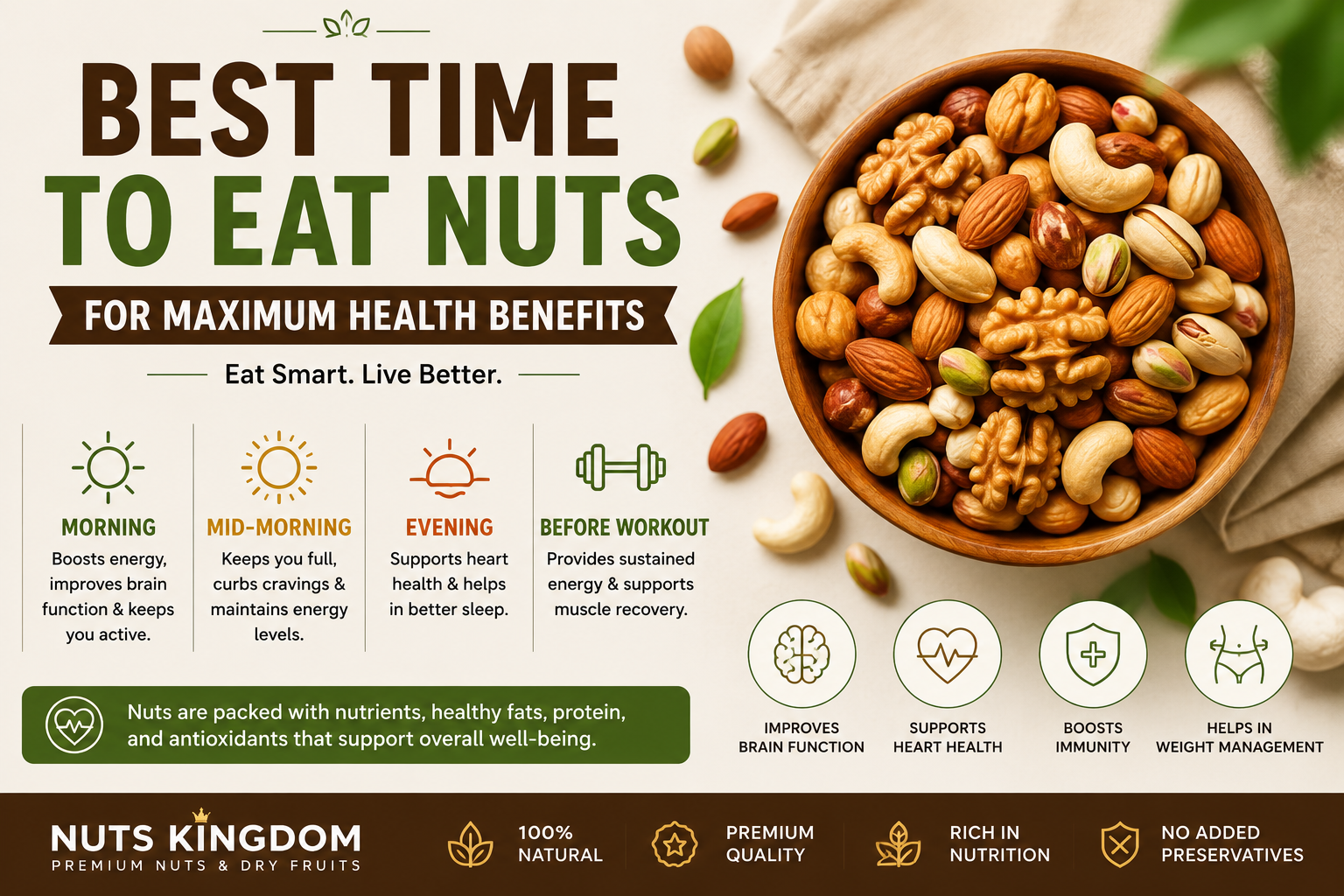
Nuts are among the most nutritious foods you can add to your daily diet. Packed with healthy fats, protein, fiber, vitamins, minerals, and antioxidants, they provide numerous health benefits, including supporting heart health, weight management, blood sugar control, and brain function.
A common question people ask is, “What is the best time to eat nuts?” The answer depends on your health goals. Whether you’re trying to lose weight, build muscle, improve heart health, manage diabetes, or simply maintain a balanced diet, eating nuts at the right time can help you get the most from their nutritional benefits.
While there is no single “perfect” time that works for everyone, certain times of the day may be more beneficial depending on your lifestyle and eating habits.
In this comprehensive guide, you’ll learn the best times to eat nuts, the health benefits of different types of nuts, recommended serving sizes, and practical ways to include them in your daily routine.
Why Does Timing Matter?
Nuts are naturally rich in healthy fats, plant-based protein, and dietary fiber. These nutrients digest more slowly than refined carbohydrates, helping you stay full for longer and providing a steady source of energy.
Eating nuts at strategic times may help:
- Reduce hunger between meals
- Support healthy blood sugar levels
- Improve diet quality
- Replace less nutritious snacks
- Provide lasting energy
- Increase daily nutrient intake
The most important factor is eating nuts consistently as part of a balanced diet rather than focusing only on the exact time of day.
Nutritional Value of Nuts
Although nutrition varies slightly by type, most nuts provide an impressive combination of nutrients.
Average Nutrition (Per 28g or 1 Ounce)
| Nutrient | Amount |
|---|---|
| Calories | 160–200 |
| Protein | 4–7 g |
| Healthy Fat | 13–20 g |
| Fiber | 2–4 g |
| Carbohydrates | 5–8 g |
| Vitamin E | High (especially almonds) |
| Magnesium | Good source |
| Potassium | Moderate |
| Antioxidants | Rich |
Popular healthy nuts include:
- Almonds
- Walnuts
- Pistachios
- Cashews
- Pecans
- Hazelnuts
- Brazil nuts
- Macadamia nuts
Each type offers unique nutritional benefits, so eating a variety can help you obtain a broader range of nutrients.
Is There a Perfect Time to Eat Nuts?
There isn’t one perfect time that suits everyone. The best time depends on your personal goals.
For example:
| Goal | Best Time |
|---|---|
| Weight management | Mid-morning or afternoon snack |
| Exercise | Before or after workouts |
| Heart health | Any time as part of balanced meals |
| Blood sugar management | With meals or balanced snacks |
| Energy | Morning or before physical activity |
The key is eating appropriate portions and choosing plain, minimally processed nuts.
Best Time to Eat Nuts in the Morning
Many nutrition experts recommend eating nuts during breakfast or as part of your morning meal.
Starting the day with protein, healthy fats, and fiber may help keep you satisfied until lunch.
Benefits of Eating Nuts in the Morning
Eating nuts at breakfast may:
- Help reduce mid-morning hunger
- Provide steady energy
- Add protein and healthy fats to your meal
- Increase your intake of vitamins and minerals
- Replace sugary breakfast foods
Healthy Morning Breakfast Ideas
Try adding nuts to:
- Oatmeal
- Greek yogurt
- Smoothies
- Whole-grain cereal
- Overnight oats
- Fruit bowls
Popular morning choices include:
- Almonds
- Walnuts
- Pistachios
Mid-Morning: One of the Best Times to Eat Nuts
If you often feel hungry between breakfast and lunch, a small handful of nuts can make an excellent snack.
Unlike chips or cookies, nuts provide a combination of healthy fats, protein, and fiber that can help you stay satisfied.
Benefits
A mid-morning serving of nuts may:
- Help control hunger
- Reduce cravings for sugary snacks
- Support balanced energy levels
- Encourage healthier food choices at lunch
Keep a small container of unsalted nuts in your bag, desk, or car for a convenient snack.
Best Time to Eat Nuts Before Exercise
Nuts can also be a good snack before physical activity, especially if you need sustained energy.
Because nuts digest more slowly than simple carbohydrates, it’s generally best to eat them 1–2 hours before exercise rather than immediately beforehand.
Benefits Before Exercise
Eating nuts before a workout may:
- Provide lasting energy
- Help reduce hunger during exercise
- Supply healthy fats and protein
- Support an active lifestyle
For longer workouts, consider pairing a small serving of nuts with a piece of fruit, such as a banana or apple, for additional carbohydrates.
Which Nuts Are Best in the Morning?
Although all plain nuts can be part of a healthy breakfast, some are especially nutritious.
Almonds
Known for their vitamin E, magnesium, and protein content, almonds pair well with oatmeal, yogurt, and smoothies.
Walnuts
Walnuts provide plant-based omega-3 fatty acids (ALA), making them a heart-friendly addition to breakfast.
Pistachios
Pistachios are rich in protein, fiber, and antioxidants. Their naturally lower calorie content per serving compared with some other nuts makes them a popular snack choice.
Cashews
Cashews offer a creamy texture and provide minerals such as magnesium and copper. They work well in smoothies and homemade trail mixes.
Mixed Nuts
A combination of different nuts offers a wider variety of nutrients than relying on a single type.
Choose unsalted mixed nuts with no added sugars or coatings.
How Many Nuts Should You Eat Each Day?
Nuts are nutrient-dense but also calorie-dense, so portion control is important.
For most healthy adults, a serving of 28 grams (1 ounce) per day is a good guideline.
Examples include:
- 23 almonds
- 14 walnut halves
- 49 pistachios
- 18 cashews
- 19 pecan halves
- 20 hazelnuts
- 1–2 Brazil nuts (because they are very high in selenium)
Measuring your portions can help you enjoy the benefits of nuts while keeping your overall calorie intake balanced.
Best Time to Eat Nuts After a Workout
After exercise, your body needs nutrients to support recovery and replenish energy. While protein is especially important after a workout, nuts can be a valuable part of a balanced post-workout snack because they provide healthy fats, plant-based protein, vitamins, and minerals.
For the best recovery, pair nuts with a protein-rich or carbohydrate-containing food.
Healthy Post-Workout Snack Ideas
- Greek yogurt with almonds
- Cottage cheese and walnuts
- Banana with almond butter
- Oatmeal topped with pistachios
- Smoothie with almond butter and fruit
Benefits After Exercise
Eating nuts after a workout may:
- Support muscle recovery when combined with protein
- Help satisfy hunger
- Provide magnesium and potassium
- Contribute healthy fats to your diet
Is It Good to Eat Nuts in the Evening?
Yes. Nuts can be a nutritious evening snack when eaten in moderate portions.
Instead of processed snacks such as chips or cookies, a small handful of plain nuts provides protein, fiber, and healthy fats that can help keep you satisfied until bedtime.
Benefits of an Evening Snack
- Helps control late-night hunger
- Replaces less nutritious snacks
- Provides long-lasting energy
- Supports a balanced eating pattern
Keep portions moderate because nuts are calorie-dense.
Can You Eat Nuts at Night?
Many people wonder whether eating nuts before bed causes weight gain.
There is no strong evidence that eating nuts at night automatically leads to weight gain. Overall calorie intake and diet quality matter more than the specific time you eat them.
If you’re hungry before bed, a small serving of nuts can be a better choice than sugary desserts or salty processed snacks.
Best Nuts Before Bed
- Almonds
- Walnuts
- Pistachios
Pair them with plain yogurt or a piece of fruit for a balanced snack.
Best Time to Eat Nuts for Weight Loss
If your goal is weight management, eating nuts between meals may help reduce hunger and make it easier to avoid high-calorie processed snacks.
Ideal Times
- Mid-morning
- Mid-afternoon
- Before long meetings
- Before long trips
Because nuts contain protein, fiber, and healthy fats, they can help you feel full for longer.
Weight-Loss Tips
- Measure portions carefully.
- Replace unhealthy snacks rather than adding nuts on top of your usual diet.
- Choose raw or dry-roasted, unsalted nuts.
Best Time to Eat Nuts for Diabetes
People with diabetes can often include nuts as part of a balanced eating plan.
Many nuts are naturally low in digestible carbohydrates and provide healthy fats, protein, and fiber.
Good Times to Eat Nuts
- With breakfast
- As a mid-morning snack
- With lunch
- As part of an afternoon snack
Pairing nuts with carbohydrate-containing foods may help create a more balanced meal.
Diabetes-Friendly Choices
- Almonds
- Walnuts
- Pistachios
- Hazelnuts
- Pecans
Always follow your healthcare provider’s or dietitian’s recommendations for your individual needs.
Best Time to Eat Nuts for Heart Health
Heart-healthy eating focuses more on overall dietary patterns than meal timing.
Including a moderate serving of nuts regularly may support heart health because they provide:
- Monounsaturated fats
- Polyunsaturated fats
- Fiber
- Magnesium
- Vitamin E
Enjoy nuts:
- With breakfast
- Added to salads
- Mixed into oatmeal
- As an afternoon snack
Replacing processed snacks with nuts is one simple way to improve overall diet quality.
Foods That Pair Well with Nuts
Combining nuts with other nutritious foods creates balanced meals and snacks.
Breakfast
- Oatmeal with walnuts
- Greek yogurt with almonds
- Smoothie with almond butter
- Whole-grain cereal topped with pistachios
Healthy Snacks
- Apple slices with almond butter
- Walnuts and berries
- Pistachios with carrots
- Mixed nuts and plain yogurt
Salads
Add chopped nuts to:
- Spinach salads
- Kale salads
- Mixed greens
- Quinoa bowls
Main Meals
Nuts can also be added to:
- Stir-fries
- Rice dishes
- Roasted vegetables
- Homemade granola
Common Mistakes to Avoid
Eating Too Many Nuts
Although nutritious, nuts are calorie-dense.
Stick to about 28 grams (1 ounce) per day unless advised differently by your healthcare provider or dietitian.
Choosing Flavored Nuts
Avoid:
- Honey-roasted nuts
- Chocolate-covered nuts
- Sugar-coated nuts
- Heavily salted varieties
These often contain added sugar, sodium, or unhealthy fats.
Skipping Portion Control
Instead of eating directly from a large bag, measure your serving into a small bowl or container.
Replacing Balanced Meals
Nuts should complement a balanced diet that includes vegetables, fruits, whole grains, lean proteins, and healthy fats—not replace complete meals.
Eating Only One Type of Nut
Each nut has a unique nutrient profile:
- Almonds provide vitamin E.
- Walnuts are rich in plant-based omega-3 fats.
- Brazil nuts are exceptionally high in selenium.
- Pistachios provide protein and fiber.
- Pecans contain heart-healthy monounsaturated fats.
Rotating different types of nuts can help you enjoy a wider range of nutrients.
Daily Serving Guide
| Nut | Recommended Daily Serving |
|---|---|
| Almonds | 23 nuts |
| Walnuts | 14 halves |
| Pistachios | 49 kernels |
| Cashews | 18 nuts |
| Pecans | 19 halves |
| Hazelnuts | 20 nuts |
| Brazil Nuts | 1–2 nuts |
| Macadamia Nuts | 10–12 nuts |
These serving sizes provide valuable nutrients while helping you manage calorie intake.
Frequently Asked Questions (FAQs)
1. What is the best time to eat nuts?
There is no single best time for everyone. The ideal time depends on your goals:
- Morning: For lasting energy and a nutritious start to the day.
- Mid-morning or afternoon: To help control hunger between meals.
- Before exercise: About 1–2 hours before a workout for sustained energy.
- After exercise: Paired with protein to support recovery.
- Evening: As a healthier alternative to processed snacks.
2. Can I eat nuts on an empty stomach?
Yes. Eating a moderate serving of plain nuts on an empty stomach is safe for most healthy adults. Their healthy fats, protein, and fiber may help keep you satisfied until your next meal.
3. Is it okay to eat nuts every day?
Yes. Daily nut consumption can be part of a healthy diet. A serving of about 28 grams (1 ounce) is generally recommended for most adults.
4. Which nuts are best for weight loss?
Some of the best choices include:
- Almonds
- Pistachios
- Walnuts
- Pecans
These nuts provide protein, fiber, and healthy fats that help increase fullness.
5. Should I eat raw or roasted nuts?
Both raw and dry-roasted, unsalted nuts are healthy choices. Avoid varieties with added sugar, excessive salt, or unhealthy oils.
6. Can eating nuts at night cause weight gain?
No. Weight gain depends on your total calorie intake over time, not simply the time you eat. A small serving of nuts at night can be a healthier option than sugary desserts or processed snacks.
7. Are mixed nuts healthier than a single type?
A variety of nuts can provide a broader range of nutrients because each type has its own nutritional strengths.
For example:
- Almonds are rich in vitamin E.
- Walnuts provide plant-based omega-3 fats.
- Brazil nuts are high in selenium.
- Pistachios contain protein and fiber.
8. How many nuts should I eat per day?
A daily serving of 28 grams (1 ounce) is appropriate for most adults.
Examples include:
- 23 almonds
- 14 walnut halves
- 49 pistachios
- 18 cashews
- 20 hazelnuts
- 19 pecan halves
- 1–2 Brazil nuts
Who Should Be Careful When Eating Nuts?
Although nuts are nutritious, some people should consume them with caution.
People with Tree Nut Allergies
Tree nut allergies can cause serious allergic reactions. Anyone with a diagnosed allergy should avoid the nuts that trigger their symptoms and follow medical advice.
People Following a Calorie-Controlled Diet
Nuts are nutrient-dense but also calorie-dense. Measuring portions helps prevent consuming more calories than intended.
People with Certain Kidney Conditions
Some nuts contain significant amounts of potassium or phosphorus. Individuals with kidney disease should consult their healthcare provider or dietitian about appropriate portions.
How to Store Nuts Properly
Proper storage helps maintain freshness and prevents nuts from becoming rancid.
Storage Tips
- Store nuts in airtight containers.
- Keep them in a cool, dry place.
- Refrigerate for longer freshness.
- Freeze for long-term storage.
- Protect them from direct sunlight, heat, and moisture.
Whole nuts generally stay fresh longer than chopped or ground nuts.
Healthy Ways to Include Nuts in Your Daily Diet
Adding nuts to meals and snacks is simple.
Breakfast
- Oatmeal with almonds
- Greek yogurt with walnuts
- Overnight oats with pistachios
- Whole-grain toast with almond butter
Healthy Snacks
- A handful of mixed nuts
- Apple slices with almond butter
- Pistachios with fresh fruit
- Walnuts with plain yogurt
Lunch and Dinner
- Sprinkle chopped almonds over salads.
- Add walnuts to grain bowls.
- Mix cashews into stir-fries.
- Use crushed pecans as a topping for roasted vegetables.
Healthy Desserts
- Chia pudding with almonds
- Yogurt parfait with berries and pistachios
- Homemade energy bites with dates and nuts
- Fresh fruit topped with chopped walnuts
Final Thoughts
Nuts are among the healthiest snack choices available. They provide a rich combination of healthy fats, plant-based protein, fiber, vitamins, minerals, and antioxidants that support overall health.
The best time to eat nuts depends on your lifestyle and health goals. Morning, mid-morning, before or after exercise, and even the evening can all be good times to enjoy nuts as part of a balanced eating pattern.
Rather than focusing only on timing, prioritize portion control, variety, and consistency. Choosing plain, unsalted nuts and replacing highly processed snacks with a moderate serving of nuts can improve the overall quality of your diet.
Combined with regular physical activity, adequate sleep, and a balanced diet rich in fruits, vegetables, whole grains, and lean proteins, nuts can play an important role in supporting long-term health.
Key Takeaways
- There is no single best time to eat nuts; the ideal time depends on your goals.
- Morning and between meals are popular times for sustained energy and appetite control.
- Nuts can be enjoyed before or after exercise as part of a balanced snack.
- Eating nuts at night does not automatically cause weight gain.
- A daily serving of about 28 grams (1 ounce) is suitable for most adults.
- Choose raw or dry-roasted, unsalted nuts for the greatest nutritional benefit.
- Rotate different types of nuts to enjoy a wider range of nutrients.
You May Also Like
Continue your healthy eating journey with these related articles:
🥜 Nuts & Dry Fruits
- Best Dry Fruits for Weight Loss
- Benefits of Almonds
- 10 Best Dry Fruits for Diabetes
- Best Time to Eat Nuts
- 10 Best Dry Fruits for Diabetes
- Walnuts vs. Almonds: Which Is Healthier?
- Top High-Protein Nuts




Leave a Reply