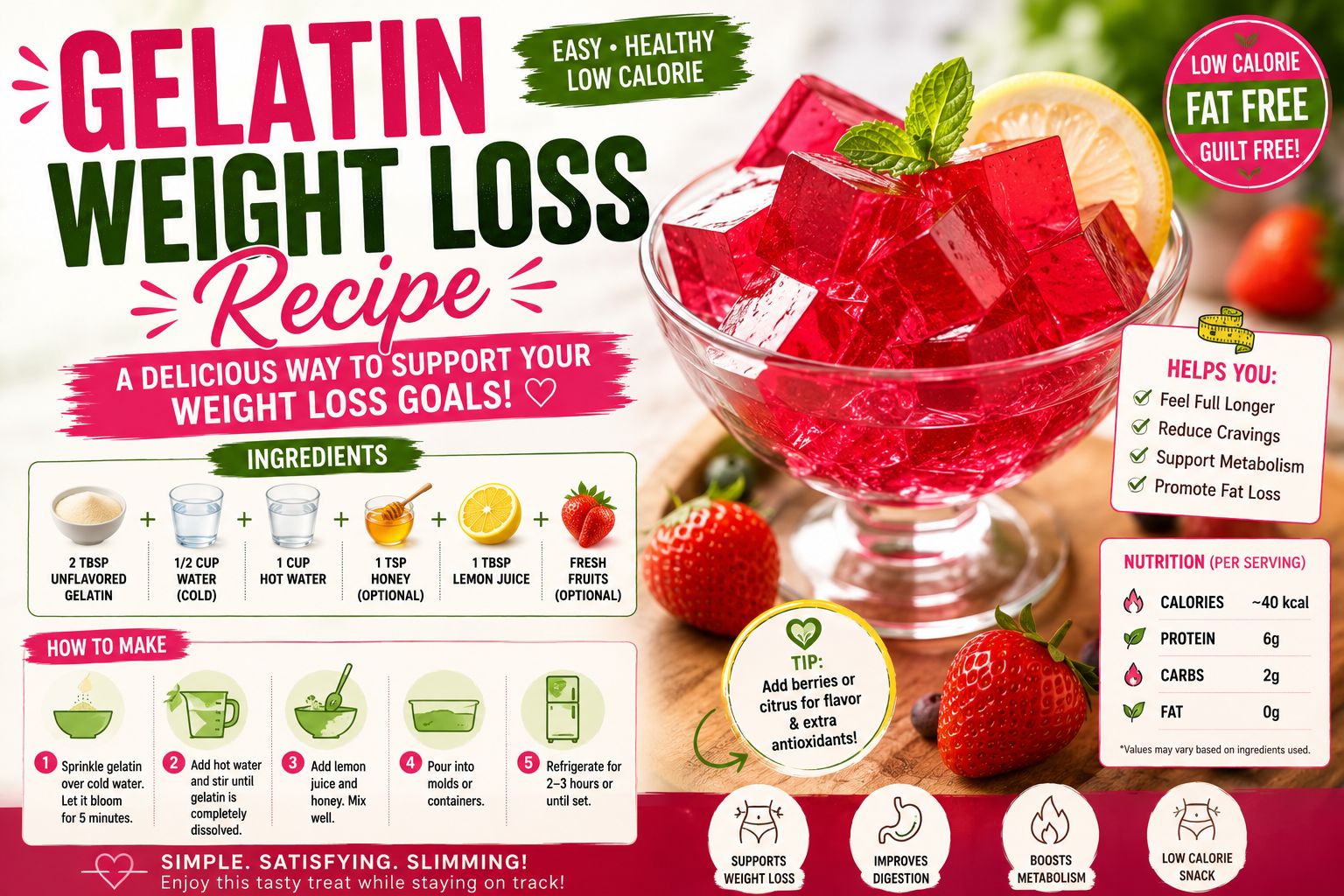
If you’re searching for a simple dessert that won’t completely derail your calorie goals, a gelatin weight loss recipe can be an interesting option.
Gelatin is low in calories when prepared without added sugar, and it can provide protein. It also has a soft, satisfying texture that can make it feel more like a dessert than a typical “diet food.”
But there’s an important point to understand from the beginning:
Gelatin does not directly burn belly fat or cause weight loss by itself.
Weight loss happens when you consistently consume fewer calories than your body uses. A gelatin-based snack can simply be one tool that helps you manage calories, portions, or dessert cravings.
In this guide, you’ll learn how to make a simple gelatin recipe for weight loss, how to make it more filling, and which ingredients work best with it.
Can Gelatin Help With Weight Loss?
Gelatin may have a place in a calorie-conscious diet because it is a source of protein and can be prepared as a relatively low-calorie food.
However, it shouldn’t be treated as a fat-burning ingredient.
Think of gelatin as a food component, not a weight-loss supplement.
For example, replacing a high-calorie dessert with a homemade gelatin cup containing Greek yogurt and berries could reduce the calories in that particular snack.
That may help your overall calorie intake.
But simply eating gelatin while continuing to consume more calories than your body needs won’t cause fat loss.
The Best Gelatin Weight Loss Recipe
High-Protein Berry Gelatin Cups
This is our recommended starting recipe because it combines gelatin with Greek yogurt and berries, creating something more substantial than plain flavored gelatin.
Ingredients
- 1 cup fresh or frozen strawberries
- ½ cup blueberries
- ¾ cup plain Greek yogurt
- 1 tablespoon unflavored gelatin powder
- ½ cup cold water
- ½ cup hot water
- ½ teaspoon vanilla extract
- Optional: a small amount of calorie-free sweetener
Equipment
- Blender
- Small saucepan or microwave-safe container
- Mixing bowl
- 3–4 small serving cups
How to Make Berry Gelatin Cups
Step 1: Prepare the Gelatin
Place the cold water in a small bowl.
Sprinkle the unflavored gelatin evenly over the surface.
Allow it to sit for several minutes so the gelatin can hydrate.
This process is called blooming.
Step 2: Dissolve the Gelatin
Add the hot water and stir thoroughly until the gelatin has completely dissolved.
Don’t allow the mixture to boil.
Step 3: Blend the Fruit
Add the strawberries and blueberries to a blender.
Blend until smooth.
If you’re using frozen berries, allow them to soften slightly first.
Step 4: Add Greek Yogurt
Add the Greek yogurt and vanilla extract to the blended fruit.
Blend again until creamy.
Step 5: Combine
Slowly add the dissolved gelatin mixture to the berry-yogurt mixture while blending or stirring.
Make sure everything is thoroughly combined.
Step 6: Refrigerate
Pour the mixture into small cups or containers.
Refrigerate for approximately 2–4 hours, or until the gelatin has set.
Serve chilled.
Why This Recipe Can Fit a Weight Loss Diet
This recipe doesn’t contain a magic fat-burning ingredient.
Its advantage is the overall combination of ingredients.
Greek Yogurt Provides Protein
Plain Greek yogurt is one of the easiest ways to increase the protein content of this dessert.
Protein can help make meals and snacks more satisfying.
Berries Add Fiber and Flavor
Strawberries and blueberries provide natural sweetness, fiber, and other nutrients.
They also reduce the need for large amounts of added sugar.
Gelatin Creates Structure
Gelatin gives the dessert its characteristic firm, jiggly texture.
It also contributes protein.
No Large Amount of Added Sugar
Using unsweetened gelatin and naturally sweet fruit allows you to control how much added sugar goes into the recipe.
How Many Calories Are in Gelatin?
The calorie content depends heavily on the ingredients.
Plain unflavored gelatin itself is relatively low in calories for the amount normally used in a recipe, but the total calories increase when you add:
- Sugar
- Honey
- Cream
- Full-fat yogurt
- Nut butter
- Sweetened condensed milk
- Large quantities of fruit
That’s why homemade gelatin can be useful for calorie-conscious eating: you control the ingredients.
Always check the nutrition labels of the specific products you’re using if you’re tracking calories.
Can You Use Sugar-Free Jello for Weight Loss?
Sugar-free gelatin can fit into a weight-loss diet.
However, “sugar-free” doesn’t automatically mean “healthy” or “unlimited.”
Some sugar-free gelatin products contain very few calories, which can make them convenient when you’re craving something sweet.
But if you want a more nutrient-dense snack, consider adding ingredients such as:
- Greek yogurt
- Berries
- Chia seeds
- Cottage cheese
- Fresh fruit
The goal isn’t simply to find the food with the fewest calories.
It’s to create an eating pattern that keeps you satisfied while providing adequate nutrition.
Gelatin vs. Jell-O: What’s the Difference?
The words are sometimes used interchangeably, but they’re not exactly the same.
Gelatin is the protein ingredient that creates the gel-like texture.
Jell-O is a brand of prepared gelatin dessert that typically comes flavored and may contain sweeteners and other ingredients.
If you’re making a weight-loss-friendly recipe, unflavored gelatin gives you more control over what goes into the dessert.
You can add your own fruit, yogurt, flavorings, and sweetener.
Can Gelatin Reduce Hunger?
Gelatin contains protein, and protein can contribute to satiety.
But you shouldn’t expect a gelatin dessert to completely suppress your appetite.
A small bowl of plain gelatin may not keep you full for several hours.
That’s why adding Greek yogurt, fruit, or another nutritious ingredient can make the snack more substantial.
For example:
Plain gelatin → light dessert
while:
Gelatin + Greek yogurt + berries → more substantial protein-containing snack
Best Fruits to Add to Gelatin
You have plenty of options.
Strawberries
Strawberries work particularly well because they provide sweetness and a bright flavor without requiring much added sugar.
Blueberries
Blueberries create a beautiful color and pair well with yogurt.
Raspberries
Raspberries are a good option when you want a more tart flavor.
Peaches
Fresh or unsweetened frozen peaches can create a softer, sweeter dessert.
Kiwi
Kiwi can provide a refreshing flavor, although fresh kiwi contains enzymes that can interfere with gelatin setting. If you’re using kiwi, cooking it briefly first can help prevent this problem.
Mango
Mango creates a naturally sweet tropical gelatin dessert.
Because mango is more calorie-dense than some berries, portion size still matters.
Can You Add Greek Yogurt to Gelatin?
Yes.
Greek yogurt is one of the best additions if you want to make gelatin more filling.
It provides protein and gives the dessert a creamy texture.
A simple combination is:
Greek yogurt + strawberries + unflavored gelatin + vanilla
This creates something closer to a light mousse than traditional gelatin.
What About Chia Seeds?
Chia seeds can also be incorporated into gelatin recipes.
They provide fiber and healthy fats, but they are calorie-dense, so you don’t need a large amount.
Try adding:
1 teaspoon to 1 tablespoon
depending on the recipe.
Allow the mixture enough time to hydrate and set properly.
Should You Eat Gelatin at Night for Weight Loss?
There is nothing magical about eating gelatin before bed.
Eating a particular food at night doesn’t automatically cause or prevent fat loss.
However, a small gelatin-based dessert can be useful if you’re genuinely hungry or want something sweet after dinner.
For example:
Greek yogurt + berries + gelatin
may be a more controlled dessert than a large serving of ice cream or cake.
What matters most is your total daily calorie intake, not the clock.
Can Gelatin Burn Belly Fat?
No.
This is one of the most important myths to avoid when writing about gelatin and weight loss.
There is no single food that selectively burns fat from your stomach.
Belly fat generally decreases as overall body fat decreases.
That requires an appropriate calorie deficit maintained over time.
Gelatin can potentially fit into that plan as a lower-calorie snack or dessert, but it isn’t a belly-fat burner.
5 Ways to Make Your Gelatin More Weight-Loss Friendly
1. Choose Unflavored Gelatin
This gives you control over the other ingredients.
2. Limit Added Sugar
Use fruit, vanilla, cinnamon, or a suitable calorie-free sweetener for additional flavor.
3. Add Protein
Greek yogurt, cottage cheese, or another protein-rich ingredient can make the snack more satisfying.
4. Control Portions
Even a healthy dessert can contribute significant calories if the serving becomes very large.
5. Use Fruit for Flavor
Berries and other fruits can make gelatin much more interesting without relying entirely on sugar.
Who Might Enjoy a Gelatin Weight Loss Recipe?
This type of snack may be useful for people who:
- Enjoy desserts
- Want a lighter sweet snack
- Prefer make-ahead foods
- Want to experiment with high-protein snacks
- Need a portion-controlled dessert
- Don’t enjoy eating plain Greek yogurt
- Want something cold and refreshing
It isn’t necessary for weight loss, but it can add variety to a calorie-conscious diet.
Important Things to Know Before Using Gelatin
Gelatin is generally considered a food ingredient, but not everyone may want to use it.
Traditional gelatin is derived from animal collagen, so people following vegetarian or vegan diets may prefer plant-based gelling alternatives such as agar-agar.
People with food allergies or dietary restrictions should check product labels carefully.
Also, gelatin should not replace a balanced diet.
Your meals should still include a variety of nutrient-rich foods such as vegetables, fruits, whole grains, legumes, protein sources, and healthy fats.
Final Takeaway
A gelatin weight loss recipe can be a simple way to enjoy a sweet, portion-controlled snack while keeping your overall diet in mind.
The best approach isn’t to rely on gelatin as a fat-burning food.
Instead, combine it with nutritious ingredients such as Greek yogurt and berries, limit added sugar, control portions, and make sure the recipe fits your overall calorie needs.
Our top recipe:
High-Protein Berry Gelatin Cups
Ingredients:
- Strawberries
- Blueberries
- Plain Greek yogurt
- Unflavored gelatin
- Water
- Vanilla
It’s easy to prepare ahead of time, tastes like dessert, and can be adapted to your personal calorie and protein goals.
Gelatin Weight Loss Recipe — Part 2: 6 More Healthy Gelatin Recipes
If you enjoyed the berry gelatin cups from Part 1, there are plenty of other ways to use gelatin in a calorie-conscious diet.
The biggest advantage of making gelatin desserts at home is control. You decide how much sugar, fruit, yogurt, and other calorie-dense ingredients go into the recipe.
These recipes are designed to be simple, filling, and different from one another so you don’t end up eating the same dessert every day.
2. High-Protein Greek Yogurt Gelatin Pudding
If your main goal is to make gelatin more filling, this is one of the best combinations to try.
Ingredients
- 1 cup plain Greek yogurt
- 1 tablespoon unflavored gelatin
- ½ cup hot water
- ¼ cup cold water
- ½ teaspoon vanilla extract
- Cinnamon to taste
- Optional: calorie-free sweetener
Instructions
- Sprinkle gelatin over the cold water.
- Let it sit for several minutes.
- Add hot water and stir until completely dissolved.
- Mix Greek yogurt, vanilla, and cinnamon in a bowl.
- Slowly add the dissolved gelatin while stirring.
- Divide into small containers.
- Refrigerate for 2–3 hours.
The result is a creamy, pudding-like dessert with more protein than traditional flavored gelatin.
Best For
A high-protein evening snack or light dessert.
3. Strawberry Lemon Gelatin Cups
This recipe is refreshing and naturally sweet.
Ingredients
- 1 cup sliced strawberries
- 1 tablespoon unflavored gelatin
- 1 cup water
- 1–2 tablespoons fresh lemon juice
- ½ teaspoon vanilla extract
- Optional: calorie-free sweetener
Instructions
- Sprinkle gelatin over ¼ cup cold water.
- Let it bloom for several minutes.
- Heat the remaining water until hot but not boiling.
- Stir the bloomed gelatin into the hot water.
- Add lemon juice and vanilla.
- Place strawberries into small cups.
- Pour the gelatin mixture over the strawberries.
- Refrigerate until firm.
Why It’s Useful
The strawberries provide natural sweetness while lemon adds acidity and flavor.
You can adjust the sweetness without adding large amounts of sugar.
4. Berry Chia Gelatin Pudding
Want to increase the fiber and texture?
Try adding chia seeds.
Ingredients
- ½ cup blueberries
- ½ cup raspberries
- 1 tablespoon chia seeds
- 1 tablespoon unflavored gelatin
- ¾ cup water
- ½ teaspoon vanilla
- Optional: small amount of calorie-free sweetener
Instructions
- Blend the berries until smooth.
- Bloom the gelatin in a small amount of cold water.
- Dissolve it using hot water.
- Combine the berry puree, gelatin mixture, vanilla, and chia seeds.
- Pour into small jars.
- Refrigerate for several hours.
The chia seeds absorb liquid and create a thicker texture.
Tip
Don’t add excessive chia seeds just because they’re considered a “superfood.” A tablespoon is usually plenty for a small recipe.
5. Low-Calorie Lemon Gelatin Dessert
Sometimes simple is better.
If you want something light after dinner, this lemon recipe is an easy option.
Ingredients
- 1 tablespoon unflavored gelatin
- 1 cup water
- 2 tablespoons fresh lemon juice
- Lemon zest from ½ lemon
- Optional: calorie-free sweetener
Instructions
- Bloom the gelatin in ¼ cup cold water.
- Heat the remaining water.
- Stir in the bloomed gelatin until dissolved.
- Add lemon juice and zest.
- Add sweetener if desired.
- Pour into small serving cups.
- Refrigerate until firm.
Flavor Profile
It’s:
Tart + refreshing + light
This makes it particularly useful for people who want dessert without a heavy, creamy texture.
6. Chocolate Protein Gelatin Dessert
If you’re craving chocolate, you don’t necessarily need cake or ice cream.
This recipe combines cocoa, yogurt, and gelatin.
Ingredients
- ¾ cup plain Greek yogurt
- 1 tablespoon unsweetened cocoa powder
- 1 tablespoon unflavored gelatin
- ½ cup hot water
- ¼ cup cold water
- ½ teaspoon vanilla
- Optional: calorie-free sweetener
Instructions
- Bloom gelatin in the cold water.
- Add hot water and stir until completely dissolved.
- Mix Greek yogurt, cocoa powder, and vanilla.
- Slowly incorporate the gelatin.
- Stir until smooth.
- Refrigerate for 2–3 hours.
Why It Works
Unsweetened cocoa provides chocolate flavor without requiring chocolate syrup.
Greek yogurt contributes protein and creates a creamy texture.
7. Tropical Mango Gelatin Cups
For something completely different, try a tropical version.
Ingredients
- ½ cup mango
- ½ cup pineapple
- 1 tablespoon unflavored gelatin
- 1 cup water
- 1 tablespoon lime juice
- Optional: calorie-free sweetener
Instructions
- Blend mango and pineapple.
- Bloom gelatin in cold water.
- Dissolve the gelatin using hot water.
- Mix the fruit puree into the gelatin.
- Add lime juice.
- Pour into small cups.
- Refrigerate until firm.
Portion Tip
Mango and pineapple are nutritious fruits, but they’re still sources of calories and carbohydrates.
Keep the fruit portion reasonable if you’re specifically trying to create a lower-calorie dessert.
Gelatin Recipe Comparison
| Recipe | Main Ingredient | Best For |
|---|---|---|
| Berry Greek Yogurt | Berries + yogurt | Everyday snack |
| Greek Yogurt Gelatin | Greek yogurt | Higher protein |
| Strawberry Lemon | Strawberries + lemon | Refreshing dessert |
| Berry Chia | Berries + chia | More fiber |
| Lemon Gelatin | Lemon | Very light dessert |
| Chocolate Protein | Cocoa + yogurt | Chocolate cravings |
| Mango Tropical | Mango + pineapple | Fruit lovers |
How to Make Gelatin More Filling
If you’re eating gelatin as part of a weight-loss diet, plain gelatin may not be enough to satisfy you.
Here are some ways to make it more substantial.
Add Greek Yogurt
Greek yogurt is one of the easiest additions because it provides protein and creates a creamy consistency.
Add Berries
Berries add flavor and fiber.
Add Chia Seeds
Chia seeds can increase fiber and create a thicker texture.
Add Cottage Cheese
Blended cottage cheese can create a surprisingly creamy high-protein dessert.
If you’re sensitive to the texture, blend it completely before adding it to the recipe.
What Should You Avoid Adding?
The goal isn’t to make gelatin unhealthy.
But certain ingredients can quickly transform a light dessert into a high-calorie one.
Be careful with large quantities of:
- Sugar
- Honey
- Maple syrup
- Sweetened condensed milk
- Heavy cream
- Full-fat whipped cream
- Chocolate syrup
- Large amounts of nut butter
- Caramel sauce
- Sweetened coconut milk
These ingredients aren’t automatically “bad.”
The issue is that they can significantly increase the calories in your recipe.
Can You Use Protein Powder in Gelatin?
Yes.
Protein powder can be incorporated into some gelatin recipes, especially creamy yogurt-style recipes.
However, don’t simply dump protein powder into boiling gelatin.
Instead:
- Prepare the gelatin.
- Allow it to cool slightly.
- Mix protein powder separately with yogurt or another liquid.
- Combine the mixtures gradually.
- Refrigerate until set.
The exact texture depends on the protein powder you use.
Some powders blend smoothly, while others can become grainy.
Gelatin and Greek Yogurt: Why They’re a Good Combination
Gelatin and Greek yogurt serve different purposes.
Gelatin provides structure and contributes protein.
Greek yogurt provides creaminess and additional protein.
Together, they can create a dessert that feels much more substantial than plain gelatin.
This can be particularly useful if you’re trying to replace desserts that are traditionally high in sugar and fat.
Can You Eat Gelatin Every Day?
For most people, gelatin can be included as part of a varied diet.
But there’s no special reason that you need to eat gelatin every day for weight loss.
Think of it as one possible snack or dessert.
You should still eat a variety of:
- Fruits
- Vegetables
- Whole grains
- Legumes
- Protein-rich foods
- Nuts and seeds
- Dairy or alternatives
A healthy diet is about the overall pattern, not one ingredient.
How Much Gelatin Should You Use?
The amount depends on the recipe and the type of gelatin you’re using.
Always follow the package instructions because different products can have different concentrations and setting requirements.
Using too much gelatin can produce a very firm, rubbery texture.
Using too little may result in a dessert that doesn’t set properly.
How to Store Homemade Gelatin
Keep homemade gelatin desserts refrigerated.
Use clean, covered containers and avoid leaving them at room temperature for extended periods.
For the best texture and quality, prepare reasonable quantities that you can consume within several days.
If your recipe contains dairy or fresh fruit, pay particular attention to refrigeration and storage instructions for those ingredients.
Is Gelatin Better Than Regular Dessert?
It depends on what you’re comparing.
A homemade gelatin dessert made with:
- Greek yogurt
- Berries
- Unflavored gelatin
- Minimal added sugar
may contain fewer calories than some traditional desserts.
But that doesn’t make gelatin universally “better.”
For weight loss, the more useful question is:
Does this dessert help me control my overall calorie intake while still enjoying my food?
If yes, it can be a useful option.
Gelatin as a Craving-Control Strategy
Dessert cravings are normal.
Trying to eliminate every sweet food forever isn’t necessary for most people.
Instead, you can create lighter alternatives.
For example:
Craving chocolate?
Try chocolate Greek yogurt gelatin.
Craving something fruity?
Try strawberry-lemon gelatin.
Want something refreshing?
Try lemon gelatin.
Want something creamy?
Try Greek yogurt gelatin.
This approach allows you to keep enjoyable foods in your routine without automatically turning every craving into a high-calorie dessert.
Part 2 Takeaway
There isn’t one perfect gelatin recipe for weight loss.
The best recipe depends on what you’re looking for.
For protein: Greek yogurt gelatin
For fiber: Berry chia gelatin
For chocolate cravings: Chocolate protein gelatin
For a light dessert: Lemon gelatin
For fruit lovers: Strawberry or tropical gelatin
The most important factor is still your overall diet.
Gelatin can make a convenient low-calorie dessert, but it doesn’t replace nutritious meals or magically increase fat loss.
When Is the Best Time to Eat Gelatin for Weight Loss?
There is no scientifically proven time when gelatin causes more fat loss.
You can enjoy a gelatin-based snack whenever it fits comfortably into your daily eating pattern.
However, different times may work better depending on your routine.
In the Morning
Gelatin can be included with breakfast, especially when combined with Greek yogurt, fruit, or another protein-rich food.
Plain gelatin alone, however, may not provide enough energy or nutrients to function as a complete breakfast.
Between Meals
A small gelatin cup can work as an afternoon snack when you’re craving something sweet.
After Dinner
This may be one of the most practical uses.
If you usually reach for cookies, cake, or ice cream after dinner, a portion-controlled gelatin dessert can be a lighter alternative.
Before Bed
There’s nothing inherently fattening about eating gelatin before bed.
What matters is your total calorie intake over the day.
Can Eating Gelatin Before Bed Help You Lose Weight?
This is a common question, but the answer isn’t as exciting as social media sometimes suggests.
Gelatin doesn’t burn extra fat simply because you eat it at night.
However, a small, controlled portion can be useful if you regularly experience nighttime dessert cravings.
For example, instead of eating a large bowl of ice cream, you might choose:
Greek yogurt + berries + gelatin
The replacement may reduce your overall calorie intake.
So the potential benefit comes from what gelatin replaces, not from eating it at a particular time.
Can Gelatin Help With Late-Night Cravings?
It can be a useful option for some people.
A chilled gelatin dessert can provide a sweet taste and interesting texture without requiring a large dessert portion.
For better satiety, consider adding protein.
Simple Evening Gelatin Snack
- ½ cup plain Greek yogurt
- ½ cup berries
- Prepared unflavored gelatin
- Cinnamon or vanilla
This can feel more substantial than plain gelatin.
If you’re consistently very hungry at night, however, don’t automatically assume you need to suppress your appetite with gelatin.
You may need to review whether your earlier meals contain enough protein, fiber, and overall food.
Can Gelatin Reduce Belly Fat?
No food can specifically target belly fat.
Gelatin isn’t a belly-fat-burning food.
If you lose body fat, the rate and location of fat loss are influenced by factors including genetics, hormones, sex, age, and overall energy balance.
A gelatin dessert can support a weight-loss diet only indirectly if it helps you manage calories or replace a higher-calorie dessert.
Is Gelatin High in Protein?
Gelatin is made from collagen and contains protein.
However, it shouldn’t automatically be treated as a complete protein source for your entire diet.
If you’re using gelatin as a weight-loss snack, combining it with foods such as Greek yogurt can provide a more substantial nutritional profile.
This is another reason why a Greek yogurt gelatin recipe can be more useful than plain gelatin alone.
7-Day Gelatin Weight Loss Snack Plan
You don’t need to eat gelatin every day to lose weight.
But if you enjoy it, here’s a simple seven-day rotation.
Day 1 — Berry Greek Yogurt Gelatin
Ingredients:
- Greek yogurt
- Strawberries
- Blueberries
- Unflavored gelatin
Best for: Protein + fruit.
Day 2 — Lemon Gelatin
Ingredients:
- Unflavored gelatin
- Lemon juice
- Water
- Optional calorie-free sweetener
Best for: A very light dessert.
Day 3 — Chocolate Protein Gelatin
Ingredients:
- Greek yogurt
- Unsweetened cocoa
- Gelatin
- Vanilla
Best for: Chocolate cravings.
Day 4 — Strawberry Chia Gelatin
Ingredients:
- Strawberries
- Chia seeds
- Gelatin
- Water
Best for: Fiber and texture.
Day 5 — Mango Lime Gelatin
Ingredients:
- Mango
- Gelatin
- Lime juice
- Water
Best for: A tropical flavor.
Day 6 — Cinnamon Yogurt Gelatin
Ingredients:
- Greek yogurt
- Gelatin
- Cinnamon
- Vanilla
Best for: A creamy dessert.
Day 7 — Mixed Berry Gelatin
Ingredients:
- Raspberries
- Blueberries
- Strawberries
- Greek yogurt
- Gelatin
Best for: A weekend fruit dessert.
How to Make Gelatin Without Added Sugar
If you’re trying to keep calories and added sugars under control, you don’t necessarily need sugar.
Try using:
- Fresh berries
- Vanilla extract
- Cinnamon
- Lemon zest
- Lime juice
- Unsweetened cocoa
- A suitable calorie-free sweetener
Start with a small amount of sweetener.
You can always add more, but you can’t easily remove it once it’s mixed in.
Common Gelatin Weight Loss Mistakes
Mistake 1: Believing Gelatin Burns Fat
It doesn’t.
Gelatin isn’t a fat-burning supplement.
Its potential value comes from how you incorporate it into your diet.
Mistake 2: Eating Unlimited Sugar-Free Jello
A low-calorie food isn’t automatically unlimited.
If you’re eating multiple servings because they’re “diet food,” the habit may not help you manage your overall eating pattern.
Mistake 3: Adding Too Many Toppings
Whipped cream, chocolate syrup, caramel, granola, and large amounts of nuts can turn a light gelatin dessert into a high-calorie treat.
Mistake 4: Replacing Real Meals With Gelatin
Gelatin isn’t a complete meal.
Your body needs a variety of nutrients from different foods.
Use it as a snack or dessert rather than relying on it as your primary source of nutrition.
Mistake 5: Using Gelatin as a Crash Diet
A diet based primarily on gelatin isn’t balanced and isn’t a sensible long-term weight-loss strategy.
Sustainable weight management requires a varied diet and adequate nutrition.
Gelatin vs. Greek Yogurt for Weight Loss
Both can have a place in a healthy eating plan, but they serve different purposes.
| Feature | Gelatin | Greek Yogurt |
|---|---|---|
| Texture | Firm/jiggly | Creamy |
| Protein | Yes | Yes |
| Easy dessert | Excellent | Good |
| Added sugar | Depends on recipe | Depends on product |
| Can add fruit | Yes | Yes |
| Can be combined | Yes | Yes |
Rather than choosing one over the other, combining them can create a more satisfying dessert.
How to Make Gelatin More Filling Without Adding Too Many Calories
If plain gelatin doesn’t satisfy you, try increasing the nutritional value rather than simply increasing the portion.
Option 1: Add Greek Yogurt
This adds protein and creaminess.
Option 2: Add Berries
This adds fruit and fiber.
Option 3: Add a Small Amount of Chia
This adds fiber and healthy fats.
Option 4: Add Cottage Cheese
Blend it first for a smoother texture.
Option 5: Pair It With a Protein-Rich Snack
You could have a small gelatin dessert alongside Greek yogurt or another protein-rich food.
Frequently Asked Questions
Is gelatin good for weight loss?
Gelatin can fit into a weight-loss diet, particularly when used to make a relatively low-calorie dessert. However, gelatin itself does not directly cause fat loss.
Does gelatin burn belly fat?
No. There is no evidence that eating gelatin specifically burns abdominal fat.
Can I eat gelatin every day?
For most people, gelatin can be included as part of a varied diet. There is no requirement to eat it daily for weight loss.
Does gelatin have protein?
Yes. Gelatin is a protein derived from collagen, although it should not be your only protein source.
Can I eat gelatin before bed?
Yes. Eating gelatin at night doesn’t automatically cause weight gain. Your overall calorie intake matters more than the time of day.
Is sugar-free gelatin better for weight loss?
Sugar-free gelatin can be a convenient low-calorie dessert, but it shouldn’t be considered a fat-burning food. Check the nutrition label and serving size.
Can I add Greek yogurt to gelatin?
Yes. Greek yogurt can increase the protein content and create a creamier texture.
Can I add fruit to gelatin?
Yes. Berries, strawberries, peaches, mango, and other fruits can work well.
Is gelatin better than Jell-O?
Unflavored gelatin gives you more control over the ingredients because you can decide how much fruit and sweetener to add. Jell-O is a branded prepared gelatin product with its own ingredients.
Can gelatin replace a meal?
Generally, no. Gelatin by itself doesn’t provide the variety of nutrients you’d expect from a balanced meal.
How long does homemade gelatin last?
Keep homemade gelatin refrigerated in covered containers and follow food-safety practices for any dairy or fresh-fruit ingredients. For best quality, prepare manageable quantities rather than storing large batches for an extended period.
How to Include Gelatin in a Healthy Weight Loss Diet
If you enjoy gelatin, you don’t need to make it the centerpiece of your diet.
Instead, think of it as one small tool.
A balanced day could look something like:
Breakfast
Greek yogurt + berries + oats
Lunch
Chicken or beans + vegetables + whole grains
Snack
Berry gelatin cup
Dinner
Fish, chicken, tofu, or beans + vegetables + a carbohydrate source
Dessert
Small portion of chocolate Greek yogurt gelatin
This approach gives you much more nutritional variety than attempting a “gelatin diet.”
The Best Gelatin Recipe for Weight Loss
If I had to choose one recipe from this guide, I’d pick the High-Protein Berry Gelatin Cups.
Ingredients
- 1 cup strawberries
- ½ cup blueberries
- ¾ cup plain Greek yogurt
- 1 tablespoon unflavored gelatin
- ½ cup cold water
- ½ cup hot water
- ½ teaspoon vanilla
Why It’s a Good Choice
It combines:
Protein + fruit + fiber + controlled portions
It’s also easy to prepare ahead of time.
You can make several small portions and keep them refrigerated for convenient snacks.
Final Verdict
A gelatin weight loss recipe can be a useful addition to a healthy eating plan, especially if you enjoy desserts and want a lighter alternative to calorie-dense sweets.
But don’t fall for the idea that gelatin melts fat or specifically targets your stomach.
The real benefit is much simpler:
A well-designed gelatin dessert can provide a satisfying, portion-controlled option that fits within your overall calorie goals.
For the best results, combine gelatin with nutritious ingredients such as Greek yogurt, berries, chia seeds, and unsweetened cocoa while keeping added sugars and calorie-dense toppings under control.
Most importantly, don’t turn gelatin into a crash diet.
Long-term weight loss comes from an overall sustainable lifestyle that includes nutritious food, appropriate portions, physical activity, adequate sleep, and consistency.
Read More
- Weight Loss Calculator
- Best Foods for Weight Loss
- High Protein Snacks for Weight Loss
- Best Smoothie Recipe for Weight Loss
- Healthy Snack Ideas
- Healthy Late Night Snacks
- Best Foods to Reduce Belly Fat


Leave a Reply