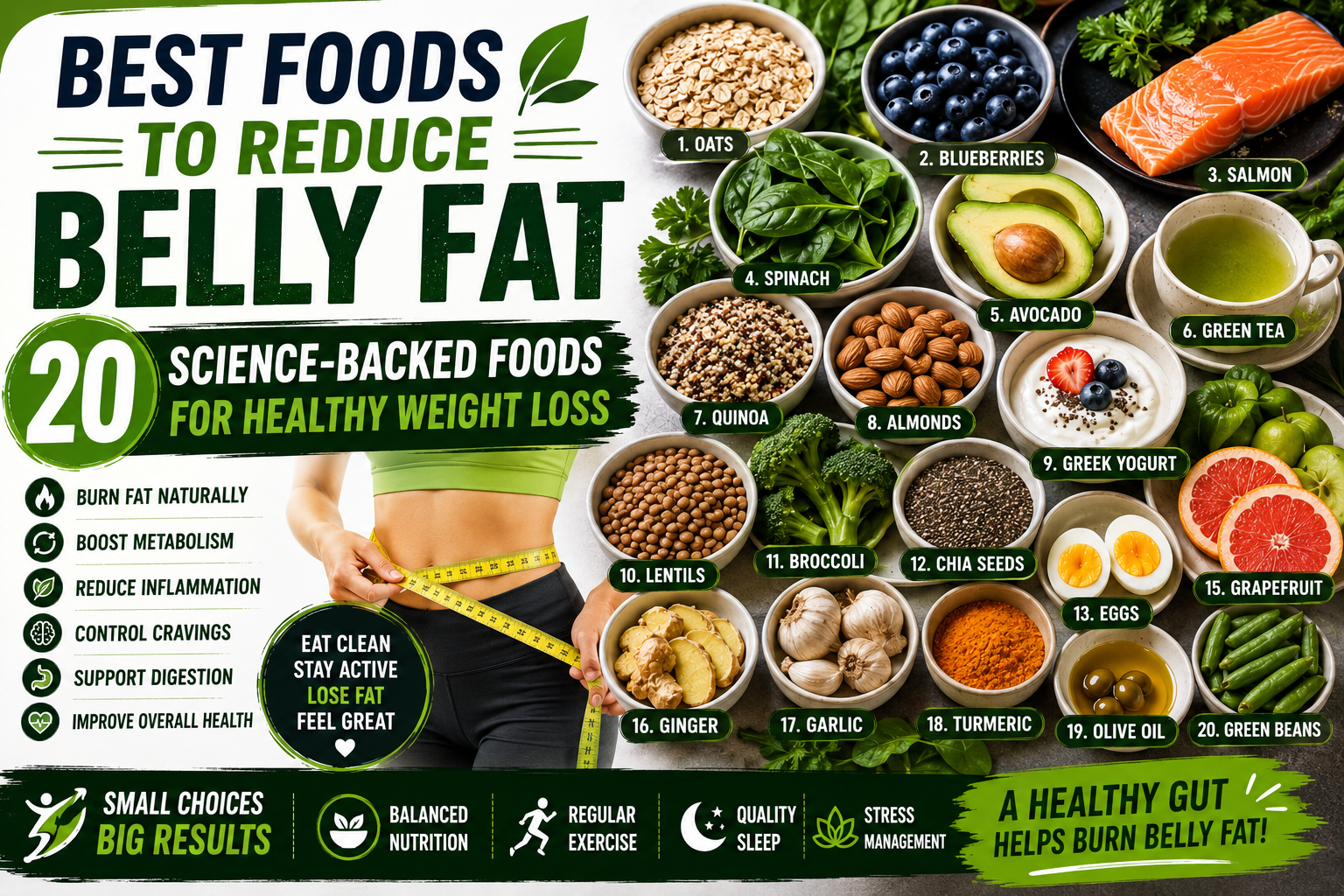
Belly fat is one of the most common health concerns for people trying to lose weight. While no single food can specifically “burn” belly fat, choosing nutrient-rich foods as part of a balanced diet can help support healthy weight loss and reduce overall body fat over time. Combined with regular exercise, quality sleep, and a calorie-controlled eating plan, these foods may help you reach your health goals.
Many of the best foods for weight management are rich in protein, fiber, healthy fats, vitamins, and minerals. These nutrients help increase feelings of fullness, reduce overeating, and provide steady energy throughout the day.
In this guide, you’ll discover 20 science-backed foods that can support healthy weight loss, learn why belly fat matters, and find practical nutrition tips for building healthier eating habits.
Important: It’s not possible to target fat loss from one specific area of the body through food alone. Weight loss generally occurs across the entire body, including the abdominal area.
Can Foods Really Reduce Belly Fat?
No food can directly melt or burn belly fat. However, certain foods can support healthy weight loss by helping you:
- Stay full for longer
- Reduce overall calorie intake
- Maintain muscle during weight loss
- Improve diet quality
- Support healthy blood sugar control
- Replace highly processed, calorie-dense foods
The most effective approach combines nutritious eating, regular physical activity, stress management, and adequate sleep.
Why Belly Fat Matters
Excess abdominal fat—particularly visceral fat, which surrounds internal organs—is associated with a higher risk of several health conditions.
Maintaining a healthy weight may help support:
- Heart health
- Blood sugar management
- Healthy cholesterol levels
- Normal blood pressure
- Overall metabolic health
Losing even a modest amount of body weight can improve many health markers.
What Makes a Food Helpful for Weight Loss?
The most effective foods for healthy weight management often have one or more of these qualities:
High in Protein
Protein helps increase fullness and supports muscle maintenance.
Examples include:
- Greek yogurt
- Eggs
- Cottage cheese
- Fish
- Beans
Rich in Fiber
Fiber slows digestion and helps you feel satisfied longer.
Great sources include:
- Oats
- Apples
- Berries
- Vegetables
- Lentils
Healthy Fats
Healthy fats support heart health and improve meal satisfaction.
Choose foods such as:
- Almonds
- Walnuts
- Avocados
- Olive oil
- Chia seeds
Use moderate portions because healthy fats are calorie-dense.
Low in Added Sugar
Limiting foods high in added sugar may help reduce excess calorie intake.
1. Avocados
Avocados are rich in heart-healthy monounsaturated fats and fiber, making them a satisfying addition to meals and snacks.
Benefits
- High in healthy fats
- Rich in fiber
- Potassium
- Folate
- Helps increase fullness
Healthy Serving Ideas
- Spread on whole-grain toast
- Add to salads
- Blend into smoothies
- Use in sandwiches
Enjoy moderate portions because avocados are energy-dense.
2. Greek Yogurt
Greek yogurt is one of the best high-protein foods for healthy weight management.
Nutritional Benefits
- High-quality protein
- Calcium
- Probiotics
- Vitamin B12
Why It Helps
Protein-rich foods may help reduce hunger and support muscle maintenance during weight loss.
Top plain Greek yogurt with berries and cinnamon instead of sugary toppings.
3. Eggs
Eggs are affordable, nutritious, and packed with complete protein.
Benefits
- High-quality protein
- Choline
- Vitamin D
- Selenium
- Vitamin B12
A breakfast that includes eggs may help you feel fuller compared with some refined carbohydrate breakfasts.
4. Oats
Oats are rich in soluble fiber, especially beta-glucan, which supports fullness and digestive health.
Nutritional Benefits
- Fiber
- Complex carbohydrates
- Magnesium
- Iron
- Plant protein
Healthy Toppings
- Blueberries
- Strawberries
- Chia seeds
- Cinnamon
- Almonds
Choose plain oats instead of flavored varieties with added sugar.
5. Almonds
Almonds provide a combination of protein, fiber, and healthy fats that makes them a satisfying snack.
Benefits
- Vitamin E
- Magnesium
- Protein
- Fiber
- Heart-healthy fats
Stick to a small handful (about 23 almonds) to help manage calorie intake.
6. Berries
Berries are naturally sweet, low in calories, and rich in antioxidants.
Best Choices
- Blueberries
- Strawberries
- Raspberries
- Blackberries
Benefits
- High in fiber
- Vitamin C
- Antioxidants
- Naturally low in calories
Add berries to yogurt, oatmeal, or smoothies.
7. Leafy Green Vegetables
Leafy greens are nutrient-dense while being very low in calories.
Great Options
- Spinach
- Kale
- Lettuce
- Swiss chard
- Arugula
Benefits
- Fiber
- Vitamin K
- Folate
- Vitamin A
- Vitamin C
Fill half your plate with vegetables to increase meal volume without adding many calories.
Healthy Eating Tips for Belly Fat Loss
Healthy habits matter just as much as food choices.
Prioritize Whole Foods
Choose foods that are minimally processed whenever possible.
Include Protein in Every Meal
Protein helps promote fullness and supports muscle health.
Eat Plenty of Vegetables
Vegetables are naturally high in fiber and low in calories, making them an excellent choice for healthy weight management.
Stay Hydrated
Sometimes thirst can be mistaken for hunger. Drinking enough water throughout the day supports overall health.
Watch Portion Sizes
Even nutritious foods can contribute excess calories if eaten in very large portions.
Sample Belly Fat-Friendly Meal Ideas
Here are a few balanced meal combinations:
Breakfast
- Greek yogurt
- Blueberries
- Chia seeds
Snack
- Apple with a handful of almonds
Lunch
- Grilled chicken
- Mixed salad
- Olive oil dressing
Snack
- Carrot sticks with hummus
Dinner
- Baked salmon
- Steamed broccoli
- Brown rice
These meals combine protein, fiber, and healthy fats to support overall healthy eating.
8. Fatty Fish
Fatty fish such as salmon, sardines, mackerel, and trout are excellent sources of high-quality protein and omega-3 fatty acids.
Benefits
- Rich in protein
- Contains omega-3 fats
- Supports heart health
- Helps keep you full longer
- Provides vitamin D and selenium
Aim to include fatty fish in your diet 1–2 times per week as part of a balanced eating pattern.
9. Chia Seeds
Chia seeds are tiny nutritional powerhouses packed with fiber, plant-based protein, and healthy fats.
Nutritional Benefits
- High in soluble fiber
- Plant-based omega-3 fatty acids
- Protein
- Calcium
- Magnesium
Healthy Ways to Eat Chia Seeds
- Add to oatmeal
- Mix into smoothies
- Make chia pudding
- Sprinkle over yogurt
Because chia seeds absorb water, drink enough fluids throughout the day.
10. Green Tea
Green tea is a calorie-free beverage rich in antioxidants called catechins.
Why Choose Green Tea?
- Naturally sugar-free
- Rich in antioxidants
- A healthier alternative to sugary drinks
- May support a healthy lifestyle when combined with balanced nutrition and exercise
Replace sugar-sweetened beverages with unsweetened green tea whenever possible.
11. Apples
Apples are one of the best fruits for healthy snacking because they’re naturally high in fiber and low in calories.
Benefits
- High in fiber
- Vitamin C
- Naturally sweet
- Easy to carry
For extra fullness, pair an apple with a tablespoon of natural peanut butter.
12. Beans and Lentils
Beans and lentils provide a winning combination of protein and fiber, making them highly satisfying.
Best Choices
- Black beans
- Kidney beans
- Chickpeas
- Lentils
- Pinto beans
Benefits
- Plant protein
- Fiber
- Iron
- Folate
- Magnesium
Add them to soups, salads, wraps, or grain bowls.
13. Cottage Cheese
Cottage cheese is naturally rich in protein and relatively low in calories.
Nutritional Benefits
- Casein protein
- Calcium
- Vitamin B12
- Phosphorus
Enjoy cottage cheese with berries, cucumber slices, or tomatoes for a balanced snack.
14. Broccoli
Broccoli is one of the most nutrient-dense vegetables you can eat.
Benefits
- High in fiber
- Vitamin C
- Vitamin K
- Folate
- Antioxidants
Steam, roast, or stir-fry broccoli with minimal oil for a healthy side dish.
15. Extra Virgin Olive Oil
Extra virgin olive oil is a cornerstone of the Mediterranean diet and provides heart-healthy monounsaturated fats.
Benefits
- Healthy fats
- Rich in antioxidants
- Supports heart health
- Adds flavor to meals
Use olive oil in moderation for:
- Salad dressings
- Roasted vegetables
- Whole-grain dishes
Foods to Limit
While no food needs to be completely off-limits, reducing highly processed foods may help support healthy weight management.
Sugar-Sweetened Drinks
Examples include:
- Soft drinks
- Sweetened juices
- Energy drinks
- Sweetened iced tea
Choose water, sparkling water, or unsweetened tea instead.
Highly Processed Snacks
Limit foods such as:
- Potato chips
- Candy
- Cookies
- Doughnuts
- Pastries
These foods are often high in calories while being low in fiber and protein.
Refined Grains
Examples include:
- White bread
- Sugary breakfast cereals
- White pastries
Choose whole-grain alternatives whenever possible.
Fast Food
Fast food meals are often high in:
- Calories
- Sodium
- Saturated fat
Preparing meals at home more often gives you greater control over ingredients and portion sizes.
Healthy Eating Tips for Belly Fat Loss
Small, sustainable habits often make the biggest difference over time.
Eat More Protein
Include lean protein at every meal to help increase fullness.
Examples include:
- Chicken breast
- Fish
- Greek yogurt
- Eggs
- Beans
Fill Half Your Plate with Vegetables
Vegetables provide volume with relatively few calories, making meals more satisfying.
Choose Whole Grains
Replace refined grains with:
- Oats
- Brown rice
- Quinoa
- Whole-wheat bread
Whole grains contain more fiber and nutrients than refined grains.
Stay Consistent
Healthy eating works best when practiced consistently rather than occasionally.
Focus on building habits you can maintain over the long term.
Move More Every Day
Nutrition is important, but combining healthy eating with regular physical activity is even more effective for overall weight management.
Aim for a mix of:
- Walking
- Strength training
- Cycling
- Swimming
- Other enjoyable forms of exercise
Sample Belly Fat-Friendly Snack Ideas
Try these balanced snack combinations:
- Greek yogurt with blueberries
- Apple with almonds
- Cottage cheese with strawberries
- Carrot sticks with hummus
- Roasted chickpeas
- Oatmeal with chia seeds
- Hard-boiled eggs with cucumber
- Mixed berries and walnuts
These snacks combine protein, fiber, and healthy fats to help keep you satisfied between meals.
16. Quinoa
Quinoa is a whole grain that’s naturally rich in fiber and contains more protein than many other grains.
Nutritional Benefits
- Plant-based protein
- High in fiber
- Magnesium
- Iron
- Complex carbohydrates
Why It Supports Healthy Weight Management
Quinoa can help you stay satisfied for longer because it combines protein and fiber in one food. Use it as a substitute for refined grains like white rice.
17. Sweet Potatoes
Sweet potatoes are naturally sweet, rich in fiber, and packed with vitamins.
Benefits
- High in fiber
- Vitamin A
- Potassium
- Vitamin C
- Complex carbohydrates
Bake or steam sweet potatoes instead of frying them for a healthier meal.
18. Bell Peppers
Bell peppers are colorful vegetables that are low in calories and high in nutrients.
Nutritional Benefits
- Vitamin C
- Vitamin A
- Fiber
- Antioxidants
Bell peppers add volume to meals without significantly increasing calorie intake.
19. Walnuts
Walnuts provide healthy fats, plant protein, and fiber, making them a nutritious snack when eaten in moderation.
Benefits
- Omega-3 fatty acids
- Protein
- Fiber
- Magnesium
- Antioxidants
A small handful of walnuts paired with fruit makes a satisfying snack.
20. Tomatoes
Tomatoes are naturally low in calories and rich in antioxidants such as lycopene.
Benefits
- Vitamin C
- Potassium
- Lycopene
- High water content
Add tomatoes to salads, sandwiches, soups, or omelets for extra nutrition.
Sample One-Day Belly Fat-Friendly Meal Plan
This sample menu emphasizes balanced nutrition rather than quick fixes.
Breakfast
- Plain Greek yogurt
- Mixed berries
- Chia seeds
- Unsweetened green tea
Mid-Morning Snack
- Apple
- Small handful of almonds
Lunch
- Grilled chicken breast
- Quinoa
- Mixed green salad with olive oil and lemon dressing
Afternoon Snack
- Cottage cheese
- Cucumber slices
Dinner
- Baked salmon
- Steamed broccoli
- Roasted sweet potatoes
Evening Snack (Optional)
- Herbal tea
- A few walnuts
Lifestyle Tips Beyond Diet
While nutritious foods are important, healthy lifestyle habits play an equally important role in reducing overall body fat.
Exercise Regularly
Aim for a combination of:
- Strength training
- Brisk walking
- Cycling
- Swimming
- Other activities you enjoy
Building muscle helps support a healthy metabolism.
Sleep Well
Adults generally benefit from 7–9 hours of quality sleep each night. Poor sleep may increase hunger and make healthy eating more difficult.
Manage Stress
Chronic stress can influence eating habits. Helpful stress-management techniques include:
- Walking outdoors
- Meditation
- Deep breathing
- Yoga
- Spending time with family and friends
Stay Hydrated
Drink water throughout the day. Staying hydrated supports overall health and may help prevent confusing thirst with hunger.
Be Patient
Healthy fat loss takes time. Focus on building sustainable habits instead of expecting rapid results.
Frequently Asked Questions (FAQs)
1. Can any food specifically burn belly fat?
No. There is no single food that targets belly fat. Healthy eating, regular exercise, adequate sleep, and maintaining a calorie deficit are the most effective strategies for reducing overall body fat.
2. Which foods help you stay full the longest?
Foods high in protein and fiber, such as Greek yogurt, eggs, beans, oats, and lentils, are generally more filling than refined carbohydrate snacks.
3. Are nuts good for weight loss?
Yes. Almonds, walnuts, pistachios, and other nuts provide healthy fats, protein, and fiber. Because they are calorie-dense, enjoy moderate portions.
4. Is fruit bad for belly fat?
No. Whole fruits contain fiber, vitamins, minerals, and antioxidants. For most people, they are an important part of a healthy diet.
5. Should I avoid carbohydrates?
Not necessarily. Choosing whole-grain carbohydrates like oats, quinoa, brown rice, and whole-wheat bread is generally healthier than relying on refined grains.
6. Is green tea effective for weight loss?
Green tea can be a healthy, calorie-free beverage that replaces sugary drinks. It should be viewed as part of an overall healthy lifestyle rather than a standalone weight-loss solution.
7. How long does it take to lose belly fat?
The timeline varies depending on factors such as diet, physical activity, sleep, stress, and individual metabolism. Gradual, sustainable weight loss is generally recommended.
8. What drinks are best for healthy weight management?
Good choices include:
- Water
- Sparkling water
- Unsweetened green tea
- Herbal tea
- Black coffee (without added sugar, if tolerated)
Final Thoughts
There is no magic food that melts belly fat, but a diet rich in whole, nutrient-dense foods can support healthy weight loss and improve overall well-being. Foods like Greek yogurt, eggs, oats, berries, leafy greens, salmon, beans, walnuts, and olive oil provide protein, fiber, healthy fats, and essential nutrients that help keep you satisfied and support long-term healthy eating habits.
Pair these foods with regular physical activity, good sleep, stress management, and consistent healthy choices for the best results. Remember, small changes practiced consistently often lead to lasting success.
Key Takeaways
- No single food can specifically burn belly fat.
- Focus on reducing overall body fat through balanced nutrition and an active lifestyle.
- Eat more protein and fiber-rich foods.
- Include healthy fats in moderate portions.
- Limit sugary drinks and highly processed foods.
- Stay active and prioritize strength training.
- Sleep 7–9 hours each night.
- Build habits you can maintain long term.
You May Also Like
Continue your healthy eating journey with these related articles:
- Healthiest Nuts to Eat Every Day
- Benefits of Almonds
- Walnut Benefits
- Best Nuts for Weight Loss
- Best Time to Eat Nuts
- Best Dry Fruits for Weight Loss
- 10 Best Dry Fruits for Diabetes (Science-Backed & Blood Sugar Friendly)
- Medjool Dates Benefits
Leave a Reply