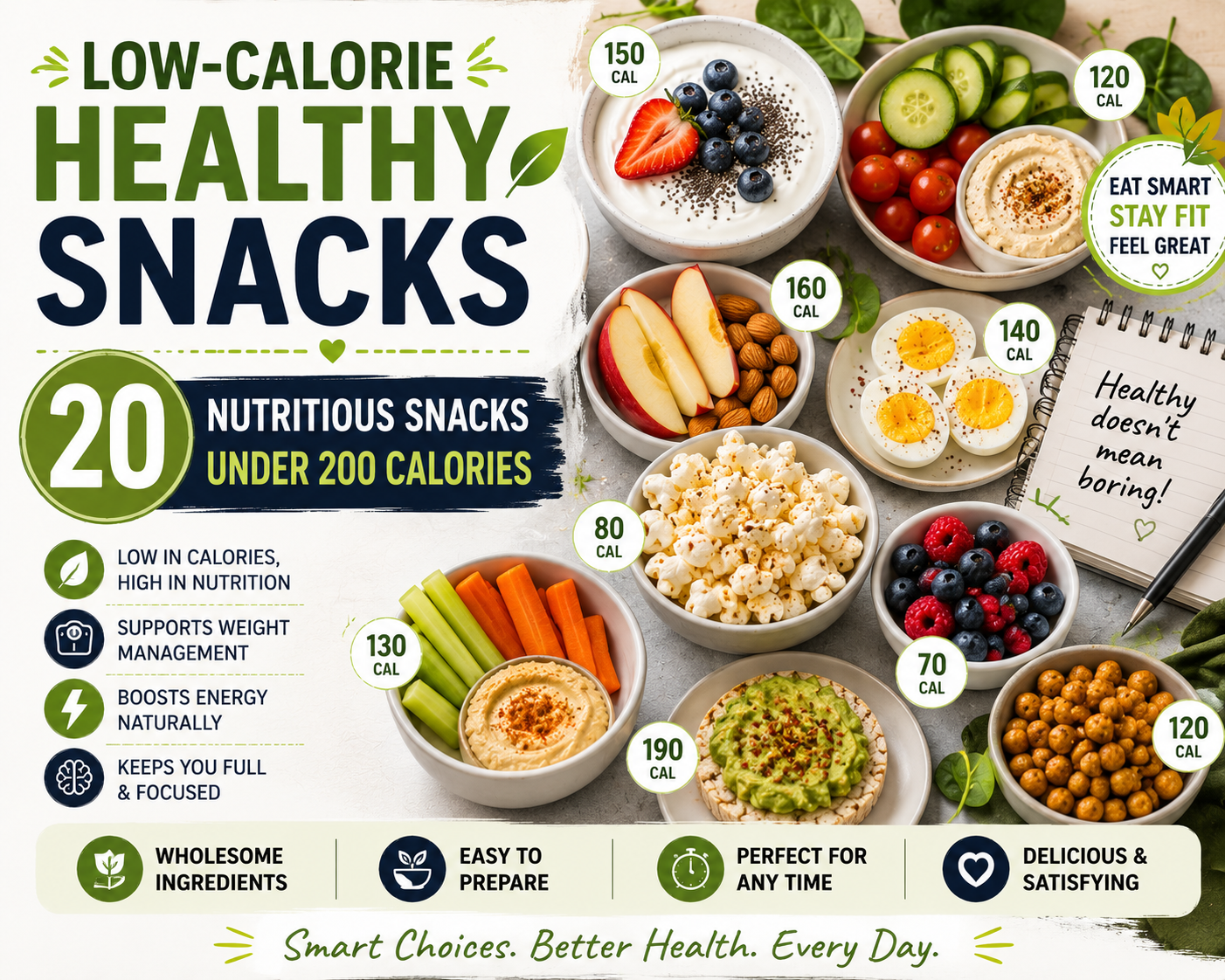
Finding snacks that are both nutritious and low in calories can be challenging, especially when many packaged snack foods are high in added sugar, unhealthy fats, and sodium. Fortunately, there are plenty of delicious whole-food options that satisfy hunger without adding excessive calories to your daily diet.
Low-calorie healthy snacks can help bridge the gap between meals, provide essential nutrients, and support your overall health. When chosen wisely, they can also fit into a balanced eating plan for weight management without leaving you feeling deprived.
The best low-calorie snacks combine protein, fiber, healthy fats, vitamins, and minerals to keep you full and energized. Instead of focusing only on calorie counts, it’s important to choose foods that deliver lasting nutrition.
In this guide, you’ll discover 20 healthy snacks under 200 calories, learn what makes a snack filling, and find practical ideas for smart, satisfying snacking.
Why Choose Low-Calorie Healthy Snacks?
Healthy snacks can play an important role in a balanced diet. They may help you:
- Manage hunger between meals
- Maintain steady energy levels
- Reduce the temptation to overeat later
- Increase your intake of fruits and vegetables
- Meet your daily nutrient needs
- Support healthy weight management when included in an appropriate calorie intake
Remember that overall eating habits, physical activity, sleep, and lifestyle are all important for long-term health.
What Makes a Healthy Low-Calorie Snack?
A satisfying snack is about more than just calories. The best options include nutrients that help you stay full and energized.
Protein
Protein supports muscle maintenance and helps increase feelings of fullness.
Good sources include:
- Greek yogurt
- Cottage cheese
- Eggs
- Edamame
- Roasted chickpeas
Fiber
Fiber slows digestion and promotes fullness.
High-fiber foods include:
- Apples
- Berries
- Carrots
- Oats
- Popcorn
Healthy Fats
Healthy fats provide lasting energy and support overall health.
Choose foods such as:
- Almonds
- Walnuts
- Chia seeds
- Peanut butter
- Avocados
Since healthy fats are calorie-dense, enjoy them in moderate portions.
Vitamins and Minerals
Whole foods naturally provide essential nutrients like:
- Vitamin C
- Potassium
- Magnesium
- Calcium
- Iron
These nutrients support overall health and normal body functions.
1. Apple Slices
Approximate Calories: 95 per medium apple
Apples are one of the easiest low-calorie snacks to keep on hand. They’re naturally sweet, portable, and high in fiber.
Benefits
- Rich in fiber
- Naturally low in calories
- Provides vitamin C
- Helps satisfy sweet cravings
For extra satisfaction, pair apple slices with a small amount of peanut butter or a few almonds.
2. Greek Yogurt
Approximate Calories: 90–150 per serving (plain, depending on fat content)
Plain Greek yogurt is packed with protein and calcium, making it one of the best filling snacks.
Nutritional Benefits
- High-quality protein
- Calcium
- Probiotics
- Vitamin B12
Top it with fresh berries or cinnamon instead of sugary flavored toppings.
3. Air-Popped Popcorn
Approximate Calories: 30–35 per cup (air-popped)
Popcorn is a whole grain that can be surprisingly filling because of its fiber content.
Benefits
- High in fiber
- Low in calories
- Crunchy and satisfying
- Easy to prepare
Avoid excessive butter and salt to keep it a healthier option.
4. Carrot Sticks with Hummus
Approximate Calories: 120–170 (depending on portion size)
Carrots provide fiber and vitamin A, while hummus adds plant-based protein and healthy fats.
Why It’s a Great Snack
- Balanced nutrition
- Rich in fiber
- Provides vitamins and minerals
- Helps increase vegetable intake
5. Cucumber Slices
Approximate Calories: 15–20 per cup
Cucumbers are one of the lowest-calorie vegetables and contain a high percentage of water, making them refreshing and hydrating.
Healthy Serving Ideas
- Sprinkle with black pepper
- Add lemon juice
- Pair with Greek yogurt dip
- Enjoy with hummus
6. Hard-Boiled Eggs
Approximate Calories: About 70–80 per large egg
Eggs provide complete protein and several important nutrients.
Benefits
- High-quality protein
- Choline
- Vitamin B12
- Keeps you full longer
A boiled egg with sliced cucumber or tomatoes makes a balanced snack under 150 calories.
7. Mixed Berries
Approximate Calories: 60–85 per cup
Berries such as strawberries, blueberries, raspberries, and blackberries are naturally sweet and rich in antioxidants.
Nutritional Benefits
- High in fiber
- Vitamin C
- Antioxidants
- Naturally low in calories
Enjoy berries on their own or with plain Greek yogurt.
Tips for Choosing Better Low-Calorie Snacks
Keep these simple habits in mind:
Choose Whole Foods
Fresh fruits, vegetables, nuts, seeds, and dairy products usually provide more nutrients than highly processed snacks.
Watch Portion Sizes
Even healthy foods can contribute excess calories if eaten in very large amounts. Pre-portion snacks whenever possible.
Stay Hydrated
Sometimes thirst is mistaken for hunger. Drink water throughout the day and consider having a glass before reaching for a snack.
Combine Protein and Fiber
Snacks that contain both protein and fiber are generally more satisfying than snacks high in refined carbohydrates alone.
Examples include:
- Greek yogurt with berries
- Apple with a few almonds
- Carrots with hummus
- Cottage cheese with fruit
Sample Low-Calorie Snack Combinations
Here are a few balanced ideas under approximately 200 calories:
- Plain Greek yogurt with blueberries
- Apple slices with 1 tablespoon of peanut butter
- Air-popped popcorn with a boiled egg
- Carrot sticks with hummus
- Mixed berries with cottage cheese
- Cucumber slices with Greek yogurt dip
These snacks provide a combination of protein, fiber, and essential nutrients while keeping calories in check.
8. Cottage Cheese
Approximate Calories: 90–120 calories per ½ cup (low-fat)
Cottage cheese is a high-protein, low-calorie snack that helps keep you feeling full between meals. It also provides calcium and vitamin B12, making it an excellent choice for a balanced diet.
Nutritional Benefits
- High-quality protein
- Calcium
- Vitamin B12
- Phosphorus
- Low in carbohydrates
Healthy Serving Ideas
- Top with strawberries or blueberries.
- Add sliced cucumber and black pepper.
- Sprinkle with chia seeds.
- Pair with pineapple chunks.
9. Almonds (Portion Controlled)
Approximate Calories: About 160–170 calories per 23 almonds (28 g)
Almonds are rich in healthy fats, protein, fiber, and vitamin E. Although they are calorie-dense, a moderate serving makes a satisfying snack.
Benefits
- Healthy monounsaturated fats
- Protein
- Fiber
- Magnesium
- Vitamin E
Measure portions instead of eating directly from the bag.
10. Roasted Chickpeas
Approximate Calories: 120–150 calories per serving
Roasted chickpeas are crunchy, flavorful, and packed with plant-based protein and fiber.
Why They’re Healthy
- High in fiber
- Plant-based protein
- Iron
- Folate
- Magnesium
Season them with paprika, garlic powder, or herbs instead of excessive salt.
11. Rice Cakes with Peanut Butter
Approximate Calories: 150–180 calories
Rice cakes are light and low in calories. Pairing one with a thin layer of natural peanut butter creates a more satisfying snack.
Healthy Toppings
- Peanut butter and banana slices
- Almond butter with cinnamon
- Peanut butter and chia seeds
Choose plain rice cakes with no added sugar.
12. Chia Pudding
Approximate Calories: 150–180 calories per serving
Chia pudding is rich in fiber, plant-based omega-3 fats, and protein.
Healthy Ingredients
- Chia seeds
- Unsweetened milk
- Cinnamon
- Vanilla extract
- Fresh berries
Benefits
- Keeps you full longer
- High in fiber
- Supports digestive health
- Easy to prepare ahead of time
13. Celery with Peanut Butter
Approximate Calories: 120–170 calories
Celery is naturally low in calories, while peanut butter provides healthy fats and protein.
Benefits
- Crunchy and satisfying
- Balanced nutrients
- Easy to prepare
- Kid-friendly and office-friendly
Use a moderate amount of peanut butter to keep calories under control.
14. Edamame
Approximate Calories: About 120 calories per ½ cup
Edamame is one of the best plant-based snacks because it contains both protein and fiber.
Nutritional Benefits
- Plant protein
- Fiber
- Iron
- Magnesium
- Folate
Steam and lightly season with herbs or spices for a nutritious snack.
15. Oatmeal
Approximate Calories: 150 calories per prepared serving
Oatmeal isn’t just for breakfast. A small bowl makes a filling afternoon snack thanks to its complex carbohydrates and fiber.
Healthy Toppings
- Blueberries
- Strawberries
- Cinnamon
- Chopped almonds
- Chia seeds
Avoid flavored instant oatmeal packets that contain large amounts of added sugar.
Best Low-Calorie Snacks for Weight Loss
If you’re trying to lose weight, choose snacks that are filling and nutrient-dense rather than simply low in calories.
Excellent options include:
- Greek yogurt with berries
- Cottage cheese
- Apple slices
- Carrot sticks with hummus
- Air-popped popcorn
- Hard-boiled eggs
- Edamame
- Roasted chickpeas
These foods provide protein, fiber, or both—nutrients that can help increase feelings of fullness.
High-Protein Low-Calorie Snacks
Protein plays an important role in maintaining muscle and promoting satiety.
Great high-protein snacks include:
| Snack | Approximate Protein |
|---|---|
| Greek yogurt | 15–20 g |
| Cottage cheese | 12–15 g |
| Hard-boiled eggs | 6 g per egg |
| Edamame | 9–11 g |
| Roasted chickpeas | 6–8 g |
| Low-fat cheese | 6–8 g |
Combining protein with fiber-rich foods can help keep you satisfied for longer.
Common Snacking Mistakes
Avoid these habits to make healthier snack choices.
Eating Straight from the Package
Portion snacks into small bowls or containers to avoid overeating.
Choosing “Low-Fat” but High-Sugar Foods
Some products marketed as low-fat contain significant amounts of added sugar. Read nutrition labels carefully.
Drinking Sugary Beverages
Choose water, sparkling water, or unsweetened tea instead of sugary soft drinks.
Skipping Meals
Skipping meals may leave you overly hungry later, making it harder to control portion sizes.
Ignoring Hunger Cues
Try to snack because you’re physically hungry—not simply because you’re bored or stressed.
Smart Portion Control Tips
- Use small containers for snacks.
- Measure servings of nuts and seeds.
- Fill half your snack plate with fruits or vegetables when possible.
- Eat slowly and avoid distracted snacking.
- Keep healthy snacks visible and less nutritious snacks out of easy reach.
16. Bell Pepper Slices with Guacamole
Approximate Calories: 120–170 calories per serving
Bell peppers are naturally low in calories and rich in vitamin C, while guacamole provides healthy monounsaturated fats and fiber.
Benefits
- Rich in antioxidants
- Supports heart health
- High in vitamin C
- Crunchy and satisfying
For a lower-calorie option, enjoy a smaller portion of guacamole with extra vegetables.
17. Frozen Grapes
Approximate Calories: 60–70 calories per cup
Frozen grapes are a naturally sweet and refreshing snack that can help satisfy dessert cravings.
Benefits
- Naturally sweet
- Low in calories
- Hydrating
- Rich in antioxidants
Freeze washed grapes overnight for an easy grab-and-go snack.
18. Tuna and Cucumber Bites
Approximate Calories: 120–180 calories per serving
Top thick cucumber slices with tuna mixed with plain Greek yogurt or a small amount of light mayonnaise.
Nutritional Benefits
- High-quality protein
- Low in carbohydrates
- Rich in selenium
- Contains vitamin B12
This snack is especially filling thanks to its high protein content.
19. Homemade Vegetable Soup
Approximate Calories: 80–150 calories per bowl
A bowl of vegetable soup is warm, comforting, and naturally low in calories.
Healthy Ingredients
- Tomatoes
- Carrots
- Celery
- Spinach
- Onions
- Zucchini
- Herbs and spices
Choose broth-based soups instead of cream-based varieties to keep calories lower.
20. Pear with Cinnamon
Approximate Calories: 100–120 calories
Pears are rich in fiber and naturally sweet, making them an excellent healthy snack.
Benefits
- High in fiber
- Vitamin C
- Potassium
- Naturally satisfying
Sprinkle cinnamon on pear slices for extra flavor without adding sugar.
Sample One-Day Healthy Snack Plan
Here’s an example of how you can include nutritious low-calorie snacks throughout the day.
Mid-Morning Snack
- Greek yogurt with blueberries
Afternoon Snack
- Apple slices with one tablespoon of natural peanut butter
Evening Snack
- Air-popped popcorn or carrot sticks with hummus
This combination provides protein, fiber, vitamins, and minerals while helping you stay energized.
Long-Term Healthy Snacking Tips
Healthy eating isn’t about perfection—it’s about building sustainable habits.
Plan Ahead
Prepare healthy snacks before your week begins.
Keep Nutritious Foods Visible
Place fruit on your kitchen counter and store pre-cut vegetables at eye level in the refrigerator.
Read Nutrition Labels
When buying packaged snacks, compare products and choose options that are:
- Lower in added sugar
- Lower in sodium
- Higher in fiber
- Higher in protein
Stay Hydrated
Drinking enough water throughout the day supports overall health and may help prevent confusing thirst with hunger.
Listen to Your Body
Eat when you’re hungry and stop when you’re comfortably satisfied.
Frequently Asked Questions (FAQs)
1. What are the best low-calorie healthy snacks?
Some of the best options include:
- Greek yogurt
- Apples
- Mixed berries
- Air-popped popcorn
- Hard-boiled eggs
- Cottage cheese
- Edamame
- Carrot sticks with hummus
2. Are low-calorie snacks good for weight loss?
They can be helpful when they fit into your overall calorie needs. Choosing nutrient-dense snacks with protein and fiber may help manage hunger and support healthy weight management.
3. What snacks keep you full the longest?
Foods rich in protein and fiber tend to be the most filling.
Examples include:
- Greek yogurt
- Cottage cheese
- Hard-boiled eggs
- Roasted chickpeas
- Oatmeal
- Edamame
4. Can I eat nuts on a low-calorie diet?
Yes. Nuts are nutritious but calorie-dense. Enjoy portion-controlled servings, such as about 23 almonds or a small handful of mixed nuts.
5. Are fruits too high in sugar?
Whole fruits contain natural sugars along with fiber, vitamins, minerals, and antioxidants. For most people, whole fruits are part of a healthy diet.
6. What should I drink with healthy snacks?
Healthy beverage choices include:
- Water
- Sparkling water
- Unsweetened green tea
- Herbal tea
- Black coffee (in moderation)
7. How many calories should a healthy snack contain?
Many healthy snacks fall within the range of 100–200 calories, though individual needs vary depending on age, activity level, and overall diet.
8. Is popcorn a healthy snack?
Yes, air-popped popcorn is a whole grain that’s naturally high in fiber and relatively low in calories when prepared without excessive butter, oil, or salt.
Final Thoughts
Low-calorie healthy snacks can help you stay energized, satisfy hunger between meals, and support a balanced eating pattern. The key is to choose nutrient-rich foods that provide protein, fiber, healthy fats, and essential vitamins instead of relying on highly processed snacks.
Fresh fruits, vegetables, Greek yogurt, cottage cheese, eggs, oatmeal, nuts, seeds, and legumes are all excellent choices that can fit into a healthy lifestyle. Remember that no single snack determines your overall health—consistency, portion control, regular physical activity, and balanced meals all contribute to long-term wellness.
By preparing healthy snacks in advance and keeping nutritious options within reach, you’ll make it easier to enjoy satisfying foods while staying on track with your nutrition goals.
Key Takeaways
- Choose snacks that combine protein and fiber for better fullness.
- Keep portions moderate, especially for calorie-dense foods like nuts and nut butter.
- Include whole fruits and vegetables every day.
- Read nutrition labels when buying packaged snacks.
- Stay hydrated throughout the day.
- Plan and prepare healthy snacks in advance.
- Focus on overall eating habits rather than calorie counting alone.
You May Also Like
Continue building healthier eating habits with these related articles:
- Healthiest Nuts to Eat Every Day
- Benefits of Almonds
- Walnut Benefits
- Best Nuts for Weight Loss
- Best Time to Eat Nuts
- Best Dry Fruits for Weight Loss
- 10 Best Dry Fruits for Diabetes (Science-Backed & Blood Sugar Friendly)
- Medjool Dates Benefits
Leave a Reply