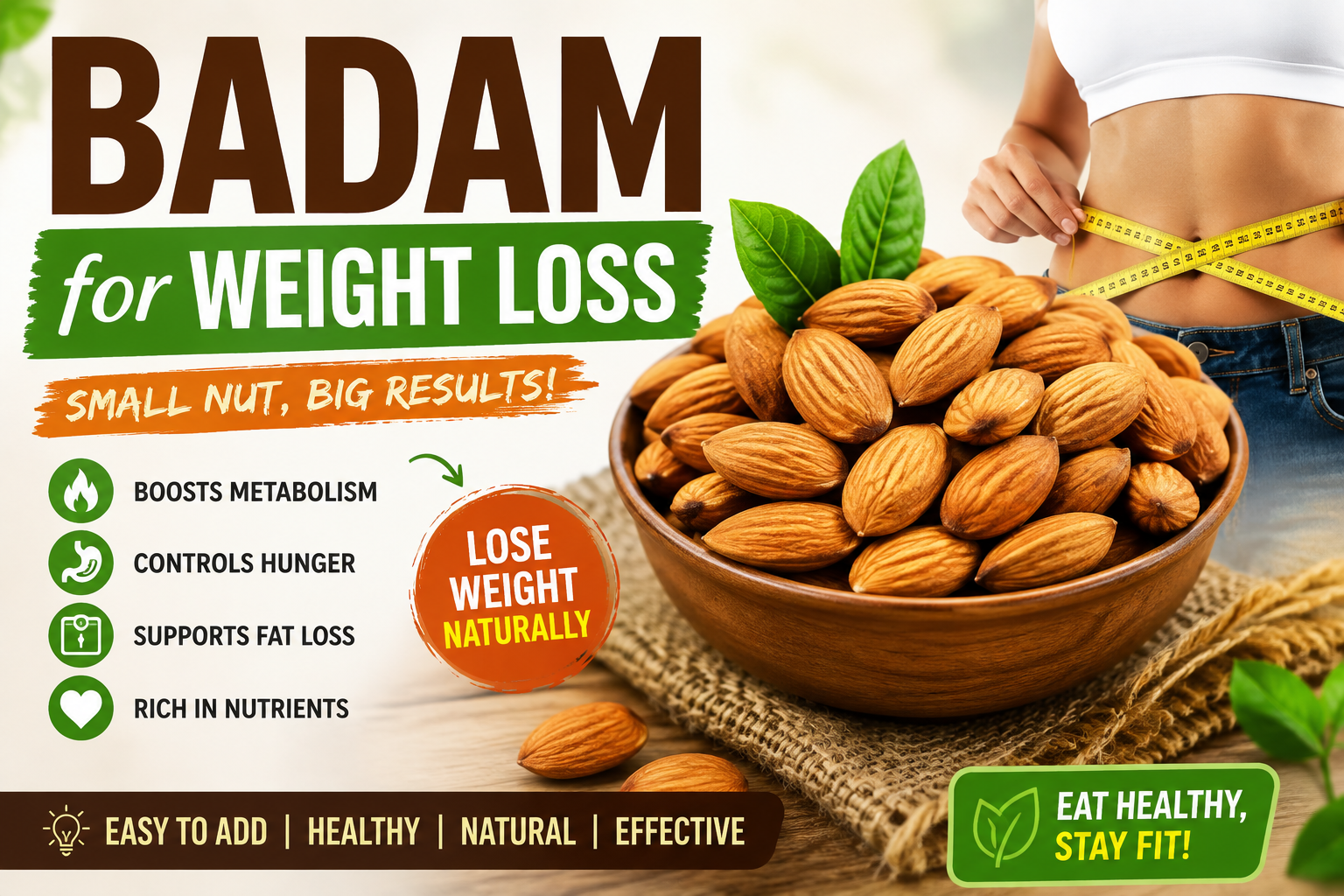
If you are trying to lose weight, you may be wondering whether badam, also known as almonds, should be included in your diet.
This is a common question because almonds are highly nutritious, but they are also relatively high in calories and fat. Some people believe that eating nuts will automatically cause weight gain, while others claim that eating almonds every day can melt fat and reduce belly fat.
The truth is more balanced.
Almonds can be a healthy and useful food for weight loss when eaten in the right portions. They contain protein, fiber, healthy fats, vitamins, and minerals that can make your meals and snacks more satisfying. However, almonds are not a magic fat-burning food, and eating excessive amounts can add a significant number of calories to your diet.
The key is understanding how much to eat, when to eat them, what to combine them with, and how almonds fit into your overall calorie intake.
In this detailed guide, you will learn everything you need to know about badam for weight loss, including the benefits of almonds, calories, portion sizes, soaked almonds, the best time to eat almonds, whether almonds can reduce belly fat, healthy almond recipes, common mistakes, and frequently asked questions.
Are Almonds Good for Weight Loss?
Yes, almonds can be good for weight loss.
However, simply adding almonds to your current diet will not automatically make you lose weight.
Weight loss generally occurs when you consistently consume less energy than your body uses over time. This is commonly known as maintaining a calorie deficit.
Almonds may support a weight-loss-friendly diet because they contain several nutrients associated with fullness and satisfaction, including:
- Protein
- Dietary fiber
- Unsaturated fats
- Vitamin E
- Magnesium
- Other essential nutrients
The combination of protein, fiber, and healthy fats can make almonds more satisfying than many highly processed snack foods.
For example, imagine that you usually eat a packet of cookies or candy when you become hungry in the afternoon. Replacing that snack with a controlled portion of almonds and a piece of fruit may help you make a more nutritious choice.
The important word here is replacement.
If you replace a high-calorie, low-nutrient snack with an appropriate portion of almonds, they may support your weight-loss efforts.
But if you eat several large handfuls of almonds in addition to your regular meals, snacks, and desserts, the extra calories may make weight loss more difficult.
Therefore, almonds are not automatically “weight-loss food” or “weight-gain food.”
How you eat them matters.
Why Are Almonds Good for Weight Management?
Almonds have several characteristics that may make them useful in a healthy eating plan.
1. Almonds Contain Protein
Protein is an important nutrient, particularly when you are trying to lose weight.
A diet containing adequate protein may help support fullness and can also help support the maintenance of lean muscle when combined with appropriate exercise.
Almonds contain protein, although they should not be your only source.
A balanced diet can include protein from foods such as:
- Eggs
- Chicken
- Fish
- Greek yogurt
- Milk
- Cottage cheese
- Beans
- Lentils
- Tofu
- Lean meat
Adding almonds to meals and snacks can contribute to your total protein intake.
For example, instead of eating fruit alone, you could combine fruit with a small portion of almonds. This combination may feel more satisfying because the almonds add protein and fat.
2. Almonds Provide Dietary Fiber
Fiber is another reason almonds can fit well into a weight-loss diet.
Fiber-rich foods can help support digestive health and may contribute to feelings of fullness.
A healthy diet can include fiber from many sources, including:
- Fruits
- Vegetables
- Beans
- Lentils
- Oats
- Whole grains
- Seeds
- Nuts
Almonds are not a substitute for vegetables or other fiber-rich foods, but they can contribute to your total daily fiber intake.
For a satisfying snack, try combining almonds with foods that provide volume, such as an apple, berries, or other fruit.
3. Almonds Contain Healthy Fats
Almonds contain mostly unsaturated fats.
Fat is an essential nutrient and plays many important roles in the body. It can also make meals more satisfying.
However, there is an important point to remember:
Healthy fats still contain calories.
This is why portion control matters.
Some people make the mistake of thinking:
“Almonds are healthy, so I can eat as many as I want.”
Unfortunately, eating very large amounts of any calorie-dense food can make it difficult to maintain a calorie deficit.
A small, measured serving of almonds can fit easily into many diets. A large bowl of almonds may provide far more calories than you expect.
4. Almonds May Help Control Unhealthy Snacking
One of the biggest challenges during weight loss is dealing with hunger and cravings.
You may start your day with a healthy breakfast and lunch, but then become extremely hungry in the afternoon.
When this happens, many people choose convenient foods such as:
- Chips
- Cookies
- Candy
- Cakes
- Pastries
- Sugary drinks
These foods can be easy to overeat.
Almonds provide a convenient alternative.
Keeping a small pre-portioned serving of almonds available can make it easier to choose a nutritious snack.
Instead of carrying an entire large packet, prepare individual portions in advance.
This helps prevent mindless eating.
How Many Almonds Should You Eat Per Day for Weight Loss?
There is no magical number of almonds that guarantees weight loss.
Your ideal portion depends on several factors, including:
- Your body size
- Your age
- Your activity level
- Your calorie needs
- Your weight-loss goals
- Your overall diet
- The other foods you eat
For many people, a small handful or measured serving can fit comfortably into a healthy diet.
Instead of focusing only on the exact number of almonds, focus on portion control.
A useful strategy is:
- Decide on your serving.
- Remove that amount from the container.
- Place it in a small bowl.
- Put the remaining almonds away.
- Eat slowly.
Avoid eating directly from a large bag or container.
When you eat while watching television, scrolling through social media, or working, it can be easy to consume far more than you intended.
Almond Calories: Why Portion Control Matters
Almonds are considered calorie-dense because they contain a significant amount of healthy fat.
This does not mean you should avoid them.
It simply means you should be aware of how much you eat.
For example, there is a big difference between:
- A small handful of almonds
- Two handfuls
- A large bowl
- Eating continuously from an open packet
The calories can add up quickly.
The same principle applies to other nutritious foods that are calorie-dense, including:
- Walnuts
- Cashews
- Pistachios
- Peanut butter
- Almond butter
- Seeds
- Olive oil
- Avocados
These foods can be part of a healthy diet, but portion size remains important.
Can Badam Reduce Belly Fat?
This is one of the most frequently asked questions.
Unfortunately, no single food can specifically target belly fat.
Eating almonds will not tell your body:
“Burn fat only from my stomach.”
When you lose body fat, your body determines where fat is lost based on factors such as:
- Genetics
- Age
- Hormones
- Sex
- Body composition
Some people notice changes in their face first. Others notice changes in their arms, legs, or waist.
The general goal for reducing belly fat is to reduce overall body fat through sustainable lifestyle habits.
These habits may include:
- Maintaining an appropriate calorie deficit
- Eating enough protein
- Eating fiber-rich foods
- Exercising regularly
- Walking more
- Doing resistance training
- Getting enough sleep
- Managing stress
Almonds can be included as part of this lifestyle.
But they are not a miracle belly-fat-burning food.
What Is the Best Time to Eat Almonds for Weight Loss?
There is no magical time when almonds suddenly become more powerful for fat burning.
You can eat almonds at any time of the day.
However, certain times may be more useful depending on your eating habits.
Almonds in the Morning
Some people enjoy eating a few almonds with breakfast.
You can add them to:
- Oatmeal
- Yogurt
- Smoothies
- Fruit bowls
If you enjoy soaked almonds, you can also eat them in the morning.
Almonds as a Mid-Morning Snack
If you become hungry between breakfast and lunch, a small portion of almonds may help you avoid less nutritious snacks.
Try combining almonds with:
- An apple
- An orange
- Greek yogurt
- A boiled egg
Combining almonds with another nutritious food can create a more balanced snack.
Almonds in the Afternoon
Afternoon cravings can be a major challenge for people trying to lose weight.
Instead of automatically eating cookies, chips, or candy, try a measured portion of almonds.
A combination such as fruit and almonds may be satisfying.
Almonds at Night
You can eat almonds at night if they fit into your overall calorie intake.
Eating food at night does not automatically cause weight gain.
What matters more is your overall calorie balance.
If a small serving of almonds helps you avoid eating a large amount of ice cream or candy, it may actually be a useful nighttime snack.
Soaked Badam for Weight Loss
Soaked almonds are very popular, especially in South Asian diets.
Some people soak almonds overnight and eat them in the morning.
How to Soak Almonds
- Take a small portion of almonds.
- Place them in a bowl.
- Add enough water to cover them.
- Leave them overnight.
- Drain and rinse them before eating.
Some people remove the skin after soaking, while others eat the almonds with the skin.
The most important point is that soaking almonds does not magically turn them into a fat-burning food.
Soaked almonds can still be a nutritious choice, but your overall calorie intake and portion size matter more for weight loss.
Are Raw or Roasted Almonds Better for Weight Loss?
Both raw and roasted almonds can fit into a healthy weight-loss diet.
The most important thing is to check the ingredients.
Some flavored almond products may contain:
- Added sugar
- Honey
- Chocolate
- Oil
- Excess salt
- Candy coatings
A plain raw almond or a simple dry-roasted almond is generally easier to include in a calorie-conscious diet.
The less unnecessary sugar and added ingredients, the easier it may be to control calories.
Can You Eat Almonds on an Empty Stomach?
Yes, many people can eat almonds on an empty stomach.
Some people enjoy soaked almonds first thing in the morning.
However, eating almonds on an empty stomach does not automatically cause faster weight loss.
The best time to eat them is the time that works well with your routine.
If eating a small portion of almonds in the morning helps you manage hunger, then it can be a useful habit.
If you prefer eating them later in the day, that is also fine.
10 Healthy Ways to Eat Almonds for Weight Loss
1. Almonds With an Apple
One of the simplest snacks is an apple with a small portion of almonds.
The apple provides volume and fiber, while almonds provide protein and healthy fats.
This combination can be more satisfying than eating a sugary snack.
2. Almonds With Greek Yogurt
Add chopped almonds to plain Greek yogurt.
You can also add:
- Berries
- Cinnamon
- A small amount of fruit
This combination can provide protein, healthy fats, and a variety of nutrients.
Choose unsweetened yogurt when possible if you want to control added sugar.
3. Almond Oatmeal
Add chopped almonds to oatmeal.
For a simple breakfast, combine:
- Oats
- Milk or yogurt
- Cinnamon
- Berries
- A measured portion of almonds
This creates a filling and nutritious meal.
4. Almond Smoothie
Almonds can be added to smoothies, but portion size is important.
A smoothie can quickly become very high in calories when you add:
- Banana
- Dates
- Honey
- Peanut butter
- Almonds
- Full-fat milk
Each ingredient may be nutritious, but combining large amounts can create a calorie-dense drink.
Keep your smoothie simple.
5. Almond and Berry Bowl
Combine a small portion of almonds with:
- Strawberries
- Blueberries
- Raspberries
- Other berries
This gives you a combination of sweetness, crunch, fiber, and healthy fats.
6. Almonds on a Salad
Sprinkle sliced almonds over a salad.
A small amount can add crunch and flavor.
This can make salads more enjoyable without requiring a large amount of high-calorie toppings.
7. Almond Chia Pudding
Chopped almonds can be added to chia pudding.
Be careful with added sweeteners and calorie-dense toppings.
Use reasonable portions.
8. Almond Butter on Whole-Grain Toast
Almond butter can be a nutritious option, but it is calorie-dense.
Use a measured serving instead of spreading a very large amount.
Pair it with fruit or a protein source for a more balanced meal.
9. Homemade Almond Trail Mix
You can make a simple trail mix using:
- Almonds
- Pumpkin seeds
- Other nuts
- A small amount of dried fruit
Avoid adding excessive amounts of candy and chocolate if your main goal is weight loss.
10. Almonds as a Dessert Replacement
If you usually eat cookies or candy after dinner, try replacing some of that habit with a controlled portion of almonds and fruit.
This can be a practical way to reduce your intake of highly processed desserts.
Healthy Almond Recipe for Weight Loss
Apple, Yogurt and Almond Bowl
This simple recipe can work as breakfast or a snack.
Ingredients
- Plain Greek yogurt
- One small apple
- A small measured portion of almonds
- Cinnamon
- Optional berries
Instructions
- Add Greek yogurt to a bowl.
- Wash and chop the apple.
- Add the apple to the yogurt.
- Sprinkle chopped almonds on top.
- Add cinnamon.
- Add berries if desired.
This snack provides a combination of:
- Protein
- Fiber
- Healthy fats
- Vitamins and minerals
The calorie content will depend on the exact portions and ingredients you use.
Almond Smoothie for Weight Loss
A smoothie can be a convenient breakfast or snack.
Ingredients
- One small banana
- A measured amount of almonds
- Unsweetened milk or another preferred milk
- Ice
- Cinnamon
- Optional plain Greek yogurt
Instructions
- Add all ingredients to a blender.
- Blend until smooth.
- Adjust the amount of liquid to achieve your desired consistency.
If weight loss is your goal, avoid automatically adding several calorie-dense ingredients.
A smoothie does not have to contain:
- Honey
- Multiple bananas
- Large amounts of nuts
- Several spoonfuls of nut butter
- Large amounts of dried fruit
Simple recipes can still taste good.
Almond Milk and Weight Loss
Almond milk is another product that people often associate with weight loss.
However, not all almond milk is the same.
Some varieties may contain added:
- Sugar
- Flavorings
- Syrups
Unsweetened almond milk is often lower in calories than some other milk-based beverages, but the nutritional content varies by brand.
Always check the nutrition label.
Also remember that drinking almond milk alone will not cause fat loss.
The important question is how it fits into your total diet.
Can Almonds Cause Weight Gain?
Almonds can contribute to weight gain if you consistently consume more calories than your body needs.
However, almonds themselves are not automatically “fattening.”
The context matters.
Example 1: Replacing an Unhealthy Snack
You normally eat a large packet of cookies.
You replace that snack with a controlled serving of almonds and fruit.
Your overall calorie intake may decrease.
Example 2: Adding Extra Almonds
You continue eating all your normal meals, snacks, desserts, and then eat several large handfuls of almonds.
Your overall calorie intake may increase.
The difference is not the almond itself.
The difference is how almonds fit into your total diet.
Common Mistakes When Eating Almonds for Weight Loss
Mistake 1: Eating Unlimited Almonds
Almonds are healthy, but they are calorie-dense.
Eating directly from a large bag can lead to overeating.
Better approach:
Measure your serving before eating.
Mistake 2: Choosing Sugar-Coated Almonds
Chocolate-covered or candy-coated almonds may contain significantly more calories and added sugar.
They can still be enjoyed occasionally, but plain almonds may be a better everyday choice.
Mistake 3: Adding Almonds Instead of Replacing Other Foods
If you add almonds to an already high-calorie diet, you may increase your total calorie intake.
Try using almonds as a replacement.
For example:
Instead of cookies → almonds and fruit.
Mistake 4: Ignoring Other Parts of Your Diet
You cannot compensate for an unhealthy overall diet simply by eating almonds.
Weight loss usually requires attention to your entire eating pattern.
Focus on:
- Protein
- Vegetables
- Fruits
- Fiber
- Appropriate portions
- Regular physical activity
Mistake 5: Expecting Fast Results
No food will cause dramatic fat loss overnight.
Sustainable weight loss generally takes time.
Avoid diets that promise:
- Instant belly-fat loss
- Extreme weight loss in a few days
- Fat melting without dietary changes
- Weight loss without considering total calories
Consistency is more valuable than quick-fix promises.
Almonds and Exercise
Almonds can fit into an active lifestyle.
You can eat them as part of a meal or snack before or after exercise.
However, almonds are relatively high in fat, so a large amount immediately before intense exercise may not feel comfortable for everyone.
Before a workout, some people prefer foods that are easier to digest.
After exercise, almonds can be combined with a higher-quality protein source.
For example:
- Greek yogurt and almonds
- Milk and almonds
- Fruit with yogurt and almonds
The best option depends on your personal preferences and activity level.
Almonds vs Other Nuts for Weight Loss
Almonds are not the only nuts that can fit into a weight-loss diet.
Other nutritious options include:
- Walnuts
- Pistachios
- Cashews
- Pecans
- Peanuts
Each nut has a different nutritional profile.
The best choice is often one that you enjoy and can eat in an appropriate portion.
Almonds
Crunchy and rich in vitamin E.
Walnuts
Known for their beneficial fat profile.
Pistachios
Eating pistachios in their shells may slow down eating for some people.
Cashews
Creamy and versatile in many recipes.
Peanuts
Technically legumes, but nutritionally similar to nuts in many ways and often used as a snack.
Variety can help make healthy eating more enjoyable.
A Simple Almond Weight-Loss Meal Plan
Here is an example of how almonds can fit into a balanced day.
Breakfast
Choose:
- Eggs or Greek yogurt
- Oatmeal or whole-grain toast
- Fruit
You can add a small amount of chopped almonds.
Mid-Morning Snack
Try:
- A small measured portion of almonds
- One piece of fruit
Lunch
Choose a protein source such as:
- Chicken
- Fish
- Beans
- Lentils
Add:
- Vegetables
- Rice, potatoes, or another carbohydrate in an appropriate portion
Afternoon Snack
Try:
- Plain yogurt
- Berries
- A small amount of chopped almonds
Dinner
Include:
- A protein source
- Vegetables
- Carbohydrates in an appropriate portion
- Healthy fats
This is only an example. Your individual nutritional requirements may differ.
How to Use Almonds in a Calorie Deficit
If you are trying to lose weight, here is a simple approach.
Step 1: Know Your Overall Eating Pattern
You do not necessarily need to count every calorie forever, but understanding portion sizes can be useful.
Step 2: Choose a Controlled Portion of Almonds
Avoid eating directly from the bag.
Prepare a serving in advance.
Step 3: Pair Almonds With High-Volume Foods
Examples include:
- Apples
- Oranges
- Berries
- Vegetables
- Plain yogurt
This can make your snack more satisfying.
Step 4: Use Almonds to Replace Less Nutritious Snacks
Instead of simply adding almonds to your diet, replace something.
For example:
- Chips → almonds
- Cookies → almonds and fruit
- Candy → yogurt with almonds
Step 5: Stay Physically Active
Physical activity can support weight management and overall health.
You can start with activities such as:
- Walking
- Cycling
- Swimming
- Sports
- Resistance training
The best activity is one you can perform consistently.
Do Almonds Increase Metabolism?
Almonds should not be considered a metabolism-boosting miracle food.
Your metabolism is influenced by many factors, including:
- Age
- Body size
- Muscle mass
- Genetics
- Physical activity
- Overall calorie intake
Building and maintaining muscle through resistance training can support your metabolic health.
Adequate protein is also important.
But eating almonds alone will not dramatically increase your metabolism or cause rapid fat loss.
Are Almonds Good for Intermittent Fasting?
Almonds contain calories, so eating them will generally end a fasting period.
However, during your eating window, almonds can be included as part of a healthy meal or snack.
Intermittent fasting can be useful for some people because it provides structure.
However, it is not required for weight loss.
Some people prefer intermittent fasting, while others prefer eating smaller meals throughout the day.
The best approach is one that helps you maintain a healthy calorie intake consistently.
Frequently Asked Questions About Badam for Weight Loss
How many badam should I eat per day for weight loss?
There is no exact number that guarantees weight loss. A small measured serving can fit into many healthy diets, but your total calorie intake and overall eating habits matter more.
Can I eat badam at night for weight loss?
Yes. Eating almonds at night does not automatically cause weight gain. A controlled portion can fit into your daily calorie intake.
Are soaked almonds better for weight loss?
Soaked almonds can be enjoyable and may be easier for some people to eat, but soaking them does not turn them into a special fat-burning food.
Do almonds burn belly fat?
No. Almonds cannot specifically target or burn belly fat. Reducing overall body fat is the main approach to reducing fat around the waist.
Can I eat almonds every day?
Many people can include almonds in their daily diet. The key is portion control and maintaining variety in your overall diet.
Are raw almonds better than roasted almonds?
Both can be healthy options. Plain raw or dry-roasted almonds without excessive sugar or added oil are simple choices.
Should I eat almonds before breakfast?
You can, but eating almonds before breakfast does not guarantee faster weight loss. Choose the timing that works best for your routine.
Can almonds make me gain weight?
Any food containing calories can contribute to weight gain when eaten in excess. Almonds are nutritious but calorie-dense, so portion size matters.
7 Practical Tips for Eating Almonds and Losing Weight
1. Measure Your Portion
Never assume that “healthy” means unlimited.
2. Eat Slowly
Chew your food and pay attention to when you feel satisfied.
3. Combine Almonds With Protein or Fruit
Try almonds with:
- Greek yogurt
- Fruit
- Milk
- Other balanced foods
4. Avoid Excess Sugar
Choose plain almonds instead of heavily sweetened varieties most of the time.
5. Do Not Drink Your Calories Without Thinking
Be careful with smoothies and almond-based drinks that contain multiple calorie-dense ingredients.
6. Stay Active
Walking and resistance training can support your weight-loss goals.
7. Be Consistent
One healthy snack will not cause instant weight loss.
Your results depend on the habits you follow over weeks and months.
Final Thoughts: Should You Eat Badam for Weight Loss?
Yes, almonds can be a healthy addition to a weight-loss diet.
They provide protein, fiber, healthy fats, vitamin E, magnesium, and other nutrients. Their nutritional profile can make them a satisfying alternative to highly processed snacks.
However, almonds are not a magic solution.
They will not:
- Melt belly fat overnight
- Cause automatic weight loss
- Dramatically boost your metabolism
- Cancel out an unhealthy diet
The best way to use almonds for weight loss is simple:
- Eat a reasonable, measured portion.
- Avoid excessive sugar-coated varieties.
- Pair almonds with fruit or protein-rich foods.
- Use them to replace less nutritious snacks.
- Maintain an overall calorie intake appropriate for your goals.
- Stay physically active.
- Focus on long-term consistency.
Whether you prefer raw almonds, roasted almonds, or soaked badam, they can all fit into a healthy eating plan.
The secret is not eating huge amounts of almonds or expecting them to magically burn fat.
The real benefit comes from using this nutritious food as part of a balanced lifestyle.
If almonds help you stay satisfied, reduce your cravings for highly processed snacks, and make your healthy eating plan more enjoyable, then they can be a valuable part of your weight-loss journey.
Remember: successful weight loss is not about finding one magical food. It is about building sustainable habits that you can follow for the long term.
Read More:
Healthy Vending Machine Snacks
Personal Trainer for Weight Loss
Where to Apply Progesterone Cream for Weight Loss
Lipotropic Injections for Weight Loss
Is Beef Jerky Good for Weight Loss?
Benefits of Almond Milk for Females


Leave a Reply