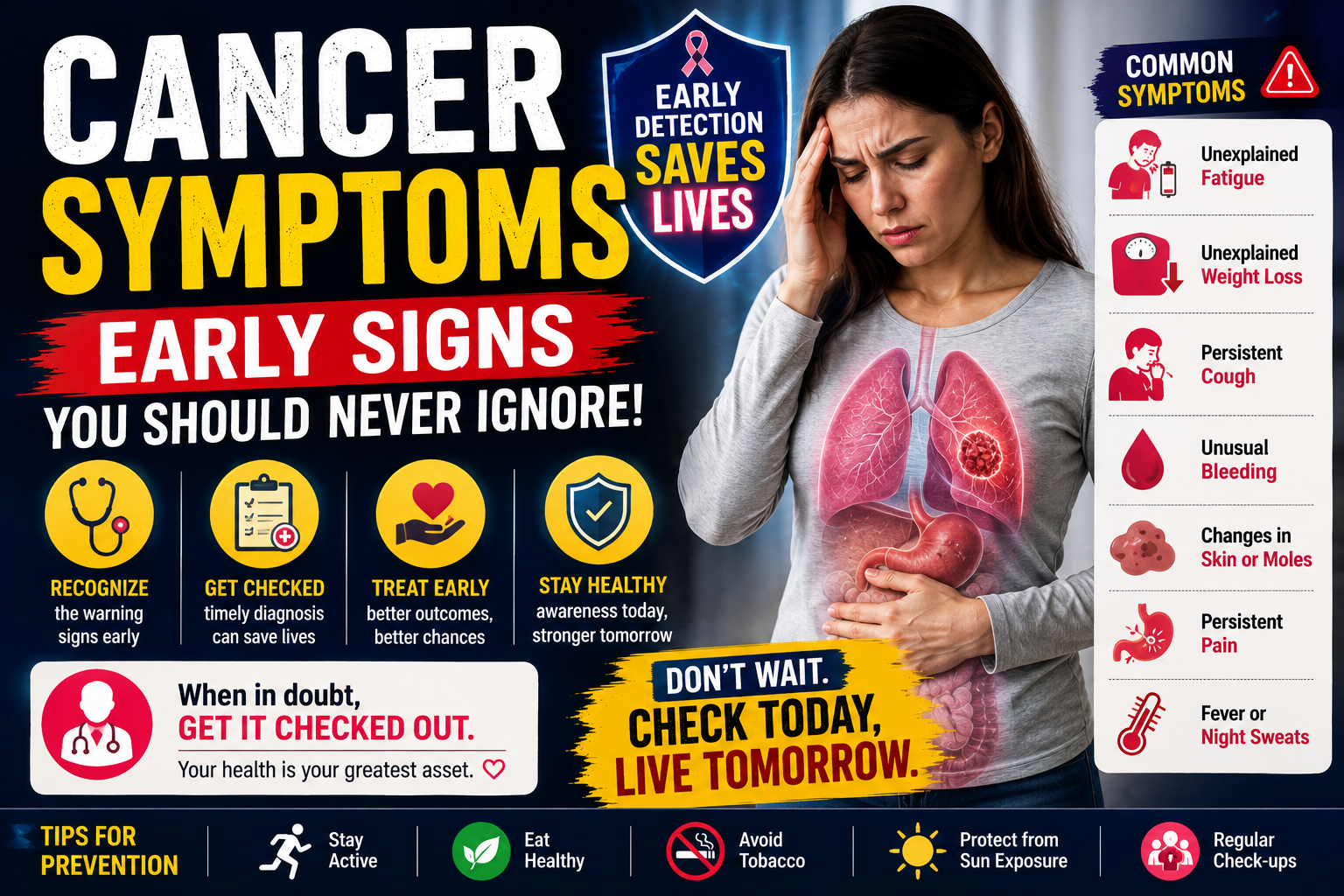
Cancer can develop in many different parts of the body, which means cancer symptoms aren’t the same for everyone. Some cancers cause noticeable changes early, while others may not cause obvious symptoms until they have progressed.
Knowing common warning signs can help you recognize when something unusual deserves medical attention. However, it’s equally important not to assume that a symptom automatically means cancer. Many cancer symptoms are also caused by common, non-cancerous conditions.
This guide explains some of the signs and symptoms that can occur with cancer and when it may be appropriate to speak with a healthcare professional.
Important: This article is for general education and is not a diagnosis. If you have a new, persistent, unexplained, or worsening symptom, consult a qualified healthcare professional.
What Are Cancer Symptoms?
Cancer symptoms are changes in the body that can occur when abnormal cells grow, interfere with normal organs, cause inflammation, or spread to other tissues.
The symptoms depend on factors such as:
- The type of cancer
- Where it develops
- Its size and location
- Whether it has spread
- The person’s general health
For example, a skin cancer may cause a visible change in the skin, while a cancer affecting the digestive system may cause changes in bowel habits or unexplained weight loss.
Some cancers can also produce no noticeable symptoms during their early stages, which is one reason recommended cancer screening is important for people who meet the relevant age or risk criteria.
15 Possible Warning Signs of Cancer
The following symptoms can occur with cancer, but none of them alone proves that a person has cancer.
1. Unexplained Weight Loss
Unexpected weight loss without deliberately changing your diet or exercise routine can sometimes be a warning sign.
For example, someone may notice that their clothes have become noticeably looser even though they haven’t been trying to lose weight.
Unexplained weight loss can occur with some cancers because cancer can affect appetite, metabolism, digestion, or the body’s energy requirements.
However, weight loss has many other possible causes, including:
- Stress
- Depression
- Digestive problems
- Thyroid disorders
- Infections
- Medication changes
- Changes in appetite
If you’re losing weight without intending to, especially if the loss is significant or continues over time, discuss it with a healthcare professional.
2. Persistent or Unusual Fatigue
Everyone gets tired occasionally.
Cancer-related fatigue, however, may feel different from ordinary tiredness. A person may feel unusually exhausted despite getting adequate sleep or resting.
Persistent fatigue can occur for many reasons, including:
- Anemia
- Sleep problems
- Infections
- Nutritional deficiencies
- Thyroid problems
- Stress
- Depression
- Certain medications
Some cancers can also cause fatigue.
If severe or unexplained fatigue continues or interferes with normal activities, it’s worth discussing with a doctor.
3. An Unexplained Lump or Swelling
A new lump, swelling, or thickened area anywhere on the body should not automatically be assumed to be cancer.
Many lumps are harmless and can result from:
- Cysts
- Infections
- Inflamed tissue
- Benign growths
- Enlarged lymph nodes
However, a lump that persists, grows, becomes hard, or changes should be evaluated by a healthcare professional.
Lumps can occur in many locations, including:
- Breast
- Neck
- Armpit
- Groin
- Abdomen
- Skin
Don’t attempt to diagnose a lump based solely on how it feels.
4. Persistent Pain
Pain is extremely common and usually has causes unrelated to cancer.
However, persistent or unexplained pain can sometimes be associated with cancer, particularly when it doesn’t improve or is accompanied by other concerning symptoms.
Depending on where a tumor develops, pain may occur in areas such as:
- The abdomen
- Back
- Chest
- Bones
- Head
- Pelvis
The location and nature of pain can vary considerably.
A new pain that is severe, persistent, worsening, or unexplained deserves medical evaluation.
5. Changes in the Skin
Changes to the skin can sometimes be associated with skin cancers or other cancers.
One important warning sign is a new or changing mole or skin growth.
Pay attention to changes such as:
- Increasing size
- Changes in shape
- Irregular borders
- Multiple colors
- Persistent bleeding
- Crusting
- A sore that doesn’t heal
A useful approach when monitoring moles is the ABCDE method:
A — Asymmetry
One half doesn’t look like the other.
B — Border
The edges are irregular, uneven, or poorly defined.
C — Color
The color isn’t uniform or has changed.
D — Diameter
The spot is larger than approximately 6 millimeters, although melanoma can be smaller.
E — Evolving
The mole changes in size, shape, color, or appearance.
Not every unusual-looking mole is cancer, but a changing skin lesion should be checked by a healthcare professional.
6. Unusual Bleeding
Bleeding that doesn’t have an obvious explanation can sometimes be an important warning sign.
Examples include:
- Blood in the stool
- Blood in the urine
- Coughing up blood
- Vomiting blood
- Unusual vaginal bleeding
- Bleeding after menopause
The cause isn’t necessarily cancer.
For example, hemorrhoids can cause rectal bleeding, and urinary infections can sometimes cause blood in the urine.
Nevertheless, unexplained or recurring bleeding should be medically evaluated rather than ignored.
7. Persistent Cough
A cough is commonly caused by infections, allergies, asthma, acid reflux, smoking, and other conditions.
Most short-term coughs are not cancer.
However, a cough that doesn’t go away, keeps getting worse, or is accompanied by other symptoms should be evaluated.
Potential warning signs may include:
- Persistent cough
- Chest pain
- Shortness of breath
- Hoarseness
- Coughing up blood
- Repeated respiratory infections
People who smoke or have significant exposure to tobacco smoke should be especially attentive to persistent respiratory symptoms and discuss appropriate screening with a healthcare professional.
8. Persistent Hoarseness or Voice Changes
A temporary change in your voice can happen after:
- A cold
- Flu
- Allergies
- Excessive talking
- Acid reflux
But persistent hoarseness can sometimes require further investigation.
If your voice remains unusually hoarse for an extended period without an obvious explanation, speak with a healthcare professional.
Persistent voice changes can have several causes, and cancer is only one possibility.
9. Changes in Bowel Habits
Changes in bowel habits can occur for many reasons.
You may notice:
- Persistent constipation
- Persistent diarrhea
- A change in stool consistency
- More frequent bowel movements
- Difficulty passing stool
- A feeling that the bowel hasn’t completely emptied
Occasional changes are extremely common and may result from diet, stress, medications, infections, or changes in routine.
The concern increases when changes are persistent, unexplained, or accompanied by blood in the stool, abdominal pain, or unexplained weight loss.
10. Changes in Bladder Habits
Changes in urination can have many causes, including urinary tract infections, prostate problems, diabetes, medications, and increased fluid intake.
Possible warning signs that deserve evaluation include:
- Blood in the urine
- Persistent pain while urinating
- Needing to urinate much more frequently
- Difficulty starting urination
- A persistent change in normal urinary habits
Blood in the urine should particularly be discussed with a healthcare professional, even if it occurs only once.
11. Difficulty Swallowing
Difficulty swallowing, medically called dysphagia, can occur for many reasons.
For example:
- Acid reflux
- Esophageal disorders
- Inflammation
- Neurological conditions
- Structural problems
In some cases, persistent swallowing difficulty can be associated with cancers of the throat or esophagus.
Pay attention if swallowing becomes progressively more difficult or is associated with:
- Unexplained weight loss
- Persistent chest discomfort
- Regurgitation
- Pain when swallowing
Persistent swallowing problems should be assessed by a healthcare professional.
12. Persistent Indigestion or Heartburn
Occasional indigestion is common.
Certain foods, overeating, stress, alcohol, medications, and acid reflux can all cause digestive discomfort.
However, persistent or unusual indigestion or heartburn should not simply be ignored, particularly if it is accompanied by other symptoms.
Speak with a healthcare professional if digestive symptoms:
- Continue for a long time
- Keep returning
- Become more severe
- Are accompanied by unexplained weight loss
- Cause difficulty swallowing
- Occur with persistent vomiting or bleeding
13. Persistent Fever or Night Sweats
Fever is usually caused by infection or inflammation.
But some cancers can also cause fever or significant night sweating.
A fever that persists without an obvious explanation, especially when accompanied by other unusual symptoms, deserves medical evaluation.
Night sweats can have numerous causes, including:
- Infections
- Hormonal changes
- Medications
- Anxiety
- Environmental temperature
- Other medical conditions
Again, this symptom alone doesn’t mean cancer.
14. Loss of Appetite
A reduced appetite can occur when you’re:
- Stressed
- Sick
- Depressed
- Taking certain medications
- Experiencing digestive problems
Some cancers can also reduce appetite.
If appetite loss is persistent and leads to unintentional weight loss, weakness, or nutritional problems, contact a healthcare professional.
15. A Sore That Doesn’t Heal
A minor cut, mouth ulcer, or skin injury normally improves with time.
A sore that repeatedly returns or doesn’t heal as expected deserves attention.
Persistent sores can occur for many reasons, but certain skin and oral cancers can present with non-healing lesions.
Pay particular attention to sores that:
- Bleed
- Become larger
- Develop a persistent crust
- Change appearance
- Remain present for an unusually long time
A doctor or dentist can determine whether further examination is necessary.
Why These Symptoms Don’t Automatically Mean Cancer
This is one of the most important points in this entire article.
Search engines often make people anxious because they may see a symptom list and immediately assume the worst.
For example:
Fatigue → cancer?
Not necessarily.
Weight loss → cancer?
Not necessarily.
Cough → lung cancer?
Not necessarily.
Lump → cancer?
Not necessarily.
Many everyday conditions can cause exactly the same symptoms.
Cancer is only one possible explanation.
What matters is the pattern:
- Is the symptom new?
- Is it persistent?
- Is it getting worse?
- Is there no obvious explanation?
- Are several symptoms occurring together?
- Is it interfering with normal life?
Those are reasons to seek professional evaluation rather than trying to diagnose yourself online.
When Should You See a Doctor?
Consider contacting a healthcare professional if you develop a symptom that is:
Persistent, unexplained, unusual for you, worsening, or accompanied by other concerning changes.
You don’t need to wait until a symptom becomes severe before discussing it.
A doctor may ask about:
- When the symptom started
- Whether it’s getting worse
- Your medical history
- Your medications
- Family history
- Lifestyle factors
- Other symptoms
Depending on the situation, they may recommend an examination, blood tests, imaging, or another type of evaluation.
A Key Difference: Screening vs. Diagnosis
It’s important to understand that cancer screening and cancer diagnosis are not the same thing.
Screening
Screening looks for certain cancers in people who may not have symptoms.
Examples can include screening for:
- Breast cancer
- Cervical cancer
- Colorectal cancer
- Lung cancer in certain high-risk groups
The appropriate screening schedule depends on factors such as age, sex, personal history, family history, and risk factors.
Diagnostic Testing
Diagnostic tests are performed when someone has symptoms or an abnormal screening result that requires investigation.
A healthcare professional decides which tests are appropriate based on the individual’s situation.
Part 1 Takeaway
Cancer can cause many different symptoms, but there is no single symptom that confirms cancer.
Some of the possible warning signs include:
- Unexplained weight loss
- Persistent fatigue
- New or changing lumps
- Persistent pain
- Skin changes
- Unusual bleeding
- Persistent cough
- Voice changes
- Changes in bowel habits
- Changes in bladder habits
- Difficulty swallowing
- Persistent indigestion
- Unexplained fever or night sweats
- Loss of appetite
- Non-healing sores
Many of these symptoms have much more common explanations, so don’t attempt to diagnose cancer based on a symptom list.
If a symptom is persistent, unexplained, worsening, or concerning to you, speak with a qualified healthcare professional.
Cancer can affect almost any part of the body, so the symptoms can vary considerably. A symptom that is important for one type of cancer may be uncommon in another.
It’s also important to remember that having one or more of these symptoms does not mean you have cancer. Many of them are caused by infections, inflammation, hormonal changes, digestive conditions, medications, or other common health problems.
The purpose of this section is to help you understand patterns that may warrant medical evaluation—not to diagnose yourself.
Cancer Symptoms by Body Area
1. Breast Cancer Symptoms
Breast cancer doesn’t always cause symptoms in its early stages, which is why recommended screening is important for people who meet the relevant criteria.
Possible changes include:
- A new lump in the breast or underarm
- A thickened area of breast tissue
- Change in breast size or shape
- Changes to the skin over the breast
- Dimpling or puckering
- Changes in the nipple
- Nipple discharge, particularly if unusual
- Persistent breast or nipple pain
A breast lump does not automatically mean cancer. Many breast lumps are caused by benign conditions.
However, a new or unusual breast change should be evaluated by a healthcare professional.
2. Lung Cancer Symptoms
Lung cancer can sometimes cause symptoms involving breathing and the chest.
Possible symptoms include:
- A cough that doesn’t go away
- A cough that becomes worse over time
- Chest discomfort or pain
- Shortness of breath
- Coughing up blood
- Persistent hoarseness
- Repeated respiratory infections
- Unexplained weight loss
- Persistent fatigue
These symptoms can also occur with conditions such as asthma, infections, chronic lung disease, or acid reflux.
A persistent cough—particularly one accompanied by coughing up blood or breathing difficulties—should be medically evaluated.
3. Colorectal Cancer Symptoms
Colorectal cancer affects the colon or rectum.
Possible warning signs include:
- Blood in or on the stool
- Persistent changes in bowel habits
- Ongoing diarrhea or constipation
- Narrower-than-usual stools
- Abdominal discomfort
- Persistent bloating or cramping
- Feeling that the bowel hasn’t completely emptied
- Unexplained weight loss
- Fatigue related to blood loss or anemia
Occasional constipation or diarrhea is extremely common.
The concern is greater when bowel changes are persistent, unexplained, or accompanied by bleeding or other symptoms.
4. Prostate Cancer Symptoms
Prostate cancer may not cause noticeable symptoms in its early stages.
When symptoms occur, they can include:
- Difficulty starting urination
- Weak or interrupted urine flow
- Needing to urinate more frequently
- Increased nighttime urination
- Difficulty completely emptying the bladder
- Blood in the urine or semen
- Erectile difficulties
Many urinary symptoms are caused by benign prostatic enlargement or other non-cancerous conditions.
Therefore, urinary symptoms shouldn’t be used to diagnose prostate cancer yourself.
A healthcare professional can determine whether further evaluation is appropriate.
5. Skin Cancer Symptoms
Skin cancers can appear in several different ways.
One important sign is a new or changing skin growth.
Look for:
- A mole that changes size
- Irregular borders
- Multiple colors
- A lesion that changes over time
- A sore that doesn’t heal
- Persistent bleeding or crusting
- A new growth that looks different from other spots on your skin
The ABCDE approach can help you recognize suspicious changes:
A — Asymmetry
One side differs from the other.
B — Border
The border may be irregular or poorly defined.
C — Color
The color may be uneven or change over time.
D — Diameter
Some melanomas are larger than 6 mm, although they can be smaller.
E — Evolving
The lesion changes in appearance, size, shape, or color.
If you notice a changing or unusual skin lesion, arrange an evaluation rather than trying to identify it yourself from photographs.
6. Stomach Cancer Symptoms
Stomach cancer can sometimes cause digestive symptoms, although these symptoms are also common in many non-cancerous conditions.
Possible symptoms include:
- Persistent indigestion
- Upper abdominal discomfort
- Feeling full unusually quickly
- Loss of appetite
- Nausea
- Vomiting
- Difficulty swallowing
- Unexplained weight loss
- Fatigue
- Blood in vomit or stool
Occasional indigestion isn’t usually a sign of cancer.
Persistent or worsening digestive symptoms should be discussed with a healthcare professional.
7. Pancreatic Cancer Symptoms
Pancreatic cancer can be difficult to detect because early symptoms may be subtle or absent.
Possible symptoms can include:
- Abdominal pain
- Back pain
- Unexplained weight loss
- Loss of appetite
- Jaundice
- Dark urine
- Pale stools
- Persistent digestive problems
- Fatigue
Jaundice, which causes yellowing of the skin or whites of the eyes, can have many causes but requires medical attention.
Pancreatic cancer is relatively uncommon compared with many other conditions that cause abdominal or digestive symptoms.
8. Liver Cancer Symptoms
Possible symptoms of liver cancer can include:
- Unexplained weight loss
- Loss of appetite
- Feeling full quickly
- Upper abdominal discomfort
- Abdominal swelling
- Jaundice
- Persistent fatigue
- Nausea
- An enlarged liver or a feeling of fullness under the ribs
Liver problems have many possible causes, including infections, alcohol-related disease, fatty liver disease, medications, and other conditions.
A healthcare professional can determine what evaluation is appropriate.
9. Kidney Cancer Symptoms
Kidney cancer may not produce obvious symptoms in its early stages.
Possible symptoms include:
- Blood in the urine
- Persistent pain in the side or lower back
- An unexplained lump or swelling
- Unexplained weight loss
- Loss of appetite
- Persistent fever
- Night sweats
- Fatigue
Blood in the urine can have many causes, including urinary infections and kidney stones, but it should not simply be ignored.
10. Ovarian Cancer Symptoms
Ovarian cancer can sometimes cause symptoms that are easily mistaken for common digestive or menstrual problems.
Possible symptoms include:
- Persistent bloating
- Abdominal or pelvic discomfort
- Feeling full quickly
- Changes in appetite
- Increased urinary frequency
- Changes in bowel habits
- Persistent fatigue
- Unexplained weight loss or gain
- Changes in menstrual patterns
The important factor is often persistence and a change from your normal pattern.
If symptoms repeatedly occur or don’t resolve, speak with a healthcare professional.
11. Cervical Cancer Symptoms
Cervical cancer may not cause symptoms in its early stages.
Possible symptoms include:
- Unusual vaginal bleeding
- Bleeding after sexual intercourse
- Bleeding between periods
- Bleeding after menopause
- Unusual vaginal discharge
- Pelvic pain
- Pain during sexual intercourse
Many gynecological conditions can cause these symptoms.
Nevertheless, unusual vaginal bleeding should be evaluated by a healthcare professional.
Regular cervical cancer screening can also help detect precancerous changes before cancer develops.
12. Leukemia Symptoms
Leukemia affects blood-forming tissues and can cause symptoms related to abnormal blood cell production.
Possible symptoms include:
- Persistent fatigue
- Frequent infections
- Easy bruising
- Unusual bleeding
- Pale skin
- Fever
- Night sweats
- Unexplained weight loss
- Bone or joint discomfort
- Swollen lymph nodes
These symptoms can occur with many other illnesses.
Blood tests are often important when a healthcare professional is evaluating unexplained symptoms that could involve the blood or bone marrow.
13. Lymphoma Symptoms
Lymphoma affects the lymphatic system.
Possible symptoms can include:
- Painless swollen lymph nodes
- Persistent fever
- Drenching night sweats
- Unexplained weight loss
- Persistent fatigue
- Itching
- Recurrent infections
Swollen lymph nodes are frequently caused by infections.
For example, lymph nodes can become temporarily enlarged when your immune system is fighting a cold or another infection.
A lymph node that remains enlarged, continues growing, or is accompanied by other concerning symptoms should be evaluated.
Why Symptoms Can Be Difficult to Recognize
One of the challenges with cancer symptoms is that they can look like ordinary health problems.
For example:
Bloating can result from diet, gas, constipation, food intolerance, or many other conditions.
Fatigue can result from poor sleep, stress, anemia, infection, or medication.
Cough can result from allergies, asthma, infection, or reflux.
Weight loss can occur because of dietary changes, stress, digestive problems, or other illnesses.
That’s why symptoms alone cannot diagnose cancer.
Doctors look at the complete picture.
Persistent Symptoms Matter More Than One-Day Symptoms
A symptom that appears briefly and then completely disappears often has a different significance from a symptom that continues for weeks or repeatedly returns.
Pay attention to whether a symptom is:
New
Something you don’t normally experience.
Persistent
It doesn’t resolve as expected.
Progressive
It becomes more severe or frequent.
Unexplained
There is no obvious reason for it.
Associated With Other Changes
Several unusual symptoms occur together.
These patterns are reasons to speak with a healthcare professional.
What Happens When You See a Doctor?
If you report a concerning symptom, the doctor will usually begin by asking questions.
They may want to know:
- When the symptom started
- How frequently it occurs
- Whether it’s getting worse
- What makes it better or worse
- Whether you’ve experienced weight changes
- What medications you’re taking
- Your personal medical history
- Relevant family history
- Smoking or alcohol exposure
- Other symptoms you’re experiencing
They may then perform a physical examination.
Depending on the symptoms, further testing may be recommended.
Common Tests Used to Investigate Cancer Symptoms
There isn’t one test that can detect every type of cancer.
The appropriate investigation depends on the symptoms and suspected condition.
Possible tests include:
Blood Tests
Blood tests can provide information about blood cells, organ function, inflammation, and other factors.
They generally cannot by themselves prove that someone has cancer.
Imaging
Depending on the situation, doctors may use:
- Ultrasound
- X-rays
- CT scans
- MRI
- Mammography
- Other imaging techniques
Biopsy
A biopsy involves taking a sample of tissue or cells for laboratory examination.
For many cancers, a biopsy is an important part of confirming a diagnosis.
Endoscopy
An endoscope may be used to examine areas such as the:
- Esophagus
- Stomach
- Colon
- Rectum
The specific procedure depends on the symptoms and suspected condition.
Don’t Ignore New or Changing Symptoms
It’s easy to search online and tell yourself:
“It’s probably nothing.”
Sometimes it is.
But persistent or unexplained changes shouldn’t be ignored simply because they might have a harmless explanation.
The goal isn’t to panic.
The goal is to get appropriate medical evaluation when something doesn’t seem right.
Cancer Screening Is Different From Waiting for Symptoms
Another important point is that some cancers can be detected through screening before symptoms develop.
Depending on your age and risk factors, screening may be recommended for certain cancers.
Examples include screening for:
- Breast cancer
- Cervical cancer
- Colorectal cancer
- Lung cancer in certain higher-risk individuals
Screening recommendations vary by country and individual risk.
Talk with a healthcare professional about which screening tests are appropriate for you.
Part 2 Key Takeaway
Cancer symptoms can vary dramatically depending on where cancer develops.
Possible patterns include:
- Breast: new lumps or breast changes
- Lung: persistent cough or breathing-related symptoms
- Colon/rectum: persistent bowel changes or blood in stool
- Prostate: changes in urination
- Skin: changing or unusual skin lesions
- Stomach: persistent digestive symptoms
- Pancreas: abdominal symptoms, weight loss, or jaundice
- Liver: jaundice or upper abdominal symptoms
- Kidney: blood in urine or persistent side/back pain
- Ovaries: persistent bloating or pelvic symptoms
- Cervix: unusual vaginal bleeding
- Blood/lymphatic system: persistent fatigue, unexplained fever, bruising, or swollen lymph nodes
None of these symptoms automatically means cancer.
If you have a symptom that is new, persistent, unexplained, worsening, or concerning, seek medical advice rather than trying to diagnose the cause yourself.
Understanding possible cancer symptoms is useful, but the next question is often more important:
When should you actually see a doctor?
The answer depends on the symptom, how severe it is, how long it has lasted, and whether other symptoms are occurring at the same time.
Remember that cancer is only one possible cause of many of the symptoms discussed in Parts 1 and 2. The purpose of recognizing warning signs is to encourage appropriate medical evaluation—not to create unnecessary fear.
When Should You See a Doctor About Possible Cancer Symptoms?
Consider making an appointment with a healthcare professional when a symptom is:
- New and unexplained
- Persistent
- Getting worse
- Repeatedly returning
- Affecting your normal activities
- Associated with unexplained weight loss
- Associated with unusual bleeding
- Associated with a new lump or swelling
- Different from your normal health pattern
You don’t need to wait until you have multiple symptoms.
For example, a persistent unexplained lump deserves evaluation even if you otherwise feel healthy.
Likewise, persistent unexplained bleeding should be discussed with a healthcare professional.
When Is a Symptom an Emergency?
Some symptoms require urgent medical attention regardless of whether cancer is involved.
Seek emergency medical care for symptoms such as:
- Severe difficulty breathing
- Severe chest pain
- Sudden weakness or paralysis
- Sudden confusion
- Severe uncontrolled bleeding
- Loss of consciousness
- Severe allergic reactions
- Vomiting blood with significant weakness or dizziness
These symptoms can have many causes and should not be assumed to be cancer.
If you believe you are experiencing a medical emergency, seek appropriate emergency care rather than waiting for an online answer.
Cancer Risk Factors You Should Know
Cancer doesn’t usually have one single cause.
Risk can be influenced by a combination of:
- Age
- Genetics
- Family history
- Tobacco exposure
- Alcohol consumption
- Certain infections
- Excessive ultraviolet radiation
- Some environmental exposures
- Certain occupational exposures
- Body weight and metabolic health
- Physical inactivity
- Other individual factors
Having a risk factor doesn’t mean you will develop cancer.
Likewise, someone without obvious risk factors can still develop cancer.
Does Smoking Increase Cancer Risk?
Yes.
Tobacco exposure is one of the major preventable causes of cancer.
Smoking is strongly associated with several cancers, including cancers of the:
- Lung
- Mouth
- Throat
- Esophagus
- Pancreas
- Bladder
- Kidney
- Liver
- Stomach
- Colon and rectum
Avoiding tobacco or quitting if you currently smoke can substantially reduce cancer risk.
Secondhand smoke exposure can also be harmful.
Can Alcohol Increase Cancer Risk?
Alcohol consumption is associated with an increased risk of several cancers.
The risk can vary according to factors such as the amount consumed and individual characteristics.
Cancers associated with alcohol include cancers of the:
- Mouth
- Throat
- Esophagus
- Liver
- Breast
- Colon and rectum
If you drink alcohol, discussing your consumption with a healthcare professional can help you understand your individual risk.
Can Diet Affect Cancer Risk?
Diet is only one part of cancer risk, but overall dietary patterns can influence health.
A balanced eating pattern generally emphasizes:
- Vegetables
- Fruits
- Whole grains
- Beans and legumes
- Nuts and seeds
- Adequate protein
- A variety of minimally processed foods
It’s also sensible to limit excessive intake of highly processed foods, added sugars, and processed meats.
However, no individual food can guarantee protection from cancer.
Foods sometimes marketed online as “cancer cures” should be approached with skepticism.
Can Exercise Reduce Cancer Risk?
Regular physical activity is associated with several health benefits and can contribute to lower risk for certain cancers.
You don’t need to become an athlete to become more active.
Depending on your health and abilities, activities can include:
- Walking
- Cycling
- Swimming
- Strength training
- Dancing
- Hiking
- Recreational sports
If you’re currently inactive, gradually increasing your activity can be more realistic than attempting an extreme exercise program.
Can Cancer Be Prevented?
Not every cancer can be prevented.
Some cancers develop because of genetic or other factors that aren’t fully controllable.
However, certain steps can reduce the risk of some cancers.
These include:
Avoid Tobacco
Not smoking and avoiding tobacco exposure are among the most important preventive measures.
Protect Your Skin
Reduce excessive ultraviolet exposure and use appropriate sun protection.
Maintain a Healthy Lifestyle
Regular physical activity and a balanced diet can support overall health.
Follow Recommended Screening
Screening can help detect certain cancers or precancerous changes before symptoms develop.
Follow Vaccination Recommendations
Some infections can increase the risk of certain cancers. Vaccines such as HPV and hepatitis B vaccines can help prevent infections associated with some cancers.
Talk with a healthcare professional about vaccinations appropriate for you.
Cancer Myths You Shouldn’t Believe
Myth 1: Every Lump Is Cancer
False.
Many lumps are caused by cysts, infections, inflammation, or benign growths.
But a persistent or changing lump should still be evaluated.
Myth 2: Cancer Always Causes Pain
False.
Some cancers cause pain, while others may not cause noticeable pain, especially in earlier stages.
Don’t use the absence of pain as proof that everything is fine.
Myth 3: If You Feel Healthy, You Can’t Have Cancer
False.
Some cancers can cause few or no obvious symptoms initially.
This is one reason recommended screening can be important.
Myth 4: Sugar Directly Feeds Cancer, So Eliminating Sugar Cures Cancer
This is an oversimplification.
Cancer cells use glucose, but so do normal cells.
Removing dietary sugar does not cure cancer.
Cancer treatment should be based on evidence-based medical care.
Myth 5: Superfoods Can Cure Cancer
No single food, juice, supplement, or herb has been established as a universal cure for cancer.
A healthy diet can support overall health, but it should not replace appropriate medical treatment.
Why You Shouldn’t Self-Diagnose Cancer Online
Search engines can be useful for learning about symptoms, but they cannot examine you, review your complete medical history, or perform appropriate diagnostic testing.
For example, persistent fatigue could be caused by:
- Poor sleep
- Stress
- Anemia
- Thyroid problems
- Infection
- Medication
- Nutritional deficiencies
- Many other conditions
Cancer is one possibility among many.
The same principle applies to weight loss, headaches, cough, abdominal pain, lumps, and other symptoms.
Use health information to know when to seek help—not to replace professional diagnosis.
Questions to Ask Your Doctor
If you’re worried about a persistent symptom, writing down your questions before your appointment can be helpful.
Consider asking:
- What could be causing this symptom?
- How long should I monitor it?
- Do I need any tests?
- Are there warning signs I should watch for?
- Do I need cancer screening?
- Could any of my medications cause this?
- What should I do if the symptom gets worse?
You can also record when the symptom started and whether it has changed over time.
Frequently Asked Questions About Cancer Symptoms
What is the most common first sign of cancer?
There isn’t one universal first symptom.
Cancer symptoms depend on the type and location of the cancer. Some cancers cause a lump or visible change, while others may initially cause fatigue, bleeding, persistent cough, bowel changes, or no symptoms at all.
What are the early warning signs of cancer?
Possible warning signs include unexplained weight loss, persistent fatigue, unusual bleeding, new lumps, persistent pain, changing skin lesions, persistent cough, and changes in bowel or bladder habits.
However, these symptoms also have many non-cancerous causes.
Can cancer cause sudden weight loss?
Some cancers can contribute to unexplained weight loss, but sudden or unintentional weight loss can have many other causes.
If you’re losing weight without trying, particularly if the loss continues, speak with a healthcare professional.
Does cancer always show symptoms?
No.
Some cancers may cause few or no noticeable symptoms during their early stages.
This is why appropriate screening can be important for cancers where screening is recommended.
Can blood tests detect cancer?
Some blood tests can provide clues that help doctors investigate certain conditions, but there isn’t a single blood test that can reliably detect every cancer.
Doctors choose tests based on the symptoms, medical history, examination, and suspected condition.
Can a healthy person get cancer?
Yes.
Healthy lifestyle habits can reduce the risk of some cancers, but they cannot eliminate cancer risk completely.
Genetics, age, environmental exposures, infections, and other factors can also play a role.
Is fatigue a sign of cancer?
Fatigue can occur with some cancers, but it is extremely common and has many possible causes.
Persistent or unexplained fatigue should be discussed with a healthcare professional, especially when accompanied by other concerning symptoms.
Is unexplained bleeding a sign of cancer?
It can be, but there are many non-cancerous causes of bleeding.
Unexplained or recurring bleeding should be evaluated by a healthcare professional rather than ignored.
Does cancer cause fever?
Some cancers can cause fever, but infection is a much more common cause of fever.
A persistent fever without an obvious explanation should be medically assessed.
Can cancer be cured?
Many cancers can be treated successfully, particularly when detected and treated appropriately.
Outcomes vary considerably depending on the cancer type, stage, location, biology, and available treatment.
A cancer diagnosis does not automatically mean that treatment is unsuccessful.
The Importance of Early Medical Evaluation
One of the most useful things you can do when something unusual happens to your body is to pay attention to persistent changes.
You don’t need to assume the worst.
Instead:
Notice → Monitor → Discuss → Test if necessary
If your doctor determines that the symptom is harmless, you can have peace of mind.
If further testing is needed, getting evaluated gives you the opportunity to address the problem appropriately.
Final Takeaway: Cancer Symptoms
Cancer symptoms can be difficult to recognize because many overlap with everyday health conditions.
Potential warning signs include:
- Unexplained weight loss
- Persistent fatigue
- New or changing lumps
- Unusual bleeding
- Persistent cough
- Changes in bowel or bladder habits
- Difficulty swallowing
- Persistent indigestion
- Changing skin lesions
- Non-healing sores
- Persistent pain
- Unexplained fever
- Persistent night sweats
- Loss of appetite
- Other unusual or worsening changes
None of these symptoms automatically means cancer.
Many have common and treatable explanations.
The most important thing is to avoid ignoring persistent, unexplained, or worsening symptoms. A qualified healthcare professional can determine whether examination, screening, blood tests, imaging, or other testing is appropriate.
And remember: online symptom lists cannot diagnose cancer.
Suggested Articles
- High Protein Snacks
- Best Foods for Weight Loss
- Weight Loss Calculator
- Foods High in Antioxidants
- Foods Rich in Magnesium
- Healthy Foods List
- Best Superfoods




Leave a Reply