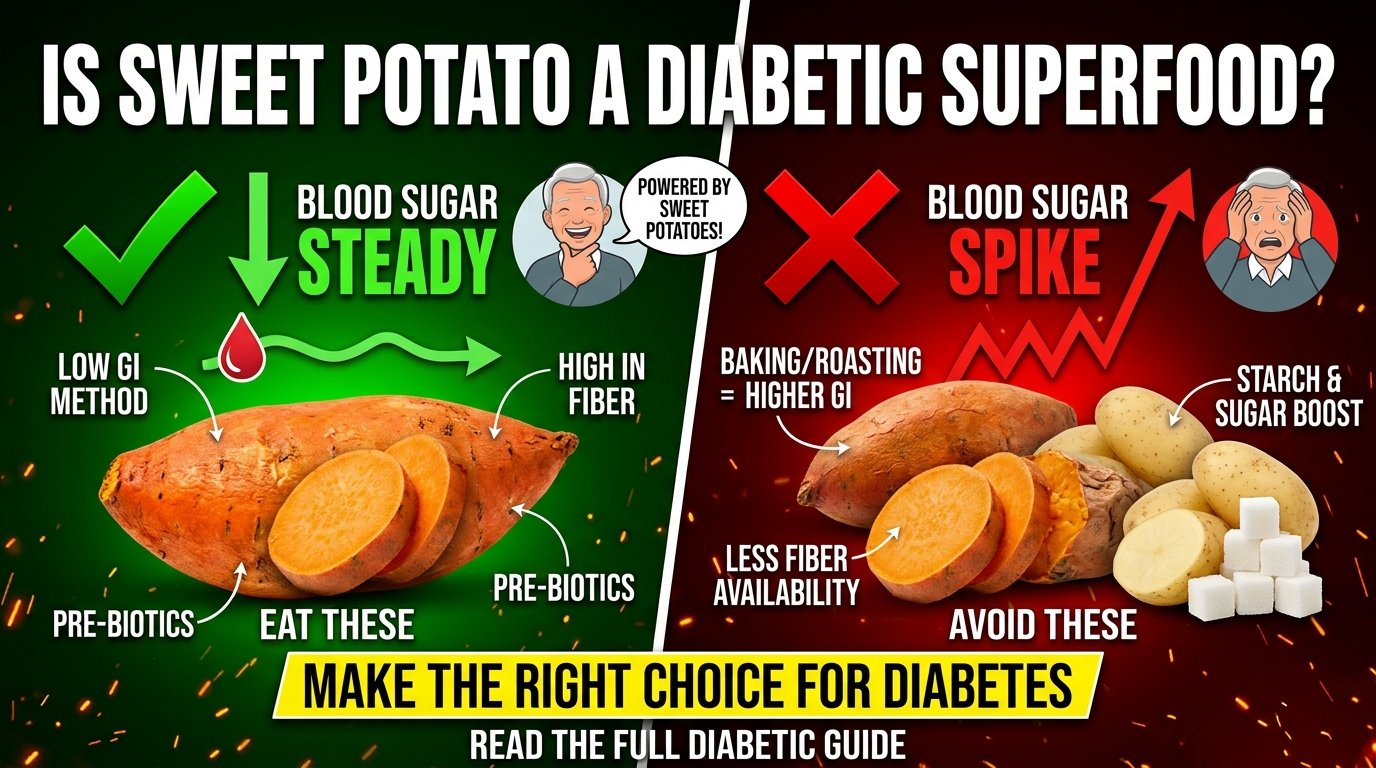
Sweet potatoes are often considered a healthier alternative to regular potatoes, but people with diabetes may still wonder whether they can safely include them in their diet. Because sweet potatoes contain carbohydrates and naturally occurring sugars, they can raise blood glucose. However, they also provide fiber, vitamins, minerals, and other beneficial nutrients.
The most important question is not simply whether sweet potatoes are “good” or “bad” for diabetes. The answer depends on portion size, preparation method, the rest of the meal, and an individual’s overall carbohydrate needs.
In general, sweet potatoes can fit into a diabetes-friendly eating pattern when eaten in appropriate portions and prepared without large amounts of added sugar. Baking, steaming, boiling, or roasting a sweet potato is usually a very different nutritional choice from eating it as sweet potato fries covered in sugary sauces or as a casserole containing marshmallows and added sugar.
This detailed guide explains the potential benefits of sweet potatoes for diabetics, how they affect blood sugar, how much may be appropriate, the difference between sweet potatoes and regular potatoes, and the healthiest ways to enjoy them.
Can Diabetics Eat Sweet Potatoes?
Yes. People with diabetes can generally eat sweet potatoes as part of a balanced diet, but they still need to consider the carbohydrate content and portion size.
Sweet potatoes are a starchy vegetable. Like other carbohydrate-containing foods, they can raise blood glucose after eating. However, they also provide dietary fiber and important nutrients.
The American Diabetes Association includes starchy vegetables among carbohydrate-containing foods that can fit into a healthy diabetes eating pattern. The key is to consider the amount eaten and the overall composition of the meal.
A useful way to think about sweet potatoes is:
Sweet potatoes are nutritious, but they are not a “free food.”
If you eat a very large serving, the total carbohydrate load may be substantial even though the food itself is healthy.
The best approach is to include a moderate portion alongside:
- Nonstarchy vegetables
- Protein
- Healthy fats
This can create a more balanced meal.
Nutritional Benefits of Sweet Potatoes
Sweet potatoes are more than just a source of carbohydrates. They contain several nutrients that can contribute to a healthy diet.
1. Dietary Fiber
Fiber is one of the major nutritional advantages of whole plant foods.
Sweet potatoes contain dietary fiber, particularly when eaten with the skin when appropriate and properly cleaned.
Fiber is important for:
- Digestive health
- Feeling full after meals
- Overall diet quality
- Supporting healthier carbohydrate choices
For people with diabetes, choosing higher-fiber carbohydrate sources can be beneficial compared with relying heavily on refined carbohydrates.
However, fiber does not make the carbohydrate content disappear. A sweet potato still contributes carbohydrates to the meal.
2. Vitamin A
Orange-fleshed sweet potatoes are especially well known for their beta-carotene content.
Beta-carotene is converted by the body into vitamin A as needed.
Vitamin A plays important roles in:
- Vision
- Immune function
- Normal growth and development
The bright orange color of many sweet potatoes is a sign of their carotenoid content.
3. Potassium
Sweet potatoes also provide potassium.
Potassium is an important mineral involved in normal body functions, including muscle and nerve activity.
However, people with kidney disease or those following a potassium-restricted diet may need individualized advice. A food that is generally healthy for most people may not be appropriate in unlimited amounts for someone with kidney problems.
4. Vitamin C and Other Nutrients
Sweet potatoes can also contribute vitamin C and other vitamins and minerals to the diet.
The exact nutritional content can vary according to:
- Variety
- Size
- Preparation method
- Whether the skin is eaten
Do Sweet Potatoes Raise Blood Sugar?
Yes.
This is important to understand clearly.
Sweet potatoes contain carbohydrates, and carbohydrates are broken down into glucose during digestion. Therefore, sweet potatoes can increase blood sugar.
But the amount and speed of the increase can vary.
Several factors influence blood glucose response:
- Portion size
- Preparation method
- Variety of sweet potato
- Whether the meal contains protein and fat
- Fiber content
- Individual metabolism
- Physical activity
- Diabetes medication
For example, eating a moderate serving of sweet potato with grilled chicken and vegetables may produce a different response than eating a very large serving of sweet potato fries with a sugary sauce.
Are Sweet Potatoes Better Than White Potatoes for Diabetics?
Both sweet potatoes and regular potatoes can fit into a diabetes-friendly eating pattern.
It is not accurate to say that one is universally “allowed” and the other is completely “forbidden.”
Sweet potatoes may provide more beta-carotene, while regular potatoes also provide valuable nutrients such as potassium and vitamin C.
The better choice may depend on:
- How the potato is prepared
- How much is eaten
- What else is included in the meal
For example:
A Better Choice
A moderate baked sweet potato served with:
- Grilled chicken
- Broccoli
- Salad
A Less Balanced Choice
A large serving of sweet potato fries with:
- Sugary sauce
- High amounts of added fat
- A calorie-dense meal
The preparation and portion can sometimes matter as much as the type of potato.
Sweet Potatoes and the Glycemic Index
The glycemic index, or GI, is often discussed when people are choosing foods for blood sugar management.
GI measures how quickly a carbohydrate-containing food may raise blood glucose compared with a reference food.
Sweet potatoes do not have one single GI value.
The glycemic response can vary based on:
- Sweet potato variety
- Cooking method
- Cooking time
- Food structure
- Individual response
This is one reason why simply searching for the “lowest GI sweet potato” is not enough.
Boiled vs. Baked Sweet Potatoes
Cooking can affect how starch is digested.
Boiling, steaming, baking, and roasting may produce different effects on the food’s structure and digestibility.
However, rather than focusing only on GI, people with diabetes should also consider:
- Total carbohydrates
- Portion size
- Fiber
- Overall meal composition
A food with a favorable GI can still contribute a large amount of carbohydrates if eaten in a very large portion.
What Is the Best Portion of Sweet Potato for a Diabetic?
There is no single serving size that is perfect for every person with diabetes.
Your ideal portion may depend on:
- Whether you have type 1 or type 2 diabetes
- Your medication
- Whether you use insulin
- Your body size
- Physical activity
- Your carbohydrate goals
- Other foods in the meal
A practical approach is to use the diabetes plate method.
Divide your plate into:
- Half: nonstarchy vegetables
- One quarter: protein
- One quarter: carbohydrate foods
Sweet potato can occupy the carbohydrate section of the plate.
For many people, starting with a moderate serving and monitoring their personal blood glucose response can be more useful than assuming that a large serving is safe simply because sweet potatoes are nutritious.
If you use insulin or follow a specific carbohydrate-counting plan, the carbohydrate content should be incorporated into that plan.
How to Include Sweet Potatoes in a Diabetes-Friendly Meal
Sweet potatoes work best when they are part of a balanced meal rather than the only major component.
Example 1: Sweet Potato and Chicken
Combine:
- A moderate serving of baked sweet potato
- Grilled chicken
- Broccoli
- Green salad
This meal provides carbohydrates, protein, fiber, and other nutrients.
Example 2: Sweet Potato and Fish
Try:
- Roasted sweet potato
- Baked salmon or another fish
- Asparagus
- Salad
Example 3: Sweet Potato Breakfast Bowl
Use:
- A moderate portion of cooked sweet potato
- Eggs
- Spinach
- Avocado
This combines the carbohydrate source with protein and healthy fats.
Example 4: Stuffed Sweet Potato
Fill a moderate baked sweet potato with:
- Black beans
- Grilled chicken
- Vegetables
- A small amount of avocado
Be aware that beans also contain carbohydrates, so the total carbohydrate content of the entire meal should be considered.
Best Ways to Cook Sweet Potatoes for Diabetics
1. Boiled Sweet Potatoes
Boiling is a simple preparation method that does not require added sugar or large amounts of fat.
Serve with herbs and spices such as:
- Cinnamon
- Paprika
- Black pepper
- Garlic
- Rosemary
2. Steamed Sweet Potatoes
Steaming can preserve the natural flavor without requiring additional oils.
3. Baked Sweet Potatoes
Baked sweet potatoes are convenient and naturally sweet.
Avoid turning them into a dessert by adding:
- Large amounts of brown sugar
- Honey
- Maple syrup
- Marshmallows
Instead, try:
- Cinnamon
- Plain Greek yogurt
- A small amount of nut butter
depending on your nutritional needs.
4. Roasted Sweet Potatoes
Cut sweet potatoes into cubes and roast them with:
- A small amount of olive oil
- Garlic
- Herbs
- Spices
Keep portion size in mind.
Are Sweet Potato Fries Good for Diabetics?
Sweet potato fries are not automatically a healthy choice simply because they are made from sweet potatoes.
Commercial or restaurant sweet potato fries may be:
- Deep-fried
- High in calories
- High in fat
- High in sodium
They may also be served with sugary sauces.
If you enjoy sweet potato fries, consider making a homemade baked version using a modest amount of oil.
Even then, they remain a carbohydrate-containing food and portion size matters.
Can Diabetics Eat Sweet Potato Every Day?
Possibly, depending on the person’s overall eating pattern and carbohydrate needs.
Eating the same food every day is not always necessary, and variety can help provide a wider range of nutrients.
If you enjoy sweet potatoes regularly, rotate them with other carbohydrate-rich whole foods such as:
- Beans
- Lentils
- Whole grains
- Other starchy vegetables
The most important issue is your overall diet.
Sweet Potatoes for Type 1 Diabetes
People with type 1 diabetes can eat sweet potatoes.
However, carbohydrate counting may be particularly important for people using mealtime insulin.
The carbohydrate content can vary based on the size of the sweet potato and how it is prepared.
For example, a small sweet potato and a large restaurant-sized sweet potato can have very different amounts of carbohydrates.
When possible:
- Check the weight or serving size.
- Estimate or calculate the carbohydrate content.
- Follow your prescribed insulin-to-carbohydrate plan.
Do not change insulin doses based on a general nutrition article.
Sweet Potatoes for Type 2 Diabetes
For people with type 2 diabetes, sweet potatoes can be included in a balanced eating pattern.
Potential advantages include:
- Fiber
- Nutrient density
- Naturally occurring vitamins and minerals
- Versatility
The main challenge is portion size.
A healthy food can still raise blood glucose when consumed in a large amount.
Sweet potatoes may be particularly useful when they replace lower-quality refined carbohydrate foods such as:
- French fries
- Refined bread
- Pastries
- Sugary side dishes
But replacing one food with another does not eliminate the need to consider total carbohydrate intake.
Are Purple Sweet Potatoes Good for Diabetics?
Purple sweet potatoes contain pigments known as anthocyanins, which give them their distinctive color.
They can be part of a healthy diet, just like orange or other varieties of sweet potatoes.
However, purple sweet potatoes are not a cure for diabetes, and they should not be treated as a substitute for prescribed medication.
The same rules apply:
- Watch portion size
- Consider total carbohydrates
- Prepare them without excessive added sugar
- Include them as part of a balanced meal
Are Japanese Sweet Potatoes Good for Diabetics?
Japanese sweet potatoes are another variety that can fit into a diabetes-friendly diet.
They may taste sweeter than some other varieties, but sweetness alone does not tell you exactly how the food will affect blood glucose.
The carbohydrate content and portion size still matter.
Do not assume that a naturally sweet taste means the food must be avoided. Instead, include the serving within your overall carbohydrate plan.
Are Canned Sweet Potatoes Good for Diabetes?
They can be, but you must read the label.
Some canned sweet potatoes are packed in:
- Syrup
- Added sugar
- Sweet sauces
A better choice may be sweet potatoes packed in water or with no added sugar.
Check:
- Total carbohydrates
- Added sugar
- Serving size
Are Mashed Sweet Potatoes Good for Diabetics?
Plain mashed sweet potatoes can fit into a balanced diet.
The problem is what is added.
Some recipes include:
- Brown sugar
- Maple syrup
- Marshmallows
- Large amounts of butter
- Heavy cream
These additions can substantially increase calories, saturated fat, and sugar.
A simpler version can use:
- Sweet potato
- A small amount of olive oil
- Cinnamon
- Garlic or herbs
- Unsweetened milk if needed
Sweet Potato Casserole and Diabetes
Traditional sweet potato casserole can be very different from a plain baked sweet potato.
Some versions contain significant amounts of:
- Sugar
- Syrup
- Marshmallows
- Butter
If you have diabetes, you do not necessarily need to avoid every dessert forever. But it is useful to recognize that sweet potato casserole is often closer to a dessert than a simple vegetable side dish.
Consider it based on the full recipe and portion size.
Best Foods to Eat With Sweet Potatoes
Pairing sweet potatoes with protein, vegetables, and healthy fats can help create a more balanced meal.
Good combinations include:
Protein
- Eggs
- Chicken
- Turkey
- Fish
- Tofu
- Greek yogurt
- Cottage cheese
Nonstarchy Vegetables
- Broccoli
- Spinach
- Cauliflower
- Green beans
- Cabbage
- Salad greens
- Bell peppers
Healthy Fats
- Avocado
- Nuts
- Seeds
- Olive oil
- Natural nut butter
Sweet Potatoes vs. Other Carbohydrates
Sweet Potato vs. White Bread
Sweet potatoes are a whole food containing naturally occurring fiber and nutrients, while many types of white bread are made primarily from refined flour.
For everyday nutrition, a plain sweet potato may be a more nutrient-dense carbohydrate choice.
Sweet Potato vs. White Rice
Both contain carbohydrates.
Sweet potatoes provide fiber and nutrients, while rice can also fit into a diabetes-friendly diet depending on type and portion.
A large bowl of either food may raise blood glucose significantly.
Portion and preparation remain important.
Sweet Potato vs. Oatmeal
Both can be nutritious carbohydrate sources.
The best choice may depend on the meal, personal preference, and blood glucose response.
There is no need to eat only one “perfect” carbohydrate.
Sweet Potato vs. Regular Potato
Both can provide useful nutrients.
Instead of completely banning one, focus on:
- Preparation
- Portion
- Meal balance
How to Make Sweet Potatoes More Diabetes-Friendly
Here are some practical tips.
Tip 1: Keep the Skin When Appropriate
The skin contributes fiber. Wash the potato thoroughly before cooking.
Tip 2: Avoid Added Sugar
Sweet potatoes are naturally sweet.
Try spices such as cinnamon instead of adding sugar or syrup.
Tip 3: Add Protein
Eat sweet potato with:
- Eggs
- Chicken
- Fish
- Greek yogurt
- Beans
Tip 4: Add Vegetables
Make vegetables the largest part of your plate.
Tip 5: Measure Large Portions
A very large sweet potato may provide considerably more carbohydrates than you expect.
Tip 6: Avoid Drinking Sugary Beverages With the Meal
Combining a carbohydrate-rich meal with soda, sweet tea, or other sugar-sweetened drinks can significantly increase the meal’s total carbohydrate load.
Sweet Potato Recipes for Diabetics
1. Cinnamon Baked Sweet Potato
Ingredients
- 1 small or appropriately portioned sweet potato
- Cinnamon
- Small amount of olive oil or plain Greek yogurt
Instructions
- Wash the sweet potato.
- Bake until soft.
- Sprinkle with cinnamon.
- Add a small amount of your preferred topping.
Avoid adding brown sugar or syrup.
2. Savory Sweet Potato Bowl
Ingredients
- Cooked sweet potato
- Grilled chicken
- Spinach
- Avocado
- Herbs and spices
Instructions
- Cook the sweet potato.
- Add a measured portion to a bowl.
- Top with chicken and vegetables.
- Add avocado if desired.
3. Roasted Sweet Potato and Broccoli
Ingredients
- Sweet potato cubes
- Broccoli
- Olive oil
- Garlic
- Black pepper
Instructions
- Cut the vegetables.
- Toss with a modest amount of olive oil and spices.
- Roast until tender.
- Serve with a protein source.
4. Sweet Potato and Egg Breakfast
Ingredients
- A moderate serving of cooked sweet potato
- Eggs
- Spinach
- Tomato
This can provide a filling breakfast with carbohydrates, protein, and vegetables.
Common Mistakes Diabetics Make With Sweet Potatoes
Mistake 1: Thinking Sweet Potatoes Do Not Raise Blood Sugar
They do contain carbohydrates.
Healthy does not mean carbohydrate-free.
Mistake 2: Eating an Extremely Large Portion
A giant sweet potato may contain much more carbohydrate than a moderate serving.
Mistake 3: Adding Sugar
Adding:
- Honey
- Brown sugar
- Maple syrup
- Marshmallows
can turn a nutritious food into a much higher-sugar dish.
Mistake 4: Eating Sweet Potato Fries Without Considering Portion Size
Sweet potato fries can still be high in calories and fat.
Mistake 5: Ignoring Other Carbohydrates in the Meal
If you eat sweet potato with:
- Bread
- Rice
- Dessert
- Sweetened drinks
the total carbohydrate intake can become quite high.
Mistake 6: Assuming Every Person Will Respond the Same Way
Blood glucose responses can vary.
A food that works well for one person may need a different portion for someone else.
Can Sweet Potatoes Help With Weight Loss?
Sweet potatoes can be part of a weight-loss diet because they are nutritious and can be satisfying.
However, no food causes weight loss by itself.
Weight loss generally requires an overall eating pattern that supports an appropriate calorie deficit, along with other lifestyle factors.
A sweet potato may be a satisfying replacement for highly processed foods, but portion size and preparation still matter.
For example:
More Balanced
Baked sweet potato + chicken + vegetables.
Less Balanced
Large sweet potato fries + sugary sauce + high-calorie fast-food meal.
The sweet potato itself is not the only factor.
Sweet Potatoes and Diabetes Medication
If you take:
- Insulin
- Sulfonylureas
- Other medications that can cause low blood sugar
changing your usual meal size or carbohydrate intake can affect blood glucose management.
For example, replacing a large carbohydrate-heavy meal with a very small portion of sweet potato may alter your carbohydrate intake significantly.
Follow your healthcare team’s instructions regarding:
- Blood glucose monitoring
- Carbohydrate counting
- Medication timing
Do not adjust medication based only on general dietary information.
When Should Diabetics Be Careful With Sweet Potatoes?
Sweet potatoes may require extra consideration if you have:
Kidney Disease
Sweet potatoes contain potassium. People with certain kidney conditions may need to limit potassium.
Gastroparesis
Diabetes-related digestive complications can affect how foods are tolerated and how blood glucose responds.
Very Strict Carbohydrate Targets
People following individualized carbohydrate targets should calculate the serving appropriately.
Insulin Treatment
Carbohydrate content may need to be counted accurately.
Frequently Asked Questions
Can diabetics eat sweet potatoes?
Yes. Sweet potatoes can generally fit into a diabetes-friendly diet, but portion size and total carbohydrate intake should be considered.
Which sweet potato is best for diabetics?
There is no single variety that is perfect for everyone. Orange, purple, and Japanese sweet potatoes can all be included. The portion and preparation method are often more important than the color.
Is boiled sweet potato good for diabetes?
Boiled sweet potato can be a simple option because it does not require added sugar or large amounts of fat.
Are baked sweet potatoes good for diabetics?
Yes, baked sweet potatoes can fit into a healthy meal when eaten in an appropriate portion and not loaded with added sugar.
Are sweet potato fries okay for diabetics?
Occasionally, depending on portion and the overall diet, but restaurant or deep-fried sweet potato fries may be high in calories, fat, and sodium. Homemade baked versions can be a lighter alternative.
Can diabetics eat sweet potatoes at night?
Sweet potatoes can be eaten at dinner or another time of day. The total carbohydrate amount and your individual diabetes management plan are more important than simply eating them “at night.”
Can a diabetic eat sweet potato every day?
Possibly, if the portion fits within the person’s overall diet. However, eating a variety of carbohydrate sources can provide broader nutritional benefits.
Is sweet potato better than white potato for diabetes?
Neither is automatically perfect or forbidden. Sweet potatoes provide high amounts of beta-carotene, while regular potatoes also provide nutrients. Preparation and portion size are important for both.
Can sweet potatoes cure diabetes?
No. Sweet potatoes are nutritious foods, but they do not cure diabetes and should not replace prescribed medication or medical care.
Final Verdict: Are Sweet Potatoes Good for Diabetics?
Yes, sweet potatoes can be a healthy carbohydrate choice for people with diabetes.
They provide:
- Fiber
- Beta-carotene
- Vitamins and minerals
- Naturally occurring nutrients
However, they also contain carbohydrates and can raise blood sugar.
The healthiest approach is to:
- Choose a moderate portion.
- Prepare them by boiling, steaming, baking, or roasting.
- Avoid excessive added sugar and heavy toppings.
- Pair them with protein and nonstarchy vegetables.
- Consider the total carbohydrates in the meal.
- Follow your individual diabetes and medication plan.
Instead of asking whether sweet potatoes are simply “good” or “bad,” think about portion, preparation, and balance.
A plain baked sweet potato served with chicken and vegetables can be part of a nutritious meal. A large serving of deep-fried sweet potato fries with sugary sauce is a very different choice.
For most people with diabetes, the goal is not to eliminate every carbohydrate. It is to choose higher-quality carbohydrate foods, pay attention to portion size, and build balanced meals that support individual blood glucose goals.
Read More:
Healthy Vending Machine Snacks
What Is the Gelatin Recipe for Weight Loss?
Personal Trainer for Weight Loss
Where to Apply Progesterone Cream for Weight Loss




Leave a Reply