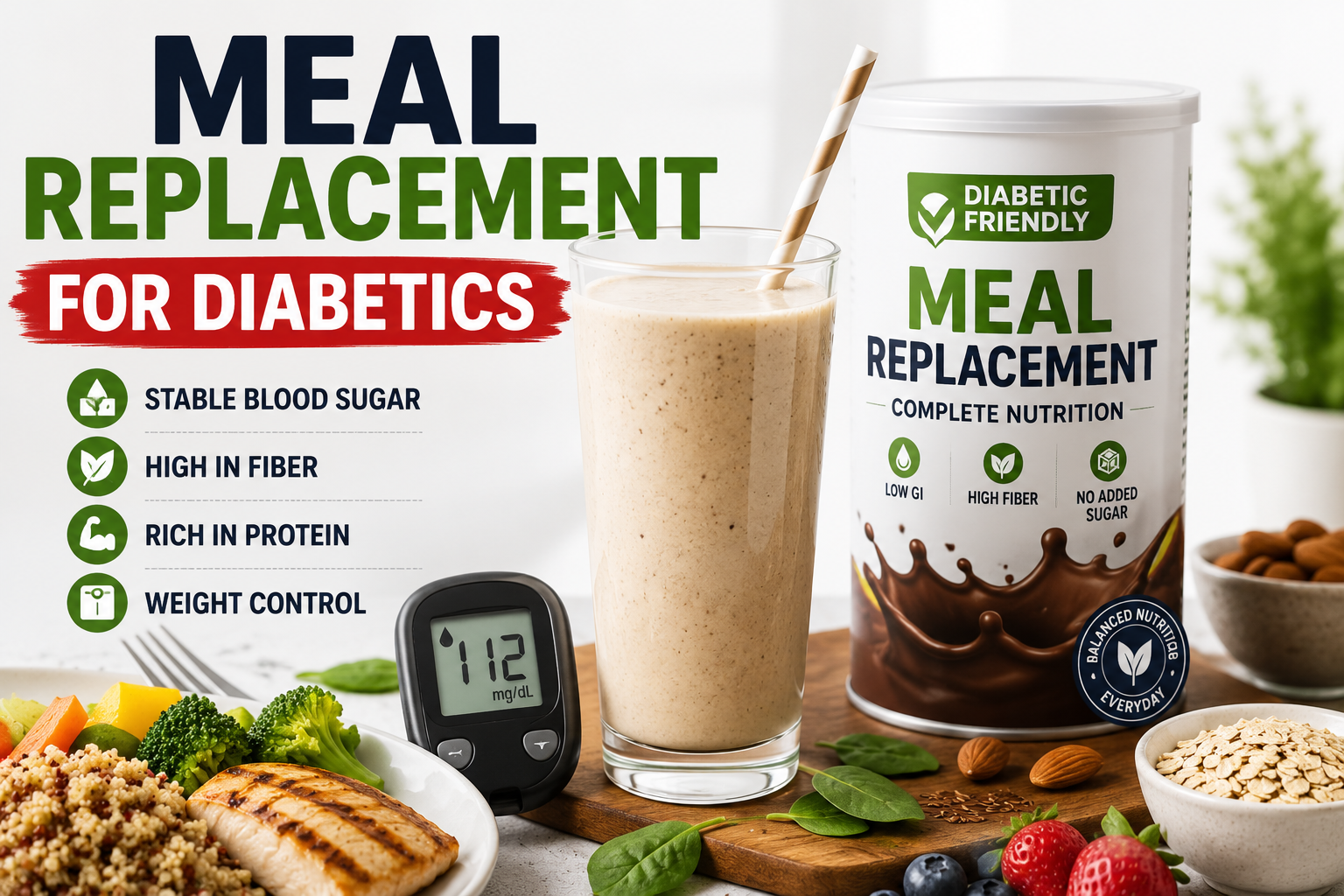
Meal replacements can seem like a convenient solution for people with diabetes. A ready-to-drink shake, nutrition drink, smoothie, or meal replacement powder may help when there is little time to cook, when appetite is low, or when portion control is difficult.
However, not every meal replacement is suitable for diabetes. Some products contain large amounts of added sugar or rapidly digestible carbohydrates, which may cause a significant rise in blood glucose. A better choice is usually one designed to provide balanced nutrition, including an appropriate amount of carbohydrates, protein, fiber, and healthy fats.
The right meal replacement also depends on the individual. A person with type 1 diabetes, type 2 diabetes, kidney disease, weight-loss goals, or insulin treatment may have very different nutritional needs.
This guide explains what meal replacements are, how they can fit into a diabetes-friendly eating pattern, what to look for on labels, and how to make smarter choices.
What Is a Meal Replacement?
A meal replacement is a prepared food or drink intended to replace a regular meal. Common forms include:
- Ready-to-drink nutrition shakes
- Meal replacement powders
- Nutrition bars
- Soups or other portion-controlled products
- Homemade meal replacement smoothies
Unlike a typical snack, a true meal replacement is intended to provide a more substantial combination of nutrients.
According to the American Diabetes Association’s 2026 Standards of Care, meal replacements can include prepackaged foods such as bars, shakes, and soups that provide fixed amounts of macronutrients and micronutrients. Partial or total meal replacement programs may help with energy restriction, portion control, weight loss, and improvements in glycemic measures, particularly as a short-term strategy.
This does not mean that every commercial shake is automatically diabetes-friendly.
A chocolate-flavored drink marketed as a “health shake” may still contain significant amounts of carbohydrates or added sugar.
The label matters.
Can Diabetics Use Meal Replacements?
Yes. Meal replacements can fit into a diabetes management plan for some people.
They may be especially useful when:
- You are too busy to prepare a balanced meal.
- You struggle with portion control.
- You are following a structured weight-loss program.
- You need a convenient option while traveling.
- You occasionally have difficulty preparing food.
- You are working with a healthcare professional on a calorie-controlled plan.
The ADA notes that partial or total meal replacements can be used as an additional strategy for energy restriction. Evidence reviewed in the 2026 Standards found greater weight loss and improvements in A1C and fasting blood glucose in a meta-analysis of meal-replacement interventions compared with conventional meal plans, although these approaches are generally discussed as structured and potentially short-term strategies rather than a requirement for everyone with diabetes.
The Important Word: Individualized
There is no single meal replacement that is best for every person with diabetes.
Your needs may depend on:
- Type 1 or type 2 diabetes
- Blood glucose goals
- Current medications
- Insulin use
- Kidney function
- Weight goals
- Physical activity
- Age
- Appetite
- Other medical conditions
The CDC and NIDDK both emphasize that meal planning should account for individual goals, lifestyle, and medicines.
Why Meal Replacements May Help With Diabetes Management
One of the biggest challenges in diabetes management is consistency.
A breakfast might be healthy one day and extremely high in calories or carbohydrates the next. Restaurant meals, large portions, snacks, and sugary drinks can make it difficult to know exactly what you are consuming.
A measured meal replacement can offer:
1. Portion Control
A packaged meal replacement provides a known serving size.
Instead of preparing a large bowl of cereal, eating several slices of toast, or ordering a high-calorie breakfast, you have a defined portion.
Portion control is an important part of diabetes meal planning and weight management.
2. Known Carbohydrate Content
The Nutrition Facts label can tell you how many grams of carbohydrates are in the serving.
This can be especially useful for people who count carbohydrates.
CDC guidance explains that carbohydrate counting may help manage blood sugar, and people taking mealtime insulin may count carbohydrates to match insulin doses to the food and drinks they consume.
3. Convenience
A meal replacement can be useful when you:
- Are at work
- Are traveling
- Have a busy morning
- Cannot cook
- Need something quickly
Convenience can make it easier to avoid skipping meals or choosing highly processed fast food.
4. Structured Weight Loss
For people with type 2 diabetes and overweight or obesity, weight loss may improve health and glycemic management.
The ADA’s current standards recognize meal replacements as one possible structured strategy for reducing energy intake and supporting weight loss.
However, long-term success still requires an eating pattern that provides adequate nutrition and can be maintained over time.
What Should a Good Meal Replacement for Diabetics Contain?
There is no universal perfect formula, but several features are worth considering.
1. A Reasonable Amount of Carbohydrates
Carbohydrates raise blood glucose, but people with diabetes do not necessarily need to eliminate carbohydrates completely.
The amount that fits your needs is individual.
CDC guidance notes that there is no one-size-fits-all carbohydrate target because needs vary according to factors such as age, weight, activity level, and other individual characteristics.
Therefore, instead of asking:
“Does this shake have zero carbohydrates?”
ask:
“Does the carbohydrate amount fit into my personal meal plan?”
2. Good Fiber Content
Fiber is an important part of a healthy eating pattern.
The ADA recommends emphasizing minimally processed, nutrient-dense, high-fiber carbohydrate sources and recommends a general target of at least 14 grams of fiber per 1,000 calories.
Fiber-containing ingredients in meal replacements may include:
- Oats
- Chia seeds
- Flaxseed
- Psyllium
- Whole grains
- Nuts
- Legumes
Fiber can also support fullness.
3. Adequate Protein
Protein can help make a meal replacement more satisfying and nutritionally balanced.
The exact protein requirement varies between individuals.
Protein needs may need special consideration in people with kidney disease or other medical conditions, so a very high-protein meal replacement is not automatically appropriate for everyone.
4. Healthy Fats
Some fat can contribute to fullness and nutritional quality.
Potential sources include:
- Nuts
- Seeds
- Nut butters
- Avocado
- Unsaturated plant oils
At the same time, it is sensible to pay attention to saturated fat.
NIDDK recommends limiting foods high in saturated fat as part of a healthy eating pattern for diabetes.
5. Limited Added Sugar
A product does not need to be completely sugar-free to fit into a diabetes meal plan.
However, a meal replacement containing large amounts of added sugar may not be the best everyday choice.
The ADA recommends minimizing foods with added sugar and replacing sugar-sweetened beverages with water or low- or no-calorie alternatives when appropriate.
How to Read a Meal Replacement Label
Before buying a product, turn the package around.
Step 1: Check the Serving Size
Is one bottle the serving?
Or is the package actually two servings?
This is important because the numbers on the label apply to the stated serving size.
Step 2: Check Total Carbohydrates
Look for:
Total Carbohydrate: XX grams
This number is important for people who monitor or count carbohydrates.
Step 3: Check Fiber
Compare products and consider options with useful amounts of fiber.
Step 4: Check Added Sugars
Look specifically for:
Includes XX grams Added Sugars
A product may contain naturally occurring sugar from ingredients such as milk or fruit while also containing added sugar.
These are not the same thing.
Step 5: Check Protein
Ask whether the amount of protein makes sense for a product that is replacing an entire meal.
Step 6: Check Calories
A meal replacement intended for weight loss may provide fewer calories than a typical meal.
However, consuming extremely low amounts of calories without medical supervision can be inappropriate.
NIDDK emphasizes that weight-loss plans should support sustainable lifestyle changes rather than relying on quick fixes.
Step 7: Check Sodium and Saturated Fat
Compare similar products.
A convenient shake is not automatically healthy if it is excessively high in sodium or saturated fat.
Meal Replacement vs. Protein Shake
These two products are often confused.
A protein shake is primarily designed to provide protein.
A meal replacement is intended to replace a more complete meal and ideally contains a broader range of nutrients.
A protein shake might contain:
- Protein
- Few carbohydrates
- Few calories
- Little fiber
- Limited vitamins and minerals
That may make it useful as a supplement or snack but not necessarily a complete meal.
A meal replacement should generally provide a more balanced combination of:
- Carbohydrates
- Protein
- Fat
- Vitamins and minerals
- Potentially fiber
Always check the product label rather than assuming a protein shake is automatically a complete meal replacement.
Meal Replacement vs. Smoothie
A homemade smoothie can potentially function as a meal replacement, but it depends on what you put into it.
For example:
Less Balanced Smoothie
- Fruit juice
- Banana
- Honey
- Sweetened yogurt
This may contain a substantial amount of rapidly consumed carbohydrate and little protein.
More Balanced Smoothie
- Unsweetened milk or an appropriate dairy alternative
- Plain Greek yogurt
- A measured portion of fruit
- Chia or flaxseed
- Nut butter
- Vegetables such as spinach
The second example provides a broader combination of nutrients.
However, even a healthy smoothie can contain a significant amount of carbohydrates, so portion size matters.
Homemade Meal Replacement Ideas for Diabetics
1. Greek Yogurt Berry Smoothie
Ingredients:
- Plain Greek yogurt
- A measured portion of berries
- Unsweetened milk or dairy alternative
- Chia seeds
- Ice
Berries provide flavor and nutrients, while yogurt contributes protein.
2. Peanut Butter Oat Smoothie
Ingredients:
- Plain Greek yogurt
- Unsweetened milk
- A measured portion of oats
- Natural peanut butter
- Cinnamon
- Ice
The exact portion of oats should fit your carbohydrate goals.
3. Green Protein Smoothie
Ingredients:
- Unsweetened milk or dairy alternative
- Plain yogurt or another protein source
- Spinach
- Cucumber
- Chia seeds
- A modest portion of fruit for flavor
4. Avocado Meal Replacement Smoothie
Ingredients:
- Avocado
- Plain Greek yogurt
- Unsweetened milk
- Chia seeds
- Cinnamon
- Ice
This can provide healthy fats and a creamy texture without requiring added sugar.
Are Meal Replacement Shakes Good for Weight Loss in Diabetics?
They can be helpful for some people.
One potential advantage is that meal replacements create a structured calorie and portion limit.
Instead of estimating the calories in a large breakfast or lunch, the product provides a known amount.
The ADA’s 2026 Standards state that partial or total meal replacement approaches can improve nutrient quality and glycemic management, reduce portion size and energy intake, and may be a potential short-term strategy for weight loss.
But there are limitations.
Meal Replacements Do Not Create Weight Loss Automatically
You can still consume more calories than your body needs if you:
- Drink several high-calorie shakes
- Add large amounts of nut butter or other calorie-dense ingredients
- Continue eating large meals
- Consume sugary beverages
- Frequently snack on high-calorie foods
Weight management is about the overall eating pattern, energy intake, physical activity, sleep, medication, and other individual factors.
Can a Diabetic Replace Every Meal With Shakes?
This should not be done casually.
A total meal replacement program, where most or all food is replaced with specialized products, is different from occasionally replacing breakfast with a balanced shake.
The ADA recognizes total meal replacement as a structured intervention that has been used in clinical trials and describes meal replacements as a potential short-term strategy for weight loss.
If you are considering replacing multiple meals every day, particularly for rapid weight loss, discuss the plan with a healthcare professional.
This is especially important if you:
- Take insulin
- Take medications that can cause low blood sugar
- Have kidney disease
- Have liver disease
- Are pregnant
- Have a history of eating disorders
- Have difficulty maintaining adequate nutrition
Meal Replacements and Low Blood Sugar
Skipping or substantially changing meals can affect blood glucose.
NIDDK notes that insulin and some other diabetes medicines can increase the risk of hypoglycemia if meals are skipped or delayed.
If you normally eat a 600-calorie meal with a certain amount of carbohydrates and suddenly replace it with a much smaller shake, your medication needs may not match your food intake.
Do not independently change prescribed insulin or diabetes medication based on a generic article.
Speak with your doctor or diabetes care team if you plan to make major changes to your eating pattern.
Best Time to Drink a Meal Replacement
The best time depends on your schedule and treatment plan.
Breakfast
Breakfast is a common choice because mornings can be busy.
A balanced meal replacement may be more convenient than:
- Sugary cereal
- Pastries
- Doughnuts
- Sweet coffee drinks
Lunch
A shake can be useful when you have limited time at work.
However, relying on liquid meals every day may not be necessary if you can prepare balanced solid meals.
Dinner
Replacing dinner occasionally may be part of a structured weight-management plan.
However, if you take insulin or other medications, timing and carbohydrate content should fit your treatment plan.
How Often Can a Diabetic Have a Meal Replacement?
There is no universal answer.
Some people may use one meal replacement occasionally.
Others may use one daily as part of a structured plan.
A more intensive program involving multiple meal replacements should generally be supervised by a qualified healthcare professional.
The CDC recommends regular, balanced meals and notes that eating approximately consistent amounts of carbohydrates at meals can help some people manage blood glucose.
A Simple Example of a Diabetes-Friendly Day With One Meal Replacement
This is only a general example—not a prescription.
Breakfast
A balanced meal replacement containing an appropriate amount of:
- Protein
- Fiber
- Carbohydrates
- Healthy fats
Lunch
A plate with:
- Half nonstarchy vegetables
- One-quarter lean protein
- One-quarter high-fiber carbohydrate food
Snack, if needed
Examples may include:
- Plain yogurt
- A small portion of nuts
- Vegetables with hummus
Dinner
- Nonstarchy vegetables
- Lean protein
- A measured portion of whole grains, beans, or another carbohydrate source
The CDC and NIDDK both describe the plate method as a useful way to build balanced meals.
Foods That Can Naturally Replace a Meal
You do not always need a commercial shake.
Quick, balanced meals may include:
Eggs and Whole-Grain Toast
Combine eggs with vegetables and an appropriate portion of whole-grain bread.
Greek Yogurt Bowl
Try plain Greek yogurt with:
- Berries
- Chia seeds
- Nuts
Chicken Salad
Combine:
- Grilled chicken
- Leafy greens
- Vegetables
- Avocado
- Beans or another measured carbohydrate source if appropriate
Tuna and Whole-Grain Crackers
A simple option when you need a quick lunch.
Cottage Cheese Bowl
Add vegetables, seeds, and a suitable carbohydrate source depending on your meal plan.
Whole foods can often provide more variety and chewing satisfaction than relying entirely on shakes.
Common Mistakes When Choosing a Meal Replacement for Diabetes
Mistake 1: Choosing a Product Because It Says “Healthy”
Marketing words do not tell you the full nutritional story.
Check the Nutrition Facts panel.
Mistake 2: Looking Only at Sugar
A product may contain low added sugar but still have a large amount of total carbohydrates.
Look at the complete label.
Mistake 3: Ignoring Fiber
Fiber can be an important part of carbohydrate quality.
Mistake 4: Confusing a Protein Shake With a Meal Replacement
A protein drink may not contain enough nutrients or calories to replace a full meal.
Mistake 5: Drinking Multiple Servings
One bottle may contain more than one serving.
Always check the label.
Mistake 6: Adding Too Much Fruit or Sweeteners to Homemade Shakes
A smoothie can quickly become high in carbohydrates if you add:
- Large amounts of fruit
- Fruit juice
- Honey
- Syrups
- Sweetened yogurt
Mistake 7: Replacing All Whole Foods Forever
Meal replacements can be convenient, but a healthy eating pattern should generally include a variety of minimally processed, nutrient-dense foods.
The ADA emphasizes nutrient-dense and high-fiber food sources rather than relying exclusively on highly processed products.
Meal Replacement for Type 1 Diabetes
People with type 1 diabetes can use meal replacements, but carbohydrate content may need to be matched with insulin.
CDC guidance notes that people using mealtime insulin often count carbohydrates to help match their insulin dose.
Consistency can be useful because a packaged meal replacement provides a known amount of carbohydrates.
However, insulin adjustments should be based on an individual’s established medical plan.
Meal Replacement for Type 2 Diabetes
For some people with type 2 diabetes, meal replacements may help with:
- Portion control
- Calorie reduction
- Weight management
- Consistency
The strongest potential benefit is usually not that a shake contains a magical ingredient.
Instead, the benefit may come from replacing a less balanced or higher-calorie meal with a controlled, nutritionally appropriate option.
Meal Replacement for Diabetics With Kidney Disease
This situation requires additional caution.
Protein, potassium, phosphorus, fluids, and other nutrients may need individual adjustment depending on the stage and type of kidney disease.
Do not select a high-protein meal replacement simply because it is marketed as “diabetes-friendly.”
Consult your healthcare team or a renal dietitian.
Can Diabetics Use Low-Carb Meal Replacements?
Possibly, but lower carbohydrate does not automatically mean better for everyone.
The appropriate carbohydrate intake depends on the individual.
A low-carb shake may also be:
- Very low in calories
- Low in fiber
- High in saturated fat
- Highly processed
Evaluate the complete nutritional profile.
Can Diabetics Use Sugar-Free Meal Replacements?
“Sugar-free” can be misleading if you only look at the front label.
A product may still contain:
- Starches
- Other carbohydrates
- Significant calories
CDC guidance emphasizes checking total carbohydrates when managing blood sugar, because carbohydrates include sugars and starches.
Therefore:
Sugar-free does not mean carbohydrate-free.
How to Make Your Own Meal Replacement Shake
A simple formula is:
1. Choose a Protein Base
Examples:
- Plain Greek yogurt
- Unsweetened high-protein dairy
- An appropriate unsweetened protein powder
2. Add Fiber
Examples:
- Chia seeds
- Ground flaxseed
- Oats in a measured amount
- Psyllium, if appropriate
3. Add Healthy Fat
Examples:
- Peanut butter
- Almond butter
- Avocado
- A measured portion of nuts or seeds
4. Add Flavor
Examples:
- Cinnamon
- Vanilla
- Unsweetened cocoa powder
- Berries
- A modest portion of another fruit
5. Use a Low-Sugar Liquid
Examples:
- Water
- Unsweetened milk
- An appropriate unsweetened dairy alternative
Then calculate the total carbohydrates, calories, protein, and fiber based on the ingredients and portion sizes you actually use.
Meal Replacement Shopping Checklist
Before purchasing a meal replacement, ask:
- What is the serving size?
- How many total carbohydrates does it contain?
- How much fiber does it provide?
- How much protein does it provide?
- How much added sugar does it contain?
- How many calories does it contain?
- How much saturated fat and sodium does it contain?
- Does it provide useful vitamins and minerals?
- Does the carbohydrate amount fit my personal diabetes plan?
- If I take insulin, have I considered how this meal fits my prescribed insulin plan?
Frequently Asked Questions
What is the best meal replacement for diabetics?
The best choice is not necessarily a specific brand. Look for a nutritionally balanced product with an appropriate amount of carbohydrates for your meal plan, useful protein and fiber, limited added sugar, and a calorie level that matches your goals.
Are meal replacement shakes safe for diabetics?
They can be, depending on the product and the individual. The carbohydrate content, medication regimen, and other health conditions should be considered.
Can meal replacements lower A1C?
Meal replacements do not directly “cure” diabetes. However, structured partial or total meal replacement interventions have shown improvements in A1C and fasting blood glucose in research reviewed by the ADA, particularly as part of broader energy-restriction and weight-management programs.
Can I replace breakfast with a shake every day?
Some people can use a balanced meal replacement regularly, but it should provide nutrition appropriate to your needs. If you use insulin or medications that can cause low blood sugar, discuss major dietary changes with your healthcare team.
Are homemade meal replacement shakes better?
They can be, because you control the ingredients. However, you also need to calculate the nutritional content and avoid accidentally creating a drink high in carbohydrates or calories.
Should a diabetic choose sugar-free or low-carb?
Neither label alone is enough. Check total carbohydrates, fiber, protein, calories, ingredients, and serving size.
Can a diabetic replace two meals a day?
A structured program may use multiple meal replacements, but replacing multiple meals regularly should ideally be discussed with a doctor or registered dietitian, especially if medications may need adjustment.
Final Thoughts
A meal replacement can be a useful tool for some people with diabetes, particularly when it helps with portion control, convenience, calorie management, or maintaining a consistent carbohydrate intake.
But the best meal replacement is not simply the one with the words “diabetic-friendly” on the package.
A smarter choice should fit into your overall eating plan and provide an appropriate balance of:
- Carbohydrates
- Fiber
- Protein
- Healthy fats
- Vitamins and minerals
For people using insulin or medicines that can cause hypoglycemia, changing the size or carbohydrate content of meals can affect blood glucose management. NIDDK specifically notes that skipped or delayed meals can contribute to low blood glucose with insulin and some other diabetes medicines.
The most sustainable approach is usually to use meal replacements as one tool, while continuing to build an overall diet around nutrient-dense foods such as vegetables, fruits, legumes, lean protein sources, dairy or suitable alternatives, nuts, seeds, and whole grains.
Read More:
Healthy Vending Machine Snacks
What Is the Gelatin Recipe for Weight Loss?
Personal Trainer for Weight Loss
Where to Apply Progesterone Cream for Weight Loss




Leave a Reply