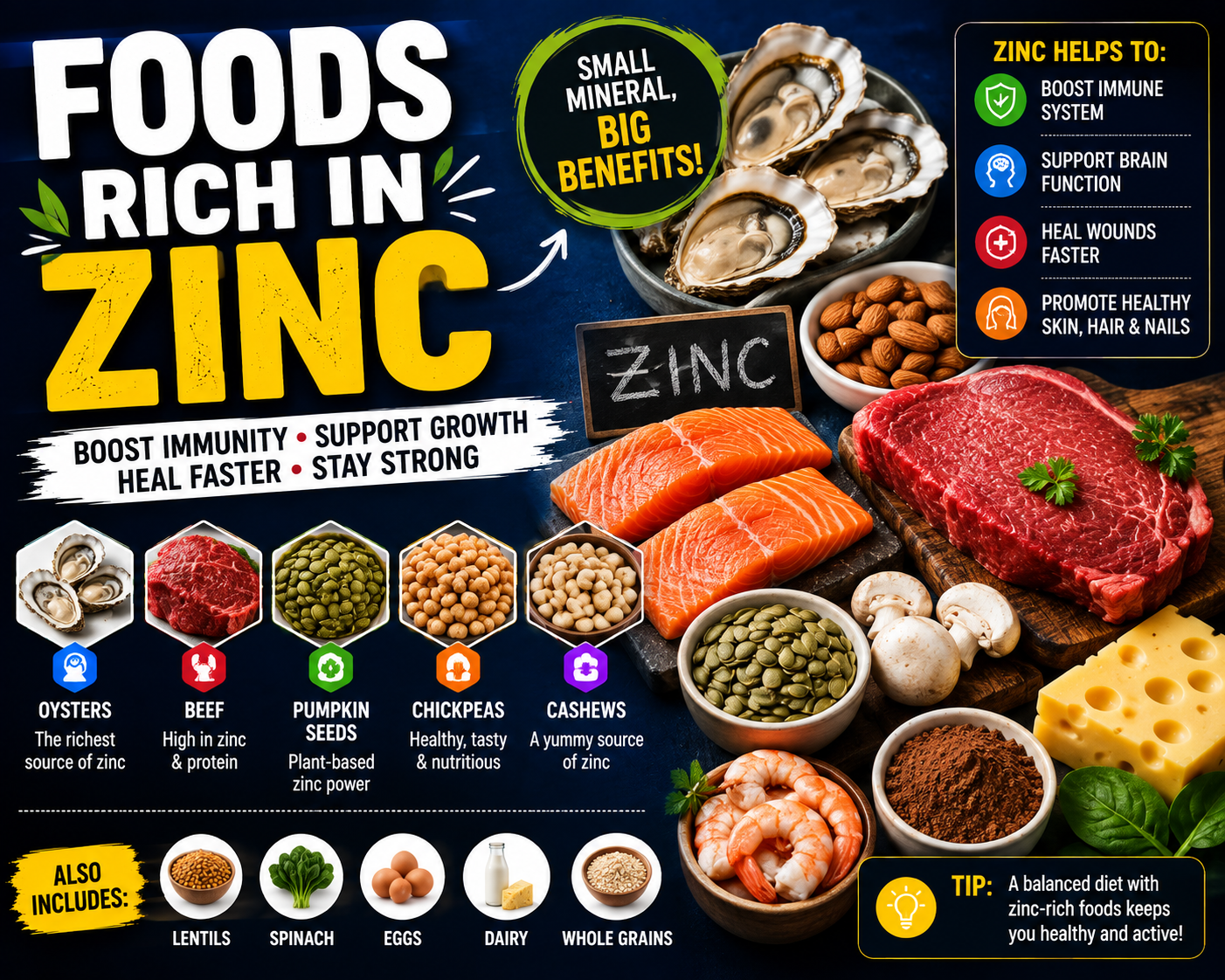
Zinc is an essential mineral that your body needs every day. It plays an important role in immune function, wound healing, DNA and protein production, growth, and normal taste and smell. Because the body doesn’t store large amounts of zinc, getting enough through your regular diet is important.
Fortunately, zinc is found in a wide range of foods, from oysters and beef to pumpkin seeds, beans, nuts, dairy products, and whole grains. This makes it possible to meet your zinc needs through a varied diet without automatically relying on supplements.
In this guide, we’ll look at some of the best foods rich in zinc, including animal-based and plant-based options, so you can choose foods that fit your eating style.
Important: This article is for general nutrition information and isn’t a substitute for medical advice. If you suspect a zinc deficiency or are considering high-dose zinc supplements, speak with a healthcare professional.
What Is Zinc?
Zinc is an essential trace mineral involved in numerous processes throughout the body.
Your body uses zinc to:
- Support normal immune function
- Make DNA
- Make proteins
- Support normal growth and development
- Help wounds heal
- Maintain a normal sense of taste
- Support cellular metabolism
Zinc is particularly important during periods of growth, including pregnancy, infancy, childhood, and adolescence.
Unlike some nutrients that receive more attention in everyday nutrition discussions, zinc is needed in relatively small amounts. That doesn’t make it unimportant—it means your diet needs to consistently provide adequate amounts.
How Much Zinc Do You Need Per Day?
The recommended amount varies according to age and sex.
For adults, the recommended dietary allowance is:
- Adult men: 11 mg per day
- Adult women: 8 mg per day
- Pregnant women: 11 mg per day
- Breastfeeding women: 12 mg per day
Teenagers and children have different requirements.
The goal isn’t necessarily to calculate every milligram of zinc you consume. Eating a varied diet that includes several zinc-containing foods can make it easier to meet your nutritional needs.
25 Foods Rich in Zinc
1. Oysters


When it comes to naturally zinc-rich foods, oysters are one of the standout choices.
They provide substantially more zinc than many other foods and are also a source of high-quality protein and other nutrients.
Because their zinc content can be exceptionally high, you don’t need to eat large portions to get a significant amount.
Best way to enjoy them: grilled, baked, or incorporated into a balanced seafood meal.
2. Beef


Beef is another excellent source of zinc.
It can be particularly useful for people who want to increase zinc while also getting protein, iron, and other nutrients.
Choose leaner cuts more often if you’re trying to keep saturated fat intake under control.
Easy meal idea: grilled lean beef with vegetables and a whole grain.
3. Crab
Crab is a seafood option that provides zinc along with protein and other nutrients.
It can be added to:
- Salads
- Soups
- Grain bowls
- Seafood dishes
- Sandwiches
Seafood such as crab and lobster is recognized as a source of zinc.
4. Lobster
Lobster is another seafood source of zinc.
Although it may not be an everyday food for everyone, it can contribute to zinc intake when included as part of a varied diet.
Try pairing lobster with vegetables and a whole-grain side rather than turning it into a meal dominated by heavy sauces.
5. Pork
Pork can contribute useful amounts of zinc while providing high-quality protein.
Lean cuts such as pork tenderloin can be incorporated into balanced meals.
Try:
- Roasted pork tenderloin
- Grilled pork
- Pork with vegetables
- Pork and whole-grain bowls
6. Chicken
Chicken isn’t as concentrated in zinc as oysters, but it can still contribute to your daily intake.
The advantage of chicken is that it’s versatile and easy to incorporate into regular meals.
For a zinc-conscious meal, combine chicken with foods such as beans, whole grains, or seeds.
7. Turkey
Turkey provides zinc along with protein and several other nutrients.
It works well in:
- Sandwiches
- Salads
- Wraps
- Grain bowls
- Soups
Choosing minimally processed turkey more often can be a practical way to incorporate poultry into a balanced diet.
8. Pumpkin Seeds


Pumpkin seeds are one of the most useful plant-based foods to consider when you’re looking for zinc.
They’re easy to add to your diet because you can sprinkle them over:
- Oatmeal
- Yogurt
- Salads
- Smoothies
- Soups
They’re also convenient as a snack.
Because seeds are calorie-dense, however, portion size still matters if you’re watching your overall calorie intake.
9. Hemp Seeds
Hemp seeds can provide zinc along with protein and healthy fats.
Their mild, nutty flavor makes them easy to add to everyday foods.
Try sprinkling them over:
- Greek yogurt
- Oatmeal
- Salads
- Smoothie bowls
- Roasted vegetables
They can be particularly useful for people looking for plant-based ways to increase their zinc intake.
10. Cashews


Cashews are another convenient zinc-containing food.
They can be eaten as a snack or incorporated into meals.
Try adding a small portion to:
- Trail mix
- Oatmeal
- Stir-fries
- Salads
- Homemade energy bites
Cashews are calorie-dense, so a moderate portion is usually more practical than eating them straight from a large bag.
11. Chickpeas


Chickpeas provide zinc along with plant protein and dietary fiber.
They’re especially useful for vegetarian and vegan eating patterns.
You can use chickpeas in:
- Hummus
- Salads
- Curries
- Soups
- Roasted snacks
- Grain bowls
A chickpea and whole-grain meal can be a simple way to combine several nutrient-rich foods.
12. Lentils
Lentils are inexpensive, versatile, and nutrient-dense.
They provide plant protein, fiber, and some zinc.
Try incorporating them into:
- Lentil soup
- Dal
- Salads
- Curries
- Grain bowls
For people who don’t eat meat or seafood, legumes such as lentils and beans can be important contributors to zinc intake.
13. Black Beans
Black beans contain zinc and can be used in countless meals.
You can add them to:
- Burrito bowls
- Tacos
- Soups
- Salads
- Chili
- Rice dishes
They’re particularly useful because they provide several nutrients at the same time rather than zinc alone.
14. Kidney Beans
Kidney beans are another plant-based source of zinc.
They work particularly well in:
- Chili
- Bean salads
- Curries
- Soups
- Rice dishes
Beans are also a source of fiber, making them a useful addition to an overall healthy eating pattern.
15. Oats


Oats contain zinc as well as fiber and other nutrients.
A zinc-conscious breakfast could combine:
Oats + pumpkin seeds + Greek yogurt + berries
This gives you a combination of whole grains, seeds, protein, and fruit.
It’s much more nutritionally complete than focusing on a single nutrient.
16. Whole-Grain Bread
Whole grains can contribute zinc to your diet.
Whole-grain bread can be an easy everyday option, especially when paired with other zinc-containing foods.
For example:
Whole-grain toast + eggs + avocado
or
Whole-grain sandwich + chicken + vegetables
17. Quinoa
Quinoa provides plant protein and minerals, including zinc.
It’s useful as a base for:
- Grain bowls
- Salads
- Breakfast bowls
- Vegetable dishes
You can combine quinoa with chickpeas, pumpkin seeds, and vegetables for a nutrient-rich plant-based meal.
18. Milk


Milk provides some zinc along with protein, calcium, and other nutrients.
Dairy products are among the food groups that contribute zinc to the diet.
If you consume dairy, milk can be an easy way to add zinc without changing your meals significantly.
19. Cheese
Cheese can also contribute zinc.
You can add moderate amounts to:
- Whole-grain sandwiches
- Omelets
- Salads
- Wraps
- Vegetable dishes
Because some cheeses are relatively high in saturated fat and sodium, portion size and overall dietary pattern matter.
20. Yogurt
Yogurt provides some zinc along with protein and, depending on the product, beneficial live cultures.
For a simple zinc-containing snack, try:
Plain Greek yogurt + pumpkin seeds + berries
This combines several nutrient-rich foods in one bowl.
21. Eggs


Eggs provide zinc along with protein and other essential nutrients.
They’re especially convenient because they can be used at almost any meal.
Try:
- Boiled eggs
- Scrambled eggs
- Omelets
- Egg sandwiches
- Egg and vegetable bowls
Eggs aren’t the richest zinc food on this list, but they can contribute to your overall intake.
22. Fortified Breakfast Cereals
Some breakfast cereals are fortified with zinc and other vitamins and minerals.
The amount can vary considerably between products, so check the Nutrition Facts label.
Look beyond the zinc number and consider:
- Added sugar
- Fiber
- Protein
- Serving size
- Overall ingredient list
A fortified cereal can be useful, but it doesn’t automatically make every cereal a healthy choice.
23. Almonds
Almonds contain zinc along with healthy fats, protein, fiber, magnesium, and other nutrients.
A small handful can work as a convenient snack.
You can also add chopped almonds to:
- Oatmeal
- Yogurt
- Salads
- Smoothie bowls
Like other nuts and seeds, almonds are energy-dense, so portion control is helpful.
24. Peanuts
Peanuts and peanut butter can contribute zinc to the diet.
Try adding a small amount of natural peanut butter to:
- Whole-grain toast
- Oatmeal
- Apples
- Smoothies
Choose products with minimal added sugar and salt when possible.
25. Sesame Seeds
Sesame seeds are another plant-based source of zinc.
They’re easy to incorporate into meals without dramatically changing the flavor.
Try them in:
- Homemade hummus
- Salads
- Stir-fries
- Grain bowls
- Tahini-based sauces
Tahini, which is made from sesame seeds, can also be used in dressings and dips.
Animal vs. Plant Sources of Zinc
One important difference between zinc-rich foods is how well the body can absorb the zinc.
Animal foods such as meat and seafood are generally highly useful sources of zinc.
Plant foods also contain zinc, but foods such as beans, nuts, and whole grains contain phytates, which can reduce zinc absorption.
That doesn’t mean plant foods aren’t good sources.
It simply means that people who obtain most of their zinc from plant foods may need to pay more attention to overall dietary variety and food preparation.
Best Zinc-Rich Foods at a Glance
| Food | Type | Easy Way to Eat It |
|---|---|---|
| Oysters | Seafood | Grilled or baked |
| Beef | Meat | Lean steak or bowl |
| Crab | Seafood | Salad or soup |
| Lobster | Seafood | Grilled or baked |
| Pork | Meat | Roasted or grilled |
| Chicken | Poultry | Salad or grain bowl |
| Turkey | Poultry | Sandwich or salad |
| Pumpkin seeds | Seeds | Snack or topping |
| Hemp seeds | Seeds | Yogurt or oatmeal |
| Cashews | Nuts | Snack or stir-fry |
| Chickpeas | Legume | Hummus or salad |
| Lentils | Legume | Soup or dal |
| Black beans | Legume | Bowl or chili |
| Oats | Whole grain | Breakfast |
| Quinoa | Whole grain | Grain bowl |
| Milk | Dairy | Drink or cereal |
| Cheese | Dairy | Sandwich or omelet |
| Yogurt | Dairy | Snack |
| Eggs | Animal food | Breakfast |
| Almonds | Nuts | Snack |
| Peanuts | Legume | Peanut butter |
| Sesame seeds | Seeds | Tahini or topping |
These foods represent the major categories recognized as useful dietary sources of zinc, including seafood, meat, poultry, beans, nuts, whole grains, eggs, dairy, and fortified cereals.
Can You Get Enough Zinc From Food?
For many people, yes.
The NIH notes that most people in the United States get enough zinc from their diets. A varied eating pattern containing foods such as seafood, meat, poultry, beans, nuts, whole grains, eggs, and dairy can provide zinc without requiring a supplement.
However, zinc needs and absorption can vary between individuals.
People following vegetarian or vegan diets may need to pay particular attention because plant foods can contain phytates that reduce zinc absorption. People with certain digestive disorders or who have undergone gastrointestinal surgery may also have difficulty absorbing enough zinc.
Part 1 Takeaway
The best foods rich in zinc aren’t limited to one category.
You can find zinc in:
Seafood: oysters, crab, lobster
Meat and poultry: beef, pork, chicken, turkey
Nuts and seeds: pumpkin seeds, hemp seeds, cashews, almonds, peanuts, sesame seeds
Legumes: chickpeas, lentils, black beans, kidney beans
Whole grains: oats, quinoa, whole-grain bread
Dairy and eggs: milk, yogurt, cheese, eggs
Fortified foods: certain breakfast cereals
Zinc is essential for immune function, DNA and protein production, growth, development, wound healing, and other body processes. Adult men generally need 11 mg per day, while adult women generally need 8 mg per day.
Getting enough zinc isn’t only about finding a list of foods that contain the mineral. How you combine and prepare those foods can also matter, particularly if most of your zinc comes from plants.
Zinc is found in meat, seafood, dairy, eggs, legumes, nuts, seeds, whole grains, and fortified foods. However, plant foods often contain phytates, compounds that can reduce the amount of zinc your body absorbs.
The good news is that you don’t need to avoid beans, grains, nuts, or seeds. Instead, focus on variety, adequate portions, and appropriate preparation methods.
26. More Plant-Based Foods Rich in Zinc
If you’re vegetarian or vegan, you have plenty of options for increasing your zinc intake.
26. Soybeans
Soybeans provide zinc along with plant protein.
You can use:
- Cooked soybeans
- Edamame
- Tofu
- Tempeh
- Soy-based foods
They can be especially useful because they provide protein and other nutrients alongside zinc.
27. Tofu
Tofu is a practical plant-based protein that can contribute zinc to your diet.
Try adding tofu to:
- Stir-fries
- Soups
- Curries
- Grain bowls
- Salads
For a nutrient-dense meal, combine tofu with vegetables and a whole grain.
28. Tempeh
Tempeh is a fermented soybean product.
Fermentation can alter the nutritional characteristics of soy foods and may help make some nutrients more accessible.
Tempeh can be:
- Grilled
- Baked
- Added to stir-fries
- Used in sandwiches
- Added to grain bowls
29. Green Peas
Green peas provide zinc along with fiber, plant protein, and other nutrients.
They can easily be added to:
- Rice
- Pasta
- Soups
- Curries
- Salads
They aren’t among the most concentrated sources of zinc, but they can contribute to your overall intake.
30. Tahini
Tahini is a paste made from sesame seeds.
Because sesame seeds contain zinc, tahini can be incorporated into a zinc-conscious diet.
Try using tahini as:
- Hummus
- Salad dressing
- Sandwich spread
- Vegetable dip
- Sauce for grain bowls
Vegetarian Foods High in Zinc
If you don’t eat meat or seafood, you can still build meals around zinc-rich foods.
Some useful choices include:
- Pumpkin seeds
- Hemp seeds
- Sesame seeds
- Cashews
- Almonds
- Peanuts
- Chickpeas
- Lentils
- Beans
- Soybeans
- Tofu
- Tempeh
- Oats
- Quinoa
- Fortified breakfast cereals
- Dairy products, if you consume them
The important thing is not to depend on one food.
Instead, include several zinc-containing foods throughout your normal eating pattern.
Vegan Foods Rich in Zinc
A vegan diet can provide zinc, but planning is particularly useful because many plant sources contain phytates.
Good options include:
Seeds
- Pumpkin seeds
- Hemp seeds
- Sesame seeds
Nuts
- Cashews
- Almonds
- Peanuts
Legumes
- Chickpeas
- Lentils
- Black beans
- Kidney beans
- Soybeans
Soy Foods
- Tofu
- Tempeh
- Edamame
Grains
- Oats
- Quinoa
- Whole-grain breads
- Fortified cereals
A varied diet can provide zinc even without animal products.
What Are Phytates?
Phytates, also called phytic acid, occur naturally in many plant foods.
They are found particularly in:
- Beans
- Lentils
- Nuts
- Seeds
- Whole grains
Phytates can bind minerals such as zinc and reduce their absorption in the digestive tract.
This doesn’t mean phytates are “bad.”
Foods containing phytates can also be highly nutritious and provide:
- Fiber
- Protein
- Magnesium
- Iron
- Other beneficial plant compounds
Therefore, there’s no reason to eliminate beans or whole grains simply because they contain phytates.
How Can You Improve Zinc Absorption?
If your diet contains a lot of plant-based foods, certain preparation methods can help reduce phytate levels.
Soaking
Soaking beans, grains, nuts, or seeds before preparation can help reduce some phytates.
For example, dried beans are commonly soaked before cooking.
Sprouting
Sprouting certain grains, legumes, and seeds can alter phytate content and improve the availability of some nutrients.
Sprouted grains and legumes can therefore be useful additions to a varied diet.
Fermentation
Fermentation can also reduce phytate levels in some foods.
Examples include:
- Tempeh
- Fermented grains
- Sourdough bread
The exact nutritional effect depends on the food and preparation method.
Cooking
Cooking improves the digestibility of many foods and is an important part of preparing beans and legumes safely.
It may also influence phytate content, although the amount removed varies according to the food and cooking method.
Does Eating Vitamin C Increase Zinc Absorption?
Vitamin C is often discussed in relation to mineral absorption, but it is important not to overstate the evidence.
Vitamin C is particularly well known for helping the absorption of non-heme iron from plant foods.
For zinc, the more important consideration is the overall composition and preparation of your diet, particularly when consuming large amounts of phytate-rich plant foods.
So you don’t need to force a vitamin-C-rich food into every zinc-containing meal.
Best Zinc-Rich Food Combinations
Instead of focusing on individual foods, try building balanced meals.
Combination 1: Oatmeal + Pumpkin Seeds + Yogurt
A simple breakfast could contain:
- Oats
- Pumpkin seeds
- Plain yogurt
- Berries
You get whole grains, seeds, dairy protein, and fruit in one meal.
Combination 2: Chickpea + Quinoa Bowl
Try combining:
- Chickpeas
- Quinoa
- Mixed vegetables
- Tahini dressing
- Lemon
This is a useful plant-based meal with protein, fiber, whole grains, seeds, and vegetables.
Combination 3: Beef + Beans
A meal containing lean beef and beans can provide zinc from both animal and plant sources.
Add:
- Brown rice
- Leafy vegetables
- Tomatoes
for a more complete meal.
Combination 4: Chicken + Whole Grains
Try:
Grilled chicken + quinoa + vegetables + pumpkin seeds
This gives you protein, zinc-containing foods, fiber, and healthy fats.
Combination 5: Tofu Stir-Fry
Use:
- Tofu
- Broccoli
- Bell peppers
- Mushrooms
- Sesame seeds
- Brown rice
This is an easy plant-based dinner that combines several nutrient-rich ingredients.
Zinc-Rich Snacks
You don’t have to get all your zinc at major meals.
Several snack options can contribute to your daily intake.
Pumpkin Seed Snack
A small portion of pumpkin seeds can be eaten on its own.
Greek Yogurt + Seeds
Add pumpkin or hemp seeds to plain Greek yogurt.
Hummus + Vegetables
Chickpea-based hummus can provide zinc along with fiber.
Peanut Butter + Whole-Grain Toast
A simple combination that provides protein, healthy fats, and some zinc.
Trail Mix
Combine:
- Cashews
- Almonds
- Pumpkin seeds
- Peanuts
Keep the serving moderate because nuts and seeds are calorie-dense.
Zinc-Rich Breakfast Ideas
Breakfast can be an easy opportunity to include zinc-containing foods.
Option 1
Oatmeal + pumpkin seeds + Greek yogurt + berries
Option 2
Eggs + whole-grain toast + avocado
Option 3
Fortified whole-grain cereal + milk + berries
Option 4
Greek yogurt + hemp seeds + oats + fruit
Option 5
Whole-grain toast + peanut butter + banana
You don’t need to eat all of these. Choose the option that fits your dietary preferences and nutritional needs.
Zinc-Rich Lunch Ideas
Chicken Grain Bowl
- Grilled chicken
- Quinoa
- Chickpeas
- Vegetables
- Pumpkin seeds
Lentil Bowl
- Lentils
- Brown rice
- Spinach
- Tomatoes
- Tahini dressing
Beef and Bean Bowl
- Lean beef
- Black beans
- Brown rice
- Lettuce
- Tomatoes
These combinations demonstrate an important principle:
You don’t need a “zinc meal.”
You simply need a balanced diet that regularly includes zinc-containing foods.
Zinc-Rich Dinner Ideas
Dinner 1: Seafood
Oysters, crab, or another seafood option with vegetables and a whole grain.
Dinner 2: Lean Beef
Lean beef with roasted vegetables and quinoa.
Dinner 3: Chicken
Chicken with brown rice, beans, and vegetables.
Dinner 4: Tofu
Tofu stir-fry with vegetables, sesame seeds, and brown rice.
Dinner 5: Lentil Curry
Lentils cooked with vegetables and served with a whole grain.
Can Cooking Destroy Zinc?
Zinc is a mineral, so it isn’t destroyed in the same way that some heat-sensitive vitamins can be.
However, food preparation can affect how much zinc remains in the food or how available it is for absorption.
For example, soaking and cooking can change phytate levels and the overall mineral availability of legumes and grains.
The key takeaway is:
Don’t worry about “protecting” zinc from normal cooking.
Focus on preparing foods properly and eating a varied diet.
Can You Get Zinc From Nuts?
Yes.
Nuts can contribute zinc, particularly:
- Cashews
- Almonds
- Peanuts
However, nuts are relatively calorie-dense.
If you’re also trying to manage your weight, measure portions rather than eating directly from a large package.
A small serving can provide nutrients without adding excessive calories.
Can You Get Zinc From Seeds?
Absolutely.
Seeds are among the most useful plant-based options for zinc.
Especially consider:
- Pumpkin seeds
- Hemp seeds
- Sesame seeds
You can add them to meals without much preparation.
A tablespoon or two can transform the nutritional profile of oatmeal, yogurt, salads, or grain bowls.
Is Meat the Only Good Source of Zinc?
No.
Animal foods such as oysters, beef, and poultry can be excellent sources, but plant foods can also contribute meaningful amounts.
For people following vegetarian or vegan diets, the strategy is to regularly include several zinc-containing foods and consider the effects of phytates on absorption.
A varied diet is much more useful than relying on one “superfood.”
What About Zinc-Fortified Foods?
Some foods have zinc added during manufacturing.
Breakfast cereals are a common example.
Fortified foods can be useful because the amount of zinc can be clearly listed on the Nutrition Facts label.
However, don’t choose a product based solely on its zinc content.
Also consider:
- Added sugars
- Sodium
- Fiber
- Protein
- Overall ingredients
- Serving size
A food can be fortified with zinc while still being high in added sugar.
Should You Take a Zinc Supplement Instead?
Not necessarily.
For people who can meet their needs through food, obtaining zinc from a varied diet is generally preferable.
Supplements can be useful in specific situations, but taking high doses without medical guidance isn’t a good strategy.
Too much zinc can cause problems, including nausea and gastrointestinal symptoms, and long-term excessive intake can interfere with copper absorption.
The adult upper intake level for zinc is 40 mg per day, including intake from food, beverages, supplements, and medications.
This is an important distinction:
More zinc is not automatically better.
A Simple Rule for Getting More Zinc From Food
Instead of memorizing dozens of foods, use this simple strategy:
Every day, include several of these:
1 protein source
Chicken, beef, eggs, seafood, tofu, or beans
1 seed or nut
Pumpkin seeds, hemp seeds, cashews, almonds, or sesame
1 whole grain
Oats, quinoa, or whole-grain bread
1 legume
Chickpeas, lentils, black beans, or soybeans
Optional dairy or fortified food
Yogurt, milk, cheese, or a fortified cereal
This approach naturally creates multiple opportunities to obtain zinc throughout the day.
Part 2 Takeaway
If you’re looking for foods rich in zinc, you have many choices—even if you don’t eat meat.
Plant-based sources include:
- Pumpkin seeds
- Hemp seeds
- Sesame seeds
- Cashews
- Almonds
- Peanuts
- Chickpeas
- Lentils
- Beans
- Soybeans
- Tofu
- Tempeh
- Oats
- Quinoa
- Fortified cereals
Animal foods such as oysters, beef, pork, chicken, and seafood can provide highly useful sources of zinc as well.
For plant-based diets, phytates are worth understanding because they can reduce zinc absorption. Soaking, sprouting, fermentation, and appropriate cooking can help alter phytate levels in some foods.
Most importantly, don’t focus on one food or one mineral in isolation. A varied diet containing protein, whole grains, legumes, nuts, seeds, fruits, and vegetables is a much stronger foundation for good nutrition.
Zinc is needed in relatively small amounts, but it has an important role in normal body function. Getting enough zinc from a balanced diet can support normal immune function, wound healing, growth, development, and the production of DNA and proteins.
For most people, the goal should be adequate zinc—not maximum zinc intake. More isn’t necessarily better, and consistently consuming excessive amounts from supplements can cause problems.
What Happens If You Don’t Get Enough Zinc?
Zinc deficiency can affect several parts of the body because zinc is involved in immune function, cell division, protein production, and tissue repair.
Possible signs of zinc deficiency include:
- Frequent infections
- Slow wound healing
- Loss of appetite
- Changes in taste or smell
- Hair loss
- Skin changes
- Diarrhea
- Problems with growth in children
- Reduced immune function
These symptoms are not specific to zinc deficiency. Similar problems can occur because of many other nutritional deficiencies or medical conditions.
If you suspect that you’re deficient, don’t try to diagnose yourself based on symptoms alone. A healthcare professional can evaluate your diet, medical history, symptoms, and overall health.
Who May Be at Greater Risk of Zinc Deficiency?
Some groups have a greater chance of not getting or absorbing enough zinc.
People Following Vegetarian or Vegan Diets
Plant foods contain zinc, but many also contain phytates, which can reduce zinc absorption.
This doesn’t mean plant-based diets are unhealthy or deficient by definition.
It means people relying heavily on plant foods should make a deliberate effort to include several zinc-containing foods throughout the diet.
People With Certain Digestive Conditions
Some gastrointestinal disorders can interfere with nutrient absorption.
Conditions affecting the digestive tract may make it harder for the body to absorb adequate zinc.
People with ongoing digestive problems should discuss nutritional concerns with a healthcare professional.
People Who Have Had Certain Gastrointestinal Surgeries
Some surgeries involving the digestive system can affect nutrient absorption.
In these situations, doctors may recommend monitoring specific nutrients, depending on the procedure and individual circumstances.
Infants Who Are Breastfed
Human milk provides zinc, but the amount available can become insufficient to meet the needs of older infants.
Infant nutrition is a specialized subject, so parents should discuss appropriate feeding and supplementation with a pediatric healthcare professional rather than deciding independently.
People With Alcohol Use Disorder
Long-term excessive alcohol consumption can be associated with inadequate dietary intake and impaired nutrient absorption.
If you have concerns about your diet or nutrient status, discuss them with a healthcare professional.
Zinc and the Immune System
Zinc is important for normal immune function.
The immune system requires zinc for the development and function of immune cells and other biological processes.
However, this doesn’t mean that taking large doses of zinc will automatically “boost” immunity.
There’s an important difference between:
Getting enough zinc
and
Taking excessive zinc.
If you’re getting adequate zinc, consuming much more isn’t necessarily going to make your immune system stronger.
A balanced diet is the better long-term strategy.
Zinc and Wound Healing
Zinc contributes to normal tissue growth and repair.
Because zinc is involved in cell division and protein production, adequate zinc status is important for normal wound healing.
People with severe zinc deficiency can experience impaired wound healing.
However, if you already consume enough zinc, taking additional supplements isn’t automatically going to make every wound heal faster.
A wound that isn’t healing normally should be evaluated medically rather than treated with zinc alone.
Zinc and Skin Health
Zinc is involved in several biological processes important for maintaining normal skin.
Severe zinc deficiency can cause skin problems.
However, online claims that zinc supplements are a universal treatment for acne, eczema, or other skin conditions are often exaggerated.
If you have a persistent skin condition, a dermatologist or other qualified healthcare professional can help identify the underlying cause.
Zinc and Hair Health
Zinc deficiency can be associated with hair loss.
But hair loss has many possible causes, including:
- Genetics
- Hormonal changes
- Stress
- Thyroid disorders
- Iron deficiency
- Certain medications
- Illness
- Nutritional deficiencies
Therefore, taking zinc simply because you’re losing hair isn’t necessarily the right solution.
If hair loss is persistent or significant, finding the underlying cause is more useful than taking random supplements.
Zinc for Taste and Smell
Zinc is involved in normal taste and smell.
A deficiency can sometimes contribute to changes in these senses.
But changes in taste or smell can also occur because of:
- Respiratory infections
- Medications
- Nasal problems
- Aging
- Other medical conditions
If these changes persist, discuss them with a healthcare professional.
How Much Zinc Is Too Much?
The recommended daily intake for adult men is 11 mg, while adult women generally need 8 mg.
The upper intake level for adults is 40 mg per day from all sources.
The upper limit isn’t a target.
It represents a level above which the risk of adverse effects increases.
Consistently consuming excessive zinc can cause:
- Nausea
- Vomiting
- Stomach cramps
- Loss of appetite
- Headaches
- Dizziness
- Reduced copper absorption
- Reduced immune function in some circumstances
That’s why high-dose zinc supplements shouldn’t be taken casually.
Can You Get Too Much Zinc From Food?
It’s generally much easier to consume excessive zinc from supplements or certain medications than from a normal varied diet.
Foods naturally contain different amounts of zinc, and eating a variety of them is generally a sensible approach.
However, people taking multiple supplements should check the labels carefully.
You may unknowingly be getting zinc from:
- Multivitamins
- Zinc tablets
- Cold remedies
- Mineral supplements
- Fortified foods
Always consider your total intake from all sources.
Zinc Supplements vs. Zinc-Rich Foods
Zinc-rich foods
Advantages include:
- Provide other nutrients
- Provide protein, fiber, or healthy fats depending on the food
- Fit naturally into meals
- Reduce the risk of unnecessarily high supplemental doses
Zinc supplements
May be useful when:
- A healthcare professional identifies deficiency
- A medical condition increases nutritional needs
- Absorption is impaired
- Dietary intake isn’t sufficient
The appropriate supplement and dose depend on the individual.
Don’t assume a higher-dose supplement is better.
One-Day Zinc-Rich Meal Plan
Here’s an example of how you could incorporate zinc-containing foods into a normal day.
Breakfast
Oatmeal Bowl
- Oats
- Greek yogurt
- Pumpkin seeds
- Berries
- Small amount of chopped almonds
This provides a combination of whole grains, dairy, seeds, nuts, and fruit.
Morning Snack
Apple + Peanut Butter
Choose a moderate portion of peanut butter.
This provides healthy fats and some zinc.
Lunch
Chicken & Chickpea Grain Bowl
Include:
- Grilled chicken
- Chickpeas
- Quinoa
- Mixed vegetables
- Sesame or tahini dressing
This combines animal and plant sources of zinc.
Afternoon Snack
Yogurt + Hemp Seeds
Add a spoonful of hemp seeds to plain yogurt.
Dinner
Lean Beef & Bean Bowl
Include:
- Lean beef
- Black beans
- Brown rice
- Mixed vegetables
- Pumpkin seeds
This meal contains several zinc-containing ingredients while also providing protein and fiber.
A Vegetarian Zinc-Rich Day
If you don’t eat meat, try something like this:
Breakfast
Oatmeal + pumpkin seeds + yogurt + fruit
Lunch
Lentil and quinoa bowl + vegetables + tahini
Snack
Cashews + fruit
Dinner
Tofu and black-bean stir-fry + brown rice + sesame seeds
This demonstrates that you can build a zinc-containing eating pattern without relying on meat.
A Vegan Zinc-Rich Day
For a vegan pattern, you could use:
Breakfast
Oatmeal + pumpkin seeds + hemp seeds + fruit
Lunch
Chickpea quinoa bowl + tahini dressing
Snack
Cashews or peanuts + fruit
Dinner
Tofu + black beans + brown rice + vegetables + sesame seeds
Because plant-based foods contain phytates, variety and adequate intake are especially important.
How to Build Your Own Zinc-Rich Meal
Use this simple formula:
Step 1: Choose a protein
- Beef
- Chicken
- Seafood
- Eggs
- Tofu
- Lentils
- Beans
Step 2: Add a zinc-containing seed or nut
- Pumpkin seeds
- Hemp seeds
- Cashews
- Sesame seeds
- Peanuts
Step 3: Add a whole grain
- Oats
- Quinoa
- Brown rice
- Whole-grain bread
Step 4: Add vegetables or fruit
This gives you a much more balanced meal than focusing on zinc alone.
Frequently Asked Questions About Zinc-Rich Foods
What food is highest in zinc?
Oysters are among the richest natural dietary sources of zinc. Other useful sources include beef, seafood, poultry, seeds, nuts, legumes, dairy products, and fortified foods.
The exact amount varies by food and serving size.
Which fruits are high in zinc?
Most fruits aren’t particularly high in zinc compared with seafood, meat, seeds, nuts, and legumes.
Fruit is still an important part of a balanced diet, but if you’re specifically trying to increase zinc, focus more heavily on zinc-containing foods such as pumpkin seeds, beans, nuts, seafood, meat, and fortified foods.
Which vegetables contain zinc?
Vegetables generally contain smaller amounts of zinc than many animal foods, nuts, seeds, and legumes.
Some vegetables can contribute to overall intake, but they shouldn’t necessarily be your primary strategy for increasing zinc.
Are pumpkin seeds high in zinc?
Yes. Pumpkin seeds are one of the better plant-based foods to consider when looking for zinc.
They can be added to oatmeal, yogurt, salads, soups, or eaten as a snack.
Are nuts a good source of zinc?
Yes.
Cashews, almonds, and peanuts can contribute zinc.
However, nuts are calorie-dense, so moderate portions are useful.
Are eggs high in zinc?
Eggs contain zinc, but they’re not among the most concentrated zinc sources.
They can still contribute to your daily intake as part of a varied diet.
Is milk a source of zinc?
Yes. Milk contains zinc and can contribute to daily intake.
Yogurt and cheese can also provide zinc.
Can vegetarians get enough zinc?
Yes.
Vegetarians can obtain zinc from foods such as:
- Seeds
- Nuts
- Beans
- Lentils
- Soy foods
- Whole grains
- Dairy
- Eggs
- Fortified foods
Because phytates can reduce zinc absorption, variety and adequate intake are particularly important.
Can vegans get enough zinc?
Yes, but attention to food choices is important.
Good options include pumpkin seeds, hemp seeds, sesame seeds, cashews, beans, lentils, soy foods, oats, quinoa, and fortified foods.
Should I take zinc every day?
Not necessarily.
Whether you need a zinc supplement depends on your dietary intake, health status, and individual circumstances.
If you’re eating a varied diet, you may already be getting enough.
Speak with a healthcare professional before taking high-dose zinc supplements.
Is zinc good for immunity?
Zinc is essential for normal immune function.
However, taking extra zinc beyond what your body needs isn’t necessarily beneficial.
The goal is to maintain adequate zinc status rather than consume excessive amounts.
Can zinc help with hair loss?
Zinc deficiency can contribute to hair loss, but most hair loss has multiple possible causes.
If you’re experiencing unexplained or significant hair loss, it’s better to investigate the cause rather than automatically taking zinc supplements.
Can zinc improve skin?
Zinc is important for normal skin health, but supplementation isn’t appropriate for everyone.
If you have a persistent skin problem, speak with a healthcare professional about the underlying cause.
Final Takeaway: Foods Rich in Zinc
Zinc is an essential mineral that supports normal immune function, wound healing, growth, development, DNA production, protein production, and other biological processes.
The best way to obtain zinc is generally through a varied, nutrient-dense diet.
Some of the best foods rich in zinc include:
Animal Sources
- Oysters
- Beef
- Crab
- Lobster
- Pork
- Chicken
- Turkey
- Eggs
- Milk
- Yogurt
- Cheese
Plant Sources
- Pumpkin seeds
- Hemp seeds
- Sesame seeds
- Cashews
- Almonds
- Peanuts
- Chickpeas
- Lentils
- Black beans
- Kidney beans
- Soybeans
- Tofu
- Tempeh
- Oats
- Quinoa
Key numbers to remember
Adult men: 11 mg/day
Adult women: 8 mg/day
Adult upper limit: 40 mg/day from all sources.
You don’t need to chase extremely high zinc intake. Instead, regularly include a variety of zinc-containing foods in your meals.
If you have symptoms that could indicate a deficiency, have a medical condition affecting nutrient absorption, or are considering high-dose supplements, consult a qualified healthcare professional.
Recommended Article’s
- Foods Rich in Magnesium
- Foods High in Antioxidants
- Best Superfoods
- Healthy Foods List
- Healthy Snack Ideas
- High Protein Snacks
- Best Foods for Weight Loss

Leave a Reply