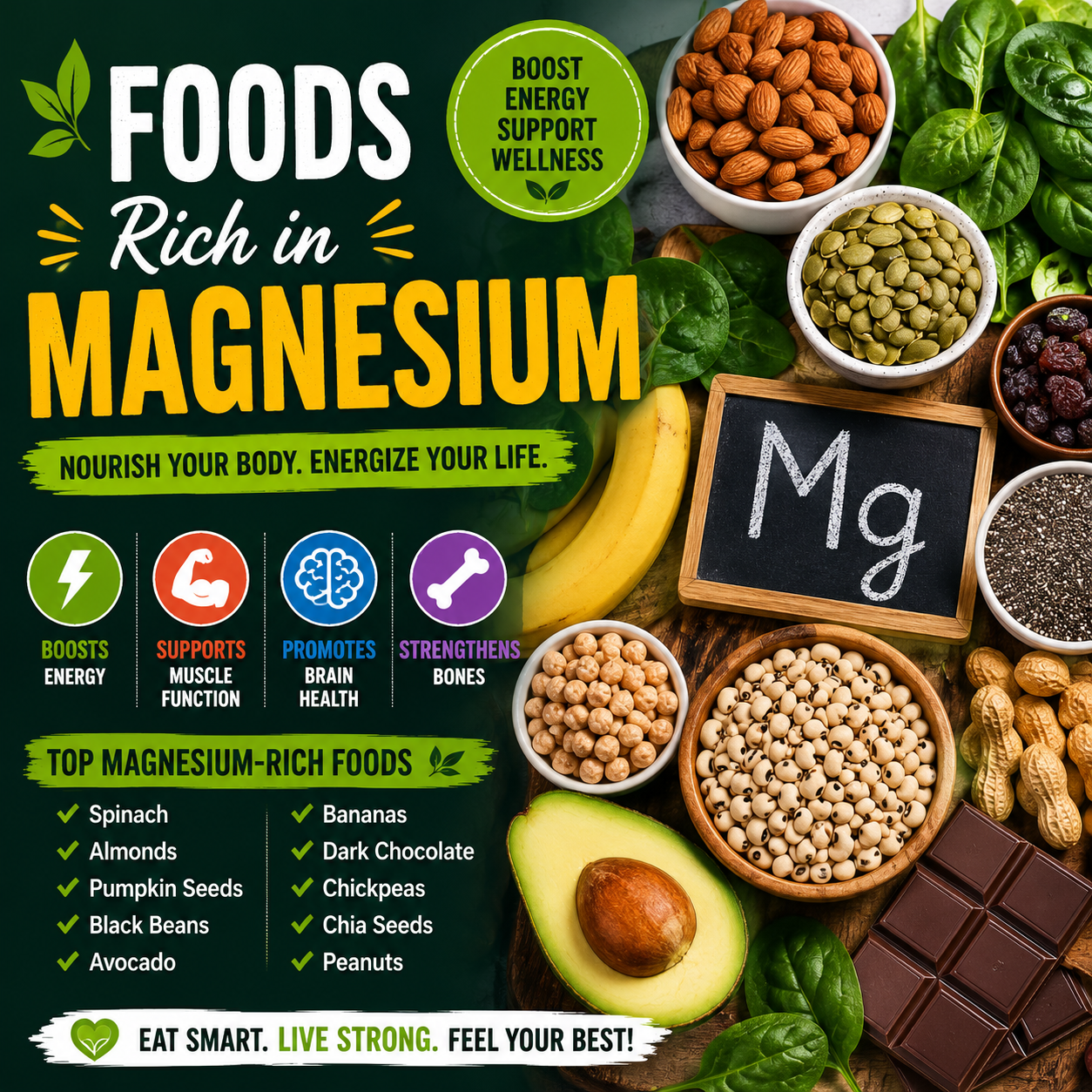
Magnesium is an essential mineral that your body needs every day. It is involved in hundreds of processes, including normal muscle and nerve function, energy production, protein synthesis, bone health, and the regulation of blood glucose and blood pressure.
Despite its importance, many people don’t pay much attention to magnesium when planning their meals. The good news is that you can find magnesium in a wide variety of everyday foods, especially nuts, seeds, beans, leafy green vegetables, whole grains, and legumes.
You don’t necessarily need expensive supplements or specialty foods to increase your magnesium intake. Simple foods such as pumpkin seeds, almonds, spinach, black beans, oats, peanut butter, and whole grains can all contribute to your daily needs.
This detailed guide covers the best foods rich in magnesium, how much magnesium they provide, easy ways to eat them, magnesium-rich meal ideas, and answers to common questions about this important mineral.
What Is Magnesium?
Magnesium is a mineral that your body needs for many important functions.
It helps support:
- Normal muscle contraction and relaxation
- Normal nerve function
- Energy production
- Protein formation
- Bone structure
- Normal heart rhythm
- Blood glucose regulation
- Normal blood pressure regulation
- Proper function of many enzymes
Your body stores much of its magnesium in bones and tissues, while a smaller amount circulates in the blood.
Because the body needs magnesium continuously, eating a varied diet that regularly includes magnesium-rich foods is an important part of good nutrition.
How Much Magnesium Do You Need Per Day?
Magnesium requirements vary depending on age and sex.
For most adults, recommended daily amounts are approximately:
| Group | Recommended Magnesium |
|---|---|
| Adult men | 400–420 mg/day |
| Adult women | 310–320 mg/day |
| Pregnancy | 350–360 mg/day |
| Breastfeeding | 310–320 mg/day |
Individual needs can vary, so these numbers should be viewed as general dietary recommendations rather than a personal prescription.
One reason magnesium-rich foods are useful is that they often provide other nutrients at the same time. For example, pumpkin seeds provide magnesium along with healthy fats and protein, while beans provide magnesium with fiber and plant protein.
50+ Foods Rich in Magnesium
Below are some of the best foods to consider if you want to naturally increase magnesium in your diet.
1. Pumpkin Seeds
Pumpkin seeds are one of the most concentrated sources of magnesium among commonly eaten foods.
They also provide:
- Protein
- Healthy unsaturated fats
- Zinc
- Iron
- Fiber
A small handful can be added to oatmeal, yogurt, salads, soups, or homemade trail mix.
Easy idea: Sprinkle pumpkin seeds over a bowl of Greek yogurt with berries.
2. Chia Seeds
Chia seeds are small but nutritionally dense. They provide magnesium, fiber, plant-based omega-3 fats, and other minerals.
They are especially easy to add to meals because they don’t require cooking.
Try adding them to:
- Oatmeal
- Smoothies
- Yogurt
- Chia pudding
- Overnight oats
A combination of chia seeds, oats, berries, and nuts makes a nutrient-dense breakfast.
3. Almonds
Almonds provide magnesium, vitamin E, protein, fiber, and mostly unsaturated fats.
They make a convenient snack because they require no preparation.
You can also add chopped almonds to:
- Oatmeal
- Salads
- Yogurt
- Cereal
- Smoothies
Choose unsalted almonds if you are trying to keep sodium intake moderate.
4. Cashews
Cashews are another useful magnesium-rich nut.
They have a naturally creamy texture and work well in both sweet and savory recipes.
Try cashews in:
- Stir-fries
- Trail mix
- Oatmeal
- Rice dishes
- Homemade sauces
A moderate serving can provide magnesium without requiring a large amount of food.
5. Peanuts
Peanuts are technically legumes, although they are commonly eaten like nuts.
They provide magnesium along with protein, fiber, healthy fats, and several other nutrients.
Enjoy them as a snack or add chopped peanuts to oatmeal, salads, or stir-fries.
6. Peanut Butter
Natural peanut butter can be another practical way to add magnesium.
Spread it over whole-grain toast or combine it with:
- Bananas
- Apples
- Oatmeal
- Greek yogurt
When buying peanut butter, check the ingredient list. Products made primarily from peanuts are a simple option.
7. Spinach
Spinach is one of the most useful magnesium-containing vegetables.
You can eat it raw or cooked.
Add spinach to:
- Omelets
- Soups
- Curries
- Pasta
- Sandwiches
- Smoothies
- Grain bowls
Because spinach cooks down significantly, a large amount can fit into a relatively small serving of cooked vegetables.
8. Swiss Chard
Swiss chard is another leafy green that contributes magnesium.
It can be sautéed with garlic and olive oil or added to soups and stews.
Other good combinations include Swiss chard with:
- Beans
- Lentils
- Eggs
- Brown rice
- Quinoa
9. Black Beans
Black beans are an excellent combination of magnesium, plant protein, and fiber.
They can form the foundation of inexpensive and filling meals.
Use black beans in:
- Burrito bowls
- Tacos
- Chili
- Salads
- Soups
- Rice dishes
A bowl containing black beans, brown rice, vegetables, avocado, and pumpkin seeds can provide several magnesium-rich ingredients at once.
10. Kidney Beans
Kidney beans provide magnesium, protein, fiber, iron, and other nutrients.
They are particularly useful in chili, bean salads, soups, and rice dishes.
If you’re using canned kidney beans, draining and rinsing them can reduce some of the sodium.
11. Lentils
Lentils are an affordable and versatile source of magnesium.
They also provide:
- Plant protein
- Fiber
- Iron
- Folate
- Other minerals
Use lentils in soups, curries, stews, salads, or grain bowls.
Because lentils are so versatile, they are one of the easiest foods to include regularly.
12. Chickpeas
Chickpeas contain magnesium, protein, fiber, iron, and other nutrients.
Some easy ways to eat them include:
- Hummus
- Chickpea salad
- Roasted chickpeas
- Chickpea curry
- Grain bowls
For a simple snack, roasted chickpeas seasoned with paprika and garlic can provide a crunchy alternative to highly processed snacks.
13. Edamame
Edamame provides magnesium along with plant protein and fiber.
Frozen edamame is particularly convenient because it can be quickly heated and added to meals.
Try it in:
- Rice bowls
- Stir-fries
- Salads
- Soups
- Noodle dishes
14. Oats
Oats provide magnesium as well as beta-glucan, a type of soluble fiber.
Oatmeal becomes even more nutritious when combined with other magnesium-rich ingredients.
Try:
Oats + chia seeds + pumpkin seeds + almonds + banana
This combination provides several sources of magnesium in one meal.
15. Quinoa
Quinoa is a useful whole-grain alternative that provides magnesium, fiber, protein, and other minerals.
Use it instead of rice in:
- Salads
- Grain bowls
- Stuffed vegetables
- Breakfast bowls
- Side dishes
Combine quinoa with chickpeas, spinach, tomatoes, avocado, and pumpkin seeds for a magnesium-rich plant-based meal.
16. Brown Rice
Brown rice provides magnesium and fiber while retaining more of the grain’s natural structure than refined white rice.
Use it as a base for:
- Bean bowls
- Stir-fries
- Vegetable dishes
- Chicken meals
- Fish dishes
17. Buckwheat
Despite its name, buckwheat is not a type of wheat. It is a naturally gluten-free seed commonly prepared like a grain.
It contains magnesium and other minerals.
You can use buckwheat in:
- Porridge
- Pancakes
- Grain bowls
- Noodle dishes
18. Whole-Wheat Bread
Whole-wheat bread can contribute magnesium as well as fiber and other nutrients.
Use it as a base for:
- Avocado toast
- Peanut butter and banana
- Hummus sandwiches
- Egg sandwiches
When choosing bread, check the ingredient list and Nutrition Facts label for fiber and added ingredients.
19. Avocado
Avocado contains magnesium, potassium, fiber, folate, and mostly unsaturated fats.
It is easy to incorporate into meals.
Try avocado with:
- Whole-grain toast
- Eggs
- Beans
- Tomatoes
- Salads
- Grain bowls
20. Bananas
Bananas are better known as a source of potassium, but they also contain magnesium.
Their portability makes them useful for snacks.
For a more substantial snack, combine a banana with peanut butter or almonds.
21. Dark Chocolate
Dark chocolate with a relatively high cocoa content can provide magnesium and cocoa polyphenols.
However, it can also contain significant calories, saturated fat, and added sugar.
Enjoy it in moderate portions rather than treating it as a magnesium supplement.
22. Unsweetened Cocoa Powder
Unsweetened cocoa powder provides magnesium and cocoa compounds while containing much less sugar than many prepared chocolate drinks.
Add it to:
- Oatmeal
- Smoothies
- Yogurt
- Chia pudding
A small amount can provide a strong chocolate flavor.
23. Flaxseeds
Flaxseeds provide magnesium, fiber, healthy fats, and plant compounds.
Ground flaxseed is especially easy to use.
Add it to:
- Oatmeal
- Smoothies
- Yogurt
- Homemade energy bites
24. Sunflower Seeds
Sunflower seeds provide magnesium, vitamin E, healthy fats, and other nutrients.
Use them as a topping for:
- Salads
- Oatmeal
- Soups
- Grain bowls
- Yogurt
25. Sesame Seeds
Sesame seeds provide magnesium and other minerals.
Tahini, made from ground sesame seeds, is another convenient option.
Use tahini in:
- Hummus
- Salad dressing
- Grain bowls
- Vegetable dips
- Sandwiches
26. Brazil Nuts
Brazil nuts provide magnesium and are particularly known for their high selenium content.
Because selenium levels can be very high, large amounts aren’t necessary.
A small serving is enough.
27. Walnuts
Walnuts provide magnesium, fiber, plant compounds, and healthy fats.
They work well with both sweet and savory foods.
Add walnuts to:
- Oatmeal
- Yogurt
- Salads
- Fruit bowls
- Whole-grain cereal
28. Pistachios
Pistachios provide magnesium along with protein, fiber, potassium, and healthy fats.
They can be eaten alone or added to yogurt, salads, and grain bowls.
29. Hemp Seeds
Hemp seeds provide magnesium, protein, healthy fats, and several minerals.
Sprinkle them over:
- Oatmeal
- Salads
- Smoothies
- Yogurt
- Grain bowls
30. Tofu
Tofu provides plant protein and can contribute magnesium and other minerals.
It works particularly well in stir-fries, curries, soups, and grain bowls.
Try pan-cooked tofu with broccoli, spinach, peppers, and brown rice.
31. Tempeh
Tempeh is a fermented soy food that provides plant protein and minerals.
It can be sliced, roasted, or stir-fried.
Pair it with vegetables and whole grains for a balanced meal.
32. Soy Milk
Soy milk can provide magnesium and protein.
Nutrient levels vary by brand, especially when it comes to fortification.
Unsweetened soy milk can be a useful choice when you want to limit added sugar.
33. Potatoes
Potatoes provide magnesium along with potassium, vitamin C, and carbohydrates.
Eating the skin can provide additional fiber and nutrients when the potato is properly washed.
Try baked potatoes topped with:
- Beans
- Greek yogurt
- Spinach
- Avocado
34. Pumpkin
Pumpkin provides magnesium along with carotenoids and fiber.
Use plain pumpkin in:
- Soups
- Oatmeal
- Smoothies
- Curries
- Baked dishes
When buying canned pumpkin, choose plain pumpkin rather than sweetened pie filling.
35. Whole-Wheat Pasta
Whole-wheat pasta provides more fiber and minerals than refined pasta.
Combine it with:
- Spinach
- Beans
- Tomatoes
- Olive oil
- Pumpkin seeds
This turns a simple pasta dish into a more nutrient-dense meal.
36. Black-Eyed Peas
Black-eyed peas provide magnesium, fiber, plant protein, and several other nutrients.
Use them in:
- Stews
- Soups
- Salads
- Rice dishes
- Bean bowls
37. Navy Beans
Navy beans are another magnesium-containing legume.
They can be added to soups, stews, bean salads, and casseroles.
38. Lima Beans
Lima beans provide magnesium along with fiber, protein, and other minerals.
They can be served as a side dish or added to soups and vegetable stews.
39. Peas
Green peas provide magnesium along with fiber, plant protein, vitamin C, and other nutrients.
Frozen peas are particularly convenient.
Add them to:
- Rice
- Pasta
- Soups
- Stir-fries
- Vegetable bowls
40. Whole-Grain Breakfast Cereal
Some whole-grain cereals can contribute a useful amount of magnesium.
Because nutritional quality varies considerably, check the label for:
- Magnesium
- Fiber
- Added sugar
- Sodium
- Whole-grain ingredients
Magnesium-Rich Fruits
Most fruits aren’t as concentrated in magnesium as seeds, nuts, and legumes, but they can still contribute to your total intake.
Some useful choices include:
- Avocado
- Banana
- Blackberries
- Raspberries
- Guava
- Figs
- Papaya
The advantage of including fruit is that it provides magnesium alongside fiber, vitamins, minerals, water, and plant compounds.
Magnesium-Rich Vegetables
Vegetables can also contribute meaningful amounts of magnesium, particularly leafy greens.
Good choices include:
- Spinach
- Swiss chard
- Kale
- Potatoes
- Pumpkin
- Green peas
- Broccoli
- Okra
Dark leafy greens are especially useful because they can provide magnesium along with folate, vitamin K, carotenoids, and other nutrients.
Best Magnesium-Rich Nuts
If you’re looking for convenient snacks, nuts are an easy category to remember.
Good options include:
- Almonds
- Cashews
- Peanuts
- Brazil nuts
- Walnuts
- Pistachios
Because nuts are calorie-dense, a moderate portion is generally enough.
A small handful paired with fruit can make a simple, satisfying snack.
Best Magnesium-Rich Seeds
Seeds are among the most concentrated sources of magnesium.
Consider:
- Pumpkin seeds
- Chia seeds
- Flaxseeds
- Hemp seeds
- Sesame seeds
- Sunflower seeds
One practical strategy is to keep two or three varieties at home and rotate them throughout the week.
10 Easy Magnesium-Rich Snack Ideas
You don’t have to prepare complicated recipes to eat more magnesium.
1. Apple + Almonds
A simple combination of fruit and nuts.
2. Banana + Peanut Butter
A convenient snack containing carbohydrates, healthy fats, and magnesium.
3. Greek Yogurt + Chia Seeds
Add berries for extra fiber and flavor.
4. Pumpkin Seeds + Dried Fruit
A small homemade trail mix.
5. Hummus + Vegetables
Use chickpea-based hummus with carrots, peppers, or cucumber.
6. Whole-Grain Toast + Avocado
Add a boiled egg for additional protein.
7. Dark Chocolate + Almonds
Keep the chocolate portion modest.
8. Chia Pudding
Prepare chia seeds with milk or unsweetened soy milk and top with fruit.
9. Roasted Chickpeas
Season chickpeas with paprika, garlic, or cumin.
10. Oatmeal Energy Bites
Combine oats, peanut butter, chia seeds, and a small amount of dried fruit.
Magnesium-Rich Breakfast Ideas
Breakfast is one of the easiest meals for increasing magnesium.
Option 1: Seeded Oatmeal
Combine:
- Oats
- Chia seeds
- Pumpkin seeds
- Almonds
- Banana
- Cinnamon
Option 2: Avocado Toast
Use:
- Whole-grain bread
- Avocado
- Egg
- Spinach
- Pumpkin seeds
Option 3: Yogurt Bowl
Combine:
- Plain Greek yogurt
- Chia seeds
- Almonds
- Berries
- Unsweetened cocoa
Magnesium-Rich Lunch Ideas
Black Bean Grain Bowl
Combine:
- Brown rice
- Black beans
- Spinach
- Avocado
- Tomatoes
- Pumpkin seeds
Lentil Salad
Combine:
- Lentils
- Spinach
- Cucumber
- Tomatoes
- Red onion
- Olive oil
Chickpea Wrap
Fill a whole-grain wrap with:
- Hummus
- Chickpeas
- Spinach
- Avocado
- Bell peppers
Magnesium-Rich Dinner Ideas
Salmon and Greens
Serve salmon with:
- Brown rice
- Spinach
- Broccoli
- Avocado
Tofu Stir-Fry
Combine:
- Tofu
- Edamame
- Broccoli
- Red peppers
- Brown rice
- Sesame seeds
Lentil Curry
Serve lentil curry with:
- Brown rice
- Spinach
- Tomatoes
- Plain yogurt
A Simple 7-Day Magnesium Meal Plan
Day 1
Breakfast: Oatmeal with banana, chia seeds, almonds, and cinnamon
Lunch: Black bean and avocado bowl
Snack: Apple with peanut butter
Dinner: Salmon with brown rice and spinach
Day 2
Breakfast: Whole-grain toast with avocado and eggs
Lunch: Lentil soup with whole-wheat bread
Snack: Pumpkin seeds and fruit
Dinner: Tofu stir-fry with vegetables and quinoa
Day 3
Breakfast: Greek yogurt with chia seeds, walnuts, and berries
Lunch: Chickpea salad with spinach and avocado
Snack: Banana with almonds
Dinner: Black bean chili with brown rice
Day 4
Breakfast: Cocoa oatmeal with peanut butter and banana
Lunch: Quinoa bowl with lentils and vegetables
Snack: Cashews and fruit
Dinner: Baked fish with potato and leafy greens
Day 5
Breakfast: Chia pudding with soy milk, berries, and pumpkin seeds
Lunch: Hummus and vegetable whole-grain wrap
Snack: Small portion of dark chocolate and almonds
Dinner: Lentil curry with brown rice and spinach
Day 6
Breakfast: Oatmeal with flaxseed, walnuts, banana, and cocoa
Lunch: Black-eyed pea salad with vegetables
Snack: Peanut butter with apple
Dinner: Tempeh stir-fry with quinoa and broccoli
Day 7
Breakfast: Whole-grain toast with avocado, spinach, and eggs
Lunch: Chickpea and brown rice bowl
Snack: Pumpkin seeds with berries
Dinner: Salmon with quinoa, vegetables, and avocado
This type of rotation provides many different magnesium-containing foods instead of relying on one ingredient.
Signs of Low Magnesium
Severe magnesium deficiency is uncommon in otherwise healthy people, but inadequate intake or certain health conditions can contribute to low magnesium levels.
Possible symptoms of significant deficiency can include:
- Muscle weakness
- Muscle cramps
- Fatigue
- Loss of appetite
- Nausea
- Abnormal heart rhythms in severe cases
These symptoms can have many different causes, so they should not automatically be interpreted as a magnesium deficiency.
If you have persistent or concerning symptoms, speak with a healthcare professional.
Who May Be at Higher Risk of Magnesium Deficiency?
Certain situations can increase the risk of inadequate magnesium status.
These may include:
- Some gastrointestinal disorders
- Certain kidney conditions
- Long-term alcohol misuse
- Some medications
- Conditions that affect nutrient absorption
If you have a medical condition or take medications regularly, don’t start high-dose magnesium supplements without professional advice.
Magnesium From Food vs. Supplements
For most people, food is an excellent place to start.
Magnesium-rich foods provide the mineral alongside other nutrients.
For example:
Pumpkin seeds: magnesium + protein + healthy fats
Beans: magnesium + fiber + plant protein
Spinach: magnesium + folate + carotenoids
Almonds: magnesium + vitamin E + healthy fats
Supplements can be useful in certain circumstances, but more is not necessarily better.
High supplemental doses can cause digestive problems such as diarrhea, and some forms of magnesium can interact with medications.
If you think you need a magnesium supplement, discuss the appropriate product and dose with a healthcare professional.
Can You Get Too Much Magnesium?
It is difficult for healthy people to consume excessive magnesium from ordinary foods because the kidneys normally help regulate magnesium levels.
The situation is different with supplements and certain medications.
Large amounts of supplemental magnesium can cause:
- Diarrhea
- Nausea
- Abdominal cramping
Very high amounts can be dangerous, particularly for people with impaired kidney function.
This is another reason to avoid treating supplements as harmless simply because magnesium is an essential nutrient.
How to Increase Magnesium Without Changing Your Entire Diet
You don’t need to completely redesign your meals.
Try these small changes:
Add Seeds to Breakfast
Sprinkle chia, pumpkin, flax, or hemp seeds over oatmeal or yogurt.
Replace Some Refined Grains
Choose oats, quinoa, brown rice, or whole-wheat bread more often.
Eat Beans More Frequently
Add black beans, chickpeas, or lentils to meals several times a week.
Keep Nuts Available
A small portion of almonds, cashews, peanuts, or walnuts makes an easy snack.
Add Leafy Greens
Put spinach or other greens into eggs, soups, curries, sandwiches, and smoothies.
Use Avocado
Add it to toast, salads, wraps, or grain bowls.
These small changes can gradually increase magnesium intake without making your diet feel restrictive.
Are Magnesium-Rich Foods Good for Weight Management?
Many magnesium-rich foods can fit well into a balanced eating pattern for weight management because they also provide fiber, protein, healthy fats, or other nutrients.
Examples include:
- Beans
- Lentils
- Oats
- Nuts
- Seeds
- Leafy greens
- Avocado
- Whole grains
However, magnesium itself is not a weight-loss ingredient.
Foods such as nuts, seeds, avocado, and dark chocolate are nutrient-dense but also relatively high in calories, so portion size still matters.
A healthy diet is about the overall pattern rather than one mineral or food.
Magnesium-Rich Foods on a Budget
You don’t need expensive products to get magnesium.
Some affordable options include:
- Oats
- Lentils
- Beans
- Peanuts
- Peanut butter
- Potatoes
- Brown rice
- Whole-wheat bread
- Bananas
- Spinach
- Frozen vegetables
Dried beans and lentils can be especially economical when purchased in larger quantities.
Frozen spinach is another useful option because it has a long storage life and can be added to many meals.
Common Mistakes When Trying to Increase Magnesium
Mistake 1: Only Eating Nuts
Nuts are useful, but relying on one category limits dietary variety.
Include beans, leafy greens, whole grains, and seeds as well.
Mistake 2: Assuming Bananas Are the Best Magnesium Food
Bananas contain magnesium, but their reputation is mainly associated with potassium.
Seeds, nuts, legumes, and leafy greens can be much richer sources.
Mistake 3: Taking Supplements Immediately
If your diet is low in magnesium-rich foods, improving your food choices may be a sensible first step.
Mistake 4: Ignoring Portion Sizes
Nuts, seeds, avocado, and dark chocolate can be nutritious but calorie-dense.
Mistake 5: Eating Only Processed “Fortified” Foods
Fortified products can be useful, but whole foods should still make up the foundation of a varied diet.
Frequently Asked Questions About Magnesium-Rich Foods
What foods are highest in magnesium?
Some of the richest commonly eaten choices include pumpkin seeds, chia seeds, nuts, seeds, beans, lentils, leafy greens, and certain whole grains.
The exact magnesium amount varies by food and serving size.
What fruit is highest in magnesium?
Avocado is one of the more notable fruits for magnesium. Bananas also provide magnesium, although they are better known for their potassium.
Are bananas high in magnesium?
Bananas contain magnesium, but they are not among the most concentrated magnesium foods. Pairing a banana with peanut butter, almonds, or seeds makes a more magnesium-rich snack.
Are almonds rich in magnesium?
Yes. Almonds are a useful source of magnesium and also provide vitamin E, fiber, protein, and healthy fats.
Are pumpkin seeds high in magnesium?
Yes. Pumpkin seeds are particularly concentrated in magnesium and are one of the easiest foods to add to meals for increasing magnesium intake.
Are eggs high in magnesium?
Eggs contain some magnesium but are not considered one of the richest dietary sources. Pair eggs with spinach, avocado, whole-grain toast, or seeds for a more magnesium-rich meal.
Is oatmeal high in magnesium?
Oats provide magnesium along with fiber and other nutrients. Adding chia seeds, pumpkin seeds, almonds, or peanut butter can substantially increase the magnesium content of an oatmeal bowl.
Is spinach rich in magnesium?
Yes. Spinach and other dark leafy greens are useful vegetable sources of magnesium.
What are the best magnesium-rich snacks?
Good options include pumpkin seeds, almonds, cashews, peanuts, chia pudding, hummus with vegetables, banana with peanut butter, and a small portion of dark chocolate with nuts.
Can magnesium-rich foods help with sleep?
Magnesium is involved in normal nerve and muscle function, but eating a particular magnesium-rich food should not be viewed as a guaranteed sleep treatment.
If you have persistent sleep problems, discuss them with a healthcare professional.
Can magnesium-rich foods help with muscle cramps?
Magnesium plays an important role in normal muscle function. However, muscle cramps can have many causes, so increasing magnesium isn’t necessarily the solution for everyone.
Persistent or severe cramps should be discussed with a healthcare professional.
Is dark chocolate a good source of magnesium?
Dark chocolate with a high cocoa content can provide magnesium. However, it can also contain significant calories and added sugar, so moderate portions are appropriate.
Do magnesium-rich foods contain protein too?
Many do.
For example:
- Beans provide magnesium and plant protein.
- Lentils provide magnesium and plant protein.
- Pumpkin seeds provide magnesium and protein.
- Almonds provide magnesium and protein.
- Tofu provides magnesium and plant protein.
This makes several magnesium-rich foods useful building blocks for balanced meals.
The Bottom Line
Magnesium is an essential mineral that supports many important functions in the body, including normal muscle and nerve function, energy metabolism, bone health, and more.
The easiest way to increase your magnesium intake is to make magnesium-rich foods a regular part of your diet.
Focus especially on:
- Pumpkin seeds
- Chia seeds
- Almonds
- Cashews
- Peanuts
- Spinach
- Beans
- Lentils
- Chickpeas
- Oats
- Quinoa
- Brown rice
- Avocado
- Flaxseeds
- Whole grains
- Tofu
- Dark chocolate
You don’t need to eat all of them every day.
Instead, create variety.
Add seeds to breakfast, beans to lunch, leafy greens to dinner, and nuts or fruit to your snacks.
A simple meal such as oatmeal with chia seeds, pumpkin seeds, banana, and almonds can provide multiple magnesium-rich ingredients at once.
Likewise, black beans, quinoa, spinach, avocado, and pumpkin seeds can turn an ordinary lunch into a nutrient-dense meal.
The goal isn’t perfection. It’s consistency.
By regularly choosing whole grains, legumes, leafy greens, nuts, seeds, fruits, and vegetables, you can increase magnesium intake while also improving the overall nutritional quality of your diet.
Quick List: 50+ Foods Rich in Magnesium
- Pumpkin seeds
- Chia seeds
- Almonds
- Cashews
- Peanuts
- Peanut butter
- Spinach
- Swiss chard
- Black beans
- Kidney beans
- Lentils
- Chickpeas
- Edamame
- Oats
- Quinoa
- Brown rice
- Buckwheat
- Whole-wheat bread
- Avocado
- Bananas
- Dark chocolate
- Unsweetened cocoa powder
- Flaxseeds
- Sunflower seeds
- Sesame seeds
- Brazil nuts
- Walnuts
- Pistachios
- Hemp seeds
- Tofu
- Tempeh
- Soy milk
- Potatoes
- Pumpkin
- Whole-wheat pasta
- Black-eyed peas
- Navy beans
- Lima beans
- Green peas
- Kale
- Whole-grain cereal
- Figs
- Guava
- Papaya
- Broccoli
- Salmon
- Halibut
- Hummus
- Tahini
- Whole grains
- Soybeans
- Beet greens
Suggested Articles
- Healthy Foods List
- Best Superfoods
- Foods High in Antioxidants
- High Protein Snacks in the USA
- Healthy Snacks for Adults in the USA
- Healthy Snack Ideas
- Low-Calorie Healthy Snacks
- Portion Control for Nuts




Leave a Reply