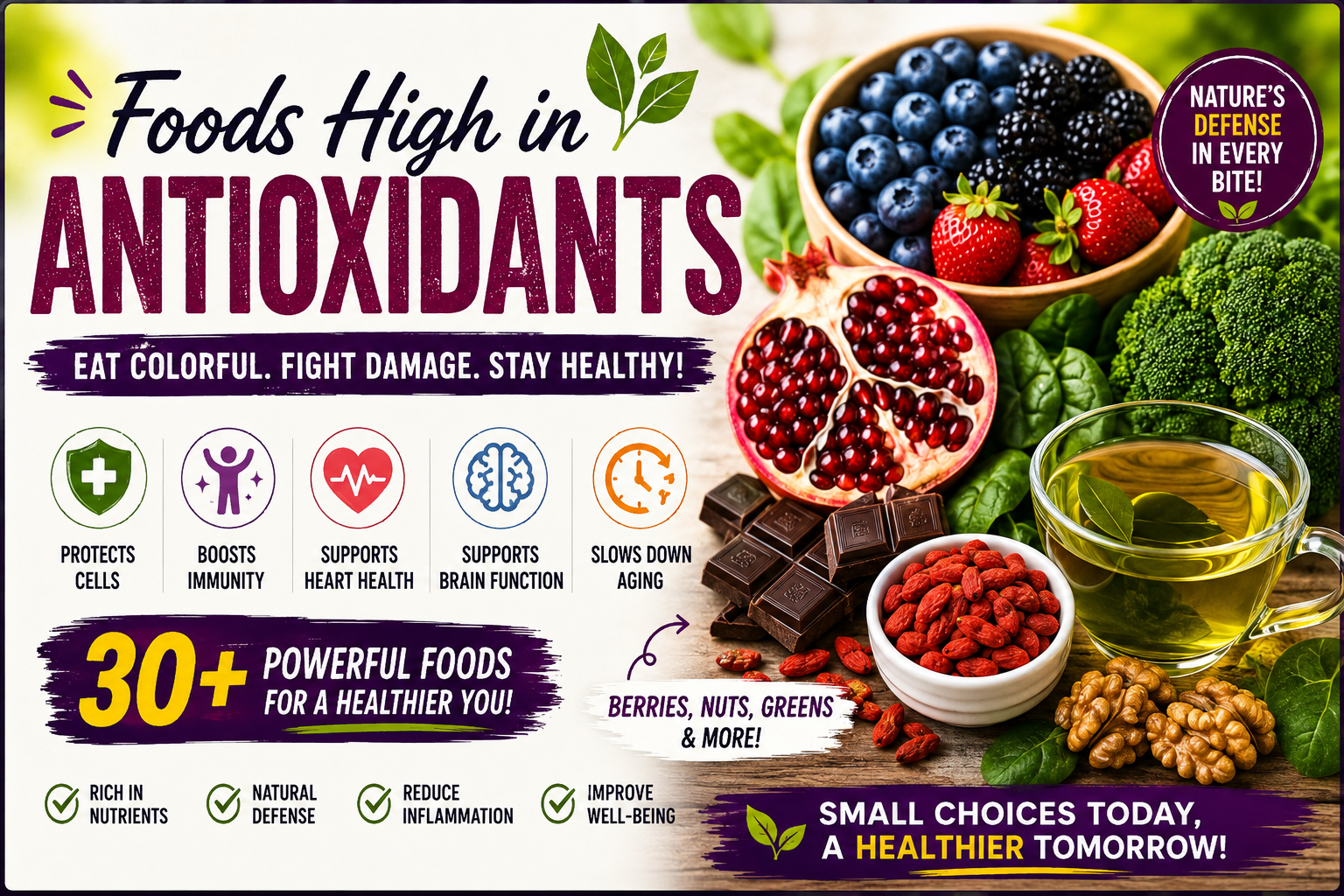
Antioxidants are naturally occurring compounds found in many fruits, vegetables, nuts, seeds, legumes, beverages, and other plant foods. They help protect cells from oxidative stress caused by unstable molecules known as free radicals.
You don’t need to buy expensive “antioxidant” supplements to include more antioxidants in your diet. In fact, one of the simplest approaches is to eat a wide variety of colorful whole foods.
From berries and dark leafy greens to beans, nuts, cocoa, and green tea, there are plenty of everyday options.
This guide explores some of the best foods high in antioxidants, how to include them in meals, and practical ways to make your diet more antioxidant-rich.
What Are Antioxidants?
Antioxidants are substances that help protect cells from oxidative damage.
Your body naturally produces free radicals during normal processes such as metabolism. Environmental factors can also contribute to oxidative stress.
Antioxidants interact with these compounds and help maintain balance in the body.
Several nutrients and plant compounds have antioxidant properties, including:
- Vitamin C
- Vitamin E
- Carotenoids
- Selenium
- Polyphenols
- Flavonoids
- Anthocyanins
Different foods contain different combinations of these compounds.
That’s why eating a variety of foods is more useful than trying to get all your antioxidants from one “superfood.”
1. Blueberries
Blueberries are one of the easiest antioxidant-rich foods to add to your diet.
Their deep blue-purple color comes largely from naturally occurring compounds called anthocyanins.
You can enjoy blueberries:
- Fresh
- Frozen
- With plain yogurt
- In oatmeal
- In smoothies
- With chia seeds
Frozen blueberries are particularly convenient because they can be stored for longer and added directly to smoothies or breakfast bowls.
Easy idea
Combine blueberries with plain Greek yogurt, walnuts, and chia seeds for a simple breakfast or snack.
2. Strawberries
Strawberries are rich in vitamin C and contain several plant compounds.
They’re also easy to incorporate into meals without much preparation.
Try sliced strawberries with:
- Oatmeal
- Greek yogurt
- Cottage cheese
- Whole-grain cereal
- Smoothies
For a simple snack, combine strawberries with a handful of nuts.
3. Blackberries
Blackberries contain anthocyanins and other naturally occurring plant compounds.
Their combination of sweetness and fiber makes them a useful addition to breakfast or snacks.
Try them with:
- Oats
- Yogurt
- Chia pudding
- Smoothies
- Fruit salads
Fresh and frozen blackberries can both be useful options.
4. Raspberries
Raspberries are another berry worth adding to your rotation.
They provide fiber along with vitamin C and various plant compounds.
Instead of eating the same fruit every day, rotate raspberries with blueberries, strawberries, and blackberries.
This simple habit increases variety without requiring major changes to your diet.
5. Pomegranate
Pomegranate contains polyphenols and other antioxidant compounds.
The easiest way to use it is to add the seeds to foods you already eat.
Try pomegranate seeds on:
- Greek yogurt
- Oatmeal
- Salads
- Grain bowls
- Fruit salads
The bright color also makes meals more visually appealing.
6. Red Grapes
Red and purple grapes contain polyphenols, including compounds found in their skins.
Whole grapes are an easy snack because they require little preparation.
You can also freeze grapes for a refreshing snack.
Choose whole grapes more often than grape-flavored products or sugary drinks.
7. Cherries
Cherries contain anthocyanins and other plant compounds.
Fresh cherries can be eaten on their own, while frozen cherries work well in smoothies and yogurt bowls.
Try combining cherries with:
- Plain yogurt
- Oats
- Almonds
- Chia seeds
8. Oranges
Oranges are well known for their vitamin C content.
Vitamin C is an important antioxidant nutrient that also supports normal immune function and collagen production.
Instead of drinking orange juice every time, include the whole orange when possible.
The whole fruit provides fiber and takes longer to consume.
9. Kiwi
Kiwi provides vitamin C along with other nutrients and plant compounds.
Slice it over oatmeal or yogurt, or add it to a fruit bowl.
A colorful breakfast containing kiwi, berries, and seeds can provide several different types of antioxidant compounds.
10. Red Apples
Apples contain several plant compounds, particularly in and near the skin.
If you enjoy the skin and it has been properly washed, eating the whole apple can help you get more of the fruit’s naturally occurring compounds.
Easy combinations include:
Apple + peanut butter
Apple + walnuts
Apple + Greek yogurt
These combinations can make a simple fruit snack more filling.
11. Dark Leafy Greens
Dark leafy greens such as spinach, kale, and Swiss chard provide carotenoids, vitamin C, vitamin E, and other nutrients.
Instead of treating leafy greens as a side dish you have to force yourself to eat, incorporate them into meals.
Add them to:
- Omelets
- Soups
- Wraps
- Sandwiches
- Grain bowls
- Smoothies
12. Spinach
Spinach is particularly versatile because it works in both raw and cooked dishes.
A handful can disappear into:
- Scrambled eggs
- Pasta dishes
- Smoothies
- Soups
- Stir-fries
This makes spinach one of the easiest vegetables for increasing your intake of nutrient-rich foods.
13. Kale
Kale provides carotenoids, vitamin C, vitamin K, and other nutrients.
If raw kale seems too tough, try cooking it lightly or massaging it with dressing before adding it to a salad.
You can also combine chopped kale with:
- Chickpeas
- Tomatoes
- Avocado
- Pumpkin seeds
for a more substantial meal.
14. Broccoli
Broccoli is a cruciferous vegetable containing vitamin C, carotenoids, and other plant compounds.
Steaming, roasting, or lightly sautéing broccoli can make it easier to incorporate into regular meals.
Try roasted broccoli alongside:
- Salmon
- Chicken
- Lentils
- Brown rice
- Quinoa
15. Red Bell Peppers
Red bell peppers are particularly rich in vitamin C and carotenoid pigments.
Their natural sweetness makes them useful in salads, wraps, stir-fries, and roasted vegetable dishes.
For a quick snack, slice them and serve with hummus.
16. Tomatoes
Tomatoes contain several plant compounds, including the carotenoid lycopene.
Interestingly, cooking tomatoes can increase the amount of lycopene that the body can absorb.
Try tomatoes in:
- Soups
- Sauces
- Salads
- Omelets
- Grain bowls
Tomato-based sauces can therefore be a useful way to include antioxidant-rich plant foods in everyday meals.
17. Carrots
Carrots are rich in carotenoids, particularly beta-carotene.
Their natural sweetness makes them easy to use as both a snack and a meal ingredient.
Try:
- Raw carrots with hummus
- Roasted carrots
- Carrot soup
- Grated carrots in salads
- Carrots added to stir-fries
18. Sweet Potatoes
Sweet potatoes provide beta-carotene along with fiber and other nutrients.
Their naturally sweet flavor works well in both savory and slightly sweet meals.
Try roasted sweet potato with:
- Black beans
- Spinach
- Avocado
- Pumpkin seeds
This creates a filling plant-based bowl with multiple nutrient sources.
19. Purple Cabbage
Purple cabbage gets its striking color from anthocyanin pigments.
It can add both texture and color to meals.
Use shredded purple cabbage in:
- Salads
- Slaws
- Tacos
- Wraps
- Grain bowls
It’s particularly useful when you want to make an ordinary meal more colorful.
20. Beets
Beets contain naturally occurring compounds called betalains, which give them their distinctive red-purple color.
They can be:
- Roasted
- Boiled
- Added to salads
- Blended into dips
- Combined with leafy greens
Pair roasted beets with goat cheese, walnuts, and leafy greens for a flavorful salad.
21. Red Onions
Red onions contain flavonoids and other plant compounds.
They can add flavor without requiring heavy sauces.
Try them raw in salads or cook them into:
- Bean dishes
- Omelets
- Stir-fries
- Vegetable soups
22. Garlic
Garlic contains sulfur-containing compounds and can add significant flavor to meals.
Rather than thinking of garlic as a supplement, use it as a regular cooking ingredient.
Add it to:
- Roasted vegetables
- Lentils
- Beans
- Chicken
- Fish
- Tomato sauces
23. Green Tea
Green tea contains polyphenols called catechins.
Unsweetened green tea can be an easy way to include plant compounds without adding significant calories.
You can enjoy it:
- Hot
- Chilled
- With lemon
- Alongside a meal
If caffeine affects your sleep, avoid drinking caffeinated tea close to bedtime.
24. Unsweetened Cocoa Powder
Cocoa contains polyphenols, including flavanols.
Use unsweetened cocoa powder rather than relying on highly sugary chocolate drinks.
Add a small amount to:
- Oatmeal
- Smoothies
- Yogurt
- Chia pudding
It can provide a rich chocolate flavor without requiring large amounts of added sugar.
25. Dark Chocolate
Dark chocolate contains cocoa polyphenols, although nutritional quality varies substantially between products.
A higher-cocoa product generally contains more cocoa solids than milk chocolate, but it can still contain significant calories, saturated fat, and added sugar.
Think of dark chocolate as an occasional food that can fit into a balanced diet, rather than something to eat in unlimited quantities simply because it contains antioxidants.
26. Walnuts
Walnuts provide vitamin E, polyphenols, and healthy unsaturated fats.
They are particularly convenient because they can be eaten without cooking.
Try a small portion with:
- Apple
- Berries
- Oatmeal
- Greek yogurt
27. Pecans
Pecans contain polyphenols and unsaturated fats.
Use them as a topping for oatmeal or yogurt, or combine them with fruit for a simple snack.
Because nuts are energy-dense, a moderate portion is usually sufficient.
28. Almonds
Almonds provide vitamin E, an antioxidant nutrient, along with protein, fiber, and unsaturated fats.
Keep a small portion available as a convenient snack.
You can also add chopped almonds to:
- Oatmeal
- Salads
- Yogurt
- Smoothies
29. Pistachios
Pistachios contain polyphenols, carotenoids, protein, fiber, and unsaturated fats.
They can be eaten on their own or added to meals.
Choosing unsalted or lightly salted pistachios can help keep sodium intake lower.
30. Peanuts
Peanuts contain several antioxidant-related compounds, including vitamin E and polyphenols.
Although peanuts are technically legumes, they are commonly grouped with nuts because of how they are eaten.
Choose minimally processed peanuts or natural peanut butter when practical.
Why Color Matters When Choosing Antioxidant Foods
One of the easiest ways to increase dietary variety is to eat more colors.
Different pigments in plant foods are associated with different compounds.
🔵 Blue and Purple
Examples:
- Blueberries
- Blackberries
- Purple cabbage
- Pomegranate
These foods contain compounds such as anthocyanins.
🔴 Red
Examples:
- Tomatoes
- Red peppers
- Red grapes
- Watermelon
These foods can provide compounds such as lycopene and other polyphenols.
🟠 Orange and Yellow
Examples:
- Carrots
- Sweet potatoes
- Oranges
- Pumpkin
These foods commonly provide carotenoids and vitamin C.
🟢 Green
Examples:
- Spinach
- Kale
- Broccoli
- Green tea
These provide a range of vitamins, minerals, carotenoids, and polyphenols.
The goal isn’t to memorize every antioxidant compound.
Simply making your plate more colorful is a practical way to increase dietary variety.
Are Antioxidant Foods Better Than Antioxidant Supplements?
Not necessarily.
Whole foods provide a combination of nutrients, fiber, water, and plant compounds that isolated supplements don’t necessarily reproduce.
For most people, the first strategy should be to build a varied diet containing plenty of fruits, vegetables, legumes, whole grains, nuts, seeds, and other minimally processed foods.
Supplements can also have risks, particularly when taken in high doses or combined with medications.
If you’re considering antioxidant supplements, discuss them with a qualified healthcare professional rather than assuming that more antioxidants are always better.
How to Eat More Antioxidants Every Day
You don’t need to completely change your diet.
Try a few simple upgrades.
Breakfast
Add berries, chia seeds, walnuts, or cocoa to oatmeal or yogurt.
Lunch
Add spinach, tomatoes, red cabbage, or peppers to sandwiches and salads.
Snack
Choose fruit with a small portion of nuts.
Dinner
Include at least one colorful vegetable with your main meal.
Beverage
Replace some sugary drinks with water or unsweetened tea.
These small changes can increase the variety of antioxidant-containing foods in your diet without making meals complicated.
Some of the most useful antioxidant-rich foods to include in your diet are:
- Blueberries
- Strawberries
- Blackberries
- Raspberries
- Pomegranate
- Red grapes
- Cherries
- Oranges
- Kiwi
- Apples
- Spinach
- Kale
- Broccoli
- Red bell peppers
- Tomatoes
- Carrots
- Sweet potatoes
- Purple cabbage
- Beets
- Red onions
- Garlic
- Green tea
- Unsweetened cocoa
- Dark chocolate
- Walnuts
- Pecans
- Almonds
- Pistachios
- Peanuts
Fruits and vegetables get most of the attention when people talk about antioxidants, but they’re not the only sources.
Beans, spices, herbs, seeds, whole grains, tea, coffee, and some other everyday foods also contain naturally occurring antioxidant compounds.
The important point is not to chase one particular antioxidant. Instead, aim for a varied diet that regularly includes different plant foods.
31. Black Beans
Black beans provide fiber, plant protein, minerals, and various polyphenols.
They’re particularly useful because they’re inexpensive and easy to combine with other nutritious foods.
Try black beans in:
- Burrito bowls
- Tacos
- Salads
- Soups
- Grain bowls
Easy combination
Brown rice + black beans + tomatoes + avocado + red cabbage creates a colorful, fiber-rich meal.
32. Kidney Beans
Kidney beans contain polyphenols and other plant compounds along with protein and fiber.
Use them in:
- Chili
- Bean salads
- Soups
- Rice dishes
If using canned kidney beans, drain and rinse them before eating.
33. Chickpeas
Chickpeas are a versatile legume containing protein, fiber, minerals, and plant compounds.
You can turn them into:
- Hummus
- Salads
- Curries
- Soups
- Roasted snacks
Roasted chickpeas can be seasoned with paprika, garlic, and black pepper for a crunchy snack.
34. Lentils
Lentils are an affordable source of plant protein and fiber.
They also contain various polyphenols.
Try lentils in:
- Soups
- Curries
- Salads
- Grain bowls
- Vegetable stews
Because they cook relatively quickly compared with many dried beans, lentils are particularly useful for weeknight meals.
35. Soybeans
Soybeans contain isoflavones, a type of plant compound belonging to the polyphenol family.
Soy foods can include:
- Edamame
- Tofu
- Tempeh
- Soy milk
Choose minimally processed soy foods when possible.
36. Flaxseeds
Flaxseeds provide lignans, fiber, and alpha-linolenic acid, a plant-based omega-3 fatty acid.
Ground flaxseed is generally easier to incorporate into meals.
Add it to:
- Oatmeal
- Yogurt
- Smoothies
- Homemade energy bites
37. Chia Seeds
Chia seeds provide fiber, minerals, and plant compounds.
They are particularly easy to use because they don’t require grinding.
Add them to:
- Oatmeal
- Smoothies
- Yogurt
- Chia pudding
38. Pumpkin Seeds
Pumpkin seeds provide vitamin E, minerals, healthy fats, and other plant compounds.
Try them as a crunchy topping for:
- Salads
- Soups
- Oatmeal
- Yogurt
- Roasted vegetables
39. Sunflower Seeds
Sunflower seeds are a convenient source of vitamin E and other nutrients.
Use a small portion as a topping for salads, oatmeal, or homemade trail mix.
Choose unsalted varieties if you’re trying to reduce sodium.
40. Sesame Seeds
Sesame seeds contain lignans and other naturally occurring compounds.
They can add flavor and texture to:
- Stir-fries
- Salads
- Rice bowls
- Homemade dressings
Tahini, which is made from ground sesame seeds, is another useful way to include them.
41. Extra-Virgin Olive Oil
Extra-virgin olive oil contains polyphenols and predominantly monounsaturated fat.
It works especially well as a dressing for vegetables and salads.
Try mixing:
Olive oil + lemon juice + garlic + black pepper
for a simple homemade dressing.
42. Green Tea
Green tea is particularly notable for its catechin content.
One of the easiest ways to include it is simply to replace some sugary drinks with unsweetened green tea.
You can drink it:
- Hot
- Iced
- With lemon
- With mint
43. Black Tea
Black tea also contains polyphenols, although its specific composition differs from green tea because of the processing involved.
Drink it unsweetened or with minimal added sugar.
44. Coffee
Coffee contains numerous naturally occurring polyphenols.
For many adults, plain coffee can be a significant source of dietary antioxidants.
However, adding large amounts of sugar, syrups, or cream can substantially change the nutritional profile of the drink.
45. Cinnamon
Cinnamon contains polyphenolic compounds and can add strong flavor without requiring sugar.
Use it in:
- Oatmeal
- Yogurt
- Smoothies
- Baked apples
- Chia pudding
A small amount can go a long way.
46. Turmeric
Turmeric contains curcuminoids, including curcumin.
It is commonly used in South Asian and Middle Eastern cooking.
Add turmeric to:
- Lentil dishes
- Vegetable curries
- Soups
- Rice dishes
- Egg dishes
Rather than relying on turmeric supplements, using it as a culinary spice is a simple way to incorporate it into meals.
47. Ginger
Ginger contains several bioactive compounds and can add a strong flavor to both food and beverages.
Use fresh ginger in:
- Stir-fries
- Soups
- Curries
- Tea
- Smoothies
48. Cloves
Cloves contain high concentrations of certain polyphenolic compounds.
Because cloves have an intense flavor, small culinary amounts are generally enough.
Use them in:
- Tea
- Oatmeal
- Spice blends
- Baked fruit
49. Oregano
Oregano contains plant compounds with antioxidant activity.
Fresh or dried oregano can make vegetables, beans, fish, chicken, and tomato dishes more flavorful.
50. Rosemary
Rosemary contains several aromatic plant compounds.
Use it to season:
- Potatoes
- Chicken
- Fish
- Vegetables
- Soups
Herbs and spices can make healthy food more enjoyable without requiring large amounts of salt.
51. Dark Chocolate With High Cocoa Content
Dark chocolate can contain flavanols and other cocoa polyphenols.
However, it should not be treated like a free-pass health food.
Chocolate can still contain:
- Added sugar
- Saturated fat
- Significant calories
If you enjoy it, a small portion of a higher-cocoa product can fit into an overall balanced eating pattern.
52. Unsweetened Cocoa
Cocoa powder can be one of the easiest ways to add cocoa polyphenols to everyday foods.
Try mixing it into:
- Oatmeal
- Greek yogurt
- Smoothies
- Chia pudding
Choose unsweetened cocoa powder rather than sweetened chocolate drink mixes.
53. Whole-Grain Oats
Oats contain polyphenols called avenanthramides.
They also provide beta-glucan, a type of soluble fiber.
Make oatmeal more antioxidant-rich by adding:
Oats + blueberries + walnuts + chia seeds
This combines several different nutrient sources in one meal.
54. Whole-Grain Barley
Barley contains fiber and various plant compounds.
Use it as an alternative to rice in:
- Soups
- Grain bowls
- Salads
- Vegetable dishes
55. Quinoa
Quinoa provides protein, fiber, minerals, and plant compounds.
Use it as a base for meals containing colorful vegetables and legumes.
56. Buckwheat
Despite its name, buckwheat is not wheat.
It contains rutin and other plant compounds and can be used in:
- Porridge
- Pancakes
- Grain bowls
- Noodle dishes
57. Avocado
Avocado provides vitamin E, carotenoids, fiber, and mostly unsaturated fats.
One useful feature is that its fats can help your body absorb fat-soluble compounds from other foods.
Try avocado with:
- Tomatoes
- Spinach
- Eggs
- Beans
- Whole-grain toast
58. Artichokes
Artichokes contain fiber and a variety of plant compounds.
They can be steamed, roasted, or added to salads and vegetable dishes.
59. Red Leaf Lettuce
Red and purple leafy lettuces contain pigments that contribute to their antioxidant properties.
Use them as the base of salads instead of relying on one type of lettuce every day.
60. Pumpkin
Pumpkin provides carotenoids, particularly beta-carotene.
Use plain pumpkin in:
- Soups
- Oatmeal
- Smoothies
- Curries
When buying canned pumpkin, choose plain pumpkin rather than sweetened pie filling.
The Best Antioxidant Foods Are Not Necessarily Exotic
A common misconception is that you need expensive powders, berries, or imported “superfoods” to eat an antioxidant-rich diet.
You don’t.
Many affordable foods contain antioxidant compounds.
Budget-Friendly Choices
- Beans
- Lentils
- Cabbage
- Carrots
- Onions
- Garlic
- Apples
- Bananas
- Oats
- Green tea
- Peanuts
- Tomatoes
- Frozen berries
Frozen produce can also be useful when fresh produce is expensive or difficult to store.
Fresh vs. Frozen Antioxidant Foods
Frozen fruits and vegetables can be a practical choice.
Freezing can preserve many nutrients, and frozen produce can often be stored for weeks or months.
Consider keeping these in your freezer:
- Blueberries
- Strawberries
- Raspberries
- Spinach
- Broccoli
- Peas
- Cherries
- Mixed vegetables
This makes it easier to add plant foods to meals even when fresh produce isn’t available.
How to Build an Antioxidant-Rich Plate
Instead of counting antioxidants, use a simple visual approach.
Step 1: Add a Colorful Vegetable
Choose:
- Broccoli
- Spinach
- Red peppers
- Tomatoes
- Purple cabbage
- Carrots
Step 2: Add a Protein Source
Choose:
- Beans
- Lentils
- Fish
- Eggs
- Chicken
- Tofu
Step 3: Add a High-Fiber Carbohydrate
Choose:
- Oats
- Brown rice
- Quinoa
- Barley
- Sweet potato
Step 4: Add a Healthy Fat
Choose:
- Avocado
- Nuts
- Seeds
- Olive oil
This approach naturally creates a diverse meal without needing to calculate individual antioxidant levels.
Antioxidant-Rich Snack Ideas
If you’re looking for simple snacks, try these combinations.
Snack 1
Blueberries + walnuts
Snack 2
Apple + natural peanut butter
Snack 3
Carrots + hummus
Snack 4
Greek yogurt + strawberries + chia seeds
Snack 5
Red bell pepper + hummus
Snack 6
Small portion of dark chocolate + almonds
Snack 7
Pomegranate seeds + plain yogurt
Snack 8
Air-popped popcorn + unsweetened green tea
The best snack is one that fits your hunger level, dietary needs, and daily routine.
Antioxidant-Rich Breakfast Ideas
Breakfast is an easy place to add colorful foods.
Berry Oatmeal
Combine:
- Oats
- Blueberries
- Raspberries
- Chia seeds
- Walnuts
Green Smoothie
Blend:
- Spinach
- Kiwi
- Berries
- Plain yogurt
- Chia seeds
Yogurt Bowl
Combine:
- Greek yogurt
- Strawberries
- Pomegranate seeds
- Pumpkin seeds
Cocoa Oatmeal
Mix:
- Oats
- Unsweetened cocoa
- Banana
- Walnuts
- Cinnamon
These combinations provide different foods rather than relying on one supposed “superfood.”
Antioxidant-Rich Dinner Ideas
Salmon Vegetable Bowl
Combine:
- Salmon
- Broccoli
- Brown rice
- Red cabbage
- Avocado
Lentil Tomato Bowl
Combine:
- Lentils
- Tomatoes
- Spinach
- Brown rice
- Olive oil
Chickpea Vegetable Bowl
Combine:
- Chickpeas
- Roasted carrots
- Purple cabbage
- Quinoa
- Tahini dressing
Tofu Stir-Fry
Combine:
- Tofu
- Broccoli
- Red peppers
- Mushrooms
- Brown rice
- Sesame seeds
The combination of different colors and food groups is more useful than focusing on a single antioxidant.
What Can Reduce the Nutritional Value of an Otherwise Healthy Food?
Preparation matters.
A nutritious ingredient can become part of a less balanced meal when large amounts of added sugar, salt, or unhealthy fats are introduced.
For example:
Plain berries → nutritious choice
Berries covered in large amounts of added sugar → very different food
Similarly:
Plain nuts → nutrient-dense
Nuts heavily coated in sugar or salt → less ideal as an everyday snack
The goal isn’t to avoid every processed food. It’s to make minimally processed foods the foundation of your eating pattern.
Should You Eat Antioxidant Foods Every Day?
You don’t need to eat every antioxidant-rich food every day.
Instead, aim for regular variety.
For example:
Monday: berries + spinach + walnuts
Tuesday: tomatoes + beans + green tea
Wednesday: broccoli + lentils + oranges
Thursday: purple cabbage + blueberries + almonds
Friday: carrots + chickpeas + cocoa
Different foods provide different compounds, so rotating them can be more useful than repeatedly eating one food.
Antioxidant Food Combinations
Some foods naturally work well together.
Berries + Yogurt
Fruit provides plant compounds while yogurt adds protein.
Tomatoes + Olive Oil
Adding a source of fat can help absorption of fat-soluble carotenoids such as lycopene.
Spinach + Avocado
Combining leafy greens with a source of healthy fat can support absorption of certain carotenoids.
Beans + Tomatoes
This combination works well in soups, stews, and grain bowls.
Oats + Berries + Nuts
A simple breakfast containing whole grains, fruit, and nuts.
Antioxidant-rich eating doesn’t require expensive supplements or exotic ingredients.
Some of the most useful foods are ordinary staples:
- Beans
- Lentils
- Chickpeas
- Soy foods
- Flaxseeds
- Chia seeds
- Pumpkin seeds
- Sunflower seeds
- Sesame seeds
- Olive oil
- Green tea
- Black tea
- Coffee
- Cinnamon
- Turmeric
- Ginger
- Oregano
- Rosemary
- Oats
- Barley
- Quinoa
- Buckwheat
- Avocado
- Artichokes
- Pumpkin
The biggest strategy is simple:
Eat a wider variety of colorful plant foods throughout the week.
By now, you have seen that antioxidant-rich foods are not limited to berries or expensive superfoods. A wide range of everyday ingredients can contribute plant compounds and antioxidant nutrients to your diet.
The easiest strategy is to eat a diverse selection of fruits, vegetables, legumes, whole grains, nuts, seeds, herbs, spices, and unsweetened beverages.
Antioxidant Foods by Nutrient and Plant Compound
Different antioxidant foods contain different nutrients and plant compounds. Instead of looking for one “best” antioxidant food, consider including several categories throughout the week.
Foods High in Vitamin C
Vitamin C is an antioxidant nutrient found in many fruits and vegetables.
Good sources include:
- Oranges
- Kiwi
- Strawberries
- Bell peppers
- Broccoli
- Guava
- Tomatoes
- Papaya
- Brussels sprouts
Adding fruit or vegetables to several meals throughout the day is an easy way to increase vitamin C intake.
Foods Rich in Vitamin E
Vitamin E is another antioxidant nutrient.
Foods that provide vitamin E include:
- Almonds
- Sunflower seeds
- Peanuts
- Avocado
- Spinach
- Pumpkin seeds
- Hazelnuts
Nuts and seeds are nutrient-dense, so you generally don’t need a large amount to enjoy them as part of a balanced diet.
Foods Rich in Carotenoids
Carotenoids are pigments found in many yellow, orange, red, and green plant foods.
Examples include:
- Carrots
- Sweet potatoes
- Pumpkin
- Spinach
- Kale
- Tomatoes
- Red peppers
- Mangoes
- Papaya
One practical strategy is to regularly include colorful vegetables and fruits rather than focusing on a single carotenoid.
Foods Rich in Polyphenols
Polyphenols are a large family of naturally occurring plant compounds.
Foods and beverages containing various polyphenols include:
- Berries
- Apples
- Grapes
- Pomegranate
- Cocoa
- Green tea
- Black tea
- Coffee
- Olives
- Extra-virgin olive oil
- Beans
- Lentils
- Herbs
- Spices
This is another reason dietary variety matters.
Foods Rich in Anthocyanins
Anthocyanins are pigments responsible for many blue, purple, and red colors in plants.
Examples include:
- Blueberries
- Blackberries
- Raspberries
- Cherries
- Purple cabbage
- Black grapes
- Pomegranate
- Red cabbage
An easy way to increase variety is to include at least one deeply colored fruit or vegetable during the day.
Foods Rich in Lycopene
Lycopene is a carotenoid commonly associated with red-colored foods.
Important dietary sources include:
- Tomatoes
- Tomato sauce
- Tomato paste
- Watermelon
- Pink grapefruit
- Guava
Tomato products are particularly interesting because cooking and processing can increase the amount of lycopene available for absorption.
Foods Rich in Flavonoids
Flavonoids are a broad group of plant compounds found in many everyday foods.
Sources include:
- Apples
- Berries
- Citrus fruits
- Tea
- Cocoa
- Onions
- Grapes
- Certain herbs and vegetables
Eating different plant foods is a practical way to increase exposure to different flavonoids.
A 7-Day Antioxidant-Rich Eating Plan
You don’t need to eat every food on this list. The following plan demonstrates how you can rotate different foods throughout the week.
Day 1
Breakfast: Oatmeal with blueberries, chia seeds, walnuts, and cinnamon
Lunch: Lentil salad with spinach, tomatoes, cucumber, and olive oil
Snack: Apple with a small portion of almonds
Dinner: Salmon with broccoli, sweet potato, and purple cabbage
Drink: Unsweetened green tea
Day 2
Breakfast: Greek yogurt with strawberries, pomegranate seeds, and pumpkin seeds
Lunch: Black bean bowl with brown rice, red peppers, tomatoes, and avocado
Snack: Carrots with hummus
Dinner: Chicken with quinoa and roasted vegetables
Day 3
Breakfast: Whole-grain toast with avocado and eggs
Lunch: Chickpea and spinach salad with tomatoes
Snack: Kiwi and walnuts
Dinner: Lentil curry with brown rice and broccoli
Drink: Unsweetened tea
Day 4
Breakfast: Cocoa oatmeal with banana, chia seeds, and walnuts
Lunch: Tuna salad with leafy greens, red onion, tomatoes, and avocado
Snack: Blueberries with plain Greek yogurt
Dinner: Tofu stir-fry with red peppers, broccoli, mushrooms, and brown rice
Day 5
Breakfast: Smoothie with spinach, berries, kiwi, plain yogurt, and flaxseed
Lunch: Quinoa bowl with black beans, purple cabbage, carrots, and avocado
Snack: Apple with natural peanut butter
Dinner: Baked fish with roasted sweet potato and green vegetables
Day 6
Breakfast: Oatmeal with raspberries, pumpkin seeds, cinnamon, and almonds
Lunch: Tomato and lentil soup with whole-grain bread
Snack: Small portion of dark chocolate with pistachios
Dinner: Chicken and vegetable bowl with quinoa
Drink: Green tea
Day 7
Breakfast: Greek yogurt with blackberries, strawberries, chia seeds, and walnuts
Lunch: Chickpea and avocado salad with colorful vegetables
Snack: Orange and a small handful of peanuts
Dinner: Salmon with roasted carrots, broccoli, and brown rice
This type of rotation gives you a much broader selection of plant foods than eating the same “antioxidant superfood” every day.
How to Make Your Grocery List More Antioxidant-Rich
A simple shopping strategy can make healthy eating much easier.
Choose 3–5 Fruits
For example:
- Blueberries
- Apples
- Oranges
- Strawberries
- Kiwi
Fresh or frozen can both work.
Choose 5–7 Vegetables
Include different colors:
- Spinach
- Broccoli
- Carrots
- Tomatoes
- Red peppers
- Purple cabbage
- Sweet potatoes
Choose 2–3 Legumes
- Lentils
- Chickpeas
- Black beans
Choose 2–3 Nuts or Seeds
- Walnuts
- Almonds
- Chia seeds
Add Flavor
Keep:
- Garlic
- Ginger
- Turmeric
- Cinnamon
- Oregano
- Rosemary
Choose a Beverage
- Green tea
- Black tea
- Coffee
Prefer unsweetened versions when possible.
A Simple Antioxidant Shopping Formula
If you don’t want to plan a detailed grocery list, use this formula:
2 colorful fruits + 3 colorful vegetables + 1 legume + 1 whole grain + 1 nut or seed + 1 herb/spice
Repeat this each week with different foods.
For example:
Week 1
Blueberries + oranges + spinach + tomatoes + broccoli + lentils + oats + walnuts + turmeric
Week 2
Strawberries + kiwi + carrots + purple cabbage + red peppers + chickpeas + quinoa + almonds + cinnamon
This keeps your diet varied without making grocery shopping complicated.
Common Mistakes When Eating for Antioxidants
Mistake 1: Focusing on One Superfood
Eating blueberries every day doesn’t replace eating vegetables, legumes, nuts, seeds, and other fruits.
Variety is more useful.
Mistake 2: Assuming More Is Always Better
Antioxidants are important, but taking very large amounts through supplements isn’t automatically beneficial.
Food should generally be the first source of nutrients for most people.
Mistake 3: Drinking Sugary “Antioxidant” Beverages
A drink may contain fruit extracts or antioxidants while also containing substantial added sugar.
Whole fruits are often a more practical choice.
Mistake 4: Ignoring Portion Size
Nuts, seeds, olive oil, avocado, and dark chocolate can be nutritious but relatively calorie-dense.
Healthy does not mean unlimited.
Mistake 5: Buying Expensive Superfoods
You don’t need exotic powders or expensive imported berries.
Beans, onions, cabbage, carrots, tomatoes, apples, oats, and tea can all contribute useful nutrients and plant compounds.
Mistake 6: Forgetting Frozen Foods
Frozen fruits and vegetables can be convenient and nutritious.
Keeping frozen berries and vegetables available can make it easier to eat more plants.
Do Cooking Methods Affect Antioxidants?
Yes, preparation can influence nutrient availability.
The effect depends on the food and compound.
Some nutrients are sensitive to prolonged heating, while cooking can make certain compounds easier for the body to absorb.
For example, cooking tomatoes can increase the bioavailability of lycopene.
Rather than worrying about finding one “perfect” cooking method, use a mixture of:
- Raw
- Steamed
- Roasted
- Stir-fried
- Lightly cooked
- Soups and stews
This naturally creates variety.
Are Raw Foods Always Higher in Antioxidants?
Not necessarily.
Some nutrients and plant compounds can decrease with certain types of cooking, while others can become more available.
For example, cooked tomatoes can provide more bioavailable lycopene than raw tomatoes.
The practical takeaway is simple:
Eat some plant foods raw and others cooked.
You don’t need to choose one method exclusively.
Are Antioxidants the Same as Vitamins?
No.
Some vitamins have antioxidant functions, such as vitamins C and E.
But antioxidants also include many other compounds, including plant polyphenols and carotenoids.
So the terms aren’t interchangeable.
A food can contain multiple antioxidant compounds at the same time.
Can Antioxidant Foods Support a Healthy Diet?
Yes.
Many antioxidant-rich foods are also excellent sources of:
- Fiber
- Vitamins
- Minerals
- Protein
- Healthy fats
- Water
- Other plant compounds
For example, berries provide more than antioxidants. They also contribute fiber and several vitamins and minerals.
Similarly, beans provide protein and fiber in addition to various plant compounds.
That’s why focusing on whole foods is generally more useful than chasing individual antioxidant numbers.
Frequently Asked Questions
What are the best foods high in antioxidants?
Some excellent choices include berries, pomegranate, grapes, leafy greens, broccoli, tomatoes, beans, lentils, nuts, seeds, cocoa, green tea, and many herbs and spices.
There is no single food that is universally the “best.”
Which fruit has the most antioxidants?
Different fruits contain different antioxidant compounds, so there isn’t one universally highest-antioxidant fruit.
Berries such as blueberries, blackberries, strawberries, and raspberries are popular choices because they contain a variety of plant compounds.
Are bananas high in antioxidants?
Bananas contain several nutrients and antioxidant-related compounds, but they are not usually considered among the most concentrated antioxidant fruits.
They can still be part of a varied, healthy diet.
Are apples high in antioxidants?
Apples contain polyphenols and other plant compounds, particularly in and near the skin.
Eating a whole, properly washed apple is an easy way to include fruit in your diet.
Are eggs high in antioxidants?
Eggs are nutritious and provide protein, vitamins, minerals, and some antioxidant-related nutrients, but they are not generally considered a major dietary source of polyphenol antioxidants.
Pairing eggs with vegetables such as spinach, tomatoes, or peppers creates a more antioxidant-rich meal.
Is green tea high in antioxidants?
Yes. Green tea contains polyphenols, particularly catechins.
Unsweetened green tea can be a convenient low-calorie beverage choice.
Is coffee high in antioxidants?
Coffee contains a variety of naturally occurring polyphenols and can contribute substantially to antioxidant intake for people who drink it.
Keep added sugar and high-calorie flavorings moderate.
Is dark chocolate high in antioxidants?
Dark chocolate containing a higher percentage of cocoa can provide cocoa flavanols and other polyphenols.
However, chocolate can also contain added sugar, saturated fat, and significant calories, so portion size matters.
Are nuts high in antioxidants?
Many nuts contain antioxidant-related nutrients and plant compounds.
Walnuts, almonds, pecans, peanuts, and pistachios can all fit into a balanced diet.
Are vegetables better than fruits for antioxidants?
Neither category is automatically better.
Fruits and vegetables contain different combinations of vitamins, minerals, carotenoids, polyphenols, and other compounds.
Eating both is the better strategy.
What vegetables are highest in antioxidants?
Some antioxidant-rich choices include:
- Spinach
- Kale
- Broccoli
- Red peppers
- Tomatoes
- Carrots
- Purple cabbage
- Beets
- Sweet potatoes
Different vegetables provide different compounds, so variety is important.
What are antioxidant-rich snacks?
Some simple options include:
- Berries with Greek yogurt
- Apple with peanut butter
- Carrots with hummus
- Nuts with fruit
- Pomegranate seeds with yogurt
- Dark chocolate with almonds
- Red peppers with hummus
What is the best antioxidant-rich breakfast?
A breakfast containing several plant foods can be a great option.
For example:
Oatmeal + blueberries + chia seeds + walnuts + cinnamon
This provides whole grains, fruit, seeds, nuts, fiber, and several naturally occurring plant compounds.
Do I need antioxidant supplements?
Most people should not assume that they need high-dose antioxidant supplements simply because antioxidants are important.
A varied diet can provide many antioxidant nutrients and plant compounds.
If you are considering supplements, especially if you take medications or have a specific health condition, speak with a healthcare professional first.
Final Thoughts
Eating more antioxidant-rich foods doesn’t have to involve complicated diets, expensive supplements, or exotic ingredients.
Start with foods that are already easy to find.
Add berries to breakfast.
Put colorful vegetables into lunch and dinner.
Eat beans and lentils regularly.
Keep nuts and seeds available for snacks.
Use herbs and spices to add flavor.
Drink unsweetened tea or coffee if you enjoy them.
And most importantly, rotate your foods.
A diet containing blueberries, spinach, tomatoes, beans, lentils, nuts, seeds, whole grains, herbs, spices, and many other plant foods provides much more variety than relying on one “superfood.”
The best approach isn’t to ask:
“Which food has the most antioxidants?”
A better question is:
“How can I eat a wider variety of nutritious plant foods every week?”
That simple change in thinking can make an antioxidant-rich diet much easier to maintain.
Quick List: 60+ Foods High in Antioxidants
Fruits
- Blueberries
- Strawberries
- Blackberries
- Raspberries
- Pomegranate
- Red grapes
- Cherries
- Oranges
- Kiwi
- Apples
- Guava
- Papaya
- Mango
- Watermelon
- Pink grapefruit
Vegetables
- Spinach
- Kale
- Broccoli
- Red bell peppers
- Tomatoes
- Carrots
- Sweet potatoes
- Purple cabbage
- Beets
- Red onions
- Garlic
- Pumpkin
- Artichokes
- Mushrooms
- Brussels sprouts
Beans & Legumes
- Black beans
- Kidney beans
- Chickpeas
- Lentils
- Soybeans
- Edamame
Nuts & Seeds
- Walnuts
- Pecans
- Almonds
- Pistachios
- Peanuts
- Flaxseeds
- Chia seeds
- Pumpkin seeds
- Sunflower seeds
- Sesame seeds
Whole Grains
- Oats
- Barley
- Quinoa
- Buckwheat
Beverages & Other Foods
- Green tea
- Black tea
- Coffee
- Unsweetened cocoa
- Dark chocolate
- Extra-virgin olive oil
- Cinnamon
- Turmeric
- Ginger
- Oregano
- Rosemary
Recommended Articles
- Best Superfoods
- Healthy Foods List
- High-Protein Snacks in the USA
- Healthy Snacks for Adults in the USA
- Healthy Snack Ideas
- Low-Calorie Healthy Snacks
- Healthy Evening Snacks
- Healthy Late Night Snacks
- Portion Control for Nuts
- Best Foods to Reduce Belly Fat

Leave a Reply