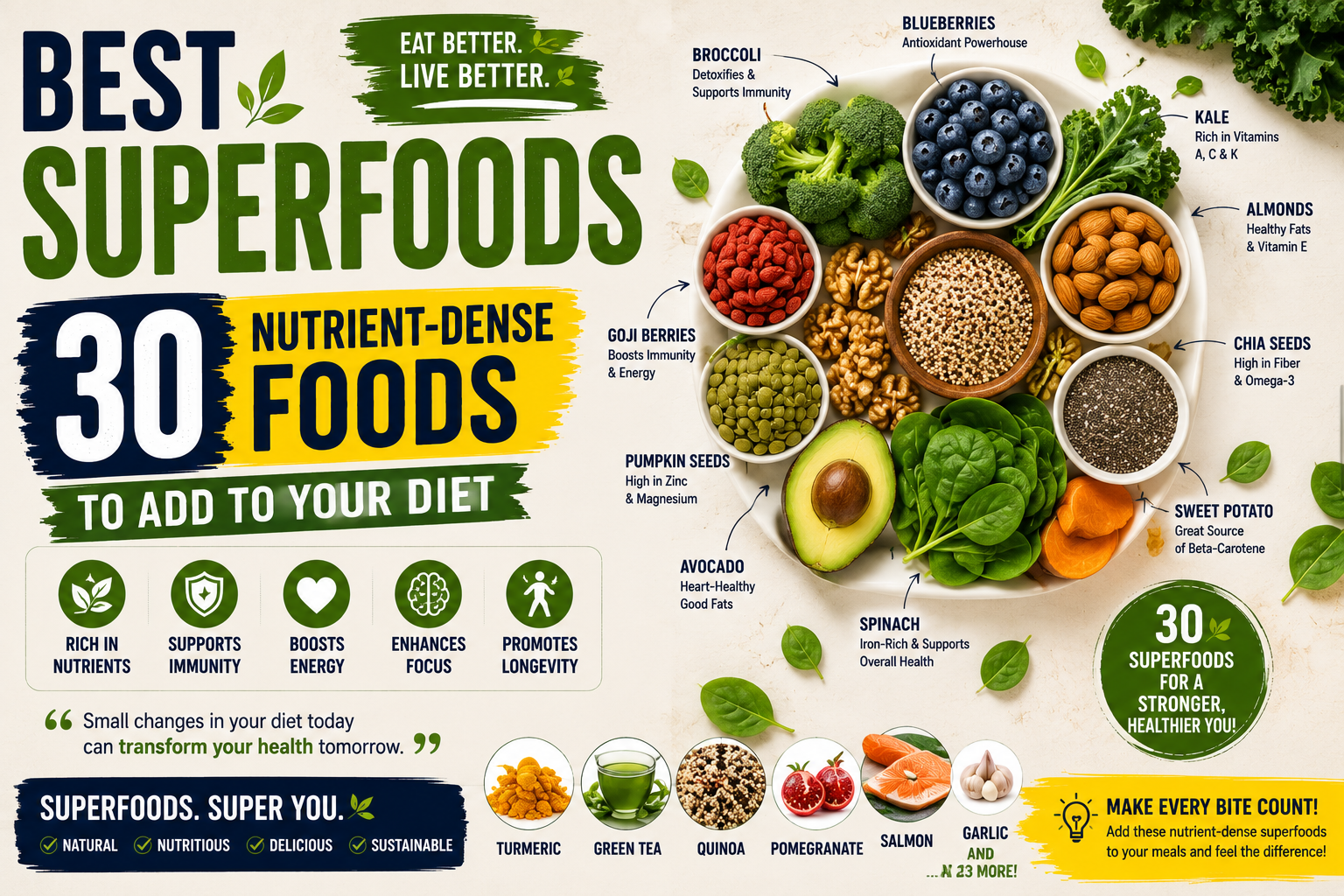
The term “superfood” is everywhere—from grocery-store labels to wellness blogs and social media. But what actually makes a food a superfood?
There is no official scientific category called “superfoods.” The term is generally used to describe foods that provide a high concentration of beneficial nutrients, such as vitamins, minerals, fiber, healthy fats, protein, antioxidants, or other naturally occurring compounds.
You don’t need expensive powders, exotic berries, or imported ingredients to eat a nutrient-rich diet. Many of the best foods are affordable staples that you can find at an ordinary supermarket.
From blueberries and spinach to walnuts, beans, salmon, oats, eggs, chia seeds, and sweet potatoes, there are plenty of practical choices.
This guide explores 30 nutrient-dense foods and explains how you can include them in everyday meals.
Important: No single food can provide everything your body needs. A varied diet containing different food groups is more important than focusing on individual “superfoods.”
What Are Superfoods?
“Superfood” is a popular nutrition term rather than a formal medical or scientific classification.
Foods commonly described this way tend to have one or more of the following characteristics:
- High nutrient content
- Fiber
- Protein
- Unsaturated fats
- Vitamins and minerals
- Antioxidants
- Naturally occurring plant compounds
For example, walnuts provide healthy fats and minerals, while berries provide fiber and various plant compounds.
The important point is that superfoods work as part of an overall healthy eating pattern.
Eating blueberries while consuming an otherwise unbalanced diet won’t magically make the entire diet healthy.
1. Blueberries
Blueberries are among the most popular foods associated with antioxidant-rich eating.
They provide:
- Fiber
- Vitamin C
- Vitamin K
- Manganese
- Various plant compounds
Their naturally sweet flavor makes them easy to add to meals without relying on heavily processed ingredients.
Easy Ways to Eat Blueberries
Add them to:
- Oatmeal
- Plain yogurt
- Smoothies
- Whole-grain cereal
- Salads
Frozen blueberries are also a convenient option and can be kept available throughout the year.
2. Spinach
Spinach is a leafy green vegetable packed with nutrients while being relatively low in calories.
It provides nutrients including:
- Folate
- Vitamin K
- Vitamin A
- Vitamin C
- Iron
- Magnesium
You don’t need to eat a huge salad every day to benefit from spinach.
Try It In
- Omelets
- Soups
- Smoothies
- Sandwiches
- Pasta
- Stir-fries
Baby spinach is particularly convenient because it requires little preparation.
3. Salmon
Salmon stands out because it provides high-quality protein along with omega-3 fatty acids.
It also provides nutrients such as:
- Vitamin B12
- Vitamin D
- Selenium
- Protein
Regularly including seafood in a balanced diet can help increase intake of important nutrients.
Simple Preparation
Bake salmon with:
- Lemon
- Garlic
- Black pepper
- Herbs
Serve it with vegetables and a whole grain for a balanced meal.
4. Walnuts
Walnuts are one of the most useful nuts to include in a nutrient-rich diet.
They provide:
- Unsaturated fats
- Plant protein
- Fiber
- Magnesium
- Copper
- Manganese
They also contain alpha-linolenic acid (ALA), a plant-based omega-3 fatty acid.
Easy Uses
Sprinkle chopped walnuts over:
- Oatmeal
- Yogurt
- Salads
- Roasted vegetables
Because nuts are energy-dense, portion size still matters.
5. Avocado
Avocado is technically a fruit, but it’s very different nutritionally from most sweet fruits.
It provides:
- Monounsaturated fat
- Fiber
- Folate
- Potassium
- Vitamin K
Its creamy texture makes it useful as an alternative to some spreads.
Try Avocado With
- Whole-grain toast
- Eggs
- Beans
- Salads
- Grain bowls
6. Eggs
Eggs are one of the most versatile nutrient-dense foods.
They provide:
- High-quality protein
- Choline
- Vitamin B12
- Selenium
- Riboflavin
The yolk contains many of the egg’s nutrients, so there’s no need to automatically discard it unless you have a specific dietary reason.
Beyond Breakfast
Use eggs in:
- Vegetable omelets
- Grain bowls
- Sandwiches
- Salads
- Snack boxes
7. Oats
Oats are a simple whole grain that can become the foundation of a nutritious breakfast or snack.
They provide:
- Carbohydrates
- Fiber
- Protein
- Magnesium
- Iron
- Zinc
Oats contain a type of soluble fiber called beta-glucan.
Make Oats More Nutrient-Dense
Combine oats with:
- Berries
- Walnuts
- Chia seeds
- Milk
- Plain yogurt
- Cinnamon
This creates a much more substantial meal than plain oats alone.
8. Chia Seeds
Tiny chia seeds pack several nutrients into a small serving.
They provide:
- Fiber
- Plant-based omega-3 ALA
- Protein
- Calcium
- Magnesium
- Manganese
When mixed with liquid, chia seeds absorb water and form a gel-like texture.
Easy Uses
Add them to:
- Overnight oats
- Yogurt
- Smoothies
- Chia pudding
- Homemade energy bites
A small amount can add texture and nutrients without changing the flavor dramatically.
9. Sweet Potatoes
Sweet potatoes provide carbohydrates, fiber, potassium, and beta-carotene.
Their naturally sweet flavor makes them useful in both savory and sweet dishes.
Try Them
- Baked
- Roasted
- Mashed
- Added to grain bowls
- Served with beans
For a simple meal, combine roasted sweet potato with black beans, avocado, and vegetables.
10. Broccoli
Broccoli is a member of the cruciferous vegetable family.
It provides:
- Vitamin C
- Vitamin K
- Folate
- Fiber
- Potassium
It also contains naturally occurring plant compounds found in cruciferous vegetables.
Make Broccoli More Interesting
Roast it with:
- Olive oil
- Garlic
- Black pepper
- Lemon
Roasting can give broccoli a completely different flavor compared with simply boiling it.
11. Greek Yogurt
Greek yogurt can be a convenient source of protein and calcium.
It can be eaten as a snack, breakfast ingredient, or base for savory sauces.
Better Combinations
Instead of heavily sweetened flavored yogurt, try plain Greek yogurt with:
- Fresh berries
- Walnuts
- Chia seeds
- Cinnamon
- Sliced fruit
Check the nutrition label because protein and added sugar levels vary between products.
12. Lentils
Lentils are one of the most useful plant-based staples for a nutrient-rich diet.
They provide:
- Plant protein
- Fiber
- Folate
- Iron
- Potassium
- Magnesium
They’re also inexpensive compared with many specialty health foods.
Use Lentils In
- Soups
- Salads
- Curries
- Grain bowls
- Vegetable patties
Cooked lentils can also be refrigerated and used throughout the week.
13. Almonds
Almonds provide a combination of:
- Unsaturated fats
- Protein
- Fiber
- Vitamin E
- Magnesium
A small portion can add crunch and nutrition to meals.
Try Them With
- Fruit
- Oatmeal
- Yogurt
- Salads
Choose unsalted or lightly salted almonds if you want to keep sodium lower.
14. Beans
Beans are an underrated superfood-style staple.
Black beans, kidney beans, chickpeas, pinto beans, and other varieties provide combinations of:
- Protein
- Fiber
- Folate
- Iron
- Potassium
- Magnesium
They’re also versatile enough to fit into many different cuisines.
Easy Uses
Add beans to:
- Tacos
- Soups
- Salads
- Rice bowls
- Wraps
Canned beans can save time. Rinse them before eating to reduce some of the sodium from the canning liquid.
15. Extra-Virgin Olive Oil
Extra-virgin olive oil isn’t typically eaten as a snack, but it can be an important part of a nutrient-rich eating pattern.
It provides mostly monounsaturated fat and contains various naturally occurring compounds.
Use It For
- Salad dressings
- Roasted vegetables
- Grain bowls
- Beans
- Fish
A little can add flavor and make vegetables more appealing.
Because it is calorie-dense, use an amount appropriate for your overall diet.
Superfoods Don’t Have to Be Exotic
One of the biggest misconceptions about superfoods is that they have to be unusual or expensive.
You don’t need:
- Expensive powders
- Rare berries
- Imported supplements
- Fancy wellness drinks
Some of the most nutritious foods are already common grocery-store staples.
Everyday Superfood Examples
Protein: Eggs, salmon, beans
Whole grains: Oats
Healthy fats: Walnuts, avocado, olive oil
Vegetables: Spinach, broccoli, sweet potatoes
Fruit: Blueberries
Seeds: Chia seeds
These foods can form the foundation of a nutrient-dense diet without requiring an expensive shopping list.
How to Build a Superfood Plate
Instead of trying to eat every superfood in one day, build balanced meals.
A simple formula is:
½ Plate
Vegetables and/or fruit
¼ Plate
Protein-rich food
¼ Plate
Whole grains or another carbohydrate-rich food
Then add a moderate amount of healthy fat.
Example
Roasted broccoli + salmon + quinoa + avocado
This gives you multiple food groups and a variety of nutrients in one meal.
Best Superfoods by Nutrient
Different foods stand out for different reasons.
| Nutrient or Feature | Foods to Consider |
|---|---|
| Plant omega-3 ALA | Walnuts, chia seeds |
| Protein | Eggs, salmon, Greek yogurt, lentils |
| Fiber | Beans, lentils, oats, chia seeds |
| Vitamin C | Broccoli, berries |
| Vitamin K | Spinach, broccoli |
| Vitamin E | Almonds, avocado |
| Potassium | Sweet potatoes, avocado, beans |
| Calcium | Greek yogurt, chia seeds |
| Healthy fats | Avocado, walnuts, olive oil |
| Whole-grain carbohydrates | Oats |
No single food wins every category. Variety is the real advantage.
How Many Superfoods Should You Eat Every Day?
You don’t need to eat a specific number.
A better goal is to include a variety of nutrient-rich foods throughout the week.
For example:
Breakfast
Oats + berries + chia seeds
Lunch
Beans + spinach + avocado + whole grains
Dinner
Salmon + broccoli + sweet potato
Snack
Greek yogurt + walnuts
This approach gives you a wide range of nutrients without making your diet unnecessarily complicated.
Part 1 Takeaway
The best superfoods aren’t necessarily the most expensive or fashionable foods.
Blueberries, spinach, salmon, walnuts, avocado, eggs, oats, chia seeds, sweet potatoes, broccoli, Greek yogurt, lentils, almonds, beans, and olive oil can all contribute valuable nutrients to a balanced eating pattern.
Rather than focusing on one “miracle food,” think about variety, minimally processed foods, adequate protein, fiber, healthy fats, fruits, vegetables, and whole grains.
There is no single food that can make a diet healthy on its own. The real value of so-called superfoods comes from combining different foods that provide different nutrients.
Some foods are particularly useful because they bring protein, fiber, healthy fats, vitamins, minerals, or plant compounds to the table. Others are valuable simply because they’re affordable, easy to prepare, and versatile enough to eat regularly.
Here are 15 more nutrient-dense foods to add to your rotation.
16. Sardines
Sardines are small oily fish that provide a surprisingly impressive nutritional profile.
They contain:
- Protein
- Omega-3 fatty acids
- Vitamin B12
- Vitamin D
- Calcium when the bones are eaten
- Selenium
Because they’re canned, sardines can be kept in the pantry and used whenever you need a quick protein source.
Easy Ways to Eat Sardines
Try them:
- On whole-grain toast
- Mixed into a salad
- With lemon and herbs
- On whole-grain crackers
- With roasted vegetables
If the flavor is too strong on its own, combine sardines with lemon, mustard, or fresh herbs.
17. Pumpkin Seeds
Pumpkin seeds are small but nutrient-dense.
They provide:
- Protein
- Magnesium
- Zinc
- Iron
- Unsaturated fats
- Fiber
They’re particularly convenient because they require no cooking.
Add Them To
- Oatmeal
- Salads
- Yogurt
- Smoothies
- Homemade trail mix
A small portion can add crunch and nutrients to an otherwise simple meal.
18. Green Tea
Green tea is different from most foods on this list because it’s a beverage rather than a major source of calories or macronutrients.
It’s naturally rich in plant compounds called polyphenols, including catechins.
For many people, green tea can be an easy alternative to sugar-sweetened beverages.
Make It More Interesting
Try green tea:
- Hot with lemon
- Iced with mint
- Alongside breakfast
- As an afternoon drink
Avoid turning it into a high-sugar drink with large amounts of sweetened syrups.
19. Garlic
Garlic isn’t usually eaten in large quantities, but small amounts can make healthy foods considerably more flavorful.
It contains sulfur-containing compounds and can be used to add flavor without relying heavily on salt.
Use Garlic With
- Roasted vegetables
- Beans
- Lentils
- Fish
- Chicken
- Whole grains
A nutrient-rich diet becomes much easier to maintain when healthy foods actually taste good.
20. Tomatoes
Tomatoes are versatile, affordable, and easy to add to meals.
They provide:
- Vitamin C
- Vitamin K
- Potassium
- Folate
- Lycopene
Lycopene is a naturally occurring carotenoid that gives tomatoes their red color.
Fresh or Cooked?
Both can be useful.
Add fresh tomatoes to:
- Salads
- Sandwiches
- Wraps
Use cooked tomatoes in:
- Soups
- Sauces
- Bean dishes
- Vegetable stews
21. Quinoa
Quinoa is technically a seed but is commonly used like a grain.
It provides:
- Protein
- Fiber
- Magnesium
- Iron
- Folate
It is also notable because it contains all nine essential amino acids, making it a useful plant-based protein source.
How to Use It
Replace rice with quinoa in:
- Grain bowls
- Salads
- Stuffed vegetables
- Meal-prep containers
You can cook a batch once and use it across several meals.
22. Oranges
Oranges are an easy way to add fruit to your diet.
They provide:
- Vitamin C
- Folate
- Potassium
- Fiber when eaten whole
Whole oranges are generally more filling than drinking orange juice because you retain the fruit’s fiber and chewing provides more physical volume.
Easy Uses
Eat them:
- As a snack
- With breakfast
- Alongside a protein-rich meal
- In fruit salads
23. Apples
Apples are one of the most convenient fruits for busy adults.
They provide:
- Fiber
- Vitamin C
- Potassium
- Various plant compounds
Their portability makes them particularly useful for work, travel, and outdoor activities.
Upgrade the Snack
Pair an apple with:
- Peanut butter
- Almonds
- Cheese
- Plain yogurt
This adds protein or healthy fats to the fruit.
24. Fermented Foods
Some fermented foods can contribute beneficial microorganisms to the diet.
Examples include:
- Plain yogurt
- Kefir
- Kimchi
- Sauerkraut
- Some fermented vegetables
Not every fermented food contains live cultures by the time it reaches your plate, so check product labels when that matters to you.
Important
Fermented foods are not a replacement for fruits, vegetables, whole grains, legumes, or other nutritious foods.
Think of them as another category to include in a varied diet.
25. Flaxseeds
Flaxseeds are another small seed with a useful nutritional profile.
They provide:
- Fiber
- Plant-based omega-3 ALA
- Protein
- Magnesium
- Thiamin
Ground flaxseed is generally easier to incorporate into meals than whole flaxseed.
Sprinkle It Over
- Oatmeal
- Yogurt
- Smoothies
- Whole-grain cereal
Keep it stored properly because the oils in flaxseed can become rancid over time.
26. Dark Leafy Greens
Spinach isn’t the only leafy green worth eating.
Other choices include:
- Kale
- Collard greens
- Swiss chard
- Mustard greens
These vegetables provide different combinations of vitamins, minerals, fiber, and plant compounds.
Make Them Easier to Eat
Add chopped greens to:
- Eggs
- Soups
- Beans
- Pasta
- Stir-fries
If you don’t enjoy large salads, cooked greens can be an easier way to increase vegetable intake.
27. Mushrooms
Mushrooms are often overlooked when people talk about nutrient-dense foods.
They provide:
- B vitamins
- Selenium
- Copper
- Potassium
- Other bioactive compounds
Some mushrooms exposed to ultraviolet light can also provide vitamin D.
Easy Preparation
Sauté mushrooms with:
- Garlic
- Olive oil
- Black pepper
- Herbs
Serve them with eggs, whole grains, poultry, or vegetables.
28. Plain Popcorn
Popcorn is technically a whole grain.
When air-popped and lightly seasoned, it can be a relatively simple snack.
The nutritional profile changes significantly when large amounts of:
- Butter
- Sugar
- Salt
- Caramel
are added.
Better Flavor Ideas
Try:
- Paprika
- Garlic powder
- Nutritional yeast
- Black pepper
- Cinnamon for a sweet version
29. Cacao or Unsweetened Cocoa
Unsweetened cocoa powder can add chocolate flavor while providing minerals and plant compounds.
Use it in small amounts in:
- Oatmeal
- Smoothies
- Yogurt
- Chia pudding
Be careful with products that contain large amounts of added sugar.
The goal is cocoa, not turning every snack into a dessert.
30. Seaweed
Seaweed is eaten regularly in many cuisines and provides a different collection of nutrients from land-based vegetables.
Depending on the type, it can provide:
- Iodine
- Vitamin K
- Folate
- Other minerals and plant compounds
Seaweed snacks can be convenient, but some packaged varieties are high in sodium.
Because iodine content can vary widely, extremely large amounts aren’t necessary.
Best Superfoods for Breakfast
A nutrient-dense breakfast doesn’t require an elaborate recipe.
Option 1
Oats + blueberries + chia seeds + walnuts
Option 2
Eggs + spinach + whole-grain toast + avocado
Option 3
Plain Greek yogurt + fruit + pumpkin seeds
Option 4
Quinoa breakfast bowl + milk + fruit
The idea is to combine different food groups rather than trying to find one magical breakfast ingredient.
Best Superfoods for Plant-Based Eating
People following plant-based diets can build meals around several nutrient-rich foods.
Strong Choices
- Lentils
- Beans
- Chickpeas
- Quinoa
- Chia seeds
- Flaxseeds
- Pumpkin seeds
- Walnuts
- Spinach
- Sweet potatoes
Combining legumes, grains, nuts, seeds, fruits, and vegetables provides variety.
People following fully vegan diets should also pay attention to nutrients that can be difficult to obtain in adequate amounts from plants alone, particularly vitamin B12.
Best Superfoods for Fiber
Fiber is important for digestive health and can contribute to a satisfying eating pattern.
Good food sources include:
- Lentils
- Beans
- Oats
- Chia seeds
- Flaxseeds
- Apples
- Berries
- Sweet potatoes
- Popcorn
- Vegetables
Increase fiber gradually and drink enough fluids, especially if your current intake is relatively low.
Best Superfoods for Protein
If you’re looking for nutrient-dense protein sources, consider:
Animal Sources
- Salmon
- Sardines
- Eggs
- Greek yogurt
Plant Sources
- Lentils
- Beans
- Quinoa
- Pumpkin seeds
- Chia seeds
Using different sources throughout the week can make your diet more varied.
Best Budget-Friendly Superfoods
You don’t need a large grocery budget to eat nutrient-dense foods.
Some affordable choices include:
Oats
Inexpensive, shelf-stable, and versatile.
Beans
One of the easiest ways to add plant protein and fiber.
Lentils
Fast-cooking and useful in many recipes.
Eggs
Versatile and nutrient-rich.
Sweet Potatoes
Affordable and easy to prepare.
Canned Tomatoes
Useful for soups, sauces, and bean dishes.
Frozen Berries
Often more economical than fresh berries, especially when berries are out of season.
Canned Sardines
A shelf-stable seafood option with protein and omega-3 fats.
Superfoods for Busy Adults
Healthy eating becomes much easier when nutritious foods require little preparation.
Keep a few convenient ingredients available:
Freezer: Frozen berries, edamame, vegetables
Pantry: Oats, beans, lentils, chia seeds, pumpkin seeds
Refrigerator: Eggs, yogurt, vegetables, fruit
Quick protein: Canned fish, cooked chicken, Greek yogurt
This allows you to assemble meals without starting from zero every day.
A Simple Superfood Grocery List
If you want to start gradually, you don’t need to buy all 30 foods at once.
Start with:
Fruits
- Apples
- Blueberries
- Oranges
Vegetables
- Spinach
- Broccoli
- Tomatoes
- Sweet potatoes
Protein
- Eggs
- Salmon
- Greek yogurt
- Lentils
- Beans
Healthy Fats
- Walnuts
- Almonds
- Avocado
- Chia seeds
Whole Grains
- Oats
- Quinoa
Flavor & Extras
- Garlic
- Extra-virgin olive oil
- Green tea
- Unsweetened cocoa
Then gradually add other foods according to your preferences.
Part 2 Takeaway
A nutrient-dense diet doesn’t need to look like a collection of expensive health products.
Sardines, pumpkin seeds, tomatoes, quinoa, apples, flaxseeds, leafy greens, mushrooms, popcorn, seaweed, and fermented foods can all contribute different nutrients and flavors.
The biggest advantage comes from variety.
Instead of eating the same few “superfoods” every day, rotate foods across different categories. This gives you a broader nutritional profile and makes healthy eating much less boring.
Knowing which foods are nutrient-dense is useful, but the bigger question is how to actually eat them.
You don’t need to build every meal around a long list of “superfoods.” A better strategy is to combine different foods throughout the day so your diet contains a variety of protein, fiber, healthy fats, fruits, vegetables, whole grains, vitamins, and minerals.
The following ideas make that approach much easier.
Best Superfood Combinations
Some foods work particularly well together because they provide complementary nutrients, textures, and flavors.
1. Oats + Berries + Chia
A simple breakfast combination that provides whole-grain carbohydrates, fiber, and plant-based nutrients.
Add milk or plain yogurt if you want more protein.
2. Salmon + Broccoli + Sweet Potato
This creates a balanced dinner with:
- Protein
- Omega-3 fats
- Vegetables
- Fiber
- Carbohydrates
Season with lemon, garlic, and herbs instead of relying on heavy sauces.
3. Lentils + Tomatoes + Spinach
Combine cooked lentils with tomatoes and spinach for an inexpensive plant-based meal.
Add whole grains if you want something more substantial.
4. Greek Yogurt + Walnuts + Fruit
This combination works well as breakfast or a snack.
Greek yogurt contributes protein, while walnuts provide unsaturated fats and fruit adds natural sweetness and fiber.
5. Eggs + Avocado + Whole-Grain Toast
A simple meal that combines protein, healthy fats, and whole-grain carbohydrates.
Add tomatoes or leafy greens for more vegetables.
6. Beans + Sweet Potato + Avocado
This is an easy plant-forward bowl.
Add:
- Black beans
- Roasted sweet potato
- Avocado
- Tomatoes
- Lime
- Cilantro
It’s filling, flavorful, and doesn’t require expensive ingredients.
7-Day Superfood Meal Plan
This sample plan shows how nutrient-dense foods can fit into an ordinary week.
Day 1
Breakfast: Oatmeal with blueberries and chia seeds
Lunch: Lentil and spinach bowl with tomatoes
Dinner: Salmon with broccoli and sweet potato
Snack: Apple with almonds
Day 2
Breakfast: Eggs with spinach and whole-grain toast
Lunch: Black bean and avocado bowl
Dinner: Chicken with quinoa and roasted vegetables
Snack: Plain Greek yogurt with walnuts
Day 3
Breakfast: Greek yogurt with berries and pumpkin seeds
Lunch: Chickpea and tomato salad
Dinner: Sardines with whole-grain toast and vegetables
Snack: Orange and a small handful of nuts
Day 4
Breakfast: Overnight oats with flaxseed and fruit
Lunch: Lentil soup with leafy greens
Dinner: Salmon with quinoa and roasted broccoli
Snack: Popcorn with a piece of fruit
Day 5
Breakfast: Eggs, avocado, tomatoes, and whole-grain toast
Lunch: Bean and sweet potato bowl
Dinner: Chicken, mushrooms, and vegetables
Snack: Greek yogurt with chia seeds
Day 6
Breakfast: Oatmeal with apple, cinnamon, and walnuts
Lunch: Quinoa salad with beans and vegetables
Dinner: Sardines or other seafood with roasted vegetables
Snack: Pumpkin seeds and fruit
Day 7
Breakfast: Greek yogurt, berries, flaxseed, and oats
Lunch: Lentil and vegetable bowl
Dinner: Salmon with sweet potato and dark leafy greens
Snack: Apple with peanut butter
This is only an example. Portions and food choices should be adjusted to individual nutritional needs, preferences, allergies, and dietary patterns.
Best Superfoods for a Balanced Diet
Rather than ranking foods from “best” to “worst,” it can be more useful to think about what each food contributes.
For Protein
- Salmon
- Eggs
- Greek yogurt
- Lentils
- Beans
- Quinoa
For Fiber
- Oats
- Lentils
- Beans
- Chia seeds
- Flaxseeds
- Apples
- Berries
For Healthy Fats
- Walnuts
- Almonds
- Avocado
- Chia seeds
- Flaxseeds
- Extra-virgin olive oil
- Fatty fish
For Vegetables
- Spinach
- Broccoli
- Kale
- Tomatoes
- Mushrooms
- Sweet potatoes
This approach avoids putting too much emphasis on one particular food.
Fresh vs. Frozen vs. Canned Superfoods
You don’t always need fresh produce.
Fresh
Fresh fruits and vegetables are excellent when they’re convenient and affordable.
They’re particularly useful when you’re eating foods such as:
- Apples
- Oranges
- Tomatoes
- Avocado
- Leafy greens
Frozen
Frozen produce can be extremely convenient.
Examples include:
- Frozen berries
- Frozen spinach
- Frozen broccoli
- Frozen edamame
Frozen fruits and vegetables are often picked and frozen relatively quickly after harvest, and they can help reduce food waste.
Canned
Canned foods are useful for busy households.
Examples include:
- Beans
- Lentils
- Tomatoes
- Sardines
- Salmon
For canned foods, compare sodium levels and choose lower-sodium options when available. Rinsing canned beans can also remove some sodium from the liquid.
The best format is often simply the one that makes nutritious food easiest for you to eat regularly.
Common Superfood Myths
Myth 1: Superfoods Are Miracle Foods
No single food can prevent every disease or compensate for an unhealthy overall diet.
A healthy eating pattern matters much more than one ingredient.
Myth 2: Expensive Foods Are More Nutritious
Not necessarily.
Beans, oats, eggs, lentils, frozen vegetables, and canned fish can all be nutrient-dense without being expensive.
Myth 3: You Need Exotic Superfoods
Foods such as chia seeds, quinoa, and certain berries are nutritious, but they’re not mandatory.
You can build a healthy diet from familiar foods.
Myth 4: More Is Always Better
Even nutritious foods can become excessive when eaten in very large quantities.
This is especially relevant for calorie-dense foods such as:
- Nuts
- Seeds
- Avocado
- Olive oil
Portion size still matters.
Myth 5: Superfood Powders Are Better Than Whole Foods
Powders can be convenient, but they don’t automatically provide more benefits than whole foods.
Whenever possible, build your diet around a variety of minimally processed foods.
How to Start Eating More Superfoods
Don’t try to completely redesign your diet overnight.
Instead, make small substitutions.
Week 1
Add one fruit to breakfast.
Week 2
Add a serving of vegetables to lunch.
Week 3
Replace a refined grain with a whole grain.
Week 4
Add beans or lentils to one meal.
Week 5
Include nuts or seeds in a snack.
Week 6
Eat fish as part of your regular meal rotation if you enjoy seafood.
Small changes are easier to maintain than a dramatic diet overhaul.
Superfoods for Busy People
If you’re short on time, focus on foods requiring minimal preparation.
Almost No Preparation
- Apples
- Oranges
- Walnuts
- Almonds
- Pumpkin seeds
- Greek yogurt
- Canned fish
Quick Preparation
- Eggs
- Oats
- Frozen vegetables
- Edamame
- Lentils
Meal-Prep Friendly
- Beans
- Quinoa
- Roasted sweet potatoes
- Cooked lentils
- Hard-boiled eggs
Keeping a few of these foods available can make nutritious eating much easier during busy weeks.
Frequently Asked Questions
What are the top 10 superfoods?
Popular nutrient-dense choices include blueberries, spinach, salmon, walnuts, avocado, eggs, oats, chia seeds, broccoli, and lentils.
However, there is no scientifically established official ranking of “top 10 superfoods.”
What is the number one superfood?
There isn’t a single number-one superfood.
Different foods provide different nutrients. Salmon may stand out for protein and omega-3 fats, while lentils are excellent for plant protein and fiber, and berries provide fiber and various plant compounds.
Variety is more important than finding one winner.
Are nuts considered superfoods?
Nuts can reasonably be described as nutrient-dense foods because they provide unsaturated fats, protein, fiber, vitamins, and minerals.
Almonds, walnuts, pistachios, pecans, and other nuts can all fit into a balanced diet.
Are eggs a superfood?
Eggs are nutrient-dense and provide high-quality protein, choline, vitamin B12, selenium, and other nutrients.
They can be part of a balanced eating pattern for many people.
Are superfoods good for weight loss?
Some nutrient-dense foods can make it easier to build filling, nutritious meals, but no food automatically causes weight loss.
Weight management depends on overall energy intake, activity, eating patterns, sleep, and many other factors.
What are the best superfoods for breakfast?
Good options include oats, berries, chia seeds, eggs, Greek yogurt, nuts, and whole grains.
Combining several of these foods can provide a more balanced meal than relying on one ingredient.
What are the cheapest superfoods?
Affordable nutrient-dense choices include:
- Oats
- Beans
- Lentils
- Eggs
- Potatoes and sweet potatoes
- Frozen vegetables
- Canned tomatoes
- Canned fish
- Seasonal fruit
Prices vary by location and store.
Are frozen fruits and vegetables healthy?
Yes. Frozen fruits and vegetables can be nutritious and convenient.
They are especially useful when fresh produce is expensive, out of season, or likely to go to waste.
Do superfoods replace supplements?
Not necessarily.
A balanced diet can provide many essential nutrients, but some people may require supplements because of dietary restrictions, life stage, medical conditions, or other individual circumstances.
Supplement decisions should be based on individual needs rather than the assumption that “superfoods” eliminate the need for all supplements.
Final Thoughts
The best superfoods are not necessarily the foods with the most impressive marketing claims.
They’re foods that provide useful nutrients and can realistically become part of your everyday eating pattern.
Berries, leafy greens, fish, eggs, legumes, whole grains, nuts, seeds, vegetables, and fruit can all contribute to a varied diet.
Instead of searching for one miracle ingredient, focus on building meals with different colors, textures, food groups, and nutrient sources.
A bowl of oats with berries and seeds, a lentil-and-vegetable lunch, or salmon with broccoli and sweet potato may not sound revolutionary—but consistently eating meals like these can be much more valuable than chasing the latest superfood trend.
The goal isn’t perfection.
The goal is variety, balance, and consistency.
Key Takeaways
- “Superfood” is a popular term, not an official scientific food category.
- No single food can provide every nutrient your body needs.
- Variety is more important than finding one “best” food.
- Fruits, vegetables, whole grains, legumes, nuts, seeds, fish, eggs, and dairy can all contribute valuable nutrients.
- Affordable foods can be just as useful as expensive health products.
- Frozen and canned foods can be practical alternatives to fresh foods.
- Check labels on packaged foods for added sugar and sodium.
- Portion size still matters, even with nutrient-dense foods.
- Build meals around different food groups rather than individual superfoods.
- Small, sustainable changes are more realistic than extreme diet makeovers.
30 Best Superfoods at a Glance
| # | Superfood | Notable Nutrients |
|---|---|---|
| 1 | Blueberries | Fiber, vitamin C, vitamin K |
| 2 | Spinach | Folate, vitamin K, vitamin A |
| 3 | Salmon | Protein, omega-3 fats, vitamin B12 |
| 4 | Walnuts | ALA omega-3, magnesium, fiber |
| 5 | Avocado | Monounsaturated fat, fiber, potassium |
| 6 | Eggs | Protein, choline, B12 |
| 7 | Oats | Fiber, magnesium, beta-glucan |
| 8 | Chia seeds | Fiber, ALA, calcium |
| 9 | Sweet potatoes | Beta-carotene, fiber, potassium |
| 10 | Broccoli | Vitamin C, vitamin K, fiber |
| 11 | Greek yogurt | Protein, calcium |
| 12 | Lentils | Protein, fiber, folate |
| 13 | Almonds | Vitamin E, magnesium, healthy fats |
| 14 | Beans | Protein, fiber, potassium |
| 15 | Extra-virgin olive oil | Monounsaturated fats |
| 16 | Sardines | Protein, omega-3 fats, B12 |
| 17 | Pumpkin seeds | Magnesium, zinc, protein |
| 18 | Green tea | Polyphenols |
| 19 | Garlic | Sulfur-containing compounds |
| 20 | Tomatoes | Lycopene, vitamin C |
| 21 | Quinoa | Protein, fiber, magnesium |
| 22 | Oranges | Vitamin C, folate |
| 23 | Apples | Fiber, vitamin C |
| 24 | Fermented foods | Varies by food; some provide live cultures |
| 25 | Flaxseeds | Fiber, ALA omega-3 |
| 26 | Kale | Vitamins K, A, C |
| 27 | Mushrooms | B vitamins, selenium |
| 28 | Popcorn | Whole-grain fiber |
| 29 | Unsweetened cocoa | Minerals, polyphenols |
| 30 | Seaweed | Iodine, minerals |
Recommended Internal Links
“healthy snacks for adults in the USA”
“high-protein snacks in the USA”
“best foods to reduce belly fat”


Leave a Reply