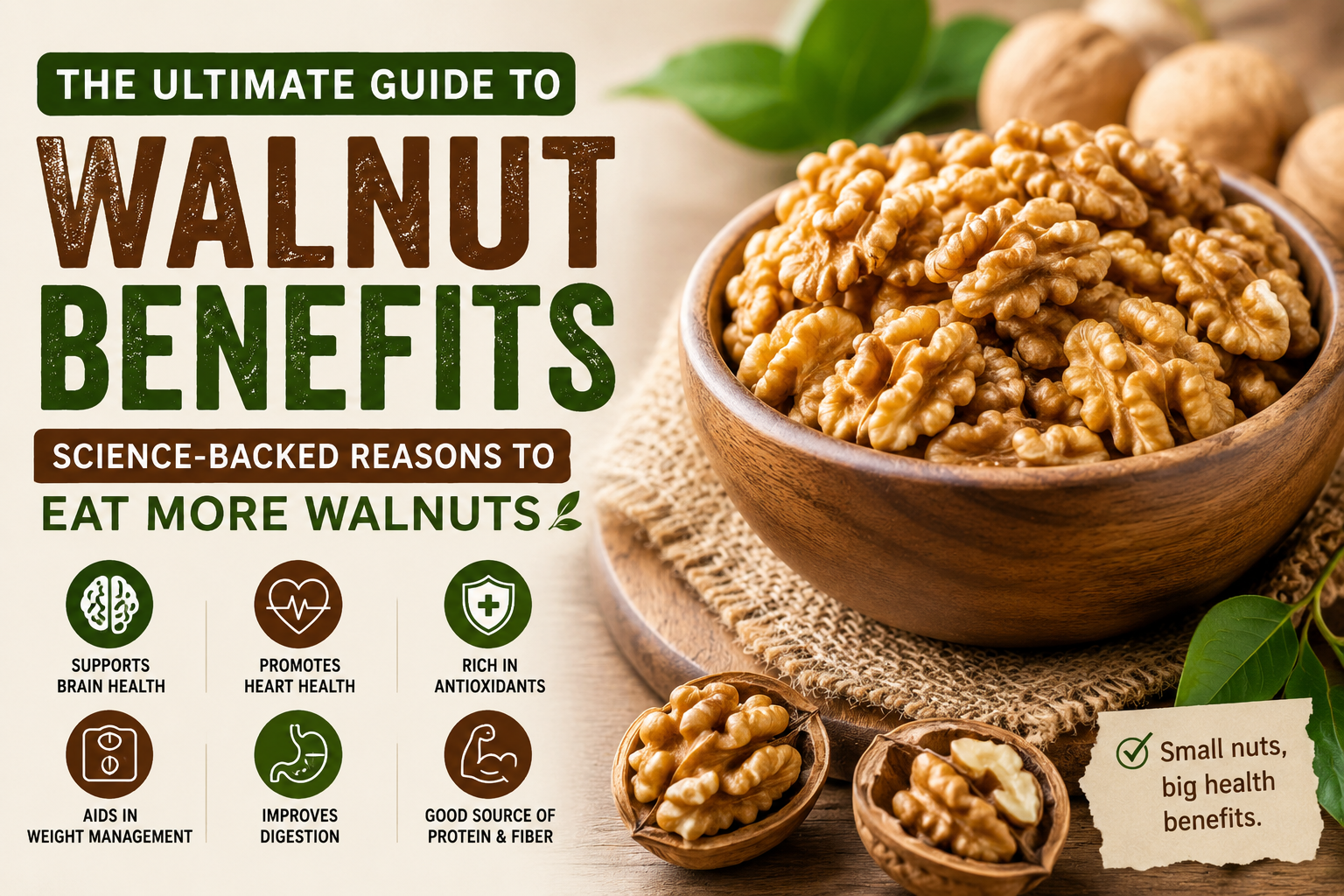
Walnuts are among the most nutritious nuts you can eat. They are especially valued for their rich content of plant-based omega-3 fatty acids (ALA), antioxidants, healthy fats, fiber, vitamins, and minerals. Their unique nutrient profile has made walnuts a popular choice for people looking to support heart health, brain function, weight management, and overall wellness.
Unlike many processed snacks, walnuts provide a satisfying combination of protein, healthy fats, and fiber that can help keep you full while delivering essential nutrients. They can be enjoyed on their own or added to oatmeal, yogurt, salads, smoothies, baked goods, and many other recipes.
Research suggests that regularly including walnuts in a balanced diet may offer several health benefits. While walnuts are not a cure for any disease, they can contribute to a healthy eating pattern that supports long-term health.
In this comprehensive guide, you’ll discover 20 science-backed walnut benefits, nutritional facts, the recommended daily serving, and the best ways to enjoy walnuts.
What Are Walnuts?
Walnuts are the edible seeds of trees belonging to the Juglans genus. The most commonly consumed variety is the English walnut (Juglans regia), although black walnuts are also available in some regions.
Walnuts have a distinctive brain-like appearance and a mildly earthy, slightly buttery flavor. They are widely used in both sweet and savory dishes.
You can enjoy walnuts in many forms, including:
- Raw walnuts
- Dry-roasted walnuts
- Chopped walnuts
- Crushed walnuts
- Walnut butter
- Walnut oil
Because of their versatility and nutritional value, walnuts are considered one of the healthiest nuts available.
Walnut Nutrition Facts
A standard serving is 1 ounce (28 grams) or approximately 14 walnut halves.
| Nutrient | Amount (Per 28g) |
|---|---|
| Calories | 185 |
| Protein | 4.3 g |
| Healthy Fat | 18.5 g |
| Carbohydrates | 4 g |
| Fiber | 2 g |
| Omega-3 (ALA) | 2.5 g |
| Magnesium | 11% Daily Value |
| Copper | 56% Daily Value |
| Manganese | 42% Daily Value |
Walnuts also contain:
- Vitamin B6
- Folate
- Phosphorus
- Zinc
- Potassium
- Polyphenols
- Melatonin (naturally occurring in small amounts)
Their combination of healthy fats and antioxidants makes walnuts nutritionally unique among tree nuts.
Why Are Walnuts So Healthy?
Walnuts are considered a nutrient-dense food because they provide many beneficial nutrients in a relatively small serving.
Some of their key nutritional strengths include:
- Rich in plant-based omega-3 fatty acids (ALA)
- High in antioxidants
- Good source of fiber
- Provide plant-based protein
- Rich in copper and manganese
- Contain magnesium and phosphorus
- Naturally cholesterol-free
Together, these nutrients support many important functions throughout the body.
1. Rich in Plant-Based Omega-3 Fatty Acids
One of the biggest reasons walnuts stand out from other nuts is their high content of alpha-linolenic acid (ALA), a plant-based omega-3 fatty acid.
ALA is an essential fat, meaning your body cannot produce it on its own and it must come from your diet.
Including foods rich in ALA may help support:
- Heart health
- Brain function
- Healthy cell membranes
- Overall wellness
Among commonly eaten tree nuts, walnuts are one of the richest natural sources of ALA.
2. Supports Heart Health
Heart disease remains one of the leading causes of illness worldwide, making heart-friendly food choices an important part of a healthy lifestyle.
Walnuts provide several nutrients associated with cardiovascular health, including:
- Unsaturated fats
- Omega-3 fatty acids
- Fiber
- Magnesium
- Antioxidants
As part of a balanced diet, walnuts may help:
- Support healthy cholesterol levels
- Promote normal blood vessel function
- Contribute to overall heart health
Replacing processed snacks with walnuts is one practical way to improve diet quality.
3. Packed with Powerful Antioxidants
Walnuts are among the nuts with the highest antioxidant activity.
They contain beneficial plant compounds such as:
- Polyphenols
- Ellagic acid
- Catechins
- Melatonin
Antioxidants help protect the body’s cells from oxidative stress caused by free radicals.
A diet rich in antioxidant-containing foods may support healthy aging and overall wellness.
4. Helps with Weight Management
Although walnuts are calorie-dense, research suggests they can fit into a healthy weight-management plan when eaten in moderation.
Their combination of:
- Healthy fats
- Protein
- Fiber
helps increase feelings of fullness, which may reduce the desire to snack on less nutritious foods.
For best results:
- Measure portions.
- Replace processed snacks rather than adding extra calories.
- Combine walnuts with fruits or yogurt for a balanced snack.
5. Supports Brain Health
Walnuts are often associated with brain health because of both their nutrient content and their brain-like shape.
They provide:
- Plant-based omega-3 fatty acids
- Vitamin B6
- Antioxidants
- Copper
These nutrients contribute to normal brain function as part of an overall healthy diet.
Maintaining brain health also depends on regular exercise, quality sleep, stress management, and a balanced lifestyle.
6. Promotes Healthy Digestion
Walnuts contain dietary fiber that supports digestive health.
Fiber may help:
- Promote regular bowel movements
- Feed beneficial gut bacteria
- Increase fullness after meals
- Support a healthy digestive system
Eating walnuts together with fruits, vegetables, legumes, and whole grains can help you meet your daily fiber needs.
7. May Help Reduce Inflammation
Inflammation is a natural response by the body’s immune system, but long-term inflammation has been linked to various chronic health conditions.
Walnuts contain several nutrients that help support the body’s natural defense systems, including:
- Omega-3 fatty acids
- Polyphenols
- Vitamin E
- Copper
Including walnuts as part of a varied, balanced diet may contribute to overall health and well-being.
Best Ways to Enjoy Walnuts
Walnuts are incredibly versatile and can easily be added to everyday meals.
Try them:
At Breakfast
- Mixed into oatmeal
- Sprinkled over Greek yogurt
- Blended into smoothies
- Added to homemade granola
As Snacks
- A handful of raw walnuts
- Mixed nuts with dried fruit
- Walnuts and fresh apple slices
At Lunch or Dinner
- Tossed into salads
- Mixed into quinoa bowls
- Added to roasted vegetables
- Included in whole-grain dishes
8. May Support Healthy Cholesterol Levels
Walnuts are naturally rich in polyunsaturated fats, including plant-based omega-3 fatty acids (ALA). Replacing foods high in saturated fat with foods rich in unsaturated fats, such as walnuts, may help support healthy cholesterol levels as part of a balanced diet.
Walnuts also provide:
- Dietary fiber
- Plant sterols
- Antioxidants
These nutrients contribute to overall cardiovascular health when included in a healthy eating pattern.
Tips
For the greatest benefit:
- Replace processed snacks with walnuts.
- Choose plain, unsalted walnuts.
- Enjoy them in moderate portions.
9. May Help Support Healthy Blood Sugar Management
Walnuts are naturally low in digestible carbohydrates while providing healthy fats, protein, and fiber.
Because of this nutrient combination, walnuts can be part of a balanced eating plan for people who want to support healthy blood sugar levels.
Benefits
Walnuts may:
- Help increase fullness
- Slow digestion when eaten with meals
- Support balanced snacks
- Provide magnesium, which contributes to normal glucose metabolism
For personalized nutrition advice, people with diabetes should consult their healthcare provider or registered dietitian.
10. Supports Strong Bones
Healthy bones require a variety of nutrients, and walnuts contribute several of them.
Walnuts provide:
- Magnesium
- Phosphorus
- Copper
- Manganese
These minerals play important roles in maintaining normal bone structure and supporting muscle function.
Pair walnuts with calcium-rich foods like yogurt or fortified plant-based milk for a nutrient-rich snack.
11. Promotes Healthy Skin
Walnuts contain healthy fats, vitamin E, antioxidants, and copper that contribute to maintaining healthy skin.
Including walnuts in a balanced diet may help support:
- Skin hydration
- Healthy skin cells
- Protection from oxidative stress
- A natural, healthy appearance
Remember that good skin health also depends on hydration, sun protection, sleep, and an overall nutritious diet.
12. Supports Healthy Hair
Healthy hair requires protein, healthy fats, vitamins, and minerals.
Walnuts provide nutrients that contribute to overall hair health, including:
- Omega-3 fatty acids
- Copper
- Protein
- Vitamin B6
Although walnuts are not a treatment for hair loss, they can be part of a diet that supports healthy hair.
13. Helps with Muscle Recovery
Walnuts contain plant-based protein, healthy fats, magnesium, and antioxidants that make them a nutritious snack for active individuals.
Benefits After Exercise
Walnuts may:
- Help satisfy hunger
- Support muscle maintenance when paired with protein-rich foods
- Provide healthy fats
- Supply essential minerals
For better recovery, pair walnuts with:
- Greek yogurt
- Cottage cheese
- Milk
- Fruit smoothies
14. Supports the Immune System
A strong immune system depends on a variety of nutrients working together.
Walnuts provide:
- Copper
- Vitamin B6
- Antioxidants
- Healthy fats
Combined with fruits, vegetables, whole grains, and lean protein, walnuts can be part of a healthy lifestyle that supports normal immune function.
15. May Support Healthy Aging
Healthy aging involves protecting cells from oxidative stress and maintaining good overall nutrition.
Walnuts contain:
- Polyphenols
- Omega-3 fatty acids
- Vitamin B6
- Copper
- Manganese
These nutrients support normal body functions and contribute to overall wellness throughout life.
Regular physical activity, sufficient sleep, and a balanced diet remain the most important factors for healthy aging.
Best Ways to Eat Walnuts
Walnuts are one of the easiest nuts to include in everyday meals.
Breakfast
Try walnuts with:
- Oatmeal
- Overnight oats
- Greek yogurt
- Smoothies
- Whole-grain cereal
Healthy Snacks
Enjoy walnuts:
- On their own
- Mixed with almonds and pistachios
- With apple slices
- With plain yogurt
Lunch and Dinner
Add chopped walnuts to:
- Green salads
- Quinoa bowls
- Brown rice
- Roasted vegetables
- Whole-grain pasta
Healthy Desserts
Walnuts also work well in:
- Chia pudding
- Yogurt parfaits
- Homemade energy bites
- Fruit salads
Raw vs. Roasted Walnuts
Many people wonder whether raw or roasted walnuts are healthier.
Raw Walnuts
Benefits
- Minimal processing
- No added oils
- No added salt
- Natural flavor
Dry-Roasted Walnuts
Benefits
- Crunchier texture
- Rich flavor
- Retain most nutrients when roasted without added oil
Which Is Better?
Both are nutritious choices.
For maximum health benefits, choose:
- Raw walnuts
- Dry-roasted walnuts
- Unsalted walnuts
Avoid:
- Honey-roasted walnuts
- Sugar-coated walnuts
- Chocolate-covered walnuts
- Heavily salted walnuts
These products often contain added sugar, sodium, or unnecessary fats.
Recommended Daily Serving
Walnuts are nutrient-dense but also calorie-dense.
For most healthy adults, the recommended serving is:
14 walnut halves (28 grams or 1 ounce) per day.
Approximate nutrition per serving:
| Nutrient | Amount |
|---|---|
| Calories | 185 |
| Protein | 4.3 g |
| Healthy Fat | 18.5 g |
| Fiber | 2 g |
| Omega-3 (ALA) | 2.5 g |
This serving fits well into most balanced eating plans.
Common Mistakes to Avoid
Eating Too Many Walnuts
Even healthy foods can contribute excess calories if portions become too large.
Buying Sweetened Varieties
Avoid flavored walnuts with:
- Added sugar
- Syrups
- Chocolate coatings
- Excess salt
Ignoring Portion Sizes
Measure servings instead of eating directly from a large package.
Replacing Balanced Meals
Walnuts are a healthy snack or meal addition but should not replace meals that include vegetables, fruits, whole grains, and lean protein.
16. Supports Gut Health
A healthy gut plays an important role in digestion, nutrient absorption, and overall well-being. Walnuts contain dietary fiber and beneficial plant compounds that help nourish the beneficial bacteria living in your digestive system.
A fiber-rich diet that includes walnuts may help:
- Support regular bowel movements
- Promote a healthy gut microbiome
- Improve digestive comfort
- Increase feelings of fullness
For the best results, combine walnuts with fruits, vegetables, legumes, and whole grains.
17. A Good Source of Plant-Based Protein
Walnuts provide around 4.3 grams of protein per 28-gram (1-ounce) serving. While they are not as high in protein as some other foods, they contribute to your daily protein intake.
Protein helps:
- Build and repair body tissues
- Support muscle maintenance
- Keep you feeling satisfied
- Complement an active lifestyle
Pair walnuts with yogurt, milk, or legumes for a more protein-rich meal.
18. Easy to Add to Any Diet
One of the biggest advantages of walnuts is their versatility. They fit into many eating patterns, including:
- Mediterranean diet
- Vegetarian diet
- Vegan diet
- High-fiber diet
- Heart-healthy eating plans
You can enjoy walnuts at breakfast, lunch, dinner, or as a snack, making them an easy way to improve the nutritional quality of your meals.
19. Naturally Rich in Essential Minerals
Walnuts provide several important minerals that support normal body functions, including:
- Magnesium
- Copper
- Manganese
- Phosphorus
- Zinc
These nutrients contribute to:
- Energy production
- Bone health
- Normal nerve function
- Healthy metabolism
- Immune system function
Eating a variety of nuts helps ensure a broader intake of essential minerals.
20. A Delicious and Satisfying Healthy Snack
Walnuts are convenient, portable, and require no preparation, making them an excellent snack for busy lifestyles.
Instead of reaching for processed snacks high in added sugar or refined carbohydrates, a small handful of walnuts offers:
- Healthy fats
- Plant-based protein
- Fiber
- Vitamins and minerals
Keep a small container of walnuts at work, in your bag, or at home for a quick and nutritious snack.
Frequently Asked Questions (FAQs)
1. Is it good to eat walnuts every day?
Yes. For most healthy adults, eating about 14 walnut halves (28 grams) daily can be part of a balanced diet.
2. What is the best time to eat walnuts?
Walnuts can be enjoyed at any time of day. They are especially popular:
- At breakfast
- As a mid-morning snack
- Before or after exercise
- In the evening instead of processed snacks
The best time depends on your personal goals and overall eating pattern.
3. Are walnuts better than almonds?
Both walnuts and almonds are highly nutritious.
- Walnuts are especially rich in plant-based omega-3 fatty acids.
- Almonds provide more vitamin E, protein, and fiber.
Including both in your diet allows you to benefit from their different nutrient profiles.
4. Can walnuts help with weight loss?
Walnuts are calorie-dense, but their combination of healthy fats, protein, and fiber can help increase fullness. When eaten in appropriate portions as part of a calorie-controlled diet, they can support weight management.
5. Can people with diabetes eat walnuts?
Yes. Walnuts are naturally low in digestible carbohydrates and can be included in a diabetes-friendly eating plan. People with diabetes should follow individualized advice from their healthcare provider or registered dietitian.
6. Are raw walnuts healthier than roasted walnuts?
Both raw and dry-roasted walnuts are nutritious. Choose unsalted varieties without added sugar or unhealthy oils.
7. How many walnuts should I eat daily?
A serving of 14 walnut halves (about 28 grams) is suitable for most healthy adults.
8. Do walnuts contain omega-3?
Yes. Walnuts are one of the richest tree nut sources of alpha-linolenic acid (ALA), a plant-based omega-3 fatty acid.
Who Should Limit Walnuts?
Although walnuts are healthy for most people, some individuals should consume them with caution.
People with Tree Nut Allergies
Walnuts can trigger serious allergic reactions in people with tree nut allergies. Avoid them completely if advised by your healthcare provider.
People Following a Calorie-Controlled Diet
Walnuts are calorie-dense. Measuring portions helps prevent excess calorie intake.
Individuals with Certain Medical Conditions
People with specific dietary restrictions or medical conditions should seek personalized advice from a healthcare professional before making significant dietary changes.
How to Store Walnuts
Because walnuts contain healthy unsaturated fats, they can become rancid if stored improperly.
Storage Tips
- Keep walnuts in an airtight container.
- Store them in a cool, dry place.
- Refrigerate for extended freshness.
- Freeze for long-term storage.
- Protect them from moisture, heat, and direct sunlight.
Proper storage helps preserve flavor, texture, and nutritional quality.
Final Thoughts
Walnuts are among the most nutrient-dense foods you can include in your diet. Their unique combination of plant-based omega-3 fatty acids, antioxidants, healthy fats, protein, fiber, vitamins, and minerals makes them an excellent addition to a balanced eating pattern.
Whether your goal is supporting heart health, maintaining a healthy weight, improving diet quality, or simply enjoying a satisfying snack, walnuts are a versatile and convenient choice.
Remember that no single food can guarantee good health. The greatest benefits come from eating walnuts as part of an overall healthy lifestyle that includes a variety of nutrient-rich foods, regular physical activity, quality sleep, and routine medical care when needed.
Key Takeaways
- Walnuts are one of the best natural sources of plant-based omega-3 fatty acids (ALA).
- They provide healthy fats, protein, fiber, antioxidants, vitamins, and minerals.
- A daily serving of 14 walnut halves (28 grams) is suitable for most adults.
- Raw and dry-roasted walnuts are both healthy options.
- Choose unsalted walnuts without added sugar or unhealthy oils.
- Enjoy walnuts in breakfast, salads, yogurt, smoothies, or as a healthy snack.
- Pair walnuts with other nutrient-rich foods for a balanced diet.
You May Also Like
Continue exploring healthy foods with these related articles:
🥜 Nuts & Dry Fruits
- Best Dry Fruits for Weight Loss
- Benefits of Almonds
- 10 Best Dry Fruits for Diabetes
- Best Time to Eat Nuts
- Top 15 Healthy Snacks in Pakistan
- Healthiest Nuts to Eat Every Day
- Walnuts vs. Almonds: Which Is Healthier?
- Top High-Protein Nuts




Leave a Reply