Nuts are among the most nutritious foods you can include in your diet. They’re packed with healthy fats, protein, fiber, vitamins, minerals, and antioxidants, making them a smart choice for heart health, weight management, and overall wellness.
However, because nuts are energy-dense (high in calories), eating large amounts can make it easier to consume more calories than you intended. That’s why portion control is important. The good news is that you don’t need to avoid nuts—you simply need to enjoy them in the right amounts.
In this guide, you’ll learn how much nuts you should eat each day, recommended serving sizes for different varieties, simple ways to measure portions, and practical tips to enjoy nuts as part of a balanced diet.
Note: Nutritional needs vary from person to person. If you have allergies or specific medical conditions, consult a qualified healthcare professional before making significant dietary changes.
Why Portion Control Matters
Nuts provide many health benefits, but they are also calorie-dense because they naturally contain healthy fats.
For example, a small handful of nuts can contain around 160–200 calories, depending on the variety. Eating directly from a large bag can make it easy to consume several servings without realizing it.
Benefits of Practicing Portion Control
- Helps manage calorie intake
- Supports healthy weight management
- Prevents mindless overeating
- Makes it easier to enjoy nuts every day
- Encourages balanced eating habits
Rather than eliminating nuts, focus on enjoying the right amount consistently.
Are Nuts Healthy?
Absolutely. Nuts are considered one of the healthiest snack options because they provide a wide range of nutrients.
Nutrients Found in Nuts
- Healthy unsaturated fats
- Plant-based protein
- Dietary fiber
- Vitamin E
- Magnesium
- Potassium
- Copper
- Selenium (especially Brazil nuts)
- Antioxidants
Regularly including nuts as part of a balanced diet has been associated with better overall diet quality and heart health.
How Many Nuts Should You Eat Per Day?
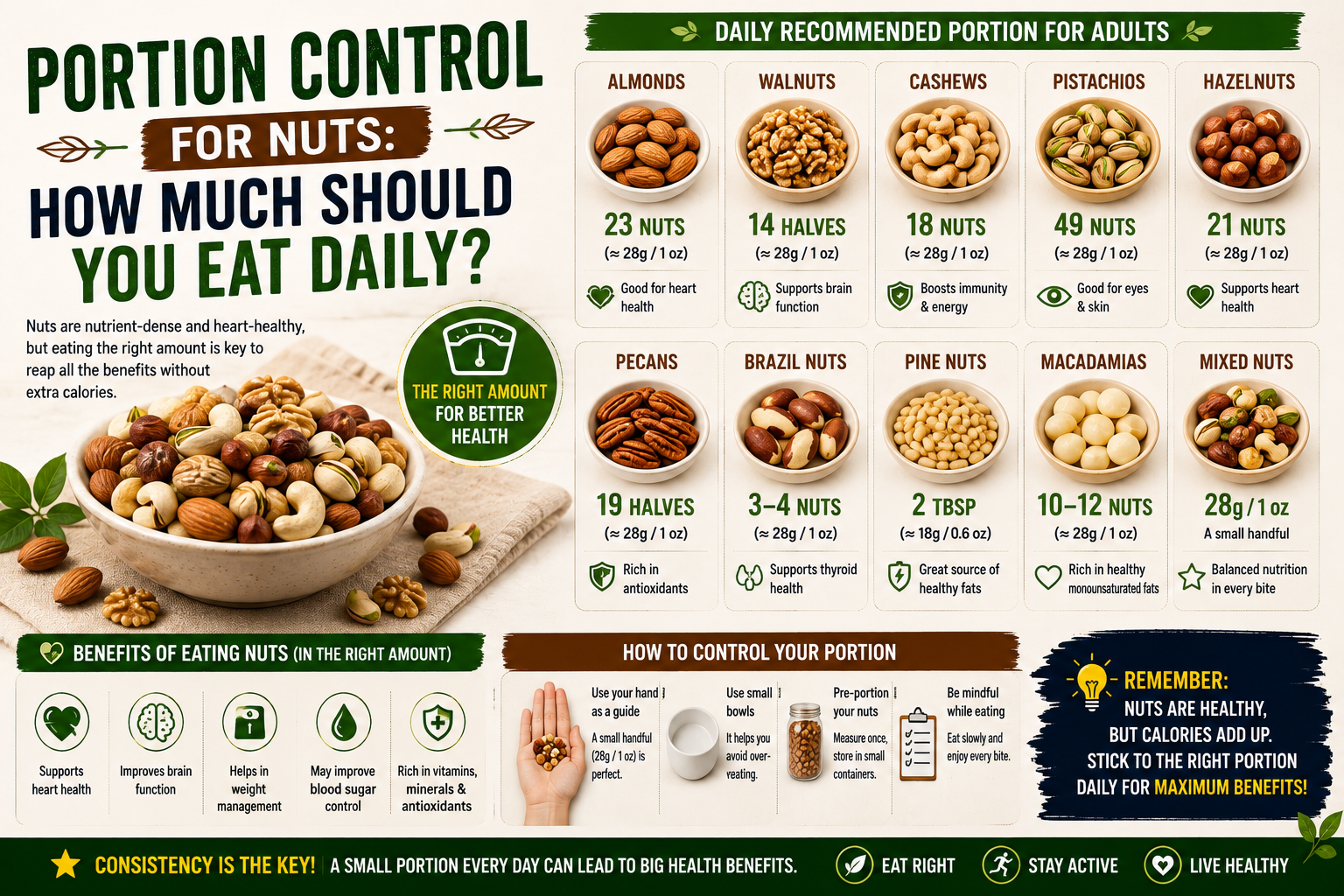
For most healthy adults, a standard serving is about 28 grams (1 ounce) of unsalted nuts.
This equals approximately:
| Nut | Approximate Amount (28 g) |
|---|---|
| Almonds | 23 almonds |
| Walnuts | 14 walnut halves |
| Pistachios | 49 pistachios |
| Cashews | 18 cashews |
| Pecans | 19 halves |
| Hazelnuts | 21 hazelnuts |
| Peanuts | About 28 peanuts |
These numbers are approximate because nut sizes vary naturally.
Common Portion Control Mistakes
Many people unintentionally eat more nuts than they realize.
Eating Straight from the Bag
Large bags make it difficult to keep track of serving sizes.
Better option: Divide nuts into small containers or reusable snack bags.
Assuming Healthy Means Unlimited
Although nuts are nutritious, eating several large handfuls every day can significantly increase calorie intake.
Moderation is still important.
Choosing Sugary or Salted Nuts
Honey-roasted, chocolate-coated, or heavily salted nuts often contain added sugar, sodium, or unhealthy ingredients.
Choose:
- Raw nuts
- Dry-roasted nuts
- Unsalted varieties
whenever possible.
1. Almonds
Recommended Portion
23 almonds (about 28 grams)
Nutritional Highlights
- Protein
- Fiber
- Vitamin E
- Magnesium
- Healthy monounsaturated fats
Best Ways to Enjoy Almonds
- As a snack
- Mixed into oatmeal
- Added to yogurt
- Sprinkled over salads
Almonds are one of the easiest nuts to portion because counting about 23 almonds provides a standard serving.
2. Walnuts
Recommended Portion
14 walnut halves (28 grams)
Benefits
- Plant-based omega-3 fatty acids
- Protein
- Fiber
- Copper
- Antioxidants
Walnuts pair well with:
- Oatmeal
- Salads
- Greek yogurt
- Fruit
3. Pistachios
Recommended Portion
49 pistachios
Pistachios are naturally lower in calories per nut compared with some larger nuts.
Benefits
- Protein
- Fiber
- Potassium
- Vitamin B6
- Healthy fats
Buying pistachios in their shells may naturally slow down eating and help with portion awareness.
4. Cashews
Recommended Portion
18 cashews
Cashews have a creamy texture and are rich in several important minerals.
Nutritional Benefits
- Magnesium
- Copper
- Zinc
- Protein
- Healthy fats
Enjoy them:
- On their own
- In stir-fries
- Mixed into salads
5. Peanuts
Recommended Portion
About 28 peanuts
Although technically legumes, peanuts have a nutritional profile similar to tree nuts.
Benefits
- Protein
- Healthy fats
- Niacin
- Folate
- Vitamin E
Choose dry-roasted or unsalted peanuts when possible.
6. Pecans
Recommended Portion
19 pecan halves
Pecans are rich in healthy fats and antioxidants.
Benefits
- Fiber
- Healthy fats
- Manganese
- Copper
Because pecans are calorie-dense, measuring portions is especially helpful.
7. Hazelnuts
Recommended Portion
21 hazelnuts
Hazelnuts provide healthy fats along with important vitamins and minerals.
Benefits
- Vitamin E
- Healthy fats
- Fiber
- Copper
- Manganese
They make a delicious addition to oatmeal, yogurt, or homemade trail mix.
Easy Portion Control Tips
Following a few simple habits can make it easier to enjoy nuts without overeating.
Measure Before Eating
Instead of grabbing a handful from a large bag, measure a serving into a small bowl or container.
Buy Small Snack Packs
Pre-portioned packs can be convenient for work, travel, or school.
Combine Nuts with Fruit
Pairing nuts with an apple, pear, or berries adds fiber and helps create a more satisfying snack.
Eat Slowly
Take time to chew and enjoy each bite. Eating mindfully may help you recognize when you’re satisfied.
Store Nuts Properly
Keep nuts in airtight containers in a cool, dry place. For longer storage, refrigerate or freeze them to help maintain freshness.
Sample Portion-Controlled Snack Ideas
Try these balanced snack combinations:
- 23 almonds with an apple
- 14 walnut halves with Greek yogurt
- 49 pistachios with orange slices
- Cottage cheese topped with chopped pecans
- Oatmeal sprinkled with hazelnuts
- A small handful of cashews with fresh berries
These snacks combine protein, fiber, and healthy fats to help keep you satisfied between meals.
8. Brazil Nuts
Recommended Portion
1–2 Brazil nuts per day
Brazil nuts are extremely rich in selenium, an essential mineral that supports normal thyroid function, immune health, and antioxidant defenses.
Nutritional Benefits
- Selenium
- Healthy fats
- Protein
- Magnesium
- Vitamin E
Because Brazil nuts contain very high amounts of selenium, 1–2 nuts per day is generally enough for most adults. Eating large quantities regularly is not recommended.
9. Macadamia Nuts
Recommended Portion
10–12 macadamia nuts (about 28 grams)
Macadamia nuts are known for their buttery texture and high content of heart-healthy monounsaturated fats.
Benefits
- Healthy fats
- Fiber
- Manganese
- Thiamine (Vitamin B1)
- Copper
Since they are one of the most calorie-dense nuts, measuring portions is especially important.
10. Pine Nuts
Recommended Portion
About 2 tablespoons (28 grams)
Pine nuts are small seeds commonly used in salads, pesto, and Mediterranean dishes.
Benefits
- Healthy fats
- Protein
- Iron
- Magnesium
- Vitamin E
Instead of eating them alone, sprinkle measured portions over salads or roasted vegetables.
11. Mixed Nuts
Mixed nuts are an excellent way to enjoy a variety of nutrients in one serving.
Recommended Portion
1 ounce (28 grams) or one small handful
A healthy mix may include:
- Almonds
- Walnuts
- Pistachios
- Cashews
- Pecans
- Hazelnuts
Benefits
- Variety of vitamins and minerals
- Protein
- Fiber
- Healthy fats
- Antioxidants
Choose unsalted, dry-roasted, or raw mixed nuts whenever possible.
12. Nut Butters
Nut butters can be just as nutritious as whole nuts, but they’re easy to overeat because they’re smooth and concentrated.
Recommended Portion
1–2 tablespoons
Healthy choices include:
- Peanut butter
- Almond butter
- Cashew butter
What to Look For
Choose products with:
- No added sugar
- No hydrogenated oils
- Minimal ingredients (ideally just nuts and a little salt)
Spread nut butter on:
- Whole-grain toast
- Apple slices
- Banana
- Celery sticks
Easy Ways to Measure Nut Portions
You don’t always need a kitchen scale. These simple methods can help you estimate serving sizes.
Use Your Hand
For most adults:
- One small handful is close to one serving (28 grams).
- Your cupped palm is a practical visual guide for portioning nuts.
Use Measuring Cups
Approximate serving sizes:
- ¼ cup of most nuts ≈ 1 ounce (28 grams)
- 2 tablespoons of pine nuts ≈ 1 ounce
Using measuring cups for a few weeks can help you recognize portion sizes without measuring every time.
Count Individual Nuts
For greater accuracy, count nuts such as:
- 23 almonds
- 18 cashews
- 49 pistachios
- 14 walnut halves
- 21 hazelnuts
This method works especially well when you’re trying to manage your calorie intake.
Tips to Avoid Overeating Nuts
Even healthy foods can contribute to excess calorie intake when eaten in very large amounts.
Portion Before You Snack
Instead of eating directly from the bag, place one serving into a bowl or snack container.
Pair Nuts with High-Fiber Foods
Combining nuts with fiber-rich foods helps create a more satisfying snack.
Examples include:
- Almonds with an apple
- Walnuts with berries
- Pistachios with orange slices
- Cashews with grapes
Eat Slowly
Take your time to chew thoroughly and enjoy each bite. Eating slowly can help you recognize when you’re satisfied.
Keep Healthy Portions Ready
Prepare several small containers of nuts at the beginning of the week. This makes it easier to grab the right amount when you’re busy.
Avoid Mindless Snacking
Avoid eating nuts while watching TV or working if you’re not paying attention to how much you’re consuming.
Best Time to Eat Nuts
There isn’t a single “perfect” time to eat nuts. They can fit into your diet throughout the day.
Morning
Adding nuts to breakfast can increase protein, fiber, and healthy fats.
Examples:
- Oatmeal with almonds
- Greek yogurt with walnuts
- Whole-grain cereal with chopped hazelnuts
Between Meals
A small handful of nuts can help control hunger until your next meal.
Healthy combinations include:
- Pistachios with fruit
- Almonds with yogurt
- Cashews with a pear
Before Exercise
Eating a moderate portion of nuts with fruit may provide steady energy before physical activity.
Example:
- Banana with almond butter
- Apple and a few walnuts
After Exercise
Pair nuts with another source of protein or carbohydrates to support recovery.
Examples:
- Greek yogurt with chopped almonds
- Cottage cheese with walnuts
- Smoothie topped with crushed pistachios
Portion-Controlled Meal Ideas
Breakfast
- Oatmeal
- 23 almonds
- Fresh blueberries
Morning Snack
- Greek yogurt
- 14 walnut halves
Lunch
- Mixed green salad
- Grilled chicken
- 2 tablespoons pine nuts
Afternoon Snack
- Apple
- 1 tablespoon peanut butter
Dinner
- Grilled salmon
- Steamed vegetables
- Brown rice
Evening Snack
- Cottage cheese
- Small handful of pistachios
Common Signs You’re Eating Too Many Nuts
Watch for these habits:
- Eating directly from large bags or jars
- Frequently having multiple handfuls without measuring
- Choosing heavily salted or sugar-coated nuts
- Using large amounts of nut butter without measuring
- Snacking on nuts even when you’re not hungry
Being mindful of portion sizes helps you enjoy the nutritional benefits of nuts while keeping your overall diet balanced.
Sample One-Day Meal Plan with Portion-Controlled Nuts
Using the right amount of nuts throughout the day can help you enjoy their nutritional benefits without consuming excessive calories. Here’s an example of how to include nuts in a balanced daily eating plan.
Breakfast
- Bowl of oatmeal
- 23 almonds (chopped)
- Fresh blueberries
- Glass of low-fat milk or a fortified plant-based alternative
Why it works: This meal combines complex carbohydrates, protein, healthy fats, and fiber for lasting morning energy.
Mid-Morning Snack
- Plain Greek yogurt
- 14 walnut halves
- Fresh strawberries
Benefits
- High-quality protein
- Omega-3 fats
- Calcium
- Antioxidants
Lunch
- Grilled chicken or baked tofu
- Mixed green salad
- 2 tablespoons pine nuts
- Olive oil and lemon dressing
- Whole-grain bread
This meal offers lean protein, vegetables, and healthy fats.
Afternoon Snack
- Apple slices
- 1 tablespoon natural peanut butter
The combination of fruit and nut butter provides fiber, healthy fats, and protein to help keep you satisfied.
Dinner
- Baked salmon or grilled beans
- Brown rice
- Steamed broccoli
- Side salad
You don’t need to add nuts to every meal. Balance your intake across the day.
Evening Snack (Optional)
- Cottage cheese
- Small handful of pistachios (about 28 g)
A protein-rich evening snack may help satisfy hunger before bedtime.
Common Portion Control Mistakes
Even people who choose healthy foods sometimes consume more than intended. These are some of the most common mistakes when eating nuts.
1. Eating Straight from the Bag
Large bags make it difficult to know how much you’ve eaten.
Better approach: Measure one serving into a small bowl or reusable snack container.
2. Forgetting About Calories
Although nuts contain mostly healthy fats, they are still calorie-dense.
A standard serving is generally around 160–200 calories, depending on the type of nut.
3. Choosing Flavored Nuts
Many packaged nuts contain added:
- Sugar
- Salt
- Honey coatings
- Chocolate
- Artificial flavorings
Choose raw, dry-roasted, or lightly salted varieties whenever possible.
4. Using Too Much Nut Butter
Nut butter spreads easily, making it simple to eat several servings without realizing it.
Measure 1–2 tablespoons instead of estimating.
5. Snacking Without Hunger
Eating while watching television, working, or scrolling on your phone can lead to mindless overeating.
Take a moment to ask yourself if you’re actually hungry before reaching for a snack.
Frequently Asked Questions (FAQs)
1. How many nuts should I eat each day?
For most adults, about 28 grams (1 ounce) of unsalted nuts per day is a reasonable serving as part of a balanced diet. Brazil nuts are an exception because of their high selenium content—1–2 per day is generally enough.
2. Can eating too many nuts cause weight gain?
Nuts can fit into a weight-management plan, but regularly eating large portions may increase your overall calorie intake. Portion control is the key.
3. Are raw nuts healthier than roasted nuts?
Both raw and dry-roasted nuts can be nutritious. Dry-roasted nuts without added oils or excessive salt are a good choice.
4. What is the healthiest nut?
There isn’t a single “healthiest” nut. Different nuts provide different nutrients.
Examples include:
- Almonds – Vitamin E
- Walnuts – Omega-3 fats
- Pistachios – Protein and fiber
- Brazil nuts – Selenium
Eating a variety of nuts can help you benefit from a broader range of nutrients.
5. Are nuts good for weight management?
Yes. Nuts contain protein, fiber, and healthy fats that can help increase feelings of fullness when eaten in appropriate portions.
6. Should I eat nuts every day?
Many people can include a moderate serving of nuts in their daily eating pattern. Variety and moderation are important.
7. Can children eat nuts?
Whole nuts may pose a choking hazard for young children. Follow age-appropriate feeding guidance and seek advice from a healthcare professional if you have concerns, especially regarding allergies.
8. What’s the easiest way to measure a serving?
Simple options include:
- One small handful
- About ¼ cup for many nuts
- Counting individual nuts (such as 23 almonds or 18 cashews)
- Using a food scale for greater accuracy
Final Thoughts
Nuts are one of nature’s most nutrient-dense foods. They provide healthy fats, protein, fiber, vitamins, minerals, and antioxidants that can support overall health when enjoyed as part of a balanced diet.
The key isn’t avoiding nuts—it’s eating the right amount. A standard serving of around 28 grams (1 ounce) is enough to enjoy their benefits while helping you manage your overall calorie intake.
Whether you enjoy almonds, walnuts, pistachios, cashews, pecans, or mixed nuts, measuring portions, choosing minimally processed varieties, and pairing them with fruits, vegetables, or yogurt can make your snacks more balanced and satisfying.
Key Takeaways
- A standard serving of most nuts is 28 grams (1 ounce).
- Portion control helps manage calorie intake without giving up nutritious foods.
- Choose raw, dry-roasted, or unsalted nuts whenever possible.
- Pair nuts with fiber-rich foods like fruit or vegetables.
- Measure nut butters instead of spreading freely.
- Enjoy a variety of nuts to benefit from different nutrients.
- Practice mindful eating to avoid overeating.
You May Also Like
Continue learning about healthy nuts and nutrition with these related articles:
- Healthy Snack Ideas
- Healthy Late Night Snacks
- Best Weight Loss Programs in 2026
- Healthy Evening Snacks
- Best Time to Eat Nuts
- Best Dry Fruits for Weight Loss
- 10 Best Dry Fruits for Diabetes (Science-Backed & Blood Sugar Friendly)
- Medjool Dates Benefits


Leave a Reply